BLUE BOY

It was the fall of 2001 and the Los Angeles Times said that the Titan Arum (the Corpse Flower or Stinky Flower) would be blooming at the Huntington Gallery in San Marinoo only today. It was one of the largest flowers in the world and bloomed only every five years and only for three days. Twenty two years ago, there were many fewer of them in the world, but the Huntington had snaffled one. Yesterday, it had been at its best. Today would be the last chance to see it in flower. Tomorrow, the flower would wilt and die.

Corpse flower known as Amophophallus titanum blooming in Honolulu Hawaii and releasing an odor smelling like rotting flesh

I explained this to my grandson GS who was eating his breakfast at the other side of the tiny table. I did not call it a Corpse Flower. I called it a Stinky Flower. Six-year-old boys like gross, in moderation. Why did it smell bad? To attract flies to pollinate it. A few minutes of negotiation convinced his mother who was hurrying out to work that a school called Play Mountain Place would not disapprove of a day off to study a rare botanical specimen.

So we set off in my green Toyota Tercel from our barrio off Venice Blvd. I had just had major surgery and had come down from Canada to recover. The surgeon had recklessly removed my courage along with the part I had signed up for. I was no longer a road warrior on strange freeways. If I got confused, GS sitting behind me in his child seat, calmly pointed out where I should go.

The last thing my daughter said to me, “Oh, the Blue Boy is there. Be sure to see him.”

There was a very long line and it was hot in the sun, despite the free bottles of water. At certain points the smell of – let’s be frank – dead animal was overwhelming.

Then we went to lunch. Fortunately, a docent sitting at the next table was delighted to answer all the probing questions I couldn’t. Both of GS’s grandfathers were physicists and mathematicians. One of them had a double PhD. The other was my ex-husband.

After lunch, we looked at pictures. I was distracted by the blonde bombshell at my side. I had lost him in major airports, where I had to choose between catching him and losing our luggage. I still had him.

GS was close by my side when I walked into a room and there was the Blue Boy. I was so gobsmacked that I loosened my grip on my grandson’s hand. He slipped silently away. When I tore my eyes away from the full length portrait of the Boy in Blue, I saw a small being at the end of the room engrossed in the portrait there.

There was no one else there. Even the watcher had stood up from her chair and stepped around the corner. I wanted to stand there forever.

But I heard, “Can we go now? I’ve seen them all.”

It wasn’t enough. I had to go back the next day, without my mercurial companion.

As I passed the Titan Arum, I saw that it was a sad memory of its former glory.

I bought a small book about the Thomas Gainsborough’s Blue Boy (est. 1770) and and Sir Thomas Lawrence’s Pinkie (1793). The lithe girl hung opposite the Blue boy. Both people depicted are young, and Henry E. Huntington bought them both in the 1920s; otherwise, there is no connection between them.

Pinkie’s pink bonnet strings and her filmy white dress, with the wide pink sash are lifting in the breeze. Her pink lips are small, demure, kissable. A week before the portrait was to be exhibited at the royal Academy Exhibition, Pinkie died. She had had a cough, which may indicate she died of tuberculosis. The portrait vanished from view for many years, but it was known to be in the possession of Pinkie’s brother, the father of the poet, Elizabeth Barrett-Browning.

The little book The Blue Boy and Pinkie by Robert R. Wark, a ‘noted art historian’ was published by the Huntington Gallery in 1963. Wark gives the standard 1963 account of who modeled for the portrait. Indeed the print that I bought has the name in script at the bottom of the white window mat, Master Jonathan Buttall, the son of a wealthy ironmonger (hardware merchant). It is probable Gainsborough became a friend of the elder Buttall in Ipswich where they both lived before moving to London. Gainsborough was only 11-years-older than Master Buttall. We know they were friends because the artist left a short list of those he wanted at his funeral in 1788, including Jonathan.

Henry Huntington paid $728,000 for the Blue Boy in 1921. It is estimated to be worth over $9 billion today.

In the 1790s, Buttall’s business came upon hard times and his household effects were sold at auction, including the Blue Boy for 35 guineas. He died late in 1805 at the age of the age of 53, in which case, he would have been born in 1752. The portrait seems to have been exhibited in at the Royal Academy in 1770, which would have made Jonathan eighteen.

When I sat down to write this blog post, Google did not agree with Robert R Wark, noted art historian though he was. Today’s noted art historians suggest it was Gainsborough Dupont, Thomas’s nephew, or, just to be awkward, that there was no sitter.

We know that a Van Dyke Costume such as the Blue Boy is wearing was available for Gainsborough’s sitters. The Honourable Edward Bouverie chose to wear it for his portrait in 1773, same lace collar and cuffs. Another sitter Paul Cobb Methuen also wore it. It was the fashion in those days to dress in the costume of sitters for Sir Anthony Van Dyck. Women also chose to do this.

Whenever I see or remember the Blue Boy, I recall the smooth confidence of the young man, relaxed, calm, forthright, somewhat assertive, no doubt the product of wealth and class.

I spent 35-years, studying boys of this age as they entered my classroom for the first time, sussing out the troublemakers. Blue Boy would not be one, so long as he was treated with the respect he felt he deserved.

In my opinion, however, genius he was, no one, not even Gainsborough could paint that face and cavalier posture or the glint of light on the left sleeve without a model.

After I read Mr. Wark’s little book, believing it was a picture of Jonathan Buttall, I wondered how how he had changed by the time of his bankruptcy. Had his widow’s peak rendered him bald? Did he have a paunch from English beef, port and pudding? Had life battered that beauty and serenity out of him when he died at 53?

There is another story that Gainsborough painted the picture in answer to an essay by Sir Joshua Reynolds, head of the Royal Academy of Arts. Reynolds held that no great picture could be predominately blue. It must be made of warmer colors. Gainsborough took this as a challenge to be disproved.

When Huntington Museum xrayed the Blue Boy , it discovered that Gainsborough had reused an old canvas. The head of an older man was revealed above the Blue Boy’s. Surely, a painter would not reuse an old canvas in front of a wealthy sitter. Surely, Gainsborough fired up by the challenge had seized the first canvas that came to hand in his enthusiasm to disprove the older artist.

Blue Boy went back to London for a four month visit on the hundredth anniversary of its relocation to the United States of America, but it is home at the Huntington again now.

If I were Los Angeles, I would get GS to drive me down to San Marino to see the true colors of the Blue Boy. GS would keep track of the cane I’m always misplacing.

See joyce@joycehowe.com for latest book
I Trust You to Kill Me
Sign up your email address for a FREE cop of e-book,
Monthly draw.

BLUE BOY

It was the fall of 2001 and the Los Angeles Times said that the Titan Arum (the Corpse Flower or Stinky Flower) would be blooming at the Huntington Gallery in San Marinoo only today. It was one of the largest flowers in the world and bloomed only every five years and only for three days. Twenty two years ago, there were many fewer of them in the world, but the Huntington had snaffled one. Yesterday, it had been at its best. Today would be the last chance to see it in flower. Tomorrow, the flower would wilt and die.

Corpse flower known as Amophophallus titanum blooming in Honolulu Hawaii and releasing an odor smelling like rotting flesh

I explained this to my grandson GS who was eating his breakfast at the other side of the tiny table. I did not call it a Corpse Flower. I called it a Stinky Flower. Six-year-old boys like gross, in moderation. Why did it smell bad? To attract flies to pollinate it. A few minutes of negotiation convinced his mother who was hurrying out to work that a school called Play Mountain Place would not disapprove of a day off to study a rare botanical specimen.

So we set off in my green Toyota Tercel from our barrio off Venice Blvd. I had just had major surgery and had come down from Canada to recover. The surgeon had recklessly removed my courage along with the part I had signed up for. I was no longer a road warrior on strange freeways. If I got confused, GS sitting behind me in his child seat, calmly pointed out where I should go.

The last thing my daughter said to me, “Oh, the Blue Boy is there. Be sure to see him.”

There was a very long line and it was hot in the sun, despite the free bottles of water. At certain points the smell of – let’s be frank – dead animal was overwhelming.

Then we went to lunch. Fortunately, a docent sitting at the next table was delighted to answer all the probing questions I couldn’t. Both of GS’s grandfathers were physicists and mathematicians. One of them had a double PhD. The other was my ex-husband.

After lunch, we looked at pictures. I was distracted by the blonde bombshell at my side. I had lost him in major airports, where I had to choose between catching him and losing our luggage. I still had him.

GS was close by my side when I walked into a room and there was the Blue Boy. I was so gobsmacked that I loosened my grip on my grandson’s hand. He slipped silently away. When I tore my eyes away from the full length portrait of the Boy in Blue, I saw a small being at the end of the room engrossed in the portrait there.

There was no one else there. Even the watcher had stood up from her chair and stepped around the corner. I wanted to stand there forever.

But I heard, “Can we go now? I’ve seen them all.”

It wasn’t enough. I had to go back the next day, without my mercurial companion.

As I passed the Titan Arum, I saw that it was a sad memory of its former glory.

I bought a small book about the Thomas Gainsborough’s Blue Boy (est. 1770) and and Sir Thomas Lawrence’s Pinkie (1793). The lithe girl hung opposite the Blue boy. Both people depicted are young, and Henry E. Huntington bought them both in the 1920s; otherwise, there is no connection between them.

Pinkie’s pink bonnet strings and her filmy white dress, with the wide pink sash are lifting in the breeze. Her pink lips are small, demure, kissable. A week before the portrait was to be exhibited at the royal Academy Exhibition, Pinkie died. She had had a cough, which may indicate she died of tuberculosis. The portrait vanished from view for many years, but it was known to be in the possession of Pinkie’s brother, the father of the poet, Elizabeth Barrett-Browning.

The little book The Blue Boy and Pinkie by Robert R. Wark, a ‘noted art historian’ was published by the Huntington Gallery in 1963. Wark gives the standard 1963 account of who modeled for the portrait. Indeed the print that I bought has the name in script at the bottom of the white window mat, Master Jonathan Buttall, the son of a wealthy ironmonger (hardware merchant). It is probable Gainsborough became a friend of the elder Buttall in Ipswich where they both lived before moving to London. Gainsborough was only 11-years-older than Master Buttall. We know they were friends because the artist left a short list of those he wanted at his funeral in 1788, including Jonathan.

Henry Huntington paid $728,000 for the Blue Boy in 1921. It is estimated to be worth over $9 billion today.

In the 1790s, Buttall’s business came upon hard times and his household effects were sold at auction, including the Blue Boy for 35 guineas. He died late in 1805 at the age of the age of 53, in which case, he would have been born in 1752. The portrait seems to have been exhibited in at the Royal Academy in 1770, which would have made Jonathan eighteen

When I sat down to write this blog post, Google did not agree with Robert R Wark, noted art historian though he was. Today’s noted art historians suggest it was Gainsborough Dupont, Thomas’s nephew, or, just to be awkward, that there was no sitter.

We know that a Van Dyke Costume such as the Blue Boy is wearing was available for Gainsborough’s sitters. The Honourable Edward Bouverie chose to wear it for his portrait in 1773, same lace collar and cuffs. Another sitter Paul Cobb Methuen also wore it. It was the fashion in those days to dress in the costume of sitters for Sir Anthony Van Dyck. Women also chose to do this.

Whenever I see or remember the Blue Boy, I recall the smooth confidence of the young man, relaxed, calm, forthright, somewhat assertive, no doubt the product of wealth and class.

I spent 35-years, studying boys of this age as they entered my classroom for the first time, sussing out the troublemakers. Blue Boy would not be one, so long as he was treated with the respect he felt he deserved.

In my opinion, however, genius he was, no one, not even Gainsborough could paint that face and cavalier posture or the glint of light on the left sleeve without a model.

After I read Mr. Wark’s little book, believing it was a picture of Jonathan Buttall, I wondered how how he had changed by the time of his bankruptcy. Had his widow’s peak rendered him bald? Did he have a paunch from English beef, port and pudding? Had life battered that beauty and serenity out of him when he died at 53?

There is another story that Gainsborough painted the picture in answer to an essay by Sir Joshua Reynolds, head of the Royal Academy of Arts. Reynolds held that no great picture could be predominately blue. It must be made of warmer colors. Gainsborough took this as a challenge to be disproved.

When Huntington Museum xrayed the Blue Boy , it discovered that Gainsborough had reused an old canvas. The head of an older man was revealed above the Blue Boy’s. Surely, a painter would not reuse an old canvas in front of a wealthy sitter. Surely, Gainsborough fired up by the challenge had seized the first canvas that came to hand in his enthusiasm to disprove the older artist.

Blue Boy went back to London for a four month visit on the hundredth anniversary of its relocation to the United States of America, but it is home at the Huntington again now.

If I were Los Angeles, I would get GS to drive me down to San Marino to see the true colors of the Blue Boy. GS would keep track of the cane I’m always misplacing.

See joyce@joycehowe.com for latest book
I Trust You to Kill Me
Sign up your email address for a FREE cop of e-book,
Monthly draw.

BLUE BOY

Featured

It was the fall of 2001 and the Los Angeles Times said that the Titan Arum (the Corpse Flower or Stinky Flower) would be blooming at the Huntington Gallery in San Marinoo only today. It was one of the largest flowers in the world and bloomed only every five years and only for three days. Twenty two years ago, there were many fewer of them in the world, but the Huntington had snaffled one. Yesterday, it had been at its best. Today would be the last chance to see it in flower. Tomorrow, the flower would wilt and die

Corpse flower known as Amophophallus titanum blooming in Honolulu Hawaii and releasing an odor smelling like rotting flesh

I explained this to my grandson GS who was eating his breakfast at the other side of the tiny table. I did not call it a Corpse Flower. I called it a Stinky Flower. Six-year-old boys like gross, in moderation. Why did it smell bad? To attract flies to pollinate it. A few minutes of negotiation convinced his mother who was hurrying out to work that a school called Play Mountain Place would not disapprove of a day off to study a rare botanical specimen.

So we set off in my green Toyota Tercel from our barrio off Venice Blvd. I had just had major surgery and had come down from Canada to recover. The surgeon had recklessly removed my courage along with the part I had signed up for. I was no longer a road warrior on strange freeways. If I got confused, GS sitting behind me in his child seat, calmly pointed out where I should go.

The last thing my daughter said to me, “Oh, the Blue Boy is there. Be sure to see him.”

There was a very long line and it was hot in the sun, despite the free bottles of water. At certain points the smell of – let’s be frank – dead animal was overwhelming.

Then we went to lunch. Fortunately, a docent sitting at the next table was delighted to answer all the probing questions I couldn’t. Both of GS’s grandfathers were physicists and mathematicians. One of them had a double PhD. The other was my ex-husband.

After lunch, we looked at pictures. I was distracted by the blonde bombshell at my side. I had lost him in major airports, where I had to choose between catching him and losing our luggage. I still had him.

GS was close by my side when I walked into a room and there was the Blue Boy. I was so gobsmacked that I loosened my grip on my grandson’s hand. He slipped silently away. When I tore my eyes away from the full length portrait of the Boy in Blue, I saw a small being at the end of the room engrossed in the portrait there.

There was no one else there. Even the watcher had stood up from her chair and stepped around the corner. I wanted to stand there forever.

But I heard, “Can we go now? I’ve seen them all.”

It wasn’t enough. I had to go back the next day, without my mercurial companion.

As I passed the Titan Arum, I saw that it was a sad memory of its former glory.

I bought a small book about the Thomas Gainsborough’s Blue Boy (est. 1770) and and Sir Thomas Lawrence’s Pinkie (1793). The lithe girl hung opposite the Blue boy. Both people depicted are young, and Henry E. Huntington bought them both in the 1920s; otherwise, there is no connection between them.

Pinkie’s pink bonnet strings and her filmy white dress, with the wide pink sash are lifting in the breeze. Her pink lips are small, demure, kissable. A week before the portrait was to be exhibited at the royal Academy Exhibition, Pinkie died. She had had a cough, which may indicate she died of tuberculosis. The portrait vanished from view for many years, but it was known to be in the possession of Pinkie’s brother, the father of the poet, Elizabeth Barrett-Browning.

The little book The Blue Boy and Pinkie by Robert R. Wark, a ‘noted art historian’ was published by the Huntington Gallery in 1963. Wark gives the standard 1963 account of who modeled for the portrait. Indeed the print that I bought has the name in script at the bottom of the white window mat, Master Jonathan Buttall, the son of a wealthy ironmonger (hardware merchant). It is probable Gainsborough became a friend of the elder Buttall in Ipswich where they both lived before moving to London. Gainsborough was only 11-years-older than Master Buttall. We know they were friends because the artist left a short list of those he wanted at his funeral in 1788, including Jonathan.

Henry Huntington paid $728,000 for the Blue Boy in 1921. It is estimated to be worth over $9 billion today.

In the 1790s, Buttall’s business came upon hard times and his household effects were sold at auction, including the Blue Boy for 35 guineas. He died late in 1805 at the age of the age of 53, in which case, he would have been born in 1752. The portrait seems to have been exhibited in at the Royal Academy in 1770, which would have made Jonathan eighteen

When I sat down to write this blog post, Google did not agree with Robert R Wark, noted art historian though he was. Today’s noted art historians suggest it was Gainsborough Dupont, Thomas’s nephew, or, just to be awkward, that there was no sitter.

We know that a Van Dyke Costume such as the Blue Boy is wearing was available for Gainsborough’s sitters. The Honourable Edward Bouverie chose to wear it for his portrait in 1773, same lace collar and cuffs. Another sitter Paul Cobb Methuen also wore it. It was the fashion in those days to dress in the costume of sitters for Sir Anthony Van Dyck. Women also chose to do this.

Whenever I see or remember the Blue Boy, I recall the smooth confidence of the young man, relaxed, calm, forthright, somewhat assertive, no doubt the product of wealth and class.

I spent 35-years, studying boys of this age as they entered my classroom for the first time, sussing out the troublemakers. Blue Boy would not be one, so long as he was treated with the respect he felt he deserved.

In my opinion, however, genius he was, no one, not even Gainsborough could paint that face and cavalier posture or the glint of light on the left sleeve without a model.

After I read Mr. Wark’s little book, believing it was a picture of Jonathan Buttall, I wondered how how he had changed by the time of his bankruptcy. Had his widow’s peak rendered him bald? Did he have a paunch from English beef and pudding? Had life battered that beauty and serenity out of him when he died at 53?

When Huntington Museum xrayed the Blue Boy , it discovered that Gainsborough had reused an old canvas. The head of an older man was revealed above the Blue Boy’s. Surely, a painter would not reuse an old canvas in front of a wealthy sitter. Surely, Gainsborough fired up by the challenge had seized the first canvas that came to hand in his enthusiasm to disprove the older artist.

There is another story that Gainsborough painted the picture in answer to an essay by Sir Joshua Reynolds, head of the Royal Academy of Arts. Reynolds held that no great picture could be predominately blue. It must be made of warmer colors. Gainsborough took this as a challenge to be disproved.

Blue Boy went back to London for a four month visit on the hundredth anniversary of its relocation to the United States of America, but it is home at the Huntington again now.

If I were Los Angeles now, I would get GS to drive me down to San Marino to see the true colors of the Blue Boy. GS would keep track of the cane I’m always misplacing.

See joyce@joycehowe.com for latest book
I Trust You to Kill Me
Sign up your email address for a FREE cop of e-book,
Monthly draw.
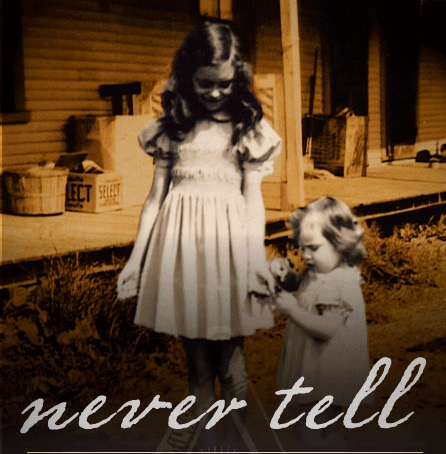
Prologue to Never Tell ( a memoir)

I'm the big sister here, but the story is about a younger me.

PROLOGUE

Until my father died, I had almost no memory of my childhood.  My remote past was like a country landscape after a heavy snowfall.  There were a few barely recognizable humps and bumps around which I embroidered fragmentary anecdotes, but no extensive narrative. 

I thought this was normal.

It’s true that from time to time my present life made no sense either.  There was, for example, a conversation with my mother when I was in my thirties.  I was with her in her and my father’s bedroom.  The jewellery box was open and I saw a tiepin lying on their dresser.  I picked it up and read aloud, “Knight of the Temple Mater”.

“It’s your father’s of course.  From his club.  Rod can get Blake into his club, but you can’t keep putting it off.”

Putting it off, I wondered, since when.

“Blake doesn’t join clubs,” I replied.  I knew that much about my husband.  He hated what he regarded as the herd mentality.

I put the pin down and passed on to the beads hanging out of the jewellery box, more or less oblivious to my mother’s urgent pleading that it was now or never and did I know what I stood to lose.

I had no idea and continued to have no idea until thirteen years after her death and six months after Rod’s.   I was fifty-one by then.

Suddenly the past unrolled from my subconscious in high definition and Dolby sound, scene after scene, complete with word-by-word dialogue.  And it wasn’t just me.  My two sisters and my nieces were also in the grip of inner horror movies.  My son had less specific flashbacks although no less disquieting.  Only my daughter in Los Angeles and my brother in Brussels seemed immune.

At the time, none of us was in therapy and we seldom saw each other, so no one was planting ideas in our heads, but when desperation drove us to consult each other, we discovered that we had separately remembered the same scenes.  Ultimately four of us had our heads read.  That is we were tested at great expense by a clinical psychologist and pronounced sane.  Eight years later six of us received compensation from the Ontario Board of Criminal Injuries.

The Temple Mater – the Mother Temple – apparently, was incapable of continuing the mind control that its knight had so effectively wielded while he lived.

I have set down what I remembered of my life until I was eighteen.  My amnesia did not end there, for there was much about my adult life that had been lost to me as well.  Indeed, it became apparent that my alter ego, Delano, conducted a whole other secret life in the middle of the night, in which she served the old mother temple as assiduously as Rod ever had if more benignly.  But that is a story for another time.

Epilogue

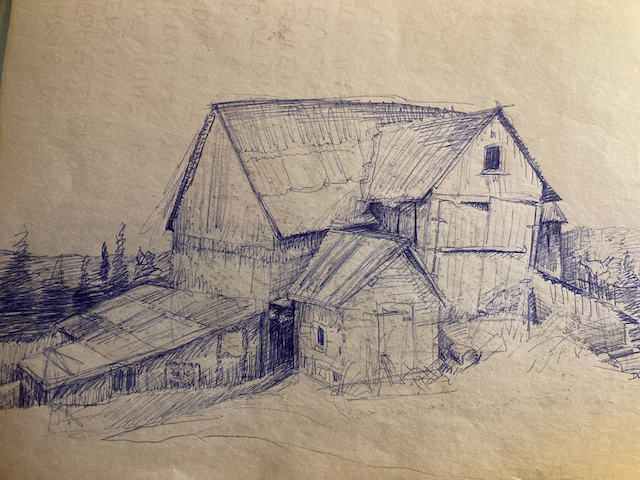
I am talking to the hens in bright sunshine in the barnyard, barely taller than they are in my three-year-old body.  They are big and white and full of chatter as they step around me, sometimes raising their voices as if they were asking me a question.   I call them by the names I have given them inquiring about their health and whether they have laid an egg today and they answer me when I speak to them.  The little brown banty hens are too busy hunting for corn I have scattered to speak.  The rooster is otherwise occupied up on the roof of the henhouse.

Then I hear my name and looking up, I see my daddy at the barn door, beckoning me.

“He’s here, Joy.  He’s here.  Come quick.”

I drop the corn and rush to the barn.  My father takes my hand and leans down to whisper, “Be very quiet and move slowly.”

He walks with me slowly and softly down the aisle behind the empty cow stalls.  I crane my neck to see.  We stop when we can see the dish on the floor beside the cow door.  It is put there, filled fresh after every milking, for the cats. 

There, flicking its long tongue into the milk is a little green garter snake.

I Trust You to Kill Me
Set in 2120 In Colombia, this tale of survival as the climate worsens, this story of a functioning
family will warm your heart in the holiday season. Available in hard cover, paperback and e-book from Kindle.

To win a free e-book of Never Tell or I Trust You to Kill Me, please go to joyce@joycehowe.com and leave your email address

Never Tell
a memoir of a cult daughter shows how resilient children can be.
e-book available. paperback and hard cover coming soon

Watching the Breath: listening to the light

Day 93: Yes, I know there are other people still locked down. Steven Colbert was last week. Possibly, my region can be opened up this week, but the last I heard cases of Covid-19 were still going up, especially in my suburb. Although, honestly, it won’t make much difference to me, given my advanced age and the nearly 20% chance that it will be fatal if I catch it.

For the first three weeks, I didn’t leave my apartment, but then grocery delivery stopped working. You could order a large number of things and sit up until 12 a.m. to get a delivery slot, four nights in a row and never get one. Conclusion – I had had too few children, the two I had were wanderers and I would have to scuttle out before daylight and buy my own.

So for three months, I have been staring out my high windows at the sky, my feet touching earth once a week to hunt and gather. The good news is it’s now daylight at 6:50 a.m.

I know everyone has had different stresses and pressures. I’m grateful I wasn’t shut up with the man I married nor our children who needed the challenge of strenuous exercise to keep from killing each other. We were both teachers, and good at it, except with our own offspring, who tended to run screaming from the room when their father tried to teach them algebra.

So there’s that to be grateful for.

I also know there are many, many single people who have got to the end of their rope, like me, around 9 p.m. when they haven’t heard another voice all day. Except of course on television. I am proud of the fact that so far I have had only one real panic attack caused by a sudden vision of burning cities and gunfire. We had already had some of that, but this was worse and involved Trump’s rally in Tulsa. I called Georgia my sister, who was puzzled because I couldn’t speak. Finally and with no sociological reference, I managed, “I can’t breathe.” It was a doozy combining all the symptoms of suffocation, heart attack, food poisoning and seizure-like spasms.

Georgia said in a kindly, scolding voice, “You know we all signed up for this. Every last one of us. We made an agreement to take on these roles – victim or killer or Covid patient. We came to do these things, to learn a certain lesson. Anyway, it’s all already happened.”

Now you may not agree with Georgia’s view of destiny, which we undertake pre-incarnation. I’m not altogether sure that I do. At the time,  it seemed a wise idea, although I nearly drew the line at it had “already happened”.

Half an hour later I had calmed down.

Next day I checked in with my daughter in California and she seconded everything Georgia had said, despite the fact that the two of them have barely spoken for forty years. I still want to nail them down about the simultaneity of time. Certain times I absolutely do not want to ever encounter again.

Such as this one.

Thank goodness for household chores that ground me, thank you for Face Time and video calling and even telephones, thank you for television – for  news channels and Netflix and Acorn, thank you for e-books and library loans by internet, thank you for socially distanced chats in Georgia’s backyard and drive-by birthday parties and thank you for the strange experience of being a monk in a mountain cave.

I had read a lot about these chaps in my study of Buddhism and Taoism. I knew that they depended on routine. That seemed an odd way to organize nothing, but I leapt to the task. One of my first daily tasks is to put my hair in order. It was last cut in late January. I wear it short, very short, usually. Now it is half way down my long neck and curling up in an awkward reverse pageboy. This morning I found myself saying, “Fuzzy-wuzzy was a bear..”

Both Georgia and my daughter are fond of reminding me to breathe. I, of course, always respond in my robot voice, “What is breathe?” “Watch your breath,” my daughter says. “And listen”.

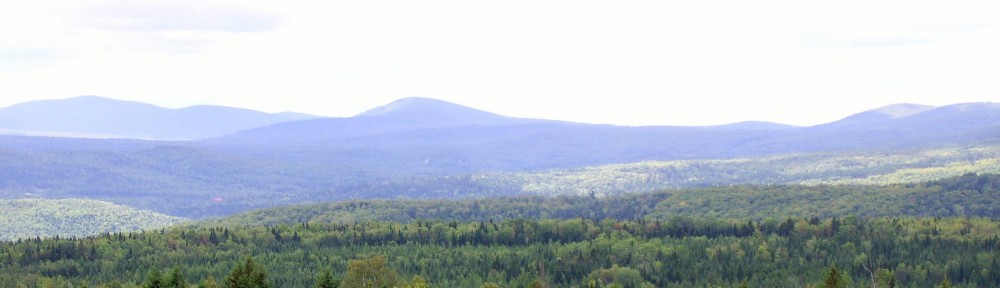
I can see about 50 miles of horizon out my floor-to-ceiling windows. The view’s horizon is the shore of Lake Ontario. The photo above does show a line of darker blue that is the water. In the east, I can see the C.N. Tower in downtown Toronto and in the west, I can see the height of the Niagara Escarpment, the only height in this flat land. I particularly love Rattlesnake Point there and longed to go there for the long weeks of shut-in.

I used to live in a ground floor apartment in a triplex. There were bushes and flowers, trees and birds at my level. Now my view is of doll house roofs and tree tops. And sky. I have taken to noticing the change in light throughout the day. At the moment the ground is all green kodachrome while the sky is light blue fading to white over the lake. I have watched a line-squall suddenly tear through with floods of rain and tree-bending winds. I have watched its darkness leave just as suddenly to lash the city. I have remembered the names of clouds from my sailing days and the weather they presaged.

I have sat in absolute stillness listening to the quiet.

At dawn this morning, I dreamed of a man who loved me when I was young, a tweedy grad student who smoked a pipe and wrote me love poetry. I liked him well enough, and spent time with my roommate in the house he lived in with other grad students. It was good to get way from residence food and rules. We laughed and pretended to be intellectuals. After I left university, he called me to invite me to a cousin’s wedding Friday night two days hence. He had tracked me down at Blake’s home. I said I was sorry I couldn’t go. He said, “I suppose you have something important on.” He could be snarky. “Well, yes,” I said reluctantly. “I’m getting married.” I may have named my son after him, although I spelled it differently and reasoned it was my grandmother’s maiden name. He died young, in his forties, of a brain tumour. I didn’t learn that until years later, by which time I was divorced.

“I thought you knew,” my ex-roommate said when she told me. “We thought you were the woman in the veil who came late to the funeral and sat in the back row.”

Last night, he turned up in my dream. We were both still young. He was working in a hospital in Toulon, he said. That was odd, considering he had studied physics.Then he enfolded me in an enormous hug. His body was more substantial than it had ever been and he held me tightly for a long time. So thank you, Brian, after all these months I needed that human touch.


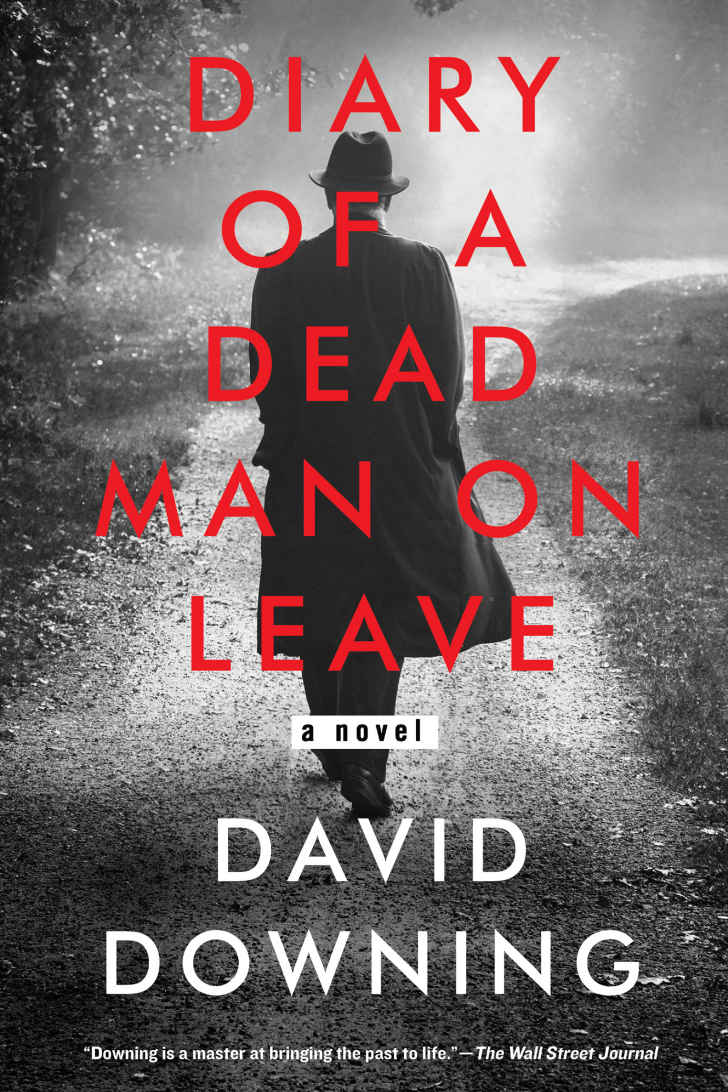
Waiting for the Bullet: Diary of a Dead Man on Leave

David Downing takes the title of his latest spy novel, Diary of a Dead Man on Leave from a Comintern expression roughly equivalent to the American saying “dead man walking”, which describes a prisoner condemned to death. Spies for the Soviet Union expected to be eliminated eventually, often by their own side.

Josef, the narrator of the diary is a German national, returned from South America to Hamm, Germany to foment revolution there. He has seen the inside of prison in his previous assignment, but in Hitler’s Germany in 1938, prison is the least of his worries. Any Germans with communist ideas have learned to keep their head down or even to espouse the ideals of the fascist German Social Democracy party, which Hitler heads.

It seemed appropriate that my library hold on this ebook should come through in the first week of March 2020, given the news.

In this winter of my 84th year I have been battling chronic pain in the first place and the side effects of the medication that alleviated it in the second. Briefly, the meds worked brilliantly, except they made me seasick. I staggered about, trying not to throw up, but reluctant to quit them because of their good effect.

At the same time, news of the novel corona virus came at me from every direction. I live in Toronto, where SARs made itself at home in 2002-3 and I knew people affected. The good news being touted was that Covid-19 was not as deadly as SARs. The other good news was that it could be mild, didn’t seem to affect children and most of the people who died were elderly.

Just a minute – that’s me.

The average age of those who have died at this date is 80. Those over 80 have over a 20.5% chance of dying from it, according to WHO’s February figures. I tried to put that in perspective. Twenty of one hundred 80-year-olds who caught it died. The other one presumably became a zombie. No, no, stupid, you have to think in terms of 200. Forty one of them died. Okay. Got it.

Well, should I even bother hoarding toilet paper. The average age of those hospitalized was 60. I’d be carted out of here snappish at that rate. No problem. My apartment door is opposite the elevators. No troublesome narrow staircase.

So that’s settled. Someone else can raid my pantry in their desperation to survive the quarantine.

Like Josef, all I can do is wait for the bullet, comforted by the fact that if it’s my bullet, someone else will be spared.

I had a brief flirtation with Communist ideology in my youth, mostly to annoy Joe McCarthy, the U.S. senator who was persecuting liberal Americans. Never mind that I was Canadian. I cheered when Castro ‘liberated’ Cuba, the day that I was married. Got over that pretty fast, certainly by the fall of 1962 when the Soviets seemed bent on blowing up my babies.

Spy-wise, Josef’s return to Germany, is not a success.The first sign is that he decides to keep a diary: spies should never commit anything to paper. He has found a room in a boarding house run by a widow, Anna, who has a 12-year-old son, Walter. Walter is trying to navigate his way through school assignments, which require him to support Nazi ideas and policies and he turns to Josef for help. It is this unexpected human need that prompts Josef to start his journal.

At that time -the summer and fall of 1938 – Hitler is laying the groundwork for the annexation of Sudetenland, the “Germanic” part of Czechoslovakia. It looks as if he will gobble up the whole country. Probably he delays because, despite the armament he has built, his railway infrastructure is not yet up to the job. Josef knows this because he works on scheduling trains. Czechoslovakia will be annexed entirely in March 1939, but it will take the invasion of Poland for the Allies to declare war. The main narrative of the diary ends before that.

There are four boarders in Anna’s house, avid followers of the news. One of them Rushay delightedly recites newspaper accounts of  the latest Nazi  ‘achievements’ at the breakfast table. He is not the only boarder who is in love with Anna, but he is the most persistent.

Reading these scenes is like watching CNN today, leadership indulging in half-truths, self aggrandizement, unapologetic disregard for facts and downright lies.

David Downing lives in England with his American wife. And yes, they do get CNN across the pond. My Belgian brother gets a head start on us because he gets up six hours earlier and sometimes wakes me up with outrages I don’t yet know about. I have explained to him that my medication is supposed to be calming my nerves, which are otherwise set on maximum alert, that I don’t watch the news anymore.

Addicts lie, but you knew that.

Diary of a Dead Man on Leave alludes to the ever worsening persecution of the Jews and concentration camps, but it dramatizes the persecution of Walter’s African-German school friend, Marco, who gets called a Rhineland bastard. He was conceived there at the end of WW I and his father, who loved his mother, was shipped home, not knowing about the conception.

Josef lives in expectation of recall to Moscow and the bullet that will probably await him. He is not sure he will answer the summons when it comes and meanwhile, Anna’s family needs him more and more.

He has always put his ideals before individual needs. The good of the whole and all that. How much of conscience should be sacrificed for pragmatic personal reasons?

Like many others, I would be better off today if I had been more pragmatic and morally flexible, but I chose to defy that logic. The same defiance that brought me here leads me to say the Covid-19 bullet is not for me.

If I am wrong, it doesn’t matter.

Ah Josef, this life is a school after all.


Motherless six-year-old looks at the World in 2020

The 13th century poet, Rumi asked, “Who looks out with my eyes?” Lately, it has been my 6-year-old self.

When I was 6, a bad thing happened and I nearly died. I was hurt bad physically, but much more deeply in my heart and my soul. For a while, I was drifting away until the loving care of my Aunt Mae pulled me back and healed me up with nothing more than a few herbs, a tin bath tub and raspberry pie.

By the time, I returned home, I had no memory of what had happened. Mae had taught me to put the pain away in the inner-most doll of a series of Russian dolls. And under her care, I learned to read the whole of the first Dick and Jane book and add numbers all the way to 10. I had missed almost the entire month of September, but I was way ahead of the other kids. On the December report card, I came first.

I didn’t work my way down to that innermost Russian doll for 60 years. Only then did I learn her story.

For over twenty years now I have had to return to that child and try to address her despair and depression. It hasn’t worked very well. There are dolls around my house and teddy bears, a child’s rocking chair and certainly, I have catered to her love of reading. One of my best friends is my younger sister, whose newborn croup figured significantly in the ‘bad thing’. But the 6-year-old, let’s call her Jo as her maternal grandfather did, has been subject to what is best explained by the old spiritual, “Sometimes I feel like a motherless child/ a long way from home, dear Lord/ a long way from home”. (See my memoir Never Tell  at joycehowe.com

Naturally, she has sought to attach herself to substitute mothers, and to feel equally abandoned when these people didn’t do the job. One of these has recently pointed out that I have within me the power to deal with Jo and her insatiable needs myself. It was an offer I couldn’t refuse – not that I didn’t want to.

So I began the tearful task of confronting Jo’s feelings head-on. (I have described this process.)    https://115journals.com/?s=the+cure+for+pain

I thought twice a day meditations on the trauma would fix things pretty quick. On the 4th day, I felt sufficiently together to go to the grocery store. Rude awakening. Jo was so depressed I could barely concentrate. I weighed a bag of mushrooms at the self-check-out and put in the code for whole wheat dinner rolls. I tried to walk out without paying for 2 gallon jugs of spring water. The friendly helper finally decided I was just dotty not larcenous. I unloaded my groceries into the car’s trunk and sat in the driver’s seat getting a grip.

At home, I decided that little Jo needed more conversation, so I started to talk to her – in my head, I hasten to say.

Now Jo belongs to an earlier time, September 1942 to be precise – when things weren’t going well in the war. It was not at all clear that Hitler wouldn’t win and send his bad men knocking on our door even in the province of Quebec in Canada. Children knew as much about the war as the CBC was permitted to tell us while we ate our dinner at noon and we understood how dire things were because we eavesdropped on adults in the time- honoured childhood way. That’s not to mention the school propaganda campaign that had us dragging in carts of glass bottles, tin cans, newspaper and stinky leftover fat to win the war.

Moreover, we were not only poor, we were rationed. Butter, eggs, lard, sugar and even molasses, the stalwart nutrients of any poor family were hard to come by.

As a result of this background Jo burst onto the scene full of -not grief – but wonder and curiosity. I spent a whole evening explaining – in my head. Her daddy had told her about the fact that after the war, radio would have pictures. She hadn’t believed him, but seeing it was not surprising. She had seen a refrigerator in the house across the street, but could I make ice cream like our neighbour. It was an exciting evening. Jo just would not calm down. In between these lessons, I reminded her that I was a big person now and I was her mommy. I didn’t choose to watch anything scary on television, but I did have to sing three verses of Amazing Grace. She was disappointed that my voice had got old, but it improved on the third rendition.

Today, she is quieter, but I know she isn’t going to let me bury her back inside that Russian doll and I can feel her looking out of my eyes.

Who Says Words with My Mouth

Who looks out with my eyes? What is
the soul? I cannot stop asking.

If I could taste one sip of an answer,
I could break out of this prison for drunks.

I didn’t come here of my own accord,
and I can’t leave that way.

Whoever brought me here will have to take me home.

Rumi trans. Coleman Barks. The Book of Love p. 57


The Cure for PTSD Terror: you’re soaking in it

This post may trigger PTSD sufferers.

In our search for mental health care, we once sat in a Kern County, California, mental health clinic listening to a psychologist exclaim that our patient could not have PTSD because she had never served in the army.

In fact she had been conscripted at birth as all the rest of the family had, and our sergeant major was a bat-shit crazy man, known initially as daddy and later as grandfather. His sadist attacks were so traumatizing that we dared not reveal them even had we been able to remember. So it was that the patient had been repeatedly taken back to that house of torture by her mother, the author of this blog.

(To be fair, mother could not recall that her own life had almost ended when the b-s crazy man raped her as a child. And she has spent the last 30 years since b-s crazy man died and she did remember, in profound guilt and grief. But enough of personal angst.)

Suffice to say Dad could have given the North Koreans or even the CIA lessons in torture or a 2.0 course in mind control. He himself had rather an unpleasant death, which I describe at the end of my e-memoir, Never Tell, recovered memories of a daughter of the Temple Mater. joycehowe.com

That’s the back story as to why the patient developed suicidal impulses and then intractable insomnia. For most of her life, she was able to repress the trauma, going so far as to contend that the rest of us experienced it, but she didn’t. This was lucky, because by then we had put in years of dealing with it, worn out therapists and come to realize that terrifying as it is, the past is dead and gone.

As, by the way, were quite a few people outside the family, who encountered our very own psychopath. And, no, a million dollar police investigation, involving three police forces couldn’t prove that.

How to deal with such insomnia? Even the strongest drugs couldn’t put her to sleep for long. In one 5 day hospital stay, five other drugs were tried. The fifth one precipitated a heart attack. So we cast about for other methods.

Finally last April, I concluded she couldn’t sleep because she was afraid to dream.

At one point, she fled to Toronto and her loving mother’s arms. I would sit at her bedside until she fell asleep, sometimes for 90 minutes. It is a moving experience to sit in the dark beside someone you love as she does her best to sleep. Going to sleep for her isn’t easy, but it is easier than staying asleep. I wasn’t up to being there at 4 a.m. when she usually comes wide awake. Or 3 am or 2 am. Sometimes she doesn’t sleep at all, just lies in a semi-conscious state, which surprisingly can generate bad dreams.

While I was studying the NICABM (National Institute for the Clinical Application of Behavioral Medicine) Treating Trauma Master Series , I came across the idea that therapists don’t do their clients any favours by trying to make them feel safe. That is a technique that Grandad and hosts of his fellow abusers use. Trying to make the trauma survivor relax is an immediate trigger – they want to run a mile.

Our patient came at the idea from a totally different angle. She watched a terrifying movie, went to bed late and slept like a baby.

We reached the conclusion that, instead of avoiding fear, she (we in fact) had to soak in it – like that Palmolive dish detergent commercial years ago where the woman is in the nail salon -“You’re soaking in it”. https://www.youtube.com/watch?v=_bEkq7JCbik

We are in the research phase. Our patient has spent the last several months reading about psychopathic serial killers and watching shows like The Mindhunters. The Mindhunters interview serial murders in prison in order to understand them. Patient reports that the single scariest scene so far was one in which the woman on the mindhunter team was at home in her apartment at night wearing only a long  man’s shirts and pouring herself a glass of wine at the kitchen counter. She was at the left of the shot. The right side showed the rest of the kitchen and hall, an empty floor. An absolutely terrifying space. Into which something could suddenly come. I myself found the next scene where she goes down to the building’s laundry – still dressed only in the shirt – and while the washer starts, hears a cat meowing outside the open basement window and decides to feed it her leftover tuna. I will not divulge what eventually comes through that window.

Who says recovering from PTSD can’t be fun?

I’ve always hated Hallowe’en and horror shows, but now I begin to see their value. We can’t evade our terror. It may be buried, but it’s there, so we might as well face it, embrace it as far as possible. We don’t need to defy it. We can acknowledge it and even say this is what made me who I am. We can say, ‘I have been to the edge of death more than once, but I can still permit myself to sleep’. At least six hours most nights.

And of course, we can refuse to put ourselves in real life situations with people that scare us.

See also https://115journals.com/2013/10/18/the-cure-for-pain/


Dark: a personal response to the Netflix series

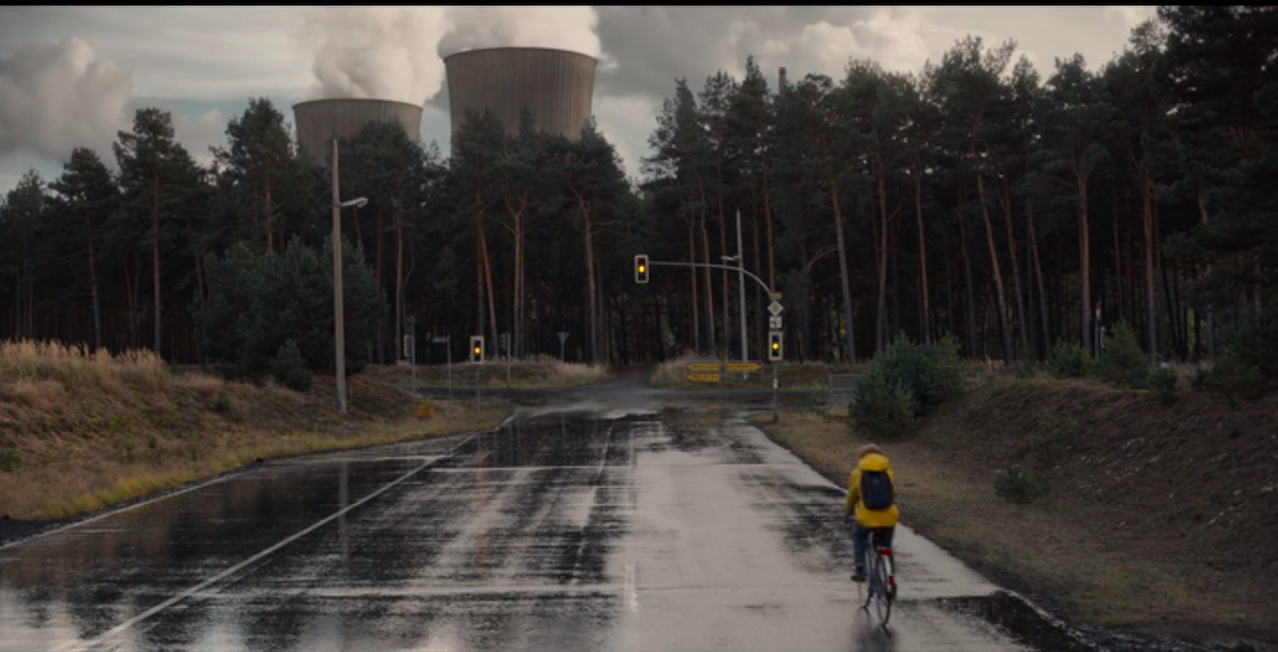
screenshot from Dark

It has taken great self-control not to watch both seasons and all 18 episodes of Dark for a third time. First, I watched the dubbed version. (Avoid that.) Then I watched the original German version with English subtitles. Altogether a much better experience. It took me over two weeks and given my advancing years, I held out against wasting time by perennially repeating this experience.

“Time is always with us. Time sees everything”

(Yes, you can. Go to options and opt for the original German as the language and English subtitles. Don’t have options, you’ll have something like it, the same place where you can opt for closed captions. Never did that? You have a whole new world of experience to discover. You will even be able to understand The Wire afterwards.)

Initially, I couldn’t understand Dark’s complexity. (Face it, kid, ultimately you couldn’t understand it either.) It starts with the disappearance of a child in 2019. Well, no, it starts with the suicide of a 43-year-old man in 2019.

Four different families find themselves in tumult: the Kahnwalds, the Nielsons, the Dopplers and the Tiedemans. But wait, another child disappeared 33 years before in 1986. From the same family – the Nielsons. Policeman Egon was so ineffectual at solving the mystery that Ulrich Nielson, brother of the disappeared boy, has become a policeman in order to do better. Now his son is missing.

The town of Windem is set in the midst of a great evergreen forest, but rising from its centre, far from the red tile roofs of the tidy houses, is one of Germany’s first nuclear generators. Snugged up to the guarded perimeter of the plant is a cave, which all the children are warned against, so, of course, it is a child magnet.

Windem, we are told repeatedly is a town of secrets. Initially, these secrets seem to be adulterous, but then again they could be ecological or incestuous.

Why is there a door in the cave that is welded shut? What does Sic mundi creatus est mean? And, whoops, why has another and another person vanished? Who is the man dressed like a priest, lurking near the cave and chatting with children? Why does the body of a boy dressed in 1980’s clothes and dead only 16 hours suddenly appear? What is this book that keeps surfacing – Eine Reise durch die Zeit – A Journey Through Time? Could there be such a thing as time travel? Could the question be not ‘Where is Mikkel?’ but ‘When is Mikel’?

Is Charlotte Doppler, Winden’s police chief, the key to these mysteries?

Then we find ourselves back in 1986, same town, same school, same nuclear plant, same people, just younger.

So you have home work. Get well into this series because I need to keep writing about it and there will be spoilers.


Grieving for Blake: a ghostly affair

Persistent readers know that I have been documenting the demise of my ex-husband Blake here at 115journals. I’ve told of his remarkable 8-year survival with stage 4 prostate cancer, and lately his decline as he began to lose his grip on his perch. He passed away last Monday.

We have been divorced for forty years. We were married for only nineteen. We had two children, who are themselves middle-aged now. To protect their interests, I agreed to act as his executor. I knew it was a bad idea, but I wasn’t aware that I would be chief mourner and ghost-whisperer as well.

When it comes to Kubler-Ross’s  seven stages of grief, I’m a rapid cycler.

Saturday, I set up a little altar in the loving spirit of letting him go, or to be precise, getting him to go. He had turned up in Georgia’s bedroom at 5:20 a.m. in his hospital gown, trailing his blue hospital blanket, confused but vividly Blake. A few days later, Georgia’s daughter jumped off the floor and screamed as something brushed past her in a doorway. Admonitions to go to the light, to go find Leyla, his second wife, fell on deaf protoplasm, as did a final plea to go find his pet Sheba Inu.

In my place, his presence was more diffuse and business-like. He has left me to file several years of income tax, as well as deal with Alice, his resident gold-digger. On Saturday, that seemed charmingly chivalrous, so I set up an auxiliary shrine on the dining room table. As a Taoist, I keep a family shrine with pictures of my people, past and present, Kwan Yin, the Mother, Buddha and candles. I put a picture of 23-year-old Blake in his graduation gown, his obit, a book of Rumi poetry, a dozen tea-coloured roses, incense, Kwan Yin, Buddha and lit bees wax candles. It was the Saturday after his passing, the day we would have had his funeral if he hadn’t opted out of such ritual. I read him Tennyson:

Sunset and evening star
and one clear call for me
May there be no moaning of the bar
When I put out to sea.

Then I got on with my own taxes.

In the evening, I sat down to finish watching The Girl on the Train on Netflix. I had read the book some time ago, and, although I had forgotten it mostly, I knew I hated all three neurotic women and especially the drunken protagonist, who just wouldn’t let up on her ex’s new wife and may have killed her neighbour. About an hour later, my mood had swung from loving a farewell to dear Blake, to get back here: I’ll kill you myself. For my lovely Blake was every bit as good at gas-lighting as Tom, the husband in the story. We – ex-wife, daughter and step-daughter – had compared notes at dinner one February night when the family had travelled from near and far to say goodbye to papa. And he wasn’t beyond blackening each of our names to the others. Then, of course, there was the question of Alice, his latest triumph, 45-years younger, who wouldn’t let us in to see him without a hissy fit, and who had been helping him work his way through the home equity line of credit at a good fast clip.

I repurposed the altar in the name of love and told Blake to get lost.

So here I am, middle of the night, suddenly awake and sobbing with grief. I knew him longer than anyone still extant. I may have loved him best. I certainly hated him best.

He’s gone. I can’t call him up to lament about one ‘child’ or the other. I can’t depend on his caring as much as me. And no, I can’t tell Blake – whatever – anymore.

He believed death was the absolute end. There was nothing after.

In that case, settle down, Boy.