OLVIDALA (Forget Her)

Journals before 2116 when they numbered 139 or so.

Olividala! Forget her. That girl we hardly knew, the one who kept the daily writings, so she could remember the past and find herself. Let’s send the past to Iron Mountain and look toward the future.

This blog is called 115journals  because that is the number of journals I had when I started it. My idea was that keeping a journal and reading could help us change. Last week I had 150. Most of them have since gone to Iron Mountain.

It is charming to think of the mostly black, hard-covered volumes striking out with backpacks and water bottles into China’s mountain ranges in search a cave-dwelling guru, a Master Journal who would continue their enlightenment.

In fact, Iron Mountain allegedly had a half-price sale, and Mohammad A. brought a trolley and wheeled them down in the elevator,13 stories, and out to his SUV.

They were a weighty lot. Each non-acid sketch book cost me $10 or more . Dating from 1978, the first few were poetry. Most of my days for 42 years began with half an hour journal writing. If nothing else, they were a record of the weather in the world at large and in my mind. They were also clear evidence that I didn’t know what I thought until I wrote it down.

They began, of course, in agony, but this is a happy story.

The trolley trip cost $25 and the cost per pound (what? not per kilo) was $228. Reportedly, I saved $24.96, which is, by no means, 50%. I didn’t question that, anymore than I would have questioned the vet’s price for’ putting down’ a beloved pet.

I have had a very hard week – losing a bag of wine and expensive pharmaceuticals, losing an extremely important e-mail. After embroiling Uber and the e-mail sender in futile searches, I found them both under my nose.

Youngsters would make nothing of such lapses, but really old people line up and bash on the doors of locked wards. ‘Save me. Save me.’

It was a week that could make anyone cry, but I wept non-stop until my new, cataract-free lens swelled up again, and my drooping eyelids dampered my vision. I wasn’t crying about the 42 years of my life, which I now had no way of recalling. No. (I kept saying to me.)

Getting the  150 books out of their bulging bookcase in my bedroom was like selling my low-mileage 2018 Corolla. (Did you know it’s a good year to sell a car.) The Corolla got me out of debt and paid an excellent editor to edit my new novel I Trust You to Kill Me, set in Colombia in 2120.

There will be 2 more books in the series, which will end in about 2180. But how will it end? Optimistically or the other?

I actually didn’t know until I had a house full of visitors. A  bizarre twist and a whole new perspective presented itself. What if there was a third way to end. I hope I memorized the detail.

It is not an S&M book.

Alena, the protagonist is an intelligence agent, who has been taught to say, “I Trust You to Kill Me” to a fellow agent if she is badly wounded, in order to save the mission. It also comes in handy in a dying civilization when you can’t endure further catastrophe.

I don’t have a real file-cabinet anymore. Life has down-sized me to a one-bedroom apartment. I put my research and plan files into boxes I buy in dollar stores. They are now stored on the otherwise empty bookcase in my bedroom.

Don’t cry for me, little black books,
I’ve gone on and
You know that I’ll always love you
Through the all lean years and the mean years
Until we’re make the NY
Times.

joycehowe.com

Thank you for following. Leave your email address at joyce@joycehowe.com
for a chance to win a FREE e-copy of I Trust You to Kill Me in a monthly draw

Why Colombia?

Suppose you were told you couldn’t go out of your house, in my case because I was over 70?

Oh, you were told that too?

I had been stocking up my pantry ever since the plague hit Italy. China, that didn’t phase me. I didn’t actually believe in China even though people were literally locked in. Doors were chained shut. But I didn’t worry until they started piling bodies in cathedrals and ice rinks in Italy and Spain.

Then our provincial (state) premier (governor) announced that I couldn’t go out and neither could my sister, who had promised to look after me when I – inevitably – needed looking after. Trouble was she was over 70 as well. So I went to Colombia.

Now don’t make trivial protests about airlines and no-cross-em borders.

I had been to Colombia in the early 70s with Gabriel. I didn’t know him well and I was not sure it was a wise idea, but like him, I fell in love with the Magdalena River. We traveled up and down the river several times, in A Hundred Years of Solitude and in Love in a Time of Cholera.

I know that was a cheap trick, but how else could I convey the idea of that lovely paradise lying across the equator: a jungle, grasslands, hundreds of rivers draining from the second highest mountains in the world into the biggest river on earth, a place of snow and ice and fire, a country with more unique plant life than any other, a place of gold and emeralds, of coca, cocaine, poppy and heroin, of incalculable cruelty and death whose people still sang and danced.

A country where a 13-year-old girl could keep three young siblings, one a babe in arms, alive in the jungle for six weeks.

In March 2020, I read an article about Wade Davis, a Canadian cultural anthropologist and ethnobotanist, who had written Magdalena: River of Dreams. That was very early in the Covid Pandemic and it was hard to get delivery, except from Amazon. On that occasion, I had nothing more to read and would have had a full-on panic if my local library had not had the capacity of loaning out e-books. I summoned this book while sitting in bed and was a quarter of the way through it before I fell asleep.

When I finished it. I started it again.

At the end of second reading, grocery stores started opening at 7 a.m. for the elderly. By then, I was sizing up the kitchen chair legs which my long ago Newfie dog had chewed down to their marrow. My stash of frozen bread had given way to boxed crackers and I was eating way too much rice.

I had also discovered The Thief of Memory by Michael Jacobs, another book about the Magdalena River. Once again, the book was readily available over the ether from the library.

We were all sure that by summer the Covid epidemic would be over. I had made face masks from large hankies and the elasticized tops of socks, and I washed my hands like a fiend. Hospitals were more or less holding their own in my area and both Davis and Jacobs had written several books about Colombia. After all, wasn’t it nice not to have to keep appointments. I didn’t dwell on the idea of cavities or cataracts, or fibrillation or the recurrence of diseases that tend to recur. I was so happy reading that I thought that it might be fun to write my own book.

Pretty much everybody was talking about whether pandemics and climate change meant the end of the world. Why not write about that and set the story in Colombia?

Why Colombia? Colombia is lovely and has magic realism.

SOON BY ETHER OR PAPER – I Trust You to Kill Me by J.A. Howe

How to Write a Novel During a Pandemic

Previously on 115journals.com, I wrote about dreaming the beginning of my soon-to-be-published novel, I Trust You to Kill Me, set in Colombia in 2120. I said that I dreamed the first chapter. Every night I went on dreaming about the place and the people I had imagined. I had cancelled my in cleaner because she was also working in the front lines in Canadian Tire. As I went about my house keeping, the next scene would write itself in my head and I would word process it in the afternoon.

I was so happy. I couldn’t visit anyone. I masked up and scuttled into the grocery store at 7 a.m, senior hours, but I was happy because my apartment thronged with the ever-growing number of characters in the book. They’d get into life-threatening predicaments and then figure their way out. They were contending with the end of the world, or, at least, the end of civilization.

I had given up listening to Canada’s Prime Minister, who had to do his updates on the steps of the house he was living in because he and his wife got Covid. I switched to the Cuomo brothers, Chris in his basement for the same reason and Andrew, somewhere in Albany, looking official, quoting Churchill, “If you’re going through hell, keep on going.” I had no idea these steady, supportive men were actually deeply flawed.

I had cajoled six people to be my beta readers and I shared how happy I was with the book. When it was finished and edited and edited, I had it copied. Each copy cost about $50 and Canada Post earned about half that getting it to far-flung destinations. I suppose monks copying it in calligraphy would have cost more.

Now I was free to start the second book in the series.

But. Hang on. Word came back that it was unreadable. People would add that, no doubt, I had a good book in my head, but I had left most of it out. My friends were at the breaking point. One read me the first 13 pages aloud. Each sentence provided me with half a page or a page of notes. The one writer in the group had put aside her own work to read it. She was the most distraught of all. She sent me a short response, but managed to lose her copious notes. Another one didn’t lose hers, but never intended me to see them.

The trouble was I lost the half the novel. It just vanished from my computer and neither Microsoft nor Apple nor the Geek Squad could find it. That led me to pick up the heavily annotated one from the annotater. Well, she was out, but the door was unlocked. It was mine after all.

Holy Crow! Those comments. They were things I used to think while marking grade nine short stories, but I could never, never give to tenderhearted students.

I sat down at my desk, which looked out high over the neighborhood, all the way to Lake Ontario. It was August. Okay, I said to myselfI’m , I get to do it all over again.

Pandemic psychosis manifests in a multitude of ways. For example, I was pretty sure there shouldn’t be a hard lump just there, but I would get to it later. And I did, several weeks later. Some surgeries go ahead even in the middle of pandemics.

When I glanced up from my computer, I was vaguely aware of the trees turning yellow and orange and the pile of pages growing taller, even taller than before.

It looked as if we could have a smallish Christmas where we actually ate with a few other people. I copied the pages myself this time. The writer gamely offered to read the new version, but I felt I had done her enough harm. The others, great readers and frank critics all got new copies, well, some of them did.

But my chief, reliable critic, received the new, longer, much longer, book and unceremoniously backed out. “But you promised!” Now I’m I actually felt a little down,

I was fooling around on Twitter one day and found a very old DM from a woman who offered to edit my book. It was 2 or 3 years old, but she was still at the job. I sent her a 10 page sample – chapter two – and she sent me back a very competent and encouraging response.

In January, I sent her the whole book. Here was a woman, who didn’t mind reading on line. She was busy though. Of course I got impatient, but her response when it came blew my mind.

Apparently, it was good.

Stay tuned for further adventures of I Trust You to Kill me, even the origin of that very old phrase from a Sufi Master.

A Hundred Days of Solitude: chpt 3

The View -day after day- from my tower. (Taken after the Snowbirds, flew over to cheer us up, peutetre)

A Hundred Years of Solitude by Gabriel Garcia Marquez tells the story of seven generations of the Buendia family, which founded the riverside town on Macondo in the jungle of Columbia. In the first generation the isolated town has no outside contact except for an annual visit from a Gypsy band. It is a place where the inexplicable can happen and ghosts are commonplace. Many misfortunes befall the Buedias, all of which it turns out have been predicted. It is a long book, perfect if you are still, like me, a coronavirus shut-in.

********

 HANK WILLIAM’S ADVICE

I asked Hank Williams, how lonely can it get?
Hank Williams hasn’t answered me yet,
But I hear him coughing all night long
A hundred floors above me in the Tower of Song. (Leonard Cohen)

My tower is actually named after a British city and it doesn’t have that many stories. I don’t write songs, but I could perhaps answer the question.

In the beginning, I actually feel lonely, abandoned, bereft. Sometimes I cry. Once or twice I howl. By Easter that has pretty well stopped. I am like the baby who figures out crying is useless.

Day 31: Easter arrives while it is still hard lock-down. Although I’m not a church-going Christian, I am still a cultural one. Easter is the most important church festival. It has always been a family time. My sister’s family is large with children of all ages. We usually drive north to Barrie where the long table is loaded with every vegetable available and roast ham. There is wine and laughter.

This year my sister, my niece and I are in our separate dwellings a few blocks apart. My niece has a sore throat. She is isolating to protect her mother. Normally, they treat each other as a family cohabiting. I order dessert from Sweet Things. The Door Dash delivery guy even comes up to the 14th floor. I drive to my sister’s, call her, she comes down in her N95 mask and I hand two desserts to her.  I come home and eat my key lime pie.

At a certain point, I feel so unseen that I am disappearing.

Day 2 – Day infinity: What to do? What to do?

The eastern sages that live in caves advise us that even the contemplative life must have a routine. I can do that, I think. I go to sleep at midnight, after reading in bed for an hour or more. I get up at 8. I pull myself together. I exercise as much as my body and a 950 Sq. ft. apartment permits. I eat breakfast while I read the news on my phone.

The rest of the day? What was I doing before? I was actually writing two books, a second memoir following Never Tell and a second mystery following Hour of the Hawk. The original two need to be marketed on line. https://www.joycehowe.com/books Many people are reading e-books with libraries closed. So go for it! Are you kidding? The world is ending, at least the world as we knew it. Why does it need another memoir of my abusive birth family? And now that woman has been pushed off a cliff in Kern County in my second mystery, I have no idea who did it? It took two people to get rid of her car, but what two people?

I’ve furloughed my cleaner. She also works in an essential retail store. So I have to do my own cleaning. It takes her 2 hours. It takes me 2 hours times 4 days. But I celebrate that I can do it at all and thank Cymbalta. I also decide my sister is right – an ironed pillow case is divine. The next thing I know I am ironing sheets and shirts and masks. Stop now!

I watch television. At first CNN is on all day. At lunch and dinner I watch Netflix, a documentary called Pandemic, which shows in six parts how ” tireless doctors and scientists” have been working for many years to learn how to make a vaccine for novo viruses. Each episode is episodic featuring several teams and one home-schooling anti-vaxxer and her many children. I take a vow to have the flu shot this year. I stopped getting shots because they make me sick, possibly because they are egg based. But this year, I’ll put up with that AND I will get a Covid shot as soon as I can. The scientists in the show spend a lot of time in full gear in bat caves. In general, it builds confidence, especially in Bill Gates’ money. I also watch Tiger King. God help me! Then I turn from Netflix to Acorn, which streams British, Australian and New Zealand shows. I love a good mystery. Whereas Netflix has taught me German, Finnish, Swedish and Russian, I learn Welsh English, even Welsh, Cornish, Irish and heavy, heavy Scots. I already knew how to decipher Australian and Kiwi.

I read. On the serious side, I read Susan Cain’s Quiet: The power of introverts. Probably I’m an introvert at heart. I needed to rest up after a day in the classroom before I could get dinner and relate to my family; however, I was able to avail myself of the ‘free trait’ and act out of character on the stage or in front of a class or even at dinner. Being introverted is an excellent trait to have when you have to stay home for months.

I frog march myself through John Bolton’s The Room Where it Happened, bending my brain around references to American foreign policy. I am testing a theory – is Donald Trump as incompetent as he seems. Then I read Mary Trump’s Too Much and Never Enough. Even without his suggestion that we ingest bleach to cure Covid, these two books confirm my opinion. I am terrified of coronavirus, and I am terrified of this man knowing the nuclear codes. As time goes on and the U.S. cases start to climb in Florida, Arizona, California again and Texas – oh my babies – the two anxieties come together.

I trade mystery titles with my California daughter and find them on my library’s website. I run through all of Mick Heron’s MI 5 books, which are satirical and funny and intriguing and sad. https://115journals.com/2020/04/19/slow-time-slow-horses-the-slough-house-spies/ I write a blog post about them. I read the SoHo mysteries, set in different countries: Thomas Perry, Dan Fesperson, Ken Bruen, Denise Mina, Mark Pryor, Colin Cotterill, Stuart Neville, and thus I travel to the British Isles, Germany, Russia, the U.S., Thailand, Laos. I read to rest during housework or cooking, but the last hour of the day is sacrosanct reading time and I end up lying my head down at midnight.

I don’t know Alice. What was the question?

As Alice lay dying, she seized Gertrude Stein’s hand and said, “Oh, Gertrude, what is the answer?” Gertrude replied, “I don’t know, Alice. What was the question?”

Then there is Leonard Cohen’s answer in The Tower of Song, “Dum de dum dum, de de dum dum.”

Alice wanted to know the meaning of life. Curiously, that becomes an urgent question as we contemplate death.  Part of what Aunt Mae taught my sister and me was that a person could have several possible exit dates. I have had a few close calls, which led me to read Robert Thurman and Sogyal Rinpoche and the Dalai Lama and Rumi. Now the shocking death tolls in our local long term care homes wake me up.

I had forgotten.

I know the way back – gratitude for the helpers, who are risking their lives and dying to help the sick, empathy for the dead and the dying and the ill – all isolated from their family’s support. I can leap on that train and ride it until I disappear into a universal cloud of love. In the morning, energy too low for that, I recite the Twenty Third Psalm by King David, for whom I named my son. Especially the last lines ground me:
Thou preparest a table before me in the presence of my enemies
Thou annointest my head with oil. My cup runneth over.
Surely goodness and mercy will follow me all the days of my life
And I will dwell in the house of the Lord forever.

A Hundred Days of Solitude still to come – those darned visions



Watching the Breath: listening to the light

Day 93: Yes, I know there are other people still locked down. Steven Colbert was last week. Possibly, my region can be opened up this week, but the last I heard cases of Covid-19 were still going up, especially in my suburb. Although, honestly, it won’t make much difference to me, given my advanced age and the nearly 20% chance that it will be fatal if I catch it.

For the first three weeks, I didn’t leave my apartment, but then grocery delivery stopped working. You could order a large number of things and sit up until 12 a.m. to get a delivery slot, four nights in a row and never get one. Conclusion – I had had too few children, the two I had were wanderers and I would have to scuttle out before daylight and buy my own.

So for three months, I have been staring out my high windows at the sky, my feet touching earth once a week to hunt and gather. The good news is it’s now daylight at 6:50 a.m.

I know everyone has had different stresses and pressures. I’m grateful I wasn’t shut up with the man I married nor our children who needed the challenge of strenuous exercise to keep from killing each other. We were both teachers, and good at it, except with our own offspring, who tended to run screaming from the room when their father tried to teach them algebra.

So there’s that to be grateful for.

I also know there are many, many single people who have got to the end of their rope, like me, around 9 p.m. when they haven’t heard another voice all day. Except of course on television. I am proud of the fact that so far I have had only one real panic attack caused by a sudden vision of burning cities and gunfire. We had already had some of that, but this was worse and involved Trump’s rally in Tulsa. I called Georgia my sister, who was puzzled because I couldn’t speak. Finally and with no sociological reference, I managed, “I can’t breathe.” It was a doozy combining all the symptoms of suffocation, heart attack, food poisoning and seizure-like spasms.

Georgia said in a kindly, scolding voice, “You know we all signed up for this. Every last one of us. We made an agreement to take on these roles – victim or killer or Covid patient. We came to do these things, to learn a certain lesson. Anyway, it’s all already happened.”

Now you may not agree with Georgia’s view of destiny, which we undertake pre-incarnation. I’m not altogether sure that I do. At the time,  it seemed a wise idea, although I nearly drew the line at it had “already happened”.

Half an hour later I had calmed down.

Next day I checked in with my daughter in California and she seconded everything Georgia had said, despite the fact that the two of them have barely spoken for forty years. I still want to nail them down about the simultaneity of time. Certain times I absolutely do not want to ever encounter again.

Such as this one.

Thank goodness for household chores that ground me, thank you for Face Time and video calling and even telephones, thank you for television – for  news channels and Netflix and Acorn, thank you for e-books and library loans by internet, thank you for socially distanced chats in Georgia’s backyard and drive-by birthday parties and thank you for the strange experience of being a monk in a mountain cave.

I had read a lot about these chaps in my study of Buddhism and Taoism. I knew that they depended on routine. That seemed an odd way to organize nothing, but I leapt to the task. One of my first daily tasks is to put my hair in order. It was last cut in late January. I wear it short, very short, usually. Now it is half way down my long neck and curling up in an awkward reverse pageboy. This morning I found myself saying, “Fuzzy-wuzzy was a bear..”

Both Georgia and my daughter are fond of reminding me to breathe. I, of course, always respond in my robot voice, “What is breathe?” “Watch your breath,” my daughter says. “And listen”.

I can see about 50 miles of horizon out my floor-to-ceiling windows. The view’s horizon is the shore of Lake Ontario. The photo above does show a line of darker blue that is the water. In the east, I can see the C.N. Tower in downtown Toronto and in the west, I can see the height of the Niagara Escarpment, the only height in this flat land. I particularly love Rattlesnake Point there and longed to go there for the long weeks of shut-in.

I used to live in a ground floor apartment in a triplex. There were bushes and flowers, trees and birds at my level. Now my view is of doll house roofs and tree tops. And sky. I have taken to noticing the change in light throughout the day. At the moment the ground is all green kodachrome while the sky is light blue fading to white over the lake. I have watched a line-squall suddenly tear through with floods of rain and tree-bending winds. I have watched its darkness leave just as suddenly to lash the city. I have remembered the names of clouds from my sailing days and the weather they presaged.

I have sat in absolute stillness listening to the quiet.

At dawn this morning, I dreamed of a man who loved me when I was young, a tweedy grad student who smoked a pipe and wrote me love poetry. I liked him well enough, and spent time with my roommate in the house he lived in with other grad students. It was good to get way from residence food and rules. We laughed and pretended to be intellectuals. After I left university, he called me to invite me to a cousin’s wedding Friday night two days hence. He had tracked me down at Blake’s home. I said I was sorry I couldn’t go. He said, “I suppose you have something important on.” He could be snarky. “Well, yes,” I said reluctantly. “I’m getting married.” I may have named my son after him, although I spelled it differently and reasoned it was my grandmother’s maiden name. He died young, in his forties, of a brain tumour. I didn’t learn that until years later, by which time I was divorced.

“I thought you knew,” my ex-roommate said when she told me. “We thought you were the woman in the veil who came late to the funeral and sat in the back row.”

Last night, he turned up in my dream. We were both still young. He was working in a hospital in Toulon, he said. That was odd, considering he had studied physics.Then he enfolded me in an enormous hug. His body was more substantial than it had ever been and he held me tightly for a long time. So thank you, Brian, after all these months I needed that human touch.


Slow Time, Slow Horses: the Slough House spies

Fortunately, I trained early in the art of solitude. Until I was 5, I was an only child on a farm in the mountains of Quebec’s Eastern Townships. Our land produced a reliable crop of stones every year, just enough hay to keep the cows going and a few hardy vegetables. Without electricity, telephone or indoor plumbing, I had only my imagination to entertain me. It has come in handy in the past two months.

I know the Covid-19 shut down has theoretically lasted only 5 weeks or so, but I was shut in by debilitating dizziness and nausea for most of February, so thank you early childhood.

Once we moved to town and I learned to read, I read everything I could get my hands on, which wasn’t much. It wasn’t until we moved to the city at the end of the war that I laid hands on library books. Then my ingrained solitary self could live happily in worlds populated by imaginary people.

For 2 1/2 months, I have lived surrounded by the slow horses, exiles from the British Secret Service (MI5), banished across the Thames to rundown Slough House in the hope that mind-numbing clerical work will force them to quit.

I discovered Mick Herron’s Slough House series when I searched the e-book catalogue of my local library for the Soho Mysteries. I had already read many of these books including the Cara Black mysteries set in Paris, David Downing’s set across Europe and South Asia and Dan Fesperson’s also European in setting.

Herron is English, an Oxford alumnus. He worked as an editor and never, he is quick to say as a spy, unlike many well-known spy novelists like Le Carre. As a result, he feels free to invent. His ‘slow horses’ are rejects from the MI5 head-quartered in Regent Park, London. Each of them has failed in their training or their service, some spectacularly, but, for one reason or another, cannot be fired outright.

River Cartwright, for example is the grandson of David Cartwright, fondly known as OB (Old Bastard) and formerly #2 in the Service. River ‘crashed’ King’s Cross subway station during the evening rush causing the entire system to shut down for hours. Theoretically. By failing to capture the ‘suicide terrorist’. In fact commuters carried on blissfully unaware of their fate. It was a training test.

Other insubstantial inhabitants of my 14th floor apartment included Bad Sam Chapman, disgraced head Dog (security) of the Service; alcoholic Catherine Standish, former assistant to #1, whose body she discovered, fighting her addiction a day at a time; Louisa Guy, the most competent of the lot; Min Harper, who left a top-secret disc on a subway seat; Roddy Ho, computer genius and social moron; Marcus Longridge, an inveterate gambler; J.K. Coe, PTSD victim who finds stress relief in killing people; Moira Tregorian, who has no idea why she has been sent there: Lech (Alec) Wicinski, who absolutely did not access child pornography on his work computer; Sid Baker -is she a plant and what really happens to her; Shirley Dander, cocaine addict and one-woman army and Jackson Lamb. Lamb drinks, smokes, and farts at his desk, never washes, and, generally breaks each and every politically correct convention there is going, inflicts pain and suffering on his staff, for he is indeed the head of Slough House. For his sins or possibly for his achievements. On the other hand, he will not suffer anyone one else to harm his joes.

A joe is an agent in the field. Slow horses are no longer permitted to mount ops, to undertake operations. They are to stick to their book work, their computer drudgery on their outdated equipment, but every so often an op is forced upon them by circumstances, when someone is intent on murdering Roddy Ho, for example, or someone kidnaps Catherine, or Min’s teenage son goes missing. The list goes on.

They are all inept, not a James Bond in the bunch. Quite a few of them get eliminated by their much more cunning adversaries. What they lack in effectiveness, they make up for in spirit. Some deaths are heroic, some are chance and some are just plain stupid. Even though they can’t stand each other in the office, they throw themselves bodily into the fray when a fellow slow horse is in danger. And Jackson Lamb, who often seems to be missing in action, is usually meeting Regent Park’s #1 or #2 with enough blackmail to protect his people from ‘friendly fire’. You may hear him snoring, but don’t assume he is sleeping on the job.

The books are mysteries, yes, but they are also funny, partly because of their absurdity but also because of their wit. Jackson Lamb dismisses Brexit, “I’ve read more convincing lies on the side of a bus.” And “Except the cold war didn’t end. It just hid behind closed doors like Trump in a tantrum.”

The series begins with Slow Horses, in which a kidnapped Muslim boy is due to be beheaded on-line. Dead Lions harks back to the Old Bastard’s glory days, a possibly mythical Soviet spy and a very long term sleeper cell. Real Tigers involves a para-military group coercing the slow horses into handing over secret information. Spook Street centers on River and his grandfather and a curious commune in France with children but no female residents. London Rules focuses on British politics and elucidates the rules of spydom there as opposed to Moscow rules; London rules include ‘Cover your arse’ and ‘Stick together until you can’t.’ Joe Country is a Brexit era novel with a character who may well be a pre-covid Boris Johnson, its thrilling final action set in wintry Wales. There are also several novellas, including The List -after Dead Lions, Nobody Walks -after it, The Drop before Joe Country and The Last Dead Letter after it as well as The Catch. These shorter works may refer to Slough House but center on other characters.

Herron has also written several novels featuring Zoe Boehm, a private detective, another down at the heels protagonist.

For a glossary of terms, characters and places used in the Slough House books see https:spywrite.com/2018/07/04mick-herron-slough-house, which would be particularly helpful if you read the books out of order.


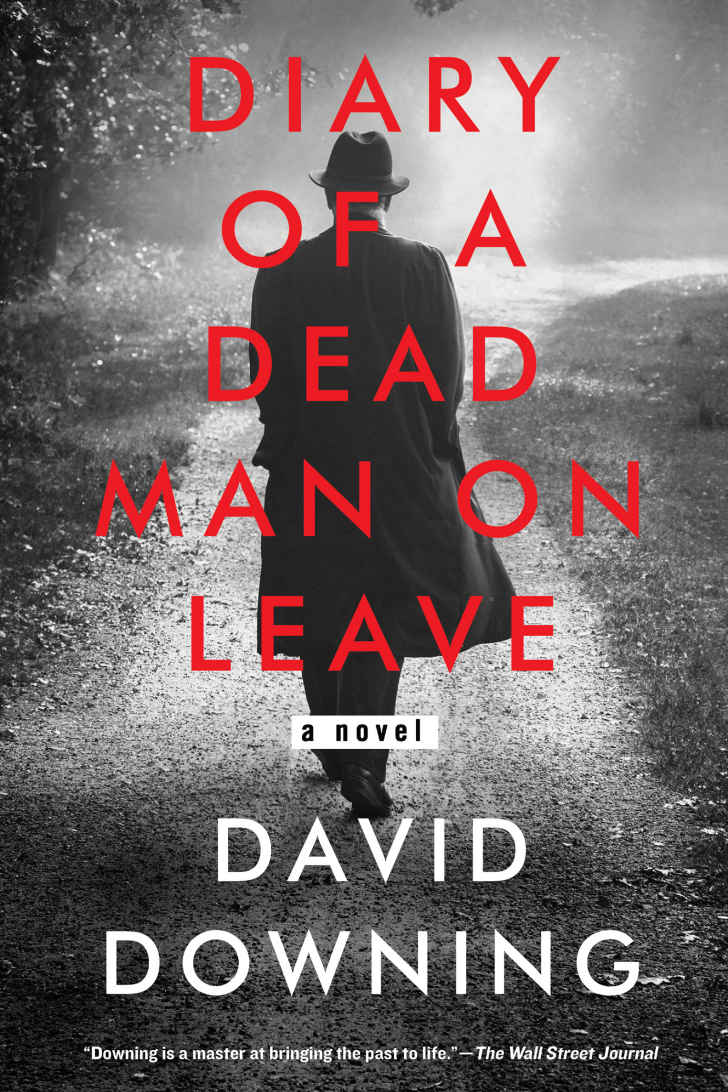
Waiting for the Bullet: Diary of a Dead Man on Leave

David Downing takes the title of his latest spy novel, Diary of a Dead Man on Leave from a Comintern expression roughly equivalent to the American saying “dead man walking”, which describes a prisoner condemned to death. Spies for the Soviet Union expected to be eliminated eventually, often by their own side.

Josef, the narrator of the diary is a German national, returned from South America to Hamm, Germany to foment revolution there. He has seen the inside of prison in his previous assignment, but in Hitler’s Germany in 1938, prison is the least of his worries. Any Germans with communist ideas have learned to keep their head down or even to espouse the ideals of the fascist German Social Democracy party, which Hitler heads.

It seemed appropriate that my library hold on this ebook should come through in the first week of March 2020, given the news.

In this winter of my 84th year I have been battling chronic pain in the first place and the side effects of the medication that alleviated it in the second. Briefly, the meds worked brilliantly, except they made me seasick. I staggered about, trying not to throw up, but reluctant to quit them because of their good effect.

At the same time, news of the novel corona virus came at me from every direction. I live in Toronto, where SARs made itself at home in 2002-3 and I knew people affected. The good news being touted was that Covid-19 was not as deadly as SARs. The other good news was that it could be mild, didn’t seem to affect children and most of the people who died were elderly.

Just a minute – that’s me.

The average age of those who have died at this date is 80. Those over 80 have over a 20.5% chance of dying from it, according to WHO’s February figures. I tried to put that in perspective. Twenty of one hundred 80-year-olds who caught it died. The other one presumably became a zombie. No, no, stupid, you have to think in terms of 200. Forty one of them died. Okay. Got it.

Well, should I even bother hoarding toilet paper. The average age of those hospitalized was 60. I’d be carted out of here snappish at that rate. No problem. My apartment door is opposite the elevators. No troublesome narrow staircase.

So that’s settled. Someone else can raid my pantry in their desperation to survive the quarantine.

Like Josef, all I can do is wait for the bullet, comforted by the fact that if it’s my bullet, someone else will be spared.

I had a brief flirtation with Communist ideology in my youth, mostly to annoy Joe McCarthy, the U.S. senator who was persecuting liberal Americans. Never mind that I was Canadian. I cheered when Castro ‘liberated’ Cuba, the day that I was married. Got over that pretty fast, certainly by the fall of 1962 when the Soviets seemed bent on blowing up my babies.

Spy-wise, Josef’s return to Germany, is not a success.The first sign is that he decides to keep a diary: spies should never commit anything to paper. He has found a room in a boarding house run by a widow, Anna, who has a 12-year-old son, Walter. Walter is trying to navigate his way through school assignments, which require him to support Nazi ideas and policies and he turns to Josef for help. It is this unexpected human need that prompts Josef to start his journal.

At that time -the summer and fall of 1938 – Hitler is laying the groundwork for the annexation of Sudetenland, the “Germanic” part of Czechoslovakia. It looks as if he will gobble up the whole country. Probably he delays because, despite the armament he has built, his railway infrastructure is not yet up to the job. Josef knows this because he works on scheduling trains. Czechoslovakia will be annexed entirely in March 1939, but it will take the invasion of Poland for the Allies to declare war. The main narrative of the diary ends before that.

There are four boarders in Anna’s house, avid followers of the news. One of them Rushay delightedly recites newspaper accounts of  the latest Nazi  ‘achievements’ at the breakfast table. He is not the only boarder who is in love with Anna, but he is the most persistent.

Reading these scenes is like watching CNN today, leadership indulging in half-truths, self aggrandizement, unapologetic disregard for facts and downright lies.

David Downing lives in England with his American wife. And yes, they do get CNN across the pond. My Belgian brother gets a head start on us because he gets up six hours earlier and sometimes wakes me up with outrages I don’t yet know about. I have explained to him that my medication is supposed to be calming my nerves, which are otherwise set on maximum alert, that I don’t watch the news anymore.

Addicts lie, but you knew that.

Diary of a Dead Man on Leave alludes to the ever worsening persecution of the Jews and concentration camps, but it dramatizes the persecution of Walter’s African-German school friend, Marco, who gets called a Rhineland bastard. He was conceived there at the end of WW I and his father, who loved his mother, was shipped home, not knowing about the conception.

Josef lives in expectation of recall to Moscow and the bullet that will probably await him. He is not sure he will answer the summons when it comes and meanwhile, Anna’s family needs him more and more.

He has always put his ideals before individual needs. The good of the whole and all that. How much of conscience should be sacrificed for pragmatic personal reasons?

Like many others, I would be better off today if I had been more pragmatic and morally flexible, but I chose to defy that logic. The same defiance that brought me here leads me to say the Covid-19 bullet is not for me.

If I am wrong, it doesn’t matter.

Ah Josef, this life is a school after all.


Winter Came: aging in a cold climate

From The Double Game by Dan Fesperman

He (Bruzek) handed it back. Then, with a grimace and a groan, he worked himself into a more upright position.

“Please help me to stand. I would feel much more comfortable speaking to you from behind my desk.”

I took his arm and helped him across the room to a ladder-back chair behind a huge mahogany desk. Behind it was a wall of bookshelves, stuffed full and leaning slightly, as if they might fall at any moment.
p 313 in my overdrive program on my ipad.

I had to recline as Vlacek Bruzek was doing when Bill Cage wound his way up through the antiquarian book store in Prague to ask him questions about spy couriers during the cold war.

I had to recline and pick up Fesperman’s book because I was exhausted. It was 11 a.m. and I was exhausted because the superintendent had called to tell me to move my car for the snow plow. The older woman -only in her late 60s next to my car – was trying in vain to defrost her windows and clear the 8 inches of snow. Fortunately, I had done that the day before and had by now recovered from that exertion.

It’s worth noting that I am so old this woman is solicitous of me.

Twenty minutes later, I had to put on my boots, my furry aviator’s hat and my -30C hooded coat and go back down to relocate my Corolla. (Full disclosure the windchill was only -15, but old bodies are cold bodies.)

That was it. I was barely able to make Masala chai before I had to rest.

I never expected to grow old. Too many close calls and a mother who passed at 58. But here I am, not yet old old. Yes, it’s a thing. In less than 2 more years I will be 85 and old old. My grandmother lived to be 96, so I guess I have to follow a new paradigm.

I suppose I should remind you that if you are lucky, you too will get there. If you’re already there, you know the truth that Leonard Cohen said, ‘You can’t reveal to the innocent youth.’ Part of that truth seems to be that for every half hour of effort it is necessary to rest 30 minutes. I mean I had to go down 13 floors in an elevator, walk 50 yards, get into my car and drive it to Visitors’ parking. How can that be exhausting?

Our bodies all age differently, of course, so perhaps yours is/will be different. If your mind can’t accept that resting routine, you have to numb it down with – preferably -‘stupid’ TV. HGTV works for me, but recently my Bell TV service has been down more than up, so I turned to Fesperson’s books. These are smart books by the way. Whereas I can’t use CNN to rest with, I can use complicated books with good mysteries.

I don’t have many old friends.One, my ex-husband, Blake, passed last March as I have documented in previous blogs. https://115journals.com/2019/03/20/blake-no-more/ My sister Georgia is 6-years younger and just beginning to feel the effort/rest effect. Another friend who is 91 has recently changed dramatically, developing an edge. She was always able to keep me believing she was charming and sweet and cared deeply for me and my loved ones. Then in one single angry outburst laid waste to that idea. Blake had also become irascible in his last days, We all forgave him as we sat beside his bed of pain. Until we had to deal with the twenty years of neglect of home and finances he left behind.

Apparently, we should all assume that our brains are de-myolinating as we age and expect dementia. I’ve got Lion’s Mane mushrooms in capsule on order. fungi.com

An older real estate collapse you don’t even remember in 1995 bumped me out of home ownership. Three years ago, my landlord sold the triplex where I lived on the ground floor in a Toronto neighbourhood I had come to love. Rent increases made it necessary for me to get out of town and at my sister’s encouragement I moved to an apartment in Mississauga. It is warm – often equatorial, even in winter, well-maintained -although the elevators can be chancey, and safe – interlopers are scared of our Shanti in the front office. First responders will be able to stretcher me out and down.

At Blake’s three-story townhouse in Cabbagetown, they had to carry him bodily down the twisty, narrow stairs. He never did get set up with a hospital bed and a potty on the first floor.

So that’s been dealt with. The fact that I really am not a suburb lover can’t matter now. Anyway I am learning to love the sky in all its moods and the distant glimpse of Lake Ontario and the Niagara Escarpment where the clouds are different.

According to my mandatory driver assessments, I am able to drive. That could change or it could gradually dawn on me that spending over $500 a month on a car is too much what with the pressure of rent increases and Bell increases. Grocery delivery, Uber and patience may win out.

It’s new territory and Tennyson’s Ulysses has advised me to “To strive, to seek, to find and not to yield” https://www.poetryfoundation.org/poems/45392/ulysses


What Kind of Fish Have I Caught?

Now What Am I Going to Do?  by Sheila Maloney
Why did I decide to write a mystery? Let me see.

I was living half way up a mountain, suffering from a serious lack of sensory deprivation. I was surrounded by extraordinary beauty and bored out of my skull. I had read every mystery available in the Kern County Library down the hill. I couldn’t afford anymore Kindle e-books. And I wasn’t aware of digital loans. I could watch TV only if I crashed in somebody else’s living room. Internet connection could be found only at a cafe, which still wasn’t licensed to serve. Anything. Besides the connection was so slow, it took hours just to buffer.

So not a serious writer. Not driven. Just bored.

On the other hand, I had built my long life around narrative, survived by it, studied it, taught it, got withdrawal if I ran out of it. So why not?

My friends in the mountain village, fearing for my mental health, brainstormed the underlying idea – eco-terrorism. Well meaning ecologists driven over the line by ideology. Or not. Three and a half years and eight rewrites later, back home in Toronto, I published Hour of the Hawk, independently as an e-book and POD (print on demand) on Amazon.

Six months later, 300 e-books have been downloaded. Free e-books. Twenty five paperbacks have been sold, 20 to the author, the others to her friends.

So marketing?

David Gaughran who generously shares his experience in independent publishing, helped me – virtually – to publish my first book, a memoir of childhood, Never Tell with his free book, Let’s Get Digital in 2012. Now I turned to his book Amazon Decoded for finer points on accessing Amazon’s best seller’s lists and his newest Strangers into Superfans. Reading and rereading, I slowly began to refine my idea of my ideal reader.

OMG!

She was a cozy mystery reader!

➤ COZY: One of the ironic strengths of this subgenre is the fact that, by creating a world in which violence is rare, a bloody act resonates far more viscerally than it would in a more urban or disordered setting. READER EXPECTATION:
A unique and engaging protagonist: Father Brown, Miss Marple, Kinsey Millhone. The crime should be clever, requiring ingenuity or even brilliance on the hero’s part to solve. Secondary characters can be coarse, but never the hero—or the author. Justice triumphs in the end, and the world returns to its original tranquility.
Writer’s Digest Oct, 2015

A world where violence is rare -Bear Mountain Place, a remote village in Southern California – check
a unique and engaging protagonist –  Joanna, a 78-yr-old who has trouble recognizing faces, Clara, an 85-yr-old who has trouble seeing and hearing, set out to solve the mystery -check
a clever, ingenious even brilliant resolution by the protagonistadd visionary – check
Justice triumphs, order is restored – of course, with two such sleuths on the case – check

So what’s the problem?

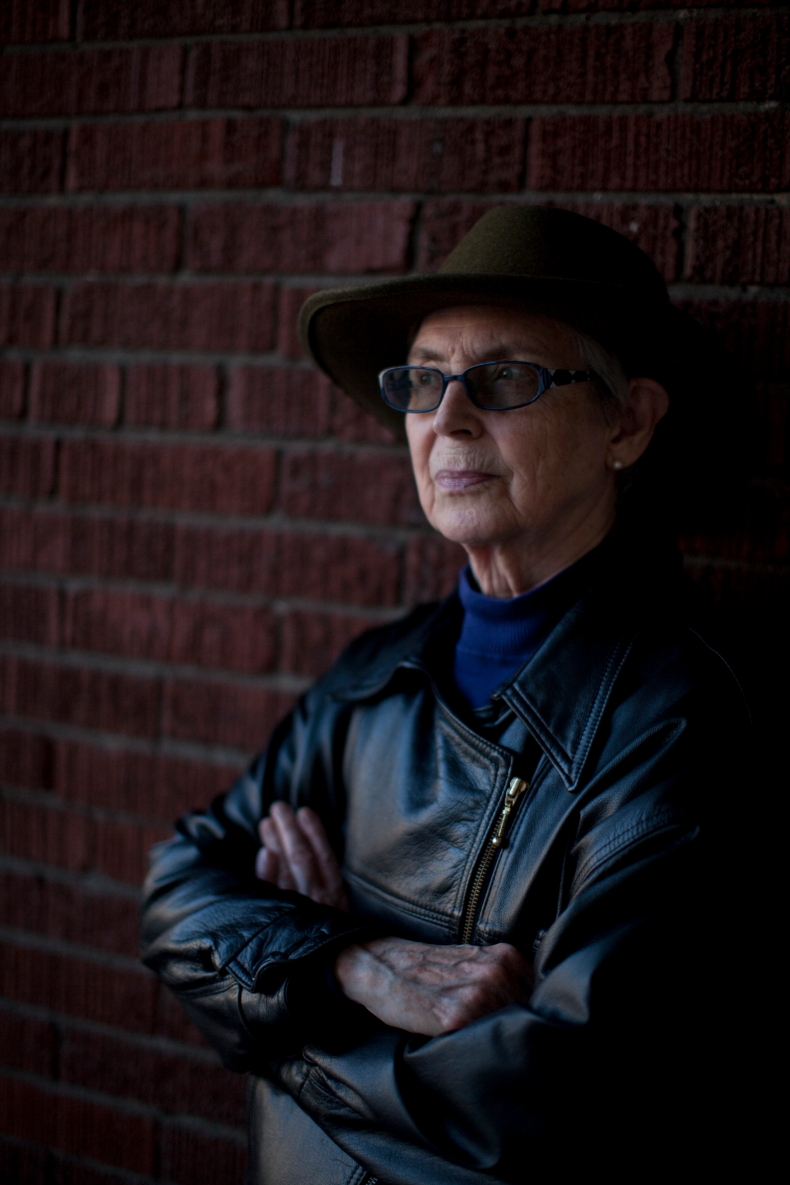
In order to find my narrative voice, I had a number of portraits taken and this is what my narrator looked like. (Phillipa C., Dundas W. Toronto)

Not cozy. Smart-mouthed. Occasionally profane. Prone to black thoughts. Convinced of Samuel Beckett’s rule, ‘Despair young and never look back’.

Gaughran told me to look at “Also Boughts’. (In my case, the term ‘bought’ has to be used loosely.) These included several cozy series including the Cupcake Series, (cozy mysteries often include recipes), several historical mysteries like Mona Lisa’s Secret by Phil Phillips, the Undertaker Series (sounds promising) and Everett by Jennifer Buff, a dark psychological suspense novel.

Oh, come on, Joyce, you did include a detailed description of a birthday dinner preparation in Hour of the Hawk. And it’s true  Clara has six cats, named Jazz, Poirot, Tennison, Sherlock and Columbo. It’s also true that Joanna, who is living with her, is allergic to cats and endures a sequence of 27 sneezes early in the book.

You, Joyce, are a terrible snob. Like most English Majors. Look how long it took you to lower yourself to reading mysteries. You were 67 when your friend Anna said she was reading Donna Leone’s Detective Brunetti series set in Venice. (A lot of Italian cooking there) Only then did you admit a reader could not live by Booker Prize alone. Since then you have devoured P.D. James, Ruth Rendall/Barbara Vine, Elizabeth George, Peter Robinson, Ian Rankin, all of the Scandanavian mysteries – even Jo Nesbo, as well as Icelandic, Michael Connelly, Lee Child. Etc. Now you have had to branch out to espionage novels. You have had repeated escapes from truly awful cliched books, some of which you actually undertook to review. Get over yourself. Admit you wrote a cozy mystery.

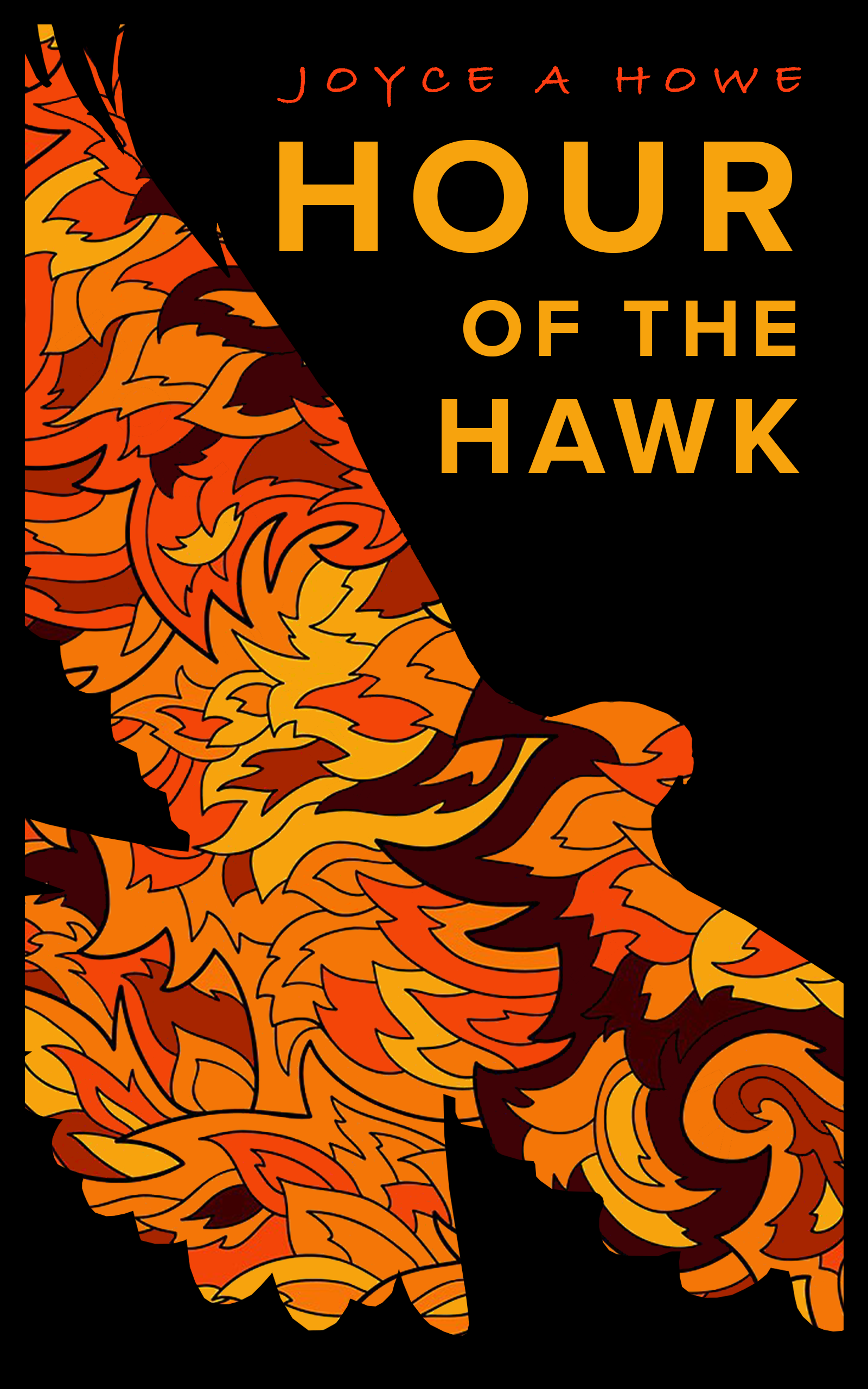
“Can I still keep the cover? (Jeremy Von Caulert, BLack Sunset) I love the cover. I’ll have to rewrite the blurbs. Okay, Okay, but only if I can call it a cozy mystery, plus.”

Hour of the Hawk  Chapter One: Too Many Bears

The bear came down from the mountain in late afternoon. She wasn’t hungry. She had eaten well, but she was missing the cub.

She turned at the bottom along the well-worn path, picking up the scent of honey in the distance, and closer up, traces of many other bears, including the cub. The cub was old enough to manage on her own now. There would be a new cub in winter. She was almost there when another darker smell stopped her in her tracks. Blood. Bear blood. She took it in. Not just any bear blood, her cub’s blood.

The man got home from work early. He was the boss. He could leave when he wanted. This bear thing had him all upset. All he had wanted to do was help his fellow creatures. They were hungry and starving in this four-year drought.

To continue reading sample https://www.facebook.com/joyce.howe.75

joycehowe.com


‘Am I in your book?” – The Worst Kind of Thief

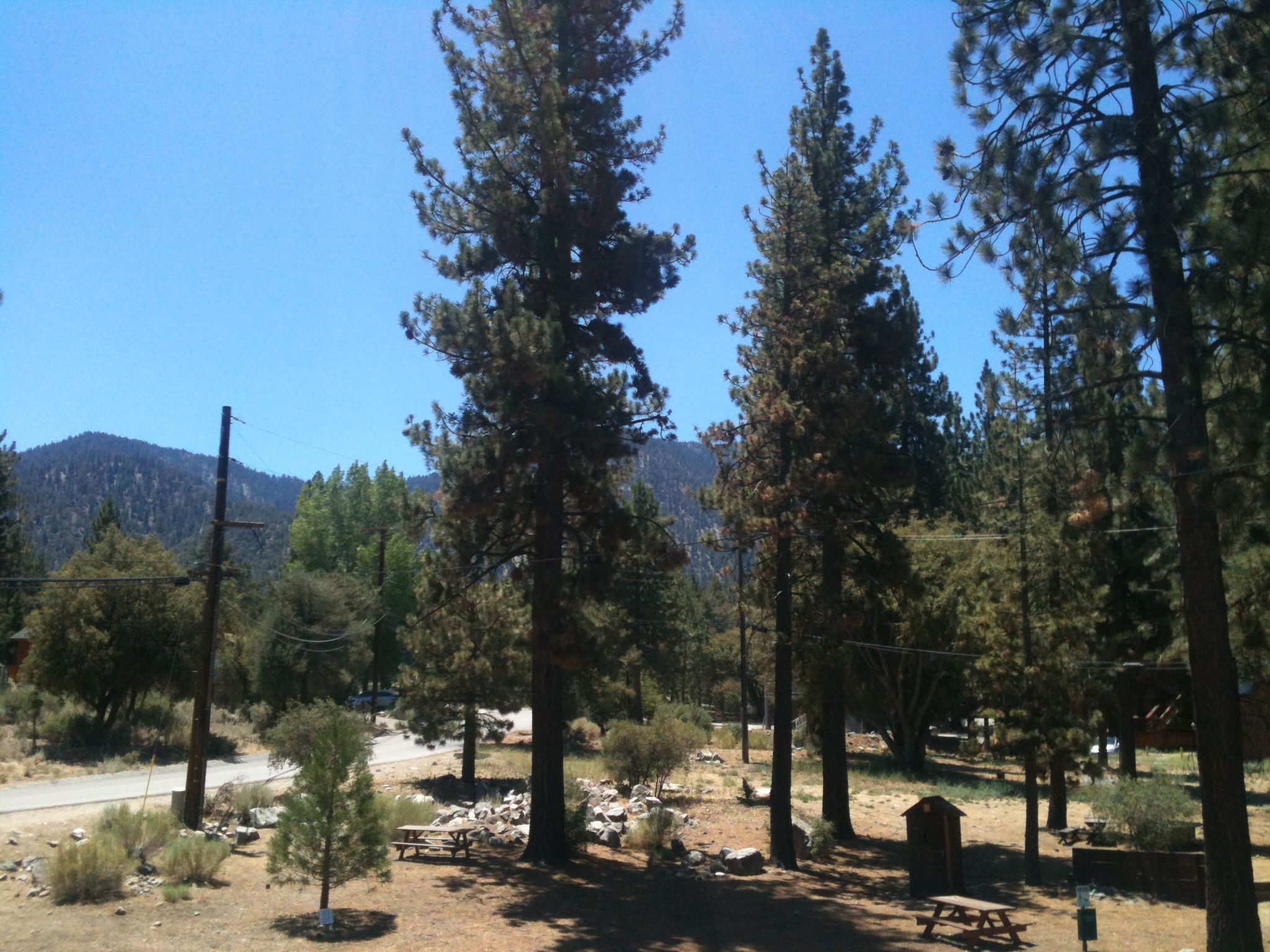
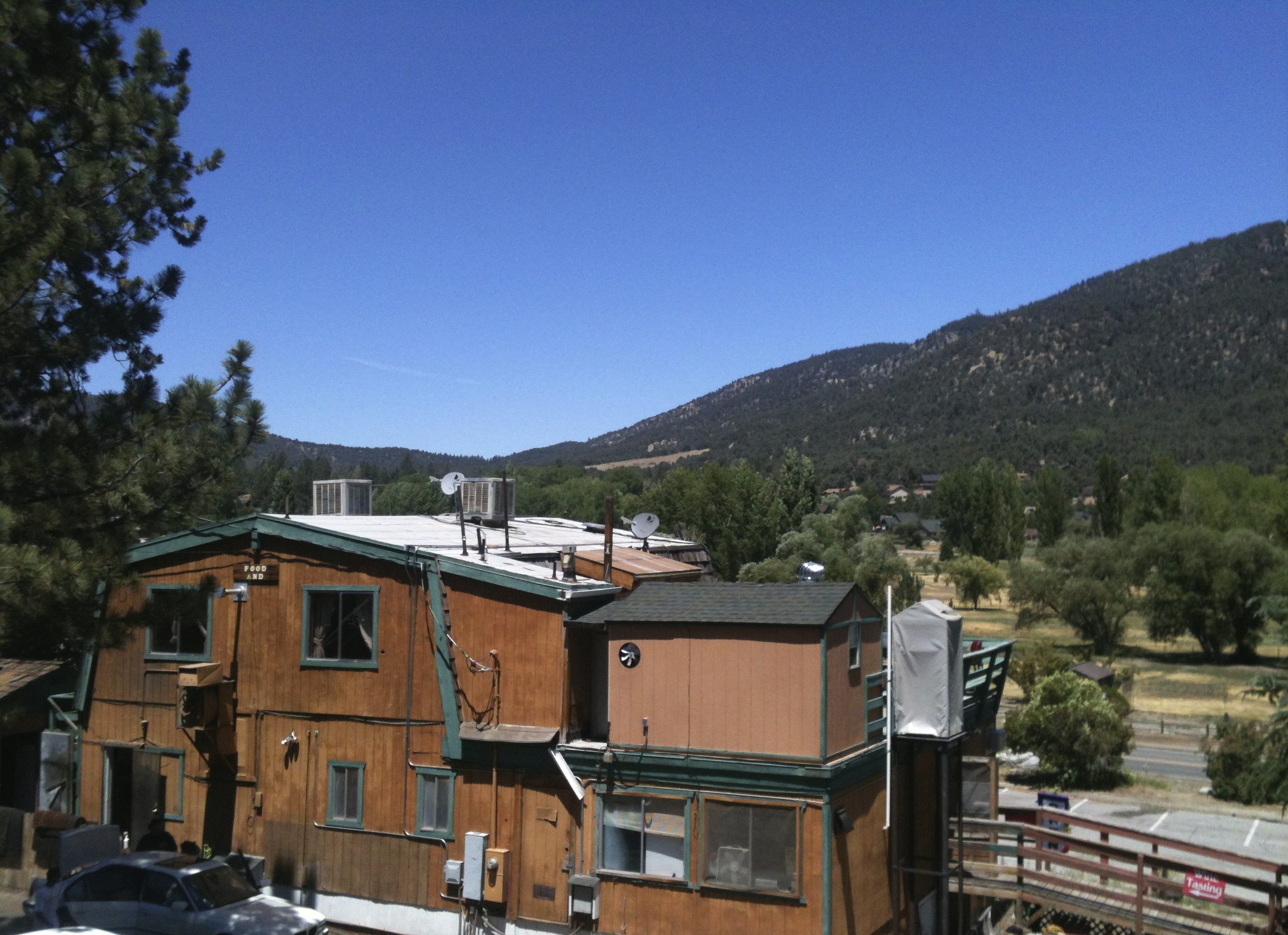
The mountain village of PMC in Kern County California, which served as the prototype for Bear Mountain Place.

Awake, I lack imagination. Asleep, I dream whole new worlds. Unfortunately, I do my writing awake. And so, I identify with Sheryl Crowe’s ‘worst kind of thief’.

In her song, The Book, Sheryl Crowe (from her 1996 self-titled album) sings that she read the book and discovered she knew that girl in it ‘a little too well’. She’ll always remember three days in Rome. She got “written down, sliced around, passed down among strangers’ hands”. She ‘laid her heart out, laid her soul down’. She learned that ‘the love you once made/can’t be undone’. ‘Will I get revenge?’ Well yes. By writing this song.

I longed to find proof that this was autobiographical. It seems too heartfelt to be fiction. But I didn’t.

Why do I care? I “carry a pen and a paper” and “no words I waste”.

I started writing my mystery Hour of the Hawk, when I spent several months in a California mountain village waiting out a family problem. My amateur detectives are two elderly women who set about finding out who is terrifying the town with acts of ecological terrorism, which steadily grow more deadly. I modeled one of them on a friend.

Clara was a disarming little old lady, cute, with flashing blue eyes and a lovely smile.  She had a great schtick. She could seem charmingly helpless-a girl just out in the world, or alternately, a slightly confused elder. The first week she was in Bear Mountain Place, a woman stuck $10 in her purse and told her to buy herself a decent meal.
“Why did she do that?” Clara asked me.
“Generosity,” I said. “But next time tell her you need $20 for a decent meal up here.”

I shamelessly stole other identities as well. Two of these people read the manuscript, and, although they both offered advice, neither objected to the theft. ‘Clara’ still had not read the book when I published it as an e-book on Amazon. Since she didn’t have a tablet, she still couldn’t. Then in February, I published Hour of the Hawk through Amazon’s Print on Demand. Now she could read it.

I’m such a coward that I tried the indirect approach. None of her close relatives would hazard a guess about how she’d react. Fictional Clara is hard of hearing and sight, so much so that the villain of the piece – or one of them at any rate – is able to sneak past here while she is watching television. Real Clara has had her vision corrected, but has also fore-sworn her hearing aids on the grounds that elderly fingers can’t handle tiny, tiny batteries. Would my friend resent these handicaps being used for humor?

The other amateur sleuth, Joanna Hunter, can’t recognize faces, a disability I am familiar with.

So I found my courage and wrote Clara a long letter, explaining my concern and enclosing a sample or two.

Then Jesus, the cable guy, arrived.
His card read Jesus Morales, Direct T.V. He pronounced it for me, Hesus.
“Hesus, Hesus,” I kept repeating to myself. I wasn’t used to Jesus as an ordinary name. I wasn’t used to Hispanic accents. I could understand Chinese or West Indian accents, and, of course, South Asian, but not Spanish.
He wasn’t used to Canadian accents. He didn’t understand ‘rooof’, so I had to say ‘ruf’. We kept asking each other to repeat. I held the record. I just didn’t get Hesus.
“Sit down. Why don’t you sit down?” Reg/Doug called to me.
Clara could tear herself away from them only for a moment. “Joanna can show you whatever you need,” she told Hesus.
He turned on the new 70-inch television set. It hung on the wall in front of the couch where Clara and her company sat. We were all jammed into a ten-foot wide space, crowded with unpacked boxes. When the sound came on, Clara cried out, “I’ll never be able to hear that.” So Jesus turned the volume up and up, until Clara was satisfied. The screen told us the volume was 87. Then she and the ‘boys’ resumed shouting.
Jesus showed me his work sheet, and began to ask questions. A bald guy on the screen was yelling about the shoddy workmanship on a renovation. Jesus was shouting questions at me. The boys and Clara were splitting their sides at some long ago anecdote. I grabbed the remote control, and turned down the volume.
“It says one box here,” said Jesus.
“No, no. We were promised two,” I said. “There’s another set in a bedroom. Colin talked to the company several times. There are to be two boxes.”
Then I moved Jesus over near the utility room, so I had access to the landline.
“Oh, Jesus-with a J-God, I’m going to lose my mind,” I thought.
Once I’d got hold of Colin, I handed the handset to Jesus, and locked myself in my bathroom.
It didn’t work. I had to come back out into the din. Jesus called.
When I came out, he assured me everything was all right now. The bedroom set was working as well. I dragged Clara away from the boys, explained what had been done, and asked her to sign her name. Suddenly, she decided she should take charge, and began to ask questions that had been answered an hour ago. Jesus tended to mutter in his thick accent.
“Do I have two boxes? Colin said I would get two boxes.” She went into my bedroom and came out. “There’s just this tiny thing in there, no real box.”
Jesus began to reassure her that both sets worked, independently of each other
“You’ll have to speak louder,” I told him.
He started shouting. I searched frantically for the remote control, found it at last on top of a pile of boxes and pushed mute. I gestured at the boys who were laughing with each other. Now there were only two voices shouting.

It took a week for the letter to escape the confines of Canada Post and the U.S. Mail and end up being released into Clara’s California post office box. Yes, she wanted to read it, I heard. A mutual friend handed her a print copy. I waited for her verdict.

“I’m so flattered,” she said when she called.

I have started writing the second Joanna Hunter mystery and Clara, who will soon be 90, will be part of it.

joycehowe.com

The e-book version of Hour of the Hawk is free to download on Mother’s Day May 13/18 and May 14/18. If you decide to read it, please leave a review on Amazon. The print edition is also for sale.