BLUE BOY

It was the fall of 2001 and the Los Angeles Times said that the Titan Arum (the Corpse Flower or Stinky Flower) would be blooming at the Huntington Gallery in San Marinoo only today. It was one of the largest flowers in the world and bloomed only every five years and only for three days. Twenty two years ago, there were many fewer of them in the world, but the Huntington had snaffled one. Yesterday, it had been at its best. Today would be the last chance to see it in flower. Tomorrow, the flower would wilt and die.

Corpse flower known as Amophophallus titanum blooming in Honolulu Hawaii and releasing an odor smelling like rotting flesh

I explained this to my grandson GS who was eating his breakfast at the other side of the tiny table. I did not call it a Corpse Flower. I called it a Stinky Flower. Six-year-old boys like gross, in moderation. Why did it smell bad? To attract flies to pollinate it. A few minutes of negotiation convinced his mother who was hurrying out to work that a school called Play Mountain Place would not disapprove of a day off to study a rare botanical specimen.

So we set off in my green Toyota Tercel from our barrio off Venice Blvd. I had just had major surgery and had come down from Canada to recover. The surgeon had recklessly removed my courage along with the part I had signed up for. I was no longer a road warrior on strange freeways. If I got confused, GS sitting behind me in his child seat, calmly pointed out where I should go.

The last thing my daughter said to me, “Oh, the Blue Boy is there. Be sure to see him.”

There was a very long line and it was hot in the sun, despite the free bottles of water. At certain points the smell of – let’s be frank – dead animal was overwhelming.

Then we went to lunch. Fortunately, a docent sitting at the next table was delighted to answer all the probing questions I couldn’t. Both of GS’s grandfathers were physicists and mathematicians. One of them had a double PhD. The other was my ex-husband.

After lunch, we looked at pictures. I was distracted by the blonde bombshell at my side. I had lost him in major airports, where I had to choose between catching him and losing our luggage. I still had him.

GS was close by my side when I walked into a room and there was the Blue Boy. I was so gobsmacked that I loosened my grip on my grandson’s hand. He slipped silently away. When I tore my eyes away from the full length portrait of the Boy in Blue, I saw a small being at the end of the room engrossed in the portrait there.

There was no one else there. Even the watcher had stood up from her chair and stepped around the corner. I wanted to stand there forever.

But I heard, “Can we go now? I’ve seen them all.”

It wasn’t enough. I had to go back the next day, without my mercurial companion.

As I passed the Titan Arum, I saw that it was a sad memory of its former glory.

I bought a small book about the Thomas Gainsborough’s Blue Boy (est. 1770) and and Sir Thomas Lawrence’s Pinkie (1793). The lithe girl hung opposite the Blue boy. Both people depicted are young, and Henry E. Huntington bought them both in the 1920s; otherwise, there is no connection between them.

Pinkie’s pink bonnet strings and her filmy white dress, with the wide pink sash are lifting in the breeze. Her pink lips are small, demure, kissable. A week before the portrait was to be exhibited at the royal Academy Exhibition, Pinkie died. She had had a cough, which may indicate she died of tuberculosis. The portrait vanished from view for many years, but it was known to be in the possession of Pinkie’s brother, the father of the poet, Elizabeth Barrett-Browning.

The little book The Blue Boy and Pinkie by Robert R. Wark, a ‘noted art historian’ was published by the Huntington Gallery in 1963. Wark gives the standard 1963 account of who modeled for the portrait. Indeed the print that I bought has the name in script at the bottom of the white window mat, Master Jonathan Buttall, the son of a wealthy ironmonger (hardware merchant). It is probable Gainsborough became a friend of the elder Buttall in Ipswich where they both lived before moving to London. Gainsborough was only 11-years-older than Master Buttall. We know they were friends because the artist left a short list of those he wanted at his funeral in 1788, including Jonathan.

Henry Huntington paid $728,000 for the Blue Boy in 1921. It is estimated to be worth over $9 billion today.

In the 1790s, Buttall’s business came upon hard times and his household effects were sold at auction, including the Blue Boy for 35 guineas. He died late in 1805 at the age of the age of 53, in which case, he would have been born in 1752. The portrait seems to have been exhibited in at the Royal Academy in 1770, which would have made Jonathan eighteen.

When I sat down to write this blog post, Google did not agree with Robert R Wark, noted art historian though he was. Today’s noted art historians suggest it was Gainsborough Dupont, Thomas’s nephew, or, just to be awkward, that there was no sitter.

We know that a Van Dyke Costume such as the Blue Boy is wearing was available for Gainsborough’s sitters. The Honourable Edward Bouverie chose to wear it for his portrait in 1773, same lace collar and cuffs. Another sitter Paul Cobb Methuen also wore it. It was the fashion in those days to dress in the costume of sitters for Sir Anthony Van Dyck. Women also chose to do this.

Whenever I see or remember the Blue Boy, I recall the smooth confidence of the young man, relaxed, calm, forthright, somewhat assertive, no doubt the product of wealth and class.

I spent 35-years, studying boys of this age as they entered my classroom for the first time, sussing out the troublemakers. Blue Boy would not be one, so long as he was treated with the respect he felt he deserved.

In my opinion, however, genius he was, no one, not even Gainsborough could paint that face and cavalier posture or the glint of light on the left sleeve without a model.

After I read Mr. Wark’s little book, believing it was a picture of Jonathan Buttall, I wondered how how he had changed by the time of his bankruptcy. Had his widow’s peak rendered him bald? Did he have a paunch from English beef, port and pudding? Had life battered that beauty and serenity out of him when he died at 53?

There is another story that Gainsborough painted the picture in answer to an essay by Sir Joshua Reynolds, head of the Royal Academy of Arts. Reynolds held that no great picture could be predominately blue. It must be made of warmer colors. Gainsborough took this as a challenge to be disproved.

When Huntington Museum xrayed the Blue Boy , it discovered that Gainsborough had reused an old canvas. The head of an older man was revealed above the Blue Boy’s. Surely, a painter would not reuse an old canvas in front of a wealthy sitter. Surely, Gainsborough fired up by the challenge had seized the first canvas that came to hand in his enthusiasm to disprove the older artist.

Blue Boy went back to London for a four month visit on the hundredth anniversary of its relocation to the United States of America, but it is home at the Huntington again now.

If I were Los Angeles, I would get GS to drive me down to San Marino to see the true colors of the Blue Boy. GS would keep track of the cane I’m always misplacing.

See joyce@joycehowe.com for latest book
I Trust You to Kill Me
Sign up your email address for a FREE cop of e-book,
Monthly draw.

BLUE BOY

It was the fall of 2001 and the Los Angeles Times said that the Titan Arum (the Corpse Flower or Stinky Flower) would be blooming at the Huntington Gallery in San Marinoo only today. It was one of the largest flowers in the world and bloomed only every five years and only for three days. Twenty two years ago, there were many fewer of them in the world, but the Huntington had snaffled one. Yesterday, it had been at its best. Today would be the last chance to see it in flower. Tomorrow, the flower would wilt and die.

Corpse flower known as Amophophallus titanum blooming in Honolulu Hawaii and releasing an odor smelling like rotting flesh

I explained this to my grandson GS who was eating his breakfast at the other side of the tiny table. I did not call it a Corpse Flower. I called it a Stinky Flower. Six-year-old boys like gross, in moderation. Why did it smell bad? To attract flies to pollinate it. A few minutes of negotiation convinced his mother who was hurrying out to work that a school called Play Mountain Place would not disapprove of a day off to study a rare botanical specimen.

So we set off in my green Toyota Tercel from our barrio off Venice Blvd. I had just had major surgery and had come down from Canada to recover. The surgeon had recklessly removed my courage along with the part I had signed up for. I was no longer a road warrior on strange freeways. If I got confused, GS sitting behind me in his child seat, calmly pointed out where I should go.

The last thing my daughter said to me, “Oh, the Blue Boy is there. Be sure to see him.”

There was a very long line and it was hot in the sun, despite the free bottles of water. At certain points the smell of – let’s be frank – dead animal was overwhelming.

Then we went to lunch. Fortunately, a docent sitting at the next table was delighted to answer all the probing questions I couldn’t. Both of GS’s grandfathers were physicists and mathematicians. One of them had a double PhD. The other was my ex-husband.

After lunch, we looked at pictures. I was distracted by the blonde bombshell at my side. I had lost him in major airports, where I had to choose between catching him and losing our luggage. I still had him.

GS was close by my side when I walked into a room and there was the Blue Boy. I was so gobsmacked that I loosened my grip on my grandson’s hand. He slipped silently away. When I tore my eyes away from the full length portrait of the Boy in Blue, I saw a small being at the end of the room engrossed in the portrait there.

There was no one else there. Even the watcher had stood up from her chair and stepped around the corner. I wanted to stand there forever.

But I heard, “Can we go now? I’ve seen them all.”

It wasn’t enough. I had to go back the next day, without my mercurial companion.

As I passed the Titan Arum, I saw that it was a sad memory of its former glory.

I bought a small book about the Thomas Gainsborough’s Blue Boy (est. 1770) and and Sir Thomas Lawrence’s Pinkie (1793). The lithe girl hung opposite the Blue boy. Both people depicted are young, and Henry E. Huntington bought them both in the 1920s; otherwise, there is no connection between them.

Pinkie’s pink bonnet strings and her filmy white dress, with the wide pink sash are lifting in the breeze. Her pink lips are small, demure, kissable. A week before the portrait was to be exhibited at the royal Academy Exhibition, Pinkie died. She had had a cough, which may indicate she died of tuberculosis. The portrait vanished from view for many years, but it was known to be in the possession of Pinkie’s brother, the father of the poet, Elizabeth Barrett-Browning.

The little book The Blue Boy and Pinkie by Robert R. Wark, a ‘noted art historian’ was published by the Huntington Gallery in 1963. Wark gives the standard 1963 account of who modeled for the portrait. Indeed the print that I bought has the name in script at the bottom of the white window mat, Master Jonathan Buttall, the son of a wealthy ironmonger (hardware merchant). It is probable Gainsborough became a friend of the elder Buttall in Ipswich where they both lived before moving to London. Gainsborough was only 11-years-older than Master Buttall. We know they were friends because the artist left a short list of those he wanted at his funeral in 1788, including Jonathan.

Henry Huntington paid $728,000 for the Blue Boy in 1921. It is estimated to be worth over $9 billion today.

In the 1790s, Buttall’s business came upon hard times and his household effects were sold at auction, including the Blue Boy for 35 guineas. He died late in 1805 at the age of the age of 53, in which case, he would have been born in 1752. The portrait seems to have been exhibited in at the Royal Academy in 1770, which would have made Jonathan eighteen

When I sat down to write this blog post, Google did not agree with Robert R Wark, noted art historian though he was. Today’s noted art historians suggest it was Gainsborough Dupont, Thomas’s nephew, or, just to be awkward, that there was no sitter.

We know that a Van Dyke Costume such as the Blue Boy is wearing was available for Gainsborough’s sitters. The Honourable Edward Bouverie chose to wear it for his portrait in 1773, same lace collar and cuffs. Another sitter Paul Cobb Methuen also wore it. It was the fashion in those days to dress in the costume of sitters for Sir Anthony Van Dyck. Women also chose to do this.

Whenever I see or remember the Blue Boy, I recall the smooth confidence of the young man, relaxed, calm, forthright, somewhat assertive, no doubt the product of wealth and class.

I spent 35-years, studying boys of this age as they entered my classroom for the first time, sussing out the troublemakers. Blue Boy would not be one, so long as he was treated with the respect he felt he deserved.

In my opinion, however, genius he was, no one, not even Gainsborough could paint that face and cavalier posture or the glint of light on the left sleeve without a model.

After I read Mr. Wark’s little book, believing it was a picture of Jonathan Buttall, I wondered how how he had changed by the time of his bankruptcy. Had his widow’s peak rendered him bald? Did he have a paunch from English beef, port and pudding? Had life battered that beauty and serenity out of him when he died at 53?

There is another story that Gainsborough painted the picture in answer to an essay by Sir Joshua Reynolds, head of the Royal Academy of Arts. Reynolds held that no great picture could be predominately blue. It must be made of warmer colors. Gainsborough took this as a challenge to be disproved.

When Huntington Museum xrayed the Blue Boy , it discovered that Gainsborough had reused an old canvas. The head of an older man was revealed above the Blue Boy’s. Surely, a painter would not reuse an old canvas in front of a wealthy sitter. Surely, Gainsborough fired up by the challenge had seized the first canvas that came to hand in his enthusiasm to disprove the older artist.

Blue Boy went back to London for a four month visit on the hundredth anniversary of its relocation to the United States of America, but it is home at the Huntington again now.

If I were Los Angeles, I would get GS to drive me down to San Marino to see the true colors of the Blue Boy. GS would keep track of the cane I’m always misplacing.

See joyce@joycehowe.com for latest book
I Trust You to Kill Me
Sign up your email address for a FREE cop of e-book,
Monthly draw.

BLUE BOY

Featured

It was the fall of 2001 and the Los Angeles Times said that the Titan Arum (the Corpse Flower or Stinky Flower) would be blooming at the Huntington Gallery in San Marinoo only today. It was one of the largest flowers in the world and bloomed only every five years and only for three days. Twenty two years ago, there were many fewer of them in the world, but the Huntington had snaffled one. Yesterday, it had been at its best. Today would be the last chance to see it in flower. Tomorrow, the flower would wilt and die

Corpse flower known as Amophophallus titanum blooming in Honolulu Hawaii and releasing an odor smelling like rotting flesh

I explained this to my grandson GS who was eating his breakfast at the other side of the tiny table. I did not call it a Corpse Flower. I called it a Stinky Flower. Six-year-old boys like gross, in moderation. Why did it smell bad? To attract flies to pollinate it. A few minutes of negotiation convinced his mother who was hurrying out to work that a school called Play Mountain Place would not disapprove of a day off to study a rare botanical specimen.

So we set off in my green Toyota Tercel from our barrio off Venice Blvd. I had just had major surgery and had come down from Canada to recover. The surgeon had recklessly removed my courage along with the part I had signed up for. I was no longer a road warrior on strange freeways. If I got confused, GS sitting behind me in his child seat, calmly pointed out where I should go.

The last thing my daughter said to me, “Oh, the Blue Boy is there. Be sure to see him.”

There was a very long line and it was hot in the sun, despite the free bottles of water. At certain points the smell of – let’s be frank – dead animal was overwhelming.

Then we went to lunch. Fortunately, a docent sitting at the next table was delighted to answer all the probing questions I couldn’t. Both of GS’s grandfathers were physicists and mathematicians. One of them had a double PhD. The other was my ex-husband.

After lunch, we looked at pictures. I was distracted by the blonde bombshell at my side. I had lost him in major airports, where I had to choose between catching him and losing our luggage. I still had him.

GS was close by my side when I walked into a room and there was the Blue Boy. I was so gobsmacked that I loosened my grip on my grandson’s hand. He slipped silently away. When I tore my eyes away from the full length portrait of the Boy in Blue, I saw a small being at the end of the room engrossed in the portrait there.

There was no one else there. Even the watcher had stood up from her chair and stepped around the corner. I wanted to stand there forever.

But I heard, “Can we go now? I’ve seen them all.”

It wasn’t enough. I had to go back the next day, without my mercurial companion.

As I passed the Titan Arum, I saw that it was a sad memory of its former glory.

I bought a small book about the Thomas Gainsborough’s Blue Boy (est. 1770) and and Sir Thomas Lawrence’s Pinkie (1793). The lithe girl hung opposite the Blue boy. Both people depicted are young, and Henry E. Huntington bought them both in the 1920s; otherwise, there is no connection between them.

Pinkie’s pink bonnet strings and her filmy white dress, with the wide pink sash are lifting in the breeze. Her pink lips are small, demure, kissable. A week before the portrait was to be exhibited at the royal Academy Exhibition, Pinkie died. She had had a cough, which may indicate she died of tuberculosis. The portrait vanished from view for many years, but it was known to be in the possession of Pinkie’s brother, the father of the poet, Elizabeth Barrett-Browning.

The little book The Blue Boy and Pinkie by Robert R. Wark, a ‘noted art historian’ was published by the Huntington Gallery in 1963. Wark gives the standard 1963 account of who modeled for the portrait. Indeed the print that I bought has the name in script at the bottom of the white window mat, Master Jonathan Buttall, the son of a wealthy ironmonger (hardware merchant). It is probable Gainsborough became a friend of the elder Buttall in Ipswich where they both lived before moving to London. Gainsborough was only 11-years-older than Master Buttall. We know they were friends because the artist left a short list of those he wanted at his funeral in 1788, including Jonathan.

Henry Huntington paid $728,000 for the Blue Boy in 1921. It is estimated to be worth over $9 billion today.

In the 1790s, Buttall’s business came upon hard times and his household effects were sold at auction, including the Blue Boy for 35 guineas. He died late in 1805 at the age of the age of 53, in which case, he would have been born in 1752. The portrait seems to have been exhibited in at the Royal Academy in 1770, which would have made Jonathan eighteen

When I sat down to write this blog post, Google did not agree with Robert R Wark, noted art historian though he was. Today’s noted art historians suggest it was Gainsborough Dupont, Thomas’s nephew, or, just to be awkward, that there was no sitter.

We know that a Van Dyke Costume such as the Blue Boy is wearing was available for Gainsborough’s sitters. The Honourable Edward Bouverie chose to wear it for his portrait in 1773, same lace collar and cuffs. Another sitter Paul Cobb Methuen also wore it. It was the fashion in those days to dress in the costume of sitters for Sir Anthony Van Dyck. Women also chose to do this.

Whenever I see or remember the Blue Boy, I recall the smooth confidence of the young man, relaxed, calm, forthright, somewhat assertive, no doubt the product of wealth and class.

I spent 35-years, studying boys of this age as they entered my classroom for the first time, sussing out the troublemakers. Blue Boy would not be one, so long as he was treated with the respect he felt he deserved.

In my opinion, however, genius he was, no one, not even Gainsborough could paint that face and cavalier posture or the glint of light on the left sleeve without a model.

After I read Mr. Wark’s little book, believing it was a picture of Jonathan Buttall, I wondered how how he had changed by the time of his bankruptcy. Had his widow’s peak rendered him bald? Did he have a paunch from English beef and pudding? Had life battered that beauty and serenity out of him when he died at 53?

When Huntington Museum xrayed the Blue Boy , it discovered that Gainsborough had reused an old canvas. The head of an older man was revealed above the Blue Boy’s. Surely, a painter would not reuse an old canvas in front of a wealthy sitter. Surely, Gainsborough fired up by the challenge had seized the first canvas that came to hand in his enthusiasm to disprove the older artist.

There is another story that Gainsborough painted the picture in answer to an essay by Sir Joshua Reynolds, head of the Royal Academy of Arts. Reynolds held that no great picture could be predominately blue. It must be made of warmer colors. Gainsborough took this as a challenge to be disproved.

Blue Boy went back to London for a four month visit on the hundredth anniversary of its relocation to the United States of America, but it is home at the Huntington again now.

If I were Los Angeles now, I would get GS to drive me down to San Marino to see the true colors of the Blue Boy. GS would keep track of the cane I’m always misplacing.

See joyce@joycehowe.com for latest book
I Trust You to Kill Me
Sign up your email address for a FREE cop of e-book,
Monthly draw.

Prologue to Never Tell ( a memoir)

I'm the big sister here, but the story is about a younger me.

PROLOGUE

Until my father died, I had almost no memory of my childhood.  My remote past was like a country landscape after a heavy snowfall.  There were a few barely recognizable humps and bumps around which I embroidered fragmentary anecdotes, but no extensive narrative. 

I thought this was normal.

It’s true that from time to time my present life made no sense either.  There was, for example, a conversation with my mother when I was in my thirties.  I was with her in her and my father’s bedroom.  The jewellery box was open and I saw a tiepin lying on their dresser.  I picked it up and read aloud, “Knight of the Temple Mater”.

“It’s your father’s of course.  From his club.  Rod can get Blake into his club, but you can’t keep putting it off.”

Putting it off, I wondered, since when.

“Blake doesn’t join clubs,” I replied.  I knew that much about my husband.  He hated what he regarded as the herd mentality.

I put the pin down and passed on to the beads hanging out of the jewellery box, more or less oblivious to my mother’s urgent pleading that it was now or never and did I know what I stood to lose.

I had no idea and continued to have no idea until thirteen years after her death and six months after Rod’s.   I was fifty-one by then.

Suddenly the past unrolled from my subconscious in high definition and Dolby sound, scene after scene, complete with word-by-word dialogue.  And it wasn’t just me.  My two sisters and my nieces were also in the grip of inner horror movies.  My son had less specific flashbacks although no less disquieting.  Only my daughter in Los Angeles and my brother in Brussels seemed immune.

At the time, none of us was in therapy and we seldom saw each other, so no one was planting ideas in our heads, but when desperation drove us to consult each other, we discovered that we had separately remembered the same scenes.  Ultimately four of us had our heads read.  That is we were tested at great expense by a clinical psychologist and pronounced sane.  Eight years later six of us received compensation from the Ontario Board of Criminal Injuries.

The Temple Mater – the Mother Temple – apparently, was incapable of continuing the mind control that its knight had so effectively wielded while he lived.

I have set down what I remembered of my life until I was eighteen.  My amnesia did not end there, for there was much about my adult life that had been lost to me as well.  Indeed, it became apparent that my alter ego, Delano, conducted a whole other secret life in the middle of the night, in which she served the old mother temple as assiduously as Rod ever had if more benignly.  But that is a story for another time.

Epilogue

I am talking to the hens in bright sunshine in the barnyard, barely taller than they are in my three-year-old body.  They are big and white and full of chatter as they step around me, sometimes raising their voices as if they were asking me a question.   I call them by the names I have given them inquiring about their health and whether they have laid an egg today and they answer me when I speak to them.  The little brown banty hens are too busy hunting for corn I have scattered to speak.  The rooster is otherwise occupied up on the roof of the henhouse.

Then I hear my name and looking up, I see my daddy at the barn door, beckoning me.

“He’s here, Joy.  He’s here.  Come quick.”

I drop the corn and rush to the barn.  My father takes my hand and leans down to whisper, “Be very quiet and move slowly.”

He walks with me slowly and softly down the aisle behind the empty cow stalls.  I crane my neck to see.  We stop when we can see the dish on the floor beside the cow door.  It is put there, filled fresh after every milking, for the cats. 

There, flicking its long tongue into the milk is a little green garter snake.

I Trust You to Kill Me
Set in 2120 In Colombia, this tale of survival as the climate worsens, this story of a functioning
family will warm your heart in the holiday season. Available in hard cover, paperback and e-book from Kindle.

To win a free e-book of Never Tell or I Trust You to Kill Me, please go to joyce@joycehowe.com and leave your email address

Never Tell
a memoir of a cult daughter shows how resilient children can be.
e-book available. paperback and hard cover coming soon

OLVIDALA (Forget Her)

Journals before 2116 when they numbered 139 or so.

Olividala! Forget her. That girl we hardly knew, the one who kept the daily writings, so she could remember the past and find herself. Let’s send the past to Iron Mountain and look toward the future.

This blog is called 115journals  because that is the number of journals I had when I started it. My idea was that keeping a journal and reading could help us change. Last week I had 150. Most of them have since gone to Iron Mountain.

It is charming to think of the mostly black, hard-covered volumes striking out with backpacks and water bottles into China’s mountain ranges in search a cave-dwelling guru, a Master Journal who would continue their enlightenment.

In fact, Iron Mountain allegedly had a half-price sale, and Mohammad A. brought a trolley and wheeled them down in the elevator,13 stories, and out to his SUV.

They were a weighty lot. Each non-acid sketch book cost me $10 or more . Dating from 1978, the first few were poetry. Most of my days for 42 years began with half an hour journal writing. If nothing else, they were a record of the weather in the world at large and in my mind. They were also clear evidence that I didn’t know what I thought until I wrote it down.

They began, of course, in agony, but this is a happy story.

The trolley trip cost $25 and the cost per pound (what? not per kilo) was $228. Reportedly, I saved $24.96, which is, by no means, 50%. I didn’t question that, anymore than I would have questioned the vet’s price for’ putting down’ a beloved pet.

I have had a very hard week – losing a bag of wine and expensive pharmaceuticals, losing an extremely important e-mail. After embroiling Uber and the e-mail sender in futile searches, I found them both under my nose.

Youngsters would make nothing of such lapses, but really old people line up and bash on the doors of locked wards. ‘Save me. Save me.’

It was a week that could make anyone cry, but I wept non-stop until my new, cataract-free lens swelled up again, and my drooping eyelids dampered my vision. I wasn’t crying about the 42 years of my life, which I now had no way of recalling. No. (I kept saying to me.)

Getting the  150 books out of their bulging bookcase in my bedroom was like selling my low-mileage 2018 Corolla. (Did you know it’s a good year to sell a car.) The Corolla got me out of debt and paid an excellent editor to edit my new novel I Trust You to Kill Me, set in Colombia in 2120.

There will be 2 more books in the series, which will end in about 2180. But how will it end? Optimistically or the other?

I actually didn’t know until I had a house full of visitors. A  bizarre twist and a whole new perspective presented itself. What if there was a third way to end. I hope I memorized the detail.

It is not an S&M book.

Alena, the protagonist is an intelligence agent, who has been taught to say, “I Trust You to Kill Me” to a fellow agent if she is badly wounded, in order to save the mission. It also comes in handy in a dying civilization when you can’t endure further catastrophe.

I don’t have a real file-cabinet anymore. Life has down-sized me to a one-bedroom apartment. I put my research and plan files into boxes I buy in dollar stores. They are now stored on the otherwise empty bookcase in my bedroom.

Don’t cry for me, little black books,
I’ve gone on and
You know that I’ll always love you
Through the all lean years and the mean years
Until we’re make the NY
Times.

joycehowe.com

Thank you for following. Leave your email address at joyce@joycehowe.com
for a chance to win a FREE e-copy of I Trust You to Kill Me in a monthly draw

Why Colombia?

Suppose you were told you couldn’t go out of your house, in my case because I was over 70?

Oh, you were told that too?

I had been stocking up my pantry ever since the plague hit Italy. China, that didn’t phase me. I didn’t actually believe in China even though people were literally locked in. Doors were chained shut. But I didn’t worry until they started piling bodies in cathedrals and ice rinks in Italy and Spain.

Then our provincial (state) premier (governor) announced that I couldn’t go out and neither could my sister, who had promised to look after me when I – inevitably – needed looking after. Trouble was she was over 70 as well. So I went to Colombia.

Now don’t make trivial protests about airlines and no-cross-em borders.

I had been to Colombia in the early 70s with Gabriel. I didn’t know him well and I was not sure it was a wise idea, but like him, I fell in love with the Magdalena River. We traveled up and down the river several times, in A Hundred Years of Solitude and in Love in a Time of Cholera.

I know that was a cheap trick, but how else could I convey the idea of that lovely paradise lying across the equator: a jungle, grasslands, hundreds of rivers draining from the second highest mountains in the world into the biggest river on earth, a place of snow and ice and fire, a country with more unique plant life than any other, a place of gold and emeralds, of coca, cocaine, poppy and heroin, of incalculable cruelty and death whose people still sang and danced.

A country where a 13-year-old girl could keep three young siblings, one a babe in arms, alive in the jungle for six weeks.

In March 2020, I read an article about Wade Davis, a Canadian cultural anthropologist and ethnobotanist, who had written Magdalena: River of Dreams. That was very early in the Covid Pandemic and it was hard to get delivery, except from Amazon. On that occasion, I had nothing more to read and would have had a full-on panic if my local library had not had the capacity of loaning out e-books. I summoned this book while sitting in bed and was a quarter of the way through it before I fell asleep.

When I finished it. I started it again.

At the end of second reading, grocery stores started opening at 7 a.m. for the elderly. By then, I was sizing up the kitchen chair legs which my long ago Newfie dog had chewed down to their marrow. My stash of frozen bread had given way to boxed crackers and I was eating way too much rice.

I had also discovered The Thief of Memory by Michael Jacobs, another book about the Magdalena River. Once again, the book was readily available over the ether from the library.

We were all sure that by summer the Covid epidemic would be over. I had made face masks from large hankies and the elasticized tops of socks, and I washed my hands like a fiend. Hospitals were more or less holding their own in my area and both Davis and Jacobs had written several books about Colombia. After all, wasn’t it nice not to have to keep appointments. I didn’t dwell on the idea of cavities or cataracts, or fibrillation or the recurrence of diseases that tend to recur. I was so happy reading that I thought that it might be fun to write my own book.

Pretty much everybody was talking about whether pandemics and climate change meant the end of the world. Why not write about that and set the story in Colombia?

Why Colombia? Colombia is lovely and has magic realism.

SOON BY ETHER OR PAPER – I Trust You to Kill Me by J.A. Howe

How to Write a Novel During a Pandemic

Previously on 115journals.com, I wrote about dreaming the beginning of my soon-to-be-published novel, I Trust You to Kill Me, set in Colombia in 2120. I said that I dreamed the first chapter. Every night I went on dreaming about the place and the people I had imagined. I had cancelled my in cleaner because she was also working in the front lines in Canadian Tire. As I went about my house keeping, the next scene would write itself in my head and I would word process it in the afternoon.

I was so happy. I couldn’t visit anyone. I masked up and scuttled into the grocery store at 7 a.m, senior hours, but I was happy because my apartment thronged with the ever-growing number of characters in the book. They’d get into life-threatening predicaments and then figure their way out. They were contending with the end of the world, or, at least, the end of civilization.

I had given up listening to Canada’s Prime Minister, who had to do his updates on the steps of the house he was living in because he and his wife got Covid. I switched to the Cuomo brothers, Chris in his basement for the same reason and Andrew, somewhere in Albany, looking official, quoting Churchill, “If you’re going through hell, keep on going.” I had no idea these steady, supportive men were actually deeply flawed.

I had cajoled six people to be my beta readers and I shared how happy I was with the book. When it was finished and edited and edited, I had it copied. Each copy cost about $50 and Canada Post earned about half that getting it to far-flung destinations. I suppose monks copying it in calligraphy would have cost more.

Now I was free to start the second book in the series.

But. Hang on. Word came back that it was unreadable. People would add that, no doubt, I had a good book in my head, but I had left most of it out. My friends were at the breaking point. One read me the first 13 pages aloud. Each sentence provided me with half a page or a page of notes. The one writer in the group had put aside her own work to read it. She was the most distraught of all. She sent me a short response, but managed to lose her copious notes. Another one didn’t lose hers, but never intended me to see them.

The trouble was I lost the half the novel. It just vanished from my computer and neither Microsoft nor Apple nor the Geek Squad could find it. That led me to pick up the heavily annotated one from the annotater. Well, she was out, but the door was unlocked. It was mine after all.

Holy Crow! Those comments. They were things I used to think while marking grade nine short stories, but I could never, never give to tenderhearted students.

I sat down at my desk, which looked out high over the neighborhood, all the way to Lake Ontario. It was August. Okay, I said to myselfI’m , I get to do it all over again.

Pandemic psychosis manifests in a multitude of ways. For example, I was pretty sure there shouldn’t be a hard lump just there, but I would get to it later. And I did, several weeks later. Some surgeries go ahead even in the middle of pandemics.

When I glanced up from my computer, I was vaguely aware of the trees turning yellow and orange and the pile of pages growing taller, even taller than before.

It looked as if we could have a smallish Christmas where we actually ate with a few other people. I copied the pages myself this time. The writer gamely offered to read the new version, but I felt I had done her enough harm. The others, great readers and frank critics all got new copies, well, some of them did.

But my chief, reliable critic, received the new, longer, much longer, book and unceremoniously backed out. “But you promised!” Now I’m I actually felt a little down,

I was fooling around on Twitter one day and found a very old DM from a woman who offered to edit my book. It was 2 or 3 years old, but she was still at the job. I sent her a 10 page sample – chapter two – and she sent me back a very competent and encouraging response.

In January, I sent her the whole book. Here was a woman, who didn’t mind reading on line. She was busy though. Of course I got impatient, but her response when it came blew my mind.

Apparently, it was good.

Stay tuned for further adventures of I Trust You to Kill me, even the origin of that very old phrase from a Sufi Master.

Requiem: moving mountains #1

There were 4 of us, ages 11-13. I was eldest, there for the summer. The younger kids were my two uncles and my aunt. (I know – hill people.) We had climbed onto the roof of the wagon shed. The corrugated tin was hot under our feet. There had been a dance down at the hall the night before. It was too wonderful to let go, so we were putting on a show. We had sneaked out the potato masher and a wooden spoon for microphones. I was singing, “South of the border, down Mexico way’. Evelyn was backup because, honestly, she couldn’t carry a tune. Ted was on air guitar, twanging away and Percy was battering the roof with 2 sticks. I got to the sad part, “The mission bells told me that I could not stay.”

Hereford Mountain hunched over behind the corn field and the Old Place.

I was happy, really happy.

“Whaaat?” my grandmother screeched as she came around the corner. “Get down from there before you break your necks. And give me the masher. I need it. The men will be back for dinner.”

Mountains don’t move, not even for Mohammed. Hills don’t give up farming to find work in a steel mill. Hereford Mountain is still there, although it has a bike trail up from the East Hereford side. There’s a new vacation house out back of Bungee, snugged up under the mountain’s shoulder. The road to this dead-end has been improved. There is a pond.

But Hereford is gone.

The 10 farms that climbed up from river valley are turned into tree plantations or rental properties. The sunny hay fields are now mostly dark and foreboding, thick with tall spruce. Perhaps some dairy farmer out from the prosperous wide valley is still taking hay from the old Owen place.

Those hills were great for farming stone. They yielded an excellent crop every spring, but never more than one crop of hay. The top soil was thin having been scraped off and washed into the valley. The Owens who came to Plymouth on the Hopewell, 3 ships after the Mayflower, had too many surviving sons. My great great (about 1825) migrated north to these bony hills and set to work chopping down trees and hefting stones, starving and working themselves to death.

I joined them in 1936, arriving in a tiny backwoods house -out around the Horn- with no electricity, running water or telephone. No horse but shanks’ mare. A woodstove in the kitchen. The good news was that my father had worked at pulp logging all winter and saved up $18 for the doctor to deliver me. He brought ‘twilight sleep’ for my hysterical 19-year-old mother. My Aunt Mae, perfectly capable of delivering a baby and possibly more adept than the doctor and his bag, stood by. All she had by way of anesthetic was raspberry tea, laughter and Jesus.

The last time I went back was 8 years ago, a birthday treat for my younger sister, Georgia, on her 70th. We stayed at the Ayres Cliff Inn as if we were rich people. On the way home to Toronto, we realized we could not go back. One of us had a back spasm and both of us never wanted to get behind the wheel of a car again.

Last weekend, Georgia, thanks to DNA testing and Facebook found Julie, whose mother Rose grew up on the hill. Thus I learned that the only survivor of the people I knew is Rose’s 97-year-old father. One or two of my Aunt Mae’s grandsons may still be there, but I didn’t know them. All my mother’s 6 siblings are gone. Most had died in Ontario where she had, and of cancer as she had. They had all worked in steel or aluminum. Evelyn and Ted had crossed the border to work in the U.S. They had been born there in 1937 in a hospital because of the risk with twins. I had felt Ted was gone, but not Evelyn, yet she had in 2013. The last of the old people, the previous generation, Julie’s aunt, her husband and his brother, Ron, another Owen uncle, had died since 2019. These were the people I had last contacted. I had learned then that our favourite, Ron had dementia and was in a home.

I left there almost 80 years ago. Or rather, we escaped. Afterwards, we sometimes were hungry but never starved. I wish I could say we left the worst of hill life behind, but I can’t because we still had Dad. Hereford Hill breathed a sigh of relief that he was gone no doubt. Gradually uncles and other folk followed in our tracks and tried to create the good old days, plus readily available booze and the odd mob contract to supplement income.

So this week, as well as facing democracy’s destruction and rising Covid figures, I bade farewell to the beauty and joy and awfulness of hill life. Ave atque vale!

See also https://115journals.com/2018/03/01/hillbilly-elegy-a-personal-reflection/
https://115journals.com/2018/03/04/hillbilly-elegy-reflection-2/

A Hundred Days of Solitude: chpt 3

The View -day after day- from my tower. (Taken after the Snowbirds, flew over to cheer us up, peutetre)

A Hundred Years of Solitude by Gabriel Garcia Marquez tells the story of seven generations of the Buendia family, which founded the riverside town on Macondo in the jungle of Columbia. In the first generation the isolated town has no outside contact except for an annual visit from a Gypsy band. It is a place where the inexplicable can happen and ghosts are commonplace. Many misfortunes befall the Buedias, all of which it turns out have been predicted. It is a long book, perfect if you are still, like me, a coronavirus shut-in.

********

 HANK WILLIAM’S ADVICE

I asked Hank Williams, how lonely can it get?
Hank Williams hasn’t answered me yet,
But I hear him coughing all night long
A hundred floors above me in the Tower of Song. (Leonard Cohen)

My tower is actually named after a British city and it doesn’t have that many stories. I don’t write songs, but I could perhaps answer the question.

In the beginning, I actually feel lonely, abandoned, bereft. Sometimes I cry. Once or twice I howl. By Easter that has pretty well stopped. I am like the baby who figures out crying is useless.

Day 31: Easter arrives while it is still hard lock-down. Although I’m not a church-going Christian, I am still a cultural one. Easter is the most important church festival. It has always been a family time. My sister’s family is large with children of all ages. We usually drive north to Barrie where the long table is loaded with every vegetable available and roast ham. There is wine and laughter.

This year my sister, my niece and I are in our separate dwellings a few blocks apart. My niece has a sore throat. She is isolating to protect her mother. Normally, they treat each other as a family cohabiting. I order dessert from Sweet Things. The Door Dash delivery guy even comes up to the 14th floor. I drive to my sister’s, call her, she comes down in her N95 mask and I hand two desserts to her.  I come home and eat my key lime pie.

At a certain point, I feel so unseen that I am disappearing.

Day 2 – Day infinity: What to do? What to do?

The eastern sages that live in caves advise us that even the contemplative life must have a routine. I can do that, I think. I go to sleep at midnight, after reading in bed for an hour or more. I get up at 8. I pull myself together. I exercise as much as my body and a 950 Sq. ft. apartment permits. I eat breakfast while I read the news on my phone.

The rest of the day? What was I doing before? I was actually writing two books, a second memoir following Never Tell and a second mystery following Hour of the Hawk. The original two need to be marketed on line. https://www.joycehowe.com/books Many people are reading e-books with libraries closed. So go for it! Are you kidding? The world is ending, at least the world as we knew it. Why does it need another memoir of my abusive birth family? And now that woman has been pushed off a cliff in Kern County in my second mystery, I have no idea who did it? It took two people to get rid of her car, but what two people?

I’ve furloughed my cleaner. She also works in an essential retail store. So I have to do my own cleaning. It takes her 2 hours. It takes me 2 hours times 4 days. But I celebrate that I can do it at all and thank Cymbalta. I also decide my sister is right – an ironed pillow case is divine. The next thing I know I am ironing sheets and shirts and masks. Stop now!

I watch television. At first CNN is on all day. At lunch and dinner I watch Netflix, a documentary called Pandemic, which shows in six parts how ” tireless doctors and scientists” have been working for many years to learn how to make a vaccine for novo viruses. Each episode is episodic featuring several teams and one home-schooling anti-vaxxer and her many children. I take a vow to have the flu shot this year. I stopped getting shots because they make me sick, possibly because they are egg based. But this year, I’ll put up with that AND I will get a Covid shot as soon as I can. The scientists in the show spend a lot of time in full gear in bat caves. In general, it builds confidence, especially in Bill Gates’ money. I also watch Tiger King. God help me! Then I turn from Netflix to Acorn, which streams British, Australian and New Zealand shows. I love a good mystery. Whereas Netflix has taught me German, Finnish, Swedish and Russian, I learn Welsh English, even Welsh, Cornish, Irish and heavy, heavy Scots. I already knew how to decipher Australian and Kiwi.

I read. On the serious side, I read Susan Cain’s Quiet: The power of introverts. Probably I’m an introvert at heart. I needed to rest up after a day in the classroom before I could get dinner and relate to my family; however, I was able to avail myself of the ‘free trait’ and act out of character on the stage or in front of a class or even at dinner. Being introverted is an excellent trait to have when you have to stay home for months.

I frog march myself through John Bolton’s The Room Where it Happened, bending my brain around references to American foreign policy. I am testing a theory – is Donald Trump as incompetent as he seems. Then I read Mary Trump’s Too Much and Never Enough. Even without his suggestion that we ingest bleach to cure Covid, these two books confirm my opinion. I am terrified of coronavirus, and I am terrified of this man knowing the nuclear codes. As time goes on and the U.S. cases start to climb in Florida, Arizona, California again and Texas – oh my babies – the two anxieties come together.

I trade mystery titles with my California daughter and find them on my library’s website. I run through all of Mick Heron’s MI 5 books, which are satirical and funny and intriguing and sad. https://115journals.com/2020/04/19/slow-time-slow-horses-the-slough-house-spies/ I write a blog post about them. I read the SoHo mysteries, set in different countries: Thomas Perry, Dan Fesperson, Ken Bruen, Denise Mina, Mark Pryor, Colin Cotterill, Stuart Neville, and thus I travel to the British Isles, Germany, Russia, the U.S., Thailand, Laos. I read to rest during housework or cooking, but the last hour of the day is sacrosanct reading time and I end up lying my head down at midnight.

I don’t know Alice. What was the question?

As Alice lay dying, she seized Gertrude Stein’s hand and said, “Oh, Gertrude, what is the answer?” Gertrude replied, “I don’t know, Alice. What was the question?”

Then there is Leonard Cohen’s answer in The Tower of Song, “Dum de dum dum, de de dum dum.”

Alice wanted to know the meaning of life. Curiously, that becomes an urgent question as we contemplate death.  Part of what Aunt Mae taught my sister and me was that a person could have several possible exit dates. I have had a few close calls, which led me to read Robert Thurman and Sogyal Rinpoche and the Dalai Lama and Rumi. Now the shocking death tolls in our local long term care homes wake me up.

I had forgotten.

I know the way back – gratitude for the helpers, who are risking their lives and dying to help the sick, empathy for the dead and the dying and the ill – all isolated from their family’s support. I can leap on that train and ride it until I disappear into a universal cloud of love. In the morning, energy too low for that, I recite the Twenty Third Psalm by King David, for whom I named my son. Especially the last lines ground me:
Thou preparest a table before me in the presence of my enemies
Thou annointest my head with oil. My cup runneth over.
Surely goodness and mercy will follow me all the days of my life
And I will dwell in the house of the Lord forever.

A Hundred Days of Solitude still to come – those darned visions


Something Arrived: covid gives way to chaos

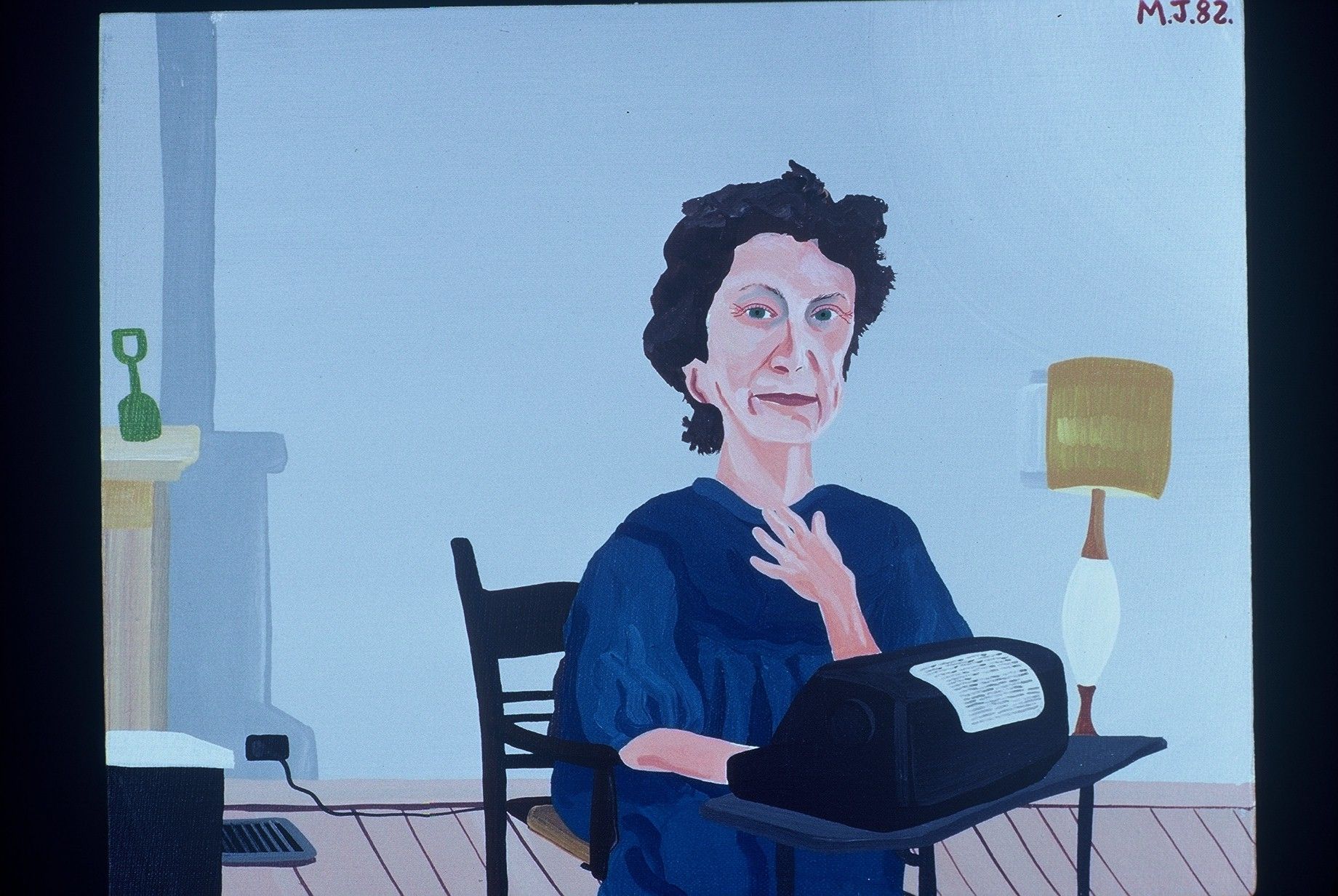
Look The Writer by Mendelsohn Joe 1982

My last blog post was called Nothing Arrived after the Villagers’ song https://115journals.com/2020/05/14/nothing-arrived-day-64-of-lockdown/

It turns out I only had to wait. Eventually 3 cloth masks arrived from the veterinary supply store, not quite as advertised but that’s understandable – not that veterinarians had much call for them on day 70, but the rest of us did. I also received a book from Amazon –Dead Lions by Mick Herron, a birthday gift for my niece, long overdue because it had been circling the eastern half of the continent. And Land’s End sped a summer dress to me, so I could survive my south-facing apartment. Best of all, a new news cycle arrived. Suddenly, instead of watching the death count in the U.S. rolling past 100,000, I got to see burning buildings and looted stores on Melrose. Melrose!! Stay the F away from my eye glass! store.

I caught no glimpse of my grandson in the LA march. He knew better than to be there, I told myself. I called him after midnight. He had just got back. He had been shot by ‘rubber’ bullets three times, one in the chest, but he was carrying his backpack there. One in his foot, which was bleeding, and one missed his face, on which he was wearing a gas mask. He absolutely had to be there, he said. It was his responsibility as a citizen. I didn’t argue. I just whined like an old granny – wait a minute – about live bullets coming next.

“Do over. Do over,” I cried to the gods. I’ll go back to nothing arriving. Please. Yes, I believe in equal justice. I hate fascism. I fought it as a child, dragging a wagon of tin and rancid fat and paper to school. Don’t you just have to do that once?

So I lit a candle to Kwan Yin and Buddha. I have to give some credit to George Floyd’s relatives who appealed for the violence to stop, but I don’t discount my Taoist saints. It did stop – except for the cops who battered girls riding bikes and tasered students out looking for a snack and  crushed news photographers with their shields and pushed old men over to crack their skulls. But, by and large, no more stealing small appliances or burning auto supply stores.

It wasn’t until grandson phoned me on his birthday that I found out he had stopped marching. Too dangerous.

So shut up here in my tower like the Lady of Shallot, I indulge in magical thinking. If I ‘pray’/think hard enough things can change. Some people march in large crowds and refuse to obey police commends, cf grandson, while some people light candles and think hard. If only… justice would be universal and Trump would lose his voice. Pretty sure he can’t write except his signature.

So today, the march in D.C. is going to be bigger than ever, despite the baby gate around Lafayette Park, along more than the two blocks that read ‘Black lives matter’ from the Space station probably. And there will be marches across the States, here in Canada and around the world.

I’m not black. I was -and am- white trash, a hillbilly from the Eastern Townships. In those days, the French held power in Quebec. The French held the mortgage on our farm. Grandpa Willy had defaulted. My father took it on. At first he took me with him to hand over what cash he could pay. Dad’s talent with fire must have been a concern for Monsieur Mortgage Holder. Dad was always first to show to put out the flames in a barn.

It’s not the same. I didn’t have to worry about my black son being shot. They just put my white uppity hippy white son in the cruiser and did a suspect parade of one. “Not him,” said the lady.

And I had a long career, passing as a normal, respectable, more or less middle class teacher. But I lived by a code. Never call the police. Stay out of hospitals. Don’t mess with city hall or the government. Keep your head down. Lucky me! My skin doesn’t advertise my difference.