Separatism Fatigue

SAMSUNG DIGITAL CAMERA

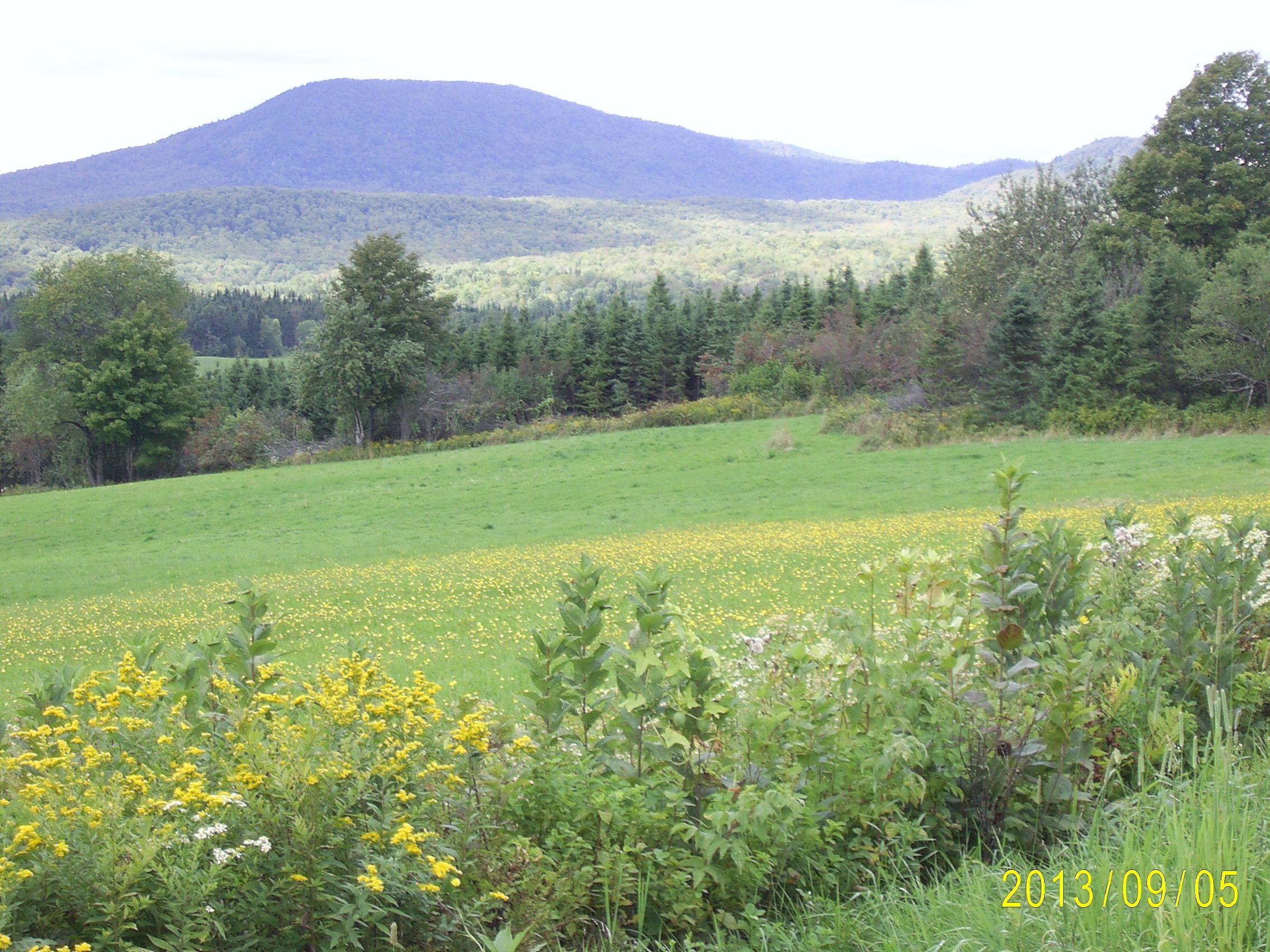
I was born in the Eastern Townships of Quebec, Canada, (on the border with Vermont and New Hampshire) and although I moved away when I was nine, my heart still lives under Hereford mountain. So imagine my surprise when I reacted to the latest uproar about Quebec separating from Canada by wearily wishing it would just go and be done with it.

I must have got old and crotchety, I thought. How could I think that? True I didn’t journey to Montreal in 1995 as thousands of others from right across Canada did in a massive demonstration of love, which worked. That referendum was defeated and we have had almost twenty years of something like peace, not all that peaceful but not excessively worrying either.

On the other hand, we have been stewing over this problem since the early sixties when A Royal Commission on Bilingual and Bicultural-ism was set up in answer to growing Québec nationalism. The effect was that people enrolled their children in French immersion schools across the country and seriously ambitious folk made themselves bilingual. We had a brief cultural détente during Montreal Expo in 1967, but the next year, we had FLQ terrorism and murder in the name of Separatism. We had the War Measures Act, martial law in Québec. Individually, we had serious inner conflict. That was the year the Parti Québeçois was formed by the merging of two existing parties. Under the leadership of René Lévesque, it won the provincial election in 1976.

I took that very hard. My mother, who had been given two weeks to live in 1970, was by the fall of 1976, unable to fight death off any longer and this Lévesque wanted to take away my motherland.

English speakers left Montreal in droves and flocked a few hours down the road to Toronto doing their bit to liven up their new city.

In 1980, Lévesque held the first referendum to that effect, weighting the question by what we Anglais considered to be an ambiguous question. Despite this the No’s prevailed, settling the question, we thought. Foolish hope. In 1995, after the Unity Rally, the No’s won again but barely.

Before I go on, a little personal history. I was an English-speaking Québecer. The mortgage on our farm was held by a Frenchman. He was depicted in family conversations like Simon Legree. I was dragged along by my father to “negotiations” with this man. The rest of the continent might have been pulling out of the Great Recession, but not Hereford Hill. The only reason we were still eating, and not well at that, was we grew potatoes, milked cows,  and hunted. I remember those tense ‘sort of’ conversations. Hard to talk when two people don’t share language, except for swear words. So my father gave up the farm. “Je me souviens” (“I remember”) is on the Quebec license plates. It’s not clear if it means the Battle of the Plains of Abraham where the British won over the French, or the humiliation of having to address the Federal government in English. When I read it, I remember being downtrodden by the French.

In the years since Lévesque’s win, Québec has passed laws limiting education in English schools. If you are a native French speaker or an immigrant, you are required to go to a French school. Together with the falling birth rate in the province, this policy has reduced the population, although people from Haiti or Morocco, French-speaking countries, flock in, it seems. Not sure how the “pur laine” (pure wool) the good old fashioned French Québecois, feel about that.

For a while in the 70’s, when I visited, store clerks, etc. actually pretended not to understand any English or my fractured French. I do have several years of study, but unfortunately under English speakers who had dreadful accents. My children fared better with French-speakers and summers in France. That is changed now. Hotel employees and other service providers are eager to communicate. They have lost their Parisian frostiness.

As I said in an earlier post, it is still not possible to figure out all the highway signs and I find myself praying – in English- that the one I just sailed past uncomprehendingly, didn’t say “Road closed ahead”. Let’s see “rue fermé…” And sort out “est” and “ouest” at 120 KPH!

Lately, Pauline Marois the P.Q. premier of Quebec and the merry band in her minority government, have sought to woo voters by plumping for a more secular state, à la France, which went that way after the French Revolution. She seeks to pass a bill forbidding the wearing of visible symbols of religious allegiance by public representatives and workers – the hijab, the turban, the yarmulka, even to be fair, ostentatious crosses, although small ones are to be allowed. So goodbye job, Muslim, scarf-wearing daycare worker/ teacher assistant. Marois called a provincial election for April 7, 2014 and proposes to win a majority in the legislature by this strategy. She vowed to fight the election on that bill and on the province’s economy.

Last week, she showed up at a press conference with PKP (Pierre-Karl Péladeau) in tow. He, she announced, would run in the election. He is the owner of a country-wide media conglomerate, including newspapers and television stations, which he vows to retain, but place in a blind trust if he is elected. (Blind, my eye; this guy is a hands-on publisher.) Trouble is he didn’t act like a humble, first time candidate. Immediately, he made it clear that he chose to run only with sovereignty in view. (Yes, that means Separation.) By the end of the week, Ms Marois was (gently) holding him back from the microphone. Then she went on to explain that a separated Quebec would still have open borders, use Canadian currency and have a seat on the Bank of Canada.  Really! but will there be a tariff on cheese?

Pundits including Conrad Black in Saturday’s (March 15, 2014) National Post (Let’s hold our own referendum) think that “the French are about evenly divided on the issue, and the 20% of Quebecers not native French Canadians are solidly Federalist” leaving opinion at about where it was in 1980 – 60 No to 40 Yes.

But … do I care? Finally, in Rex Murphy’s column in the same paper, I found out that I am not so special after all. In fact, he says that as a country we are worn out by this marital spat and we have all begun to think, “If you want to go, go.”

Did I actually say that? Oh my dear starvation mountains please still be there.
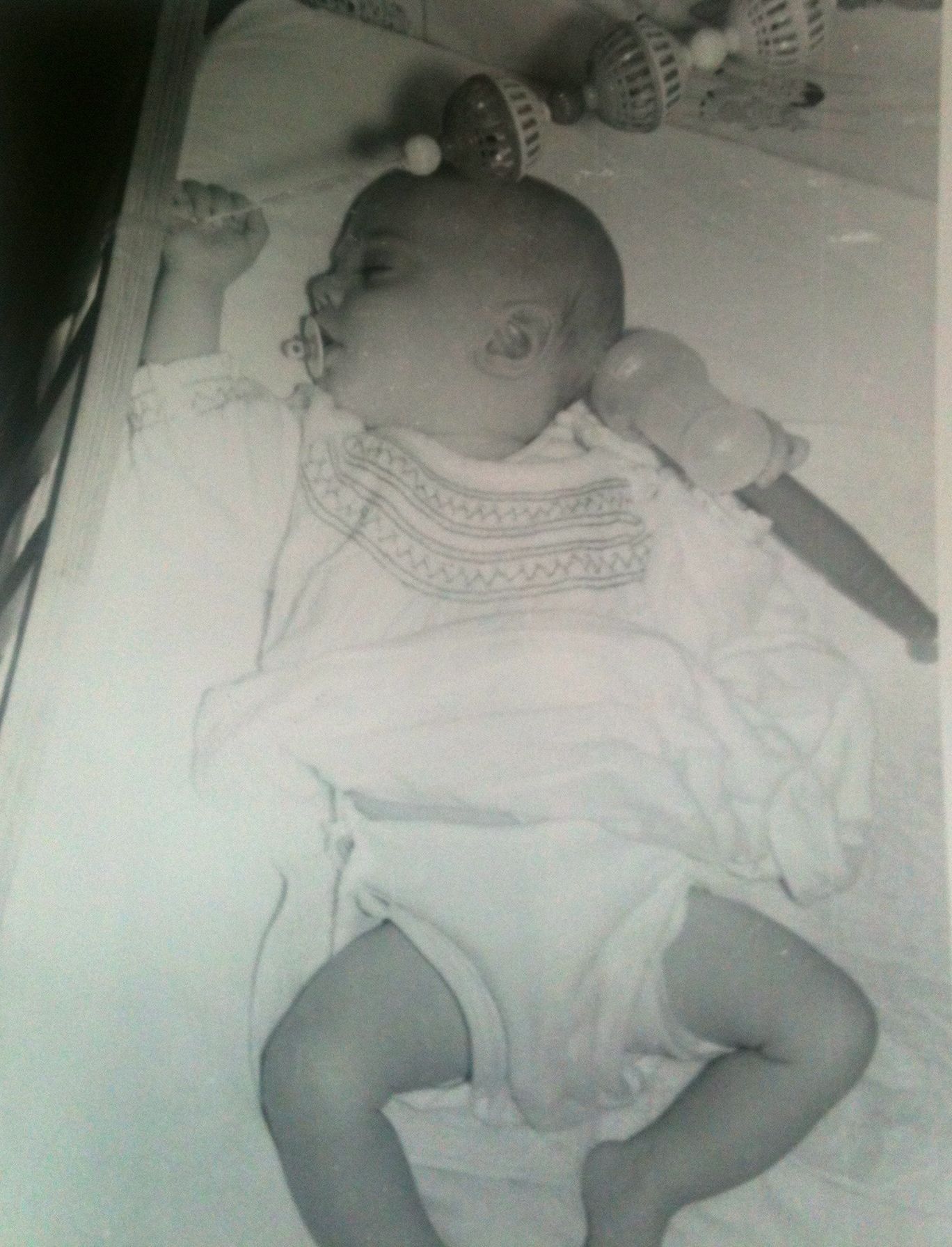
Daniel – unknowable infant

(Part of an on-going series about my estranged son.)

Babby D.So we came home from Mt Sinai Hospital, Daniel and I and the red roses. Blake went off to collect Julia from the babysitting friend’s house and I put the sleeping baby into the baby carriage that served as a bassinet and lay down to rest close beside it. I had missed one-year-old Julia badly and wondered how she would react to this little rival.

In a few minutes, I had my answer. Her father put her down on the bed and I picked up her brother. Her face was suffused with joy. In her excitement, she leapt to her feet, over-balanced on the mattress and crashed to the floor, hitting her head and howling in pain. Blake rescued her and sat down to comfort her. She really was hurt.

Daniel barely flinched at the noise. He slept on. Evidently, this was a different sort of baby, a calm infant, not given to nervous response.

In a few minutes, Julia got over crying and leaned her tear-stained face in to kiss her brother’s round face. The next minute we were all laughing. As far as she was concerned, I had brought home a living, breathing doll for her to play with.

And he happened to be a boy. In those days, there was no way of knowing that before hand. Older women would whisper,”She’s carrying low. Must be a boy.” They had said that throughout my first pregnancy. That worked out! Boys were scarce on the ground in both families. Although Blake’s father had been one of many boys, Blake was the only one carrying the Durant name in his generation. Now there was Daniel Durant. And the only male member of my family was my little brother, Rob. My father was a man who wanted male heirs, hence my sister, Georgia’s name. Blake was pleased as well, although lineage meant little to him.

And me? I was intrigued and a little unnerved. But it didn’t take me long to learn to take evasive action while changing diapers. One face full of pee was enough.

The thing about little Daniel was that he was quiet. At first newborns don’t seem to realize they’ve been born, but even when he got past that sleepy stage, Daniel was quiet. For one thing, he was well-fed. Bottle-fed. Not from choice. Not many mothers breast-fed in those days – 1962. I had been determined to, a year before, but it hadn’t gone well. The head nurse had screamed at my left breast’s in-turned nipple and then screamed at my doctor’s incompetence. My own mother and mother-in-law just shook their heads silently over my outrageously old-fashioned idea. My grandmother seemed to have forgotten the “unpleasant” experience. I had no friend, no group support. And Julia lost weight in the process of a session of nursing and screamed in starved protest. When she was a week old, we boiled up the bottles and began to give her formula. Now, a year later, she climbed on the traitorous mattress, sat beside me and watched me feed her brother his bottle.

She adored him. We all adored him. He was adored.

He had to be Danny because Daniel was too big.

He had big blue eyes and when they began to focus, they sought out his big sister. She was delighted to entertain him and he was delighted to be entertained.

D watches sisterMy idea of heaven was to get them both down for a nap at the same time although, of course, Julia was often busy pulling every pot and pan out of the kitchen cupboard and bashing them about while he slept. I was considered a very liberal mother for permitting this kind of kitchen chaos.

There were two baby cribs in the bigger bedroom and a second high chair standing ready. There was a playpen for containment of joyous energy when necessary.

Mostly we three were alone. Blake taught math in North York, 40 minutes away and returned there two nights a week to teach night school. On Sunday mornings, he went out to tutor an adult student. We were trying to make ends meet. So as I worked I listened to the CBC, especially from noon to 1:30 when books were read aloud. We listened to popular music as I worked or I sang to them. I loved singing and still had a voice. They seemed to like the singing and danced as small children do. Once he got into his high chair, Danny waved his arms and jumped on his seat. Or he bounced in the Jolly Jumper which hung in doorway. Later, Jolly Jumpers like bottle feeding, got a bad rap, but what did we know?

We moved when Danny was six months old. Long story there – adult only apartment building, furious neighbours….. Besides we reasoned, children need a yard. So we rented a house and moved to the Bendale subdivision in Scarborough. It had only 600 square feet, but it also had a finished basement room, with good big windows. Once again, we kept them together in the biggest bedroom, so they could keep each other company. One of the things I have stood charged with as a mother is not providing visual stimulation for these budding visual artists. Apparently, the only wall decoration was a blue thing, that I was able to identify to the adult complainers as a thermometer.

We had had to leave Dr Anchelson behind since I didn’t drive. We had only one car anyway. So I found a new doctor around the corner on Lawrence Ave.

One day, I loaded them both in the buggy and cut through the walkway beside the Catholic Church and School to his office. All morning Daniel had been crying and pulling at his ear. Holding him in my lap, I told Dr. Isaacs that he had an earache. Carefully, he examined Daniel’s ears, first one, then the other. Then he turned to Julia, who was standing beside us, and examined her ears. “This one has the earache,” he said, pointing at her.

In a nutshell, that explains why Daniel, as an infant, was unknowable. He and his sister acted as one organism.

Septuagenarian Hobbit Has Ultrasound

My hobbit attitude is getting out of hand. I could say it’s the weather that’s making me a stay-at-home. And my age. My muscles are prone to spasm and never more than when there is a windchill of -30 C (-20F). So much of January, I’ve been hunkered down indoors, reading my Christmas books and watching my Christmas DVDs. I’ve even eschewed tai chi classes in favour of moving the furniture and practicing in the living room. But yesterday I had to go out.

I had an appointment for an ultrasound of my right breast. I first mentioned my oncologist’s concern about my right breast in The Cure for Fear https://115journals.com/2013/11/22/the-cure-for-fear/   Evidently, right breast felt that left breast had got altogether too much attention in the past and had started acting out.

When I wrote The Cure for Fear, I was convinced that I would know the scope of the disaster the next day. As it turned out, I didn’t. First the results got delayed. Word-processing of results is no longer done in-house. It’s moved off shore or something. Possibly there is a “typing” factory in South Asia. So my first appointment got cancelled. Then I made the trip to Streetsville, an hour away, to be told that the doctor had had an emergency and wasn’t there. But, not to worry, said his assistant. The results were okay. When I finally got to see the doctor, two weeks later, he was distracted. I tried to ask a question and he said, “Can’t you see I’m reading?”

OK.

I waited silently.

There was, apparently, a little party going on in my right breast: a swollen lymph node, a cyst and a small lump, all nicely lined up at 10 o’clock. After careful examination, Dr. ____ gave me the choice of having a biopsy right away or a further ultrasound in 3 months. Breaking my silence, I said, “Depends on what you mean by right away. I’ll be away the rest of December.” And so, it came to pass that I ended up with this appointment at the end of January. (How is that 3 months, anyway?)

First thing I did when I got home from the oncologist was fish out the reports from 15 years ago when left breast was getting all the attention. There I read that a small benign lump had been detected in my right breast at 11 o’clock. I hied myself off to my G.P., report in hand. I was careful not to speak while he was reading. Could be, he said. Might be the same lump lurking there all these years. Couldn’t be sure. Sure enough to get my hyper-vigilant, worrier off the case. I flew off to Brussels where I very nearly forgot it.

Yesterday, I arrived at the hospital early. Just as well since I had to drive nearly to the top of the parking garage. Like many others, I feel that I am a co-owner of this garage its tariff is so steep. Since I was so early, I decided to wipe the side windows, which I could barely see through for the dirty salt residue that had been whipped up off the highway. I wet paper towel with windshield washer fluid and wiped them down. Don’t try it. I seem to have forgotten everything I ever knew about driving in a Canadian winter. When I came out to drive home 2 hours and $12 later, the windows were covered with dirty swirls through which I could not see at all.

I’m used to the check-in procedure here now, having checked in at least once a year since the year of the left breast. I even manage to find the ultrasound waiting room, and get myself into one of those nice gowns that tie in the back. It’s inconvenient to have to carry my clothes and my long winter coat, which sit next to me while I wait. And wait. And wait.

No problem. Someone is texting me pictures and CP 24 is on the television set. It’s true that I am a little unsettled by the fact that everyone who comes in after me is immediately whisked out of there for their test. The announcer on the news channel tells me that Dufferin County has declared a state of emergency and closed all its roads. Whoa! That’s north of here but still, has the weather changed that much since I came in? Then “Code Blue in Cardiology. Code Blue in Cardiology”. Then there’s the mayor on the screen, looking like a candidate for a Code Blue himself and being served with papers alleging that he engineered a jail house beat-down. Not that Mayor Ford gets much airtime because Justin Bieber is back in town surrendering to police on a charge of assault. I tear myself away from all this hair-raising excitement. No one else waiting. Four people, presumably ultrasound technicians, are chatting away in front of computers. And I’ve been left here in limbo? It’s like a really bad dream I once had. https://115journals.com/2012/07/20/i-dream-of-etherica-life-changing-dream-2/

Finally, we get down to the task at hand, with apologies because they are so busy. ???? The good news is that the gel is warm these days. It takes a long while. It is clear that the cyst is alive and well, if cysts can be said to be well, but deep breathing helps with pain. This is taking much longer than usual. At last, the technician says, “Why are you here?” For one moment, I think “Wasting taxpayer’s money.. do you think we are going to pay for this?” But I explain about right breast’s recent party mode. “Well, I see the cyst but I can’t find anything else,” she says and tosses me a towel.  She’s just broken the sacred code of technician silence. “Oh, thank you, thank you. You’re so kind to tell me,” I cry, only just restraining myself from throwing my arms around her.

So that’s the end for now. Mr Death isn’t knocking on the door for this green-eyed girl just yet.

Winter Blues

“Pile Driver Blues” was an a cappella opus, I made up one weekend when I found myself trapped in a San Fransisco airport hotel during construction. I sang it to a two year-old as I pushed him in a stroller around the concrete. Next door was the infernal, 12 hour a day, ground-shaking pile driver. It was not my last encounter with the blues. January seems to breed them.

Does it pay to examine their origin closely? Holiday hangover? Weather fallout? Economic downturn? Legitimate grief? Fatigue? All of the above? Information is always useful, I suppose, and may provide perspective.

The Yellow Emperor’s Classic of Internal Medicine, the treatise on ancient Chinese medicine, sees it as a good and necessary way to slow us down in winter so that we get enough rest to consolidate our strength.

Early this morning, my sister Georgia, alerted to my winter blues, phoned to prescribe Northrop Frye’s Double Vision Chpt. 3. I was taken aback, to say the least. I was on my way to a tai chi class, however, so I tabled the suggestion.

Two hours later, I was back home, stretched and invigorated, but bluer than ever. I tried a nap and woke up ready to try her idea. I found Double Vision on-line and began reading. What do you know, she might be onto something.

Chapter 3 is called “The Double Vision of Time” and begins with a description of the tragedy of time. “It seems probable that the basis for consciousness … is the awareness that the uneasy pact between body and soul will dissolve sooner or later..”  The body’s drive to survive makes us suppress our consciousness of this as much as possible or, at the very least, to convince ourselves that we are not going to die at once. The result, however, is a “subdued anxiety”, or quiet desperation, according to Frye, scholar, critic, a fellow Torontonian, and 78 years-old when he wrote that (1912-1991).

Ordinarily, we see time as horizontal and linear, comprised of past, present and future, although all attempts to grasp “Now” prove illusive. It barely emerges from the past before it vanishes into the future. Moreover, its progress involves a kind of repetition which Frye describes as parabolic as is clearly demonstrated in Shakespeare’s seven stages of man, beginning and ending in helplessness. (“All the world’s a stage..” As You Like It II, vii) “Thus the tragic aspect of time in which every moment brings us toward death.” The double vision of time involves superimposing a vertical dimension, in which all time exists at once.

In practical terms, we can free ourselves from time by “genuine achievement” in everything that matters and that can be accomplished by the building of habit through “incessant practice”. Practicing the piano, for example, repetitively playing scales and practice pieces eventually allows us to break through to the freedom of accomplishment. Thus we come to an “enlarged sense of the present moment”. Experience and awareness are one. Now we are in the “Now”. This intensity is spiritual connection, the vertical dimension, enlightenment.

Right. I think I get it. I do have a number of practices: tai chi, journal writing, cooking, blogging. If I just keep at them, with intention, I’ll break through to a timeless moment? And such a moment will surely be free of the Blues.

Living in 3 Time Zones: a matriarch’s tale

There were stars overhead. A long-legged eight year-old had plunked himself down in the bed beside me. We could hear the revelers downstairs, but youngest and oldest, we craved rest. The stars on the ceiling glowed in the dark and I remembered sleeping under just such stars 20 years ago in Venice Beach, California, an ocean and a continent away. This is how far my family has spread. This is how far I have had to spread my arms to keep them – what? – not safe, for that is impossible. Let us just say “to keep them”.

Technology has made the job easier in the last 15 or 20 years. E-mail was a great help, so much faster that snail mail. Answering machines and FAX machines appeared. Then long distance rates started to fall, the mobile phone came along, and texting became possible. Distances were easier to bridge.

In Brussels last week, I watched the last episode of the BBC’s David Copperfield in which the Micawbers embarked on a sailing ship for a new life in Australia. Something had finally come up, as Mr Micawber so optimistically kept on saying it would, throughout his disastrous life. The villain of the story, Uriah Heep, was also on his way there, barefoot, chained to other prisoners, to pay for his crimes. His mother cried out, “My poor boy. I’ll never see him again.” Australia was just too far then, even supposing Heep lived to get released. Letters might be exchanged, but probably only two or three a year, given the time the voyage took.

In 1945 when my father moved us from the Eastern Townships of Quebec to Hamilton Ontario, my nine year-old self seriously doubted that I would ever get back to the mountains and the family I loved. Letters were posted and received weekly, but we had no phone. In the event of something momentous like a new baby brother, we could borrow the neighbour’s phone and pay the exorbitant long distance cost. In fact, we did return the summer after my brother Rob was born, in 1947.

Rob was the first family emigrant, hying himself off with a backpack at the age of 19 to explore the world. Our mother cashed in his life insurance policy to finance his getaway. By then it was a tossup whether our father would murder Rob or Rob would murder our father. All of the three older girls in the family harboured the same homicidal urge, but were not as capable of the deed.

Rob stayed safely out of reach of familial harm in Afghanistan, India, and Turkey, where various strangers had a go at him. Finally, he settled in Belgium. Where he had a phone which I could now afford to call to tell him our mother had been given only weeks to live. He thought it was a trick, and indeed, our mother survived against all odds for another 6 years. She had that ace in her pocket though -imminent death- and he came back for a visit – 3 years after he had left. He invited us to visit him and  2 years later I did, with my young family. We formed a friendship then that had not been possible before. So I began the process of long distance living. What time is it here? What time is it in Belgium or Italy or Sweden, wherever his career as a film gaffer took him?

Just when I got the knack of that, my daughter Julia took off for New York City. No problem, same time zone. But -what’s this? She’s off to the west coast. She’s getting married in Las Vegas. And so I began living in 3 -count’em – 3 time zones.

It’s quite dizzying. Whenever I want to talk to Rob, he’s already asleep. Initially, after I returned from Brussels last week, I woke up at 4 a.m., Eastern Standard Time, thinking it was already 10 a.m., and called him then. My daughter up on her west coast mountain would be snoozing away in her 1 a.m. world. As I acclimatized to Toronto time, I kept missing windows of communication. I ended up texting Rob while he slept and getting his reply when I woke up. Julia is beyond the reach of cell phone texts at present, but I catch her at odd moments as she builds the fire in early morning.

As I lay there on Christmas Eve, looking up at the stars, I thought about all the grandparents who travel great distances to be with their far-flung families and sleep as like me in children’s bedrooms. I thought about older women alone in their cars on lonely highways and on long distance flights. Like me, they may well count over 50 such trips and see the results in maturing children who know they are part of something bigger.

That something is family. I can’t help it. I have to communicate, to be there. Someone needs to hold the family together and time has made me the matriarch.

The Septuagenarian Hobbit Gets a Parking Lesson

Oh, stop trying to make me hate you, Toronto. You’ve already got sub-zero temperatures, vicious storms and week-long power outages going for you. Why did you have send the SUV woman to give me parking advice?

I was in the under-ground parking garage at Mountain Equipment Co-op, still jet-lagged from my return from Brussels, but putting a good face on it and taking advantage of a break in the weather to return a faulty product. I had already paid for parking at the wonderfully old-fashioned booth. The attendant was happily gossiping with a friend. There were many empty spaces. I was taking the opportunity to change the carpet floor mats to the rubber winter ones, when a woman in a beige SUV pulled up behind me.

“I realize it’s hard to see the lines,” she said, “but you are parked so that no-one can use the next spot.”

I could just barely discern a yellow line when I looked down. It was covered with salt and dirt.

“Thank you so much for telling me,” I replied. “But try not to get hysterical. I’m leaving immediately.”

“I’m not hysterical…”

No, just really, really annoyingly self-righteous and hidebound and so very, very puritanical, typically Torontonian, indeed typically North American.

While I was thanking her again for rendering my day more pleasant, I was remembering how cars on my brother’s one-way street in Brussels were often parked facing the wrong direction. No tickets. No outraged neigbours. Oh, carry me back!

I’ll hate myself for saying this later, but at least our mayor is a little looser.

(I know that’s an allusion, but I figure you’ve all heard about Rob Ford.)

The Septuagenarian Hobbit Returns: New Year’s

(This is one of a series of posts in which I have explored my hobbit-like reluctance to travel.)

The arrival of 2014 was confusing for me. My body-clock registered it at Brussels time and took me to bed shortly afterwards, but not before I received a text from my brother Rob, who had probably just set off fireworks in Bois Fort: Where are you? I have looked all over the house.

I can’t imagine how confused my fellow travellers must be. I joined their flight at the Brussels airport, half way through their journey from Delhi – mothers, fathers, grandmothers, children, babies and one grandfather. Shortly after take-off at 10:15 a.m., the lights were turned down and  most of them went to sleep. I joined them.

Even as I was swept south on Highway 427 from YYZ, otherwise known as Pearson International Airport, I felt as if some essential part of me had still not landed.

It is after 3 a.m. eastern standard time. My neighbours have just come in from partying and gone to bed. I went to bed at 6 p.m., so here I am.

I postponed the return to my home by stopping to eat. I was ready for dinner. Blake, who had picked me up, wanted brunch. Easy to get dinner at noon, but brunch on a weekday, New Year’s Eve or not, took some convincing.

Finally, I got home. The lights were on. I had carefully set the timer to put them on at sunset, but the ice storm cut the power, so the timer clock thought it was dark already. Warily, I approached the refrigerator. Four days without electricity! Nothing. No dreadful smell. My landlord had come in, I knew, and all the frozen meat was gone, but all the glass containers of stock, soup and stew were still there. For a brief moment, I thought there was a reason, but of course, there wasn’t. Refrozen they sat patiently waiting to give me ptomaine. For the third time in a year, I had lost everything in the freezer. (But global warming is a myth and all this crazy weather is just part of a natural cycle!!!!!!!)

The news showed me poor people in long lines waiting -many in vain – for food vouchers. They had lost their Christmas food and very likely had spent the holiday freezing in the dark.

I had gone with Rob to the fish market in Brussels to pick up a huge iced platter of oysters, sea snails and shrimp, destined to join turkey as our Christmas Eve feast. (The snails were particularly delicious.) I had been warm and cozy throughout. Evidently, there are advantages to travel.

(I will post one more blog in this series, in which I will explore the surprising fact that my Brussels family, whose language I can barely follow, has so much in common with my Canadian family and my Southern Californian family.)

Happy New Year.

The Septuagenarian Hobbit: honored guest

(Fifth in a series in which I explore reluctance to travel)

The 13th century poet Rumi said “You are the honored guest/ Don’t go begging for bits of bread. (Trans. Coleman Barks) I have been learning what he meant by that during this Christmas trip to Brussels.

In part I am honored here because my brother Rob introduces me everywhere as “ma soeur” with great affection and any sister of Rob is instantly honored by his vast number of friends. They are constantly in and out of his house here in Bois Fort. A remarkable number of them seem to have keys and the rest ring the bell at all hours.True two of them are his grown up daughters. Others have found refuge here until they could get on their feet. Still others drop by to see how his recovery from surgery is going or to borrow his sander or soy sauce, just to chat or on the off chance there is dinner.

Christmas Day, Rob interrupted my nap. He sat on the edge of the bed and presented the problem. He had invited 4 people for lunch, intending to serve Christmas Eve leftovers. (Christmas Eve is the main event here in Brussels.) One had cancelled. In his mind, lunch was cancelled. Now the other 3 had arrived.  No leftovers had been left. What to do? In 5 minutes, we devised a menu of smoked salmon, quiche from the freezer, Polish blueberry-stuffed pasta, his famous green salad and cheese. In half an hour it was on the table. Each guest specialized. One made a meal of salmon, another of cheese and salad, etc. Only the exotic pasta got short shrift. And of course there was wine. He had sent me down to the wine cellar, being hampered himself by his “changed knee”. Absent-minded he may be, but he honors guests.

In turn, these friends invite us for dinner. At home in the west end of Toronto, I lead a quiet life. The door bell never rings. Dinner out is, at most, a monthly event. Cozy it may be and introspective, but not dinner out every other night. And, to my embarrassment Christmas gifts for me. I protest to Rob that I have no gifts in return. “You are the gift,” he assures me. I contemplate tying a red ribbon around my neck. “You came so far,” he says. A lifetime of self- criticism stands in my way. How is it possible to feel worthy of this outpouring?

But that is the point Rumi was making. We don’t earn this honor. It is a given. We show up. We are the honored guest and the bounty of life is ours.

Septuagenarian Hobbit: Brussels con.

( the 4th in a series in which I examine my Hobbit-like reluctance to travel)

The street in Bois Fort, a district of Brussels, is narrow and lined with attached houses, many of which were once businesses. My brother Rob’s house used to be a bakery for example. The ovens used to be in a building in back, separated from the kitchen and store front by a small yard. The two buildings are now one and the ovens have been replaced by a fireplace. You can still see where the counter stood on the tiles in the living room and there is a tin sign hanging on a wall on which the prices of the various loaves could be written in in chalk.

As always people drop in. They don’t call first or even text. They just show up. If there is a meal on offer, they share it. They may even bring their wash.

I live in an “old” suburb of Toronto. The only people who ring my doorbell are from the Jehovah Witness program. I don’t even, anymore, get those annoying people who demand to see your utility bill because they can save you money. The rare visitor gives me fair warning of impending arrival.

I remember that open door policy here in Bois Fort even on my last visit 20 years ago. Whether it is actually a neighborhood phenomenon or my brother’s influence I can’t say. I remember that as a young teenager, he more or less lived with a neighbour, so communal living may come readily to him.

Across the street live two octogenarians that he calls his little old ladies. Their cottage sits four feet below the street on which it once sat level. It is freshly painted and has an indoor toilet now because of Rob. They protest that they don’t need these fancy new gadgets like water heaters, but they seem glad of his visits and the roast chicken he buys for them at the Sunday market. Sundays they get no meals on wheels, another thing he arranged for them. They are Bruxellois and although they speak French, their actual dialect is a language peculiar to that group.

They are not the only marginalized people Rob has adopted. He is mentoring a young man with mental challenges, teaching him the value of wearing his teeth and underwear, for example. The lame and the halt find sympathy here. He has a firm belief that we owe it to the world to make it a better place, no matter how annoying the process can be.

Why? We four siblings had every opportunity to become homeless addicts. While it is true our parents were hard workers who professed to love us, we lived in fear for our lives, constantly vigilant. At any moment, our father might take it into his head to beat us or our mother might try to drown us in the bathtub. Mental health issues! Ya think? In fact, three of us ended up in the teaching/preaching game and Rob, who was in a more creative line, took that vow to make life better for others. And did it laughing. Mostly. But if that kid doesn’t wear his teeth….

What’s not to like? Monastic me with the silent doorbell, practically imploded the other night as the table and then the family room filled up with laughing people. Long bouts of French too fast for me to follow made me go off line. Mostly translations followed so that stories got laughed at twice and that was, if anything, more overwhelming.

I have to do a certain amount of self-mentoring. I am in no danger of leaving my teeth out, but I have to tell me to relax. There is no danger here. These people actually like each other. My brother has gathered them around him, baggage and all. Despite illness and  grave prospects, there is a pocket of hope on this cobbled, narrow street.

The Septuagenarian Hobbit: part 3 -Brussels

Hobbits are notorious stay-at-homes. It takes a wizard to pry them away from their hearths, and urgent need. Bilbo in one generation and Frodo in the next took their place in the front lines of the war between good and evil, light and darkness.

I have turned into a Hobbit in my old age. I left my home with serious misgivings (see https://115journals.com/2013/11/28/the-septuagenarian-hobbit/) and the journey proved not to be an unmitigated pleasure (see https://115journals.com/2013/12/14/septugenarian-hobbit-part-2/). After three months of apprehensive planning, I find myself back in my brother Rob’s house in the Bois Fort district of Brussels. I was last here 20 years ago and before that 20 years earlier than that. We are, truth to tell, a little concerned about the next trip.

I am here at Rob’s invitation. As soon as he knew he had to have his knee “changed” -his English has grown creative in his 45 years here- he called to ask me over. Not right after the surgery but two weeks later when he would be better. Oh, foolish hope.

I owed Rob. He flew the other way in September 2001 at short notice to help me pull out of a steep decline following surgery. It took him one day to get me to eat, two to get me out of bed to eat and three to get me out to eat. To my credit, I have already inspired him to get behind the wheel of his van, clutch and all. It is his left knee that was changed. And today, we have done 16 leg lifts about an inch off the mat. It hurt one of us terribly.

I had two concerns when I set out. First of all, my brother is a force of nature. His ex-wives and girl friends, all of whom drop in on a regular basis attest to that. He is funny and charming and generous and kind and spontaneous and outrageous and alarming. You never know what he will come up with next, He claimed that a broken leg would slow him down to my speed for a change. Not a chance! He jumps out of the little white van and I have to go rushing after him waving his crutch.

The other concern I had was dealing with the language. He speaks French with, apparently, an odd accent. Some of his friends speak English. Some don’t. I can sort of follow along, recognizing enough words to guess at the meaning and he often translates. What I didn’t reckon with is Flemish. It looks as if it’s an Anglo Saxon language, but just when I need the French translation, there isn’t one.

For example, there are 2 washers and dryers in this house. At a certain point, I had all implements engaged and while I could get clothes clean, I couldn’t get them dry. I chose “Kast droog” I chose “Extra droog”. At a certain point, I realized there was a button which said “Laag” or “Faible”. I disengaged it. An hour later the clothes were still wet. Then I saw a little drawer on the left above the door. I opened it and found a  rectangular tray, 5 inches deep brimming over with water and a notation – in 5 languages, including English- commanding me to empty the tray after every load. My brother limped downstairs. He emptied the tray down the floor drain. And low and behold, there was one in the other dryer as well. The “woman” didn’t know about them, he opined. “I never do the washing,” I heard him say as he started up the stairs. Just now I went down to check them. They were full again after one load. I’m pretty sure the woman knows.

To be continued (Sorry my fingers got away from me again. I wanted to save not publish. See you in the morning.)