Cheering for the Underdog: Gladwell’s David and Goliath

Did you consider calling your son, Goliath? Would you tell him to go to the best university possible? If he were murdered, could you forgive his killer?

Malcolm Gladwell’s latest book is David and Goliath: underdogs, misfits and the art of battling giants.

David is one of my favourite names. It means “beloved of God” and denotes a hero and a poet. In 1 Samuel 17, we read of David’s exploit as a young shepherd sent to take food to his brothers in the front lines of Saul’s army as they face off against the army of the Philistines across the Eloh valley. Things are at a standoff. Neither army will venture down from the safety of the hills. While David is there, the giant Goliath, armed to the teeth with spear, sword, and javelin and wearing full body armour and helmet, issues a call to single combat. When no other Israellite answers it. David steps up. He declines Saul’s armour and runs toward Goliath with his sling whipping. The rest is history.

Gladwell examines the situation, citing scholarly literature, ballistics specialists, medical experts and geological facts. Goliath, who appears invulnerable, actually has serious limitations and David, who appears so vulnerable, actually has significant advantages. In fact, it would have been more surprising if David had lost.

Power is not always triumphant. Giants can be felled.

Gladwell goes on to consider how a disadvantage, like having dyslexia or losing a parent at a young age can have a positive effect. Twelve of the first 44 presidents of the United States, from Washington to Obama, lost their fathers at an early age. (p. 142) Emiel ‘Jay’ Freireich who pioneered a cure for childhood leukemia lost his father and had a truly awful childhood. The strategies we develop to cope with our disadvantages have a way of lifting us out of the ordinary. If….

My own life illustrates the “if” – if at least one person in the situation, the brutal childhood, for example, supports and believes in you. My Aunt Mae did that for me and my sister and we were able to pass it on to our siblings.

Then he tackles advantages like getting into a great university. Trouble is even if you are very bright, you may find yourself feeling stupid compared to your classmates because they are even brighter. Discouraged, you may drop out, whereas, if you had been satisfied with your second choice, you would have stayed the course.

One chapter considers the trickster in folk mythology and how enslaved people saw Bre’er Rabbit as a model for dealing with oppression. It’s all about not getting thrown into the briar patch. Oh, please Mr. Bull Connor, not the briar patch. A careful examination of an iconic photo – a police dog attacking a boy – astonishes.

Throughout the book, Gladwell uses the u-shaped graph to show that good effects can result up to a certain point, but past it, things go down hill. He relates this to class size, California’s Three Strikes Law, and even wealth itself.

The Nazis bombed London night after night expecting to demoralize the people into defeat. Churchill and his researchers had predicted this would happen. Mental hospitals were standing ready. Didn’t happen. Rather the opposite. Londoners remained calm and carried on. The looneybins stood empty. Has to do with the difference between a near miss, which is very traumatic, and a remote miss. People who survive a remote miss, and they were in the majority, actually conclude “that wasn’t so bad”: they have defeated fear.

Two of the most affecting stories are those of great forgiveness and great courage. A mother forgives her daughter’s murderer and a group of Huguenots in a remote area of France not only defy authorities during the German occupation but send a letter to the Vichy government saying, “We feel obliged to tell you that there are among us a certain number of Jews.” And they prevailed.

What a hopeful and encouraging short read.

The Septuagenarian Hobbit

Recently, I discovered my inner Hobbit. And no I don’t mean I found I have leathery feet with hair on top.

I am planning a trip to Brussels in December to stay with my brother. Blake congratulated me, saying it would be an adventure and I heard myself replying that I don’t want an adventure. Hobbits are notorious for their love of home. They want to enjoy their second breakfast in front of their own hearth, not go wandering over the earth on quests.

Don’t ask me how my brother, Rob, enticed me to go. He did hold out the promise of my own little apartment at the top of his house where the pigeon loft used to be. The first floor used to be a bakery and still has the wide Dutch door through which the loaves were sold. And so I was seduced.

There was a time when I set off gleefully for long summers on the road. Through Belgium, France and Corsica with side trips into Italy and Greece. In a tiny Fiat. Staying in “Clean but comfortable”, one star hotels.  Laughing at getting locked out and struggling through wet laundry lines to get in the kitchen door. Amused by the timed hall lights that left you in pitch darkness half way to the toilet. Undaunted by not understanding the language.

Now I am daunted.

As I recall Belgian cuisine, while outstanding, relies heavily on bread and frites. I haven’t eaten either for some time. My brother is a vegetarian of the fish persuasion.  Christmas dinner, (served on Christmas Eve) will be a huge fish stew perhaps or a steamed Irish salmon. I am ill-adapted to fishy feasts, living as I do far from the sea. Okay, I have those recipes buried somewhere in my memory or in that bottom drawer of the buffet. I’ll just have to go with a complete gastro shake-up. Years ago, I went on a family trip to Maui with the same sort of reservations about hotel food, but the astonishing thing was that the laughter at every meal rendered my digestion better than it had ever been.

But with some things I won’t take chances. My buckwheat pillow is going with me in my carry-on.


The Cure for Fear

Okay, I should be asleep. I need to be. I want to get up early. Things to do. May actually be getting something, (When am I not?) But I have this great opportunity, which I am going to lose tomorrow. I am uncertain and afraid. Tomorrow I will call my oncologist. If my appointment is moved forward to next week instead of the week after, I know the lump that we’ve detected needs further study.

Blake and I were sitting in Starbucks in the lobby of Toronto General, gazing back at the Art Deco facade of Princess Margaret Hospital from which we had just jaywalked.

“Even if I do get an immediate call-back it could still be A or B. That would have to be determined,” I say.

“Or it could be C,” Blake quips.

“Oh, it could very well be C,” and I have to laugh.

Yes, well,  we have just spent two hours waiting to hear Blake’s test results with regard to C. They weren’t bad, but then they weren’t good either. It’s the usual seesaw game of prostrate cancer. Knock down the PSA score and the testosterone with hormones. Ease off. Watch the PSA rise again. Today, it was decided that it was time to go back to the heavy ammunition. Not easy news for the manly Blake, but excellent news in that the drugs have improved since last time and he is line to get this extremely expensive medication for free.

Not many men in the clinic bring along their ex-wives probably, but Blake’s young second wife was carried off by cancer two years ago. So he and I are embarked on this mutual study of mortality.

Much else has been happening this week. My brother Rob underwent knee replacement in Brussels. My daughter and her husband declared bankruptcy and their home is about to be foreclosed on. True this “disaster” has opened up their lives and led them to a prospective mountain home. My grandson, Leo, who has to get his driver’s license or lose his job, has his own test redo to deal with. I had enough fear to go round.

So I kept up my mantra, “I love you and I trust you.” Initially, I just mouthed the words, but gradually I realized what they meant. Driving down to the hospital today, I found it had morphed into, “I love you. I know you are pure love. I trust love.”

Blake and I, out of nothing but pure love, created a home, two children and careers that supported us. An excellent foundation for this present project.

At home, afterward, I read Rumi’s poetry (Rumi: The Book of Love, trans. Coleman Barks). One section is called “Tavern Madness” and the poems in it are about the ‘drunkenness’ of the overwhelming contact with the divine. Dinners in our home were full of such non-alcoholic ‘drunken’ conversations, full of revelation and confidence in our vision of life.

Rumi says: I didn’t come here of my own accord
                  And I can’t leave that way.
                  Whoever brought me here will have to take me home.

I love the way, poetry lets you work things out for yourself. And I love the idea of surrender to the steady shoulder that is capable of supporting my staggering self.

In another poem, Rumi says, I am the clear consciousness core of your being,                                              The same in ecstasy
                                             As in self-hating fatigue.

And so, I came around to an open heart and fear dissolved.

Toronto’s Mayor, Rob Ford: view from Etobicoke

SAMSUNG DIGITAL CAMERAIllustration by Richard Johnson on front page of National Post, Sat. Nov. 9, 2013

I live in Etobicoke (sounds like Etobicoe), Mayor Ford’s home territory, one of the suburbs of Toronto that were unceremoniously mashed together some years ago by the reigning provincial government. Etobicoke is the west end of the mega city and Scarborough, where I brought up my children, lies in the east end. To the north lies North York, wouldn’t you know. There are diverse other subdivisions and tucked up in the south and centre, right against the lake is the old city of Toronto.

It is easy enough to find its centre, Queen and Yonge, the old city hall, red, Victorian with its tall clock tower, where certain courts hold forth and across the way, the present city hall with its clam shell and two curving towers of unequal height.

When it comes to Etobicoke, there is no there there. I mean there is no centre, I can see, but I do not see it as Mayor Ford sees it. I’ve heard rumours that there is a town hall where Etobicoke used to actually determine its own fate, but in the seven years I’ve lived here, I’ve never figured out where it is. I haven’t needed to.

Herein lies the rub. The people here are alienated I hear. They are sick of being pushed around by those uppity “elites” (please tell me it isn’t true that some say e-lights), those gravy train wasters from the city centre. That’s why they embraced their native son, Rob Ford, who had pledged to stop the gravy train, reduce spending, privatize garbage collection and put a subway in every burg.

Unhappily, he was unable to discover enough waste to trim the spending significantly, although he has put some of the waste management in private hands. His project to extend subways into hinterlands, which very likely cannot produce ridership to support it, will entail a tax rise.

But that’s not why you know about him.

You know him as our crack smoking, gangster associating, drunk driving, lewd talking mayor. You may have heard about him first last May when Gawker reported that it had  seen a video of him smoking crack. Our Toronto Star reported that it had also seen the video, which was for sale.  The entire summer was taken up with speculation, along with jokes on late shows and denial by the mayor. Meanwhile one of the guys the mayor was pictured arm in arm with was shot and killed. A police investigation ensued. Houses were raided in Operation Traveller. Arrests were made. Gradually, these arrests moved into Mayor Ford’s circle and heavily redacted documents were released. Media outlets went to court and this week a judge released a much fuller version of the documents.

Mayor Ford, who stubbornly denied all allegations, has taken to public admissions that get worse and worse. Yes, he may have smoked crack once while in a drunken stupour. Yes, he may have been badly inebriated at a street festival and on St Patrick’s Day. Yes, he may have driven drunk once in a while. Yes, he has bought illegal drugs in the last two years. Today he may have reached a nadir -let us hope- when he used sexual explicit language while refuting a claim a woman had made. But wait, he was back out there at the media scrum apologizing for that, wifey by his side.

No, he will not resign. No, he will not take a leave of absence. He charged at Councillor Minan-Wong, yesterday during a council meeting, with evident intent, only to be stopped by brother, Doug Ford, also a councillor and, ordinarily, as rude as the mayor.

Oh, make it stop! Make it stop!

Apparently, Ford’s policies still have the support of 40% of voters, but candidates with the same platform are already lining up for the mayor’s race in 2014. Only 20% still support Rob Ford himself. They are probably my neighbours. They are decent, forgiving folk who are careful with their garbage.

I didn’t vote for him. I’m one of those “elites” in his mind. I dislike many things about him personally and our politics are different. Initially, I felt a good deal of schadenfruede and even laughed. I’m not concerned about Toronto being mocked and vilified on the world stage. It’s a big city, all grown up. It can take care of itself. And I love a Greek tragedy as much as anyone, but NOT IN SLOW MOTION.

The Urban Woods in Early November

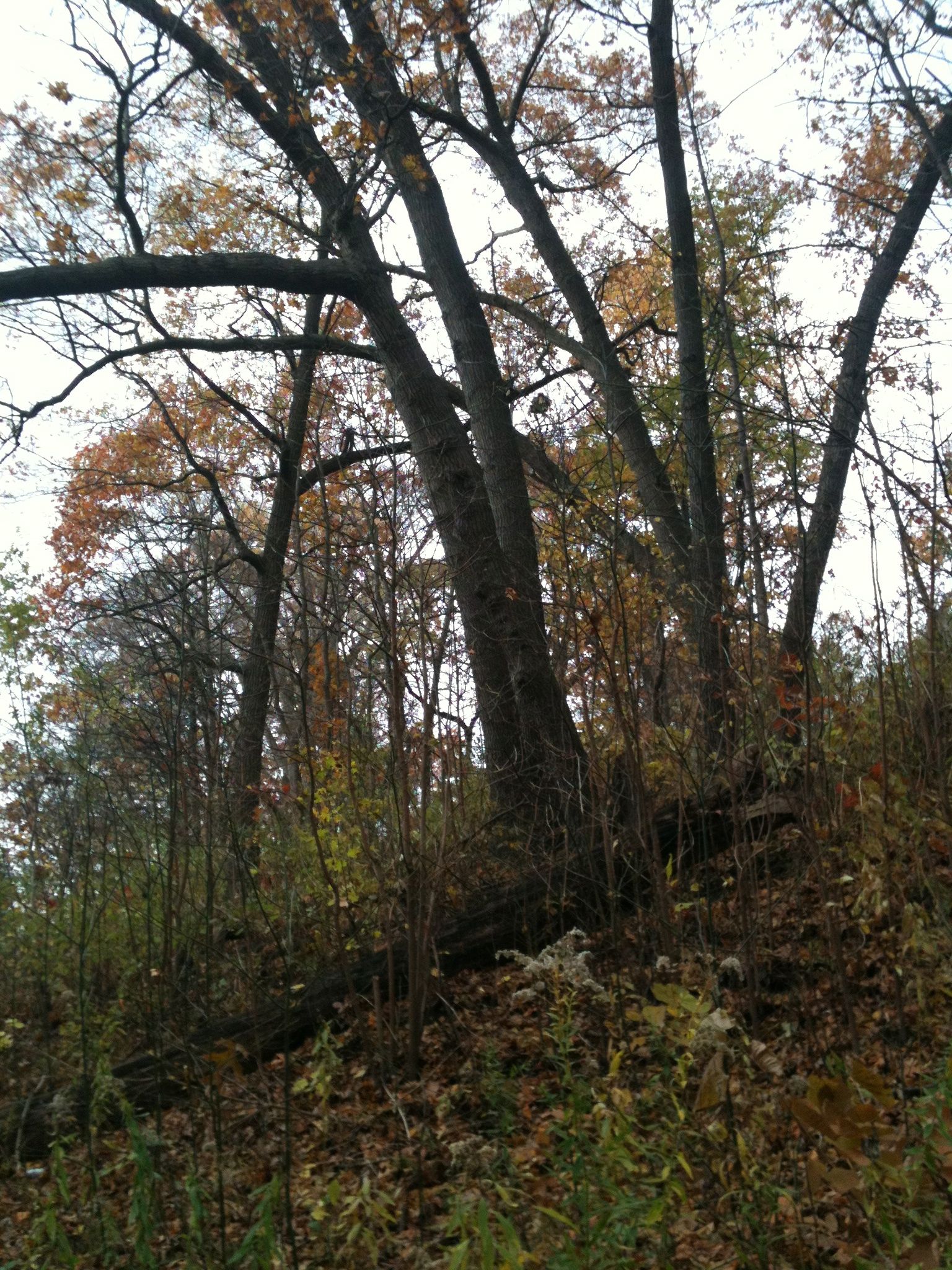
Nov woods hillsideThis week I stuck to the bike path for brisk walks rather than rambling up into the woods.

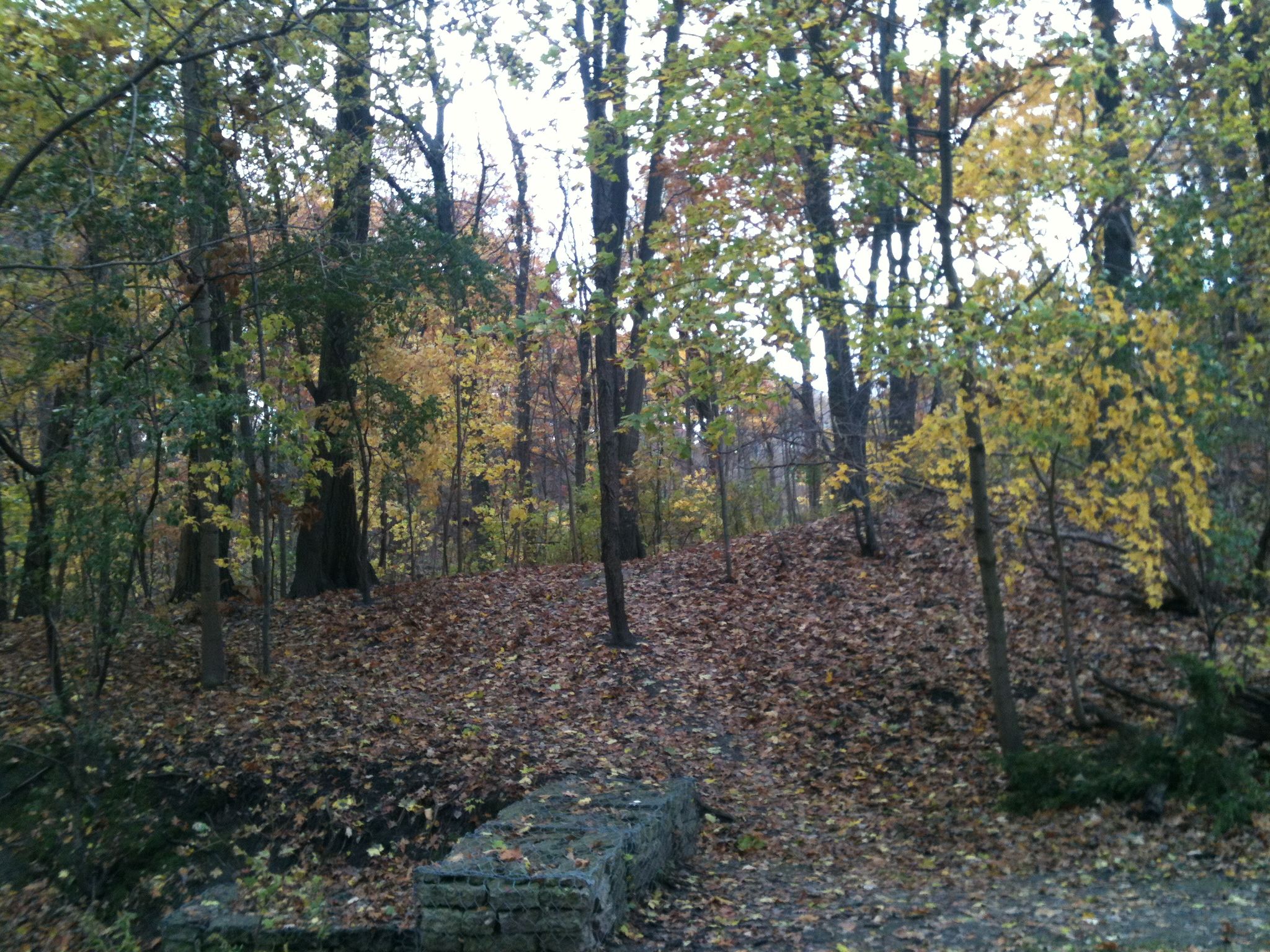
Nov woods near wallI passed the culvert where the path into the woods begins.

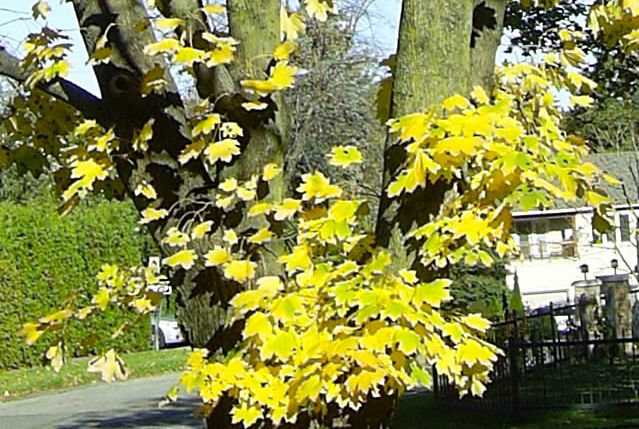
Nov woods maplesI continued on down the paved trail covered with yellow and brown leaves that sent up the acrid smell of fall.

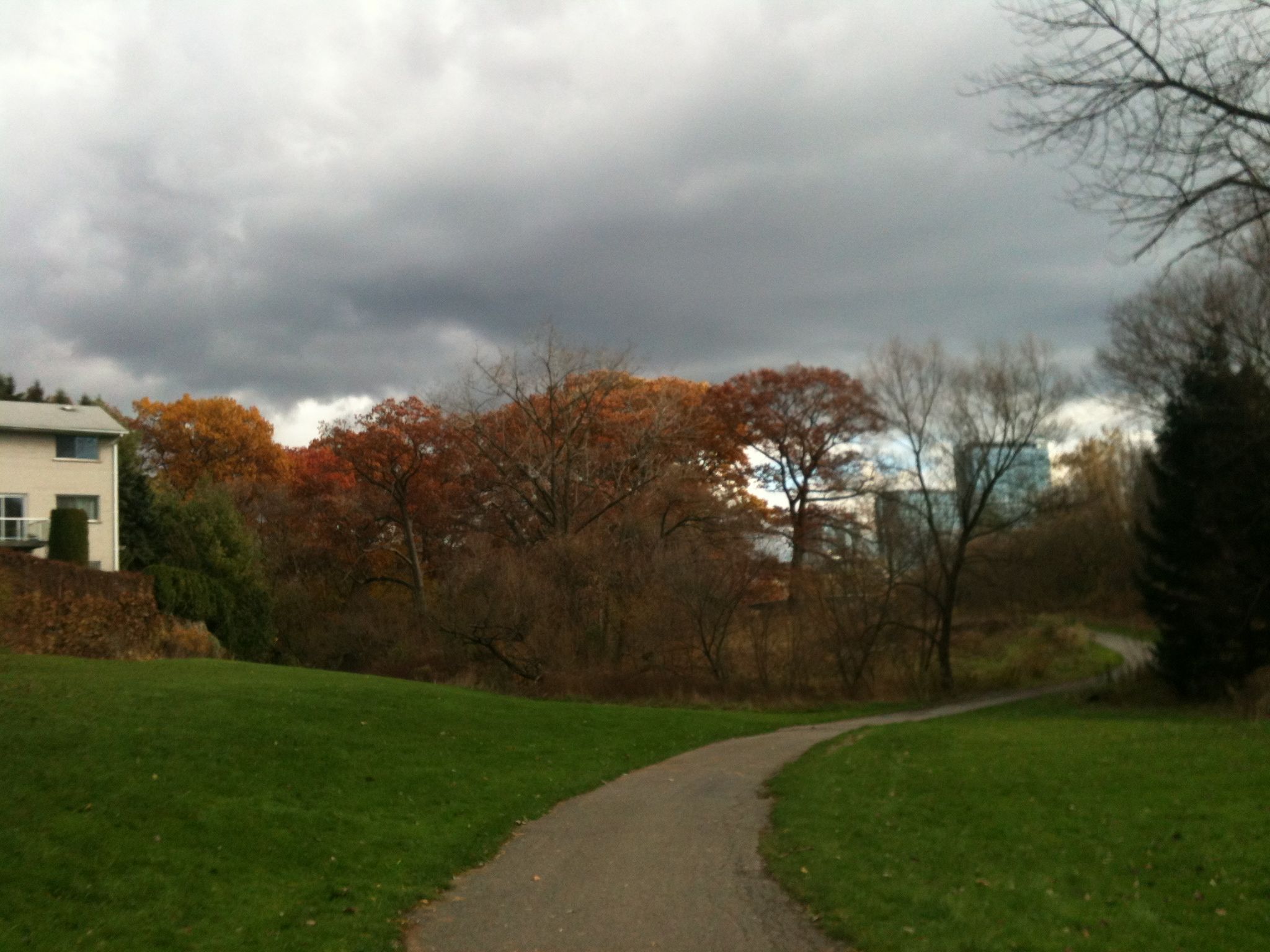
NOv oaksEventually the oaks came into view. This small wooded parkland contains the remanents of an oak savannah.

The sky above them was dramatic.

Nov oaks and clouds(Click on pictures to enlarge.)

Jack Reacher Reaches Virginia: Never Go Back

Last year I posed the burning question -Will Jack Reacher ever get to Virginia? https://115journals.com/2012/11/04/jack-reacher-will-lee-child-let-him-get-to-virginia/ I can now answer that question. Yes.

It’s true that three of Lee Child’s Reacher novels – 61 Hours, Worth Dying For and A Wanted Man, describing his circuitous journey through South Dakota, Nebraska and Kansas, actually took only a matter of days Reacher time, but  it took several years in publishing time and, despite the thrills, seemed endless. In Never Go Back, he actually arrives there.

The novel begins: “Eventually they put Reacher in a car and drove him to a motel a mile away where the night clerk gave him a room, which had all the features Reacher expected, because he had seen such rooms a thousand times before.” The shower would be strangled, the towels thin, the television small and old. In short, he lives in such rooms. As faithful readers know he is in constant motion, travelling by bus and hitched rides across the United States. Earlier I called him a wandering Taoist, unattached to any notion of home. https://115journals.com/2012/06/08/jack-reacher-wandering-taoist/

Shortly after, he is dumped at the cheap motel, a plain dark sedan pulls up and two heavies attempt to persuade him to leave town. “They couldn’t find you before. They won’t find you now. The army doesn’t use skip tracers. And no skip tracer could find you anyway. Not the way you seem to live.” Now here’s a quandary. The guys in the first car have ordered him to stay. But of course, Reacher isn’t about to follow orders any more. He does follow his own rules one of which is “Get your retaliation in first” and soon there are dents to prove it. Such is his welcome to Virginia.

Why was he so intent on getting there? He was following the siren call of a woman’s voice. Not just any woman’s voice, but the competent, risk-taking woman’s voice that has helped him in his travels from South Dakota. His goal is the HQ of 110th MP Special Unit in Rock Creek, a place he knows well since he was its first commanding officer before he quit on principle in 1997, just short of being laterally transferred to the end of the earth. He announces that he is there to see the current CO, Susan Turner and sets the wheels in motion the mayhem that follows.

Turns out that Reacher is still a wanted man: he is wanted for the murder of a gunrunner in Los Angeles 15 years ago and for skipping out on a pregnant lover in Korea, who is now living in a car with her daughter and wants support. Fortunately, the litigant has the wisdom to be living in a car in L.A.

As for Susan Turner, she has vanished from sight and when Reacher tracks her down in a detention facility almost as secret as Gauntanamo, she has left word she doesn’t want to see him. That only encourages him of course.

Turns out her charges are even more serious.

Reacher doesn’t get a glimpse of Susan Turner until a quarter of the way through the book. “She was an inch or two above medium height. She was small-boned and slender, with dark hair pulled back, and tanned skin and deep brown eyes.” He concludes she was well worth the trip. Furthermore she can take care of herself.

It is not brawn but ingenuity that enables them to go on the lam with no papers of their own and a “borrowed” $30. They head for Los Angeles in an attempt to sort out Reacher’s problems before they tackle Turner’s. As they sort his out, they speculate about why they are being targeted and who has the power to pull such strings.

One of the delights of the story is the “daughter”, a 15 year-old who seems as if she should be Reacher’s child. She already has powers of observation well beyond the FBI agents, the Army MPs and the heavies who follow in Reacher’s wake.

The good news is that Reacher’s face doesn’t take on any more damage, but it’s not news at all that he ends up waiting for a bus.

(I read this book on my KIndle.)

Sere and Yellow Leaf

SAMSUNG DIGITAL CAMERAFirst day of Standard Time. Whose idea is it to mess with time anyway? First light it was right on the freezing mark on the thermometer outside the kitchen window. Yet no visible frost. The good news, besides an extra hour’s sleep, was the blue sky. Saturday was another day of cold rain here and Friday had winds up to 85 kph. So most of the leaves  have fallen. Even the red maple down the street is half bare now.

Before

red tree #2Time to draw in. Keep the house fragrant simmering bones into stock and then turning that into stews and soups or a hearty chili.

Time to put new batteries in the smoke and carbon monoxide alarms. Testing they’re in right, is always good for an adrenalin rush. I saved my son’s life once by presenting him with a carbon monoxide alarm, guiltily, thinking it was a poor gift –until 2 weeks later.

Time to haul out the big wool blankets and the down coats. Time to waterproof the shoes and boots.

Somehow, somewhere, the shovel I kept in the car has gone missing, but the bag of kitty litter is back in with the spare tire, ready for icy roads. The brush and scraper are  in the trunk, but I still have to take out the full size broom for the heavy snow. Which surely will not come for a while.

The leaves on the lawn are dry and yellow. In the gutter, they turn wet and brown. Crank up the fiddle! Break out the grog!

SAMSUNG DIGITAL CAMERA

Ghosts

Once upon a time, I moved on Hallowe’en and like all moves, it was a truly scarey experience. But I want to talk about two moves later, the time, I moved to Z., a crossroads hamlet, an hour north of the city, hard to find on the map. Like most other newcomers, I moved there because I could afford it.

It was the second time a home-owning partnership had dissolved on me, only this time, the housing market had boomed. Whereas the first time, 10 years before, I could afford to buy a hovel on my own, city hovels were now well beyond my price range.

As luck would have it, I arrive with a Newfie dog, 7 cats and a badly sprained ankle. My partner and I have had 3 dogs and we divided them according to poundage. Bella, the Newfie is all I can handle, weight-wise. The 7 cats belong to my son and his girl friend, who are quitting the city in an anti-police protest. There have been demonstrations, friends have been roughed up. My 22 year-old son, his girl friend and the cats are seeking safe-haven with me in the country -in a white clapboard house with arched windows and gables, next door to the church.

The first load of furniture and all the animals have been dumped, my bed set up in deference to my lamed state and the young people have departed with their friends to pick up another load. Silence falls as silence can in the country, even at a crossroads. The cats don’t know me or trust me and have sequestered themselves in the summer kitchen, a one story extension at the back of the house. Belle has clumped upstairs after me and heaved herself up onto the bed, deaf to all arguments that Newfoundland dogs are too big to be bedfellows. I stand in the middle of the bedroom, gazing at the 3 pitch black, uncovered windows. No problem actually because there is nobody out there.

What about in here? A house built in 1889 surely had seen its share of death. Could it be haunted?

Fortunately, I fall immediately into the righteous sleep of the newly-moved who have badly sprained ankles, and barely notice when the second load of furniture arrives.

It is a chaotic next few days as 8 animals and 3 people sort out their roles. The big black dog soon learns her place relative to nose scratching cats. Gradually we clear paths between rooms and a nest of seating where we can take refuge and eat. Unfortunately, my son, Ben, steps on a rusty nail and we have to find the nearest walk-in clinic for a tetanus shot. Shocking how far away everything is in the country.

Unfortunately #2, now Ben and I are both limping on our left foot. I follow him through the kitchen one day. He is going out into the summer kitchen, while I am turning into the cooking area past the island. It looks like a gimp parade and I am just enjoying a quiet laugh, when another figure rushes past, arms thrashing and clothes flying. And laughing.

“Ben,” I yell, “did you see that?”

“What?” he calls back.

“Where’s Aunya?”

“Upstairs.”

We meet at the door. There is no one else there.

“An Indian – a First Nations person – whatever. Brandishing something -seemed like an axe, doing a kind of war dance and laughing!”

We stare at each other in silence. Well, if you are going to have a ghost, it is probably best to have a laughing ghost.

Some time later, I learn that the hamlet sits on the portage route up to Lake Simcoe.

Things settle down. We buy Ben a very old Ford pickup truck guaranteed to work just fine and he begins renovations. I begin commuting to work. Oh God, why did I ever move here? Surely, there is a shorter route. And there is. It takes only 60 minutes, not 75. Two hours a day, am I out of my mind?  Etc, etc.

Ben is tearing up the floor in the dining room. But no wait, he has to tear out the roof in the summer kitchen. It’s leaking. There’s been a fire up there at some point.

And something in the house is not happy.

I know it’s not the native trickster. Anyway, he’s a wayfarer not a resident.

My city-bred son and girlfriend tend to vanish back to the city until late into the night. One night, Ben calls me around 10 P.M.

“We’re staying in town for the night,” he says.

“Okay,” I reply. I do have experience living alone. I lived alone in the hovel.

There is dead air on the phone line.

“Ben?” I querry.

“Uh, have you seen the ghost?” he asks.

What a truly terrible time to ask such a question, a dark rainy October night.

“I don’t actually see her,” I reply, “except in my mind’s eye, but I know she’s there.”

“Yeah,” he says, “she’s small and she wrings her hands.”

“She’s upset about the work you’re doing. I keep telling her we’re just making her house better.”

“Me too,” he says. “I didn’t want to mention her before. Are you all right staying alone?”

I want to say that I was a lot better before he outed the ghost, but I just go on reassuringly and get off the phone. I stand there in the kitchen. She is standing just out of sight beside the stairs. She is short and thin, wearing an apron which she has balled up in her hands. I feel so cold that I might as well be naked.

I give myself a shake.

“I’m going to put on the kettle for tea before I go to bed,” I announce.

A passing cat, the orange one, meows. No bristling, no raised hackles. Belle ambles along the hallway, right through the ghost lady. Co-residents. We have to get along.

The title search arrives in the mail. One family, the Toves, owners of a car dealership, owned the house for much of the century.  One of them,Daisy died at the Village of Z., having her fixed abode there. Could be her. But on another document the most touching note of all concerns Edith, “a lunatic”. After that, various other last names, two of whom declared, “We are not a spouse”. Who cares about these late-comers in the second half of the the 20th century! My ghost now has a name.

Is this the End of Harry Hole#2: Police by Jo Nesbo

Spoilers for earlier Nesbo books and dark hints for Police.

Some months ago, I finished Jo Nesbo’s novel The Phantom in a panic and querried whether that was the end of Harry Hole (pronounced hooleh).  (See Is This the End of Harry Hole https://115journals.com/2013/03/27/jo-nesbos-the-phantom-is-this-the-end-of-harry-hole/  The appearance of a new book Police seemed to argue against it, but I got well into the new book -32% into it, my Kindle said- and Harry was still missing. It’s true there was a closely guarded coma patient in an otherwise empty locked ward in Oslo. That could be Harry, I thought. Last we knew, Harry’s “step-son” Oleg Fauke had gunned him down with a Russian Odessa – a copy of the better-known Stechkin – in a drug squat.

The first few pages of Police is told from that gun’s point of view, tracing its journey from Siberia to Norway in the hands of Rudolf Asayev and finally to Rakel Fauke’s house where it is now “sleeping” in a corner cupboard, smelling of old wood, powder residue and gun oil. Nesbo helpfully reminds us that two of its five bullets killed Gusto Hanssen who had pocketed Asayev’s money and dope, and that its next three bullets hit Harry Hole. Hitchcock said that if a gun is carried onto the stage in act one, it will sooner or later be an important plot device. There are 12 bullets left in the magazine.

As to the sleeping man in a hospital bed in a locked ward, a number of people hope never to see him again, including Mikael Bellman, the bent police chief, Harry’s nemesis.

After the glimpse of the hidden Odessa, Nesbo gives us a lovely picture of September in Norway and brings Erland Vennesla, a jogger and recently retired detective onto the scene. Poor Erland soon becomes the first victim in a series of carefully executed murders of police, mostly at the site of an unsolved murder that the victim investigated. As the bodies of police begin to pile up, Harry’s old boss Gunnar Hagen, head of Crime Squad, assembles a secret inside team consisting of Harry’s helpers: Katrine Bratt, the Bergen detective who spent time in a mental hospital, Beate Lonne, the head of Krimteknisk, who literally cannot forget a face, Stale Aune, Harry’s psychotherapist, and Rasta Hat, Bjorn Holm. Meeting in the Boiler Room as of old – so far beneath police headquarters that it’s almost in the prison next door- they bemoan the fact that Harry is totally unavailable. He was Norway’s only expert on serial murderers.

Long-standing bad guys are still on the scene, including Bellman, his lover Isabel Skoyen, a prominent city councilor, and Truls Bernsten, his erstwhile sidekick, temporarily suspended from the police department but still able to act the part of ‘burner’, destroyer of evidence. Bellman, of course, forbids Gunnar Hagen to split the investigation of the police murders between the regular police department and the four in the Boiler Room.

But who is the lecturer at the police college, the expert who has enthralled an attractive student, Silje Gravseng? And why are mysterious visitors waiting for him in his office? So his red-bearded colleague, Arnold, informs him? Surely this well-spoken, well-groomed person cannot be …..

As usual in Nesbo’s books, the murders are bizarre even grotesque, and in this case, duplications of old unsolved murders. And as usual Harry and his group leap to wrong conclusions. More than once. Harry is passionate about justice and committed to finding the bad guy, but bright? Not so much.

The trouble with Jo Nesbo as a writer is that he is capable of cold bloodedly killing off even the most beloved characters. He had Ellen Gjelten, Harry’s partner beaten to death just when she was about to tell Harry who the ‘Prince’ was. As a result, Oleg got kidnapped by the villain and narrowly escaped death, not for the last time. Then in the next book, Halvorsen, Harry’s new partner and father of Beate’s son, got gunned down. Moreover, Nesbo has said that Cockroaches due to be released soon is the last Harry Hole novel. (It is actually the second book after The Bat and before The Redbreast, translated only now.)

As the novel reaches its climax, Rakel and Oleg are menaced once again and surely this time, Harry cannot save them. Or himself.

Thus, this reader arrived near the end of the book at a solemn church service where the Boiler Room crew and the surviving cast members have assembled. Bellman is impatient for the organ to announce the ceremony. How inappropriate!

I may never forgive Nesbo for his tricky ways.