Between Thankgivings in the Centre of the World

Here in the mountain valley which the Chumash called the Centre of the World, I found myself caught between two Thanksgiving Days. I wasn’t home in Toronto for Canada’s day of thanks on the second Monday of October, and I won’t be here on November 27, the fourth Thursday in November, for the American Thanksgiving. And yet I had much to be thankful for and I wanted to express it. Luckily a birthday came along. I began planning.

Well, let’s be honest. First, I took stock. Was I up to cooking such a meal? I factored in my advanced age, my aching back and divided by thankfulness. The result was a decimal zero, zero, single digit. In other words, no prob!

Not turkey. Sorry turkey farmers, I don’t like your bird enough to go to all that bother. No our preferred protein is roast beast, i.e. a beef rib roast. Since I no longer have a house to mortgage, that was a sobering thought, but I said, what the heck, I’ve got a line of credit. In the event, it cost only $126 for 4 ribs, with the bones cut off and tied back on. The butcher worked away at it for 15 minutes while I looked at wine.

Of course there would be champagne and a good bottle of red. I found a bottle of Veuve Cliquot, or the Widow, on the top shelf and the wine guy who reached it down recommended a pinot noir from the Santa Barbara area, just across the mountains from the Centre of the World. I added a bottle of chardonnay for the cook in case her back got going.

I had found a “Classic Caesar Salad” recipe on line and Jamie Oliver’s root vegetable mash. Those ingredients were cheap enough as were the Brussell sprouts that I decided on at the last minute to add green to the main course.

Clara offered to split the cost, but I said it was my treat. I didn’t want to have to do CPR in the middle of the Santa Clarita Whole Foods  and besides I had that generous line of credit.

That was Thursday and dinner would be on Sunday. The plan was to to turn up the fridge and store the roast on the back shelf at the bottom. The butcher, fearful for his rep didn’t want to endorse that plan wholeheartedly, but I explained about winding mountain roads and a long trip down the I 5. In fact, it worked very well, although a container of green soup froze solid.

It was a two household project (Two households both alike in dignity/In fair Verona, etc). One had the necessary more or less empty fridge, but I would be cooking in the other house, the one in the pines where I could find the utensils I needed.

Saturday morning, I had the fridge house to myself, so I peeled the root veg into a big heavy pot and covered them with spring water. The tap water here is very heavily chlorinated because of the drought, I imagine. The wells are lower than ever. When I drink tea made with it, I fell as if I’m drinking from a tea flavoured swimming pool. I stashed the veg in the fridge and drove the golf cart over to the other house.

I had it to myself as well, the occupants having made their weekly trip to Los Angeles for treatment and shopping. I put on music on my IPod and began to prep the salad. I listened to the birthday boy’s album Shadows of Another Time (www.allmusic.com) as I worked and used his Cuisinart to make the Caesar dressing. By the time, I finished and cleaned up, I had heard most of it twice and gone on to listen to 4 versions of Carrickfergus.

Sitting at the table, I began tearing up a baguette for croutons. With the music off, I was began to think of why I felt thankful. Together as a family, we had found the right medical help and routed a potentially deadly disease. Now it was being managed. Certainly, refinements to medication were still being made, certainly it would be a lifelong condition,  but after 5 months, it was manageable. Or the patient had learned to manage it.

Sitting there, I felt all trace of my former picture of myself -78, alienated from a beloved son, prone to isolation in a cold city, survivor of a traumatic life – drop away. I was truly at the Centre of the World, washed through with love as I have seldom been even in the spring of my life and my first and abiding love.

When I came back into the house on Sunday morning, it was fragrant with coffee, bacon and pancakes already. We carried in the big pot and the roast from the golf cart. I rubbed the cut ends of the roast with butter, no salt so as to preserve the juices. When the oven got up to 450, I put it in for 20 minutes. Then I turned it down to 280.

It turned out the Brussell sprouts looked like small cabbages, so I sliced them thin, fried some bacon, added the sprouts, discovered the skillet was too small, put them in a pot and added a cup of chicken stock. Just before dinner, I would cook them 15 minutes.

I cooked the root veg -carrots, parsnips and rutabaga, early and got my sous chef to mash them with butter. I wasn’t up to that upper body exercise, but I was pleased to note that being thankful seemed to keep back pain at bay.

I sat at the table to put together the salads.

As dinner time drew near, I used a digital thermometer to monitor the meat. Luckily there was one. Cooking America which posted how to cook the perfect rib roast had threatened to wash its hands of me, if I didn’t use one. At a certain point it read 113. I wanted 120, knowing the meat would rise to medium rare. Fifteen minutes later, still 113. I jacked the oven heat up to 350 and 10 minutes later, the thermometer read 125. I took it out of the roast pan and wrapped it loosely with tin foil.

The sous chef mixed up the ingredients I had measured out for Yorkshire pudding, poured the beef drippings into popover pans, heated them in a 400 degree oven and then poured in the batter. Twenty minutes later when she turned the heat down to 350, they were already rising.

yorkshire

I was somewhat taken aback to discover all the beef drippings gone, but olive oil worked just as well with the scrapings from the roast pan. Beef stock and red wine added to the roux produced a tasty and copious gravy.

Reheating the mash took a good deal of stirring, but the excess water cooked off. The sprouts were tender by now and just needed to be lifted out with a slotted spoon. In both cases things hadn’t worked out as the recipe said and I had had to wing it.

The last ingredient, the guests, arrived just in time.

We had the champagne with the cake, a tropical coconut cake from Susiecakes in Manhattan Beach, which didn’t look exactly like this one. It had pineapple in the middle.

coconut cakeThankfulness is a great shortcut to happiness and mental health. And relief of back pain.

PS I drank the chardonnay anyway.

Gabaldon on Forgiving the Rapist

drums of autumn

Okay, now I’m taking moral advice from a romance novel and me a philosophy major!

The novel in question is Diane Gabaldon’s Drums of Autumn, the fourth in her Outlander series and the subject in question is forgiveness, specifically forgiveness for a rapist.

I’m nearing the end of this book and shamefully already plotting to order the fifth on my iPad. I used to have such refined tastes in reading. This book is not just a bodice ripper. It’s a skirt ripper and a shift ripper. Drawers or underwear are just removed and so require no mending. Mending is a big deal in the 18th century. Clothes are frequently reduced to rags and then replaced miraculously by a rich and generous, usually new-found relative. (How come I never find mine?)

But enough levity, now to the serious moral question.

Jamie, now in his 40s and living in 1760s North Carolina has a heart-to-heart discussion with a time-traveling woman on the subject of rape and whether vengeance or forgiveness is the appropriate response.

Both have some experience of rape as a good many of Gabaldon’s readers do, no doubt. Either she does or she has done good research. Since we are dealing here with the Highland clan warrior culture, killing the assailant is presented as an option. Those of us reared in the Christian tradition, even if lapsed, don’t leap to that as the answer, but hang on, Jamie is Catholic. Maybe it’s more a personal response.

This series is long and over the years, Jamie has discovered that time takes its own revenge and forgiveness is the better option.

Here is where the Gabaldon’s insight comes in: Jamie says that it is an on-going process that has to be renewed each day. I have noticed that myself and forgiveness comes harder some days.

Some days the whole terrible episode gets re-experienced in vivid detail, as it does for Jamie after that conversation, as it may well do for some readers after they read this part of the book.

On such a day, you can feel raw, as if you have no protective skin. No use even aiming for forgiveness then. Best to sit on a porch swing listening to the pine trees purr, watch the flitting birds, raise your eyes to the mountain ridge. Do something peaceful and healing wherever you are. Forgive yourself for hurting.


Evidence of Things Unseen

Now faith is the substance of things hoped for, the evidence of things unseen,
Hebrews 11.1

Here in the mountains of Kern County, California, we have been struggling with serious illness since the first of June. Finally, we have found the right doctors, got the right diagnosis and medication that works. What still doesn’t work is the bureaucracy that is paying for the treatment.

To skip even one dose of the several medications is to court disaster and yet again and again we turn up at the small pharmacy -the only one less than an hour away- to discover that we are over the monthly limit of 5 prescriptions, that we have used too many pills of that kind this month (doctor had changed dosage), that we can’t get one or another for five days, until we get a TAR, until we get a PA, unless we phone in the day before, never mind that we have been calling for 4 days prior. On the latest occasion it was the last reason.

Okay, confession time, I lost it. I leaned over the counter and explained as quietly as I was able, the possible dire consequences, the least of these was hospitalization. I was assured that the pharmacy had our best interests at heart, blah, blah,blah. That they just didn’t carry that medication and it would be ordered in only if we phoned the day before. Too much smiling from the other side of the counter. Too much eye shadow come to that.

“Consider it ordered,” I said.

The patient had fled to the car. I was so upset, I couldn’t actually see.

“Here are the other prescriptions,” said the Cheryl the clerk. “That will be $137.”

Whaaaa?

Blindly, I undid the bag and began to read the labels. The whole point was that the patient couldn’t pay for meds. As one of the meds’ monitors, I know every med name and dosage. None of these were familiar.

“These are not ours,” I said, pointing to the patient’s name. In fact they were for the patient’s mother-in-law, but I was too annoyed to bother saying that.

Cheryl’s eyes bugged out. As I left, I could hear her saying, “I can’t believe I….”

Next day, after 4 p.m., I drove back down the winding mountain road, to pick up the prescriptions. Yes, one was made up, although the other less urgent one wasn’t. As I waited for it to be done, I stood at the check-out counter.

Cheryl leaned over and said,” I just want to say…. I couldn’t sleep last night. I didn’t know what to do. I felt so bad. Finally, I decided to pray..”

She went on almost in a whisper, quoting a Bible verse with apologies because she really didn’t have it quite right, but it had to do with God’s help when you hit the bottom.

I touched her hand to reassure her. “Of all the problems we have had here, that was the least,” I said. “But thank you for praying. I’m not much good at it, but others are also praying.”

“God hears all prayers,” she replied.

Cheryl is one of those fervent Christians that scare us a little with their right wing views. Our idea of God is much more indwelling, not an all-powerful father or a son that will save you if only you surrender and believe. Perhaps, all things are possible, but they start within our hearts, we think and when you are grappling with life and death, God’s idea of an ideal outcome may not coincide with yours.

That night as I began to fall asleep, I felt the earnest love Cheryl radiated comfort me and  smooth a path for loving support from beyond.

The nature of God and our different interpretations of it seemed irrelevant then. Trying to have faith in God, too daunting. Faith in love that is another matter, our family’s loving and unconditional support of the patient, my own 5 month sojourn far from home, our 24/7 commitment, the wonderful doctors we have finally found, even those drugs with their unpleasant side effects. These are born of love.

And the best prayers may be tears.

Mountain Diary: moths, wildfire and sand storm


helicopter

Moth Wars -Monday

Two moths came in the door with me Monday night.

It was full dark, so dark that I had had to take the car home and leave the unlighted golf cart behind. The sky up here on the mountain was a dome of stars, uncountable and humbling, the streets, unlit, and the driveway so dark I had to feel my way. Sandy here-rocks must be there, etc. I carried laundry, bottles of spring water and my computer bag to the porch, banging my left leg with the car door in the process. I noted two large moths pressed against the screen door as I opened the inside door into the light filled room.

It was the resident cat, Jazz, who saw the moths fly in. She began scaling tall pieces of furniture and gazing longingly at the ceiling. I thought things would settle down once the lights were out. I was wrong.

I was woken up by a series of loud thumps at irregular intervals. Noisey burglar? Clara looking for a snack? Flashlight in hand, I ventured out of my room. There was the black and white cat on the top of the step ladder – we’re still hanging pictures-  staring at the ceiling. She jumped. Not surprisingly she missed the moth but I gabbed her and carried her to Clara’s room. I scooted her through the partly open door and shut it. Problem solved.

But no. One of the moths was now making passes at my reading lamp. I sat weighing moth-murder against patience. Sure enough the moth disappeared. I waited some more. No action. Good. I went back to sleep.

In the morning I felt virtuous. Moths after all, adore light, even though suicidally. No one seems to understand why. Perhaps it is because they migrate by the moon, although most moths don’t seem to migrate. Perhaps they are drawn by the heat or the wave length which they mistake for pheromones. None of the theories seem reasonable. So I fell back on a more poetic and spiritual explanation. Moths and I aspire to the light.

That lasted 12 hours. Tuesday night, same scenario. Both moths revived, one in my bedroom, one in my bathroom. Both flew into my hair. Some barbarous part of me lashed out, more than once, leaving a lifeless winged being and moth dust.

Fire on the Mountain- Tuesday

Around 4:45 a.m., I woke up to the smell of wood smoke. Had someone got up early for work and lit a wood fire? Some people leave to drive down the mountain to work at 5. Was it the smell of our own fire place, cold as it would be, being pulled in by the furnace. No, the furnace didn’t come on until 6. Puzzling, I fell asleep.

At 7:45, I woke up again. A helicopter was circling fairly low overhead, whining off into the distance and returning. Over and over and over. I was about to snooze again, when I sat bolt upright and sprang out of bed, calling myself several versions of idiot. Wrapped in a thick, hooded robe, I dashed out onto the deck and there it was a fire on the mountain.

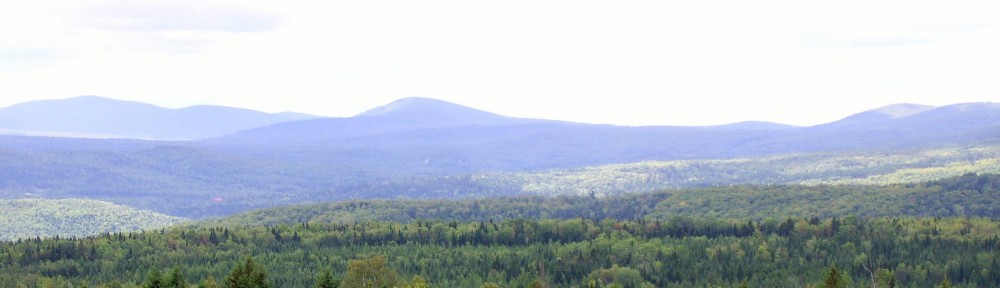
It was below Mount Pinos, two peaks below on Sawmill Mountain, part of the Transverse Range, running roughly east/west, unlike the Sierra Nevadas next door, which lie north/south. The fire was uncomfortably close to town.

Billows of white indicated steam rising from where the water had been dropped by the helicopter, while darker smoke on the western edge showed where the fire still burned. The helicopter would disappear down to Lake Fern, actually a pond, just below my other temporary home here, the house in the pines. Then I would hear it rising and soon it would come into view, trailing water as it rose. It flew into the cloud of mist and smoke, emerging and making directly for the rock face of Mt. Pinos. From my point of view, it was about to crash when it turned and flew over the smoke, where it dropped its water.

Another helicopter was cruising along the ridge and dipping down over the fire when the water bearing one left. I wanted more water helicopters.

On the internet, I read that it was a small, 1 acre fire. Clearly, the authorities didn’t want a panic. The large LED sign at the club house entrance apparently described it as “a moderate threat”. I could hear the people in the house next door talking about it as they watched from their windows; otherwise, no one seemed to be noticing.

One summer, in Greece, a wildfire broke out on the slopes above our camp ground. It crept steadily down from the heights until it reached the shrub-covered slope across the highway directly above. Huge bellied planes flew down over the Gulf of Corinth, scooped up water and returned to bomb the blazing hillside. The flames were so close that we could feel them. Ash fell about the camp ground and the smokey air was not breathable. I wanted to get the hell out of there, but I didn’t have a car and my Greek host took a typically Greek attitude. He shrugged his shoulders. We could always walk into the sea, he said. True it was shallow for hundreds of feet and it was warm, but cooler than the mid-day heat compounded by the fire.  I was not impressed by Greek disaster planning, but in the end, the fire was quelled, leaving a blackened hillside and an acrid smell.

Meanwhile back at the Transverse Range, two more helicopters had come in and all three were dipping into Fern Lake, one after the other, deafening nearby residents, but making more and more progress on the mountain. By the time I set out on the golf cart, the helicopters were gone, although a small area was still smoking. My path led me past two fireman standing beside their vehicles watching and listening for radio calls from the site. There were 20 others up there on the slope, one told me. They had had to hike in on an old trail that ran into the Chumash Wilderness. They were there with shovels to put out hot spots and flare-ups.

Kern County’s clinics and health care bureaucrats have not impressed me and at least one hospital ward has appalled me, but their emergency services are excellent, not least their firefighting force. A helicopter pad near us stands ready for emergency evacuations of the injured and there is an intensive education program about evacuation of the population in general, whether because of wildfire or earthquake. The village lies squarely over a fault line, which is what created the rift in the ranges that cradle the town.

As we got ready to sit down to dinner, a cell phone alarm alerted us to the message that a sand storm was imminent.

Wednesday – Sand storm

Hyper-alert to strange noises after the fire, I listened for the sound of heavy wind whenever I woke up in the night. (How can you tell I am much older than you?) Nothing alarmed me.

Before dawn two of our family members left for a  specialist appointment in Van Nuys. Around 8, I phoned our recovering patient to see how things were. In fact she had been woken up by an urgent summons to an office in Bakersfield, although for bureaucratic rather than medical purposes. You have to be healthy to survive illness apparently. Since she still can’t drive, I got dressed and high-tailed it out the door.

What was this? A brown fog hung over the entire mountain range. Another and more widespread fire? Of course not. Something different.

If you can’t go to the Mohave, Mohave will come to you.

I’m getting used to dust. By the time I drive the golf cart from one house to the other, it and I and all my goods and chattels are covered in dust. I have been tempted to wear a bandana over my mouth like a cowboy. I tried to tell myself that way over there the air was full of sand, not here. I didn’t believe me.

I thought things would improve as we drove down, but coming down the Tejon Pass to the Central Valley, I had to turn on the car lights. I have driven through blinding white fog and snowy white-outs, but this was the first time I had driven through a brown-out. On the valley floor, we couldn’t see the mountains that normally stand blue at the edges of the wide valley. It wasn’t windy. I suppose that’s why the sand just hung there. Breathing scoured the nose and throat, even in the car.

We got to the office 15 minutes before it closed. On Wednesdays, it closes at noon, another example of Kern County time, otherwise known as mountain time. You can never tell what weird schedule businesses will keep, closing randomly, like the restaurants in our village. But give Kern County credit: it notified us of the sandstorm


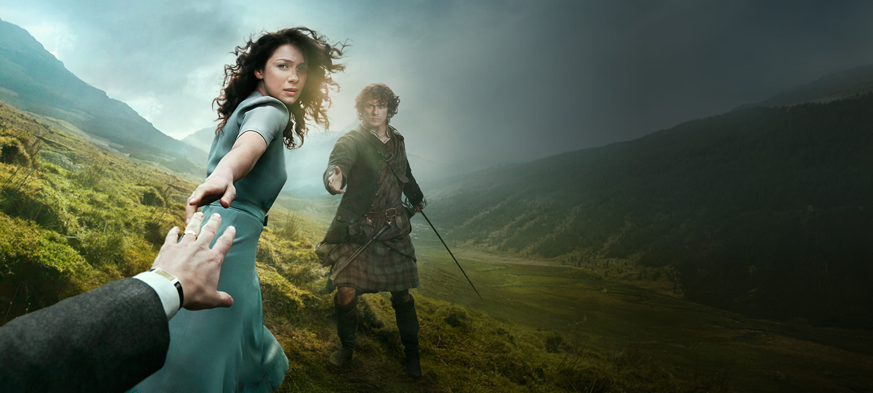
Diana Gabaldon – outlandish outlander

outlander

(Some extremely sensitive souls may find vague events mentioned to be spoilers.)

Sorry about that title.

I shouldn’t be so picky. The first 3 books in Gabaldon’s Outlander (Outlander, Dragonfly in Amber and Voyager) series have gone with me through a difficult month. I never lacked for something to read as we waited for appointments nor a distraction from whatever unpleasantness was at hand. I was reminded of a day of colonoscopy prep during which I watched most of the BBC’s series, Henry VIII. I was more or less unaware of the quarts of vileness I had to consume and its results, despite the dubious history and the inflamed sex scenes of the show.

Usually I don’t read romances, historical or otherwise, well not since I was 16. You may have heard that Diana Gabaldon fought long and hard to have her novels reclassified. You may have heard that she says they are not romances. I say, there are bodices and they get ripped. In the second book Dragonfly in Amber, Claire is sitting in the doctor’s lounge at the Boston hospital where she is on staff and she picks up a romance novel to pass the time. Just to prove her contention, Gabaldon includes passages from that book – in italics. So? I was not struck by any great difference. Call me a naive reader if you will, but I made my living teaching English literature.

Gabaldon had a superb idea. At the end of the second world war, Claire, a former combat nurse visiting Inverness with her historian husband, is drawn through a cleft in a circle of standing stones and finds herself in Scotland of 1743, indeed in the middle of a skirmish between highlanders and redcoats. One of the less savoury redcoats looks exactly like her husband, back in 1945. Claire remembers her history – in April 1745, the highland clans will be wiped out by the English army at the battle of Culloden and in the pillage and famine of its aftermath.

It is one of the most tragic events in British history.

What I want, I suppose, is a certain amount of gravitas, but what I get is a series of coincidences that would make Dickens blush and awful event following on the heals of awful event. Jamie, Claire’s 18th century husband, is about to be tortured and raped to death when Claire is thrust out of the prison’s back door and attacked by wolves. Pirates show up to steal the treasure on the very day Jamie tries to claim it. Three different ships, travelling separately, after 3 months crossing the Atlantic, fetch up on the same West Indian island more or less the same day.  A return after 20 year’s absence is crowned by 2 murders and a devastating fire that destroys a livelihood.

My reading partner who is slightly ahead of me keeps asking,”What shark is she jumping today?” “Oh today’s it’s the slave”, I reply.

A rollicking tale, no doubt about it. Reading online comments, I learn that in the most recent book, In My Heart’s Blood, Claire at age 62, by one reader’s calculation, is still working the way she did at 48. And of course still having sex, graphically, although by now constant readers must be able to imagine every possible move.

Be assured, though, that the author is still telling us that Jamie is strong, broad-chested, tall, with flaming hair, streaked with gold, amber and  possibly platinum by now. Whether he is still a proponent of wifely obedience and corporal punishment, I don’t know. I hear that he doubts his ability to lead an army, despite the fact that he has been leading large bodies of men for decades.

Fewer adjectives, we cry.

How does she do that, anyway? Does she sit in Scottish glades taking notes of light qualities? Or among Caribbean mangroves?

I don’t scorn Gabaldon’s abilities. I just wish she would listen to her editor. Of course she doesn’t have to. Her readers love the purplish prose. Probably the light fuzzy hairs on their arms really do shiver upright.

So why don’t I just put down Voyager and pick Crime and Punishment, do some serious reading? That’s what I hate the most about Gabaldon’s writing. I can’t stop. I’m addicted.


The Kangaroo Complex: take a minute mother

complexe du KangarouI sent two birthday cards to my sister Georgia one read “A mother never quits.” The other one said “Sisters are forever.” Talk about ties that bind.

Georgia considers herself the mentor of an informal group of older women -70 to 80- who still have mothering duties. One of them has three daughters who are in various stages of Huntington’s disease. The rest are not quite so challenged by their children’s illness, but bad enough.

My Belgian niece, Sarah Moon Howe, is about to premiere her documentary film called Le complexe du Kangaourou about several young mothers who have children with various physical and mental difficulties that are going to keep them in Mama’s pocket for years to come. Sarah Moon’s own son, Jack, is such a child.

It’s not a distinction reserved for women of course. Jack’s father and grandfather are also part of the project as are a great many other dads, grand dads, uncles and friends. My brother, Sarah’s father, has made it a point to befriend such young men and teach them life skills. Wear underwear and your false teeth, for example.

But just at the moment, it is a group of women I am involved with.

When Sarah Moon thought she would lose her mind with Jack’s many surgeries and need for constant care, she started dancing again. Jack was happy playing in the dressing room and being mothered by all the dancers. Sarah Moon made a movie about that as well.

Georgia advised the Huntington’s mother that she should remove the boxes in her living room belonging to the daughter who had just moved back in, which the daughter is incapable of moving. To storage or elsewhere. It was mother’s living room after all and sorely needed for relaxation. Then she should set about getting them a two bedroom apartment.

When I phoned Georgia this morning on Skype, I didn’t get hold of her, but in a few minutes the land line rang. She said, “You didn’t sound good in your message.”

Where to start? But Georgia and I are used to waiting until the other person gets her sorry story together. Briefly I was/am ill with the worst lower back pain I have ever had and that’s saying something. But there was more.

Our Aunt Mae was a wise woman who could see the future. She told us we had to live to be old and healthy because we would have jobs to do then. She said there would always be chances to go before our time and we had to watch out for these, stay alert and not get sidetracked from our -what?- she would never have used the word “destiny”. She probably just repeated “job”. One of the reasons we chose to be teachers is that we would get a pension. I never actually believed I would live to collect it and it is true I had to retire early to survive. Mae also assured us that all would be well, laughing as she did. When I doubted that, she said, “Joycey, don’t take things so to heart.”

Georgia didn’t. Georgia believed entirely in what Mae said. Things would be hard. They already were, but they would turn out all right in the end. Georgia would have said, if they’re not all right yet, then it isn’t the end.

So on the long trip back from Los Angeles to the mountain yesterday, I was staring out the back window at the unending series of hills and I suddenly had the impression that one of those false doors was available. I woke up, vehemently rejecting the possibility.

What to do, I asked Georgia. Well, of course I needed to come home for some rest and rehabilitation, she said, a few weeks at least. It might not be possible just now, but soon. She talked about how she looks after herself, how she is able to be slightly less wholehearted than I am. In times of great stress, she can withdraw part of herself and reserve it. I’m sure that’s what Sarah Moon realized and why she turned to dancing in spite of how “neglectful” it may have seemed to some. Chinese medicine says, “First, heal the mother.”

What could I do in the meantime? At present, I am reading as usual, blogging as usual and doing the tai chi exercises. I can’t watch the programs I usually watch because the internet connections up here are too slow. And PBS in this area is really lame, no British drama. I do have my own TV on which I can get the 3 networks. That leaves with me NCIS, CSI and the Good Wife. With no car of my own, I can’t set off exploring the wilderness.

Then this afternoon, I found myself on the deck doing a tai chi set for the first time in weeks. Good grief! That’s what I needed. For 20 minutes, I was lost in the familiar, slow-paced moving meditation. Not only that, the set has the benefit of including a “sit” in every move, up tall, then down, weight on one hip or another. It is the hip that my change of season illness has settled into. Two birds and all that.

Plus I remembered how to seize moments of peace instead of being eternally vigilant.


https://115journals.com/The Crying Cure

Regular readers of this blog know that I have been dealing with a serious family illness, that has left me “stranded” in an exquisitely beautiful mountain village, which I sometimes have called Shangri-la. (see 115Journals.com and enter Shangri-la in the search bar.)

Recently, we have made progress. The illness itself is difficult to diagnose and treat. Factoring in medicare didn’t just double the difficulty. Quite possibly, it quadrupled it. Every time we turned around we had been dropped from MediCal, once because we were signed up on July 30, with an end date of July 31. Yes, both were in 2014. Or MediCal was refusing to fill a prescription because there was no TAR -whatever that is – or the doctor had upped the dosage but MediCal disagreed. Even Kern County Health which we transferred to has a limit of 5 prescriptions a month, so we had to choose the cheapest one and pay cash. At least one life-threatening situation and hospitalization ensued. And let’s be frank, some of our medical practitioners seemed to know less than we did.

After a particularly rocky interview with a “specialist” on Skype, we discovered she was actually a nurse practitioner. Time to call in Blake, the patient’s father who has equity in his home. Time to call on connections. And so we found Dr. B and ponied up the cash.

Let’s be clear, my people have earned over $300,000 a year and paid taxes accordingly – prior to 2008. Thanks to banks that were too big to fail, my people failed, lost two homes, their savings and their retirement investment. Obama bailed out the big banks. The little guy not so much.

Dr.B.came up with a diagnosis in an hour and a half and the chief drug necessary to control it. “Bread and butter”, he said. Then he refused to let Blake spend the patrimony and referred us instead to a resident he supervised who would accept the medicare plan. After a month’s wait, during which time Dr B insisted we call as necessary; otherwise he would be annoyed, we met Dr. P and Dr. Y who listened intelligently and knew how to carry treatment forward. Today, we ran up against a problem and Dr. P. answered our query immediately.

So I fired off upbeat email reports to 5 family members, all of whom are far away and to 4 friends. Then I got really sick.

Has this happened to you? You hold things together at work or at home for a long time, go on vacation and spend two weeks in bed?

Sure I had a good excuse, the temperature dropped suddenly up here at 5,500 feet and the furnace pilot light was out. I don’t actually get a cold at change of season, I get a headache and then a very bad muscle spasm in my lower back. No appointment was available for treatment until Saturday. That’s tomorrow, friends. Exercise quells it briefly, then it comes raging back. Ditto hot Epsom salt baths, heat, positive thinking and long walks. Pain killers don’t seem to touch it. The one thing that works longest is a good hard cry. First I have to find privacy, not so easy when you’re living in other people’s houses. Then just let go.

Just now having cleared the air with copious tears, I went to the general store, ostensibly looking for a mallet and unconsciousness. I found extra strength Tylenol and Newcastle Brown Ale.

Hate California. it’s cold and it’s damp

People make assumptions about Canada and Canadians. It’s always cold there and its people are hardy.

No and no.

Okay so there’s the odd crackpot who does the Polar Bear swim on New Year’s day. Or dashes naked from a hot tub to roll in the snow, but these people are usually Canadian/ something, often German, Swedish or even English, like my ex-husband who raced on an ice floe in his late 70s. (To  race an ice flow, you lie partly on it in a wet suit and propel yourself down the river with your lower body.) See romtrenD.ca /phots

Most of us Canuks are used to central heating, a real furnace that runs as and when according to a preset thermomstat, fueled with gas or at the worst oil. Gone are the 50s when you had to stoke the fire at night and stir it up and add coal in the morning. In the country, if the oil truck doesn’t make your delivery, you fire up your wood stove and when he finally arrives, the doors are all open and the indoor temperature is over 90 F.

That’s the way my Grandma liked it. If you had a cold, you’d just go to her house, drink tea and sweat. She was cool and collected, not a hair out of place, in her flowery, well ironed house dress. “Are you warm enough?” she would say and put another piece of wood in the stove.

I have an abiding fear of cold as does my daughter. She says it’s because she was born in Toronto near the end of January and immediately taken away to a cold nursery. She blames me for that. (Well, she just points out that that is how her baby self saw things and please don’t tell me that she wouldn’t be able to remember. She clearly does.) But the more I cried to see her, the more they said I couldn’t see her. Something of a standoff. But after a good deal of shouting from the head nurse -at me-, my crying baby girl appeared.

I know. Times change just not fast enough.

I myself was born in an unheated farmhouse bedroom at the first of May during a snow storm – snow will do that in the mountains – a small baby and early.

In fact I think we could have both been born in the middle of a heat wave or in my grandma’s hot kitchen and still be cold.

My daughter’s father contributed his hardy genes to our son, leaving her his allergies and Roman nose.

So here on the mountain, the weather changed. And Clara’s house where I am living has a heater, but the pilot light is out. You probably know how to relight a propane pilot light. We don’t. We wait and wait for the gas company. They don’t work Saturdays.This morning it was 64 in the house and the next time I looked 63. Outside, it was just over 50, no joy in the sun.

I was sick. With a change of weather sickness. Not a cold. With me, it starts with a vicious headache and then settles into a fierce muscle spasm, in this case in my right hip, the muscle you use to lift you leg from the gas peddle to the brake. Inconvenient on mountain roads, also for getting in and out of bed, putting on shoes and going upstairs. The pain was so bad that I was nauseated. I stay in bed, reading, under a pile of covers. Gradually, I begin to rally, but….

So I says to Clara,” Clara…” She has her back turned as she washes dishes and she jumps violently. It’s hard to know how to get the attention of the hard of hearing. “Clara, can I put on a fire. It’s only 64 in here?’

“Are you cold,” she asks. .

I am wearing a woolen hat, a pair of woolen tights, a wool turtleneck and a think terry cloth robe with a hood.

“It’s just because you’re sick,” she adds

“I’ll look after it,” I insist, but she is out the door to get the firewood off the deck. There is a pile of smaller wood and branches on the ground. I gather up some. Then I retrieve some of the crumpled packing newspaper. Viola, I have a fire. I’ve had years of practice.

“It won’t last,” says Clara, her voice dire. Then she adds gloomily, “I can’t stand being hot.” She retreats to her bedroom, where she has been reading in her dressing gown all afternoon. But now she shrugs it off in preparation.

Gradually, as I dust mop the floors, the temperature rises to 68. At home I call my landlord at 68 and he turns the furnace on. At 68 at home, I am freezing. Here I feel myself unwind and enjoy the warmth. Of course I have to be five feet from the massive fireplace to do that.

Clara has just moved here from Vegas where, even in 110 degree heat, it never occurred to her to put on the A.C. When she had guests, she would make an exception, but turn it off at night, despite the fact that none of the windows opened. Recently, on a day when it hit 90 here on the mountain, the realtor, who sold her the place, asked me how we were enjoying the air conditioning. Not!

Amazingly three days ago, I drove Clara to Santa Clarita. Getting out of the car, she assured me it was a hundred, just like Vegas. Santa Clarita is an hour and several thousand feet of altitude down from where we live.

I am writing this in the house in the pines where I have a heater going near me.

I know room mates require diplomacy, especially when they own the house.

Oh, did I say, I also took us to the El Tejon Outlet centre, newly open off the I 5 on the way to Bakersfield. There I bought a winter jacket with a faux fur hood. I just wore it over here on the golf cart. Hardy I ain’t.

Joy Says Good Morning

I have been reading and rereading all the poems in Rumi: the Book of Love, this week looking for this idea. For some reason, I read back to front. Still I didn’t find it. Last night I said to myself, “Well, it must be in Coleman Bark’s introduction to a section”, so I started rereading those, back to front. I found it in Section 14, entitled “Union”. The poems in this part talk about spiritual union, which we are all seeking, no matter how worldly and unspiritual we may seem.

Here Barks considers how potentially unbalancing this can be. When that happens we are liable think we are in deep trouble, but in actual fact, we are evolving. For the time being, we may need help and so we find another kind of union with our helpers.

“The heart cannot be talked about. We must experience its depths in that mysterious osmosis of presence with presence. Hazrat Inayat Khan says that our purpose here is to make God a reality, a daunting and potentially unbalancing task. One can get too full of the ecstatic state. Rumi warns the the roof is a dangerous place to drink wine. We can die trying to make God a reality. If we don’t fall from the roof, we wake with a hangover that weakens consciousness. Hangover remorse can be helpful then. The work of balancing love (enthusiasm) with discipline (practical helpfulness) is beautifully addressed in the first poem of this section, the drink of water that is ‘Sunrise Ruby’.”
p. 119 Barks. Rumi:the Book of Love

The Sunrise Ruby
In the early morning hour,
Just before dawn, lover and beloved wake
to take a drink of water.

She asks, “Do you love me or yourself more?
Really the absolute truth.”

He says, “There’s nothing left of me,
I’m like a ruby held up to the sunrise,
Is it still a stone, or a world
made of redness? It has no
resistance to sunlight.”

The ruby and the sunrise are one.
Be courageous and discipline yourself.

Completely become hearing and ear,
and wear this sun-ruby as an earring.

Work. Keep digging your well.
Don’t think about getting off work.
Water is there somewhere.

Submit to a daily practice.
Your loyalty to that
is a ring on the door.

Keep knocking, and the joy inside
will eventually open a window
and look out to see who’s there.

Rumi trans by Coleman Barks in Rumi: the Book of Love p. 120

rumi 1