Bear Alley

bearalley frontSo we moved from the Reality Hotel (see previous posts) to Bear Alley.

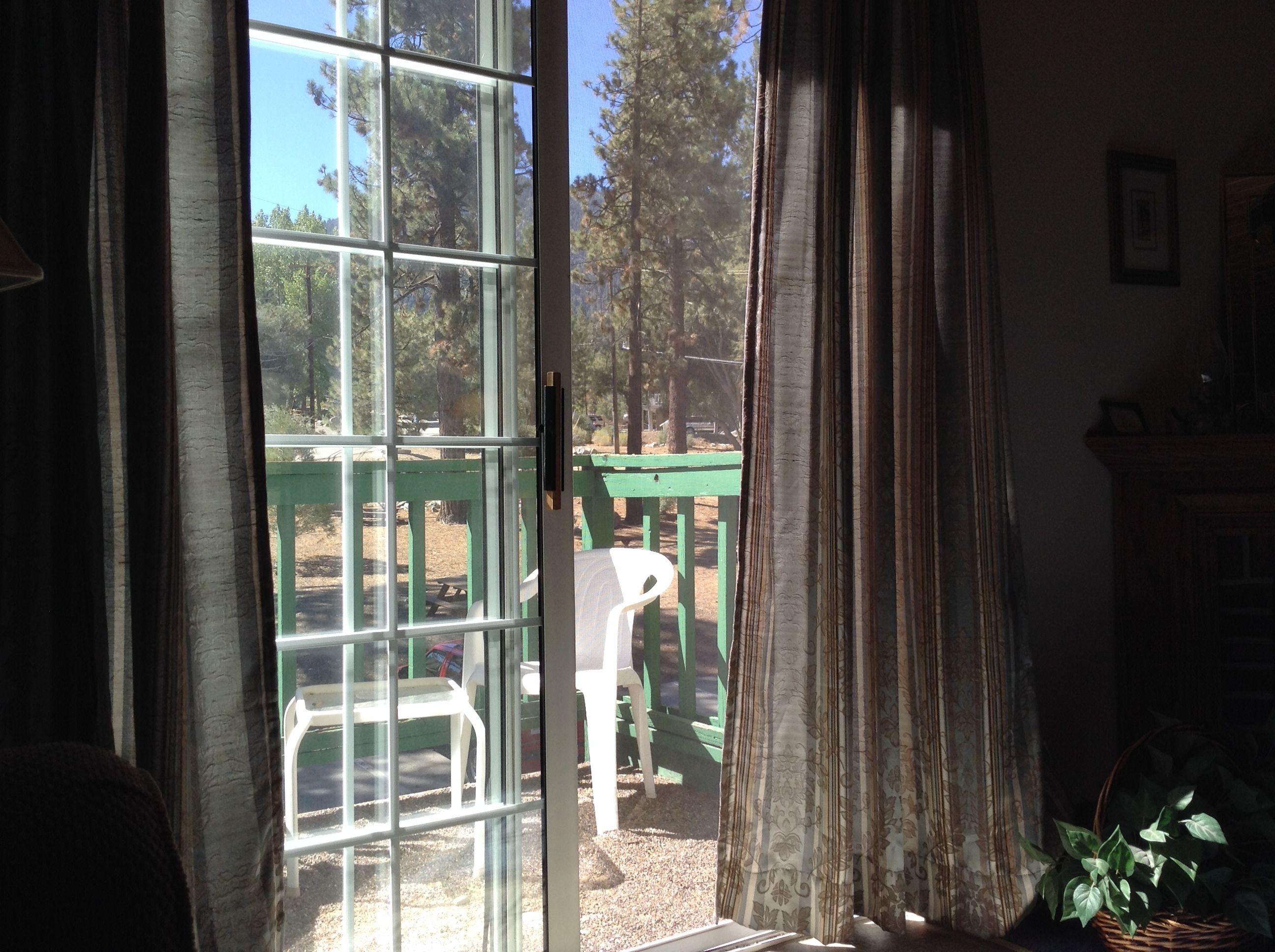
Actually, we live on Kodiak, which runs off Aleutian and is next to Klondike, just south of Grizzly Dr, It wasn’t until this morning that we learned that Bear Alley intersects with Kodiak, running below our deck. My first clue was a tall white kitchen garbage bag that had been dismembered there. This was so shocking that I didn’t even take a picture. So against the mountain code! Not quite as bad as actually feeding a bear –a fed bear is a dead bear. (Once a bear has been tamed in that way, habituated to human contact, the rangers have to shoot it.) Leaving garbage accessible is the second most egregious crime.

There are bear safes for garbage costing a thousand or more, so armoured that bears can’t tear into them, the way they can cars. They have destroyed cars for something as small as a burger wrapper or corn-based kitty litter. The people I know up here use trash compactors or sort the smelly stuff and freeze it. Even recycling material is washed and kept in a locked shed. In short, the trash stays inside until it goes to the transfer site. There it gets shut up in a dumpster with a roof and a door. During bear season the site is open late on Thursdays.

Clara and I picked up the garbage. It consisted of a lot of avocado and other fruit shells, a sodden egg box, various boxes -these people didn’t recycle either- and I don’t know what else. I was too disgusted. Clara grabbed her car keys and took the re-bagged trash to the transfer site.

In the old days in Canadian cottage country, people used to drive to the dump and watch the bears feed at dusk. Now all the dumps there are fenced like POW camps. No bear- watching.

I heard voices across the road and left my breakfast to go over to talk. That’s when I learned about Bear Alley.

The woman who lives there said she had been raking her yard, that is the dirt in her yard- no grass grows here at 7 p.m. when a bear sauntered down the alley. She fled to the other side of the house. In the process, a $20 bill fell out of her pocket and is nowhere to be found. (Clara says, “Bears have to shop too.”)

Her visitor, a realtor, said she had seen a bear at 5 p.m. and that air horns were going off all evening. I had come home on the golf cart at 5:45. I think I did hear some of those blasts, but their significance eluded me. Then Clara turned on Jeopardy and in deference to her hearing problems, I took refuge in my iPod.

The realtor said she lived here eight years and never saw a bear, but this year she has seen ten. This is because of the drought. The berries haven’t ripened as a result, so the bears are hungry. They come down to drink at the ponds on the golf course and to forage. They even turn up in groups of five in backyards.

They move very quietly. Another realtor -half the people here seem to be in that business- tells the story of folding laundry in her bedroom while her husband watched a game. She finished and walked back into the kitchen to be greeted by a 300 lb. bear quietly searching for food. She screamed and ran out the front door, leaving it open. Her husband was trapped. The bear was between him and the door. His wife was screaming bloody murder and running to the neighbours. He remembered his gun. The bear ambled out the door. He ran after firing a shot in the air. The bear just kept ambling on, totally oblivious.

Clara and I reconsider the windows we have open in the evening. Several are accessible from the deck and a small bear could get in my bedroom window. Fortunately, cooking gets done at the house in the pines, where they are extra careful about accessible windows.

We are all going to get air horns.

I feel as if I am back on Hereford Hill in Quebec where a pie cooling for supper could win you a smashed-in window or even a door and air horns were all the rage. But never handy when you needed one.

bear alley backThe exit to our secction of Bear Alley.


Square One Writer’s Block

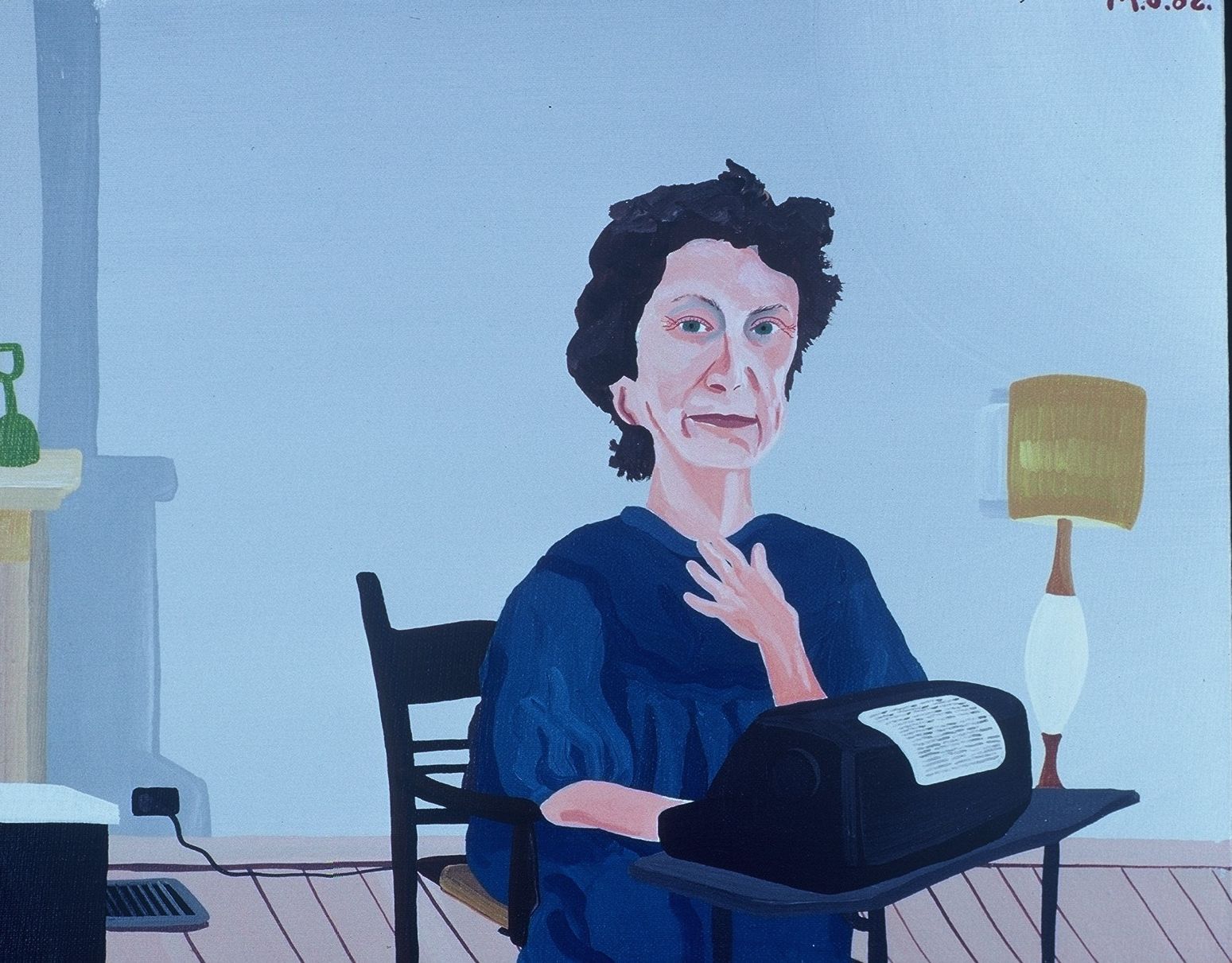
The Writer by Mendelsohn Joe, 1982

The Writer by Mendelsohn Joe, 1982

Okay, I need a new direction. Writing the blog post on Cockroaches took three days and was absorbing. I had to go back through it on my iPad reminding myself of names and sorting out the red herrings from the real resolution. I neglected to say in my review that the plot was not memorable.

The difficulty arrives from the fact that I’m more or less stuck here in a mountain village in Kern County, California far from Toronto, as a result of a family illness. There are days when I am superfluous to need, but then again, a relapse occurs and I’m fully involved. I don’t even have time to think. Other days like this one, I am at loose ends despite bear incursions.

Because I’m a big reader of mysteries, several people have suggested that I write a mystery. I thought about it.

Okay… I’d need a crime, a locale and a detective. I could set it here in this mountain village. Wait Mar Preston has already done in Payback, although I didn’t recognize the happy, friendly village I know in the misanthropic town she depicted. Besides hers had a town hall, whereas the real place has only one centre of administration, the club house. This village is unincorporated. In other words even its roads are private property and privately maintained. The streets are patrolled by security guards, although the sheriff rides in for serious matters. So I suppose I could write a truer picture of our remote mountain valley.

Then I’d need a crime. Darn. Something bad would have to happen. Something seriously bad. What stops me there is my own personal experience. My father had a way of being on the edge of seriously bad stuff. After his death, three different police forces spent $1,000,000 trying to figure out exactly what. I can only say it was not worth every penny. Even if he did look exactly like the police drawing. (See home page for ebook.)

Most of all, I don’t have a scientific background except for Biology 101 which taught me how to dissect a pig embryo. I suppose I could make it all up from my extensive reading and my watching of CSI, but I am loath to do so. It’s possible that television writers take liberties with fact. And I have no experience of group work in policing.

I could write about group life in a high school prep room. Pretty cut-throat especially before smoking was outlawed.

Actually I could depict two older women, who have no investigative qualifications except curiosity. And mystery reading. One of them, the elder, would be irrepressibly garrulous, a little deaf and charmingly dotty who could worm information out of a stone wall. The other an ex-English teacher, more reticent, but with a mind like a steel trap. I suppose Clara would want a slice of the royalties. Anyway, that sounds too fey and Agatha Christie has already captured the market.

I’m reminded of the conversation between the writer and the doctor at a party. Doctor: When I retire, I’m going to write a novel. Writer: And when I retire, I’m going to take up medicine.

So, no, I think not.

I could find another indecipherable novel like The Luminaries, study it carefully and blog about it. The Luminaries post draws about 150 hits a week, once 164 in one day. Any suggestions?

I have embarked on the project of following The Outlanders by Diana Gabaldon on Starz and reading the books, but those stories are pretty decipherable. They are historical romances, no matter what the author says.

I could start writing a memoir about this illness, but the patient will write her own as and when.

For the time being, I sit here on another sunny warm day on the edge of the pine wood, writing a blog about my inability to get a good idea. I swear I’ve marked a hundred “personal” essays from students just like this.

Help!


Jo Nesbo’s Cockroaches

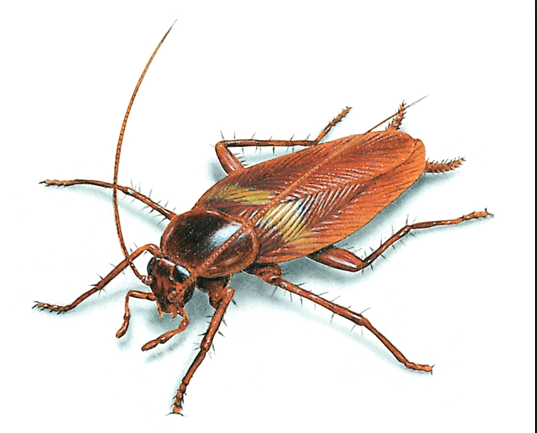
cockroachYesterday I heard a friend describe her first apartment in New York City in the early 80s, shared with two other dancers, set amidst abandoned buildings south of Houston. She slept on the floor of the pantry. She would come home, turn on the lights and actually hear the cockroaches scuttling away.

One of life’s great philosophical questions is – to squash or not to squash. Squashing entails cockroach juice. What’s that trick with boric acid along the baseboards?

When Harry Hole (holeh) arrives in his tiny apartment in Bangkok, he observes a cockroach as big as his thumb with an orange stripe on its back. He notes there are a three thousand different types and that that for every one you see, ten more are in hiding from the vibrations of your feet. For the moment, he regrets his sobriety.

Jo Nesbo published Cockroaches in 1998, his second book after The Bat, set in Sydney, Australia and before Redbreast. It has just been translated and published in English. The comments on Goodreads range from ecstatic to so-so.

My sister, Georgia, collected all the Nesbo books, except Cockroaches and gave them to me one Christmas, suggesting I start with Redbreast. When I got around to reading The Bat, I thought I could have started with it. The real hook is the developing character of Harry Hole and my only problem was that I hate reading about drunks. I was happiest with the books where he pulled himself together at least a little. Which he does in Cockroaches much to the dismay of the government in Oslo.

Hole has been selected to go to Thailand to investigate the death of the Norwegian Ambassador in a Bangkok brothel, partly because of his international success in Australia, but mostly because he is back to drinking. He has forsworn Jim Bean to make do with beer at Schrøders, where he can down nine, and still mess with Wooler, walk home and turn up sober for work next day.

Dagfinn Torhus, Director of Norway’s Foreign Affairs doesn’t even know why it is so urgent to keep all news of Atle Molnes stabbing death under wraps. Bjorn Askilden, Secretary of State, may know, having been briefed by the prime minister’s office. As the Police Superintendent bullies Bjarne Moller, head of the crime squad, into supporting the choice of Hole as lone investigator, we learn only that trust in the P.M. is all important. His centrist government of the Christian Democrats  supports family values, is anti-gay, anti-civil union and prone to wearing yellow suits. Moller has kept Hole out of trouble more than once and seriously doubts the wisdom of choosing him to go to Thailand, but clearly this is a political decision.

Harry has troubles of his own. His mentally challenged Sis has been raped and had an abortion, but the police have dropped the case. He agrees to fly to Bangkok, only if he will be allowed to re-open the case when he returns.

He flies drunk. But with Vitamin B in his bag. He was able to get sober in Sydney by using it and although he doesn’t acknowledge it, he has made a decision for sobriety again.

In Bangkok, he meets the police team he will be working with, headed by a very tall, completely bald half-American, Liz Crumley. The rest of the team are Thai, Nho who is young, Sunthorn, baby-faced and the oldest, Rangsan, always hidden behind a newspaper but spouting key ideas.

The back story of prostitute Dim, who discovered the body, actually opens the book. She plies her trade posing as Tanya Harding -“Skates go on after panties come off.”

Harry soon meets his nemesis Woo – a freakishly large enforcer- and according to custom, Woo throws Harry off a balcony.

The murder weapon is a very old knife embedded with coloured glass but greased with reindeer fat. Obviously the murderer is Norwegian. Is it the unsatisfied wife, Hildes Molnes, or even possibly the ambassador’s seventeen year old, one-armed daughter. Is it the victim’s Chargé d’affaires, Tonje Wiig? Is it his receptionist Miss Ao? Is it his seemingly loyal chauffeur, Sonphet? Is it the loan shark who holds the ambassador’s $100,000 gambling debt? Is it Roald Bork, spiritual shepherd of the  Norwegian community? Is it Ova Klipra, the wealthy contractor who lives in a former Buddhist Temple and who can’t be found. He finds you. Is it the ex-intelligence officer Ivar Loken, known as LM (living, morphine)? Is it Jens Breeke, currency broker for Barclays Thailand? And what does all this have to do with photos of a man having sex with a child, taken through a window?

We learn a good deal about the sex industry in Bangkok, including Dim’s enrty into it. Brekke treats Harry to a rundown on katoy, trans-sexual prostitutes -a head too tall, a touch too provocative, too aggressively flirtatious and too good looking – including the drawback of surgically constructed vaginas.

We learn a good deal about currency trading and how to make a bundle.

We are treated to a bloody, no-holds-barred boxing match as well as a cockfight and yes, only one cock survives. (You have to admire the lengths Nesbo goes to in his research.)

Most of all, we learn about paedophiles. Disgusted by the photographs, Harry calls home. He calls home much too often for Torhus and Moller’s liking for they are alarmed at his zeal in solving the crime. This time, Harry talks to Dr. Aune, his therapist. There are two kinds of paedophiles, he is told: preference conditioned and situation conditioned. Both may have been abused as children, but the former starts in his teens, adapting to the child’s age, although sometimes playing the role of kindly father. (My own father fitted this category.) The situation conditioned paedophile is primarily interested in adults and chooses the child as a substitute for an adult he is in conflict with.

So, huuuum, what do the cockroaches symbolize? Are they good after all, as Runa asks? And do you ignore them as Oslo wants, arrest them or squash them?

(I bought Cockroaches on iTunes $15 !!! and read it on my iPad.)


Family – a committee designed by a camel

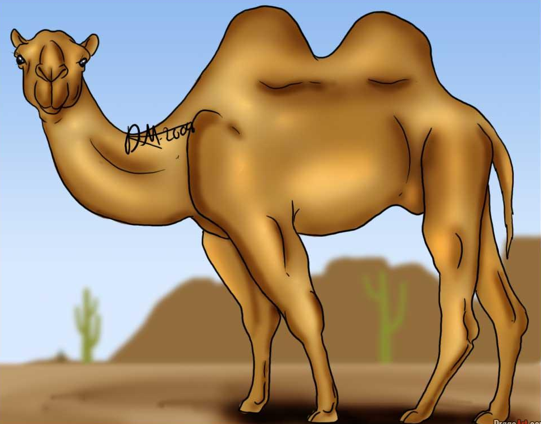
camelI saw a sign in a gift shop the other day, which read,”If he said he’d do it, he’ll do it. Don’t keep nagging him every six months.”

This summed up my relationship to my husband when I was married. It remains a bit of a problem even now. Yes, I can rely on my children’s father — eventually.

I’ve led a selfish life for years now. At least three. At 75, I stopped volunteering. For 10 years prior to that I headed the shipping committee for a charitable organization. We shipped books and t-shirts around the world, making a good deal of money for the club. My committee worked well; I left the other 4 alone to do their jobs. Trouble was the committee that managed the club didn’t extend the courtesy. I knew what we needed to cover orders, but I wasn’t allowed to order goods. That meant I ended up taking the flak when the club in Sydney or Warsaw didn’t get what they ordered. So I figured 10 years is enough and quit. As it turned out supplying instruction books wasn’t that important and trade died off. Recently, I got an email from the management asking if I could remember how many books we last had printed and by whom. I ventured that all relevant invoices had been filed. By me. Of course. But I had not committed that information to memory.

My trouble with committees is the only good ones are run by me.

As the mother of young children I ran the committee. My husband made decisions about gardening, the pool, the sailboat and the cars, but I made all the important ones. Mostly, things worked well, although my adult children seem to remember my style as autocratic. Well, what working mother’s isn’t? My son was once asked by a friend whether I denied him dessert if he didn’t eat his vegetables. He said, “No, she just threatened to kill me.” Nonsense. I never said that. He misinterpreted my look.

As they grew up, I had to back off the dirty look and bring my at-home leadership  style into line with the more laisez-faire one I used supervising the teachers who worked in my department. Vegetables were the least of my concerns. One of my teenagers was driving. They went off to an alternative school. It was the late 70’s – what drugs were they taking? Etc. But Blake and I soldiered on, trustfully in that laisez-faire way and nothing terrible happened.

Just when I had settled down to living for myself, I was suddenly drafted back to family duty.

How surprising! I had made it through the helpful grandmother stage, relatively unscathed. True I had to fly across the continent to do that, 2 or 3 times a year over a period of 25, but I read  bedtime stories and babysat and helped boys learn to swim and drove them to school and went camping with them. Now they were both adults. I was complacent. All future trips would be recreational.

Not. Illness struck and serious illness at that.

As soon as daily hospital visits ended, it began to be clear that 3 people really can’t live in 950 sq. ft. with 1 bathroom. Then the family grew, exponentially for a while and then shrunk back down to 4. Mother-in-law had come to live in the mountain village too. So that is how we 2 mothers came to live at the Reality Hotel – see previous posts- and later in the house she bought.

I learned pretty darn quick that my habit of declaring absolute opinions didn’t go over well. There were serious medical decisions to be made and apparently, the principals had to be given equal voice. Apparently, I had to back off and take a lesson from Marshall McCluhan, “I don’t necessarily believe everything I say.”

Meanwhile my new best friend was my son-in-law’s mother, Clara, who has a style all her own. She packed up to move by first pulling everything out of closets, cupboards and drawers and only then did she begin to put things in boxes. We heard daily reports of the chaos. When the house deal finally closed 7 weeks later and things began to arrive, Clara unpacked in exactly the same way. She emptied box after box and sat things everywhere. At a modest estimate, she has 2000 decorative objects, and she can tell at which thrift shop she bought each one. My room was the only sanctuary, since all I had fitted in one 23 K. suitcase.

Organization is my middle name, so I had to keep a tight rein on myself. I let myself wash each piece of china and re-stack it in categories. When Clara put a couple of mugs in one cabinet, I allowed myself to put the rest in there -at least 60 of them. Gritting my teeth in impatience, I awaited further clues. The plates, the pans, the glassware and the pantry have now been allocated.

Meanwhile I have taken it upon myself to initiate floor care. The highlight of my day today. That laminate shines up really well. I know pathetic. But there’s still no television in the house and the night life here consists of Madd Bailey’s Bar, live music Fri to Sun. Food can be ordered up from Mommy’s Roadhouse.

Or you can sit on the porch and watch the moon rise over the mountain.

So much for growing rigid with age.

The title makes no sense unless you are familiar with the saying, “A camel is a horse designed by committee” and maybe not even then.


Life is a Cabaret, Old Chum. Come to the Cabaret

Cabarethttps://www.youtube.com/watch?v=moOamKxW844

Georgia celebrated her birthday this week. I had bought tickets to Cabaret at the Shaw Festival in Niagara-on-the-Lake, Canada. I told her where to find them in my apartment in Toronto. They weren’t where I thought they were, but she called me on my land line and I told her to look under the paper weight and there they were. I had invited Blake to go with us. He had agreed to drive. And Georgia asked her daughter to go with them on my ticket.

When I bought the tickets in May, I thought to myself that it would be a treat to compensate me for the end of summer, as well as a good way to celebrate my younger sister’s birthday. Blake, my ex-husband, has known us since we were 16 and 10 respectively and we three always enjoy each others’ company.

Only problem – I am here where summer seems never to end and a typical morning greeting is “another beautiful day in paradise”. You hear that a lot in Southern California, but never more than here high in the mountains, a place which the  Chumash called the Center of the World. It is a town built around a golf club and its sole industry is leisure. Some people actually set out at 5 a.m. to drive down to work in the cities, even as far as Los Angeles, but many more do not. They get up early to play a round of golf and only then do they eat breakfast at the club house. They are resolutely friendly, waving as they pass you in their golf carts.

Others are economic refugees, here because you can buy a house for less than a hundred thousand or rent one for less than a thousand. There are many musicians and many free musical events. They will insist on playing without as much as free beer for their reward. There are talented writers and artists as well and festivals and events that showcase their work.

There are weekenders with big houses, executives, movie people, we suppose. We don’t meet them really.

And yet I missed Cabaret.

Georgia reported that it was wonderful, the set amazing. Blake took them to a good, untouristy restaurant for lunch.

I am suddenly struck by homesickness.

The maple tree across the street from the duplex where I live will have turned red by now. The one in front will soon turn yellow. The swallows will have left on or about August 28th. The geranium on the front porch -did anyone water it?- will be dying back even if they did. Tall grasses beside the bike path will be dead. Crows will be calling more than usual. Perhaps like the swallows, they are coming south.

It goes down below 60 F here at night. The cool air comes down from the heights above as soon as the sun goes down. I close the window before dawn. But by the time I go out the door, it is beginning to get hot, reaching the upper 80s by afternoon. And it is dusty. That’s the nature of a desert climate, even a high desert with pine forest. It’s rained once in the three months I’ve been here. A short trip on the golf cart leaves me, the cart and whatever I have with me -groceries, my laptop, my laundry caked in dust. In Bakersfield, an hour north, the valley floor kicks up so much dust that the mountains beyond look misty.

My Grandpa Munn couldn’t bear to leave his home, a farm in the mountains in Quebec. He would pine away when he did, growing more silent and pale as time wore on. The longest he was ever away was a week, but to him it felt like eternity. I’m not that homesick. I didn’t even notice it until I missed Cabaret. And these mountains are very like his mountains,so they are like that early home of mine.

Besides I’ve had the good fortune of having to be here amidst such beauty and in the middle of my family. Why complain?

The north seems to built into my bones. I miss the quickening of fall.

Life after the Reality Hotel (just when I thought it was over)

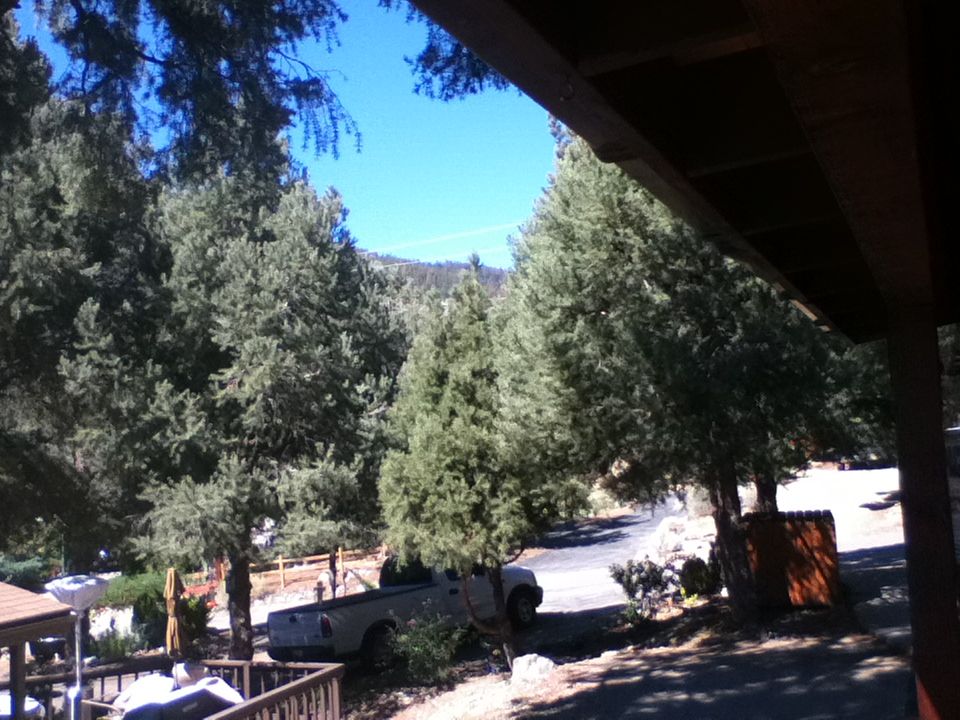
view from Kodiak #4One summer when Blake and I were still married, we visited my Nanny on her hilly farm in the Eastern Townships of Quebec. Hay season is late there and the fields get only one crop. Now it was ripe, but rain was forecast. My grandmother’s hay was already in a neighbour’s barn. She rented the land out now that my grandfather had passed -at the advanced age of 78. Would Blake, she asked, go up the hill and help her sister Eva with her crop. He set off immediately and didn’t return for many hours. When he did, he was very excited.

“You wouldn’t believe it,” he said. “There was an 88-year-old woman driving the stripped- down model T that served as a tractor. An 84-year-old woman was on the wagon packing down the hay and a 78-year-old man was pitching it up.”

We stared at him. He waited for our response. Well, yes, Blake. What else did you expect? That’s who lives there, Aunt Eva, Aunt Betsy and her younger husband, Ralph. They were no doubt happy to have help, but they would have managed on their own.

These were my people. My grandmother lived alone on the farm, out of sight of all her neighbours until she was 93, hauling in sticks of wood for the stove as necessary.

So I should not have been all that surprised when duty called just after my 78th birthday and given the stock I come from, I shouldn’t have doubted that I was up to the task.

I contemplated this as I flew home on the golf cart in the semi-dark, high desert cold, last night, barely able to see the other unlit golf carts who had also outstayed the light. I thought about it as I wrestled one plug out of the battery charger and forced the right one in. And I’m the old girl with such weak wrists that I have to waylay strange men in the street to open my wine bottle.

I also find myself driving mountain roads like a budding James Hunt. They call the part of the road just outside the village the S curves. This is misleading. The entire road is comprised of S curves, all the way down to the Mount Pinos turn. Until you get to know it, you don’t actually know whether the loop with go right or left. The road is narrow, but well marked and there are lots of turnouts, but after 3 months, I seldom need to let the cars behind me pass. Then the road opens out into a straight stretch down through Cuddy Valley. Do you remember the Waltons? This is where they lived, here in Kern County, California, not in the Carolina after all. Lately, my country driving skills have kicked in there and I have a problem sticking at 60 mph.

One quibble: should 78-year-olds sleep on the floor? Fine, I like a firm mattress, but getting up at 3 a.m.? First, you have to think about it. Turn on your knees. Plant the tops of your feet on the floor as you kneel on the mat. Push up with your hands and feet. Stand still until you get your balance. Find the flashlight. Follow its beam.

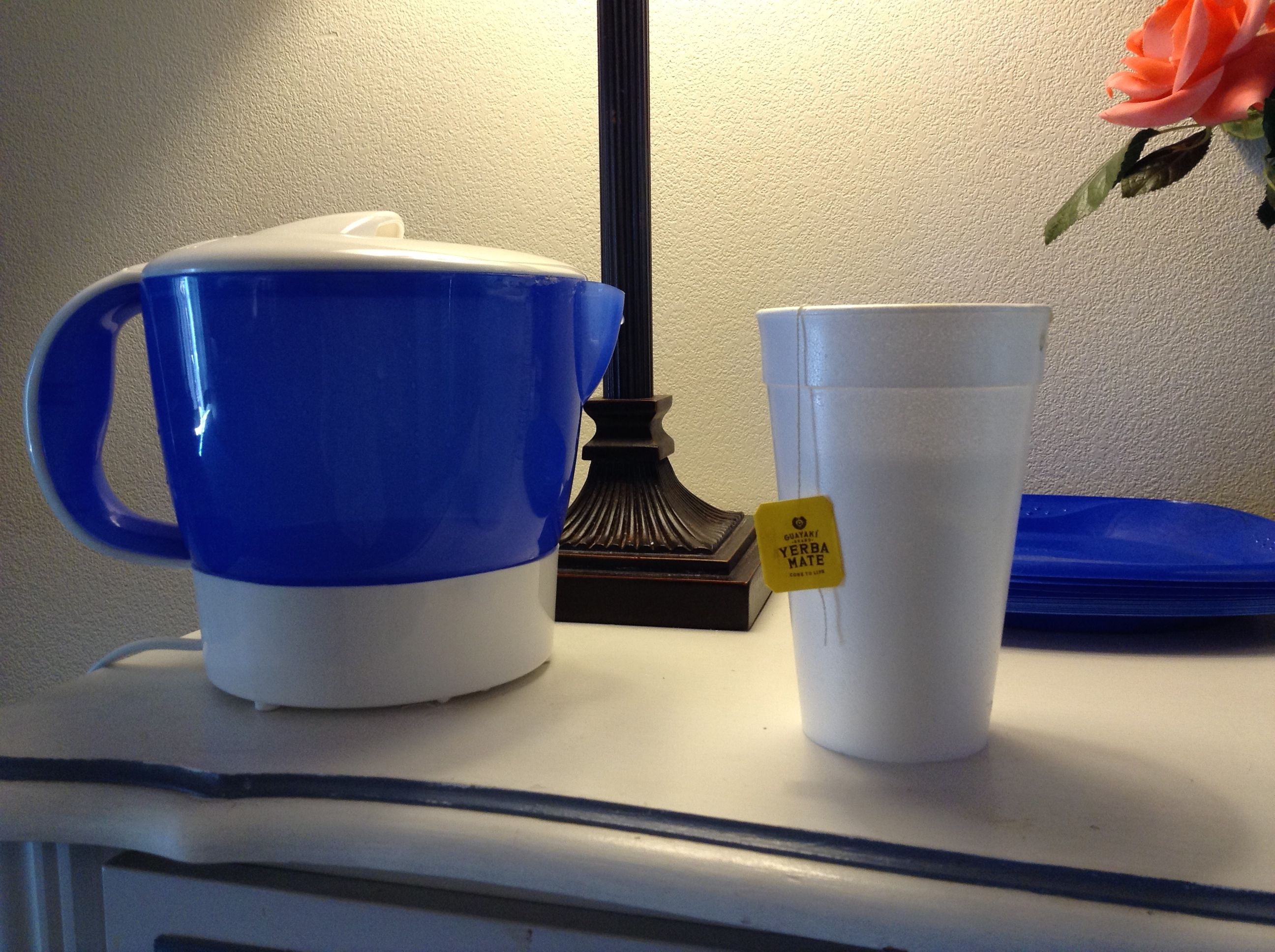
the podFor we have left the Reality Hotel, Clara and I. We have moved into her house. At last! The first 2 nights, we had a sofa, its matching chair and a mat on the floor. We borrowed sheets and blankets. Yesterday, 4 chairs fell out of the furniture pod when we unlocked it and behold there is a kind of  breakfast bar just like a table built into the kitchen island. Now I can stop eating breakfast while watching Clara sleep on the couch. If I am very lucky, or possibly, very good, I will find a bed in my room when I get back tonight. Various teenaged guys are willing to give up Saturday of Labour Day weekend to unload the pod, piano and all. Then perhaps on Monday or Tuesday, pans and dishes may materialize. At present, I make my porridge in the aforementioned hotpot https://115journals.com/2014/08/22/3024/and eat it from a styro-foam bowl with a plastic spoon.

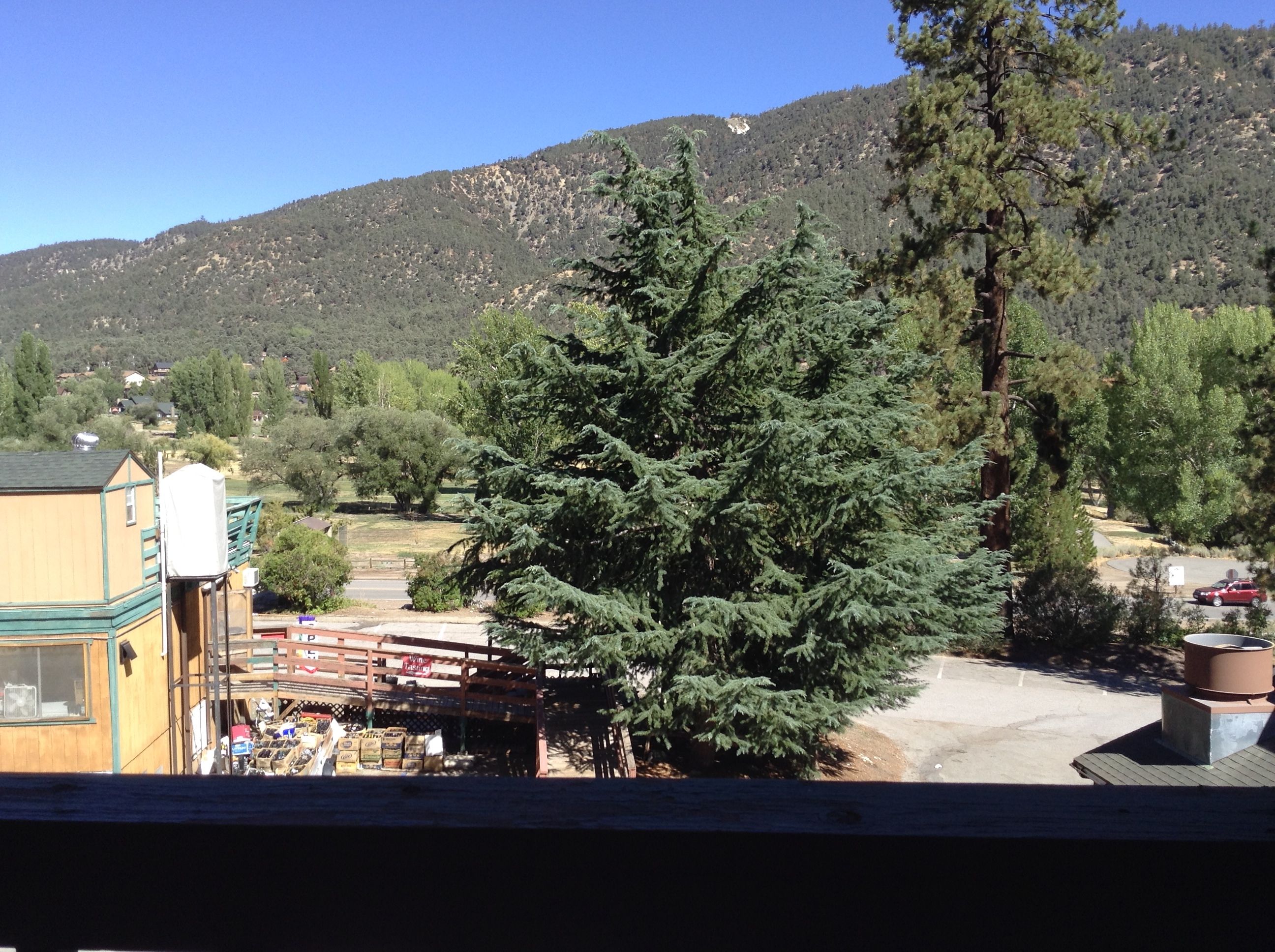
view #2 from Kodiak

The Reality Hotel: latter days

balcony hotelA snail climbed on the back of a turtle.
What did it say?
“Wheeeee!”

The house sale is moving at the same speed. When it finally closes, Clara and I can bust out of the Reality Hotel. Today it inches forward as the money from the sale of the Vegas house finally hits the bank account of the vendor of the house in Pine Mountain. Meanwhile Clara and I have been living in the second floor of this three roomed hotel since early July.

We have large airy rooms with excellent showers and a kitchenette in Clara’s room, but no phones or internet, no stove or hot plate, only a microwave and a toaster oven, in a town where restaurants keep mountain hours and Wednesdays they all close. Of course there is a general store next door where you can buy almost anything, including good French champagne, which I bought to celebrate getting the keys. Trouble was we trooped over to see the house that was almost Clara’s and the keys didn’t work. Turns out the key which over-rides the code was in the house and we didn’t have the code. We drank the champagne to make us feel better.

Now that little problem is solved. All we have to wait for is the house to be cleaned and the pod with the furniture to arrive from Las Vegas. Possibly not next week, say the pod people. Not to worry. There is a storage unit at the foot of the mountain with furniture in it, including the mats that Clara slept on in the last days in Vegas. I long to lie my ancient bones down on the floor. I dreamed last night that I was going from house to house looking for a bed to sleep on. I was still looking when I woke up.

But life here in the old Reality Hotel (Realty really, but it is all so surreal ) got better by the addition of two items.

hot potA $13 Proctor Silas plastic hot pot, which boils water for tea and cooks porridge.

hot wireNo not the Mac Air book, the gizmo beside it, a hot wire that magically allows me to get the WiFi signal from the house in the pines. It had been lying in a drawer in that house, completely unrecognized for the miracle it is.

Now I can get on-line of course and that is good for a blogger, but the best thing, the very best thing, is that I can use Skype to make phone calls. Out-going at least. I haven’t convinced others to sign up for Skype so they can call me. Except my Brussels brother.

Previously I have had to rouse Clara and borrow her cell phone. (My phone is AT&T and gets no service at all on the mountain.) Because Clara’s hearing seems to be worse up here at altitude, getting her phone can be trying. Up to now, on occasion, I have just jumped on the golf cart and gone to knock on a door.

But here I am with a morning off so far as I know. The sun is shining in the balcony door. The breeze is swelling the curtain. The Stellars jays are calling. The ventilator over the store is humming away. No, no, Joyce, positive stuff. The mountains are embracing the village on every side. And the possibility of living in a home is inching ever closer.

“I will lift up mine eyes unto the hills/ from whence cometh my help”

view from hotel

Never Let Me Go

never let me goWhen I finished reading Kazuo Ishiguro’s novel Never Let Me Go, I sat still on the sofa and thought about it. I felt unbelievably moved. What is it really about? Is it about our inhumanity to each other? Certainly, there is that.

Set in an alternative 1990s Britain, Never Let Me Go depicts Hailsham, a boarding school where children are encouraged to be creative and are given frequent medical examinations. They don’t go home for holidays. Hailsham is their home. Are they orphans? Gradually, as they grow older we learn as they do that they have been cloned to become donors, organ donors.

The novel was short-listed for the Booker prize in 2005, but I steadfastly refused to read it  because I was too squeamish. Being stuck on a mountain made me less choosey and, having more or less enjoyed Ishiguro’s When We Were Orphans, I downloaded Never Let Me Go on my iPad mini. Whereas the stilted voice of the detective in When We Were Orphans irritated me, the humane voice of Kathy in Never Let Me Go drew me in immediately. Very soon I loved the three main characters, Kathy, Ruth and Tommy.

They are being raised outside of normal society so when they are released into it to live out their abbreviated lives, they can only guess at how it actually works. For much of the time, they are equally in the dark about the donation process. Mercifully, so is the reader, although we do eventually see Ruth and Tommy in recovery between donations. Kathy is their carer supporting them through the process. Four donations seem to be the limit, during or after which, donors complete. Kathy is about to finish her years as a carer and start being a donor. Is it possible that there really is a way to get a deferral if donors can prove they are in love?

The book had a cathartic effect on me. Like a Greek tragedy, it incited “pity and terror”. No doubt this had to do with the fact that I had spent much of the last few days sitting by a loved one with a serious illness – a very heart opening if fearful experience. A never-let-me-go experience.

At the same time, Peter L. Bernstein’s book about risk Against the Gods came to my attention. Bernstein contends that people are not so much risk averse as they are loss averse. He quotes Amos Tversky who says that “the human pleasure machine is much more sensitive to negative than to positive stimuli”. We can imagine a few things that would make us feel better, but “the number of things that would make you feel worse is unbounded.” And some losses we know we could never recover from.

Reviewing Never Let Me Go in the Guardian, M. John Harrison said that the novel “isn’t about cloning or being a clone”. I think he is right. The donors endure, fulfilling their role as it has been laid down for them. The novel is about life as we all experience it. Harrison ends his review: “It’s about why we don’t explode, why we don’t just wake up one day and go sobbing and crying down the street, kicking everything to pieces out of the raw, infuriating, completely personal sense of our lives never having been what they could have been.”


Return to the Reality Hotel

Village in Sierra MountainsWe had to vacate our rooms at the Reality Hotel. There was a big car show up here called “Run to the Pines” and our rooms had been reserved by car show enthusiasts weeks before we arrived. What to do?

“No problem,” said the manager of the three room Reality Hotel. “I’m going away, you can stay in my house.”

She was glowing with pride and generosity. It would be her pleasure to share her home with us. Moreover, we already knew her housekeeper and house-mate, the red-haired Jody, who cleaned our rooms. Now it is true that we are getting cut-rates for our beautiful rooms – mine is about $33 a night, which of course I can ill afford – but Jody is clearly part of the Gudenuff cleaning company. I don’t expect to get my bed changed any more often than I would change my own, but she has changed it three times since July 7th. The comforter, I avoid like the plague, although it’s pretty enough during the day.

So we moved.

Picture us: 163 years old (aggregated) with suitcases, at least 20 shopping bags, pillows, a box of food, a refrigerator bag, a walking stick, a litter box and a cat that has to be medicated to travel. Clara is between houses and much of her stuff is what remained in her ex-house after the movers left. As we carry stuff down the steep stairs from our second floor room, we joke that we will start a moving company called “Slowbutsure: the careful movers”.

At a certain point, Jody has to clean our not yet cleared rooms, so I start throwing money at her and she helps out. She probably would have anyway, but a bill or two makes her happier.

The house is beautiful as advertised, perched on a side hill with a fabulous view of mountains. And a steep set of stairs up to our rooms. Once again the friendly redhead helps out and we schlep our goods in.

However — there are either 3 or 4 additional cats. One is a recluse who lives in the en suite off Clara’s room. Two roam the house and I believe there is another that never leaves Jody’s room downstairs. The smell of cat pee welcomes us in. I can’t even find most of the litter boxes, but I clean the one I find. It is several days before I find the main one, which is clearly in Jody’s domain, but, being Canadian or just too darn cowardly, I do not clean it.

Clara’s girl cat lives in her bedroom, but the boy cats know that and begin spraying EVERYWHERE.

My room has an A.C. unit in the window. I can’t open the window and the A.C. works at gale force.

Clara asks me to open her bathroom window for the cat recluse next morning and I find myself in a cloud of dander and fine cat hair – cat down?. My skin begins to feel hot and prickly. My eyes burn. Tiny cat hairs constantly end up in my mouth. I shower often, only to discover that something -the softened water perhaps – gives me a red rash on my upper arms. In desperation, I ask Jody how to turn the shower head from stabbing to gentle. This she can do.

I was looking forward to watching television. The first time I try, I push what would be the up-channel button on my remote control and lose all reception. Jody doesn’t know how to fix it. Nor does she know the password for the internet, having forgotten it years ago.

No problem. Everyday we have to drive to Bakersfield. Down through the beautiful pine- covered mountains into the scrub-covered mountains, down through Tejon Pass to the desert mountains and then through the flat land of the Central Valley. Foodland. Finally we reach Bakersfield where 90 degrees is a cold snap. It takes an hour and more. As soon as I step into the Prius, my lower back cries, “Not again”, but you know what, out of the house, I no longer sneeze and clear my throat.

One night I stupidly leave my chicken salad on the counter and the long black cat with a white mustache eats it. Clara is having a shower and doesn’t hear the resulting furor, but she confides to a family member that Joyce doesn’t like the cats. That night, I find the same cat with his nose in my water glass. I keep my door shut, but he lurks around the corner and dashes in between my feet. I have to wave a sweat shirt under the bed to drive him back out.

Still he bears me no ill will, asks me to open the door, thanks me and comes when I call. I wouldn’t want the mountain lions to get him. Would I?

For the interim, however, I have a phone with a Canadian long distance plan and I do a mental health call when I wake up to brace myself for another day. It’s not just the cats, it’s living out of a suitcase. Drawers are great. You pull one open and there you see clearly visible clothes in neat piles. A suitcase you have place on a flat surface, a low one in my case since I can’t actually lift 23 kilos. Find the right zipper. Open it. Ah!!!! There they are -neatly rolled clothes in 6 layers. I was sure I put the underwear in this corner. It isn’t there. Carefully I begin removing each layer. Always I have two thirds of the clothes out by the time I find what I need.

“I’m sick of camping,” Clara confides.

On Sunday while I am deeply embroiled in family matters at the house in the pines, Clara arrives to announce that she has moved out of the house because our host returned unexpectedly. Host said she would sleep on the couch, but Clara can’t let her do that.

“Why not?” I think to myself.

So between 5 p.m. and dinner, I hie myself back in the Prius out past the s-curves, up the hill and on weary legs, up the outside stairs and pack. I notice that Clara has not packed our food. I pause, covered in sweat and consider crying. Then our host shows up and helps me carry six grocery bags, two suitcases, the food box, the refrigerator bag….. meanwhile talking gaily about her vacation. I can make no sense of anything she says I am so utterly bushed. I do manage to convince her that her house is lovely and that I am full of gratitude. She replies that we have left a wonderful feeling behind. Okay!

Dinner at the house in the pines somewhat restores me.

Afterwards a beloved family member carries everything in the Prius and in Clara’s car back up to the second floor of the Reality Hotel.

The cool evening air coming down from the mountains blows in one door and out the other, sweet and pure. I put my new tiny plastic hot pot ($13) on and a minute later, I have a cup of tea.

O Reality Hotel, why did I ever knock you?

Sailing in Shangri-la

bear claw bakeryRegular readers of this blog will know that circumstances have led me to spend my summer in a remote mountain village without media. Oh, media is here, via satellite dish but not that I can access easily. Deprived of my usual sources of information (except old National Geographics -1985!!), my conversation has fallen back on old timey tales. This morning four of sat outside the Bear Claw bakery toasting in the 8 a.m. sun, eating the best croissants outside France and telling such tales.

There had been a terrible lightning strike at Venice Beach the previous Sunday. One of us had been near the beach that day, but not actually at it and had witnessed the brief violent storm.

Julia piped up and said that when you are near ground zero, the flash is a sheet of light. She recounted being in the family room of our house under the hill in Scarborough when lightning hit the flag pole above.

I didn’t remember.

I have amnesia about lightning mostly. When I was a toddler and sleeping upstairs, a ball of lightning came in one window, streaked over my crib and out the other. I leaped out of my crib and hit the stairs running. Just as the horrible thunder crashed, I slipped in my pajama feet and soared into space. I fell –into the waiting arms of my Uncle John – infinitely slow John Cunnington who had heard me, sprung up from the table, flung open the stairway door and caught me.

That was it for me – memory wise. The file marked lightning was full.

But Julia had other memories from her sailing childhood.

When she was 14, her father, Blake and I bought a Northern 29, a sailboat designed to sail in the narrow North Sea, where the waves come close together. It has a lead keel, which renders it very stable, indeed capable of righting itself should it turn over. It was a good choice for Lake Ontario which is also narrow and prone to similar waves. It has a steel mast that is set in the lead keel. This means that lightening strikes should go down into the lead and disperse over the water. The fourth member of the crew was her 13 year-old brother, Daniel.

Julia thinks that it was Blake’s wartime experience that made him want to sail. He was evacuated with many other children on the ship, Antonia, to Canada. At least one such ship, The City of Benares had been torpedoed with the loss of 77 children.There were two other ships carrying children in Convoy Z in which Antonia sailed, a total of 1000 kids. There were 6 destroyers protecting the convoy and the Battle ship Revenge, which as it turns out was carrying Britain’s gold reserve £10 million  to safety in Canada. Blake was 5 at the time. He was 10 when he made the relatively safe return after V.E. Day.

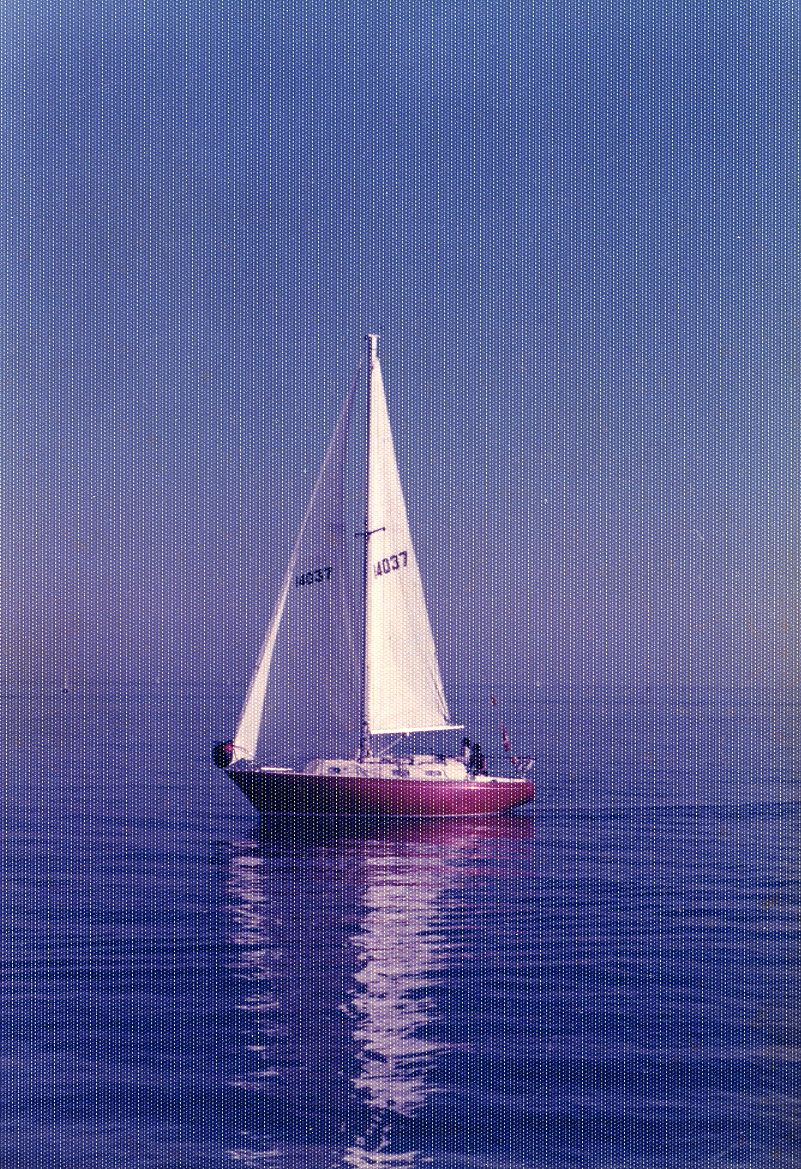
For whatever the reason, we found ourselves press-ganged into the crew of the red sailboat, Sirocco.

Mostly we were self-taught sailors, although Blake took a night course to qualify as skipper, learning such things as right of way rules, how to understand lights and buoys and so on. He had also read avidly. But the first time we flew the spinnaker, none of this helped. The spinnaker is that balloon-like, colorful sail that flies out ahead of the boat when it is sailing downwind (the wind is behind). Ours was colored like a rainbow. It is attached the mast near the bottom and then pulled up by a pulley until it is secured at the top. Meanwhile, two lines (ropes) are threaded through winches so that the crew can trim it according to the wind. The object is to get it ballooning out in front. Blake had the sail up and Julia was on the foredeck holding one of the thick rope lines not yet secured through its winch. Suddenly the halyard at the top let go and the wind carried the huge sail straight out ahead of the boat. Julia hung onto the line as it ripped through her palms at high speed. She was screaming in pain but determined not to lose our most expensive sail.

“Let it! Let it go!” he father shouted.

She did. The sail puffed once and sank through the air into the water. I ran to Julia. Blake ran to the bow. Daniel grabbed the boat hook. Julia’s hands were raw and beginning to bleed. Daniel and Blake were leaning so far out that it looked as if they would join the sail in the water, but a minute later they were back up pulling in the bedraggled mass of the sail. Glorious in flight, sodden and unlovely as a swimmer.

Sirocco was about 2 years old when we bought her and the sails were still reliable, but by the second summer, the main sail was showing wear. There is a saying that owning a sailboat is like standing in a cold shower tearing up money, so we hadn’t got around to ordering a new main sail. Typically, we would study the weather report that summer and learn that here was a chance of an afternoon storm. Since the storm hadn’t materialized for at least a week, we went sailing. Sure enough, it arrived.

Blake had shortened sail by putting up the smaller jib instead of the bigger genoa. We sail trimmers were working attentively keeping just the right amount of air in it. From time to time, Blake leaned over from the tiller and adjusted the main on its track along the boom. The wind began to pummel us in great gusts. A huge boom like thunder right above us rent the air. We looked up to see the main sail loudly flapping. It had blown out into two pieces.

Just sailing wasn’t enough. We raced Sirocco. Not only did we race it around the yacht club bay, we raced it across Lake Ontario, sometimes in two day races. Thus we were treated to a close study of lightning.

One day during such a storm, three of us were in the cockpit steering and trimming the sails. Daniel was having a break down in the cabin, probably reading. He was sitting on the banquette beside the table. Our budgie’s cage was fastened with a bungie cord to the ceiling and the floor. They were both inches from that steel mast. As those of us up-top tried to keep the boat from swamping, water crashed over the gunwales. It is reported that I shouted, “I wish you’d tell that guy who’s throwing buckets of water in our faces to stop.” Suddenly, Daniel called up, “What does it mean when the mast glows blue?” “Don’t touch it!” three of us yelled in unison. Silence fell. He was alive. What about the bird? Then we heard a very clear chirp.

One day on the St. Lawrence River, Blake nonchalantly wondered why there was a large, orange bleach bottle floating in the water. A second later, with a crash like thunder, Sirocco hit a rock. Everything flew forward and bounced back, including hapless humans. “Is there a hole? Is there a hole?” we shouted. Daniel, who had once again been below, had to dig himself out of the cabin debris and crawl into the fore-cabin. “No hole,” he shouted back. Shaking so hard I could barely stand, I joined Julia and her father on the aft rail, about 4 inches wide and we began the time-honored rocking back and forth employed when you are hard aground. Daniel crawled out and joined us. The boat didn’t budge. But what is that crazy motor-boater doing. He is driving around us, faster and faster in tight circles, each circle building a higher wake. Finally, one big one lifted Sirocco and we floated clear. Our rescuer waved and raced away. I served juice. Eventually, we all stopped shaking.

Daniel was not always below. He was the one who leaped onto the dock as we came to tie Sirocco up. (Blake invariably sailed in rather than using the motor.) One night at Niagara-on-the-Lake, Daniel missed the dock and fell between it and the boat. There was a mad rush to fend off so that he wouldn’t be crushed between the ton and a half boat and the dockside.

The waters of the Niagara River come rushing down over Niagara Falls and down the rapids and roil out into Lake Ontario. On a stormy day, the waves of the lake collide with the rush of the river and create a sort of vortex of water. On one such day, I had my personal safety line hooked onto the boat’s safety lines. So did Daniel, but he got tangled up as we worked on the fore-deck trying to take in the jib. Impatiently, he unhooked it. He had both arms full, struggling to control the canvas. He stuffed it down the hatch and stood erect. A crosscut wave hit us. Daniel fell backwards as the boat leaned. His body was entirely over water. I grasped both his wrists, braced myself and hung on, staring into his face. Suddenly, the boat heeled again and he fell into my arms.

Clara, who was listening to these stories, said after each one, “And then you quit sailing.” Of course we didn’t. Were we addicted to the adrenal rush or the tranquility of a flat sea at evening? Blake sailed for the love of sailing. Perhaps we sailed for the love of Blake.
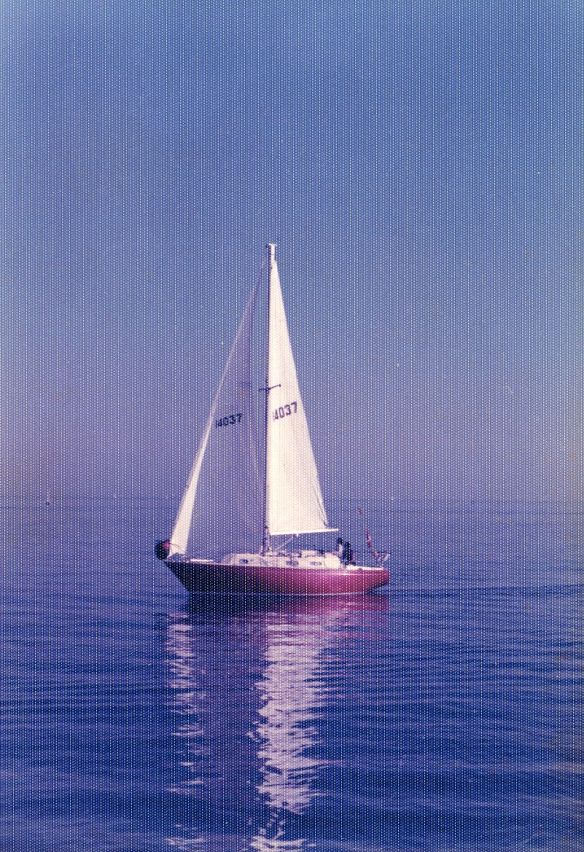
Sirroco, taken on a previous voyage

Sirocco, taken on a later voyage