The Cure For Pain Is in the Pain

In one of  Rumi’s poems, “There’s Nothing Ahead” (Coleman Bark’s translation on p. 205 of The Essential Rumi), the 13th century Sufi poet tells us that “The cure for pain is in the pain”.

This is a very enigmatic poem that begins:
Lovers think they’re looking for each other,
but there’s only one search: wandering this world is wandering that, both inside one
transparent sky. In here
there is no dogma and no heresy.

This idea echoes another poem where he says
Lovers don’t finally meet somewhere
They’re in each other all along. (Essential Rumi, p. 106)
By now we are beginning to get the idea that the ‘one search’ is not an outward one or a search for other.

After asserting that
The miracle of Jesus is himself, Rumi goes on to say that “if you can say, There’s nothing ahead, there will be nothing.” Then as though the reader is not confused enough, he adds
Stretch your arms and take hold of your clothes
with both hands. The cure for pain is in the pain.
Good and bad are mixed. If you don’t have both,
you don’t belong with us.

Faced with excruciating pain, I am more than glad to retreat to the coziness of a morphine drip, but it’s hard to come by. Lesser painkillers don’t impress me. Sure they can keep me quieter, but that’s about all. And over the counter pain remedies mess up my digestion and leave the pain the way they found it. So I am driven every so often to test this hypothesis.

I sat down earlier this week to get acquainted with the pain du jour. I made myself as comfortable as possible. No full lotus posture for me. If I’m going to look into the heart of darkness, I need pillows.

Whoa! It is bad. Really, really bad. Pull out of this dive. Just fear. Letting go never works for me. I have to own it. Hold it. Feel its center. Stay there. Stay there. Don’t fight it. This is not an alien force. This is me.

Forty minutes later, I seem to have sailed onto a clear sea.

The residual pain is bearable. I have no idea if that is what Rumi had in mind, but great poetry works that way. It is suggestive. What we make of it is up to us.

Rumi ends the poem:
When one of us gets lost, is not here, he must be inside us.
There’s no place like that anywhere in the world.

Considering Loss at Thanksgiving

Recently, I lost my usual social group. It’s because of the flood, the basement flood at the tai chi club I attended two or three times a week. It wasn’t even a very deep flood, not what others in my town experienced that July 8th when the heavens opened, but deep enough to cause a flowering of mould or noxious fungi. Initially, it smelled like charred wood. When no one else seemed to smell it, I knew I was in trouble. A blinding headache confirmed my suspicion. I withdrew. I raised an alarm. This was a health hazard, I said. The contractor who dealt with the building agreed. The rug had to be pulled up and the floor treated with anti-fungal cleaner.

It is now three months later. The rug is still there and so is the over-growth of fungus.

I tried visiting a month ago. As soon as I walked in the door, I got light-headed. Surely, I would adapt. Half an hour later, I kept saying I had to go because my head was aching, but I seemed incapable of taking myself out the door. Walking toward my car, I knew it was the beginning of the end. On Friday, I turned in my key. The instructor who took it asked me how long it takes me to get to the club I now attend.

It is true that I am now going to another location of the same outfit, half an hour closer than the mouldy one, a spacious, airy building that brings to mind Hemingway’s “clean, well lighted place”. But it lacks the 50 or so familiar faces I used to gab to and the four good friends I had made there.

There is a good deal of self-pity involved. I had been going to that club for eleven years and was instrumental in its membership expansion, in upgrading the building and in fund-raising. Every so often, I am given public credit for this. Don’t want it. Want a de-fungused basement.

Give that up, Joyce. You did it. Now it’s done. Have the grace not to snivel.

So I took Magic Erasers into the new club and scrubbed the baseboards before class. I talk to absolutely everyone who will give me the time of day. I take food in for potluck lunches. There’s got to be a pony under this pile of — fungus.

In other news: the cottage I love is being sold. We will not be able to rent it next year. A beloved house in Southern California is being lost to bankruptcy, a loss which reminds me of an earlier loss that I spoke of in my post about The Great Gatsby. https://115journals.com/2013/05/17/the-great-gatsby-a-personal-response/

Worst of all and no joking matter, a young relative is dying. I do not claim that this will actually be my loss, because I am peripheral. It is, nevertheless, a source of grief, all the more because it reminds me that I very nearly lost someone much closer. https://115journals.com/2013/01/06/shed-come-undone/

Roots are being torn up. I pulled two fat carrots out of a garden a few days ago. They are destined to join parsnips and turnip in a mash-up tomorrow. Heat, butter, nutmeg and sea salt will transform them into a mouth-watering Thanksgiving delight. (A Canuckian Thanksgiving) And I know that these changes are also transformative, but, like the carrots, I don’t yet see what we are becoming. I catch glimpses – a new home for one of us among mountain pines, my renewed friendship with my ex-husband after 30 years estrangement and various spiritual books assure me that the young man is about to be changed into “something rich and rare”.

Blake has observed that if we had stayed together in that house under the hill, skimming the leaves out of the pool and feeding the birds outside the patio door, we would be stodgy and rigid. He doesn’t add “whereas we are flexible, large-minded and open-hearted”. But of course we silently believe we have made a transformation of that order.

So for that change, at least, I am grateful.

Let us Consider the Fortunate Fall Again

Someone has just read my post Fortunate Fall: change the future in a blink, so I decided to reread it myself. https://115journals.com/2012/12/11/the-fortunate-fall-change-the-future-in-a-blink/ and https://115journals.com/2013/01/12/the-fortunate-fall-a-further-exploration/

Events connected with the initial family crises are gradually working out and, any day now, we will begin to see happy results become manifest. In the meanwhile, we have forged new bonds. Yes, it’s a cliche´ but those connections seem as if they were welded in fire. You can probably guess that they were cooled by salt water.

Now a young man is dying. When he came home as a 3 day-old baby, I showed his mother how to bath him. When he was 7, I remembered his curly headed, mischievous- self when I fell into suicidal despair. How could my death be explained to him? It couldn’t. So between him and the crisis line of the Salvation Army, I kept on living.

He doesn’t know that. Indeed at this point, he doesn’t know what is happening.

I am writing this to honour him because I cannot talk to him. What I am honouring is not just his worldly achievements but his inner being, his perpetual light that will not be put out by disease and death.

And to thank him for his shining face that gave me hope and kept me here to aid and comfort others in my turn.

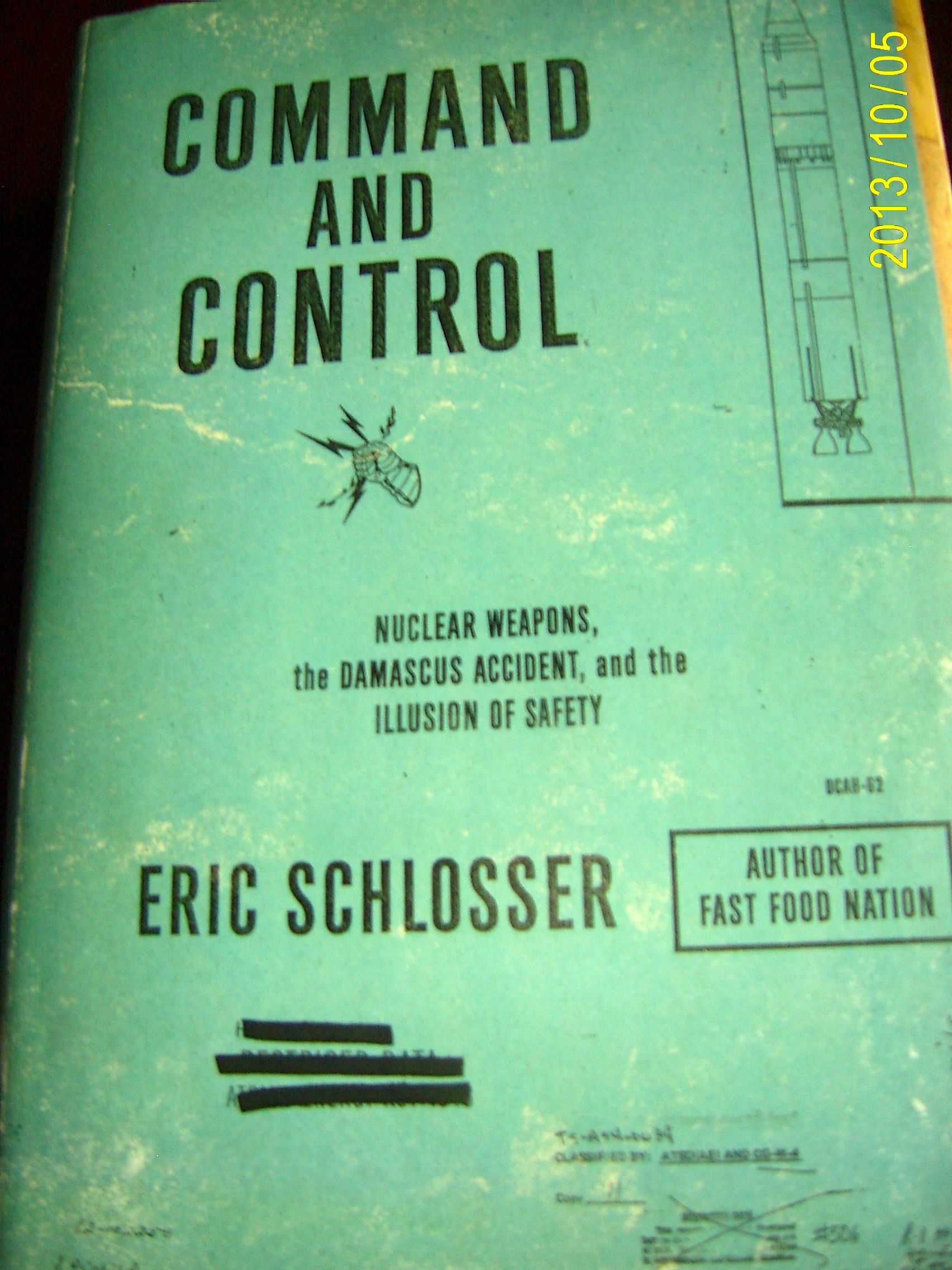
High Anxiety: Eric Schlosser’s Command and Control

SAMSUNG DIGITAL CAMERAOn January 24, 1961, a B-52 developed a fuel leak while being refueled mid-air. Unable to jettison the fuel inside its left wing, it went into an uncontrolled spin and began to break up over North Carolina. Four of its crew parachuted to safety. One died in the attempt and two died in the crash. The two Mark 39 hydrogen bombs it was carrying fell from the plane. In the process, various locking pins and arming wires were yanked out of one of them and the bomb responded as if it had been deliberately armed. The bomb hit the ground crushing crystals inside the nose, the firing signal. “But the weapon did not detonate.”  (246 Command and Control). A simple switch in the ‘safe’ position had saved the eastern seaboard from devastation. The other bomb, unarmed, hit the earth, part of it burying itself more than 70 ft deep, never to be found.

A news item in the National Post on September 23, 2013 telling that long-secret story indicated that Eric Schlosser had revealed it in his new book, Command and Control: nuclear weapons, the Damascus accident and the illusion of safety.

I snapped to attention. I remembered that day very vividly. I was in a state of high anxiety myself. I was about to give birth to my first child and true to the wisdom of the day, I was all alone in a cold room high above a wintry street, listening to the shrieks of the woman down the hall who definitely wanted “Momma Mia”.

I saw the day in an entirely new perspective. Instead of latching-on problems in mid-January 1961, I could have been dealing with radiation sickness in a semi-destroyed civilization.

I didn’t want to know that. And yet, knowing it, I rushed out to buy the book. The book seller said, if I liked Fast Food Nation, I would love this. I hadn’t read Schlosser’s best seller, figuring I didn’t need to be convinced that many people eat badly. I’m a born-again feeder myself, converted by bad health. And goodness, what a thick book – over 600 pages.

The framework story around which Schlosser builds his book is an accident in a Titan II, ballistic missile silo in Damascus, Arkansas in 1980, which began when a mechanic dropped a socket. Ordinarily, a dropped tool just ended up in the W-shaped support at the bottom and had to be retrieved. This one ruptured a fuel tank. Warning lights came on all over the command panel. The silo crew evacuated. Now it was impossible to say exactly what was happening inside the silo, except that it was dire. Schlosser feeds us this story bit by bit, concluding it at the end of the book. In between the Damascus chapters, he recounts the story of atomic weapons, the struggle to make them, to determine who would control them and how to use them. Throughout it all, the public was lulled as much as possible in spite of unbelievably inept handling, accidents and near misses, like the time the rising moon over Norway was mistaken for a fleet of Soviet bombers.

Schlosser’s research is topnotch. He seems to have interviewed everyone involved in the Damascus incident, for example and the many characters involved come to life because of the detail. If you do get confused, there’s a handy glossary at the front, not only of the major players, but also of acronyms and abbreviations.

Some of you will understand the physics Schlosser outlines better than I do. It’s true that at school, some of my best friends were physicists and I lived across the road from the university’s reactor, but, no matter how many times I am told the difference between fusion and fission, I don’t get it. I’m pretty much stuck at really big bang and lots of destruction and unimaginably big bang and destruction. The latter would be the Mark 39, H-bomb.

So my baby daughter came home un-radiated, never did learn to latch on, but took to a bottle readily enough. She learned to walk and loved her baby brother deliriously. They were both short enough to walk upright into the crawl space of our new house. That was a good thing because we were likely going to have to live there for weeks, drinking out of the hot water tank and consuming stockpiled cans of food, after the Soviet missiles took off from Cuba.

But that didn’t happen either.

Still Schlosser doesn’t want us to be lulled into a false sense of security. And I’m willing to inform myself when a book reads this well. I’ll finish it and then slip back into willful ignorance.

Mayhem in Marrakesh, Morocco

I am reblogging this beautiful post about visiting Marrakesh because it recalls my visit there in 1970 with my 8 yr-old son and 9 yr-old daughter. We got adopted by a 20 yr-old Marrakeshee who guided us around and took us to his home, not before my son and then husband went out at night to a central square and got exhilaratingly scared. My daughter says the visit changed her suburban self forever.

skinnywench's avatarA Word in Your Ear

IMG_8072

It was 11.00pm when we arrived at the Riad (hostel).  We expected a warm welcome but instead confused faces presented themselves to us when the door finally opened.  Dirty, tired and hungry after a long flight and an even longer wait to get through passport control (nearly an hour), followed by a frantic search for our luggage which had been tossed off the carouse when it shut down, I was desperate for a shower and some sleep.  I showed them the print out of our booking but they couldn’t find notification from the booking site.   After some discussion the owners told us that it wasn’t a problem as they had a room, which they prepared, and we finally crashed at 3.00am Spanish time (12.30 Morrocan time).  When the  owner finally tracked down the booking  it had been made for October and not September.  It appears that using a Spanish booking…

View original post 729 more words

Macbeth and Walter White: the death of the tragic hero

This post is about the conclusion of Breaking Bad and contains spoilers.

A tragedy such as Shakespeare’s Macbeth has to end with insight for the tragic hero and catharsis for the audience. The last episode of Breaking Bad broadcast on Sunday, September 29th had both. As a result, it left its viewers stunned but satisfied.

Macbeth realized how futile his murderous efforts to seize power had been when his beloved wife and partner went mad and killed herself. He had already concluded that his power had been paid for with loss of friendship and respect:

And that which should accompany old age,
As honour troops of friends,
I must not look to have, but in their stead
Curses, not loud but deep,

After Lady Macbeth’s death, his despair deepened:

Out, out brief candle,Life’s but a walking shadow, a poor player
That struts and frets his hour upon the stage,
And then is seen no more.

Nevertheless, he whales into battle, vowing “At least we’ll die with harness on our back”. He refuses to “play the Roman fool” and fall upon his sword when it is obvious that he will lose the battle. “Lay on, Macduff, and damned be he who first cries ‘Hold, enough’.  Exeunt fighting. The next sight we have of Macbeth is his severed head, flaunted by Macduff.

He became an awful man and we are truly glad he is dead, but we are also sad and shocked by his catastrophe. Pity and fear have washed us clean.

Walter White was of the same sort of heroic stature.

His insight is clear when he confronts his wife Skylar in her downmarket accommodations. When he begins to talk about why he did it all, she says, “I don’t want to hear you say you did it for the family once more.” He continues, “I did it for myself. It made me feel alive.”

He has already arranged for his few remaining millions to be transferred to his son in trust on his 18th birthday, ostensibly from his wealthy ex- business partner and philanthropist. He sets out to rid the world of Lydia, who now owns his meth business – ricin in her stevia, Todd, Uncle Jack and his gang, in the process freeing Jesse from enslavement. He does not take revenge on Jesse when he has the opportunity nor does he force Jesse to shot him. He even acknowledges that he wants to die.

We see him in the meth lab, caressing a piece of apparatus – he loved what he achieved, 97% pure blue crystal meth. He was a brilliant chemist. Only then does he realize he has been shot – in the right lung. He falls to the floor of the lab. From high above, we see the police enter and stream around his body as the Badfinger lovingly sings, “It’s all over now, Baby Blue”.

Insight and catharsis! Like chemistry, tragedy is all about transformation.

See also https://115journals.com/2012/09/04/macmeth-walter-white-begins-his-tragic-fall/
http://115journals.com/2012/08/02/walter-white-a-macbeth-for-our-time/

Autumn Equinox: heaven’s wheel turns

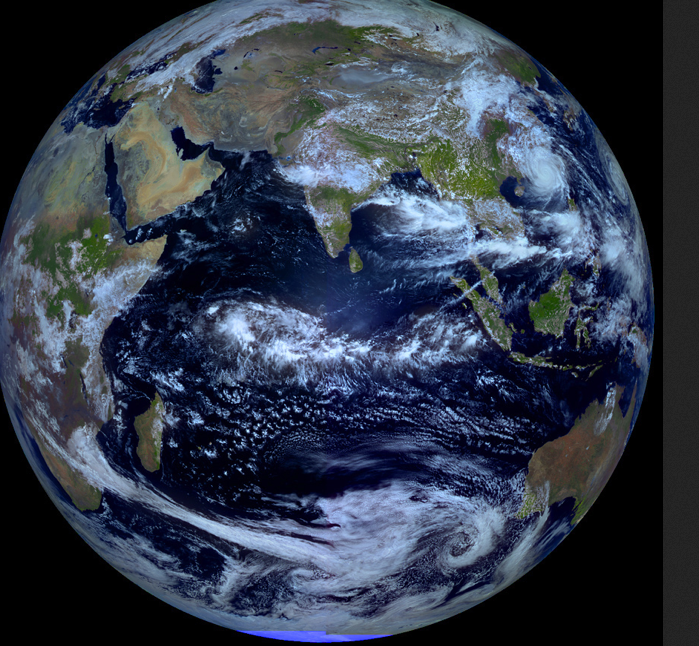
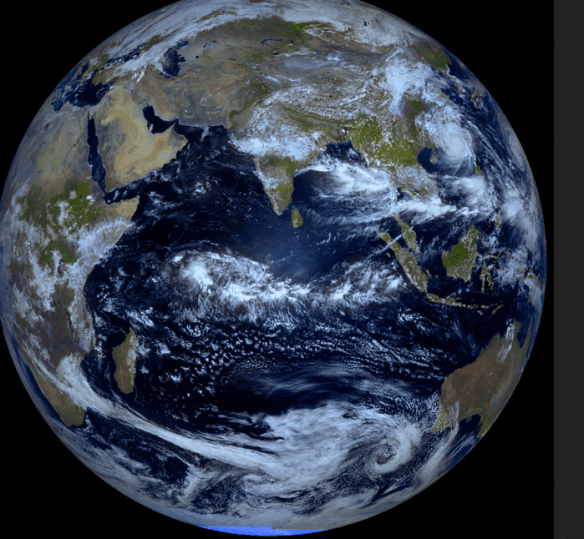
earth at solsticehttp://www.universetoday.com/104998/electro-ls-fully-lit-view-of-planet-earth-at-the-autmnal-equinox/

I know, I know, I come late to the equinox. Perhaps it’s the equinox’s fault. All hell broke loose when I should have been sitting down to ponder its significance. Fortunately, the sun positioned itself directly over the equator at right angles to Earth and showered its light equally on both hemispheres without my help. The Russian weather satellite Electro L also got on without me and took this picture of the earth as it can be seen only at the equinox. If I think about this hard enough, I may actually figure out why. (Usually part of it would be in shadow?) But you’re better off if I don’t try to explain that, given my ignorance.

This happened on Sunday, September 22, 2013 around 4:45 p.m. Eastern Daylight Time. Coincidentally, the moon had been full three days before and was particularly beautiful from my front porch.

There are four heavenly events that we still note: the vernal equinox around March 21st, the first day of spring when day and night are of equal length; the summer solstice around June 21st, Midsummer Night, the longest day of the year, and the first day of summer after which the days start to shorten; the autumnal equinox around September 21st, the first day of fall when darkness and light are once again equal; and the winter solstice around December 21st, the first day of winter when day begins to lengthen and night to grow shorter. These changes amount to only a minute or two a day, so that spring creeps northward at that daily rate.

The autumn equinox is the festival of Mabon, an early Cornish saint, according to some internet sources. That would be a pagan or Wiccan saint. Some accounts assert that she is female while others say he is male. They all see the festival as a celebration of the second harvest, the first harvest presumably was in July. But whether female or male, the deity is about to descend into the underworld, just as the energy of nature withdraws and disappears from sight in winter.

We feel this in our own bodies and we may even wonder out loud if we really can survive another winter. Chances of such complaining probably relate to how far north we live and how old we are. Me, old and here at 43.7 ° N. But I have observed that those living at 34° N and much younger also dread winter.

To cope with these fears, we have used narrative. Mabon, Persephone or Ianna goes into the underworld sometimes as the bride of Hades. The yearly King Must Die as Mary Renault recounted and Joseph Conrad alluded to in Heart of Darkness. The Green Man is sacrificed. The Straw Man is burned.

On October 31, the third harvest is celebrated, as Samhain, the Celtic New Year. So why do I get so irritated by the appearance of Hallowe’en costumes and God help us- Happy Hallowe’en cards- in stores in September? It’s just humanity acclimatizing to the death of the god, preparing to embrace the darkness by mocking it in scarey costumes and forays into the night in pursuit of sweet solace. November 1st, the Christian church designates as All Saints Day, a day to remember all the dead.

Our goal is to get through to the goddess’s or god’s rebirth, the emergence from the underworld or womb at the festival of light at winter solstice. We hang lights -much too early- and bring evergreens and holly, red with berries, into our houses to assure ourselves that eventually divine forces will bring back the energy of growth and expansion at the spring equinox.

Since I am almost as old as Mabon, I have a 75 year-old memory of one autumn equinox that I recount in Never Tell: recovered memories of a daughter of the Knights Templar. (115journals.com)

On September 21, 1934, I was a 2 year-old, seated in a horse drawn buggy between my mother and my grandmother on my way to the church hall in Hereford, Quebec on the Vermont border. There was going to be a chicken pie supper and dance. The pies under the seat were ready to be reheated in the hall stove. They smelled delicious. I never made it. “The wind took my breath away.” Don’t ask. I heard my mother say that. Evidently, the wind was very strong and I couldn’t breathe. So I found myself unceremoniously  dumped back home in the care of my great grandmother and mentally challenged cousin. They did their best to comfort me, setting up my little table with tea for my dolls and me, but I was sore aggrieved.

Later that evening, I woke up to an incredible hullabloo, a great wind hammering at the isolated hilltop farm house, my caregivers pushing furniture against the windows, which were bulging inward. My great grammy fell down. She wouldn’t get up. My cousin started screaming. When I went near her, she pushed me away and shouted at me. Things went downhill from there.

By the time my father arrived next day, having chopped his way back up hill from the church hall, I was truly traumatized, Grammy had suffered a stroke from which she never fully recovered and my clever little mind had decided to forget the whole thing. It never happened.

Exactly what never happened, I didn’t figure out for 60 years. It was the Great New England Hurricane which whaled up the eastern seaboard without warning. It killed 680 people, destroyed 9000 buildings as well as damns, bridges, roads, and harbours. It leveled whole forests. It did $20,000,000,000 damage in today’s terms. Only one of the great white pines that stood on the road down the hill was left. Although I didn’t remember the event, I loved that tree with inexplicable intensity.

So here we are just past the autumn equinox. The days grow short, but no hurricane is knocking at the door and fortunately, our stories light our way.

Your Immense Heart – re-posted

This morning it seemed like a good idea to re-post this.

A jar floating in the river
Has river in it. The city lives in the room. Think of the world
as the jar and your immense
heart as the river.
Rumi – Coleman Bark’s translation in The Soul of Rumi p. 295

Apparently, Rumi is currently the best selling poet in America. He is the 13th century Sufi, born in Afghanistan, who fled Genghis Khan and went to live in Persia. Coleman Barks, his translator, has brought him to our attention. There are other translators certainly, but I am familiar with this one and came across the lines I have quoted high above the blue Pacific on my way to Maui. I kept running them through my mind so that, by the time, I saw the double rainbow over the ocean on the Hana road, I had committed them to memory. It seemed a wonderful thing that, instead of being carried along by the current of the world, my heart was the great river that bore the world along.

Well, easy enough to know the immensity of the heart when it is full of joy as it was then. Not so easy in times of fear and loathing. And disappointment and frustration, and loss and failure and recession and depression and so on until we end up with Grinch-sized hearts, hearts that need the jaws of life to pry them open. Little tiny hearts such as Connor  (“Why I Will Never Sleep Again”, posted May 30) must have had in the end.

Open-heartedness like a river accepts everything and sweeps it up in its embrace. It does not hold back to assess a situation, deciding perhaps that here, compassion is called for or there, that empathy is in order, that this is just and right and valuable whereas that is not. It doesn’t involve effort or reason. It isn’t deserved. It is more like grace.

Big-hearted people, the Falstaffs that we meet, give us a glimpse into open-heartedness although we may dismiss them as tiresome good-time fellows. But the open heart is not necessarily ‘Hail-fellow-well-met’.

The open heart sees things in a positive light. What seems negative is just misunderstood, for always life is carrying us on in the right direction, the direction our soul is seeking in spite of where we think we ought to be or go.

But how to come to such an inclusive, accepting, positive frame of mind can be a difficult question. We each have to find our own way. Someone might begin with gratitude. Someone might arrive by being in love. Some by family love. Some by love of a pet, some of nature. To be truly open-hearted will always mean expanding beyond those beginnings and, for example, including everyone in that beloved family, loving your mother-in-law as much as your cat, for example, your political opponent as much as your child.

It is not a way of being that comes naturally to us yet, but I believe that technology is coming to our assistance. The internet can serve as one immense heart as well as mind. We share our thoughts instantly and spontaneously now and we have the opportunity to be more empathetic.

In another poem, Rumi says we are cups floating in the ocean and we should strive to wet our lips.

The Urban Woods in Mid September

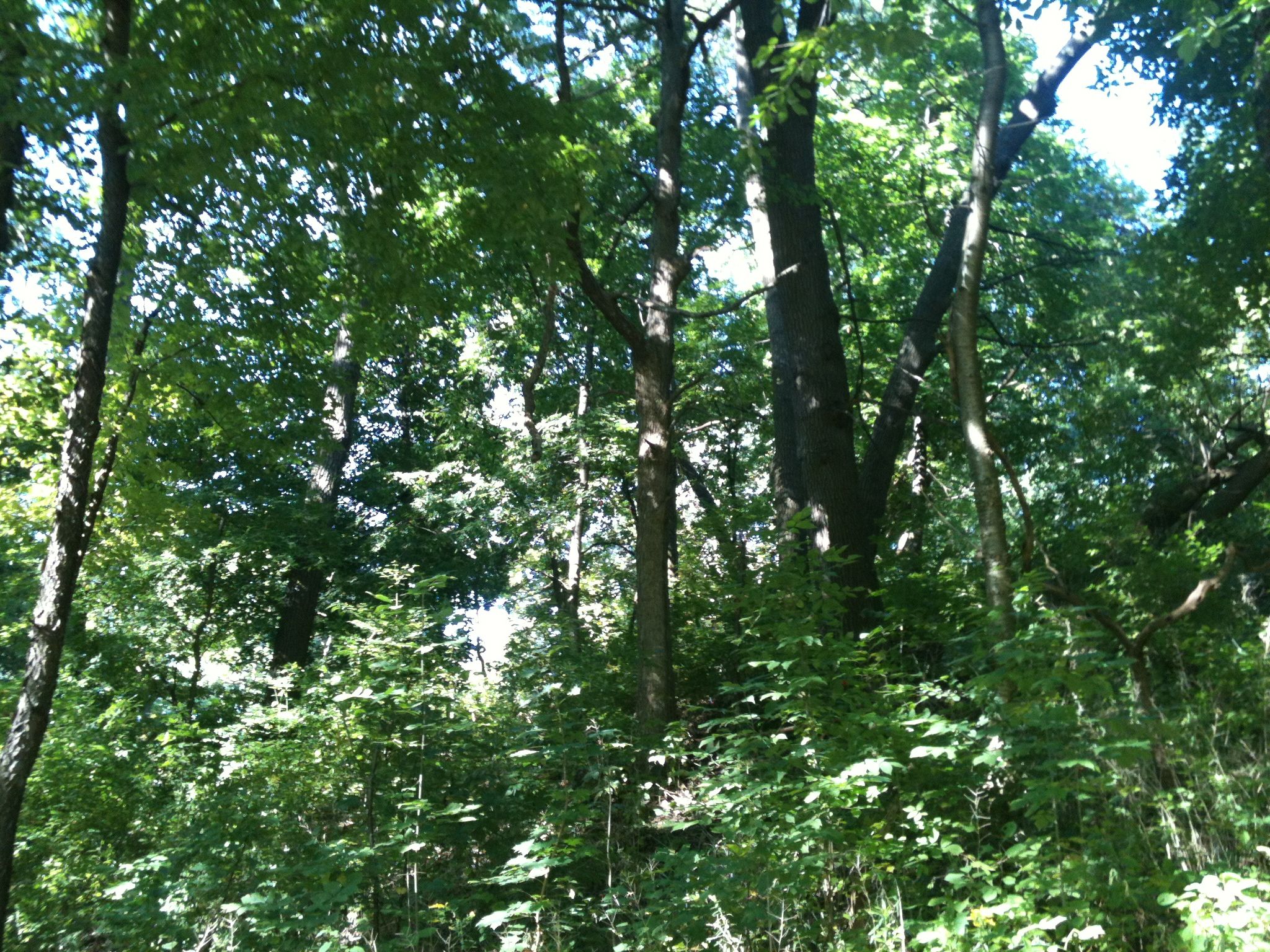
woods sunny mid SEptThe woods is very still this morning. We come down the sunny sloping path, the little caramel coloured sheba inu and I, and find a noisy smell. It takes some encouragement to get her through the domain of this angry skunk and I decide we will stick to the path just in case. Once we are through it, I hear an unseen cardinal whistle three times on the steep hillside to the left and then a chickadee call, farther off. Even the leaves of the poplars are still. The black oak leaves and the silver maple are etched against the blue sky.

blue sky above woodsI keep the walk going at a good pace in the interests of our primary mission, but once that is fulfilled and collected in the requisite stoop and scoop bag, I let the dog saunter. As we turn back three Canada Geese honk their way across the sky. They sound as if they are getting ready to migrate, but, probably, like most of their ilk, they don’t bother travelling anymore.

Now the little dog begins to show her zen-like nature, true to her Japanese genetic code perhaps. She stops beside a sunlit glade and turns her head to gaze back down the path.

sunny gladeWhat entrances her, I can not tell. Something I can not hear perhaps, for there is no nose work going on. It’s not an olfactory story she is reading. It is warm here and so quiet that I begin to relax as I wait. There are yellow flowers in front of me and a bee that hauls its whole upper body into the hanging “gondola” of the touch-me-not Jewelweed. It drinks deeply from one, tries another, finds it not to its liking and moves on.

This photo is obviously not of the yellow flower, but is the same shape.

This photo is obviously not of the yellow flower, but is the same shape.

Goldenrod made change.

Goldenrod made change.

And there are other small delights.

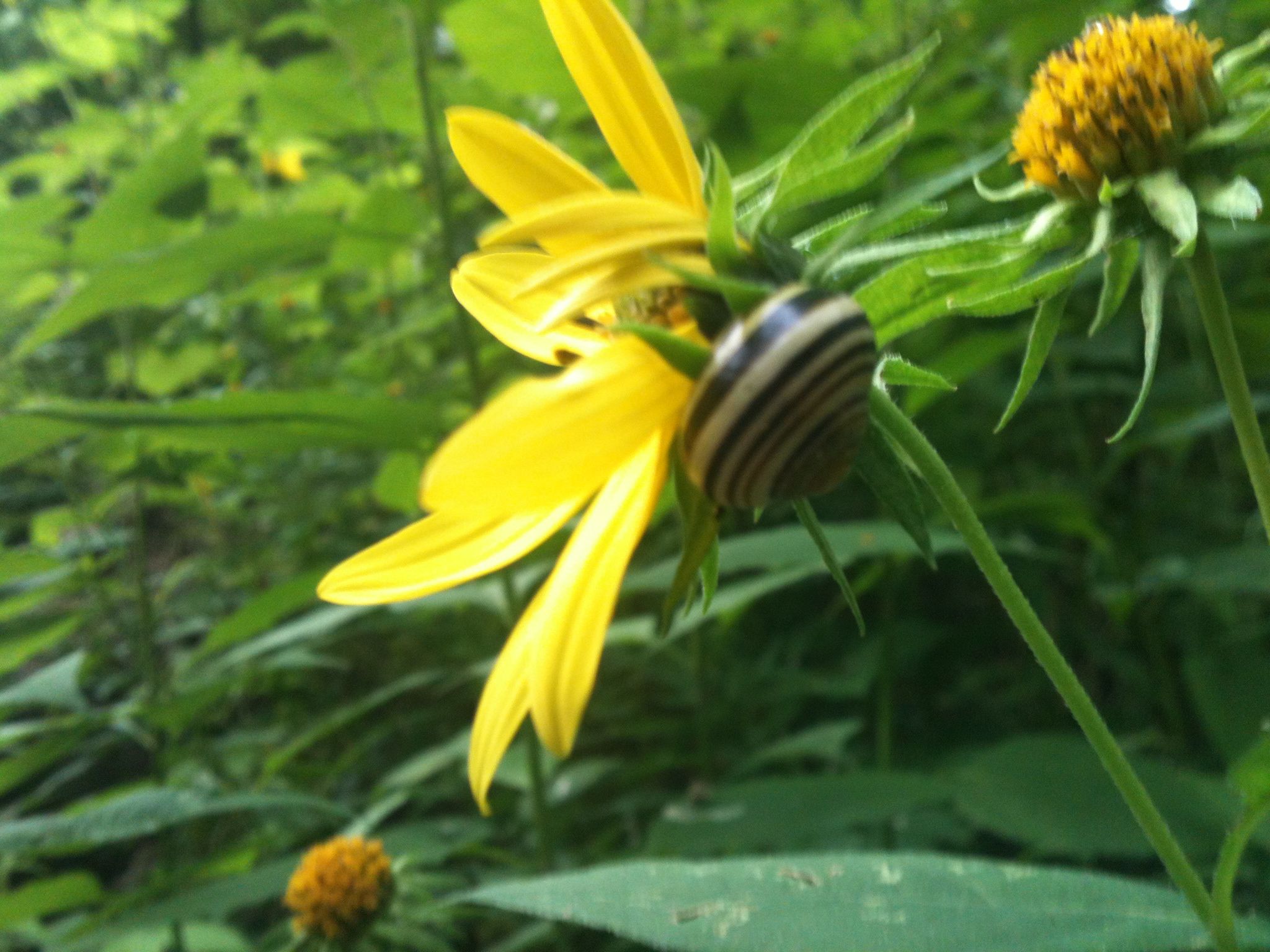
snail on yellow daisyA slight breeze, a true zephyr,  lifts the leaves just above our heads momentarily. Still the little dog stands gazing down the path.

Peace descends. The cares that have driven me at a fast clip along my path drop away. None of the urgent problems – economic, social and health, besetting my loved ones and me- have been resolved. They have just melted. They have been set free. I am happy. Glad of this blue-sky day in mid September. Nothing to do but breathe, at home in my urban woods.

Guess What Came Up at Dinner: update on Koch’s The Dinner

dinner still #3During the Toronto International Film Festival (TIFF) last week, Menno Meyjes’ movie adaptation of Herman Koch’s The Dinner was shown. Here is a link to the TIFF site describing the film: http://tiff.net/filmsandschedules/festival/2013/dinner

Meyjes was the screenwriter for Spielberg’s The Color Purple and Empire of the Sun as well as Indiana Jones and The Last Crusade.

Reviews appear to be mixed – http://www.hollywoodreporter.com/review/dinner-het-diner-toronto-review-628257, but I want to see it to sort out my feelings about the story.

For the original post see https://115journals.com/2013/04/06/guess-what-came-up-at-dinner-herman-kochs-novel-the-dinner/