The Princess and the Spell

princess in distessThe kingdom had shrunk and yet the Princess Caoilainn and her consort, Caoimhin, had found refuge in a high corner of enchanted forest. The wood elves kept watch over them. The ravens and eagles acted as sentries to warn of danger. The lumbering bears prowled the perimeter. The deer and horses, skittish by nature, sounded alarms. But none of these were proof and protection against the ancient curse that was laid on the princess  before  birth.

Once before the curse had struck her down and only the kiss of Caoimhin had brought her back from death. The wizards had worked hard to find the antidote and it seemed for a while they had succeeded. Then it struck again.

Caoimhin, distraught, sought to give her into wizard care again. Different wizards for the old ones were far away. She railed against him for his betrayal as she was carried off.

He summoned the queen, her mother, from a far off kingdom. She answered the call swiftly. Together surely with the wizards’ help, they could defeat the spell.

They journeyed down and down from the mountain, deep into the hot centre of the earth where the new wizards held sway. Caoimhin knocked at the gate. He asked for entry.

The door keeper said,”I will ask the princess if she wants to see you.”

But the princess was so deeply cursed that she rejected Caoimhin. The queen, she allowed in. The queen found her daughter much changed, head bowed, her body wrapped in white, cold in this hell hole. She held her sad child long and hard. When they sat down Caoilainn sat beside her.

Dance princess“Wrong!” the guard shouted. “Other side of table!”

Caoilainn began to rage. The apprentice wizards and the guards had rules she did not know. Sit here, wash there. Eat here. Ask nicely. Be good. She would not, she shouted. She would not bow. She had not forgotten she was a princess. The giant guard threatened to take her away.

“No,” she said. “You will not. I’ll go myself.”

Riding home, the husband and the mother considered this curse. Its origin. The mother wept with guilt and grief. The husband regretted what he’d done.

“She cried out for help,” the queen said. “She is getting help.”

At home in the enchanted mountain valley, the queen saw the beautiful things her daughter loved: the talismans, the raw jade, the lovely furniture rescued from the palace. She remembered her exquisite taste, her deep learning, her beauty and her charm. The queen heard the finch’s melody, saw the deep blue sky, the immense green pines, the mirrored lake and grieved that her daughter could not.

She travelled daily down to the centre of the earth with Caoimhin and begged for entry. Only once more did she succeed. Again Caoimhin was left standing  outside the gate- alone and sadly loitering. Then the princess decreed there would be no more visits.

“We’ll get on with life,” they vowed. They tried to eat and sleep and take the air, let the sun warm their faces. To no avail. There was no life without the princess.

Then she who had rejected them sent a message asking help to summon the other wizard who had brought her back before. At last Caoimhin could act.

What that loving wizard said to her they never really knew. Later Caoilainn  said it was just his voice that brought her back, trustworthy and assured.

By then the potions made by wizards of the hot and guarded cell had begun to work and the princess had grown calmer.

“Come take her home,” they said.

She was angry still but not at Caoimhin. For two days she railed against the guards and lesser wizards, at the lack of loving care. She talked of other people there, wounded beyond bearing, sometimes locked in solitary cells but caring for each other.

Then one day she said, “It worked.” She was herself again.

She made decisions. She forswore her title. She would make no further claim to royal power. She would sit in her window weaving tapestries. She would rest and love her husband. She would complete her healing.

lady weavingThe young princeling rode up from the coastal lowlands. He lived there in the guise of a merchant, for the merchants now ruled the land. Caoilainn rejoiced to see her son. There were tears and there was laughter.

Now they recognized the spell as they never had before and they had powerful allies to guard against it. Nothing is ever sure, but the queen had seen with future sight a very, very old woman wearing her daughter’s face.


 

Bouts of Joy

Not us. Another group of haymow jumpers

Not us. Another group of haymow jumpers

Back in the Sierra Nevadas, having exhausted myself walking up the mountain at 7,000 ft., I came down to the village to walk beside the lake, really a pond that holds the water for the fire department. One side of the water is thick with cat tails and behind there is a slope covered with deciduous bushes of different hues, including a soft red. Suddenly, I had a flash of standing beside the Indian River with my grandmother, Gladys, when she was the age I am now and I was 42.

She and I had found ourselves single and living alone that summer. Her son had gone off to live with his best friend’s wife, best friend having passed to his reward. Gladys had left the farm and gone to live in a small house on the Quebec/U.S. border. Meanwhile, my husband, daughter and son had gone off in their own directions. Gladys and I were heart-broken and yet she still made me laugh.

She recalled a day in her first home, a farmhouse. It was spring cleaning time and she had hired a French Canadian girl whom I remember later as Aunt Kate. Kate was cleaning upstairs, when she suddenly came rushing down yelling, “Gladness, Gladness, the house is on fire.” It burned to the ground. All that was left was a stone-lined cellar hole. Gladys roared with laughter as she imitated Kate.

They didn’t lose everything. The “men” -two of them would have been about 12- must have smelled the smoke or heard the sound of pots smashed together that called them back. They rushed in and grabbed the first thing the saw, the big round oak table, which immediately got  jammed in the door. Gladys screamed and yelled. They pushed and shoved. Finally the door jam yielded and the table flew out, but precious time had been wasted. Other men began to arrive and grab what they could. Some things Gladys loved were lost and the family of 6 was homeless. But in the country, someone can always squeeze in a family of six.

Twenty seven years later, the family had changed shape. My mother, who was 13 when the house burned, was married as were her next three brothers. But there were still three children at home, more or less the same age I was and I was 19. This house, too, caught fire. Once again the men seized the oak table first. Once again it got stuck in the door and Gladys screamed, “Leave that damned thing to burn”. Gladys never damned anything. It was the worst word to her. They didn’t leave it. See above.

The third house was built by the community across the road from the second one. The porch was smaller but screened. There was a coal furnace in the cement cellar and no longer needed to be insulated on the outside with banks of sawdust. And there was an actual bathroom. Until 1955, the old out-house had stood at the back of the wagon shed and only little children could use the commode inside. Gladys was very happy there. Her kitchen stove had a wood side for heating and an electric side for cooking. She had hot and cold running water, which ran into a claw foot tub. Many a visit, we sat at the much despised round oak table and laughed.

We laughed about the time that four of us, aged 11 to 13 decided to jump in the hay. It wasn’t a dangerous sport once the new hay had been harvested, but it hadn’t. All there was in the mows was last years hay, so low in the mow that it could be pulled down through the lowest door. Moreover it had compacted and was hard.

I was 13, Evelyn and Ted, twin aunt and uncle, 11 and Percy, 10. The boys dared us to go out onto the side beam that led across the mow from the barn floor (ramp) and jump from there. Sure, we girls said we can do that. The boys went first, sliding on their bottoms far across so as to leave space for us. I went next, noting as I began that it was at least 20 down. I could barely move. Finally, Evelyn began the crossing. We were all scared but she was terrified. She didn’t want to lose face in front of her brothers and once, embarked, she couldn’t go back either.

My sisters, Georgia 7 and Anne 5 stood watching on the barn floor.

I was sweating and gripping the beam. First Ted and then Percy launched himself off into the air with a bloodcurdling whoop. They would crash together, I thought. Both disappeared. A few seconds later their heads appeared as they dug themselves out of the dusty hay.

I knew I couldn’t do it. “Go back, Evelyn,” I cried.

“I can’t move”, she said. Me neither, I thought.

I studied the mow. The boys were urgently calling us to jump. “It’s fun. It’s not so bad.” My stomach heaved. I had to go to the out-house. I jumped.

The worst part was drowning in hay dust and desperately scrambling out. But now we had another problem. Evelyn was deaf to our pleading. She was weeping in terror and hiding her face in her shoulder.

“Go get Ma,” Ted yelled to my sisters. They clomped off down the wooden ramp. Crying and yelling ensued while we waited. Then Gladys was there with her small grand daughters, wiping her hands on her apron, and clearly not happy.

“What in the name of heaven were you kids doing out on that beam?” We always jumped from the barn floor and never into low hard hay. “Get back here,” she screamed at her daughter.

“Can’t,” said Evelyn,” Can’t move.”

“Well, then jump!”

Evelyn protested she would die if she did.

“Well, you’ll die if you don’t, Evelyn Grace. I’ll come out there and give you such a clout…”

Evelyn threw herself headlong, screaming, and landed on her face. We pulled her out and I dusted her off, but she continued to scream that it was all our fault. The boys and I ran across the hay, through to the mow over the cowshed, down the trap door, out through the empty cow shed and up around the barn. There on the dirt ramp, stood Gladys, her face in her apron, laughing so hard her body shook. My little sisters, who were totally unused to laughter, clung to her skirts.


Joy: #52, Tui

Lao Tsu, author of the I CHing (Book of Changes)

Lao Tsu, author of the I Ching (Book of Changes) Photo by Jan CharisseMarie from photobucket

For much of my childhood and youth, I was called Joy, one of the reasons I was able to grasp the concept of irony easily. I have always been particularly struck by the sound of the word when bellowed. More recently, I enjoyed “Joyce” pronounced Joyeeeese bellowed by the 45 year “superior” in my tai chi outfit. I came running as fast as my 70 year-old legs would carry me.

But that’s just more of the same black humour.

I had a dream the other night – as they say in song – it featured Mendelson Joe, an ex-rocker of some note and a naive artist and activist, whom I knew 30 years ago. In the dream, he was taking me to Montreal on the back of his motorbike. I’ve ridden on the back of a motorbike once around the neigbourhood and it was not sheer joy, but this long excursion made me happy. We stopped for a break and Joe parked his bike beside his friend’s bike in a field. When we were ready to go, we began walking toward the field, which suddenly and swiftly began to fill with water. By the time the two men rushed in, the bikes were completely submerged. They were able to drag them out. They were big strong bikers after all. Whether the bikes still worked I never found out.

Later as I was having my morning pu-er, I opened the I Ching at random and found “Lake”, the trigram for it is a broken or yin line over two solid, yang lines. Lake contrasts to the mountain, the culmination of solidity. Instead Lake is concentration through pooling. Certainly my dream was a dramatic illustration of that.The swift, silent flow of water was astonishing. Whereas the mountain is proud and upthrusting and in danger of excessive isolation, lake gathers through lowness.

I turned to Hexagram 58 (6 lines, a double of the lake trigram, the first yin at the top and the last yang at the bottom -lake above, lake below). The pictograph or Chinese letter representing it has 2 “dancing” legs under a rectangle ( a smiling mouth) and above it, 2 waving arms. It is called Tui, translated as “The Joyous, Lake” by the Wilhelm/Baynes English version of the I Ching, “Exchange” by Deng MIng Dao’s and “Delight” by Thomas Cleary.

I had opened the I Ching at random, but then, as my favourite detectives are fond of saying, “There’s no such thing as a coincidence”. (Cue eerie music.)

“True joy,” Wilhelm tells us rests on firmness and strength within. Deng says, “True joy relies on inner strength and remains gentle and wielding on the outside”. Cleary says, “When difficulty is entered with delight, people forget their toil, …. people forget their death.”

All three emphasize that it is the coming together of waters, the exchange of two lake waters, of human interaction that brings joy.

And no, no whining that there is no strength within. Of course there is, although it may not feel as if it is of your own making. (Speaking to myself, you understand)

In the last few weeks, I have posted a series called “Bulletins from Shangri-la”. See 115journals.com describing the joy I found in a Sierra Nevada mountain village. I am now back at sea level. I am thankful that spring finally arrived here while I was away. The trees are fully leaved. The lilacs are just opening. The urban woods I walk in is walkable once again. The hawk surveys me from her tree top as I pass.

And yet —-

My nephew passed on this week at the age of 42 nine months after a terminal diagnosis, months full of suffering. He was cared for at home throughout this ordeal.

And there are other family problems, unresolved and festering.

I have an image of my mother’s recently emerged and happy spirit https://115journals.com/2014/05/25/bulletin-from-shanri-la-4-spirits/welcoming my nephew into her joyful embrace. A comforting thought. He seems to have zoomed right through the veil. But I am still sad and aware that my grief is as nothing compared to my sister’s.

As to the other problems, I woke up this morning and asked myself what I could contribute today. Yesterday and the day before, I listened to those suffering. Today I saw that I needed to do something different.

I wrote in my journal:
See the light.
Stay grounded.
Open you heart.
Remember joy.

Deng says, “If we must have forbearance through times of suffering and adversity, then we must have happiness in times of joy.” Joy once experienced can never really vanish. Open the flood gates and water will rush in.


Bulletin from Shangri-la #6: birds

steller's jayAs you can see the Steller’s jay does have some blue and the same  kind of crest as the blue jay, presumably a cousin, but no white or grey on its breast. They live in the forested western mountains of North America.

Jays in general have a raucous reputation, but the Steller’s that live near the house in the pines give a whole new meaning to the word. The deck is theirs. If you decide that you, a mere human, want to sit there, one of them will sit above you in a nearby pine and give you orders to move on.

They have a variety of calls, including this scold:

Like other Jays, the Steller’s Jay has numerous and variable vocalizations. One common call is a harsh SHACK-Sheck-sheck-sheck-sheck-sheck series; another skreeka! skreeka! call sounds almost exactly like an old-fashioned pump handle; yet another is a soft, breathy hoodle hoodle whistle. Its alarm call is a harsh, nasal wah. Some calls are sex-specific: females produce a rattling sound, while males make a high-pitched gleep gleep.

The Steller’s Jay also is a noted vocal mimic. It can mimic the vocalizations of many species of birds, other animals, and sounds of non-animal origin. It often will imitate the calls from birds of prey such as the Red-tailed Hawk, Red-shouldered Hawk, and Osprey, causing other birds to seek cover and flee feeding areas.[3][4((]Wikepedia

These Steller’s have an elaborate game going on. They spend hours carrying twigs and softer materials like bits of plastic to a beam that extends out of the house and over the deck for 12 to 18 inches. Everything they painstakingly place there falls off onto the deck, making a large pile 5 inches deep in a couple of days. One day, we observe a Steller’s, sitting on the deck rail, read the riot act to one of the builders. I imagine she is saying,” First of all, Idiot, we build our nests high up in tall pine trees. Secondly, you need mud.”

“We need to put out water,” I protest to the householder.

“There’s a lake just down there through the trees,” she replies.

Some scientist on-line tells another inquirer that such piles are food stores. Wrong. There is absolutely nothing edible on these tiny pieces of wood.

To me the builders – at least 3 – seem slightly smaller than other adult birds. Are they teenagers trying to get the hang of nest building?

purple finchMy Steller’s observation is interrupted somewhat by my move to the boxcar house which is more in the open, a suburban part of the high desert town.  What was once lawn is now bare earth with scrub. There is an on-going drought. But near the sliding door to my bedroom at one end, bushes still flourish and it is there that a finch sings evensong.
I never actually catch a glimpse of this bird, which seems to have roosted for the night in the dense foliage, so I cannot say which type of finch it is. But the song is long and very melodic. It stops singing at the moment that dusk fades into night.
House finch song [embed]http://www.allaboutbirds.org/guide/house_finch/sounds[/embed]

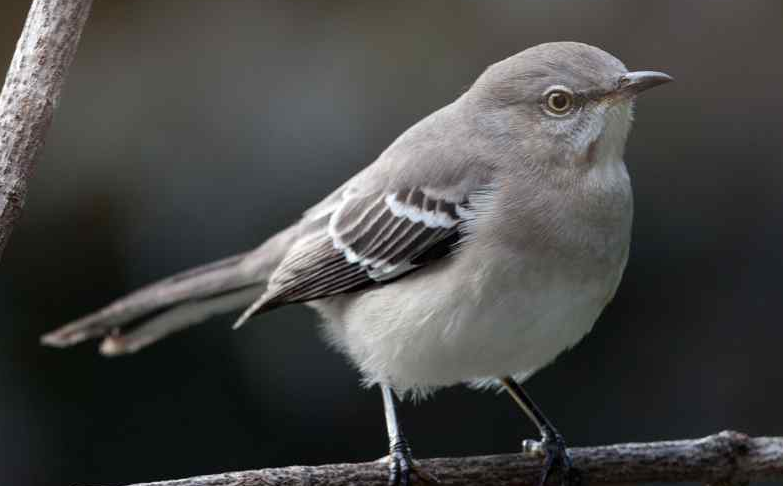
mockingbirdThe mockingbird doesn’t live up on the mountain, but I got to enjoy its sweet song at both ends of my California visit when I stayed in a house in Culver City. Years ago when my children were young I taught Lee Harper’s novel To Kill A Mockingbird. Never having actually heard one, I had to imagine how beautiful its song must be to lead Atticus to tell his children that it was a sin to kill a mockingbird. Stepping out of the car in Myrtle Beach, South Carolina, one March break, I finally did. That song alone kept me coming back for years. Then when I began visiting Los Angeles, I got better acquainted with its beauty, particularly the year I stayed in El Segundo where one liked to sit in a tree high on the hilly roadside or on top of the roof to sing its heart out. To my great joy, mockingbirds turn up some summers in the Toronto area. One of them loves to sit on a high lamp post at my local mall and celebrate life.

As their name suggests they imitate other birds and sounds they hear, car alarms, for example, so one sample isn’t really going to do the job.

Bulletin from Shangri-la #5: village life

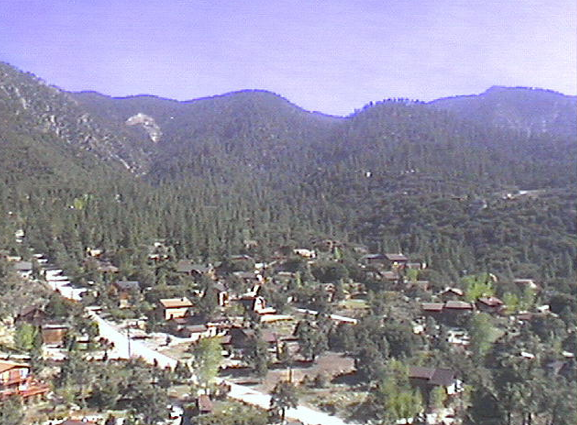
Village in Sierra MountainsMy mother was gravely ill for several years before she passed. She took comfort in the idea that God never closes a door without opening a window.

My own experience was summed up in a recent cartoon. Two women are lunching. One says to the other,” I find that when God closes a door and locks all the windows, I can still squeeze in through the dog door.”

But black humour aside, great misfortune often produces blessings.

One upside to the economic crash is that my family and I found ‘Shangri-la’, a mountain village in the Sierras. (Notice how canny I am about not naming it or providing its co-ordinates. Get your own great misfortune.)

For all I know people may live to be several hundred years old here as they did in James Hilton’s fictional paradise in Lost Horizon, high in the Himalayas. Certainly there are a lot of older people here, retired cowboys, architects, doctors, executives. Many working visual artists and an unusual number of professional musicians surviving the music industry’s transition. They can’t seem to get even free beer for plying their craft, but it doesn’t stop them from gathering and playing their hearts out.

After a previous -but lesser- misfortune, I moved to a country village in Ontario, Canada. For one thing it was cheaper there and things were on a human scale. You could park anywhere at no charge. I was right at the centre of town, a no-stop-light intersection, beside the church and the post office and across the road from the only store. I could walk out to the country in 4 directions in less than 15 minutes. One Christmas Day, I picked up a parcel from Belgium. My Newfie dog could wander in the field behind me at will. I went to buy a saw at the store one day. The Korean owner asked me what I needed to saw. I said ” A piece of wood this big.” I was mending a door frame. “Take it and bring it back when your done,” he said. The guy in the Mt. Albert hardware store always understood what thingamagig I needed and generously explained how to install it. I even had my own barn. Lots of storage there. And the tallest TV antenna tower for miles around. It soothed my soul. And set me up nicely for the real estate crash that coincided with the necessary selling of the house.

But it wasn’t Shangri-la. I was an in-comer for the entire seven years I lived there. The long term residents still mistrusted me, although they welcomed me at church. Like the other in-comers I commuted to work, although unlike them, I did not drive a big rig. Some of them thawed when one of my seven cats took to following me and the Newfie every time we went for a walk. “Oh, you’re the woman who walks her cat…”

In this Sierrra Shangri-la, everyone speaks to us. Getting croissants or the mail has to be leisurely. Dogs and people waylay us. It’s true that my son-in-law knows all the musicians and golfers, my daughter knows the musicians and everyone who goes to the daily tai chi and yoga classes, they both know all the artists, and the Vegas mother-in-law talks to everyone in the casinos, so of course she talks to everyone in the village. You simply do not pass anyone without speaking.

Worn out by the short walk “downtown” -it is high, remember- I collapse into the big chair, my feet up on the big hassock. The door is open to the breeze on this warm day. The pines are sighing, whispering, a song of deep contentment that I have brought with me from my childhood when we picnic-ed under them.

Life on a human scale! This is bliss.


The Mystical Experience Demystified

I have wanted to use this Rumi poem in a blog for a while now, but couldn’t figure out how to use it. Thanks for doing it for me.

Celia Quinn's avatarceliadermontblog

I TRUST YOU

The soul is a newly skinned hide, bloody
and gross. Work on it with manual discipline,
and the bitter tanning acid of grief.

You’ll become lovely and very strong.
If you can’t do this work yourself, don’t worry.
You don’t have to make a decision, one way or another.

The Friend, who knows a lot more than you do,
will bring difficulties and grief and sickness,
as medicine, as happiness, as the moment

when you’re beaten, when you hear Checkmate,
and you can finally say with Hallaj’s voice,
I trust you to kill me.

By Jalaluddin Rumi translated by Coleman Barks

The seven souls from afe.easia.columbia.edu The seven souls from afe.easia.columbia.edu

In Chinese philosophy there are seven souls that animate the physical body. They enter during gestation. These souls carry the lessons that were not completed in previous generations or previous lives (If you do not believe in such things, I…

View original post 534 more words

Bulletin from Shangri-la # 4: spirits

trees outside windowWhen I first walk into the house in the pines, I hear my mother say, “It’s beautiful!” My mother passed on in 1976, but this is the first I’ve heard from her. My grandparents, even my father-in-law and certainly my father when his time came, showed up in the days after they moved on. Not my mother. Absolute silence. So profound, that I had an existential breakdown. Now here she is- or seems to be- celebrating the tiny, jewel of house in Sierra mountains.

Of course she would be here, if anywhere, because the mountains and the pines are like her birthplace in Hereford, Quebec. And we are here, her daughter and her grand-daughter and full of joy to be together. It is the week of Mother’s Day and Julia’s mother-in-law is due to arrive as well.

We speculate that my mother has been lost in the timelessness of that other place, a purgatory of her own making, and only now has found a beacon to guide her out.

In the days that follow, her spirit seems to be doing loop-de-loops in the blue sky above the mountains. All the other mothers in our line, Janet and Jenny and Gladys, come into our thoughts as they often do, but only Lila is delirious.

She is not the only spirit there.

Besides being thin, the air is bone dry in this drought. Near the front door, a humidifier sends a jet of mist into the air. Out of the corner of my eye, I see it as a dancing water sprite.

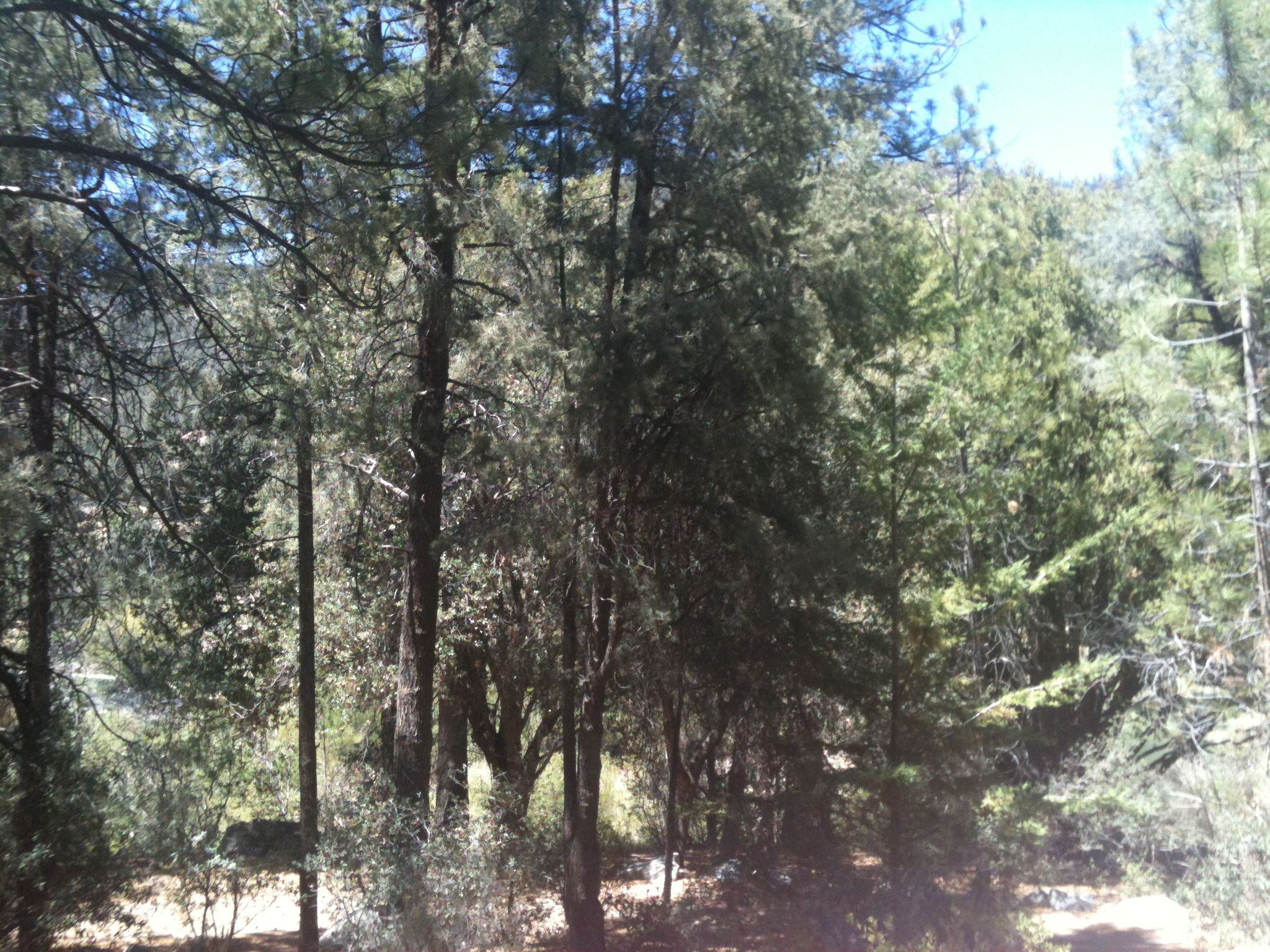
The floors are local stone, patterned like rugs. Every step feels rooted in their strangely old, slumbering consciousness. There is a small cairn of rocks near the entry and California jade and other semi-precious stones on the desk and tables. The fireplace and massive hearth of red brick fills one whole wall. The cathedral ceiling is rafterred and wooden. A wall of sliding doors looks out on the woods. Below a lake peeks through the trees.

This is a Taoist household with altars to the ancestors and the family, but there is also a stone Buddha sitting below the bookcases. A path of beige floor stones leads up to him. One morning when I am making tea, I catch a glimpse of a figure standing in front of Buddha, the figure of a monk in a brownish robe. When I turn, he gives me what can only be called a stink eye. I hurry away. Julia tells me there is a Zen monastery nearby.

Enough proves to be enough one night as I get into bed, I have a picture of an army of brownies – no not that kind- tiny beings wearing red hats and overalls going about some work under the trees. I saw such creatures when I was a child when my father took me fishing in the trout stream that ran down through the woods. They scared me with their intensity. I always understood the Seven Dwarfs on a visceral level.

In the fields, as a child, I saw fairies – blue and pink and gold- or once in a while, a towering angel. I preferred them.

Happy ghosts, water sprites, meditating monks, nature spirits, but I don’t have to cry like Macbeth, “No more sights!” I move over to the boxcar house and don’t even see dead miners. https://115journals.com/2014/05/15/bulletin-from-shangri-la-the-boxcar-house/


Bulletin #3 from Shangri-la: bears and lilacs


wildanimalfightclub.com

wildanimalfightclub.com

The bears and the lilacs come out together, they say. The Lilac Festival began last Saturday. On Friday around 7 p.m. a black bear ambled across the golf course. Diners rushed to the deck to watch it head off toward the wooded Sierra slope. There was no doubt who owned the place. The rest of us were merely guests who had to play by the rules.

Garbage goes in a bear-proof safe or directly to the transfer station. Recycling thoroughly washed can go in a locked shed. Grills have to cleaned immediately and well. Food or food wrappers must not be left in a car. (A friend of mine discovered this included corn-based kitty litter the hard way, but at least her bear tidily opened the door, whereas others destroy the car.) Sliding doors and low windows should be closed and locked at night. Always remember that a fed bear is a dead bear.

I come from bear country. I saw my first dead bear hanging from a makeshift tripod of logs when I was very small. My father thought that was just what any little girl needed apparently. Certainly he was very excited. My grandmother and I took pots with us when we went for a wilderness walk, banging them together now and then just in case.

There were lots of funny stories -funny in the retelling- about bears and pies, and bears and flour and molasses, bears and broken windows… Once my uncles and I, the same age,10 or 12, spotted a bear in the vegetable garden. The men were off haying or something. The boys had 22 rifles, as farm boys often do. Despite Nanny’s protests, they loaded the guns and set off to defend us females. We watched them dodge into the tall corn rows. They were crouching as they went and soon disappeared. The bear had also disappeared. Suddenly one of the boys stood up. One corn row away so did the bear. They were nose to nose. Instantly, both turned and ran, crashing in opposite directions. I was terrified. My grandmother was screaming. Then a minute later, she was holding her sides and laughing.

In this Sierra village, some benighted soul filled a tire swing with honey to attract a mother bear and cub. The bear broke into the house next door and vandalized it. The Rangers -the town is in Los Padres National Forest- trapped it in something that looked like a culvert. The bear was not relocated. See above.

The lilacs are not so demanding.

leslieland.com

leslieland.com

Bulletin #2 from Shangri-La: altitude

The village I am visiting in the Sierras sits in a bowl, at about 5000 ft., surrounded by 9000 ft. mountains. The mountains I was born in are the northern end of the Appalachians in Quebec, Canada. Mt. Hereford is less than 3000 ft. high, but down the way in the New Hampshire, White Mountains, Mt. Washington rises to over 6000. I went up it once with my young children and had to fight the urge to crawl. My additional 5 ft. 4 in. were just too much. I had the same impulse on Mer de Glace in the French alps.

One summer, I went camping in Yosemite with my daughter and her family and my French brother. He joked about being the only member of a film crew on a mountain shoot that had to go down to sleep. Poor thing, I thought. Then I lay down in my tent at 9000 ft.

Half an hour later, I woke up suffocating. I got out of bed, unzipped the tent flap and walked around in the pitch dark. That got tiring. I crawled back into my sleeping bag. Repeat and repeat and repeat. Around 1 a.m., I ran into my brother, who was even worse off than me. He was babbling. My daughter emerged from the tent where she, her son and husband had been sleeping soundly. Being a health care professional, she questioned us about our symptoms. Her most alarming question was, “Are you hallucinating?”  She advised us to go down to sleep.”Don’t sleep in the car. The cops don’t like that,” her husband called out from inside their tent.

I’m not sure what happened next. Rob seems to have set out to walk to the car, some distance away. I must have gone back to my tent to get something. My next memory is of walking the long dark track wrapped in my sleeping bag. A figure up ahead suddenly came toward me.

“Joyce,” it cried out.”Is that you?” Rob walked up to me. His face in the moonlight was full of horror. “I thought you were a giant ninja turtle come to take my soul.”

This was hysterically funny to both of us. We staggered toward the car, laughing. We laughed and laughed until we started to cut down through Tioga Pass where a huge full moon hung in a velvet black sky. Then we both began to cry, convinced that no matter how difficult our lives had been and they certainly had, this moment made it all worthwhile.

It took some time to find a motel. Rob disappeared into reception and came out laughing and waving a key.

“I told her you were my sister,” he chortled. “And I think she believed me.”

There were five beds in the room. It took us an age to chose.

So I scratched vacation spots of 9000 ft. off my list. The town where I was able to sleep was 7000.

Peppermint Creek up the Kern River in Kern County qualified. We spent several vacations there camped under the redwoods beside the rock pools. No problem. Well, there was the time I was getting breakfast food out of the car trunk when something breathed down my neck. Something taller than me. I took a breath. I slowly turned to meet death by bear and found myself nose to nose with a cow.

Then came the year after I had had major surgery, a whole year after. Shouldn’t I be ready to camp up there?

Obviously not. This was my daughter’s dream vacation after a very hard year. Both sons-7 and 16-were there, the latter of whom lived with his father across the continent, her newish man, her best friend and me, old short-lunged me.

Suffice to say that I spent my nights sitting in a car seat, only slightly reclined, the only way I could breath. Well some of the night. The rest of it was devoted to taking the trenching tool and the flashlight and hying myself off into the bushes. This time, altitude sickness featured the runs. But rattle snakes hunt at night and we seemed to be camped in the middle of rattlesnake city. And the flashlight seemed to have a black spot in the middle of the beam. True I could see the bowl of heaven above me and it was absolutely dense with stars. I felt as if God were talking to me. During the day, I got more and more skittish. I was getting about 2 1/2 hours sleep a night. I didn’t want to spoil the holiday. Guess whether I did.

So now I am here at  5000, among pines and bird song. And sun. I’m Canadian, don’t forget, and we’ve had a cold, rainy spring. I  have taken two walks. All roads are uphill! I stop frequently. I aim for benches. Getting showered and ready for the day makes me breathless. I sit gazing out windows at the pines. I sit on the deck gazing at the pines. I sit and read. Once in a while, when I get rested, I do tai chi. Down at sea level, I am full of energy, all those new red blood cells racing around.

I want to stay of course.


Bulletin from Shangri-La: the boxcar house

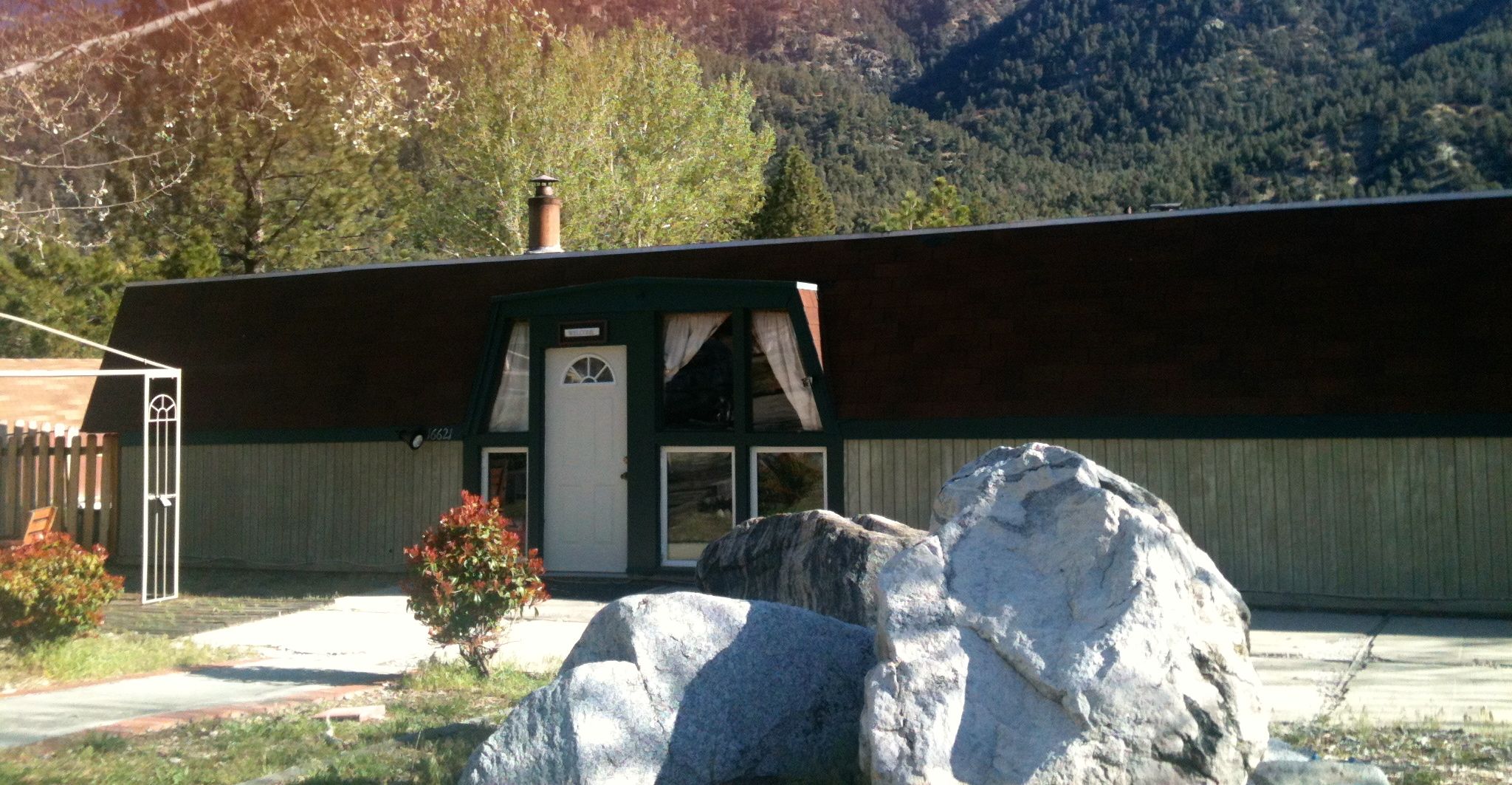
boxcar house #2

Shangri-La, here in the Sierras at the bottom end of Kern County has a type of house called the boxcar house.

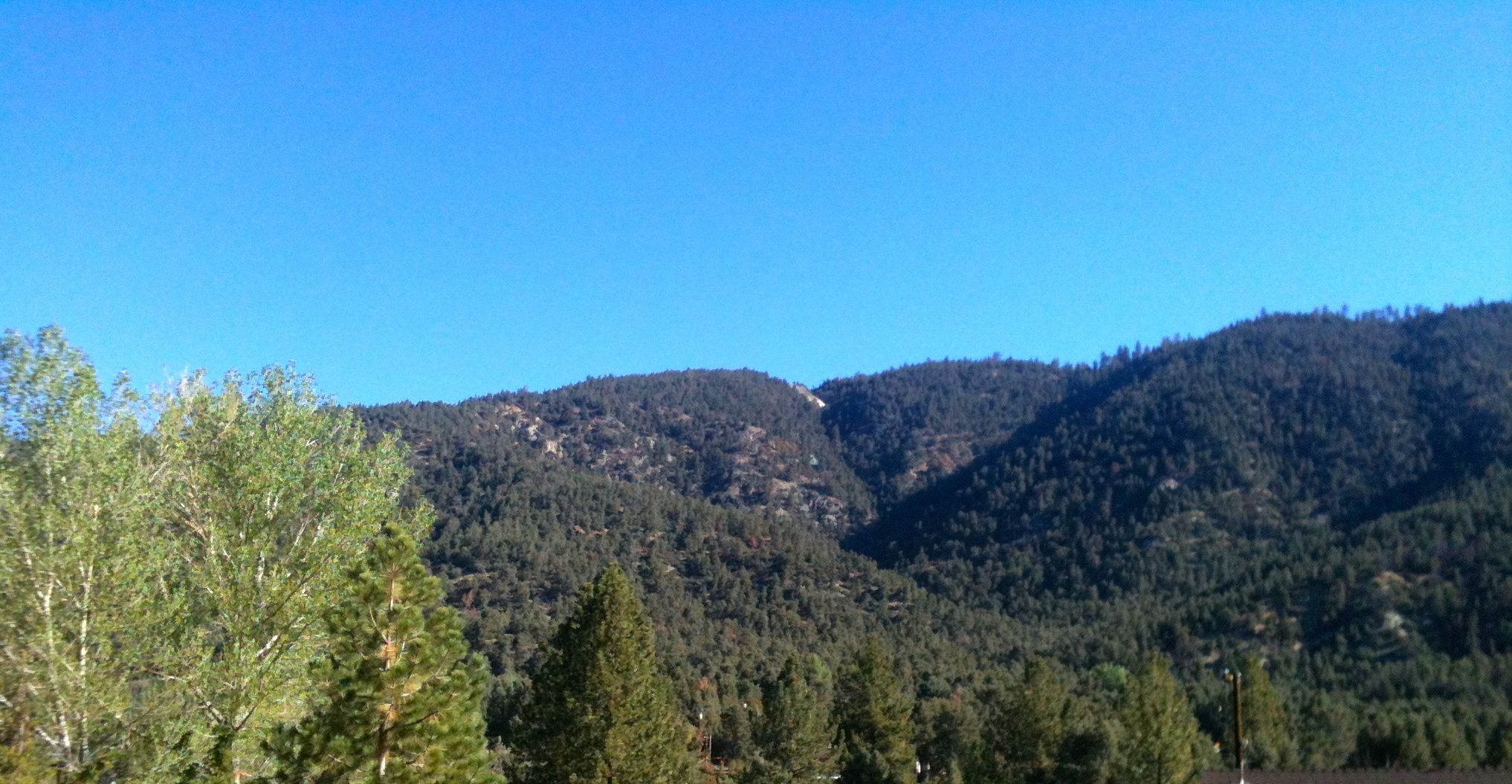
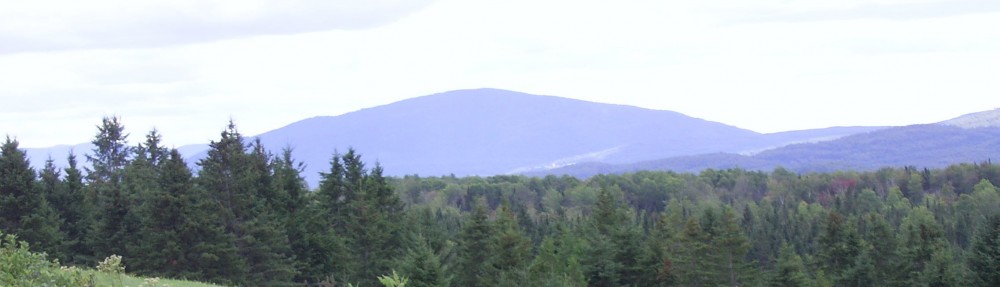
This is the possible view from the back of the boxcar house.

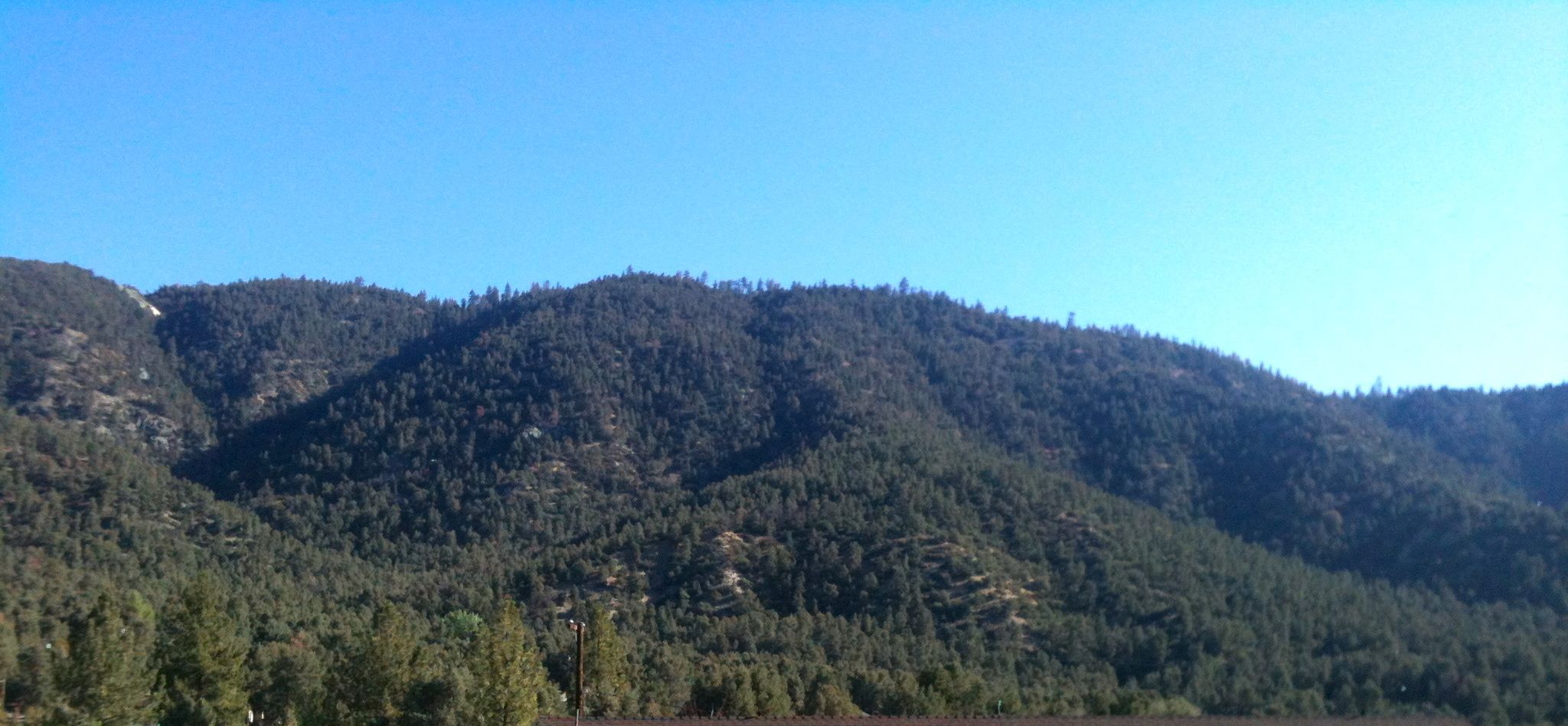
mountain view from boxcarmountain view #2This is the actual view.

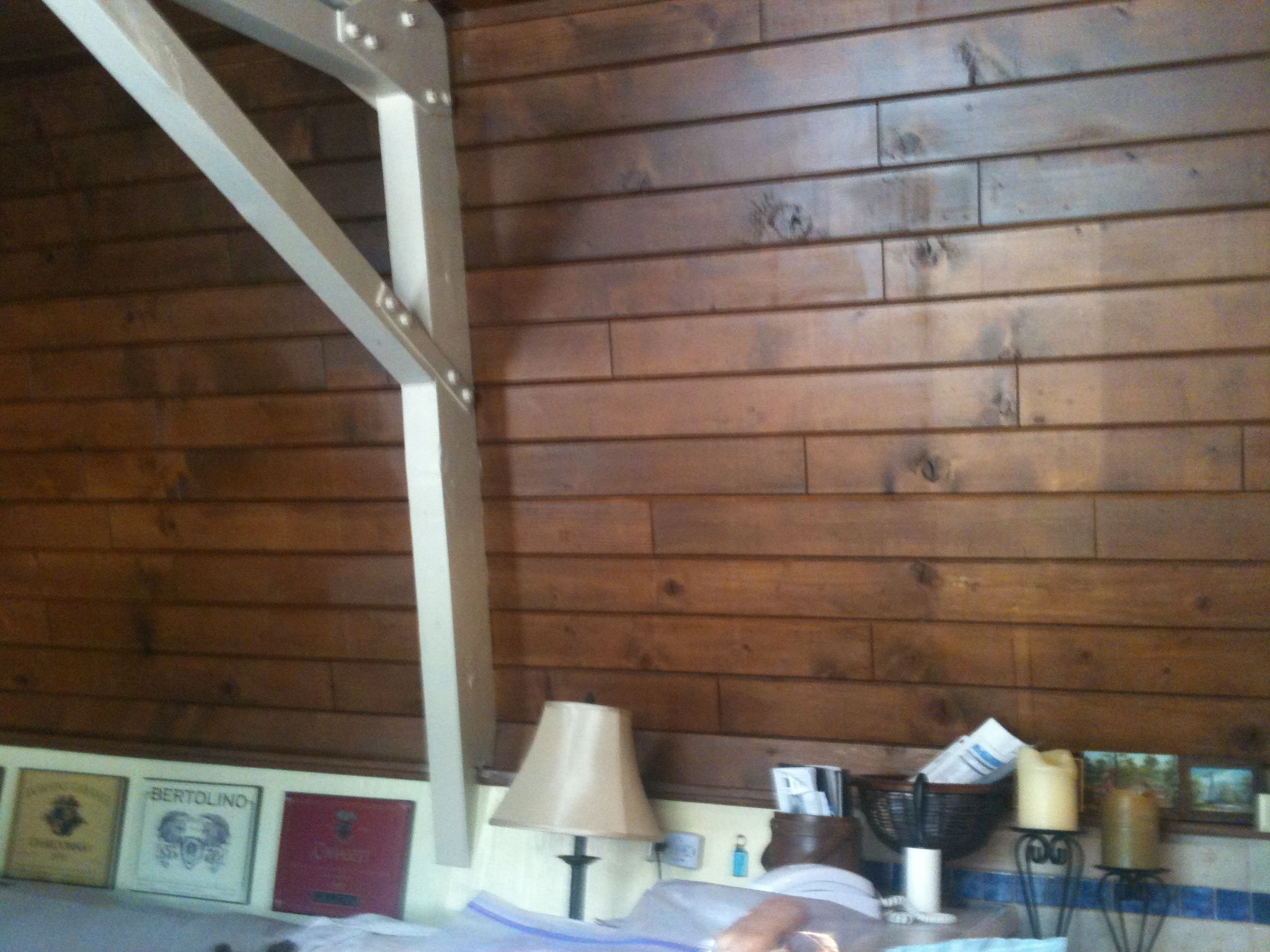
actual viewThere are no windows on the long side, except around the front door. There are sliding doors at either end, but we are enjoined not to leave them open, in case of bears. THey are the only windows that open.

During the day when we are out, the temperature inside soars. It is still about 90F/33C when we return. There is no AC. Someone used to live here full-time. How?

My room-mate and I have 163 years between us. The bathtub is two feet off the floor. Tai chi and a well-anchored bar makes it possible for me into it to take a shower. The other gal showers elsewhere.

Our first night is amusing. It is about 60F/15C inside. We have been told there are wall heaters. And yes there are. I turn on the one in the living room. It heats well enough, but not as far as the open kitchen and certainly not to the bathroom or the bedrooms, which are at either end. I turn on the heater in my bedroom. The fan powers up. A little guy inside is hitting heavy metal with a sledge hammer. I actually try to bear it. After three minutes I shut the heat off. I prefer silent cold.

The phone will not make long distance calls. The owner lives in Ventura. My cell phone gets no reception at this spot. Who carries a phone card these days? Next day, we learn that the noise will quit after the first five minutes. That proves to be true.

I start to make my bed. Like all rental cottages, this one does not provide linens. We have brought linens from the house in the pines, over the way. The bed is queen-sized. My sheets are not. If you turn the top sheet crossways and tuck it in at the sides, it more or less covers the mattress. Then the fitted sheet can be tucked in at one bottom corner to serve as a top sheet. I pile the five blankets, I find in the cupboard on top.  Quite a heavy load. I wrap what turns out to be a padded baby crib mattress cover around my shoulders and endeavour to read in bed.

In the morning, I decide to boil water for tea. I search all the cupboards. No kettle. For a few dizzy moments, I can’t find any dishes at all, until I spy the narrow cupboards built into the front wall. I find a pan to fill with water. How to turn the ceramic top burner on high. I take a guess. Ten minutes later the pan is still cold. My room-mate is an outgoing, former actor, a famous joker, but with less salty language. I stand there in exasperation and hear myself exclaiming, “Bad word, bad word, bad word.”

But here’s the best part. It is silent. No railway trains, no traffic noise. One jet – overhead in two weeks -a fighter from Lompok. No light pollution. Great beds. Excellent water pressure. Lots of hot water. And it is costing less than $60 a night. I have the address.