Why Colombia?

Suppose you were told you couldn’t go out of your house, in my case because I was over 70?

Oh, you were told that too?

I had been stocking up my pantry ever since the plague hit Italy. China, that didn’t phase me. I didn’t actually believe in China even though people were literally locked in. Doors were chained shut. But I didn’t worry until they started piling bodies in cathedrals and ice rinks in Italy and Spain.

Then our provincial (state) premier (governor) announced that I couldn’t go out and neither could my sister, who had promised to look after me when I – inevitably – needed looking after. Trouble was she was over 70 as well. So I went to Colombia.

Now don’t make trivial protests about airlines and no-cross-em borders.

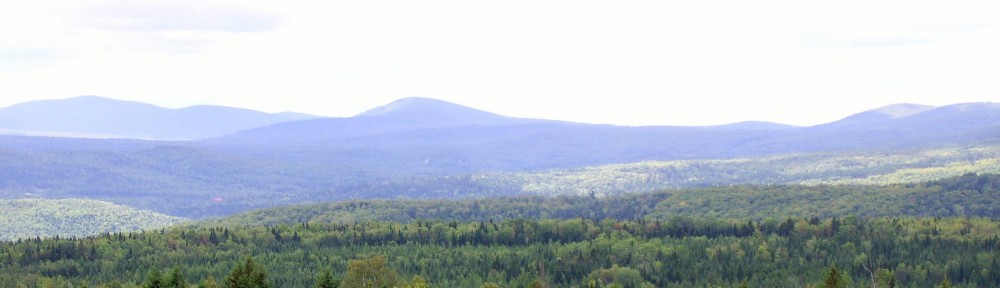
I had been to Colombia in the early 70s with Gabriel. I didn’t know him well and I was not sure it was a wise idea, but like him, I fell in love with the Magdalena River. We traveled up and down the river several times, in A Hundred Years of Solitude and in Love in a Time of Cholera.

I know that was a cheap trick, but how else could I convey the idea of that lovely paradise lying across the equator: a jungle, grasslands, hundreds of rivers draining from the second highest mountains in the world into the biggest river on earth, a place of snow and ice and fire, a country with more unique plant life than any other, a place of gold and emeralds, of coca, cocaine, poppy and heroin, of incalculable cruelty and death whose people still sang and danced.

A country where a 13-year-old girl could keep three young siblings, one a babe in arms, alive in the jungle for six weeks.

In March 2020, I read an article about Wade Davis, a Canadian cultural anthropologist and ethnobotanist, who had written Magdalena: River of Dreams. That was very early in the Covid Pandemic and it was hard to get delivery, except from Amazon. On that occasion, I had nothing more to read and would have had a full-on panic if my local library had not had the capacity of loaning out e-books. I summoned this book while sitting in bed and was a quarter of the way through it before I fell asleep.

When I finished it. I started it again.

At the end of second reading, grocery stores started opening at 7 a.m. for the elderly. By then, I was sizing up the kitchen chair legs which my long ago Newfie dog had chewed down to their marrow. My stash of frozen bread had given way to boxed crackers and I was eating way too much rice.

I had also discovered The Thief of Memory by Michael Jacobs, another book about the Magdalena River. Once again, the book was readily available over the ether from the library.

We were all sure that by summer the Covid epidemic would be over. I had made face masks from large hankies and the elasticized tops of socks, and I washed my hands like a fiend. Hospitals were more or less holding their own in my area and both Davis and Jacobs had written several books about Colombia. After all, wasn’t it nice not to have to keep appointments. I didn’t dwell on the idea of cavities or cataracts, or fibrillation or the recurrence of diseases that tend to recur. I was so happy reading that I thought that it might be fun to write my own book.

Pretty much everybody was talking about whether pandemics and climate change meant the end of the world. Why not write about that and set the story in Colombia?

Why Colombia? Colombia is lovely and has magic realism.

SOON BY ETHER OR PAPER – I Trust You to Kill Me by J.A. Howe

How to Write a Novel During a Pandemic

Previously on 115journals.com, I wrote about dreaming the beginning of my soon-to-be-published novel, I Trust You to Kill Me, set in Colombia in 2120. I said that I dreamed the first chapter. Every night I went on dreaming about the place and the people I had imagined. I had cancelled my in cleaner because she was also working in the front lines in Canadian Tire. As I went about my house keeping, the next scene would write itself in my head and I would word process it in the afternoon.

I was so happy. I couldn’t visit anyone. I masked up and scuttled into the grocery store at 7 a.m, senior hours, but I was happy because my apartment thronged with the ever-growing number of characters in the book. They’d get into life-threatening predicaments and then figure their way out. They were contending with the end of the world, or, at least, the end of civilization.

I had given up listening to Canada’s Prime Minister, who had to do his updates on the steps of the house he was living in because he and his wife got Covid. I switched to the Cuomo brothers, Chris in his basement for the same reason and Andrew, somewhere in Albany, looking official, quoting Churchill, “If you’re going through hell, keep on going.” I had no idea these steady, supportive men were actually deeply flawed.

I had cajoled six people to be my beta readers and I shared how happy I was with the book. When it was finished and edited and edited, I had it copied. Each copy cost about $50 and Canada Post earned about half that getting it to far-flung destinations. I suppose monks copying it in calligraphy would have cost more.

Now I was free to start the second book in the series.

But. Hang on. Word came back that it was unreadable. People would add that, no doubt, I had a good book in my head, but I had left most of it out. My friends were at the breaking point. One read me the first 13 pages aloud. Each sentence provided me with half a page or a page of notes. The one writer in the group had put aside her own work to read it. She was the most distraught of all. She sent me a short response, but managed to lose her copious notes. Another one didn’t lose hers, but never intended me to see them.

The trouble was I lost the half the novel. It just vanished from my computer and neither Microsoft nor Apple nor the Geek Squad could find it. That led me to pick up the heavily annotated one from the annotater. Well, she was out, but the door was unlocked. It was mine after all.

Holy Crow! Those comments. They were things I used to think while marking grade nine short stories, but I could never, never give to tenderhearted students.

I sat down at my desk, which looked out high over the neighborhood, all the way to Lake Ontario. It was August. Okay, I said to myselfI’m , I get to do it all over again.

Pandemic psychosis manifests in a multitude of ways. For example, I was pretty sure there shouldn’t be a hard lump just there, but I would get to it later. And I did, several weeks later. Some surgeries go ahead even in the middle of pandemics.

When I glanced up from my computer, I was vaguely aware of the trees turning yellow and orange and the pile of pages growing taller, even taller than before.

It looked as if we could have a smallish Christmas where we actually ate with a few other people. I copied the pages myself this time. The writer gamely offered to read the new version, but I felt I had done her enough harm. The others, great readers and frank critics all got new copies, well, some of them did.

But my chief, reliable critic, received the new, longer, much longer, book and unceremoniously backed out. “But you promised!” Now I’m I actually felt a little down,

I was fooling around on Twitter one day and found a very old DM from a woman who offered to edit my book. It was 2 or 3 years old, but she was still at the job. I sent her a 10 page sample – chapter two – and she sent me back a very competent and encouraging response.

In January, I sent her the whole book. Here was a woman, who didn’t mind reading on line. She was busy though. Of course I got impatient, but her response when it came blew my mind.

Apparently, it was good.

Stay tuned for further adventures of I Trust You to Kill me, even the origin of that very old phrase from a Sufi Master.

All Is Well: another contradiction to despair

Sirroco,

“All shall be well and all shall be well and all manner of things shall be well.”
Hildegard of Bingem

“No doubt the universe is unfolding as it should.”
The Desiderata

Faithful followers have already met my sister Georgia. Not as funny as my Brussels brother, but then she doesn’t smoke pot.* Georgia’s more into the wisdom market and she lives closer, just up the street here in westernmost TO.

I was weeping to her on the phone this morning and she started quoting Aunt Mae. I hate that. She said that Aunt Mae predicted I would be very unhappy for a long time, but that it would lead to ….enlightenment. At least I think she said ‘enlightenment’. By then I had my fingers in my ears and I was yelling, “Yabba dabba dabba dabba”. She’s such a good sister that she didn’t hang up.

I was crying because
-someone I love has realized there should be no more chemo
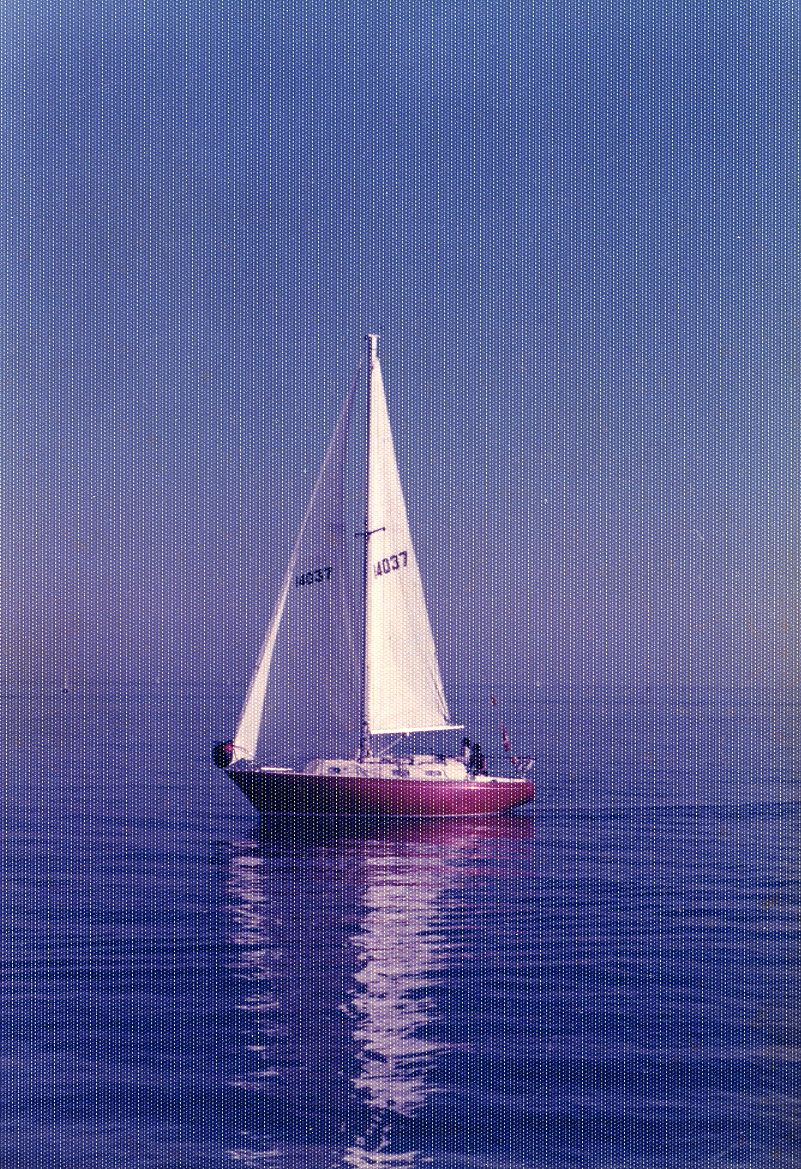
-a sailboat I love should, therefore, go to the scrap yard
-a sweet boy, who came to swim in my pool in 1975, and who has spent 25 years in solitary confinement for two murders and 14 rapes, is back in the news because he is applying for parole and I want him never to get out
-Donald Trump mocked Dr. Blasey Ford
-Brett Kavanaugh is going to be a Supreme Court Judge.

Now Georgia and I learned long ago that, despite what seemed like gross deficiencies, and even though one of us did not entirely accept it, that our lives were perfect. They were exactly what they needed to be.

Reasoning that out could be diverting but also unbearable. Better to retreat behind the ‘mystery of God’ or personal destiny. It’s just too hard debating the role of ‘evil’: how could there be a Jesus if there wasn’t a Judas. No one wants to go down the road to Hitler’s positive contribution to spiritual development.

Earth is a planet of pain. There must be others that aren’t.

It’s been a while since I could take comfort in God the Father. Not sure Georgia ever did. But I do believe very profoundly in Supreme Goodness, a divinity that we all embody, whether we let it shine or not. Even if we are drunken, 17-yr-old sex abusers. Even if we are sweet boys that turn into rapists and murderers. Even if we seem to have no redeeming quality.

And I believe, as does Georgia, that she and I chose this path we’re on, one we are stubbornly sticking to into old age. Why is a bit of a muddle, but not much. It’s about love.

In other news, my new glasses finally came and things are clearer.

* Georgia’s deadpan one-line stingers don’t hit you until long after you could have made a come-back.


Winter Solstice 2013

The winter solstice occurs on Sat. Dec. 21, 2013 at 17:11 (5:11 p.m.) Daylight in North America will last about 9 1/2 hours, the shortest day of the year and the longest night. After that the light will grow day by day until the longest day around June 21st.

The poem that follows was written in Venice Beach, California, a long way from Hereford Hill in Quebec’s Eastern Townships where the woods has grown ever deeper, and even farther from Brussels, Belgium where I am posting this.

Winter Solstice

Such deep dark
so long sustained
should smell of balsam,
cedar, pine,
should have a canopy of icy stars,
of Northern lights,
shifting panes of white or green.

-A child under a buffalo robe
watching a sleigh runner
cut through blue
moon-shadowed snow
sees a rabbit track running off
into deep woods.-

Waking in the depth
of this longest night,
thirsty for sleep,I hear
the pounding surf,
an angry wordless shout
one floor below
and the reverberating slam
of a dumpster lid.
The sky at least is quiet:
a star hangs
above the flight path.

In my long sleep,
I have been following
that track back
into the woods
breathing spruce pitch
and resined pine,
lashed by boughs of evergreen,
until I have arrived at this
secret place
which only wild things know,
a place to shelter
while things end,
time unwinds,
the circle turns.

When we awaken,
shouting, homeless,
single and bereft,
we will go forth
into the growing light,
a light
we creatures of the dark
must yet endure.

This is the place,
now is the time
for the birth of the Child
in the cave of the heart.

The Fortunate Fall: a further exploration

Recently, I posted “The Fortunate Fall: change the future in a blink” and that led me to think about the fortunate fall in general.

“Felix culpa”is the Latin for “happy fault” or fortunate fall has its origin in Roman Catholic theology. The fall of Adam and Eve and their expulsion from the garden of Eden was interpreted theologically as the source of original sin, but good came out of this loss of innocence. Without it, humanity would not have the hope of redemption. In particular, according to the church, we would not have the salvation of Jesus Christ.

In Paradise Lost, the 17th century poem by John Milton, explores this idea  beginning:

Of Mans First Disobedience and the Fruit
Of that Forbidden Tree, whose mortal tast
Brought Death into the world, and all our woe,
With Loss of Eden, til one greater Man
Restore us, and regain the blissful Seat,
Sing heavenly Muse…

He and his Muse continue singing for 12 “books” and 200 pages in my barely worn, but 50 year-old, university text. First, of course, Satan has to revolt and refuse to submit to the will of God, falling with his host of rebel angels to land at last in the burning lake of hell. He consoles himself that
The mind is its own place, and in it self
Can make a Heav’n of Hell, a Hell of Heav’n.
He gets his revenge by seducing Eve, convincing her to eat of the forbidden tree and she, of course, gives the apple to Adam.

In Book 12, Adam has a long conversation with the Archangel Michael before he is cast out to the east of Eden and learns more or less the whole history of humanity at least as the church sees it. Finally, Adam declares himself to be at peace, for something of great good will come out of his grievous error. He is about to be driven out of paradise by an angel bearing a flaming sword, but he seems quite convinced that, as Michael has told him, “thou shalt possess a Paradise within Thee, happier far”.

Juggling free will with the will of God proves to be an on-going theme in English literature. Theologians like St Augustine tell us that “God judged it better to bring good out of evil than not to permit evil to exist.”

That is one model for understanding the nature of life, but one which many of us may not find comes easily to us these days. Certainly, there is much evil in the world, much hardship and heartbreak. We struggle to come to terms with it. We cannot accept it as just random. We want to give our struggle with it meaning and significance.

Some of us conclude that we are paying karmic debt collected from deeds we have committed in this life or previous ones. This belief suggests that there is a natural law like gravity that makes it necessary to re-balance our moral selves by suffering what we have caused others to suffer, not as punishment, but as loving and necessary correction – a riff on the idea of “forgive them for they now not what they do”. Ah yes, now they do!

Another way to look at it is one that I prefer – at least at present. That is the idea that we are on a path of evolution here and what we are changing is our mind, our soul, our spirit. The hardship that we encounter is the instrument by which we progress. It is true that we can regress as well, but in general, our direction is a positive one. We are becoming more aware of oneness, for example, and connectedness. We are understanding that what we do as individuals affects others. We are becoming more empathetic. We are even beginning to see that God is not an autocratic, ancient of days who makes outrageous demands, but rather an indwelling loving essence. Which makes outrageous demands.

The poet Rumi uses the image of a tanner scouring the hide of an animal until it becomes a beautiful piece of leather to illustrate how the hardships of life render us more spiritual “Physically”, he says, “the world is grief, but within there are many kinds of laughing.”

Higgs Boson and Margaret Thatcher

Researchers at the Large Hedron Collider lab, which burrows beneath the Swiss/French border, announced on July 4th that they had detected Higgs boson or so called God particle. Science has postulated its existence since 1964, but until now it has alluded researchers. Oakland Ross writing for the Toronto Star has written a series called “Our Universe Explained” that describes the physics of the universe so that people who hated math and science can grasp it. the star.com/insight

I am going to quote an analogy he uses to explain how Higgs boson gave rise to mass and so made the universe possible.

“A useful analogy for the Higgs field and its influence on other particles is the so-called ‘Margaret Thatcher effect’, a reference to the former British prime minister, who was a colossal political force in her day. The analogy was dreamt up last year by David Miller, a physicist at the University College London.

“Imagine Thatcher swanning through a crowded room while at the height of her powers. Most of the minions in her vicinity would naturally veer toward her, owing to her authority and influence, and so the distribution of the crowd in the room – analogous to the Higgs field – would become distorted, or asymmetrical as more and more hangers-on shifted to be closer to the Iron Lady, thereby induing her with mass.

“This, metaphorically, is what happens when a particle moves through the Higgs field.

“For all its mass-giving properties, the Higgs particle is itself a rapidly decaying affair, with a lifespan measured in the minutest of a second. It made only a momentary appearance in the earliest pageant of our universe’s history and promptly vanished. But the field it engendered lives on.”