Blossom of Tewkesbury: a white tailed deer

white tailed deer #2This is a generic picture i.e. not Blossom

I watched a Nature program about white tailed deer on WNED, a PBS station the other day. http://www.pbs.org/wnet/nature/episodes/the-private-life-of-deer/full-episode/8278/ A hundred years ago, there were only one million white tailed deer in the U.S. Today there are thirty million, just a little under the human population of Canada. Here in Toronto, a small herd of them lives half a block down my street in an urban forest. I have written about them, but I am always too stunned when I chance upon them to get a photo. https://115journals.com/2013/07/14/secrets-of-the-urban-woods/

In Cayuga Heights, New York, there are 100 hundred white tailed deer for every square mile. The optimum number would be 5. The Nature program shows how they interact with the human population.

I was blown away by the story of one of them, Blossom, who was rescued as an injured fawn by a family in Tewkesbury, New Jersey and spent her life alternating between a life in the wild and visits to the family home where she was welcome to stroll in the kitchen door. (Blossom’s story is told by Anna Carver at about minute 46.) She wore a colorful collar asking hunters not to shoot her. And I gather, she eventually gave birth to twin fawns. Anna has also posted a tribute to Blossom on Youtube.

https://www.youtube.com/watch?v=52z5xyHvs3U

white tailed deer running #2


Septuagenarian Buys a Stamp (or not)

stampI set out on this sunny afternoon to buy a stamp. Well, actually several. Canada Post has just increased postage for a single stamp to $1, but if you buy a bunch it’s only 85¢. I had bought thirty 63¢ stamps designed for the Chinese Year of the Horse in January. Now I need twenty 20¢ stamps and 2¢ stamps to top those up and two 10¢ stamps to top up my U.S. postage from $1.10 to $1.20.

I have to mail the yearly doctor’s note, prescribing physiotherapy to the insurance company. On-going maintenance becomes necessary in advancing years. The doctor never refuses to give me one. The insurance company never refuses to accept it, but every year, I have to trot off to the doctor and then resort to snail mail.  So I started out with bureaucracy on my mind.

Canada Post is in trouble. We haven’t had Saturday delivery for twenty years or more. In a year or so, none of us will get home delivery. They’ve closed all but a few actual post offices and franchised out postal outlets. Then they told all these convenience or gift shops that they had to upgrade to better computers costing tens of thousands of dollars. Mom and pop gave up their franchises, which were bought by large corporations, chiefly Shoppers Drug Mart here in Toronto.

Now I can’t walk to a post office and the Shoppers mall parking lot is so badly engineered that it was probably designed by Canada Post. If I park as far south as possible, I stand a better chance of getting out, but I have a longer walk. Then in one of those brilliant marketing moves, I have to go in through the cosmetics department at the northeast end of the huge store. I never buy perfume or makeup. Doesn’t matter. I get funneled through there. Then I make a left turn. The post office is in the southwest corner. There is a hurrying person trying to pass me in the narrow toothbrush and mouthwash aisle. Then I have to swing through the lineups at the pharmacy counter and the boxes of stock still looking for a home. At last, I arrive at the Canada Post outlet.

A young woman there is turning away a business woman with a stack of thick, large brown envelopes. She is telling her where the next post office is, several miles west. Clearly, the clerk is in the middle of a phone call. “No computer,” she says. She doesn’t say, “I’m terribly sorry, but I can’t help you.” The stamps are there. I can see them. My money is  in my hot little hand, but we can’t just do an exchange. That would be too old school. Once I nearly starved in a restaurant because the computers went down, although clearly food had been cooked and wait staff stood idly by. Whereas the clerk had been quite cordial to the previous customer, she responds to me by saying, “I can’t do anything about it.” Okay, I frowned, I admit it. She doesn’t care, she is back on the phone with tech support, just a little flirty.

My unspoken curse is really not all that bad. But she may have trouble getting more than the minimum wage for a while.

I manage to worm my way out first of the store, then out of the lot up to the four way light, where I try to figure out what to do while I wait and wait for a left-turn green.

No wait, wait. First, before I get in the car, I spot a store front advertising shipping. And it has a red post box outside. That’s a very good sign. Apart from the post box deep in the heart of the old drug mart, there isn’t another for ten blocks. Relief. I dash in.

“I need stamps,” I announce.

“We don’t sell stamps,” the clerk says. “We can ship your letter Express, only $10.”

“We’re not allowed to sell stamps,” says another. “We can only ship parcels or fast mail.”

“I was just on the phone with Canada Post in Ottawa about that,” says the boss. “They told me it could take 6 to 12….. years.”

We all fall about laughing bitterly.

I decide to drive up to the Kingsway on Bloor St. There’s another Shoppers and presumably another postal outlet. Once there, I’m in paid parking territory. The machine says it takes nickles but evidently not mine. I manage to piece together enough change for 10 minutes. I go in the out door, thus circumventing the cosmetic department. I ask a woman in the checkout line where the post office is. On the second floor! How convenient. The elevator may not be the slowest I have seen, but it’s in the running.

I am #3 in the queue at the counter. I step up and order the stamps (see above).

“We don’t have any 22¢ stamps.”

“That’s okay. I’ll take 10’s and 2’s.”

“We don’t have those either.”

I won’t bore you further with a play by play. Imagine disbelief on my part. Imagine grim fatalism on hers.

“They were supposed to come yesterday. They didn’t. They were supposed to come today. They haven’t but we’re open til 9. We warned people a month ago that the price was going up and still they bought hundreds of the 65¢ stamps.”

“Well, leaving aside that it would have been possible to anticipate this need,” I reply, “nobody warned me three months ago.”

“But,” she continues, sympathetically, “you can just stick that letter in the box. They’re still accepting  the old stamp.”

Here is a fellow human being, just as fed up with inefficient bureaucracy as I am. She is not doomed to minimum wage.

It takes a large ginger cookie and a tall soy chai to cool me down.

One thing for sure, I’ll be there with bells on when they hold the wake for Canada Post.


Separatism: done and dusted

In Canada we have two seasons – winter and road repair. Indications this morning are that winter is over. I couldn’t find a single unimpeded route (pronounced ‘root” by me). Moreover “the winter of our discontent” has been ended by the rout of the Part Qubecois in the Quebec provincial election and the defeat of its leader Pauline Marois in her own riding.

As I said earlier https://115journals.com/2014/03/16/separatism-fatigue/ I couldn’t get invested in this latest attempt by my birth province to become its own country and fate was on Canada’s side. The appeal of the charter intended to exclude civil servants who would not give up wearing their scarves, skull caps and ostentatious crosses proved minimal and the threat of yet another referendum on Separation combined to lead to the defeat of the PQ and the resounding victory of the Liberals.

I spent the evening re-watching Inspector Morse’s last case, very sad, but not nail-biting. Actually, the Quebec election results weren’t either after the first hour.

Some commentators allude to this as the third vote NO on Separation. Actually, it is the 22nd. See Andrew Coyne in the April 8, 2014, edition of the National Post: in 2 referendums , 7 federal elections and 13 provincial elections, “the separatist parties and project have never once received a majority..” Mind you it was a close call in 1995 when Canadians rose up to embrace Quebec and won by a narrow margin.

fullcomment.nationalpost.com/2014/04/07/andrew-coyne-quebecers-not-only-just-said-no-to-separation-but-yes-to-the-1982-constitution/

Much as I love Paris, I definitely do not want to import France’s mindset and place it between me and my mountains, and the east coast of my Canada.

Raise a glass to the defeat of divisiveness.


The Ex – a love letter

I needed a date the other night, someone who would appreciate a family party and would be willing to drive an hour north into white-out country, late March though it was. Naturally, I called my Ex.

When I was 16, the year that Blake and I met on a Good Friday bicycle hike, the word “ex” hadn’t been invented and had certainly not devolved from meaning ex-husband/wife down to meaning ex-boy/girl friend. Only the rich and scandalous and movie stars got divorced in those days. I can’t even remember whispered adult conversations about divorced people in my home and I always heard the whispered, good stuff.

Blake and I were together for over 25 years before we broke my grandmother’s heart. (My mother had passed on, so my grandmother had to fill the role.) She thanked God that at least my grandfather had not lived to see it. Then divorce began spreading like a nasty disease and she started working hard to keep up.

So my second niece was turning 50. My children and my sister’s are all one year apart – Irish twins, as they say. This niece was the last of the four to reach 50. Initially I phoned her daughter -great niece, that would be – to say sorry, apologies and all that. I got off the phone and had a brainwave. The invitation had been addressed to Joyce and guest. I phoned Blake and he readily agreed to be my date. It would be good to see the family, he said. I cancelled my regrets.

Blake could drive through hell without turning a hair as he proved in Paris, Rome, Athens and on the Autobann when we were married. And although we have been divorced for 36 years, he has come to family gatherings in the last few years. My sister greeted him at that first Easter dinner, “Gee Blake, I didn’t know we were going to get you back.”

It hasn’t always been hearts and flowers. At first when divorce loomed, the kitchen knives lured me, sang siren songs, but both Blake and I have a blood phobia and being a bright guy, he moved out.

Even so, we didn’t fight over the division of property or children. Fifteen and sixteen -year-olds make up their own minds. The rest we divided in half, although I resented being given the cabinet television set, which took 2 men and a boy to move. We didn’t divide my brother’s drug stash in the crawl space because we didn’t know about it and he didn’t know we were selling the house. It’s still there if you look up in the rafters near an air vent or so he claims. But that’s on your head.

Any lingering angst evaporated when Blake’s wife died. No, I didn’t mean it like that. She was a beautiful, vital young woman, as passionate as only the Spanish can be and she was a brilliant cook of Mediterranean food, ambitious and hard-working. She and Blake were coping with the idea that he would go first since he already had a cancer diagnosis. Then she was diagnosed, but the prognosis was good. Not to worry. But in the course of one autumn, she turned very badly for the worse and passed away on the winter solstice.

Our daughter came flying back to aid and comfort her father. Although neither of us had known his wife well, we felt a great out-pouring of love as if she were sending it back from the other side. Blake was perhaps too overwrought to register it. It wasn’t hard to realize that Blake could use support once our daughter left.

We go to movies like August, Osage County, I cook steaks or stew, or we eat out and we talk about politics or current events: ‘what did happen to that airplane’. Julia says it’s just what we did at our own table all those years ago.  We go along with each other for medical appointments, just to have a second set of ears and to decide on treatment if necessary. It’s true that Blake has other companionship as well. Fine with me. She can keep up with him. Being younger. Is there a pattern …. No, no, that’s small minded.

Dressing for this masked ball proved challenging for me, but I pulled together a long sleeveless dress, heavy tights and a black scoop-necked top with long sleeves for a suitably “formal” look. Blake showed up in maroon cords, a blue shirt and the softest grey/blue jacket that invited touch, mine and that of several other women.

We had a charming misunderstanding about our gift of cash. He insisted on being generous. I thought we were dividing what I had ready in half. He thought he was adding to what I had ready.

When we arrived, my niece’s grandchildren greeted us at the door, the boy in a tuxedo,  two girls in long dresses and one in a tutu. Our coats were whisked away and we were provided with masks.

Shortly, thereafter, Blake wished my older niece happy birthday and she thanked him, noting that he was 5 weeks early. “Wrong niece, Blake”, but Blake is forgiven everything. He is the beloved, absent-minded uncle to them and always has been.

It is an interesting venue, the long narrow foyer of an athletic club where the birthday girl works, with a bar and tiny kitchen in the middle and  glassed in squash courts in clear view. There is one baby. Two others have been left at home, to great disappointment. And all those flying beautiful sub-teens. So septuagenarians right down to a one-year-old. In the kitchen is the family chef, birthday girl’s son-in-law, father of 6, churning out nibblies, that the kids pass around, explaining each in detail.

Someone is reported to have said, “It’s nice to see Blake and Joyce back together.” It’s not clear if this was a joke.

Blake and I enjoy a chat with my younger sister, Georgia. They have always liked each other and are not above flirting. Then we try to mingle and find ourselves with the most mono-syllabic fellow in the room. He regards innocuous questions as an invasion of privacy.

Then a remarkable thing happens. Georgia’s ex-husband takes his two daughters – my nieces- aside and tells them he is giving each of them $40,000 from their grandfather’s estate.

It takes me only a minute to slide over to the gift table, unseal the envelope  and pocket my gift money. NO, no. I didn’t do that. Honestly, I didn’t.

Then in general jubilation, the band starts up – Rolling Stones, Led Zepplin – and the dancing begins.

Once upon a time as in the best fairy tales, Blake and I danced. We square danced, we polka-ed, we two-stepped, we jitterbugged, we foxtrotted. Since we parted all those years ago, neither of us has danced. Sixty years later, we dance.


Deconstructing The Luminaries: a timeline

As the title implies, this post is intended for those who have read Eleanor Catton’s novel The Luminaries as it contains significant spoilers.

If you haven’t read the novel, try this reviewhttps://115journals.com/2014/03/27/the-luminaries-eleanor-cattons-booker-prize-winning-novel/

Feb 1839 – the Sook warehouse in Kwangchow, China is raided, opium is found hidden in tea cartons and the elder Sook is executed; Sook Yongchen turns to Carver for help;

pre 1865 – After winning at the wheel in Lydia’s gambling establishment, Crosbie Wells accepts her hand in marriage instead of the payout money – which Lydia doesn’t have and never thought she would need since the wheel is crooked. Crosbie discovers a fortune in gold in the  highland gold field of Dunstan – £ 4000 (about $300,000 in today’s money)

1853 – Ah Sook arrives at Port Phillip, Australia, is robbed of all his money, tries to contact Carver, is beaten by Jeremy Shepard, takes refuge, is found by a buck-toothed woman -Margaret Shepard, given opium, begins to recover, goes to kill Carver, instead comes upon Jeremy Shepard, Margaret manages to save Sook by killing her husband; Sook is tried but found not guilty when Margaret testifies Jeremy killed himself; Carver is arrested for smuggling and sent to Cuckatoo Island for 10 years, hard labour;

July 1864 – Sook learns the released convict, Carver, has sailed to Victoria, Australia to look for gold

Jan. 18, 1865 – Carver meets Pritchard in Hokitika, NZ and offers to sell him opium, which he smuggles in, in tea cans;

April 27, 1865 – Anna Wetherell and Emery Staines meet briefly on their ship and arrive separately in Dunedin. Lydia Wells takes Anna under her wing. Lydia ascertains that the two, Anna and Staines- share the same birthday

Carver, posing as Frances Wells, starts a long con on Lauderback, threatening Lauderback that someone thinks he- Lauderback- was an associate of a man called Carver who committed a murder and this someone is out to take revenge on Lauderback. As a result, Carver/Francis Wells gets a position on the crew of Lauderback’s Godspeed. Carver and Lydia start shipping dresses to Melbourne, Australia in Lauderback’s name, ostensibly to be fashionably altered. Since Lauderback has been having an affair with Lydia Wells, this is a reasonable ruse.

May 11, 1865 – Crosbie discovers that the fortune he left in the safe at his wife Lydia’s is gone along with his papers and knows she has stolen them;
-May 12, 1865 – Lydia burns the morning paper so that Crosbie will not learn of the arrival of the steamer Active in port along with someone Crosbie has been waiting 12 years to see. This seems to be Lauderback who has previously always come when Crosbie was away. (Lauderback has come to figure out who is shipping in his name);
-a bottle of laudanum arrives and finds its way surreptitiously into Crosbie’s booze at Lydia’s hands;
-Carver, posing as Francis Wells, tells Lauderback he has cuckolded his ‘brother’ Crosbie Wells and forces him to sign over the Godspeed to him;
-Lydia prepares for a party for ‘gentleman with naval connections’ in her home/gambling house ;
-Staines spends the afternoon watching over a trunk labelled with Lauderback’s name, due to sail on the Godspeed, ostensibly for a man named Wells, but actually Carver;
-A Chinese man is looking for an ex-con who did time on Cuckatoo Island, i e, Carver:

-in the evening Crosbie Wells escapes Carver’s attack cutting Carver’s face in a c-shape from eye to mouth, while Anna’ sleeps’ nearby in Crosbie’s bed (the origin of her addiction?);
-Crosbie flees to the docks, discovers Carver’s efforts to ship a trunk to Hokitika in Lauderback’s name, diverts it and takes passage to Hokitika;
-the Godspeed leaves without the wounded Carver, still under Phillip’s command because Carver has not yet claimed ownership.
June 14, 1865 – the Godspeed returns to port in Dunedin and newly scarred Carver takes over as owner/captain and sails to Hokitika

June 18, 1865 – Staines meets Crosbie Wells in Hokitika, tells him about watching the trunk for Carver and the fact Carver is his partner, having stood him £ 8 for supplies; Staines cashes Crosbie’s nugget at the bank for him and is rewarded;
Carver begins his search for Crosbie Wells and for the missing trunk in Hokitika by placing an ad in the name of F. Crosbie Wells;
Anna and Staines are surprised and delighted to meet. (See cosmic twins theory in comments.)

July 28, 1865 – George Shepard (governor of the gaol, the late Jeremy’s brother and now Margaret’s husband) sees Sook Yongsheng; Anna, pregnant with Crosbie’s child and exiled by Lydia, arrives on the Godspeed and is taken under the wing of Clinch, who runs the Gridiron Hotel; she doesn’t know Crosbie is living an hour outside town; she is actually working for Mannering; a trunk full of silk dresses is salvaged from the wreck of the Titania and Anna buys them from the salvagers.
-Staines buys the Gridiron Hotel from Mannering
-Staines tells Anna Crosbie is in Hokitika

Anna begins plying her new trade as a prostitute and taking opium at Sook’s place in Chinatown in Kanniere

Sept 20, 1865 – Ah Quee having discovered the stash of gold in Anna’s dresses while she slept off her opium, removes the last it, except for that in the orange dress, which she never wears while working; (previously -Ah Quee smelts all this gold, stamps it with the name Aurora, Staines’ claim, which was initially salted by Mannering and is actually worthless; Ah Quee expects his boss to bank it and pay him his paltry share: Staines takes it instead and buries it on Maori land)

Oct 11, 1865 – Anna tells Crosbie’s story to Staines; Anna loses her unborn child having suffered a blow, ostensibly from Carver who did hit her, but the serious injury was caused by his horse rearing; she gives the impression Carver was the child’s father and accuses him of killing her child;  Crosbie, at Staines’ instruction, draws up a gift of deed assigning half the fortune in gold to Anna and signs it, but Staines does not, having fallen asleep;
Crosbie (p.673)- digs up the gold bars and stashes them in his home;

Jan 12, 1866 – Lauderback’s shipping container, containing his books, letters and the deed of ‘sale’ of the sailing ship Godspeed to Carver arrives on the Virtue but is misdirected and does not arrive at Balfour’s office;

Tauwhare betrays Crosbie Wells to Carver, telling him where Crosbie lives

Jan 14, 1866 – Wearing her orange dress, Anna goes to Staines’ home for the night; while he is sleeping, she goes back to her room at the Gridiron Hotel to take opium, intending to return to Staines;
-while she is gone Staines wakes up, goes out, falls and hits his head;
-extremely high, Anna falls, hits her head and ends up collapsed on Christchurch Rd: -Carver uncorks a phial of opium (again see cosmic twin theory in comments); Crosbie drinks half a phial of opium on top of a good deal of alcohol;
-after finding the stash of gold bars in Crosbie’s cabin, Carver puts a piece of paper in Crosbie’s stove; next he needs to alert the widow, Lydia to claim it;
-Lauderback arrives from his trek over the alps to find his half-brother, Crosbie dead; -Lauderback finds Anna lying on the road; unconscious Anna is put in jail;
-Staines, also suffering concussion, falls on Gibson Quay and is nailed into a shipping crate;
-eventually Tauwhare reports having seen Lauderback and his 2 men arrive at Crosbie’s cabin on this day, after another man has also visited;

Jan 15/16, 1866 – Annie gets bail, leaves jail and she and Gascoigne remove the gold from the orange dress and hide it under his bed; Crosbie is buried by Devlin; Nillsen discovers the fortune in gold bars  after being hired to clear the dead man’s cabin and gets paid £400;
-Balfour tells Lauderback his container has not yet arrived instead of telling him it is lost; -Lauderback discovers that he ‘sold’ Godspeed to Francis Carver, not Crosbie Wells; previously he had thought that Carver (Francis Wells) was Crosbie’s half brother, extorting Godspeed as retribution for Lauderback’s cuckolding Crosbie; Lauderback knows now that he has been conned by Lydia, Wells’ widow, and Carver.

Jan 17 – Lydia arrives and makes a claim on the fortune at the bank; Frost tells Mannering the fortune was stolen; Mannering and Frost visit Ah Quee to force the truth from him; Balfour visits Lowenthal on the Sabbath;
Clinch buys Crosbie’s property and gives Frost £30 finder’s fee; Lydia arrives in Hokitika and lays claim to the fortune;

Jan 17, 1866 – Pritchard confronts Anna about the opium she took on Jan 14th. her gun goes off and Staines, now an opium addict, hiding behind the drapes is shot (or locked in a crate on board ship, he suffers a bullet wound thus preventing injury to Anna -cosmic twin theory); Gascoigne agrees to bring Anna to meet Lydia, but becomes angry when Anna asks him for help to pay her rent from the gold found in her orange dress and in G’s keeping, so does not; Lydia goes and gets Anna and takes her under her wing again; Staines gets away unseen but gravely wounded;

Jan 27, 1866 – Walter Moody sees a bloody apparition start up at him from a container, saying Magdalena; Moody arrives in Hokitika, but the ship he was on has to remain anchored beyond the reef because of bad weather; Moody meets the 12 worthies in the smoking room of the Crown Hotel and listens to their stories, which are bits and pieces, scrambled and misunderstood of the above events:
-the Godspeed is wrecked;

Feb 18, 1866 – Gascoinge advises Carver how to claim insurance for the wrecked Godspeed;  Lydia holds a seance to summon Staines’s ghost and instead “speaks” in Cantonese Sook’s words vowing revenge on Carver for causing his father’s execution; Ah Sook learns Carver is in Hokitika and forms a plan to kill him; Shepard writes a letter to the newspaper admitting he has used private money to build the new jail and lies that it was a gift from Nillsen; Lauderbank’s trunk is delivered to Moody by mistake and Moody learns Crosbie was Lauderback’s half-brother;

Mar 20, 1866 – Devlin talks to Anna while Lydia is out and shows her the unsigned deed of gift, assigning Anna half the fortune; Anna forges Staines signature despite the fact she is illiterate; Ah Sook buys a gun and has it loaded; Shepard puts out a warrant for Ah Sook’s arrest; Ah Quee is mistaken for Ah Sook and attacked in town: Mannering rescues him; Sook seeks refuge with Margaret Shepard who eventually betrays him; Shepard shoots Sook: Staines turns up and is treated for his wounds and is imprisoned beside Anna who is also back there;

April 27, 1866 – Anna’s trial for attempted suicide, public intoxication and grievous assault on Staines begins -Walter Moody for the defense; during Lauderback’s testimony, Carver is arrested for fraud against Lauderback when Crosbie’s signature on the Godspeed’s bill of sale is proven to be forged; Carver is murdered by Tauwhare while being transported to jail; Staines’ testimony that he was hiding in Anna’s room, high on her opium when he was accidentally shot, clears Anna of the most serious charge; Anna is acquitted of all charges;

Staines, charged with falsification of a report, embezzlement of ore and dereliction of duty, pleads guilty to all charges, is found guilty and sentenced to nine months hard labour.

The luminaries look forward to a loving life together in nine months.

If you find errors or can add detail, please leave a comment. I intend to keep revising as needed.

 

Carrickfergus – soul song


jim mccannYesterday’s ear-worm, the traditional Irish ballad, “I wish I was in Carrickfergus” was so persistent that I dropped everything to deal with it.

https://www.youtube.com/watch?v=yaurO8e5-mg

https://www.youtube.com/watch?v=RJMggxSzxM4

The first You Tube link is the song sung by Bruce Guthro; the second by Jim McCann  (pictured above) of the Dubliners. The latter is revered by fans of the song. There is also a version by Loudon Wainright III, done for Boardwalk Empire, as well as Van Morrison and others by women, such as Joan Baez – https://www.youtube.com/watch?v=_S7ITkoxojI

I have been a great lover of traditional ballads ever since those halycon days when high school curriculum loosened up in the early 70’s and such poetry was taught in English class. One of my adult children thinks I sang it, but I didn’t know the words until yesterday, so I thought she was remembering other similarly tragic ballads that I put on the record player.

If you go to Wikepedia, you get arcane tips on where the song came from, the fact that Carrickfergus is in County Antrim, which other ballads may have been melded to create it, etc. In other places, you will learn that the Irish actor, Peter O’Toole taught it to Dominic Behan who recorded it – thus bringing it to popular attention- and supposedly, added a verse of his own. On other sites, you will learn that it was written by Van Morrison, James Taylor, etc. Or perhaps it was written by an Irish poet who died in 1745. I’m tempted to say I wrote it. Why not? Usually, old ballads like this are ascribed to Anonymous and since they were orally transmitted, there are many versions. Perhaps my daughter is right about hearing the song in childhood because I have a memory of knowing how Joan Baez gave new meaning to the last two lines: Ah, but I am sick now, my days are numbered/ So come all you young men and lay me down.

The song begins:

I wish I was in Carrickfergus
Only for nights in Ballygran(d)
 I would swim over the deepest ocean
The deepest ocean for my love to find.

Some on-line commentators find “nights in Ballygran” puzzling. Really? Joan Baez makes this clearer: “I wish I had you in Carrickfergus.” Carrickfergus names a borough or wider area than the town of Ballygrand, which is located there.

Clearly, the song is about an insurmountable obstacle, which the singer first announces can be overcome by heroic effort, but then grows sadly more realistic.
But the sea is wide and I cannot swim over
And neither have I wings to fly
If I could find me a handsome (handy) boatman
To ferry me over to my love and I (and die)

Boatmen have been associated with passage to the next life ever since the Greeks put coins on the eyes of the dead to pay for ferry passage across the River Styx. (I once spent a summer holiday on the banks of this actual river – literally.)  So I think that singing and I is just a dodge to keep the crowd in the pub happy.

My childhood days bring back sad reflections
Of happy times I spent so long ago
My boyhood (girlhood) friends and my own relations
Have passed away like melting snow

Is this the verse Behan wrote? Seems so to me.

But I’ll spend my days in endless (ceaseless) roaming
Soft is the grass and my bed is free
Ah, to be back in Carrickfergus
On that long road down to the salty sea

Well, at least there was that.

And in Kilkenny it is reported
There are marble stones as black as ink (Written on stones…)
With gold and silver I did support her (he did support me)
But I’ll sing no more now till I get a drink.

I’m drunk today and I’m seldom sober
A handsome rover from town to town
Ah but I’m sick now, my days are numbered
Come all ye young men and lay me down.

So happy childhood, adult prosperity, loss, exile, vagrancy and drunkenness. These verses speak to the part of me that would love to deal with such loss by staying drunk. Fortunately, this is not an overwhelming urge because I ration the pinot grigio strictly. The lines encourage empathy in me for less sober types.

Having spent the whole day with the song, listening to it over and over, I had a good grieve. Catharsis, we English teachers call it, fear and pity that cleanse the heart.

In the end, however, I fell in love with the full-throated voices of the singers, as if it were being sung by my beloved. The song is full of the deep suffering life can bring us, the dreams that get trashed, the lovers and children and houses and status lost. But, even though we may be wanderers from town to town and deeply in need of comfort, something has been guiding us to where we are, which is where we need to be.

The alternate ending to the second verse seems to me truer to the tale the singer is telling.

The Luminaries: Eleanor Catton’s Booker Prize winning novel

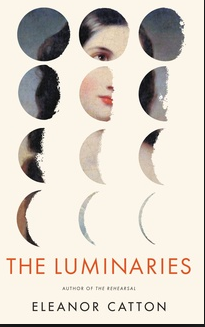
luminariesThe good thing about Eleanor Catton’s Booker winning novel, The Luminaries is that when I got to the end, I started all over again. The bad thing about it is that when I got to the end, I had to start all over again. Good because it is interesting and multi-layered enough to read again. Bad because I still didn’t get it.

The book’s 832 pages took me 13 days to finish. (Usually a book takes me three days.) I gave up television and cold weather kept me inside, so reading it was pretty much all I did.

Should you read it? It depends.

Reviewers are widely divided. Bill Roorbach in the New Yourk Times (Oct.16/13) waxed lyrical in its praise. nytimes.com Another reviewer refused to review it because he couldn’t get past the first few pages and then, after it won the Booker, did read it and decided life was too short for such books. He notes that Catton has suggested her book does not appeal to men over 45. In his blog, Claude Nougat examined the pros and cons in “Should You Read The Luminaries?” and decided to wait for the price to fall. http://claudenougat.blogspot.ca There are 72 pages of reviews on Amazon, ranging from 1 star to 5. The bad reviews remind me that Rome plowed Carthage with salt so that the city could never recover.

Almost every review mentioned its slow start and the fact it was written in Victorian English, formal and stilted. I nearly wore out the page at the front where the characters are listed. Until I had more or less memorized who was who, the twelve men at the meeting in a back room of a shabby hotel, I couldn’t keep them straight. Even after I had been provided with detailed physical and psychological descriptions, I couldn’t tell them apart easily once they got talking. One reviewer said “Don’t tell. Show.” Something I harped on as a writing teacher, but Catton feels the novel form is ripe for reinvention.

True, I wasn’t immediately hooked, but two readers I respect had thought of giving it to me, so I persisted and soon I was drawn in to it.

First there was the exotic setting – Hokitika on the west coast of southern New Zealand during the gold rush of 1865-66, beginning on January 27th. Yes, that would be summer down under, but it is a dark and stormy night, as almost all reviews point out, so stormy in fact that ships are in more danger than usual at that perennially dangerous port.

Second, there are the three mysteries, which newly arrived Scotsman  Moody stumbles upon when he gate-crashes the private meeting of 12 worthies of the town who have gathered to try to resolve: why did a drunk, Crosbie Wells die with a fortune in gold bars hidden in his shack, why did Anna Wetherell – alias the Whore- try to kill herself with opium and what has happened to the wealthy, likeable and beautiful young man, Emery Staines, who has disappeared without a trace. Oh and what of the gift of deed to Anna of half the fortune, found unburned in the ash tray of Crosbie’s stove.

Other puzzles soon emerge: how has the villian Francis Carver harmed Ah Sook, Crosbie Wells, and Anna, how many illegitimate half brothers does the politician Alistair Lauderback have, who is Mrs Wells actually married to, where is Lauderback’s missing shipping crate, who shipped the trunk with five silk dresses, why is the warden, Shepherd intent on killing Ah Sook and vice versa. Etc. etc.

The ownership of the fortune in gold is particularly tricky. You may need a flow chart. Let’s just say a heap of irony is involved.

And third, why is there a zodiac chart indicating the sign of each of the 12 worthies as well as the position of the Sun, Mars, Jupiter, Saturn, Venus, and Mercury? And who are the luminaries?

One reader I know is studying the astrology first. I’m leaving that until later, but I am grateful she e-mailed me an astrological chart. (Balfour is Sagitarrius, Gascoinge, Capricorn and so on until you get to Pritchard who is Scorpio.)

Other reviewers have verified my conclusion that some mysteries are never entirely cleared up, although I was left with a pretty good guess at the truth.

The book gets better and better as it goes. Part One, “A Sphere Within a Sphere”, set on Jan 27th is 360 pages long and includes a retelling from 12 points of view of the events of Jan 14th; Part 2, “Augeries”, Mar 20, 1866, 159; Part 4, “Paenga-Wha-wha”, April 27, 1865/April 27,1866 , 95 pages long; Part 5, “Weight and Luchre”, May 12, 1865, 40 pages long; part 6, “The Widow and the Weeds”, June 18, 1865, 21 pages;  Part 7, “Domicile”, July 28, 1865, 11 pages; part 8, “Mutable Earth”, Sept. 20, 1865, 4 pages; part 9, “matters of Succession”, Oct 11, 1865 2 1/2; part 11, “Orion Sets When Scorpio Rises”, Dec 3, 1865, 2 pages, part 12,”The Old Moon in the New Moon’s Arms”, Jan 14, 1866, 1 1/2 pages and we finally learn who the luminaries are. In short, the novel moves from slow-paced, DIckensian to brevity, to the episodic and lyrical. It was the speed and loveliness of the end that made me like the luminaries so much that I wanted to stay with them for a second read.

What I propose to do another time is to post a chronological time line. You may not want to read that until you finish the book and maybe, way down the road, I will have a guest talk about the astrology. https://115journals.com/2014/04/05/deconstructing-the-luminaries-a-timeline/

eleanor cattonThe auhor, Eleanor Catton