Aftermath: executing Blake’s Estate

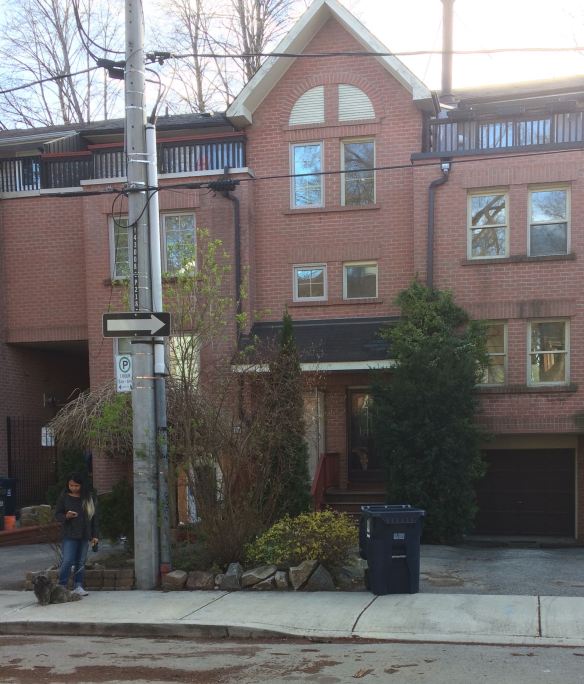
This is Blake’s house. Still Blake’s house, although you can’t see him sitting on his third floor balcony, reading the Toronto Star and drinking coffee.

To be precise, it is the house of the estate of Blake Durant, one good reason why you can’t see him sitting in his lounge chair with his coffee near at hand, cursing Donald Trump and angrily refolding his paper

It is, in fact, the house that I have just sold. For the full asking price, modest enough when you consider it is on a Cabbagetown street full of million dollar houses, but large enough to make my eyes bug out. From it, you could walk to work in Toronto’s financial district. You could park one car in the attached garage and another in the driveway. You could enjoy a private backyard deck with lovely small trees.

First, you would want to spend another $150,000 redoing the floors, installing HVAC, including duct work and upgrade the two four piece bathrooms. You might want to redo the windows and the kitchen. But the people who bought Blake’s house have that handled. The family just bought and reno’ed the almost identical house attached to the south.

I got just under $900,000. Blake and I had owned two houses as a married couple and we struggled to get $180,000 for the last one in 1979, the one under the hill, with the pool and the big family room, the gardens, the dry stone wall, the den, and the finished basement, on a cul de sac in leafy Scarborough. An ideal place for children to grow and a brisk walk to a commuter train downtown. You get the picture – our dream home, rendered mausoleum by divorce and teenagers who pissed off in its wake.

And yes, I am both ex-wife and executor. I even volunteered. Frankly, I didn’t trust Blake to protect our children’s interests and he didn’t have any friends that I trusted either. The other thing is that I loved Blake, indeed I love Blake.

That’s a problem.

Having sold the house, I feel as if he’s died all over again. When the deal closes at the end of August, I suppose I’m in for a third Blake death.

A few weeks before he passed, he confided that he was leaving me a terrible mess. He cried. He was in bad shape then, wasting away, wracked with pain and on heavy meds, but Blake always cried easily. He wasn’t exaggerating either. The mess both physical and financial was spectacular.

Five of us set about clearing things up, six if you count Alice who took herself bag and baggage back to the apartment Blake had been paying for for years. With our encouragement. After she left, the place was somewhat less like a hoarder’s paradise. It took six weeks. Waste Management sites in Toronto and Mississauga saw a lot of us, as well as Value Village. Much furniture changed hands at the curb. Some valuables on Kijiji. From time to time, one of the other of us lost hope and had to be invalided out for a few days.

“That place sucks the joy out of you!” one of us declared.

Plus it smelled of pee. It smelled badly of pee. There had been cats. There had been a very old dog. And there had been an incontinent patient. It took a professional, an industrial cleaner, an ozone machine and $3000, not to mention 11 Febreze units to get the air to the point where we could be there without every window and door wide open.

The garage was a horror show all on its own. Got Junk wanted thousands to take its disordered contents away. The only male member of our quintet threw himself at it with all his pent up rage at his father. Weekend after weekend, he dragged stuff out and off-loaded it. One guy, much to his wife’s chagrin, became the new owner of 8 bookcases and a teak table with four chairs. The childhood train set – Blake’s really – fetched $200. The last thing to go was the Bhau Haus sofa which Habitat for Humanity insisted would never go out the door – although it had come in there 25 years before. Blake’s son got it out. Like his father, he understood leverage and angles. He towed it to the curb and it went away.

Afterwards when there was nothing left to do, he found himself grieving.

Grief is a bitch. It ambushes you. Just when you think you’ve got it handled, it smashes you back down. Just when you think you’re too annoyed and overwhelmed by Blake’s lack of responsibility to care that he’s gone, you discover that your heart feels different.
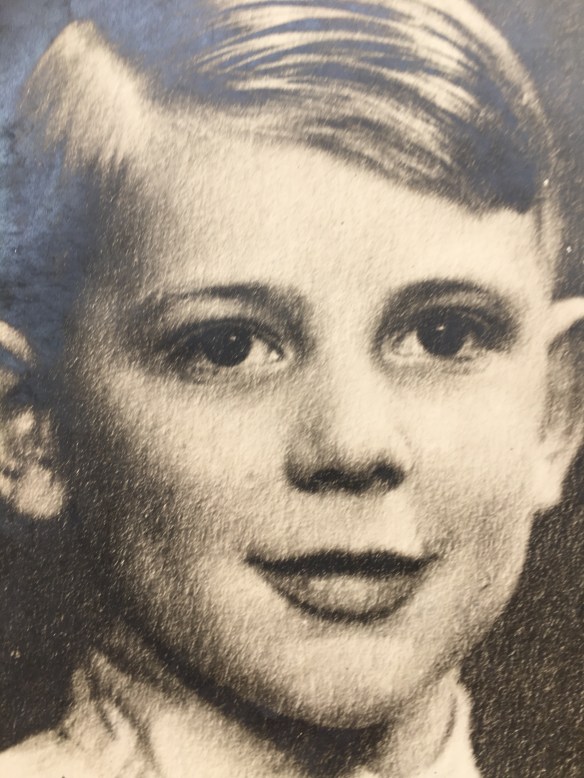


Blake’s Progress

That night, when you escape the fear of snakebite
And all the irritation with the ants, you’ll hear
my familiar voice, see the candle being lit,
smell the incense and the surprise meal fixed
by the lover inside all your other lovers.

Rumi trans. by Coleman Barks (Rumi, the Book of Love p.178)

This is the 39th day after Blake’s passing, 39 days during which he has moved through the bardo. He still has 10 to go. But now, his spirit visits us only for the briefest pinpricks of time, although he has found his way from Toronto to the Kern County mountain where his daughter lives, if only momentarily.

He is no longer bothered by the snakebite of Canada Revenue nor the ants of tax installments. He has left all that to me.

When I give way to tears, I say, “You’ve gone and left me here.” You, whom I could count on for comfort, even if you couldn’t remember Paris.

Several of us -far-seers or freaks – see him walking away as he de-materializes. I catch a glimpse of his back foot, a bit of sock above his size 10 shoe as he pushes off his toe. He is almost gone. (But does he have a cell phone in that shoe? 115journals.com/2019/02/08/place-your-phone-in-your-shoe-and-move-forward/ )

You’ve left me with all this trouble, I whine. All the traumatic past, all the chaos of the present. Doesn’t matter. Apart from generalized kindness, you were never any real help, never a fighter, vague, absentminded, not really present, tight with your money – mostly, although you did all right by Alice according to your line of credit.

You thought I was your crazy wife, but you outdid yourself choosing ever crazier partners and left me with the fallout.

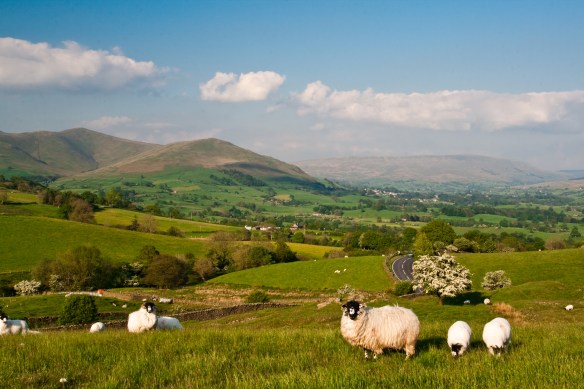
So, go on boy, find your home. Maybe it will look like Yorkshire before the war, and you can go on rambles across the moor or spend a sunny day at the shore. Even England can be sunny in heaven.

Even a lost English boy can go home.

See 115journals.com for the series on Blake’s last illness and his passing.

Blake in the Bardo

Blake as Child #2

Lincoln in the Bardo, a novel by George Saunders has popularized the bardo concept. Lincoln, having been shot to death, spends a single night -spirit-wise – in the graveyard where his son is buried, to the consternation of its ghostly residents.

Eastern religions believe that the soul sojourns in the bardo for 49 days before moving on.

Blake left his body in the middle of March. Initially, and even before his actual last breath, he traveled about a bit, principally to my sister’s home, his ex-sister-in-law’s, where he had attended family parties, including one for his 80th birthday. He always had an eye for my pretty younger sister. See https://115journals.com/2019/03/24/grieving-for-blake-a-ghostly-affair/ and https://115journals.com/2019/03/20/blake-no-more/

He has settled down since then. He doesn’t flit about alarming the living or causing them to throw pillows. He has even given up peering solemnly over my shoulder while I try to sort out his affairs. Possibly, this is because I curse him roundly for not filing a tax return since 2016 or paying Canada Revenue what he owed.

Or maybe he has slunk away because I now owe our mutual bank nearly $9000, borrowed to cover all the expenses that I am not permitted to pay for from the estate until it is settled. I am permitted to use estate money to pay for insurance, the interest on Blake’s line of credit -to the same, rule-making bank, and Ford Credit. I plan to outfox the latter by buying out the contract. More dollars I do not have, but – hey, I’m a great credit risk.

So while I trudge from office to office -bank, real estate, lawyer, post office – clasping his death certificate, his notarized will and my ID, Blake seems to be settling down to bardo instruction. His mentors appear to be small children, mostly boys. Blake was evacuated from England to Canada at the age of 5 to get him out of the way of Hitler’s bombers. His ship was in a convoy, protected by Corvettes, a cargo of British gold at his ship’s secret centre. An earlier shipload of such children had been torpedoed with great loss of young lives. My sister Georgia believes that it is these children who are teaching Blake. I opt, as well, for children who traveled with Blake and survived as he did, but have now passed on. I include my colleague Michael who hung himself one July morning when he was supposed to be doing a group presentation with me at the Ontario College of Education.

These children were orphans of the war, despite the tender care of their Canadian foster parents.

So, Blake sits with the children. In his heart, he was always five years old, always longing to be back on the water, in the water, under the water, always unable to trust his family.

He’s still got a good few days to spend in the bardo, at least until my birthday in early May.

I can’t speak of him in the past tense yet.

But alas, we do speak of him in anger.

First, there was the problem of Alice. I defied the heirs by not pitching her out of the house at once, saying it was too cruel to show up with two cops and a locksmith and tell her to go. (TO HER OWN APARTMENT WHICH BLAKE HAD PAID TO STAND EMPTY FOR 6 YEARS) Of course, I did end up on the front porch with two cops and a locksmith after a decent interval, coaxing her to at least give us access to his papers. Surely, she wanted our co-operation and, for example, his ashes. “I don’t want his ashes,” she snarled. Heads whipped back. Sympathies changed. Documents were handed through a tiny opening between the steel door and the frame. She promised to leave by Sunday midnight. On Monday, with the same patient locksmith, we entered to an impossibly dirty, foul smelling house, but one that no longer looked like a hoarder’s paradise.

Eventually, I collected Blake’s ashes – very heavy, that boy, in spite of how skeletal he had become. Eventually, I passed his earthly remains – in a roundabout way – to Alice. He loved Alice. I tried to honour that.

I thought I was too old at 83 to lift and sort and get soaked to the skin ferrying stuff to Value Village, to battle Toronto rush hour traffic to his downtown house. So, you could say that Blake has taught me that I’m stronger and smarter that I thought I was.

We work in the house without heat – to save money. I wear a winter jacket that used to be off-while. “Is that all from Blake’s house?” asks our son Daniel. “No, I reply, sarcastically. I like wearing filthy clothes.” And I stick my head back in the beautiful fridge, bought on the hottest day last summer, and absolutely never wiped out since. There are swaths of red, sugary spills and orange spills and crusty clear ones. It looks as if they opened the fridge door, stood back several paces and flung uncovered liquid concoctions in for storage.

“Why are you doing this?” Georgia yells, as she wrestles the shelves and crispers out.

“Because….” I yell back. I am kneeling on ceramic tile. My knees are crying. My back is crying. Because, I think, I cannot let the world know what my Blake had sunk to.

He was ill. He was depressed. He was afraid. He had found a perfect woman, one who couldn’t bear to be touched, one who was young and ill-informed and opinionated, -“Are the Beatles dead?” she once inquired. – one who argued and railed and shouted and shut us out of his life for years, who abused us as we tried to clean his room before his grandsons came to say farewell.

But he loved her.

Oh, Bardo Boys….


Blake No More

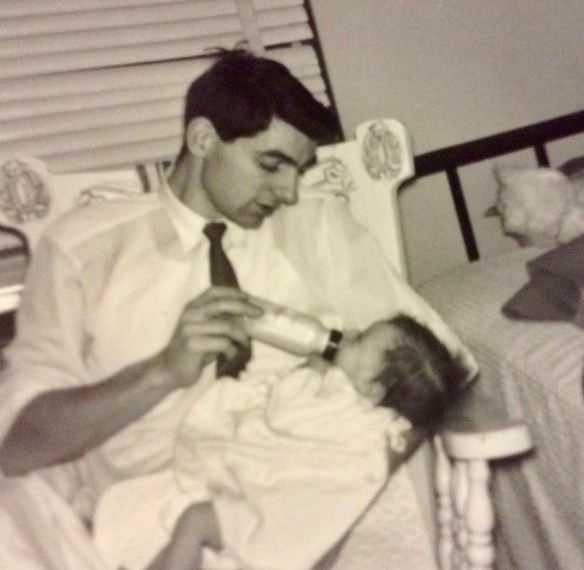
Blake 2 days before he fell off his perch

Sunset and evening star
And one clear call for me
Let there be no moaning off the bar
When I set out to sea.

Tennyson

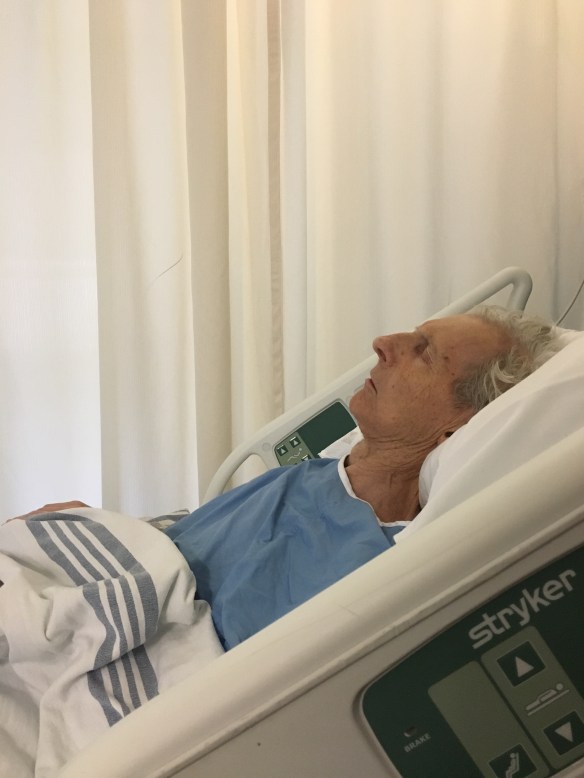
Blake’s last day was devoted to breathing. Three, sometimes four, of us sat beside his bed listening to his breath. We told Blake stories. We laughed quietly. How amazingly, infuriatingly complicated this man had been. How persistent he was even now in spite of agonizing pain that fentanyl and morphine could not entirely subdue, in spite of his failing mind and his inability to communicate.

The nurses came often to keep him comfortable. The doctor came to talk to us. The Salvation Army Chaplain stood quietly with us. We took turns going out to eat. We told more stories.

Blake’s breathing changed. There were long pauses when we thought the worst – or the best depending on your point of view. As the light began to fade over Bloor and Church, there was one last breath. We waited. We nodded to each other. We put comforting hands on his body. We wept silently. After a while one of us went for the nurse.

6:45, Monday, March 19, 2019

There was a glorious red sunset as I rode westward home.

Other posts about Blake and his relentless efforts not to fall off his perch are available at 115journals.com


Blake on his Sad Height #2

And you, my father, there on your sad height
Curse, bless me now with your fierce tears, I pray
Do not go gentle into that good night.
Rage, rage against the dying of the light.

Dylan Thomas

Here I continue the story of my ex-husband Blake’s fall off his perch. See 115journals.com for previous episodes.

Alice just called. Should Blake have blood thinner shots?

I am known as the Alice whisperer now. Like Blake, I am old enough to be her grand parent, so what the hey. The younger members of the family are more familiar with being the target of Alice’s angry shouts to get out of her house and leave Blake alone. That would actually be Blake’s house of course. But that chapter’s over and done with.

After Alice broke Blake out of Toronto Western Hospital, things went downhill on the home nursing front. Mercifully, I was left out of the loop at 1 a.m. when, once again medics trundled Blake down the narrow stairs from his third floor bedroom, and took him to Mount Sinai Hospital.

Alice just called again now. The doctor says Blake’s hemoglobin is so low, blood thinner may cause a bleed. So no.

Yet another day of sitting beside his bed and talking to the palliative care resident, the palliative care doctor, the nurse, the pharmacist, the social worker, the resident internist, not to mention the diaper changing crew and the meal shleppers. Hard enough to answer questions without Alice asking complicated meds questions of the social worker or hospice questions of the pharmacist. Always Blake was consulted on decisions. Did he want to continue treatment with Zolodex. No, he didn’t. Two interviews later, by a different expert, well, yes, why not. He’d been taking it all along after all.

Daniel and I are silently shrieking, “Stop. Stop. It’s over.” Alice is buying even the smallest unit of survival time.

The Zytiga costs $4,600 a month, but all Blake has to pay is $600 for one last bottle before the drug insurance runs out. I have no luck contradicting that decision. Alice has POA. (Yes, I had to look it up – power of attorney.) She gets to make decisions.

Alice takes it hard when the resident explains that a hospice makes the patient comfortable, but does not treat the underlying disease. By the end of the day, news arrives that Blake will be moved to the hospice unit of Sally Ann’s Toronto Grace in the morning. He is there now and that is where Alice has been calling from.

It took me the usual 2 hours to get back out of the city. I was so shattered, I took a short cut which turned into a long, long cut. At home, I showered, brushed teeth, gargled and made plans to burn my clothes. Then I fell into the unconsciousness of sleep at 6 p.m. Spending a day trying to keep Alice from messing things up and countering her rude cracks at the staff has that effect.

But Blake!

He is completely changed. He doesn’t care who helps him sort out Mr. Peepee and the handheld urinal. I say, “Good boy” and he’s satisfied. He snoozes and wakes up to ask questions. “David’s Savings Time?” “Air bubble?” Some I can’t decipher. “I need to borrow a lot of money,” he announces. “Why?” “To solve this problem.” We skip the obvious. The problem will be solved soon enough. “You just got your pension cheques,” I say. “I’ve paid your property tax,” says Alice, “and you still have $80,000 free in your line of credit.” But he has actually read the family’s mind. We thought we would need to pay for private hospice care. “I can hear phones ringing and somebody saying, ‘I’ll transfer your call’.” The nursing station is far enough away that I certainly can’t. I feel sorry for the young man in the next bed who is recovering from orthopedic surgery. How hard this must be to overhear.

Blake is listening when the best news of the day comes. His prognosis is down from 6 months to 3, and that is why he got a hospice bed.

I rub his feet. I touch his forehead. I do not allow myself to grieve. I can do that once I get out onto the Queen E. where the freeway traffic thins and all the way up Erin Mills.

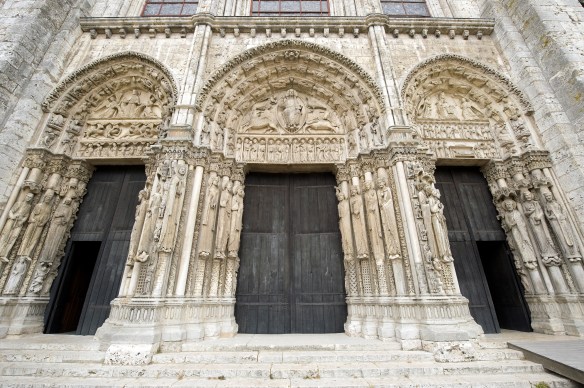
Once I got rested, I felt how sacred it was. He looks like one of those elongated saints beside a Gothic Cathedral door. He has lost all his angry edge that made the last six weeks so hard. There is nothing left of the womanizing misogynist that wrecked lives. The essential Blake is there, just shining through.


Comedy is Easy. Dying is Hard.

We were bird people as a family. Too many allergies for furry creatures. There were usually two budgies in a large cage, with names like Pip and Midjbill. And God help the unlucky child who pulled off the cover to find that one of these beauties had fallen off its perch.

As constant readers know, my ex-husband Blake is about to fall off his perch. https://115journals.com/2019/01/26/go-gentle-or-rage-two-ways-of-saying-g

https://115journals.com/2019/02/08/place-your-phone-in-your-shoe-and-move-forward/

https://115journals.com/2019/02/23/blake-there-on-his-sad-height/

He has had an ample allotment of borrowed time. He was diagnosed with stage 4 cancer nearly nine years ago, at the same time as his much younger second wife, and has outlived her by eight. Now that time is running out.

I know about living on borrowed time. I am mostly grateful to have had so much of it myself. Mostly, I am grateful, but possibly, like him, I will not consider it ample when the time comes.

Meanwhile, I have a bit part in Blake’s last great adventure. The experience veers between tragedy and farce. There are heart-rending moments, followed by down-the-rabbit-hole moments, involving, for example, shoe phones.

Stories of families gathering before or in the wake of a patriarch’s death have a common theme. Revelation. Family #1 meets family #2 and all is revealed.

We did that on such a brutal winter night that we were the only people in Milestone’s dining room. All three children were beautiful and bright, mine considerably older than the step-daughter and daughter-in-law. Once they got going, trading stories, I had to put my hand up to get a word in. Blake had changed settings, but not much else. “He did that to you too?” was a common refrain.

Since we were all now having to beg permission from his latest live-in lady to visit him we had started out a little testy. Since we had also spent a week trying to clean up the squalor of their home, we were seriously aggrieved. We didn’t want him to spend his last days like that. On the other hand, we didn’t like being screamed at to leave now, nor to contend with Blake’s desperate cries that we didn’t understand.

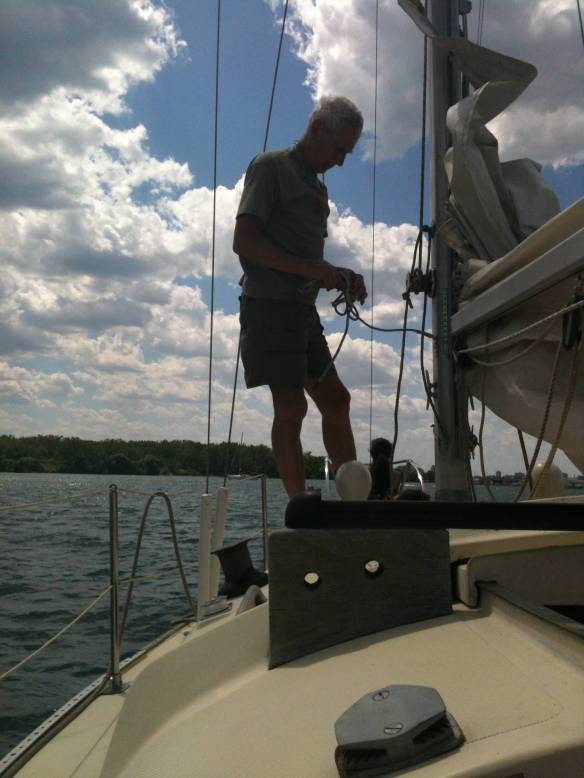
At least, I concluded from the family revelations that Blake had risked his step-daughter’s life less often than ours as he sailed Sirocco, the red hulled Northern 39. And anyway, we were willing participants in those cross-lake races through 20-ft waves. Or willing to risk our lives for Blake’s approval at any rate.

For a week, a kind of peace descended as Blake’s grandsons sat with him in his third floor sort of clean room.

Then they were gone. Our son Daniel and I found ourselves beside Blake’s hospital bed with his companion Alice, trying to understand proposed treatment and to inject logic into choices. Pretty much to no avail. Blake intended to go back up to his third floor. It would not be possible to equip it with a hospital bed because of the same narrow stairs that had prevented the paramedics from stretchering him down. He had had to walk down with 10/10 pain. But once his hydro-morphone dose was right, he would go back there and if he chose to, he would drive his car. This last decision led to hard feelings. Daniel and I did not agree that persons on opiates with a weakened back bone should drive.

As a result, Blake and Alice slipped out of the hospital last Saturday and ubered home. (Sans driver’s license, which the doctor had had withdrawn.) She watched him climb back up to his eerie. She reckoned he could have a few more weeks there in the company of his cats, warming his creamed soup up in his microwave and snacking on smoothies from his little fridge.

Until. Until the pain got up to 10 again on Sunday and what should she do. And he wouldn’t get off his wet bed so she could change the sheets. And he was cursing the doctors for not getting the pain meds right.

And I was saying, “Call 911!”

I was trying to shop for groceries. It was the second time in 10 days that I had tried to buy groceries while Alice shouted in my ear buds that she couldn’t handle things.

For the next 2 hours, I fielded phone calls -Alice, Daniel, Julia, our California daughter, Georgia, my sister – all of them several times, each call interrupting another. Texts dinging in as we talked. Daniel was about to go over to Blake’s home and call 911 himself when the palliative care nurse arrived at the house. The last I heard, Blake was allowed 2 more short term hydro-morphone when necessary. He hadn’t taken them. He was sitting up, his pain was 0, and the bed was only a little damp under the clean sheets.

The comic who says, “Dying is easy. Comedy is hard.” hasn’t died recently.


.


Blake: there on his ‘sad height’

Blake, on his perch

So the family has come and gone, daughter and grandsons from California and Texas. It went well. Blake basked in their affection.

Now he is in bed #3 on the Elder Care floor of a Toronto hospital, bombed out of his mind on hydro-morphone and offering acute observations: the doctors are being much too cautious; this is a total waste of time; they are not managing his pain – he can still feel it, not a 9 anymore, but even so a 3. In short, he has better things to do.

He sleeps and startles suddenly. “I’m awake,” he says. “What happened?” I ask. “I don’t want to lose control,” he says.

On Monday, the Palliative Care Team will come to assess his needs between 10 a.m. and noon. We will be there – Alice, his friend, Daniel, his son, and me, his ex-wife.

The traffic on this Feb. 23rd, 2019 was brutal. Two hours each way from my western suburb. I listened to David Bowie as I crawled along the Lake Shore. And cried.


Place Your Phone in Your Shoe and Move Forward

Blake still perching

So Blake had a medical procedure.

Blake, as followers know, is my ex-husband, who has clung to his perch in spite of stage 4 cancer for the past 8 years.

The procedure involved unconsciousness, an expert with a needle and the spine. Enough to make most people break a sweat. Not curative but an aid to strength and pain relief.

At the same time, his far flung family had decided to come visit while he was well enough. Our daughter had arrived the night before the procedure, and his two grandsons are expected next week.

I elected myself driver in spite of the dreadful weather and my own advanced age, on the grounds that Julia had just landed back in Toronto and needed to reacquaint herself with it before she took the wheel. We picked up Blake and his live-in friend/caretaker. The two women bundled him into the front seat beside me, and we headed across Dundas, that narrow, rail-slick street, across Yonge, University and Spadina, through Chinatown to Toronto Western Hospital. I dropped them at the front door and went in search of parking. It proved to be half a mile away down an icy side street. But this was my beloved Blake, so I limped on.

Needless to say, it took all day. Julia and I were used to surgical waits, so we had come equipped, but his friend Alice had not. While the two of us were content to slip into our books, Alice craved conversation. Not even CP 24, divided screen and all, could engross her.

So we made our way through the day. We had fled the pokey day surgery waiting room after Julia discovered the neurological waiting room with its space and comfort and natural light. Eventually, we were allowed back to sit beside our patient. Time passed. Shifts ended. The doctor was paged many times. We did our best to keep Blake’s spirits up. He confessed to feeling depressed. I suffered ever decreasing blood pressure from sitting and dehydration. At the point where I felt as if I needed a gurney myself, he was suddenly released. Julia went off to the lobby to deposit a loonie and get Blake a wheelchair.

Wait! What!

Yes, dear reader. We were not in Valencia nor even Bakersfield anymore. We were in good old Canader where you don’t get a hospital bill but you do have to pitch in.

I reversed my slippery walk, paid $25 for parking, wended my way down snow-filled one way streets and arrived back at the covered entrance. And waited. And waited. And waited. And had horns blown at me. And waited.

Then Alice called. Blake’s phone was missing. I hadn’t seen his phone. Alice hadn’t seen his phone nor had Julia. But Blake swore he had put it in his shoe, which he and Julia had locked up with the rest of his clothes. When they came back to post-op, I sat beside these shoes, 10 1/2 white trainers with velcro fasteners. I had not seen a phone in either one. So – God forgive us – we told him it must be at home. Well, they told him, because he adamantly refused to be wheeled out of the lobby and I was still deep- breathing while blocking traffic.

Both Julia and Alice called his phone repeatedly while Julia raced back up to Day Surgery and searched. Everywhere. No ringing cell phone to be found.

When Julia wrestled him back into the car, Blake was spitting mad at the three women who were calling him demented and he unafraid to express it.

But it’s an old phone that needs to be replaced and surely he – a computer expert – had backed it up. No, he hadn’t. His life was lost.

I wound my snowy way down the back streets and out into the rush hour traffic and construction of an ever darker, wetter Dundas St. Voices were raised.

At last, I found my way down to Schuter so that I could turn back north onto Blake’s one-way street. I heaved the car up over a snow berm and sat there, while Julia levered Blake out of the car. I was breathing deeply when the dashboard indicated an incoming call. From Blake’s phone. Ah, we were right! It had been at home all along.

But no, dear reader.

Upon entering the house, Alice began calling Blake’s phone. Blake was sitting on the stairs. Alice was up on the landing. Julia was just inside the door. They listened to the ringing. It seemed very close. It was Julia who worked it out.

“Your foot is ringing,” she said.

They began to pry off his right shoe. As it came loose, it glowed bluely deep within.

Go Gentle or Rage: two ways of saying good night

And you, my father, there on that sad height
Curse, bless me now with your fierce tears, I pray
Do not go gentle into that good night
Rage, rage against the dying of the light.

Dylan Thomas

Many people visit this blog –115journals.com – for one reason to get some help understanding Eleanor Catton’s enigmatic novel, The Luminairies. Ms. Catton has not expressed an opinion on my interpretation, and if she decided to do so now, I would probably not get it, just as I can no longer answer questions about the book itself. https://115journals.com/2018/09/08/what-i-once-knew-anglo-saxon-algebra-and-the-luminaries/

Others of the 300 followers catch more recent posts in their Reader or by email. Some have become familiar with my family and its ups and downs. The cast of characters include my sister Georgia here in the western suburb of Toronto and her tribe of children, my Brussels’ brother, my California daughter – she of the differential diagnosis, https://115journals.com/2018/11/08/all-is-well-differential-diagnosis/ and, of course, Blake, my ex-husband. https://115journals.com/2018/09/07/good-eggs-john-burt-and-me/

The bottom line is that Blake’s losing his grip on his perch.

Blake still perching

Returning from my recent sojourn in the Kern County Mountains of Southern California, I found him mostly confined to his third floor bedroom in downtown Toronto. It had come on him suddenly, he confided. He hadn’t had time to see to things, do that Swedish death-cleaning thing, for example.

It’s a religion to me, constantly weeding my possessions, my unworn clothes, books I no longer read, geegaws that never see the light of day, papers. I spent a morning shredding as I tried to get oriented back into my life here in Mississauga.

Blake mentioned this because he is going to leave me, his executor, to deal with a house crammed full of stuff.

I refrained from pointing out that he had had stage 4 cancer since 2010. On the other hand, he had been sailing and cruising and zip-lining through jungles and zooming down water slides until this last summer. And he has always expressed the desire to live forever. He has that optimistic turn of mind.

It appalls me. But then I have grown old in spite of that. https://115journals.com/2018/12/27/when-i-get-older-the-hundred-year-old-man-who-climbed-out/

Turns out, he’s been so busy and then so suddenly sick that he now needs a small army of relatives to clear enough space and clean enough space for him to enjoy what’s left of his time on his perch. The troops are rallying. Just don’t suggest cleaning crews. It’s more piecemeal and personal. “What is this pile?” is the current question. Could be important. Could be wash.

Then there’s the pup, a sheba inu. “Say goodbye to her,” Blake advised, implying she might be gone next time.. I thought to myself, “I said hello and  got no sign of life.” I bent down to bid the pup farewell.

Today we got the vacuum working and took up the worst of the animal hair and the autumn leaves and pet food around the bedroom. (Yes, there is a balcony.) We changed the sheets. Do many people store their sheets in tightly wound balls in linen cupboards?

Our son Daniel has pledged to install a grab rail over the tub/shower and hand rails on the steep, narrow stairs.

Our daughter and our younger grandson plan to fly out of LAX as soon as his expedited passport comes through.

Blake’s step-daughter beat us all by getting there last week and pledges to carry her weight.

Blake is very grateful to me and happy when my brother Facetimes from Belgium, but he is grumpy with his companion. He was only moderately pleased when the U.S shutdown ended today. He would be happy if only he could outlive Trump’s reign, which he sees as a threat to the world order established by the Second War, his war, the war he was refugee-ed out of at the age of 5, without parents.

In our 25 years together we were intellectual snobs. Orphaned and outsiders, we said, “Living well was the best revenge.” Then after Europe and the energy crisis, “Eating well is the best revenge.” In the 40 years since we parted, our paths diverged apparently.

I said earlier in the week, you’re going to get to go home. You haven’t been home for a long time. No, he didn’t believe that. Dead was dead. “And you a physicist!” I said. “A physicist who believes that all this loving energy can be destroyed?” “Well,” he allowed, “it is an unbelievable miracle that the human race evolved out of nothing.” “I always thought that about our children,” I said. “They came out of nothing but love.”

They are still coming, fourth generation beings who will carry us into 2100.

The One Thing You Must Never Forget to Do: contradicting despair

The Talmud tells us, You are not obligated/ to complete the work/but neither are you free/to abandon it.

The poet Rumi tells us, There is one thing in the world you must never forget to do.

Aunt Mae told me, Joycey don’t take it so to heart. She said there were millions of people of goodwill and they were all working hard. Then she cackled her uproarious laughter, she who could see the future and pronounce, “It ain’t much.” no matter the disaster. But then she said the same about death itself.

So now I near the end of my time here in the California mountains with Patient # 1 and Patient #2. https://115journals.com/2018/12/04/what-the-candle-said-caring-and-melting/ Both declare they are well and self-sufficient. One is certainly on her way there, but the other is probably on a down-bound train. No matter, I have my marching orders.

As I prepare to take up my own life again, I am doing what Mae said not to. Taking it all to heart. Taking myself too seriously. Midnight, i.e. 3 a.m., January 1, 2019, found me sleepless and full of grief and self-loathing. What did I have to show for my effort and expense? The feedback had not been encouraging. And I was as tired as an 82-year-old awake on top of a dark mountain in the bleak mid winter.

I know that the wise drag their wisdom up out of the darkness. I have watched my dear Patient #1 do this literally, coming back from unconsciousness many times, one a particularly long and perilous journey. I have done so myself. And, my elderly friend, Patient #2, is facing it daily, as age limits her senses and her scope of activity.

I have written about my grandmother in her old age wondering why she was still here. https://115journals.com/2018/12/27/when-i-get-older-the-hundred-year-old-man-who-climbed-out/ For two months, I have not had cause to question that. I was here to help. I always knew I had to stay alive in case of contingency. I’m not sure how many more contingencies I have left in me, but then I could have sworn I didn’t have the wherewithal for this one either.

My life on the 14th floor in a Toronto suburb feels distant and unreal, the desk in front the floor to ceiling window, a writer’s desk, the walls vivid with my sister’s paintings, the bedroom, curtained and warm where books wait to be read, the little kitchen where alchemy occurs. The silence.

All those shortened lines of energy, the physical bonds that are so present here will have to stretch across a continent. Technology makes it easier.

At first, I will have to catch up on all those appointments I cancelled in October and go gathering and hunting to fill the fridge. I’ll have to relearn how to sleep in a light-filled city. For a while, I will have to be Patient #3. She needs my help.