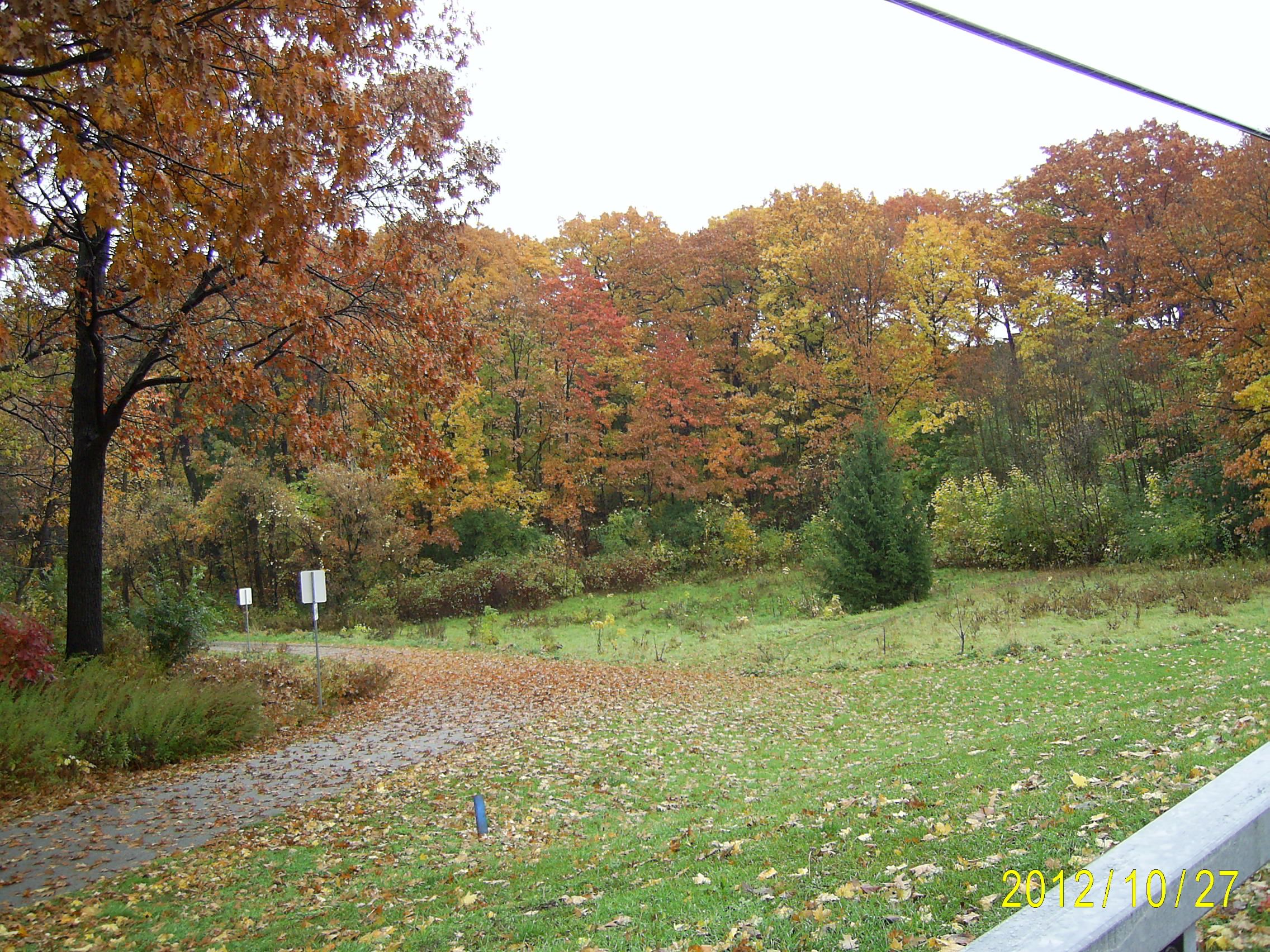
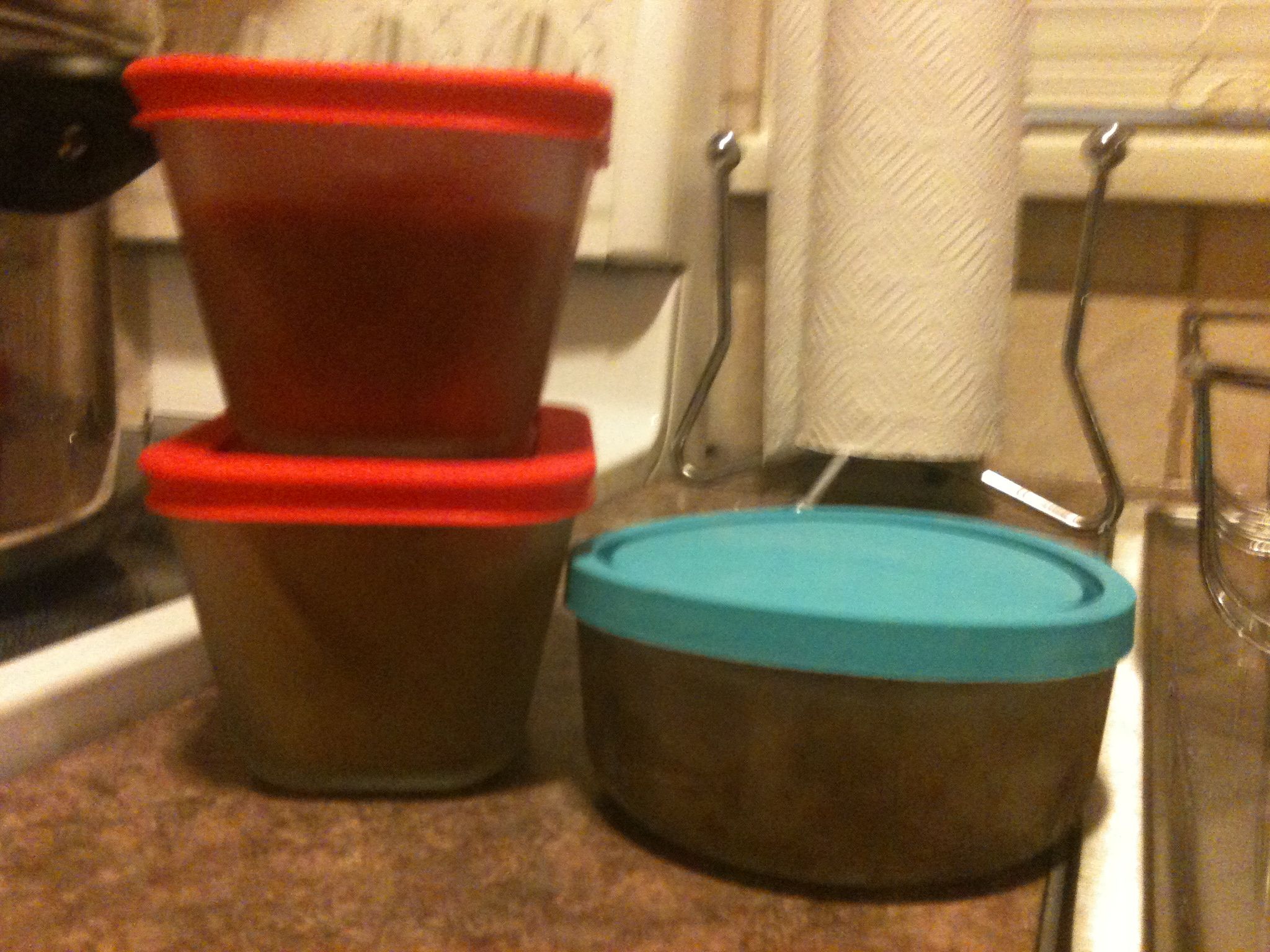
The Fall: poem for Margaret


 Spring and Fall: to a young child

MÁRGARÉT, áre you gríeving
Over Goldengrove unleaving?
Leáves, líke the things of man, you
With your fresh thoughts care for, can you?
Áh! ás the heart grows older
It will come to such sights colder
By and by, nor spare a sigh
Though worlds of wanwood leafmeal lie;
And yet you wíll weep and know why.
Now no matter, child, the name:
Sórrow’s spríngs áre the same.
Nor mouth had, no nor mind, expressed
What heart heard of, ghost guessed:
It ís the blight man was born for,
It is Margaret you mourn for.

Gerard Manley Hopkins 1918

Aunt Rosa: how to quit worrying

Reblogged from a few weeks ago to remind myself how futile worry is.

I have just finished reading Christopher Hitchens’ book, Hitch 22 where I came upon a quotation from Nabokov’s New Yorker short story entitled “Signs and Symbols”. (Nabokov’s story is available online.)

The mother in the story is looking at her photograph album and comes upon a faded picture: “Aunt Rosa, a fussy, angular, wide-eyed old lady, who had lived in a tremulous world of bad news, bankruptcies, train accidents, cancerous growths – until the Germans put her to death, together with all the people she worried about.”

I had to stop reading.

While I don’t look fussy, angular or wide-eyed, I do qualify as old and I could give Aunt Rosa a run for her money in a worrying contest. In fact, apart from train accidents, we even worry about the same things. And of course, age, my own and my friends’, and the present economic climate are providing ample opportunity.

I had to stop reading because I was gobsmacked, (Great word isn’t it: my gob or face had been smacked.) by the sheer dreadfulness of the idea, its absolute finality, but much more than that, by the relief I suddenly felt.

I could save myself all that anxiety and trouble. Life is carrying me and my loved ones forward, just as it bore Aunt Rosa and hers along and neither one of us can change that by fussing.

I wouldn’t call it fate or destiny and certainly not the will of God. For one thing that would be insulting to any self-respecting deity and for another, because I don’t believe in such a thing, except as the direction our own spirit wants to move us in.

Life as it carries us along feels more like the continuous cycle of change that the I Ching is predicated on. What is empty becomes full and what is full will not always be so.

True, the worst may happen, whatever that may be. On the other hand, it doesn’t really matter. Hitchens says in the last chapter of Hitch 22, ” The clear awareness of having been born into a losing struggle need not lead one to despair”. What matters is facing life’s challenges without sentimentality.

What matters is our true nature.

The Lady Vanishes: that was no lady, that was my M.D.

Initially Dr. Koldpac didn’t work for the Pearshaped Medical Group. (How can you tell I’ve changed the names to protect the guilty?) She was in private practice down near the lake, a hard to access place for me. I had to go west to get east, etc. I didn’t care. Finding her, someone who would actually take a new patient, meant that I could quit driving from my westend home to the far east suburb to which my previous doctor had moved. We’ll call him Dr. Vim.

Dr. Vim had a few drawbacks apart from the hour-long trip across the city. He had settled in a high density area to minister to the new immigrants there, intending to staff the office with a number of other physicians, but it hadn’t worked well. While there should have been 5 doctors, several of them were always away for one reason or another and he was sometimes left holding the fort against the onslaught of patients by himself. I always made an appointment and never waited less than 90 minutes, once a full 2 hours. Walk-ins were there for the interim- breaking down at the 4 hour mark, going out to buy sub sandwiches next door, crying into their cellphones. We amused ourselves watching the CP24 news channel with a split screen, on mute of course. We read the sign that told us that absolutely no narcotics would be prescribed on the first visit and that if we pushed around the reception counter the police would be called.

Still we were a docile lot and learned about each other’s culture. Women in full chador, only their eyes peeking through, with all their children -I hope it was all their children- in tow were of course shepherded by a man, sometimes clearly an elder son. Called by a female doctor, all of them would go into the examination room together. How easy pelvic exams must have been! I spent hours letting go of my judgement, but apparently, I have some way to go.

I had clung to Dr. Vim because initially I had gone to his walk-in clinic near my home to see about my eye which was totally bloodshot. Not a problem, he assured me, but had I considered a colonoscopy. Excuse me? Well,  my age you see and my digestive problems. He had wormed this out of me. Don’t you know he was right on! I underwent the procedure. I discovered I had an unwelcome visitor in the ascending bowel, round about the appendix. I had surgery, etc. I was so grateful I presented Dr. Vim with a Swiss Army knife and swore lasting fealty to him.

My loyalty was sorely tested after he moved across town, but I persevered. Now I don’t run snivelling to a doctor with the sniffles or stomach aches or muscle spasms. I was one of the first in my town to get H1N1 flu having picked it up in Vegas and I went to bed for the better part of 3 weeks and drank fluids. I was way too sick to drive across town and there was nothing Dr. Vim could do about it anyway. Ordinarily, I went for yearly checkups and in between to get the only prescription drug that I took. Hint: I always took one of those little pills before I went to Dr. Vim’s office.

Dr. Vim’s office also had every conceivable test available and he used these facilities liberally. I had, for example, bone scans done there and guess what? It was determined that I had osteoporosis. Having done some research, I realized that WHO (the World Health Organization) would not have classified my results that way. At most WHO would say that I had osteopenia. I have never, despite opportunity, broken a bone. Dr. Vim recommended medication. I said no thanks. I had read alarming stories that indicated taking it for many years actually weakened bones and produced spontaneous fractures of large bones, for example, when the subway train stopped too quickly. I do tai chi every day I told him. Not a weight bearing exercise, he countered. “That”, I replied, “is not the current thinking.” He should just try lifting my considerable weight off the floor in a one-legged kick. I began to question his expertise: he had trained in what we might call, an off-shore medical school.

So after much searching, I found Dr. Koldpak. She was a snappy dresser. Her style was European and her skirts were short. But she wasn’t happy. There was something about Dr. Zitt, whose office she shared, that she found insupportable. “I am going to leave,” she told me, sotto voce. “Get a copy of your file when you go out and give it to me. I’ll take you with me. You’re going to love where I’m going. Everything is electronic. You can make appointments online…” Thus I was introduced Pearshaped Medical Group.

At first it was fine. It was a little irritating not to be able to actually phone her office. All calls had to be made to a central number. And I found it hard to remember always to go online and check wait times, because even if I had an appointment, I had to wait for the walk-in before me to be seen. Once in a while when I myself walked in without going online, I would discover the office was closed. I would find myself standing and cursing at the locked metal gate. No vitamin B12 shot today!

But guess what? In between her visits to Paris et al, Dr. Koldpak hinted that she wasn’t really happy at Pearshaped. She had to see the walk-ins in the order they came in and that kept the appointments waiting and they, in turn, got angry. Still there were never more than 4 young mothers with kids waiting. It’s true than instead of CP24, we got to watch and listen to Pearshaped ads for hepatitis shots and pap smears. But I was sure, absolutely sure, that my doctor who had brought me with her from Dr. Zitt’s, would never abandon me.

Reader, she did.

I walked in to get my monthly shot and that old gate was locked right up. I turned to the pharmacist. “Gone,” he said. Gone where? Didn’t know. Gone forever? He shrugged his shoulders. A few weeks later even the sign was gone and the pharmacist, who must be seeing a downturn in business, gave me his card, told me to call. Maybe she would come back privately.

Usually doctors who abandon you have to give you other doctors’ names who can take you on, but in this case Pearshaped had me covered: there were other clinics, although getting to most of them involved crossing time zones, but there was one office farther west that wasn’t too far. I would try that. I just needed the damn shot after all.

Ah, here we are again. Another third world waiting room – a grandmother with a teenaged daughter who has the flu and another daughter who whales in with a toddler who may have a cough. They begin urgent negotiations to jump the queue. No seats left. Camp on the floor and wipe the child’s hands every two seconds because he has just touched said floor. Mother has to go buy a new package of wipes. In a loud general observation, grandma accuses us all of giving her”grandbaby” germs, although none of us is coughing or blowing or touching the floor. But miracle of miracles, I get Dr. Caragansus, who is beyond belief -well-informed and smart, explaining why, e.g., I personally, can’t take quinine to stop muscle spasms.

Oh please, be my doctor!

No such luck. Dr Caragansus is a sort of roving gunslinger. He doesn’t take patients. He just rides into town, sees walk-ins and moseys on back out again.

I decide to call Pearshaped to account. I email my complaint. In reply, I get Dr. Koldpak’s new number. For one whole night and part of a day, I feel buoyant, even happy, but I am due for a come-down.

I phone the office, full of naive hope. I ask for an appointment. “Are you a patient of Dr. Koldpak.” Certainly, just at her previous office. Can’t be done. The receptionist starts talking a mile a minute. She is hard to follow, accent-wise, but it seems to me, she is saying that I cannot qualify because I am a Pearshaped patient. !!!!! I ask her please to listen to me. I don’t want to be part of that organization anymore. I try to be clear and concise. I claim Dr. Koldpak as my physician. Now I listen very carefully. Where do I live? It turns out that I am way outside their catchment area. Catchment area? Never heard of such a thing. Been thus for 20 years. Where have you been? Well, clearly, out of the catchment.  I cannot trust myself to speak. Very softly, I press “end” and sit staring at the phone. As I sit there, it becomes clear that I wouldn’t take that faithless hussy back if she begged me.

Good news, my sister tells me later. A new doctor is taking patients up in the Junction. But he’s a man. Oh, that’s the least of my worries.

Bitter and Slow: part 2 -slow food

Having extolled the virtues of bitter greens, I am now moving on to the benefits of slow food.

LIke most people, I don’t look forward to hours at the kitchen counter after a busy day, so I don’t mean food that requires long and complicated preparation, but rather food that takes care of itself simmering away on a slow burner for hours, filling the place with mouth-watering fragrance. Specifically, I am talking about stock or broth and tomato sauce.

Two things have driven me to embrace slow food, diminishing financial resources and health concerns. The kind of restaurants I can afford, now, don’t serve the quality of food that I want to eat. Excellent organic fresh produce and meat prepared in an appetizing way comes with a high price sticker if I eat out,  but I got sick of the plain food I used to make before I took up slow-cooking stock. In addition, I have health challenges including a weak digestion and a tendency to osteoporosis.

Earlier, in “Helpless Human versus Pressure Cooker” posted on May 22, 2012, 115journals.com I alluded to the fact that I cook brown rice in an Ohsawa pot set into a pressure cooker. I soak the rice overnight and cook it for 50 minutes. Doing so, makes it easier for my system to digest it. I also soak the rice farina that I cook for breakfast and I have it on good authority that soaking steel-cut oats for 24 hours prior to cooking them for breakfast renders them as delicious as croissants. With or without butter and jam, I’m not sure. I have cooked my rice that way for years and I can make it more or less sticky by adjusting the amount of water, although I tend to use the usual twice as much water as rice, a stickier option.

It was only when I disagreed with my doctor about the significance of bone density scores that I turned to bone soup. (I have not broken a bone in 3/4 of a century and surely this says something about the strength of my bones; moreover, the medication would be entirely indigestible for my tum-tum.) Bone soup is an interesting name. I lived once in a sort of commune that served bone soup every Friday night, calling it a light supper. It was light all right. You could see through it. By the time, you had extracted the chicken bones, you were left with little more that broth with a few pieces of carrot and rice noodles. I soon learned to jump in the car and head out for the nearest burger joint that night.

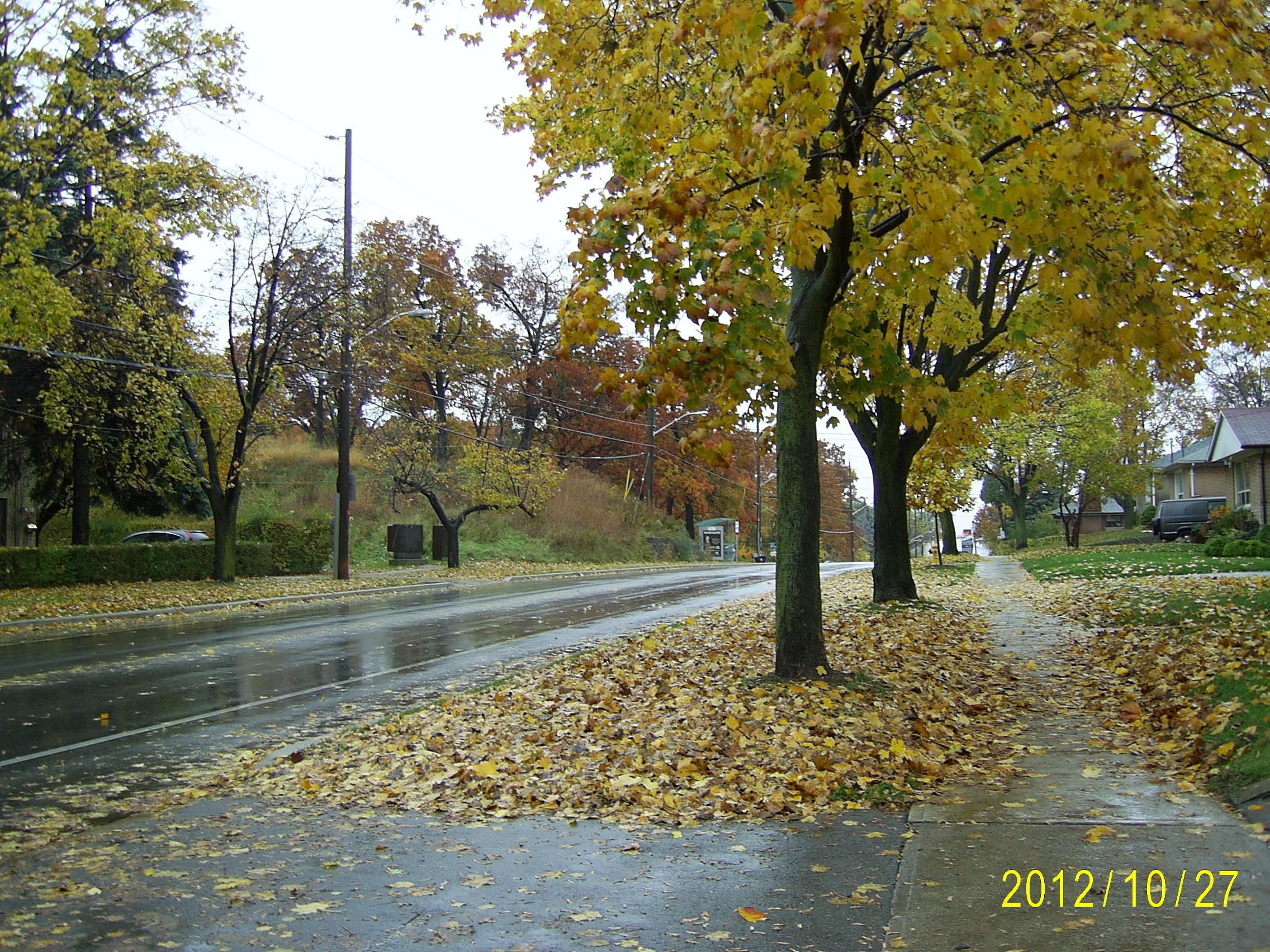
That’s not what I mean. I’m talking about beef or chicken stock made by roasting bones with as much marrow as possible and then stewing them gently with vegetables for at least 6 hours. It takes less than half an hour to prepare the ingredients, 40 minutes to roast them, a few minutes to transfer them to a stock pot. Once the burner under the stock pot is turned down to its lowest setting, it doesn’t have to be tended and the only other time needed is the washing up and transfer to containers for freezing. I use a pyrex type of small container and stack them in my small freezer. If I plan ahead, I take one out and thaw it in the refrigerator for 24 hours before I make stew or soup or gravy. If I forget, I put the frozen container in a pan of cold water so that I can pry it out in a hour or so and finish thawing in a pan on the stove. I can put together chicken soup from left-over chicken, thinly sliced carrots, green beans or chard and pre-cooked rice in about 15 minutes.

I found inspiration online and in The Joy of Cooking, but I adjusted the recipes I found to suit me. I don’t use onion, for example, just carrots and celery. I do use good quality bones – beef, marrow bones, for example, with ox tails sometimes and always some chicken bones even in the beef stock or chicken backs with a few thighs, perhaps for substance. I roast all the ingredients at 400 degrees F. I roast the vegetables for the last half hour. This gives my smoke alarm a workout unless I remember to relocate it temporarily. I use much longer cooking times – 6 hrs.- than The Joy of Cooking suggests.

I got hooked on the idea of roasting bones, years ago, when my first (although not then) son-in-law arrived from NYC and sought to woo me to his cause by roasting bones and making a reduction. He made a delicious meal and won me over. Thanks P.

I also make a vegetarian stock for when I cook for friends who don’t eat meat. Then I do use onion and a whole bulb of garlic. I found a recipe at allrecipes.com and have cooked it twice, both times enjoying how great it smelled and how great it tasted in a vegetarian Irish stew made of course with stout. (Sam Smith’s is vegetarian.) I found such a recipe by Melissa Breyer online www.care2.com. I t uses root vegetables including carrots, parsley, parsnips and turnips as well of course as potatoes and pearl barley, all in the previously slow-cooked vegetable stock. The stew itself takes only an hour or so, but be sure to get the barley well-cooked, not crunchy. Recently a huge pot of this stew went over very well at a potluck lunch. It was a stick-to-your-vegan-ribs sort of meal.

The other thing I love to slow cook is tomato sauce, not exactly a novel idea, I know. But I couldn’t eat tomatoes at all until I was told by that same good authority who soaks oats for a day that if I cooked them many hours I maybe could. I opted for 6, just for consistency. I simmer 4  or more cut up pounds that long until they are more or less paste and puree the result. Once again I freeze the paste and I can make a tomato sauce from it in a few minutes. I can’t use much and I still find it challenging to digest but it adds flavour and interest to my diet a few times a month.

So there you have my ideas for slow food, which miraculously turns into fast food, which tastes as good as gourmet restaurant food and which keeps me healthy.

Bitter and Slow: part 1 bitter greens

No not my personality!

Recently, my morning paper, read “Adult taste buds in a bitter retreat” subtitled “Sweet tooth overindulgence exacerbating picky palates”. (National Post, Sat. Oct. 13, 2012. Unfortunately this particular article is not available online.) In it Elizabeth Hames examines the apparent trend of adults reverting to  more childish tastes for sweets, as evidenced by the milky sweet concoctions available at Starbucks such as Frappuccino. Even beer is getting sweeter. And in Britain, it is now possible to buy Supersweet Broccoli, a Scottish- grown variant, touted by one chain store as benefitting pregnant women. The consumption of bitter leafy greens has declined there by 11%. In the U.S. grapefruit growers are going out of business.

Children, as you may remember from your own experience, have to develop a taste for bitter. It used to happen in the natural order of things that our tastes buds grew more refined, so that as adults we might have come to like the taste of olives, black coffee, hops in beer and martiniis as well as broccoli and its ilk. Apparently, this trend can be traced to the declining cost of sugar, due in part to the U.S. subsidies for corn growers and cheap availability of high fructose corn syrup.

“By abandoning refined tastes we eaters may actually be exacerbating the pickiness of our palates. Eating fewer flavourful foods, including certain types of produce, is believed to be creating a widespread deficiency in zinc, a flavour-enhancing mineral… That means it takes us longer to satisfy our flavour threshold which is when our brains determine we’ve had enough to eat.”

I was converted to bitter, leafy greens during a spell of bad health 25 years ago. One of the stories that convinced me was this one: newly trained doctors looking for a place to set up practice in Germany in the 19th century would go from town to town and they never chose to settle in a town where people were growing kale in their gardens. I believe that the health I enjoy today is in part of the result of eating kale and other bitter leafy greens almost every day since I heard that.

Not all bitter greens need to be cooked and even some that need to be cooked can be eaten in salads when young. Recipes from older cookbooks may advise long periods of boiling, I suppose, to make them more palatable to unrefined palates, but I just steam mine for a few minutes, more or less, more for more mature leaves, especially if I am also cooking the ribs. The longest I steam them would be 5 min., usually less. I serve them with a little olive oil and salt, or sometimes balsamic vinegar, oil and salt. Sauteeing in oil at the end or throughout also works. Some people roast kale to make chips.

Here is a partial list of bitter, leafy greens: argula, Belgian endive, beet greens, chard,chicory, cress, collard greens, endive, dandelion, kale, black kale, dinosaur kale, mustard greens, radicchio, rapini, spinach, watercress, rocket.

Of course, we are all already eating some of them and we know that oil and salt or salt substitute make them tasty and vinegar doesn’t hurt. In general, the hardier the leaf the more nutrients it provides. Many of us, who are  lactose intolerant, rely on them for calcium as do vegans. http://www.vrg.org/nutrition/calcium.htm

I add kale to stews for the last few minutes, adding new leaves when I heat up the leftovers, a particularly good way to eat it as the days grow colder. And of course I can add it or chard to my green soup. (See Green Soup posted July 28.)

Next I will consider the slow cooking I like to do especially at this time of the year. It fills the house with delicious smells that banish negativity and suit weak digestions.

Early October: reflections from Journal 119

The first weekend in October has always been an important one for me. As a high school English teacher, I found that by that date I had finally forged a relationship with my classes. I knew their names and I was interested in them as individuals and they had, usually, stopped testing me, having presumably given me a passing grade. So by then the hard slog of the new school year was over.

And there was another reward – it was a long weekend, the first Monday in October being Thanksgiving Day here, where harvest time comes earlier than it does south of the border.

Some teachers in the States have a long weekend as well in honour of Columbus Day. Not all, as I found it one year when I took my 7 year-old grandson for a hike in Topanga Canyon that day. I discovered to my mortification (I was a teacher after all) that his school, a private school in Los Angeles, didn’t have that holiday. It was the sort of school that let its students plan the lessons, so, in fact, our day trip was not much out of line.

This year, that child is in his first year residency at a New England hospital. Just saying.

On Saturday I drove to Stratford to see a production of Shakespeare’s Much Ado About Nothing, a trip of about an hour and a half with a bonus that hadn’t occurred to me. The trees were aflame with colour. In the middle distance woodlots glowed with orange and red and golden phosphorescence. (We are lucky here to have so many hard maples that produce such bright colours. The photographer who originally posted “A Tribute to Autumn”, which I reblogged lives farther north and west, I think, because the trees there produce mostly yellows.) The corn nearer the highway still stood dusky gold, but as we drove farther northwest, the fields became brown and beige stubble.

Surprising how cold it was when we got out of the car to find lunch. I had worn a sheepskin-lined rain coat and a wool tam, scarf and gloves, but the cold wind went right through me as if I were wearing diaphanous cotton. No doubt about it, summer was long gone.

I note by the way that, although it is only 70 degrees F. in Los Angeles today, it will be back up to 92 next week.

The Festival Theatre in Stratford Ontario has a thrust stage, rather than a proscenium arch. I first saw it when I was a teenager in the second year of its operation, although at the time, it was housed in a huge circular tent. The permanent structure was designed to mimic the tent. By the time, we had hiked through the park from our car, we were chilled to the bone and it seemed as if a glass of pinot noir was in order to get the blood moving again.

Once seated, I realized that my friend who had made the reservation online had upgraded us, not to the very best seats, but almost, thinking I wouldn’t notice her largess. It is hard in such a theatre to get a bad seat, but the sections at the sides of the horseshoe-shaped auditorium are more challenging. And the row in front of us was entirely empty, sold no doubt to some sponsoring company but not distributed so no heads obscured our view. The set had a staircase that swept up around a palm tree!!!! This production had been relocated to Brazil in the early 1900s.

I had looked up a summary of the plot of Much Ado About Nothing, just to sort it out from Shakespeare’s other comedies, but I was not prepared for how familiar I found it. I knew the next line before the actor spoke it. It was unsettling! Apparently, in my 35 year career, I had taught it many times and forgotten I had done so. Considering that most years I taught 5 plays by Shakespeare, I had much opportunity.

Basically, the play is about the duelling couple who apparently scorn each other and are always putting each other down, but eventually ….. Shakespeare used the same sort of plot device in Taming of the Shrew. He liked to set a headstrong, witty woman, in this case Beatrice, against the equally willful, caustic man, Benedict. There’s plenty of scope for pratfalls as they eavesdrop on their friends who are setting them up to fall in love.

After the show, we stopped at Balzacs for coffee and sugar enough to get us home through a dark and rainy drive.

Monday, turkey day, was a roast beef day in my house, roast beef and Yorkshire pudding, which I came to love when I was married to a Yorkshire lad. Fortune had carried him back to my table after many years’ absence and he assured me that I had channelled his mother’s pudding. (See recipe below.) My mother-in-law used beef fat but beef doesn’t have much fat these days so I opt for butter. And it turned out well even though we never succeeded in raising large bubbles. Like my mother-in-law, I chose a loaf tin rather than the 9 by 6.You start the oven at 400 and turn it down to 350 after 20 minutes. If you are like me, you forget when you turned it down and have to wing it after that. Maybe that’s when I got help from beyond. Proof I had channelled her: it came out of the oven puffed high and lightly browned. You have to serve it asap, so the mashed root veg (See recipe below.) had to be ready, the beef sliced and the gravy made. (Why is there never enough gravy?) The roasted beet and argula salad had to wait its turn. The meal was so delicious that we four fell to expressions ofthankfulness spontaneously. And of course there was pumpkin pie.

There were absent friends, some more permanently absent than others. We were a family reconstituted with good fellowship and food.

Early October has a way of reconciling me to the inevitable, which comes earlier here than it does down there in my second home.

 Yorkshire Pudding according to The Joy of Cooking 75th anniversary ed.

Have all ingredients at room temperature, about 70 degrees F. Preheat oven to 400 F. Sift into a bowl:

3/4 cup all-purpose flour minus 2 tablespoons
1/2 tsp of salt
Make a well in the centre and pour in
1/2 cup milk
Stir in the milk. Beat in:
2 large eggs well beaten
Add:
1/2 cup water
Beat the batter until large bubbles rise to the surface. …Pour 1/4 in. beef drippings or melted butter into a 9 by 6 baking dish or 6 regular muffin cups. Heat pan or dish until hot. POur in batter and bake 20 min. Reduce heat to 350 and bake 10-15 min. longer until puffed and golden brown.

Mashed Root Vegetables a la Desmond, my hairdresser

Peel or scrub equal amounts of carrots, parsnips and turnip, dice, add water to cover, salt, bring to boil and reduce heat. Cook until fork tender, but not soft. Drain and mash. Add butter and pepper.
Desmond says, “Don’t even think of adding sugar. These vegetables are sweet enough.”

Septuagenarians at Sea: #2

Blake sent this text after his adventure:

Yesterday I went sailing with M. and her friend A. It was another exciting outward-bound type adventure that seems to  be becoming a Durant norm, Remind me to put that phrase into the brochure… I slipped the mooring with the main sail up and was getting too close to the neighbouring boat. I went to the bow and successfully fended off without touching. Unfortunately, I lost my footing and found myself dangling from the pulpit. We were a boat moving in the basin with nobody in control.

M. had sailed a little and A. none. Legs dangling in the water, I quickly moved hand over hand  back to the cockpit where M. and A. were chatting away completely unaware I had gone overboard. When they got over their surprise and shock at hearing my voice from over the side of the boat, I proceeded to steer the boat by remote control through M., around the anchored boats  and turned us towards the gap to Lake Ontario. I had a bit of time before we reached the lake, so I decided to get back aboard.

Again by remote control, this time through A., we got the ladder out of the locker and installed. Easier to say than do. I clambered aboard, but was not finished. We were very close to the cement side of the gap and I had to fend off again. This time I was careful not to lose my footing. We then hoisted the jib and had a wonderful sail around the Toronto islands, heaving-to on the way to have lunch. Today I am having a rest.

Mortality and Christopher Hitchens

In his recently released book Mortality, Christopher Hitchens tells the story of how British journalist John Diamond chronicled his battle with cancer in a weekly column. Hitchens confesses like many other readers, he quietly urged him on from week to week. He says,

But after a year and more…well, a certain narrative expectation inevitably built up. Hey, 
miracle cure! Hey, I was just having you on! No neither of those would work as endings.
Diamond had to die; and he duly, correctly (in narrative terms) did. Though – how can I put this?- a stern literary critic might complain that his story lacked compactness toward the end.
Hitchens’ own story was more elegantly structured. He told it in 7 essays published in Vanity Fair and now collected posthumously in this small book.

Mortality describes his initial collapse in a New York City hotel room during a tour in support of his latest book, Hitch 22, in early June 2010, saying of the emergency responders:

I had time to wonder why they needed so many boots and helmets and so much backup equipment, but now I view the scene in retrospect I see it as a very gentle but firm deportation, taking me from the country of the well across the stark frontier that marks off the land of malady.

He dislikes the use of the metaphor of battle, fight or struggle to describe what ensued after he was diagnosed with metastatic oesophageal cancer. He says

Myself I love the imagery of struggle. I sometimes wish I were suffering in a good cause, or risking my life for the good of others, instead of being a gravely endangered patient.

But sitting “while a venom sack gradually empties itself into your system, the image of the ardent soldier or revolutionary is the very last one that will occur to you.” And yet his dispatches from the Land of Malady are full of his customary wit and irony. His wife, Carol Blue, reports in the book’s Afterward that he wrote the jottings now collected as chapter 8 in bursts of energy and enthusiasm, his computer perched on the food tray of his hospital bed. He continued to hold court whenever he was hospitalized, “making a point or hitting a punchline for his “guests”, whom he treated like “participants in his Socratic discourses”. He had always been a great raconteur, as well as a bon vivant. He had an encyclopedic knowledge and a rapier-like intelligence. And he could hold his liquor. After an 8 hour dinner, he would rise to toast the assembled motley crowd with “a stirring, spellbinding, hysterically funny twenty minutes of poetry, limerick reciting, a call to arms for a cause and jokes. ‘How good it is to be us’, he would say in his perfect voice.”

I started reading him in Vanity Fair, after many years of avoiding his work and like many others, I was immediately won over. I avoided him because he had betrayed me. For many years he had espoused causes dear to my heart, workers’ rights among them, what might be called leftwing views, but then after 9/11, he made a sharp turn right and supported the war in Iraq, believing the now disproved weapons-of-mass-destruction premise. Not to mention, he dissed Mother Teresa and rounded on Salman Rushdie, when Rushdie, under fatwa pressure, published “Why I have Embraced Islam”. I read the rebuttals that his friend Martin Amis wrote and imagined, in my innocence, that Amis was actually alienated from Hitchens. I was wrong. Amis remained his great friend, Rushdie was at Hitchens’ memorial and Mother Teresa – well that goes without saying.

Hitchens was a famous atheist, author of god is Not Great, and on his last Thanksgiving Day in November 2011, he was in my town, Toronto, debating his point of view with Tony Blair, the former British prime minister and recent convert to the Catholic Church. Hitchens arranged Thanksgiving dinner for his family and friends here and by all accounts carried the day in the debate.

His reaction to the Christopher Hitchens Day of prayer on September 20, 2011 involved wondering exactly what was being prayed for – his survival, his redemption? He examined the nature of prayer -the importuning of an omnipotent being to suspend His laws of nature for personal benefit- and found the practice specious. He noted that certain religious zealots had pronounced that his illness was God’s punishment and in short order analyzed the ill-logic and cruelty of that by citing blameless children suffering from cancer. He said there would be no deathbed conversion and told of Voltaire being badgered as he was dying to renounce the devil, whereupon the great thinker replied, “that this was no time to be making enemies”.

The best gift that Hitchens gave me, besides many good laughs, was the realization that I can listen to a point of view I don’t agree with, indeed that I might find contrary and wrongheaded although, of course, he said much that I found true.

He concluded an essay on The Great Gatsby by saying, “It remains ‘the great’ because it confronts the defeat of youth and beauty and idealism and finds the defeat unbearable and then turns to face the defeat unflinchingly”.  He died on December 15, 2011 at the age of 62. HIs unflinching voice goes on.