How the Light Gets In: Louise Penny’s latest

At the beginning of her new novel, Louise Penny thanks Leonard Cohen for generously allowing her to use a line from his song “Anthem”. Cohen tells us in that song that “There is a crack in everything/ That’s how the light gets in.” I have read all nine of Penny’s novels, so, presumably, I must have enjoyed them. And those lines by Cohen struck me from the first time I heard them as a neat summation of how good comes out of bad. Why, then, do I dislike their use as the title of her ninth and latest Armand Gomache mystery, How the Light Gets In?

Reviews, including one in the New York Times ranged from very positive to rhapsodic. Fans told of staying up half the night, of being totally emotionally engaged, of how they had waited breathlessly since the dire conclusion of book 8, The Beautiful Mystery for the resolution of this book. My goodness, I thought, and here I’ve been sleeping soundly oblivious to Gomache’s terrible suffering. I was so cold-hearted that I plodded through the book in my usual three days, closing it up at my regular bedtime.

How the Light Gets In, unlike The Beautiful Mystery, is set once again in the village of Three Pines, a place that cannot be found on any map, hidden and sheltered by wooded mountains where cell phone towers and internet connections cannot penetrate. And, despite its high body count over the years, an idyllic place with its village green, its outdoor rink, its used bookstore, its gourmet bistro with two fireplaces and its eccentric but helpful villagers. When he isn’t solving the latest murder there, Gomache retreats to it for solace, something he greatly needs now that his department in Quebec’s Sureté has been dismantled, his reputation is in decline and his good friend Jean-Guy Beauvoir is a drug addict.

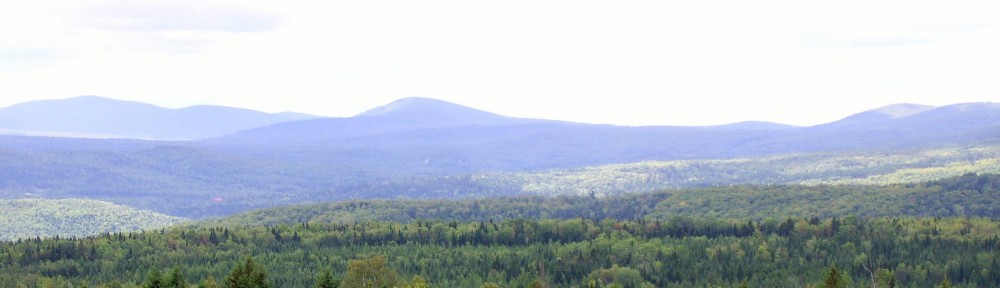
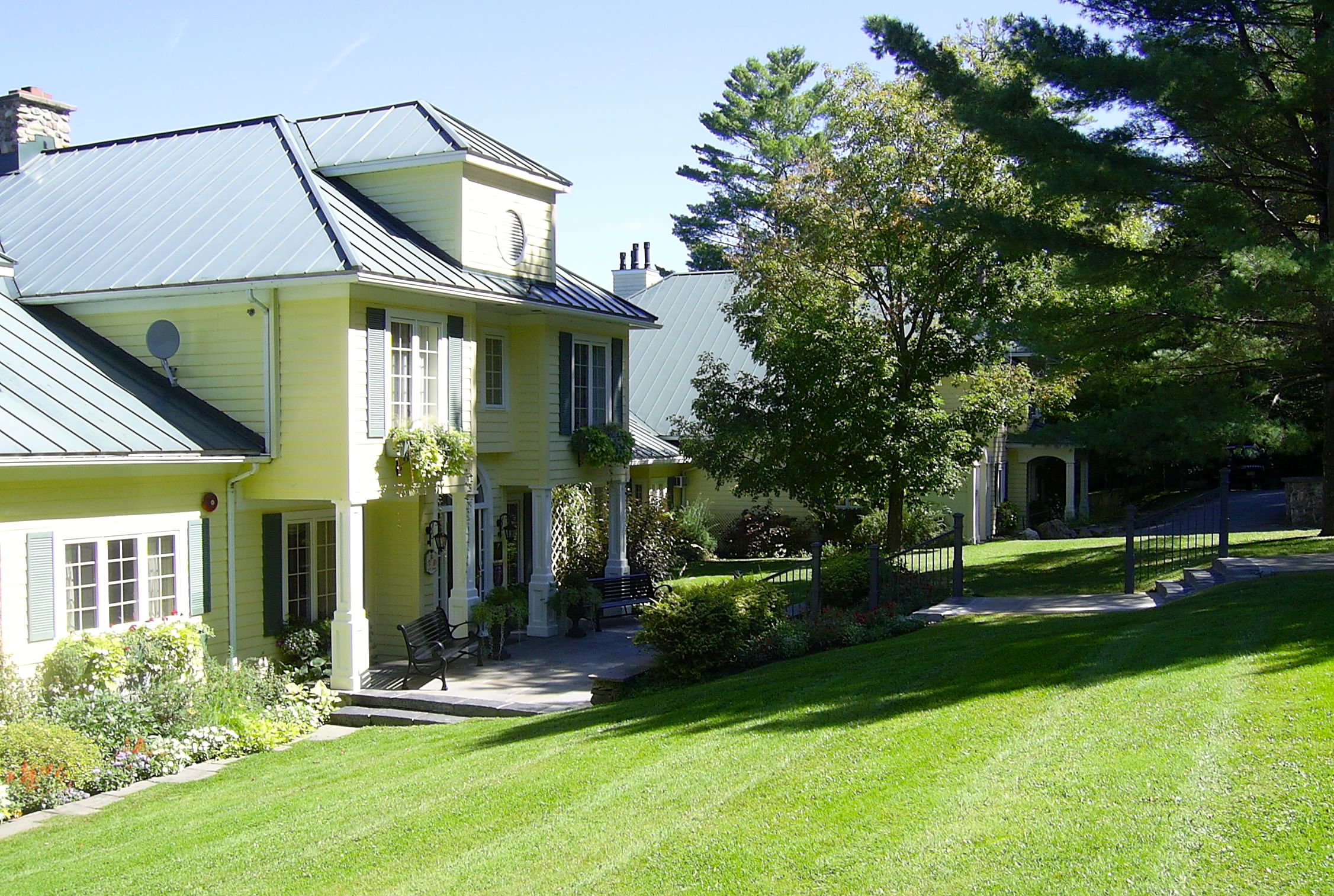
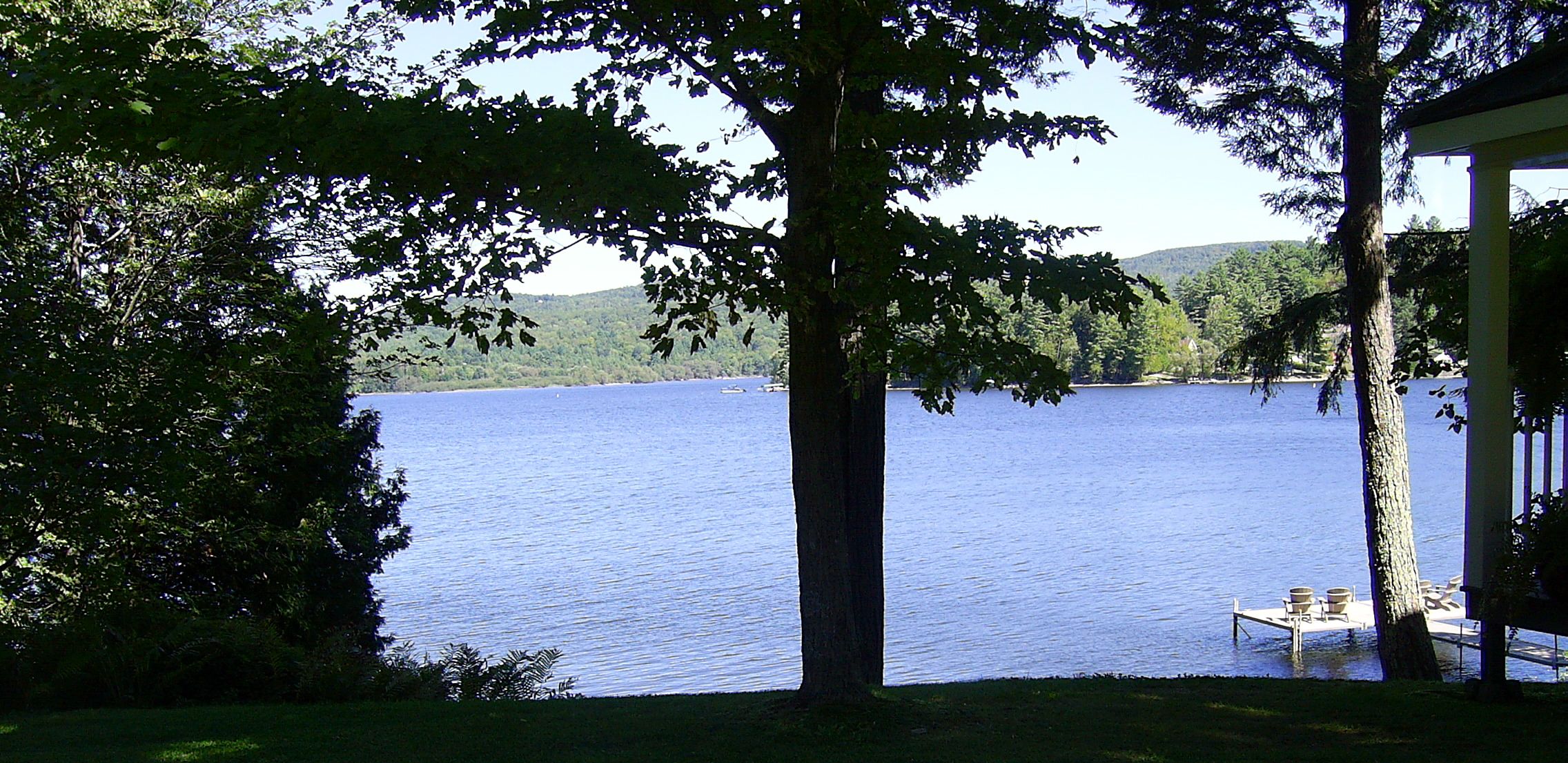
Three Pines is south-east of Montreal in Quebec’s Eastern Townships.  I am familiar with this area. More or less. I recently made a sentimental journey back there to my birthplace. (See https://115journals.com/2013/09/11/septuagenarians-on-the-road-3/) While I was there, I stayed at Auberge Ayres Cliff (https://115journals.com/2013/09/14/septuagenarians-on-the-road-5/ ),an excellent hotel, every bit as cozy as the one in Three Pines, although much more on the beaten path.

When it comes to the willing suspension of disbelief, I’m a hard case. I spent my first five years freezing and starving in the hills of the Eastern Townships, albeit in a place that couldn’t be found except by those who had been there. True we were on a hill farm which produced a bumper crop of stones every year. Over the hill and down the valley, there was rich land with fat herds of dairy cows. Presumably, the hilltop soil had been scraped off our high land and deposited there. One of those farmers held the mortgage on our place. In the end, it seemed better to move to town.

But okay, I’ll go along with this Brigadoon-like village. I’d even like to sit by one of those two fire places drinking hot chocolate and eating hot buttered croissants. (No wait I’m gluten intolerant.)

Something I won’t dispute is fear of the Champlain Bridge. Too long, too high, too confusing with those changeable lane markings and too prone to traffic jams. In the opening chapter, a woman driving across that bridge comes undone. Some time later, her body is discovered dashed against the rocks beneath. It used to be the bridge that took you from Montreal across the wide St. Lawrence to Auto Route 20 and so into Les Cantons Est. Imagine my delight when I discovered this past summer that a new bridge allowed me to cross the river without going near Montreal.

Another thing I won’t dispute is the corrupt reputation of Quebec’s construction industry and its bureaucrats or some of them at least. Whether it is believable that they could be quite so dastardly or that the dastardliness could reach quite so high is a stretch. (Whoops – I seem to have lifted “dastardly” from Marilyn Stasio’s New York Times review.)

Nevertheless, the mystery of why a 77 year-old visitor to Three Pines is murdered on her return home to Montreal is intriguing. What does her murder have to do with her siblings? And, of course, there is the ongoing question of whether Gomache is going down to defeat as some terrible act of terrorism befalls La Belle Province.

Why do I resent Penny’s appropriation of Leonard Cohen’s line? I think it’s because Cohen’s idea belongs to the real world, which, let’s face it, is fraught with suffering and hard-earned insight. Penny’s world, on the other hand, is a fantasy, an imagined place of cozy friendship and monstrous villainy. It is the dissonance that bothers me.

Living in 3 Time Zones: a matriarch’s tale

There were stars overhead. A long-legged eight year-old had plunked himself down in the bed beside me. We could hear the revelers downstairs, but youngest and oldest, we craved rest. The stars on the ceiling glowed in the dark and I remembered sleeping under just such stars 20 years ago in Venice Beach, California, an ocean and a continent away. This is how far my family has spread. This is how far I have had to spread my arms to keep them – what? – not safe, for that is impossible. Let us just say “to keep them”.

Technology has made the job easier in the last 15 or 20 years. E-mail was a great help, so much faster that snail mail. Answering machines and FAX machines appeared. Then long distance rates started to fall, the mobile phone came along, and texting became possible. Distances were easier to bridge.

In Brussels last week, I watched the last episode of the BBC’s David Copperfield in which the Micawbers embarked on a sailing ship for a new life in Australia. Something had finally come up, as Mr Micawber so optimistically kept on saying it would, throughout his disastrous life. The villain of the story, Uriah Heep, was also on his way there, barefoot, chained to other prisoners, to pay for his crimes. His mother cried out, “My poor boy. I’ll never see him again.” Australia was just too far then, even supposing Heep lived to get released. Letters might be exchanged, but probably only two or three a year, given the time the voyage took.

In 1945 when my father moved us from the Eastern Townships of Quebec to Hamilton Ontario, my nine year-old self seriously doubted that I would ever get back to the mountains and the family I loved. Letters were posted and received weekly, but we had no phone. In the event of something momentous like a new baby brother, we could borrow the neighbour’s phone and pay the exorbitant long distance cost. In fact, we did return the summer after my brother Rob was born, in 1947.

Rob was the first family emigrant, hying himself off with a backpack at the age of 19 to explore the world. Our mother cashed in his life insurance policy to finance his getaway. By then it was a tossup whether our father would murder Rob or Rob would murder our father. All of the three older girls in the family harboured the same homicidal urge, but were not as capable of the deed.

Rob stayed safely out of reach of familial harm in Afghanistan, India, and Turkey, where various strangers had a go at him. Finally, he settled in Belgium. Where he had a phone which I could now afford to call to tell him our mother had been given only weeks to live. He thought it was a trick, and indeed, our mother survived against all odds for another 6 years. She had that ace in her pocket though -imminent death- and he came back for a visit – 3 years after he had left. He invited us to visit him and  2 years later I did, with my young family. We formed a friendship then that had not been possible before. So I began the process of long distance living. What time is it here? What time is it in Belgium or Italy or Sweden, wherever his career as a film gaffer took him?

Just when I got the knack of that, my daughter Julia took off for New York City. No problem, same time zone. But -what’s this? She’s off to the west coast. She’s getting married in Las Vegas. And so I began living in 3 -count’em – 3 time zones.

It’s quite dizzying. Whenever I want to talk to Rob, he’s already asleep. Initially, after I returned from Brussels last week, I woke up at 4 a.m., Eastern Standard Time, thinking it was already 10 a.m., and called him then. My daughter up on her west coast mountain would be snoozing away in her 1 a.m. world. As I acclimatized to Toronto time, I kept missing windows of communication. I ended up texting Rob while he slept and getting his reply when I woke up. Julia is beyond the reach of cell phone texts at present, but I catch her at odd moments as she builds the fire in early morning.

As I lay there on Christmas Eve, looking up at the stars, I thought about all the grandparents who travel great distances to be with their far-flung families and sleep as like me in children’s bedrooms. I thought about older women alone in their cars on lonely highways and on long distance flights. Like me, they may well count over 50 such trips and see the results in maturing children who know they are part of something bigger.

That something is family. I can’t help it. I have to communicate, to be there. Someone needs to hold the family together and time has made me the matriarch.

The Septuagenarian Hobbit Gets a Parking Lesson

Oh, stop trying to make me hate you, Toronto. You’ve already got sub-zero temperatures, vicious storms and week-long power outages going for you. Why did you have send the SUV woman to give me parking advice?

I was in the under-ground parking garage at Mountain Equipment Co-op, still jet-lagged from my return from Brussels, but putting a good face on it and taking advantage of a break in the weather to return a faulty product. I had already paid for parking at the wonderfully old-fashioned booth. The attendant was happily gossiping with a friend. There were many empty spaces. I was taking the opportunity to change the carpet floor mats to the rubber winter ones, when a woman in a beige SUV pulled up behind me.

“I realize it’s hard to see the lines,” she said, “but you are parked so that no-one can use the next spot.”

I could just barely discern a yellow line when I looked down. It was covered with salt and dirt.

“Thank you so much for telling me,” I replied. “But try not to get hysterical. I’m leaving immediately.”

“I’m not hysterical…”

No, just really, really annoyingly self-righteous and hidebound and so very, very puritanical, typically Torontonian, indeed typically North American.

While I was thanking her again for rendering my day more pleasant, I was remembering how cars on my brother’s one-way street in Brussels were often parked facing the wrong direction. No tickets. No outraged neigbours. Oh, carry me back!

I’ll hate myself for saying this later, but at least our mayor is a little looser.

(I know that’s an allusion, but I figure you’ve all heard about Rob Ford.)

The Septuagenarian Hobbit Returns: New Year’s

(This is one of a series of posts in which I have explored my hobbit-like reluctance to travel.)

The arrival of 2014 was confusing for me. My body-clock registered it at Brussels time and took me to bed shortly afterwards, but not before I received a text from my brother Rob, who had probably just set off fireworks in Bois Fort: Where are you? I have looked all over the house.

I can’t imagine how confused my fellow travellers must be. I joined their flight at the Brussels airport, half way through their journey from Delhi – mothers, fathers, grandmothers, children, babies and one grandfather. Shortly after take-off at 10:15 a.m., the lights were turned down and  most of them went to sleep. I joined them.

Even as I was swept south on Highway 427 from YYZ, otherwise known as Pearson International Airport, I felt as if some essential part of me had still not landed.

It is after 3 a.m. eastern standard time. My neighbours have just come in from partying and gone to bed. I went to bed at 6 p.m., so here I am.

I postponed the return to my home by stopping to eat. I was ready for dinner. Blake, who had picked me up, wanted brunch. Easy to get dinner at noon, but brunch on a weekday, New Year’s Eve or not, took some convincing.

Finally, I got home. The lights were on. I had carefully set the timer to put them on at sunset, but the ice storm cut the power, so the timer clock thought it was dark already. Warily, I approached the refrigerator. Four days without electricity! Nothing. No dreadful smell. My landlord had come in, I knew, and all the frozen meat was gone, but all the glass containers of stock, soup and stew were still there. For a brief moment, I thought there was a reason, but of course, there wasn’t. Refrozen they sat patiently waiting to give me ptomaine. For the third time in a year, I had lost everything in the freezer. (But global warming is a myth and all this crazy weather is just part of a natural cycle!!!!!!!)

The news showed me poor people in long lines waiting -many in vain – for food vouchers. They had lost their Christmas food and very likely had spent the holiday freezing in the dark.

I had gone with Rob to the fish market in Brussels to pick up a huge iced platter of oysters, sea snails and shrimp, destined to join turkey as our Christmas Eve feast. (The snails were particularly delicious.) I had been warm and cozy throughout. Evidently, there are advantages to travel.

(I will post one more blog in this series, in which I will explore the surprising fact that my Brussels family, whose language I can barely follow, has so much in common with my Canadian family and my Southern Californian family.)

Happy New Year.

The Septuagenarian Hobbit: honored guest

(Fifth in a series in which I explore reluctance to travel)

The 13th century poet Rumi said “You are the honored guest/ Don’t go begging for bits of bread. (Trans. Coleman Barks) I have been learning what he meant by that during this Christmas trip to Brussels.

In part I am honored here because my brother Rob introduces me everywhere as “ma soeur” with great affection and any sister of Rob is instantly honored by his vast number of friends. They are constantly in and out of his house here in Bois Fort. A remarkable number of them seem to have keys and the rest ring the bell at all hours.True two of them are his grown up daughters. Others have found refuge here until they could get on their feet. Still others drop by to see how his recovery from surgery is going or to borrow his sander or soy sauce, just to chat or on the off chance there is dinner.

Christmas Day, Rob interrupted my nap. He sat on the edge of the bed and presented the problem. He had invited 4 people for lunch, intending to serve Christmas Eve leftovers. (Christmas Eve is the main event here in Brussels.) One had cancelled. In his mind, lunch was cancelled. Now the other 3 had arrived.  No leftovers had been left. What to do? In 5 minutes, we devised a menu of smoked salmon, quiche from the freezer, Polish blueberry-stuffed pasta, his famous green salad and cheese. In half an hour it was on the table. Each guest specialized. One made a meal of salmon, another of cheese and salad, etc. Only the exotic pasta got short shrift. And of course there was wine. He had sent me down to the wine cellar, being hampered himself by his “changed knee”. Absent-minded he may be, but he honors guests.

In turn, these friends invite us for dinner. At home in the west end of Toronto, I lead a quiet life. The door bell never rings. Dinner out is, at most, a monthly event. Cozy it may be and introspective, but not dinner out every other night. And, to my embarrassment Christmas gifts for me. I protest to Rob that I have no gifts in return. “You are the gift,” he assures me. I contemplate tying a red ribbon around my neck. “You came so far,” he says. A lifetime of self- criticism stands in my way. How is it possible to feel worthy of this outpouring?

But that is the point Rumi was making. We don’t earn this honor. It is a given. We show up. We are the honored guest and the bounty of life is ours.

Septuagenarian Hobbit: Brussels con.

( the 4th in a series in which I examine my Hobbit-like reluctance to travel)

The street in Bois Fort, a district of Brussels, is narrow and lined with attached houses, many of which were once businesses. My brother Rob’s house used to be a bakery for example. The ovens used to be in a building in back, separated from the kitchen and store front by a small yard. The two buildings are now one and the ovens have been replaced by a fireplace. You can still see where the counter stood on the tiles in the living room and there is a tin sign hanging on a wall on which the prices of the various loaves could be written in in chalk.

As always people drop in. They don’t call first or even text. They just show up. If there is a meal on offer, they share it. They may even bring their wash.

I live in an “old” suburb of Toronto. The only people who ring my doorbell are from the Jehovah Witness program. I don’t even, anymore, get those annoying people who demand to see your utility bill because they can save you money. The rare visitor gives me fair warning of impending arrival.

I remember that open door policy here in Bois Fort even on my last visit 20 years ago. Whether it is actually a neighborhood phenomenon or my brother’s influence I can’t say. I remember that as a young teenager, he more or less lived with a neighbour, so communal living may come readily to him.

Across the street live two octogenarians that he calls his little old ladies. Their cottage sits four feet below the street on which it once sat level. It is freshly painted and has an indoor toilet now because of Rob. They protest that they don’t need these fancy new gadgets like water heaters, but they seem glad of his visits and the roast chicken he buys for them at the Sunday market. Sundays they get no meals on wheels, another thing he arranged for them. They are Bruxellois and although they speak French, their actual dialect is a language peculiar to that group.

They are not the only marginalized people Rob has adopted. He is mentoring a young man with mental challenges, teaching him the value of wearing his teeth and underwear, for example. The lame and the halt find sympathy here. He has a firm belief that we owe it to the world to make it a better place, no matter how annoying the process can be.

Why? We four siblings had every opportunity to become homeless addicts. While it is true our parents were hard workers who professed to love us, we lived in fear for our lives, constantly vigilant. At any moment, our father might take it into his head to beat us or our mother might try to drown us in the bathtub. Mental health issues! Ya think? In fact, three of us ended up in the teaching/preaching game and Rob, who was in a more creative line, took that vow to make life better for others. And did it laughing. Mostly. But if that kid doesn’t wear his teeth….

What’s not to like? Monastic me with the silent doorbell, practically imploded the other night as the table and then the family room filled up with laughing people. Long bouts of French too fast for me to follow made me go off line. Mostly translations followed so that stories got laughed at twice and that was, if anything, more overwhelming.

I have to do a certain amount of self-mentoring. I am in no danger of leaving my teeth out, but I have to tell me to relax. There is no danger here. These people actually like each other. My brother has gathered them around him, baggage and all. Despite illness and  grave prospects, there is a pocket of hope on this cobbled, narrow street.

The Septuagenarian Hobbit: part 3 -Brussels

Hobbits are notorious stay-at-homes. It takes a wizard to pry them away from their hearths, and urgent need. Bilbo in one generation and Frodo in the next took their place in the front lines of the war between good and evil, light and darkness.

I have turned into a Hobbit in my old age. I left my home with serious misgivings (see https://115journals.com/2013/11/28/the-septuagenarian-hobbit/) and the journey proved not to be an unmitigated pleasure (see https://115journals.com/2013/12/14/septugenarian-hobbit-part-2/). After three months of apprehensive planning, I find myself back in my brother Rob’s house in the Bois Fort district of Brussels. I was last here 20 years ago and before that 20 years earlier than that. We are, truth to tell, a little concerned about the next trip.

I am here at Rob’s invitation. As soon as he knew he had to have his knee “changed” -his English has grown creative in his 45 years here- he called to ask me over. Not right after the surgery but two weeks later when he would be better. Oh, foolish hope.

I owed Rob. He flew the other way in September 2001 at short notice to help me pull out of a steep decline following surgery. It took him one day to get me to eat, two to get me out of bed to eat and three to get me out to eat. To my credit, I have already inspired him to get behind the wheel of his van, clutch and all. It is his left knee that was changed. And today, we have done 16 leg lifts about an inch off the mat. It hurt one of us terribly.

I had two concerns when I set out. First of all, my brother is a force of nature. His ex-wives and girl friends, all of whom drop in on a regular basis attest to that. He is funny and charming and generous and kind and spontaneous and outrageous and alarming. You never know what he will come up with next, He claimed that a broken leg would slow him down to my speed for a change. Not a chance! He jumps out of the little white van and I have to go rushing after him waving his crutch.

The other concern I had was dealing with the language. He speaks French with, apparently, an odd accent. Some of his friends speak English. Some don’t. I can sort of follow along, recognizing enough words to guess at the meaning and he often translates. What I didn’t reckon with is Flemish. It looks as if it’s an Anglo Saxon language, but just when I need the French translation, there isn’t one.

For example, there are 2 washers and dryers in this house. At a certain point, I had all implements engaged and while I could get clothes clean, I couldn’t get them dry. I chose “Kast droog” I chose “Extra droog”. At a certain point, I realized there was a button which said “Laag” or “Faible”. I disengaged it. An hour later the clothes were still wet. Then I saw a little drawer on the left above the door. I opened it and found a  rectangular tray, 5 inches deep brimming over with water and a notation – in 5 languages, including English- commanding me to empty the tray after every load. My brother limped downstairs. He emptied the tray down the floor drain. And low and behold, there was one in the other dryer as well. The “woman” didn’t know about them, he opined. “I never do the washing,” I heard him say as he started up the stairs. Just now I went down to check them. They were full again after one load. I’m pretty sure the woman knows.

To be continued (Sorry my fingers got away from me again. I wanted to save not publish. See you in the morning.)

Septugenarian Hobbit -part 2

Hobbits, as I said in a previous post dislike adventures. Bilbo and Frodo of JRR Tolkein’s The Hobbit and The Lord of the Rings were healthy, contented hobbits living in their houses under the hill in the Shire. They had no desire to leave even though Middle Earth might depend on their becoming wandering “thieves” in a good cause. As time passes, we catch a glimpse of an older Uncle Frodo, but he was a relatively young hobbit when he reluctantly joined Gandolf’s ragtag seekers of a just world order.

I’m more of a curmudgeon. I blame it on the PTSD. (See my memoir Never Tell.) I just paid Jet Airways about $700 to torture me for seven hours and in about three weeks, I will do it all over again. Coincidentally, they were transporting me from Toronto to Brussels. They began, as most airlines do by cramming me into a seat so close to the one in front of me that my tray table practically jammed into my mid-drift when the guy in front took his ease. I dropped my water bottle. Impossible to reach by bending. I had to take off my shoes and rescue it with my feet. It took me half the night to get my shoes back on.

And what a night! We took off at 18:15 or 6:15 p.m. to you non-24 hr clock people. (I mention this because my ride to the airport arrived 12 hours early.) Dinner had to wait until cruising altitude and other arcane circumstances had been achieved. Some of us had already swallowed our sleep aid in preparation for the torment. We were going to arrive at 1:45 a.m. Toronto time and be expected to function as if it were 7:45. I opted for the vegetarian meal just for show -and/or the smell. Oddly enough the meals were Indian on this Indian airline, the only airline that flies non-stop from YYX to BRU. In truth, I had a plastic container of plain rice noodles, green beans and chicken. By avoiding curry and yogurt, I hoped to avoid gastric torture. I hesitate to admit that I also dropped the lid. (Well, see, there was this vortex…)

Then it was lights out about 9. Nothing but the glow of a dozen seat-back screens playing Bollywood movies silently. My own was not on. But wait, it is. I press the bottom of the screen, I get the menu, which invites me to “Turn off Screen”. I touch that choice. Nothing. I am back to the glaring white screen advertising Bandit Queen, which I have memorized, “Married at 11, —- escapes her husband’s demands, is raped by village elders…” Well good for you becoming a bandit queen. Now vanish. And she does, but she appears randomly throughout my short night, waking me from my fitful sleep. Finally I pull my red tam down over my eyes. Begone white light. I’m not ready yet.

My seatmate is a long-legged fellow on his way home to Delhi. He has been watching a spy movie with English subtitles and, for all I know, English dialogue, but, although he is now Canadian, he finds what little I say to him puzzling. I do not tell him that his elbows and knees are encroaching on my $700 space. Where else can he put them and besides imagine what he is paying to be tortured until Delhi at 20:30 tomorrow.

Actually I am quite surprised by the amenities – an actual meal, a little red pillow and a beige and brown plaid blanket, wrapped in cellophane. On transcontinental flights, I am used to paying $5 each, if they are even available, and being offered subs at an additional cost in case I should feel food necessary.

So here we are, crammed into a vertical shelf-space, getting a little entwined limb time. I know at my age I should thank my lucky stars. I am grieving a little because I wore my red shawl to the restroom. It must have slipped off and one of those scarf-wearing, India-bound women snaffled it for her own. Or turned it in, but not to the flight attendant, I asked. She can’t know that it was the only pretty thing I could jam in given the 23 kilo weight allowance. And it matched the tam.

So we turn -in unison of course- and shift and rustle about in our strange intimacy. We lose our pillows and retrieve them, twist our blankets, flinch when the over-lap is too much. How is it possible for the lower back to hurt so? And then suddenly, it’s morning. No dawn is not creeping up over the dark, deep ocean. (Floatation device under your seat.) It’s hospital rules. Lights shall come on. At midnight in this case. The big screen at the bulk head fires up to show our stalwart plane approaching the coast of Belgium. No glow from London off to the north. Did I mention I have a window seat?

A small wrapped cake lands on my tray table. Whoa! An Indian custom? I stare at it about half a second before ripping into it. Sugar! Food rules be damned.

An hour later -why did we need a whole hour to eat a small cake?- I find myself reporting to a custom’s officer with a Flemish name who silently feeds my passport into the computer to see if I am that septuagenarian terrorist they’ve been expecting. He asks me one question in English -what is your destination. Well, Brussels as it happens. Then I have only to wait and wait and wait at Belt #4 for my 23 kilo bag. It’s spooky. Only 3 other people and zero bags. We take comfort in each other until more people and finally a few bags arrive. And there is my purple one whanging down off the drop.

And now for that special European treat -the taxi ride. I say to myself 50 Euros, $75 CD. And guess what? After being charmed by my lawyer/ taxi driver and after being allowed to choose -highway or grid-locked streets, that is exactly what it costs. But the worst of it is, being Canadian, I tip him.

For part 1 see  https://115journals.com/2013/11/28/the-septuagenarian-hobbit/

The Septuagenarian Hobbit

Recently, I discovered my inner Hobbit. And no I don’t mean I found I have leathery feet with hair on top.

I am planning a trip to Brussels in December to stay with my brother. Blake congratulated me, saying it would be an adventure and I heard myself replying that I don’t want an adventure. Hobbits are notorious for their love of home. They want to enjoy their second breakfast in front of their own hearth, not go wandering over the earth on quests.

Don’t ask me how my brother, Rob, enticed me to go. He did hold out the promise of my own little apartment at the top of his house where the pigeon loft used to be. The first floor used to be a bakery and still has the wide Dutch door through which the loaves were sold. And so I was seduced.

There was a time when I set off gleefully for long summers on the road. Through Belgium, France and Corsica with side trips into Italy and Greece. In a tiny Fiat. Staying in “Clean but comfortable”, one star hotels.  Laughing at getting locked out and struggling through wet laundry lines to get in the kitchen door. Amused by the timed hall lights that left you in pitch darkness half way to the toilet. Undaunted by not understanding the language.

Now I am daunted.

As I recall Belgian cuisine, while outstanding, relies heavily on bread and frites. I haven’t eaten either for some time. My brother is a vegetarian of the fish persuasion.  Christmas dinner, (served on Christmas Eve) will be a huge fish stew perhaps or a steamed Irish salmon. I am ill-adapted to fishy feasts, living as I do far from the sea. Okay, I have those recipes buried somewhere in my memory or in that bottom drawer of the buffet. I’ll just have to go with a complete gastro shake-up. Years ago, I went on a family trip to Maui with the same sort of reservations about hotel food, but the astonishing thing was that the laughter at every meal rendered my digestion better than it had ever been.

But with some things I won’t take chances. My buckwheat pillow is going with me in my carry-on.


Septuagenarians on the Road #5

Auberge Ripplecove, Ayres CliffThis account is taking as long as the trip itself.

We had just crossed back into Canada after an hour’s stay in the United States and close questioning by the Canadian border officer. (https://115journals.com/2013/09/12/septuagenarians-on-the-road-4/).

By 4:30 pm, we are checking in to the Auberge Ripplecove, our 5 star accommodation for the night and considerably more formal than Auberge Ayres Cliff. The lounge is well appointed. The man behind reception desk, resplendent in a dark suit. But he slips out from behind the counter to carry in our bags. Our room is just through a small  lounge with fireplace, lake view and a buffet large as one wall, a carved mythic piece of furniture, which will take some study when I have time. We are on the first floor with a garden view. Lake view costs more.

ripplecove interiorChintz and checks and stripes and even plaid and all in soft green and earthy tones. And very softly lit. There is a television set hidden in an armoir but there can be no viewing from either of the two double beds and, in any case, we seem to have given up television.

While Georgia unpacks her two Gladstone bags, I wander off to the bar downstairs to fill the ice bucket and get hot water for tea. There is a coffee maker in the room, one which suits my sister, a Kreug that takes those little packets of coffee and turns out one cup. No more simply pouring water in one end and collecting hot water at the other. Plus le change plus …le aggravation. Now the gentleman at the bar is preoccupied with his computer screen and evidently has not noted my arrival. I observe -him, the deck outside, the lake, the couple drinking martinis. I clear my throat. I ask for hot water and ice. He bustles off. I wait some more. Eventually he comes back. Period. He addresses the urgent need of a newly arrived woman for a rare brand of scotch which proves hard to find. Something about “chopped liver” swims to the surface of my mind, but just then a wait person of the female persuasion arrives with a tray, laden with an ice bucket, a white china teapot and a mug. “Shall I take it up for you?” she asks. Of course I decline, only to discover it is rather heavy for these skinny 70+ arms. We, my sister and I, are not slipping easily into old age. Too independent? I wanted to explore the hotel. That’s why I didn’t call room service and it seems impossible that this small tray could be beyond me. Short on graceful acceptance of decline?

I have been here at least three times before, but only for meals. I came here first in 1979, all that long ago. I had brought my new man to meet my Nanny and we were staying at the cheapest motel on earth but eating expensive food. We came to dinner here with a teacher friend from my previous  (married) life and her husband. We had left Belle my Newfie dog tied up outside the motel. The next year, same motel, same dog, but the friendship with Nancy had cooled, so we booked our own table. Then 30 years later, I brought Georgia here. I remember the pictures of Archie and Elizabeth Stafford who built the inn in 1945 and had to bring in electricity to ‘this remote corner of the Eastern Townships’. Could be. Didn’t seem all that remote to me as a child, but I knew Hereford, now that was remote. They didn’t get electricity up that hill until 1948. Apparently, the place has suffered a fire and been renovated twice during the 30 years I stayed away.

We take our mandatory rest, a little fraught with memory after our excursion and my realization that I had forgotten I stayed in Hotel Ayres Cliff as it was then, in 1997. Let’s be frank. There were a few idyllic memories here in Les Cantons Est, but there was a darker side, not just of poverty, some of which I have described in my e-book, Never Tell: recovered memories of a daughter of the Knights Templar. 115journals.com

It’s time to get out of the jeans for tonight’s dinner. I actually wear a dress with large red poppies. Something tells me  not only to wear the black cover-up but also to take a shawl. I’ve even stretched to stockings and tasteful heels. Georgia has accented her filmy navy outfit with fuchsia wedge heels (which she can barely walk in) and bag. She ends up with a compliment from a French woman. I end up freezing.

Turns out the preoccupied bartender is the Maitre d’ and he translates my last name into French and then explains he has made a joke. Our table is next over from the tables near the windows looking out on the lake. I seem to always get this same table.

So this is a real treat for me and I’m paying as part of the birthday tithe. Ordering from the French only wine list sets me thinking. I mean that the wine is French, the only kind of wine my Belgian brother will drink. I’ve lost any knowledge I had 30 years ago with that man I brought to Nanny’s. Literally, it was his knowledge. So I more or less take a stab and order a certain chablis. I can see why Rob has that snobbish attitude. The taste is finer and more subtle than the in-your-face Ontario chardonney I was drinking in the room.

The first course is a tiny portion of pressed duck breast and black pudding with figs and pistachios involved. Then I have scallops, while Georgia has strawberry gaspacho. She reports it is like starting with dessert. I have tiny lamb chops with beans and carrots for my main course, while she has lobster, shrimp and scallop. The portions are small but even so, I leave one chop. I don’t want to end up awake as I did in Kingston. Of course we have dessert, mine white chocolate enfolding caramel, hers pistachio cake. And then -surprise- a macaroon.

I haven’t paid attention to the ritual of service, the arrival of cutlery in little white pouches,  to be placed just so. Maybe it was that worldly long ago man that got me used to ignoring such ostentation. He always had a conversation steaming ahead, which he more or less dared a hapless wait person to interrupt. Georgia, it turns out is not so sanguine. The stuffiness bothers her. So far as the food goes, she likes it well enough, but says she doesn’t have a refined taste. I want to say, me neither, for I never caught up to that long ago man or to my own brother, but I let it go. I do absolutely love such food.

The sheets are lightly starched and crinkle like tissue when we turn, but in the end, we co-ordinate our turns, being awake for the nonce anyway, and get a good sleep. And so farewell to our $326 room. A groundsman carries our bags to the car and he and Georgia have a good gab.

SAMSUNG DIGITAL CAMERANow, I confess, I left out the bad part. When Georgia leaned over to deal with the cooler, she put her lower back -tightened by too much driving and weakened by the Everest stairs – into a total and utter spasm. It is fused, solid and agonizing.

She protests she is at her best in the morning but I drive.

You don’t want to go with us all the way back up 15, ouest to 30, over the river, back on 20, into Ontario and onto the 401. You don’t want to redo the squalor of those roadside fueling stations for cars and people. See even I am losing my positivity. You would prefer just to arrive back in Kingston at the Lasalle Travelodge -$126 plus US exchange on Hotwire. (Don’t ask. A Canadian hotel paid for in U.S. dollars?)

This is the winner according to my sister, my crippled sister. Having requested a ground floor room, we discover that I can park just outside the sliding door and easily get the bags in. The room has just had carpet replaced and been redecorated, Georgia notes and the linens are up to her standard. There is a fridge and a good, old-fashioned coffee maker. I am not so enthusiastic. The whole place, especially the restaurant, still looks like the 70s, cave-like and dark to me. (It takes a while for me to workout that Cavelier Room is not a mis-spelling, but the actual middle name of René-Robert Cavelier, Sieur de La Salle who once had command of the Louisiana Territory but started his explorations here in La Salle, a suburb of Kingston.)

By now we are so knackered- and injured, we order room service for dinner. I don’t hold out much hope for the roast beef and Yorkshire pudding and I am not disappointed. The beef is not bad, if too well done, and there is no Yorkshire pudding.

In the morning, looking for a vending machine for water, I stumble on the hot tub and indoor pool. This proves just the thing to loosen up Georgia’s lower back and a pleasant break for both of us.

We arrive back at my home in the west end of Toronto in the rain around 4:30 pm, load Georgia’s bags into her Corolla and she is off home to Mississauaga.

We have concluded that we will fly to Montreal next time, rent a car and drive the hour and a half. And, while I would love somehow to be able to spend four days at Ripplecove, its formaiity has put Georgia off. She didn’t feel comfortable there, so we will seek another place, and one less challenging than the Auberge Ayres Cliff.

There is another question, however. Do I want to go back? I balance the beauty of the mountains and wooded slopes against the drag of the church yard. All those people gone beyond recall with so much left to say, so much laughter still ringing in our ears and so much grieve left unresolved. Only us left, two young people in disguise as septuagenarians. It was ever thus. My 87 year-old grandmother was still a kid, wading in the river.

What I think is I could enjoy a pool like the Travelodge’s, access to excellent food like the Ripplecove’s, an evening on the patio at Auberge Ayres Cliff, in other words, a 4 or 5 day stay in a room with a view of hills and unstarched sheets. Just enough comfort to solace my soul.