https://115journals.com/The Crying Cure

Regular readers of this blog know that I have been dealing with a serious family illness, that has left me “stranded” in an exquisitely beautiful mountain village, which I sometimes have called Shangri-la. (see 115Journals.com and enter Shangri-la in the search bar.)

Recently, we have made progress. The illness itself is difficult to diagnose and treat. Factoring in medicare didn’t just double the difficulty. Quite possibly, it quadrupled it. Every time we turned around we had been dropped from MediCal, once because we were signed up on July 30, with an end date of July 31. Yes, both were in 2014. Or MediCal was refusing to fill a prescription because there was no TAR -whatever that is – or the doctor had upped the dosage but MediCal disagreed. Even Kern County Health which we transferred to has a limit of 5 prescriptions a month, so we had to choose the cheapest one and pay cash. At least one life-threatening situation and hospitalization ensued. And let’s be frank, some of our medical practitioners seemed to know less than we did.

After a particularly rocky interview with a “specialist” on Skype, we discovered she was actually a nurse practitioner. Time to call in Blake, the patient’s father who has equity in his home. Time to call on connections. And so we found Dr. B and ponied up the cash.

Let’s be clear, my people have earned over $300,000 a year and paid taxes accordingly – prior to 2008. Thanks to banks that were too big to fail, my people failed, lost two homes, their savings and their retirement investment. Obama bailed out the big banks. The little guy not so much.

Dr.B.came up with a diagnosis in an hour and a half and the chief drug necessary to control it. “Bread and butter”, he said. Then he refused to let Blake spend the patrimony and referred us instead to a resident he supervised who would accept the medicare plan. After a month’s wait, during which time Dr B insisted we call as necessary; otherwise he would be annoyed, we met Dr. P and Dr. Y who listened intelligently and knew how to carry treatment forward. Today, we ran up against a problem and Dr. P. answered our query immediately.

So I fired off upbeat email reports to 5 family members, all of whom are far away and to 4 friends. Then I got really sick.

Has this happened to you? You hold things together at work or at home for a long time, go on vacation and spend two weeks in bed?

Sure I had a good excuse, the temperature dropped suddenly up here at 5,500 feet and the furnace pilot light was out. I don’t actually get a cold at change of season, I get a headache and then a very bad muscle spasm in my lower back. No appointment was available for treatment until Saturday. That’s tomorrow, friends. Exercise quells it briefly, then it comes raging back. Ditto hot Epsom salt baths, heat, positive thinking and long walks. Pain killers don’t seem to touch it. The one thing that works longest is a good hard cry. First I have to find privacy, not so easy when you’re living in other people’s houses. Then just let go.

Just now having cleared the air with copious tears, I went to the general store, ostensibly looking for a mallet and unconsciousness. I found extra strength Tylenol and Newcastle Brown Ale.

The Cure for Fear

Okay, I should be asleep. I need to be. I want to get up early. Things to do. May actually be getting something, (When am I not?) But I have this great opportunity, which I am going to lose tomorrow. I am uncertain and afraid. Tomorrow I will call my oncologist. If my appointment is moved forward to next week instead of the week after, I know the lump that we’ve detected needs further study.

Blake and I were sitting in Starbucks in the lobby of Toronto General, gazing back at the Art Deco facade of Princess Margaret Hospital from which we had just jaywalked.

“Even if I do get an immediate call-back it could still be A or B. That would have to be determined,” I say.

“Or it could be C,” Blake quips.

“Oh, it could very well be C,” and I have to laugh.

Yes, well,  we have just spent two hours waiting to hear Blake’s test results with regard to C. They weren’t bad, but then they weren’t good either. It’s the usual seesaw game of prostrate cancer. Knock down the PSA score and the testosterone with hormones. Ease off. Watch the PSA rise again. Today, it was decided that it was time to go back to the heavy ammunition. Not easy news for the manly Blake, but excellent news in that the drugs have improved since last time and he is line to get this extremely expensive medication for free.

Not many men in the clinic bring along their ex-wives probably, but Blake’s young second wife was carried off by cancer two years ago. So he and I are embarked on this mutual study of mortality.

Much else has been happening this week. My brother Rob underwent knee replacement in Brussels. My daughter and her husband declared bankruptcy and their home is about to be foreclosed on. True this “disaster” has opened up their lives and led them to a prospective mountain home. My grandson, Leo, who has to get his driver’s license or lose his job, has his own test redo to deal with. I had enough fear to go round.

So I kept up my mantra, “I love you and I trust you.” Initially, I just mouthed the words, but gradually I realized what they meant. Driving down to the hospital today, I found it had morphed into, “I love you. I know you are pure love. I trust love.”

Blake and I, out of nothing but pure love, created a home, two children and careers that supported us. An excellent foundation for this present project.

At home, afterward, I read Rumi’s poetry (Rumi: The Book of Love, trans. Coleman Barks). One section is called “Tavern Madness” and the poems in it are about the ‘drunkenness’ of the overwhelming contact with the divine. Dinners in our home were full of such non-alcoholic ‘drunken’ conversations, full of revelation and confidence in our vision of life.

Rumi says: I didn’t come here of my own accord
                  And I can’t leave that way.
                  Whoever brought me here will have to take me home.

I love the way, poetry lets you work things out for yourself. And I love the idea of surrender to the steady shoulder that is capable of supporting my staggering self.

In another poem, Rumi says, I am the clear consciousness core of your being,                                              The same in ecstasy
                                             As in self-hating fatigue.

And so, I came around to an open heart and fear dissolved.

The Cure For Pain Is in the Pain

In one of  Rumi’s poems, “There’s Nothing Ahead” (Coleman Bark’s translation on p. 205 of The Essential Rumi), the 13th century Sufi poet tells us that “The cure for pain is in the pain”.

This is a very enigmatic poem that begins:
Lovers think they’re looking for each other,
but there’s only one search: wandering this world is wandering that, both inside one
transparent sky. In here
there is no dogma and no heresy.

This idea echoes another poem where he says
Lovers don’t finally meet somewhere
They’re in each other all along. (Essential Rumi, p. 106)
By now we are beginning to get the idea that the ‘one search’ is not an outward one or a search for other.

After asserting that
The miracle of Jesus is himself, Rumi goes on to say that “if you can say, There’s nothing ahead, there will be nothing.” Then as though the reader is not confused enough, he adds
Stretch your arms and take hold of your clothes
with both hands. The cure for pain is in the pain.
Good and bad are mixed. If you don’t have both,
you don’t belong with us.

Faced with excruciating pain, I am more than glad to retreat to the coziness of a morphine drip, but it’s hard to come by. Lesser painkillers don’t impress me. Sure they can keep me quieter, but that’s about all. And over the counter pain remedies mess up my digestion and leave the pain the way they found it. So I am driven every so often to test this hypothesis.

I sat down earlier this week to get acquainted with the pain du jour. I made myself as comfortable as possible. No full lotus posture for me. If I’m going to look into the heart of darkness, I need pillows.

Whoa! It is bad. Really, really bad. Pull out of this dive. Just fear. Letting go never works for me. I have to own it. Hold it. Feel its center. Stay there. Stay there. Don’t fight it. This is not an alien force. This is me.

Forty minutes later, I seem to have sailed onto a clear sea.

The residual pain is bearable. I have no idea if that is what Rumi had in mind, but great poetry works that way. It is suggestive. What we make of it is up to us.

Rumi ends the poem:
When one of us gets lost, is not here, he must be inside us.
There’s no place like that anywhere in the world.

A ‘New’ Way to Cook Rice

Cooking easily digestible rice led me to a struggle with my Lagostina pressure cooker, which I described in an earlier post http://115journals.com. I seem to have found a solution in a ‘new’ method, which turns out to be anything but new and apparently Persian.

A friend sent me a copy of a recipe she found in the Los Angeles Times by Russ Parsons – ‘Back to the basics of rice’http://www.latimes.com. Parsons cites a cookbook by Yotan Ottolenghi as his source. Once I began talking about it to other cooks, I discovered they were already using this method and, indeed, I came across recipes for other grains using the same method.

Basically, there are 4 steps. First, the rice is washed and soaked for at least an hour in salted water. Second, it is cooked in a large amount of water like pasta until it is almost done. Third, it is drained and set on the lowest heat with a tightly fitting lid for 35 minutes. (Note that Parsons recommends sprinkling a few tablespoons of water and/or oil over the drained rice, which he mounds, so that it does not get too dry.) Finally, it is removed from the heat, the lid taken off, the pot covered with a tea towel, the lid replaced and allowed to sit for 10 minutes.

I had to experiment three times before I got what I wanted. The first few times were edible but not as delicious as the 4th batch. I soaked my short grain brown rice 24 hours for easier digestion. The hard part was getting it nearly done in the ‘pasta’ step. It took much longer than white rice or even basmati. It is taking about 20 minutes. The low heat or steaming stage also took some experimentation. At first the lowest setting on my stove proved to be too high. Parsons recommends a heat diffuser but kitchen suppliers just stared blankly when I asked for one. I couldn’t even find one on-line. But hail to Lagostina. My heavy bottomed pressure cooker proved to be just the thing – a built in heat diffuser, especially since its lid sealed nicely. Of course, I didn’t choose the pressure setting.

The goal, according to Pasons, is to produce ta-dig, ‘a crisp crust of browned rice that forms on the bottom of the pan’. I have achieved that once or twice.

What I like about this method is that the individual rice grains retain their integrity so-to-speak. My old method of using a measured amount of water in an Ohsawa pot in the pressure cooker produced a mushy rice that I would not have served guests or taken to a potluck dinner. Yet, with the increased soaking time, it proved to be digestible.

Parsons includes a recipe for a pilaf he calls muceddere which is made with basmati rice, lentils, chick peas, and tomatoes. I made a double batch and took it to one potluck lunch and was only briefly taken aback when an Iranian woman about my age -that is a cook of many years – helped herself to it. She didn’t comment but at least the vegetarians enjoyed it. I also tried the recipe using dates and almonds but preferred the muceddere.

The Meaning of Life -in three phone calls

Sara was inspecting the garbage when she shrieked, “Who put this in here?” She was flourishing a dirty tissue which she had fished out of the black garbage bin and was now flinging into the green compost bin. At lunch she announced to me and our mutual friend Robin that she no longer gave to ‘people’ charities. People were a blight on the planet, she said. She gave to animal charities and  environmental causes only now.

A few days later, I was talking to Robin on the phone. “The world is not going to be saved by recycling,” Robin said. We agreed that it might be saved by empathy, by caring for others and by extension for Earth.

“But if it isn’t, it doesn’t matter because God is already perfect,” said Robin.

“And God is within us?” I asked, just to make sure she wasn’t talking about that remote, supernatural fellow, the church used to tell me about.

“Of course,” she said.

“So, in fact, we are already perfect,” I concluded. And we  changed the subject to family.

But it began to get to me, that February week. I had shingles. Again! Economic recovery still hadn’t kicked in. I had seen one too many shows about terrorism and torture. And I had shingles.

“What the fudge, is it all about?” I asked my sister, Georgia. “Why are we here, working hard like you, hurting hard like me? What does it mean?”

“It doesn’t mean anything,” she replied. “It’s what Shakespeare said, ‘All the world’s a stage and all the men and women merely players’. It’s when we go off stage, we find our real life. But then, I’m a simple soul.” She didn’t add, “Unlike you who make everything complicated”. Then she did say, “We just do our best. It’s just practical.”

And that is how she lives. She devotes herself to making life better for others.

But she was right in her unspoken assessment of me. I couldn’t drop it.

My osteopath explained to me that the herpes or chicken pox virus that had been lying dormant in my body for these many years was doing its job and attacking the nerves. That was why I had had what I called the achey flu since mid-January, but now that it had surfaced in the form of a rash, I would begin to recover. The aching had already diminished as the itching increased. Recovery would come through rest and relaxation, not through yet more exercise and effort, he said, thus dismissing my default methods.

More time to think. Just what I wanted.

Maybe I hypothesized, we are trying to perfect the material world, to raise its consciousness. Okay, but the maple tree outside my window seems pretty perfect as it is. And the sheba innu I am going to dog-sit next week, ditto. Hum!

How about this? Out of the One came the many. Are we just trying to get back to the One, trying to remember that we are not isolated, victimized, powerless individuals but part of the powerful Whole?

So I posed the question to Julia in a long, long-distance phone call.

She said, “We are God experiencing Itself.”

“Well, why does it have to be so painful?” I demanded.

“That’s the nature of perception,” she said. “The nerves are part of the mind.”

I had a fleeting thought that as soon as there is mind, there is pain. That brought my mind back to torture.

“Someone like Thomas More,” I mused -I was thinking about how he was portrayed in A Man for All Seasons– “is invulnerable to torture because he is at one with God’s perfection.”

Perhaps during my relaxed and restful recovery, I could take short excursions there.

Isn’t there a liturgical blessing, “May the peace of God, which passes all understanding, keep your hearts and minds in the knowledge and love of God…”?

Zero Dark Thirty: lessons in self-love

“If you lie to me, I will hurt you,” so says Dan, the CIA interrogator.

There has been much debate about whether Zero Dark Thirty was right to depict torture as the way that the U.S. got the initial information that led to the killing of Osama bin Laden on May 2, 2011. Either it wasn’t or the powers that be want us to believe it wasn’t, but that is not what I want to talk about.

The early scenes of the torture of detainee, Ammar, in a black op detention centre got me thinking about the nature of abuse. Jason Clarke portrays Dan, the torturer brilliantly. His Dan is bearded, exudes vitality and, of course, incites terror. The viewer readily understands his determination to uncover bin Laden’s hideout. Then the torture starts. It is, as ever, deeply personal, an intimate experience. Hands on. Ammar is naked, utterly exposed, totally isolated.  He is kept awake for 96 hours. (Is that even possible?) Or he is left in total darkness, his ears bombarded with loud rock and roll. His handlers wear black ski masks – except for Dan. He presents himself as Ammar’s friend. If Ammar tells the truth. If not, he will string him up by his arms, waterboard him, or stuff him into a box much too small and leave him there for hours. It is all up to Ammar. Eventually, Dan moves on to a friendlier phase with a cleaned up Ammar sitting down to a delicious meal and convinces him that he has already given Dan most of the information he asked for, so he might as well fill in the details.

Presumably, Dan learned these techniques in torture class and may well have practised them and been practised on. Others come by them without such training. Growing up with one presents challenges both then and afterwards.

Abusers tell you that they don’t want to hurt you. They have to because you deserve it. It is in your nature. It is punishment for what you have done. It’s because you think bad thoughts. It’s because of what you won’t do. If you stand up to the abuser, if the pain inflicted on you doesn’t bend you to his (could be her, but I’m going with his) will, others may be drawn in, smaller, perhaps, or just more vulnerable. But the abuser insists, he is really your friend, your best friend, your only friend. How could anyone else like you since you are —— (fill in the blank).

While this may be character building in the short run, it has some long term negative results. Your abuser may have fallen silent years ago. It may, in fact, be the 25th anniversary of his death and yet, he has taught you so well that you can now run the script yourself, even though you are not aware of it. So whatever happens, you find that you have not quite measured up. You’re just a bit slimy, not very nice, socially undesirable. You have, in point of fact, failed many times and in important ways.

Not only that, you are permanently pissed off. It was all grossly unfair. It was unjust. Nobody should be treated that way. Years later, you watch a movie called Death of the Maiden and identify deeply with the rage of the torture victim.

What is the answer to this self-perpetuating abuse?

Perhaps it can start simply with the idea that you have always been well-intentioned, no matter how things turned out. Perhaps it can go on to note that you have done your best and that effort needs to be respected. You have respected and even cherished others for these virtues. Why not yourself? Your love has flowed out to others, why not let it flow through you as well? There may be a hiccup of grief at the beginning, but once the furnace of self-love is stoked, it will begin to heat and heal the body so that it lets go of pain, so that it relaxes and unfolds.

January, Muscle Spasms, and All That Good Stuff

The first 3 weeks of January went swimmingly. A molar had to have its cap removed, be re-drilled and re-covered with a brand-new $800 crown. Then I had a colonoscopy. Mention that and someone is sure to intone -‘It’s the prep that’s the worst!’  These people evidently skipped the actual procedure. Meanwhile the pump on the washer quit and the Sears man had to come back 3 -count ’em ladies and gentlemen 3- times. Each visit required a generous window of time and no one in the house could devote 6 hours every Wednesday to this pursuit except me. By the time the washer doctor pronounced the 2 year-old front loader healed, I didn’t remember what clean clothes smelled like.

Then things got rough.

I wake up at 3 o’clock to a terrible racket and stumble to a window. Outside large tree limbs writhe in the wind, the rain flies horizontally, lightning flares and thunder crashes. In January!! As I turn back, my right leg begins howling in pain. By 5 a.m. I have written a long journal entry, downloaded Michael Connelly’s, Black Box on my kindle and got well into the story. Only then does the leg let me go back to sleep.

Painkillers? I would lament the fact that I can’t take any of them (tender stomach), but since they don’t seem to kill my pain anyway, I won’t bother. Actually I lie, liquid morphine works very well, but as I’ve said before, it’s so hard to come by.

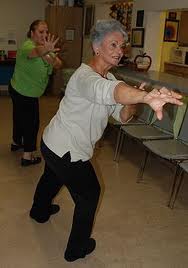
As for the leg, nothing a little exercise won’t cure, so I go for walks. I take up the rug and do tai chi in the living room as I wait for Sears. The right hip gets stiff and sore. As I take myself off to a tai chi class, the agony has spread to my lower back. But I am still working on the theory that it’s nothing I can’t work through.

By the time tea break arrives, I have been disabused of that notion. My right hip is beginning to set like cement. A minute too long and I won’t be able to bend to sit down to drive home. I turn the heat on in the Obus Form car seat. I crank up its massage feature to high. I resort to prayer.  In my driveway, I sit studying how best to get out of the car. I discover there is no best. There’s only pain.

Okay, no problem. I have ways to deal with pain. First the castor oil pack, lots of castor oil on a flannel and a heating pad. An hour later, look at that! I can walk. Only problem is I need a derrick or a crane to get me out of bed. Right, let’s try patches, lots of those patches embedded in this case with Chinese herbs, guaranteed to relieve pain, or so my past experience says. But no, not so much and, apparently, not wise to apply them on oily skin. Why not just pass out and sleep it off. An hour later, the pain wakes me up. Let’s try the tennis ball. First lie on the floor, wedge the tennis ball under the tight spot and relax into it.OMG!!!! Does the CIA know about this? It could be way more effective than water boarding! But I keep at it and a few minutes after I get up, a blessed relief floods over me. The spasm has eased.

I am so happy! And blissfully unaware that this will be the pattern of my life for the foreseeable future with one surprising twist. The spasm travels. While it seems most at home in the right hip, it is content to visit the right calf, the right knee and the right thigh, especially as I try to go to sleep. (How is that fair, I ask you.) Just for a change of venue, it zips up to the right shoulder blade, flashes along the neck and zooms down the backbone. At the moment, it has wandered right out of home territory and is visiting my upper left back.

The only time I leave the house for the first 2 weeks is to see the massage therapist and the acupuncturist. The treatments work wonders – for about 24 hours.

I get hysterical. Well, of course I do. I whine on the phone. I up my already high dose of calcium and magnesium. I meditate. I examine my soul to see what darkness lurks there.

Gradually, almost imperceptibly, the pain diminishes. I still have the travelling spasm, but I can head it off, so that it doesn’t become full blown.  I go back to tai chi class, only half of it at first. I find that one move, Creeping Low Like Snake, if done very, very gently, opens my back and softens it.

Instead of a marauding tiger tearing at my flesh, it’s more of a domestic cat now. Trouble is, I’m not much of a cat person.

Dance Class and Tai Chi

Tai chi-er

We are waiting for barbells. The resident teenager is reconciled to waiting. If the poor delivery guy/girl struggles through the gate with the 105 lb. package before Christmas so much the better, but meanwhile this health-nut proclaims there are many ways to exercise, a towel apparently comes in handy. I didn’t ask.

I packed fast for this trip. I brought only one pair of pjs. (Hello washing machine.) And I’m getting sick of these 2 outfits and the sweat pants. BUT, my exercise equipment did not get left behind. It is not heavy or forgettable. My tai chi is portable.

I ported it to a dance studio yesterday. Well, a masonic hall really, at least an ex-masonic hall, on Venice Blvd., where dance class is held. There is no instructor leading dancers through prescribed choreography, just a DJ with his computer hooked into what seem like the world’s most powerful speakers and a roomful of people moving however they please. Or lying on the floor as they please or lying in a pile on the floor as they please. So no one notices or cares about the mostly linear moves I’m making in the corner.

Loyal readers will say, “How Hollywood!” But no, I’m told that if I look it up on-line, I will find similar classes in my home town, Toronto. If your town is big enough, you might as well. And they will no doubt feature the same creatively dressed crowd -tights and tank- tops, sweats and baggy pants, floating silks of vivid colour, long skirts on guys and girls,- weaving out of their own imagination the beauty or anguish they feel.

They dance alone or with each other or in groups. One fellow danced with a bright red apple. A woman danced with a long white pillow with a heart embroidered on it. The sweatiest fellow in the room gave me a very looong, sweaty hug. It was déclassé  of me to notice any of this, although I carried away something of the sweaty guy’s essence.

My kind of tai chi -taoist.org – is never done to music. Master Moy, who brought the art of tai chi to the west in the early 70s, taught this silent technique so that we would learn to listen to our bodies. So it’s quite a shock to be practising, as I did yesterday, to tribal drums, as the “class” stomped through something like a solstice ritual.

Yet it is curiously liberating. I am so distracted by the whirling colour and the floor-shaking rhythm and even the occasional melody that I find my body moving unself-consciously. Suddenly I feel it accomplishing some refinement that I haven’t been able to get before. My  weight is well and truly in my feet. My belly soft, no longer trying to do the lifting. My hands, full of intention, but the push coming from the back foot. There is a real internal massage going on.

I had arrived here knotted up. Life will do that, as you know. I am away from my usual supports -osteopath, acupuncturist, massage therapist. Then I slipped on a rock, crossing a stream and added a spiral twist -and a good deal of temporary wetness- to the mix. (Incidentally, it was a beautiful fall, I’m told. I would expect no less after all that tai chi.) What to do? You guessed it. More tai chi. I tripled the number or jongs or standing exercises and came unwound. Now, of course, I have to keep that up for the interim or this 76 year-old body will revert or at least stiffen up.

There is usually someone in an electric wheelchair at dance class. One chap moves his chair in dancing circles with his chin. A woman dances with her upper body. Taoist Tai Chi has a sitting set as well as sitting jongs. I have done these while stricken with H1N1 flu when I would have otherwise just languished in bed for weeks.

So here’s the thing, “Dance, dance, wherever you may be.” (“I am the Lord of the dance, said he.) You don’t need any training for that. Or if you won’t dance, (Can’t make me!) take the training route so you never have to pack your exercise equipment. Learn tai chi. Look it up. Taoist Tai Chi is found in 25 countries. It could be in your town and if not, there is some other kind.

Or just get out your towel!

Merry Christmas!

Jack and Charlie: a study in compassion

Jack and Charlie lived at Wild Heart Ranch in Oklahoma in the care of Annette Tucker who has fostered 16,000 animals since she got her permit. Jack was a 16 year-old goat when the story began and Charlie, a horse blind in one eye.

I learned their story on an episode of the program Nature on PBS featuring unusual relationships between animals. I don’t usually watch Nature because, although I can watch any amount of mayhem involving people, I can’t stand watching animals suffer. But this one was full of good news. A retriever and a cheetah raced each other and had play fights, having been paired as puppy and cub, as did a lion and coyote. A gorilla hugged its dog friend. An owl and a pussycat played games. A female deer adopted a blind dog  and groomed his hair into spikes every morning. But it was Jack and Charlie that blew me away.

At first, Jack walked on the side of Charlie’s good eye when he guided him to a favourite patch of grass in the woods. Then when Charlie lost his sight in the remaining eye, Jack walked ahead of him and, according to Annette Tucker, Charlie followed the sound of Jack’s footsteps, which he could distinguish from other horses’ or people’s.

Once in tornado weather, Jack came running home screaming. As soon as he got a response, he set off running back into the woods where Annette found Charlie trapped in a circle of downed trees, a real Lassie moment -“Timmy’s in the well. Timmy’s in the well.”

To see Jack plodding along, as he did for 16 years, you cannot explain this dedication. Jack doesn’t seem to get any reward for his efforts nor does he seem especially happy to be doing it. He just goes on doing what needs to be done year after year. He never dawdles along the path, snacking now and again, as he did before Charlie went blind. He walks slowly and steadily about 10 or 15 feet ahead, waiting when Charlie gets confused.

When Charlie dies in his favourite pasture, Jack rests his head on the fallen horse briefly. Then he gets up, walks the path alone and lies down in his usual spot to sleep, apparently unmoved. Does he understand his friend is dead? Evidently, for from that point on, Jack declines. We see a much weaker animal making his way to the woods to graze. In the end, he is buried there beside his friend.

Remarkably, two members of my family, who never watch Nature either, saw the same episode and so I had a little discussion forum. One of them hypothesized that these were highly evolved souls. The other said it was just a case of companionship and that was Jack’s reward.

Scientific studies have found that people who help others are healthier and live longer. It  kept Jack going for a great number of goat-years. Giving others what they need can be a satisfying experience. We feel connected when we do and this  good feeling translates into well-being.

Jack gave me insight into the nature of compassion. It isn’t a sentiment or even an emotion; it is an action. Jack registered a need and responded to it. He provided a model for me.

The Lady Vanishes: that was no lady, that was my M.D.

Initially Dr. Koldpac didn’t work for the Pearshaped Medical Group. (How can you tell I’ve changed the names to protect the guilty?) She was in private practice down near the lake, a hard to access place for me. I had to go west to get east, etc. I didn’t care. Finding her, someone who would actually take a new patient, meant that I could quit driving from my westend home to the far east suburb to which my previous doctor had moved. We’ll call him Dr. Vim.

Dr. Vim had a few drawbacks apart from the hour-long trip across the city. He had settled in a high density area to minister to the new immigrants there, intending to staff the office with a number of other physicians, but it hadn’t worked well. While there should have been 5 doctors, several of them were always away for one reason or another and he was sometimes left holding the fort against the onslaught of patients by himself. I always made an appointment and never waited less than 90 minutes, once a full 2 hours. Walk-ins were there for the interim- breaking down at the 4 hour mark, going out to buy sub sandwiches next door, crying into their cellphones. We amused ourselves watching the CP24 news channel with a split screen, on mute of course. We read the sign that told us that absolutely no narcotics would be prescribed on the first visit and that if we pushed around the reception counter the police would be called.

Still we were a docile lot and learned about each other’s culture. Women in full chador, only their eyes peeking through, with all their children -I hope it was all their children- in tow were of course shepherded by a man, sometimes clearly an elder son. Called by a female doctor, all of them would go into the examination room together. How easy pelvic exams must have been! I spent hours letting go of my judgement, but apparently, I have some way to go.

I had clung to Dr. Vim because initially I had gone to his walk-in clinic near my home to see about my eye which was totally bloodshot. Not a problem, he assured me, but had I considered a colonoscopy. Excuse me? Well,  my age you see and my digestive problems. He had wormed this out of me. Don’t you know he was right on! I underwent the procedure. I discovered I had an unwelcome visitor in the ascending bowel, round about the appendix. I had surgery, etc. I was so grateful I presented Dr. Vim with a Swiss Army knife and swore lasting fealty to him.

My loyalty was sorely tested after he moved across town, but I persevered. Now I don’t run snivelling to a doctor with the sniffles or stomach aches or muscle spasms. I was one of the first in my town to get H1N1 flu having picked it up in Vegas and I went to bed for the better part of 3 weeks and drank fluids. I was way too sick to drive across town and there was nothing Dr. Vim could do about it anyway. Ordinarily, I went for yearly checkups and in between to get the only prescription drug that I took. Hint: I always took one of those little pills before I went to Dr. Vim’s office.

Dr. Vim’s office also had every conceivable test available and he used these facilities liberally. I had, for example, bone scans done there and guess what? It was determined that I had osteoporosis. Having done some research, I realized that WHO (the World Health Organization) would not have classified my results that way. At most WHO would say that I had osteopenia. I have never, despite opportunity, broken a bone. Dr. Vim recommended medication. I said no thanks. I had read alarming stories that indicated taking it for many years actually weakened bones and produced spontaneous fractures of large bones, for example, when the subway train stopped too quickly. I do tai chi every day I told him. Not a weight bearing exercise, he countered. “That”, I replied, “is not the current thinking.” He should just try lifting my considerable weight off the floor in a one-legged kick. I began to question his expertise: he had trained in what we might call, an off-shore medical school.

So after much searching, I found Dr. Koldpak. She was a snappy dresser. Her style was European and her skirts were short. But she wasn’t happy. There was something about Dr. Zitt, whose office she shared, that she found insupportable. “I am going to leave,” she told me, sotto voce. “Get a copy of your file when you go out and give it to me. I’ll take you with me. You’re going to love where I’m going. Everything is electronic. You can make appointments online…” Thus I was introduced Pearshaped Medical Group.

At first it was fine. It was a little irritating not to be able to actually phone her office. All calls had to be made to a central number. And I found it hard to remember always to go online and check wait times, because even if I had an appointment, I had to wait for the walk-in before me to be seen. Once in a while when I myself walked in without going online, I would discover the office was closed. I would find myself standing and cursing at the locked metal gate. No vitamin B12 shot today!

But guess what? In between her visits to Paris et al, Dr. Koldpak hinted that she wasn’t really happy at Pearshaped. She had to see the walk-ins in the order they came in and that kept the appointments waiting and they, in turn, got angry. Still there were never more than 4 young mothers with kids waiting. It’s true than instead of CP24, we got to watch and listen to Pearshaped ads for hepatitis shots and pap smears. But I was sure, absolutely sure, that my doctor who had brought me with her from Dr. Zitt’s, would never abandon me.

Reader, she did.

I walked in to get my monthly shot and that old gate was locked right up. I turned to the pharmacist. “Gone,” he said. Gone where? Didn’t know. Gone forever? He shrugged his shoulders. A few weeks later even the sign was gone and the pharmacist, who must be seeing a downturn in business, gave me his card, told me to call. Maybe she would come back privately.

Usually doctors who abandon you have to give you other doctors’ names who can take you on, but in this case Pearshaped had me covered: there were other clinics, although getting to most of them involved crossing time zones, but there was one office farther west that wasn’t too far. I would try that. I just needed the damn shot after all.

Ah, here we are again. Another third world waiting room – a grandmother with a teenaged daughter who has the flu and another daughter who whales in with a toddler who may have a cough. They begin urgent negotiations to jump the queue. No seats left. Camp on the floor and wipe the child’s hands every two seconds because he has just touched said floor. Mother has to go buy a new package of wipes. In a loud general observation, grandma accuses us all of giving her”grandbaby” germs, although none of us is coughing or blowing or touching the floor. But miracle of miracles, I get Dr. Caragansus, who is beyond belief -well-informed and smart, explaining why, e.g., I personally, can’t take quinine to stop muscle spasms.

Oh please, be my doctor!

No such luck. Dr Caragansus is a sort of roving gunslinger. He doesn’t take patients. He just rides into town, sees walk-ins and moseys on back out again.

I decide to call Pearshaped to account. I email my complaint. In reply, I get Dr. Koldpak’s new number. For one whole night and part of a day, I feel buoyant, even happy, but I am due for a come-down.

I phone the office, full of naive hope. I ask for an appointment. “Are you a patient of Dr. Koldpak.” Certainly, just at her previous office. Can’t be done. The receptionist starts talking a mile a minute. She is hard to follow, accent-wise, but it seems to me, she is saying that I cannot qualify because I am a Pearshaped patient. !!!!! I ask her please to listen to me. I don’t want to be part of that organization anymore. I try to be clear and concise. I claim Dr. Koldpak as my physician. Now I listen very carefully. Where do I live? It turns out that I am way outside their catchment area. Catchment area? Never heard of such a thing. Been thus for 20 years. Where have you been? Well, clearly, out of the catchment.  I cannot trust myself to speak. Very softly, I press “end” and sit staring at the phone. As I sit there, it becomes clear that I wouldn’t take that faithless hussy back if she begged me.

Good news, my sister tells me later. A new doctor is taking patients up in the Junction. But he’s a man. Oh, that’s the least of my worries.