January, Muscle Spasms, and All That Good Stuff

The first 3 weeks of January went swimmingly. A molar had to have its cap removed, be re-drilled and re-covered with a brand-new $800 crown. Then I had a colonoscopy. Mention that and someone is sure to intone -‘It’s the prep that’s the worst!’  These people evidently skipped the actual procedure. Meanwhile the pump on the washer quit and the Sears man had to come back 3 -count ’em ladies and gentlemen 3- times. Each visit required a generous window of time and no one in the house could devote 6 hours every Wednesday to this pursuit except me. By the time the washer doctor pronounced the 2 year-old front loader healed, I didn’t remember what clean clothes smelled like.

Then things got rough.

I wake up at 3 o’clock to a terrible racket and stumble to a window. Outside large tree limbs writhe in the wind, the rain flies horizontally, lightning flares and thunder crashes. In January!! As I turn back, my right leg begins howling in pain. By 5 a.m. I have written a long journal entry, downloaded Michael Connelly’s, Black Box on my kindle and got well into the story. Only then does the leg let me go back to sleep.

Painkillers? I would lament the fact that I can’t take any of them (tender stomach), but since they don’t seem to kill my pain anyway, I won’t bother. Actually I lie, liquid morphine works very well, but as I’ve said before, it’s so hard to come by.

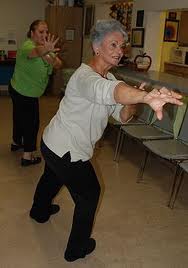
As for the leg, nothing a little exercise won’t cure, so I go for walks. I take up the rug and do tai chi in the living room as I wait for Sears. The right hip gets stiff and sore. As I take myself off to a tai chi class, the agony has spread to my lower back. But I am still working on the theory that it’s nothing I can’t work through.

By the time tea break arrives, I have been disabused of that notion. My right hip is beginning to set like cement. A minute too long and I won’t be able to bend to sit down to drive home. I turn the heat on in the Obus Form car seat. I crank up its massage feature to high. I resort to prayer.  In my driveway, I sit studying how best to get out of the car. I discover there is no best. There’s only pain.

Okay, no problem. I have ways to deal with pain. First the castor oil pack, lots of castor oil on a flannel and a heating pad. An hour later, look at that! I can walk. Only problem is I need a derrick or a crane to get me out of bed. Right, let’s try patches, lots of those patches embedded in this case with Chinese herbs, guaranteed to relieve pain, or so my past experience says. But no, not so much and, apparently, not wise to apply them on oily skin. Why not just pass out and sleep it off. An hour later, the pain wakes me up. Let’s try the tennis ball. First lie on the floor, wedge the tennis ball under the tight spot and relax into it.OMG!!!! Does the CIA know about this? It could be way more effective than water boarding! But I keep at it and a few minutes after I get up, a blessed relief floods over me. The spasm has eased.

I am so happy! And blissfully unaware that this will be the pattern of my life for the foreseeable future with one surprising twist. The spasm travels. While it seems most at home in the right hip, it is content to visit the right calf, the right knee and the right thigh, especially as I try to go to sleep. (How is that fair, I ask you.) Just for a change of venue, it zips up to the right shoulder blade, flashes along the neck and zooms down the backbone. At the moment, it has wandered right out of home territory and is visiting my upper left back.

The only time I leave the house for the first 2 weeks is to see the massage therapist and the acupuncturist. The treatments work wonders – for about 24 hours.

I get hysterical. Well, of course I do. I whine on the phone. I up my already high dose of calcium and magnesium. I meditate. I examine my soul to see what darkness lurks there.

Gradually, almost imperceptibly, the pain diminishes. I still have the travelling spasm, but I can head it off, so that it doesn’t become full blown.  I go back to tai chi class, only half of it at first. I find that one move, Creeping Low Like Snake, if done very, very gently, opens my back and softens it.

Instead of a marauding tiger tearing at my flesh, it’s more of a domestic cat now. Trouble is, I’m not much of a cat person.

Winter Storm Warning Makes Good: frightens small inner child

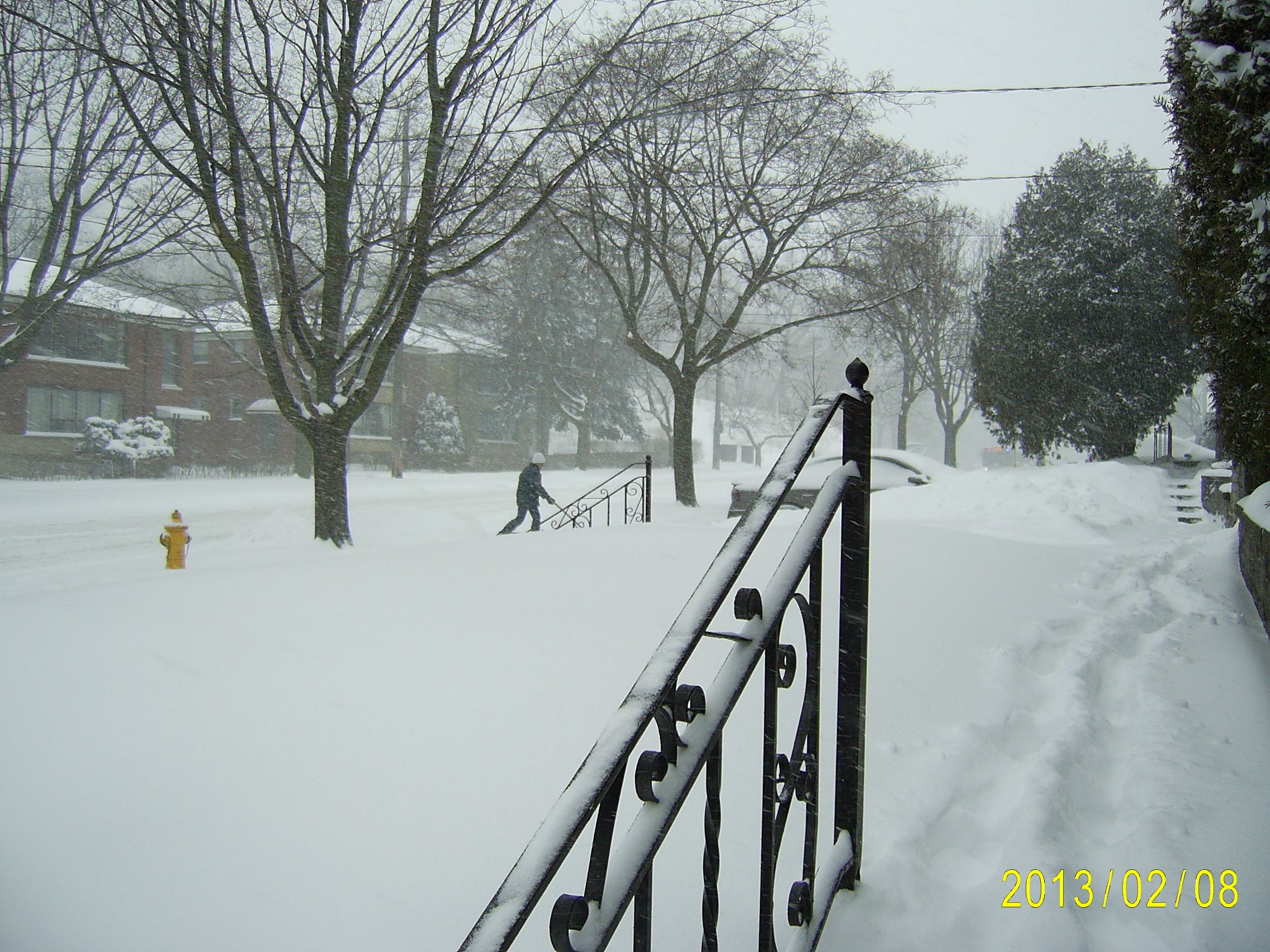
SAMSUNG DIGITAL CAMERAWe are having a winter storm. Actually, we are being pummeled by 2 cowboys, an Alberta Clipper and a Texas Low. Being on a Great Lake, we are probably getting some lake effect accumulation as well, but being inland, we are escaping the Nor’ Easter, which is going to hit Boston and the Maritime provinces. There and in New York, they have blizzard warnings, that is to say high winds up to 100 kph as well as heavy snow. In other words, we could have it much worse.

Okay, I admit it, I have storm-phobia. I come by it honestly. A long, long time ago, I lived in a poorly insulated, poorly heated farmhouse with a hysterical mother and a father off working in the woods. I’m afraid of early autumn windstorms for a slightly different reason. Absent mother, hurricane and caregiver down for the count. It is astonishing that I have managed to drag these conditioned terrors after me for 7 decades. My first instinct is to castigate myself. I remember my then husband, the redoubtable Blake (of Septuagenarian fame (115journals.com) and his impatience with this fear, but really that is not productive. We are dealing with a very young child here and censorious judgement will not work.

Yikes, she notes, there is a car stuck on the hill in front of the house!

Yes, Little One, but you are here in a warm house. The furnace has just come on. There is food in the pantry. There is beautiful music on the radio. The cedars outside the window are laden with snow like out of season Christmas trees. And safe and secure, you can watch the windblown snow drift down though weather-proof, floor-to-ceiling windows. You will have chicken soup for lunch.

SAMSUNG DIGITAL CAMERA

Cold Snap: reflections on winter and its clothes

So we’re having a cold snap. According to the news, we are all in a dire situation. The city has declared an extreme cold weather alert as well it should. More beds have been made available to the homeless. I hope the guy I saw crossing Queen’s Park, wearing two t-shirts, got one of them. I felt like jumping out of the car and taking him somewhere to buy a jacket. Maybe he had one in that pack he was carrying on his back, but I doubt it. It looked more like a sleeping bag. So I’m not against cold weather alerts. I’m against hysteria. I’m against it mainly because I am susceptible to it.

In actual fact, it isn’t that cold in Toronto, not compared to North Bay, for example, where it is -22C/-5F going down to -27C/-17F that’s -40/-40F when the windchill is factored in. Here it is only -11C/-9F with a windchill of about -17C/0F. True the snow sounds crunchy and most of us move snappishly out of doors. Still construction and road repair goes on, although I notice that they are rotating the sign guys faster than usual. Even those hardy souls need to get warm after an hour or so.

But now that we have 24 hour news, every weather event gets hyped out of all proportion. It’s hard to say whether it actually rains harder or we just think it does because of the news. Gone are the days of my childhood when a hurricane could sneak up on us. All to the good of course, but …

Today when I checked my local 24 hour news channel for the weather, I was told how to dress – my warmest coat, hat, gloves, scarf. Makes you wonder who they think they are talking to. Maybe the teenagers who won’t listen to mom.

There have always seemed to be those who can’t bear to wear a hat. They probably started out life as toddlers who tore their hats off and threw them down as soon as possible. Some of them, paradoxically, grew up to be teenagers who got their wool toques confiscated in class because they refused to take them off.

In general, I observe, that people dress more warmly these days. probably because they can. Long ago, long before you can remember, the warmest fabric you could buy was wool. Well, of course there was fur but since you couldn’t afford it, it might as well not have existed. Even the cheapest fur, euphemistically called Persian lamb, was out of the question. It was actually just a dolled up, reverse version of my grandfather’s barn coat, a sheepskin with the sheep’s wool turned in and the hide itself out. When you bought a coat in those days the most you could hope for was a chamey in the back, between the lining and the wool, to cut the wind. That is chamois, which my dictionary tells me is soft, pliable leather from sheep, goats or deer. You had to turn the coat upside down and fish around inside the lining to make sure it was there. Such a wool coat, a kerchief and galoshes over shoes did not provide much protection from fierce cold and snow.

As a child, I had worn rubber boots in the winter which, despite thick hand-knitted socks, were fearfully cold, but they wouldn’t do for a young lady on her way to Central High. One of my early purchases from my first job at 15 was a pair of snow boots.

It was children’s wear that saw the first widely produced quilted fabric. My children’s snow suits were padded with cotton and they had hoods. Still the only adult wear of that sort were snowmobile suits, one of which I acquired at the earliest opportunity even though I rode on a snowmobile only once. I still had it nearly 20 years later when I moved to a country town in the snow belt. I wore it on my long drive to work on bad days. I am happy to say that I never did need it, never having found myself stranded on a deserted road.

Then down-filled ski jackets came onto the market, but they had a very sporty look and women especially stayed with the more decorous dressy wool coat. I found a long down-filled coat in an outdoor outfitter store, which filled me with joy. It would take courage to show up at work wearing this big puffy garment but I was up to it. As I approached the women’s cloak room the first day I wore it, I met the teacher down the hall. She was wearing the exact same coat.

Now, there are sleeker, lighter, longer coats with “fur” trimmed hoods that extend beyond the face to shield it from the wind. They have zippers and snaps. Even the pockets zip. And many women are wearing them. Suddenly, being warm seems to trump looking dressed up. Not that such coats aren’t elegant in their own way. And washable to boot.

Then there are the fur-lined aviator caps with ear flaps and ties under the chin. The fur, like the coat fur, is fake or sheepskin. For a few years, I was the only one wearing such a hat, but this year, I see them everywhere. Like the coats, they are made in China, where such hats and quilted garments are nothing new.

When I hurriedly left for Los Angeles last month, I wore such a coat, not having time to consider the question. To my credit, I left the aviator cap at home and grabbed a red wool tam instead. I needn’t have worried about looking out of place. Southern California has mountains after all and down coats don’t merit a second look.

It occurs to me that somewhere people are collecting that down the way my grandmother used to collect the feathers from the barnyard chickens she plucked, hoarding it away to be stuffed into ticks to make feather beds.

The Miracle of Return

Time to fly home. Twenty eight years of lifting off from LAX, 2 or 3 times each year, you would think it would be routine by now.

In one way, it has actually got better. Having printed my boarding pass at home, I find myself only third inline to check my bag – my one bag, which cost an extra $20 + tax. The pull handle on my suitcase has taken the opportunity to lock down, so that it has to be towed from a crouching posture, but I have help schlepping it, up and onto the scale and back to the X-ray machine.

“Next stop, there where the sun is shining on the green plants,” sings out the x-ray guy.

That, of course, is the farewell spot, a narrow gate, guarded by a familiar dragon who does the second of six boarding pass and ID checks. I make for the escalator with tears on my face. Once upon a time, my Children, farewellers could go with you through security and share a farewell coffee.

There is no line at security either and it is an exciting challenge to fill 3 plastic tubs, about the size of kitty litter pans while standing on one foot. I persist in wearing lace-up low boots. It seems like defiance: I will be darned if I’ll lower my fashion standard. As if. Finally, I have much of my clothing -the guard kindly lets me keep my cardigan on – and all my possessions, some of which, I value dearly, into the trays. The nice surprise is that I do not get “wanded”, patted down nor given a full-body scan. We must not be in an Orange alert. Or maybe my number didn’t come up. Septuagenarian women are, of course, notorious hotheads given to radicalism and acts of terror.

You get used to these absurd assumptions and things really aren’t worse than the good old days. In 1971, my 10 year-old daughter was “wanded” and patted down under the eagle eye of a soldier in camouflage holding a sub-machine gun at the ready. This was in peace-loving Switzerland.

And in those days, there always seemed to be a plane crash in the news. I used to invoke angels to get us off the ground and help us back down. Now I’m usually half asleep. Airlines seem to have learned how to build and fly planes that stay in the air until time and place dictate descent.

With notable exceptions!

It is true that I no longer have the luxury of complaining about the quality of my pre-ordered special meal. I can buy a reheated pepperoni pizza or a sub sandwich from the vending cart: credit cards only, please, but most of us buy our lunch and our water before we board the plane. Starbuck’s smoked turkey and cheddar on multigrain bread turns out to be edible, but not much more. I expected stuffing, cranberry jelly.

My individual entertainment screen is not working. My seat, I am told, should not have been sold. I can move into the middle seat instead. The window guy and I look at each other. We prefer to keep a civilized distance. I do tap its screen so that I can follow our journey on the map and see what towns we are passing over. The captain announces then that we are presently over the Grand Canyon.

And so, another return. There have been returns from weddings and divorces and new babies and new houses and plenty from just ordinary family life. This is a return from what I called in an earlier post a fortunate fall. (See 115journals.com), a return after great shock and fear and grief and then great joy and renewal of love. Rebirth. A chance to start again differently.

Yes, there are still miracles.


Dance Class and Tai Chi

Tai chi-er

We are waiting for barbells. The resident teenager is reconciled to waiting. If the poor delivery guy/girl struggles through the gate with the 105 lb. package before Christmas so much the better, but meanwhile this health-nut proclaims there are many ways to exercise, a towel apparently comes in handy. I didn’t ask.

I packed fast for this trip. I brought only one pair of pjs. (Hello washing machine.) And I’m getting sick of these 2 outfits and the sweat pants. BUT, my exercise equipment did not get left behind. It is not heavy or forgettable. My tai chi is portable.

I ported it to a dance studio yesterday. Well, a masonic hall really, at least an ex-masonic hall, on Venice Blvd., where dance class is held. There is no instructor leading dancers through prescribed choreography, just a DJ with his computer hooked into what seem like the world’s most powerful speakers and a roomful of people moving however they please. Or lying on the floor as they please or lying in a pile on the floor as they please. So no one notices or cares about the mostly linear moves I’m making in the corner.

Loyal readers will say, “How Hollywood!” But no, I’m told that if I look it up on-line, I will find similar classes in my home town, Toronto. If your town is big enough, you might as well. And they will no doubt feature the same creatively dressed crowd -tights and tank- tops, sweats and baggy pants, floating silks of vivid colour, long skirts on guys and girls,- weaving out of their own imagination the beauty or anguish they feel.

They dance alone or with each other or in groups. One fellow danced with a bright red apple. A woman danced with a long white pillow with a heart embroidered on it. The sweatiest fellow in the room gave me a very looong, sweaty hug. It was déclassé  of me to notice any of this, although I carried away something of the sweaty guy’s essence.

My kind of tai chi -taoist.org – is never done to music. Master Moy, who brought the art of tai chi to the west in the early 70s, taught this silent technique so that we would learn to listen to our bodies. So it’s quite a shock to be practising, as I did yesterday, to tribal drums, as the “class” stomped through something like a solstice ritual.

Yet it is curiously liberating. I am so distracted by the whirling colour and the floor-shaking rhythm and even the occasional melody that I find my body moving unself-consciously. Suddenly I feel it accomplishing some refinement that I haven’t been able to get before. My  weight is well and truly in my feet. My belly soft, no longer trying to do the lifting. My hands, full of intention, but the push coming from the back foot. There is a real internal massage going on.

I had arrived here knotted up. Life will do that, as you know. I am away from my usual supports -osteopath, acupuncturist, massage therapist. Then I slipped on a rock, crossing a stream and added a spiral twist -and a good deal of temporary wetness- to the mix. (Incidentally, it was a beautiful fall, I’m told. I would expect no less after all that tai chi.) What to do? You guessed it. More tai chi. I tripled the number or jongs or standing exercises and came unwound. Now, of course, I have to keep that up for the interim or this 76 year-old body will revert or at least stiffen up.

There is usually someone in an electric wheelchair at dance class. One chap moves his chair in dancing circles with his chin. A woman dances with her upper body. Taoist Tai Chi has a sitting set as well as sitting jongs. I have done these while stricken with H1N1 flu when I would have otherwise just languished in bed for weeks.

So here’s the thing, “Dance, dance, wherever you may be.” (“I am the Lord of the dance, said he.) You don’t need any training for that. Or if you won’t dance, (Can’t make me!) take the training route so you never have to pack your exercise equipment. Learn tai chi. Look it up. Taoist Tai Chi is found in 25 countries. It could be in your town and if not, there is some other kind.

Or just get out your towel!

Merry Christmas!

Skyfall: M and Ulysses part 2

My post Skyfall: M and “Ulysses” got me thinking about what I know by heart. Long ago some English teacher or other required me to commit the whole of that long dramatic monologue, “Ulysses” by Alfred Lord Tennyson, the 19th century poet, to memory. It is 70 lines long and free verse and that much more difficult because there are no rhyming clues.

It begins “It little profits that an idle king/By this still hearth, among these barren crags/ Match’d with an aged wife/ Should mete and dole/ Unequal laws unto a savage race.” Ulysses is standing in the port of his island kingdom, Ithaca, beside his ship or even on its prow, and addressing his crew and his subjects. Presumably his “aged” wife is there, Penelope, who faithfully waited for him all those years while he was fighting in Troy and taking his own sweet time getting home. Thinking he had perished, suitors beset her in order to gain her kingdom. She devised a scheme to put them off, saying she would choose just as soon as she finished weaving her tapestry: every night, she tore out what she had woven that day. Now Ulysses regards her merely as an aged wife.

Presumably his son, Telemachus is also there. Ulysses says of him “most blameless is he”, suited to the task of mete-ing and dole-ing apparently and subduing the savage race “thro soft decrees”. Ulysses does concede that Telemachus is “well-loved of me”. Maybe, but not all that well respected. Still “He works his work, I mine.” but make no mistake, only one is glorious.

Mainly, however, Ulysses is talking to his mariners, those poor sods who are going to row him, assisted now and then, by fortunate winds and scant sails. “Push off, and sitting well in order smite/ The sounding furrows”, Ulysses cries. “For my purpose holds/ To sail beyond the sunset, and the baths/ Of all the western stars until I die.” “It may be that the gulfs will wash us down,” he suggests, for he is going to take them out past what we call Gibraltar into the Atlantic Ocean, terra incognita so far as the ancient Greeks were concerned. I am ill-equipped, probably, being an aged woman, to understand how his charisma made his men eager to follow him still.

Nevertheless, I can well understand the lines with which he closes. I took them to my heart as a teenager, but they are even more significant now that I can empathize with the ageing hero:
We are not now that strength which in old days
Moved earth and heaven; that which we are, we are
One equal temper of heroic hearts,
Made weak by time and fate, but strong in will
To strive, to seek, to find and not to yield.

Skyfall: M and Ulysses

Of course I saw Skyfall, the latest James Bond movie, as soon as I could, just as I had the other 22. So far as you no doubt know, it has been a 50 year project. The one that stands out in my memory is Thunderball and that has more to do with the way I got there than the movie itself. We set out in our new racing green 1965 MGB with the top down on a pleasant evening. We were cruising along the freeway, happily anticipating the film. As we drove under an overpass, the driver of the semi next to us pulled on his air horn, elevating us out of our seats -no seat belts back then- and setting our hearts racing. I could see him laughing madly as he passed us. Thunderball could only be an anti-climax.

Skyfall I liked much better than Quantum of Solace although  I’ve never met a Bond movie that I didn’t like. As the usher assured me, Skyfall is old-fashioned Bond.

The movie begins with Bond’s death and when that proves, unsurprisingly, greatly exaggerated, we see a battered, unshaven Bond wearing jeans and drinking —- beer. Back in harness, he is expected to re-qualify as an agent and is assured by one and all that he is past it, that, in fact, the concept of agents going out into the field is itself passé. Computer nerds can do all that work now without getting out of their pyjamas.

M, Bond’s boss, played by Judy Dench, is of course, even older and appears to have lost control of MI 6. Eventually, she is called before a parliamentary committee to face the music. In answering the badgering chair of the committee, she quotes from Alfred Lord Tennyson’s poem “Ulysses”.

The poet imagines the great adventurer Ulysses, the ancient Greek commander who defeated Troy by using a wooden horse. In the poem, Ulysses old and bored with his home island of Ithaca, exhorts his men to join him on one last great adventure from which they will not return. The poem ends with the lines which M quotes:
We are not now that strength which in old days
Moved earth and heaven; that which we are, we are;
One equal temper of heroic hearts,
Made weak by time and fate, but strong in will
To strive, to seek, to find, and not to yield.

Aunt Rosa: how to quit worrying

Reblogged from a few weeks ago to remind myself how futile worry is.

I have just finished reading Christopher Hitchens’ book, Hitch 22 where I came upon a quotation from Nabokov’s New Yorker short story entitled “Signs and Symbols”. (Nabokov’s story is available online.)

The mother in the story is looking at her photograph album and comes upon a faded picture: “Aunt Rosa, a fussy, angular, wide-eyed old lady, who had lived in a tremulous world of bad news, bankruptcies, train accidents, cancerous growths – until the Germans put her to death, together with all the people she worried about.”

I had to stop reading.

While I don’t look fussy, angular or wide-eyed, I do qualify as old and I could give Aunt Rosa a run for her money in a worrying contest. In fact, apart from train accidents, we even worry about the same things. And of course, age, my own and my friends’, and the present economic climate are providing ample opportunity.

I had to stop reading because I was gobsmacked, (Great word isn’t it: my gob or face had been smacked.) by the sheer dreadfulness of the idea, its absolute finality, but much more than that, by the relief I suddenly felt.

I could save myself all that anxiety and trouble. Life is carrying me and my loved ones forward, just as it bore Aunt Rosa and hers along and neither one of us can change that by fussing.

I wouldn’t call it fate or destiny and certainly not the will of God. For one thing that would be insulting to any self-respecting deity and for another, because I don’t believe in such a thing, except as the direction our own spirit wants to move us in.

Life as it carries us along feels more like the continuous cycle of change that the I Ching is predicated on. What is empty becomes full and what is full will not always be so.

True, the worst may happen, whatever that may be. On the other hand, it doesn’t really matter. Hitchens says in the last chapter of Hitch 22, ” The clear awareness of having been born into a losing struggle need not lead one to despair”. What matters is facing life’s challenges without sentimentality.

What matters is our true nature.

Septuagenarians at Sea: #2

Blake sent this text after his adventure:

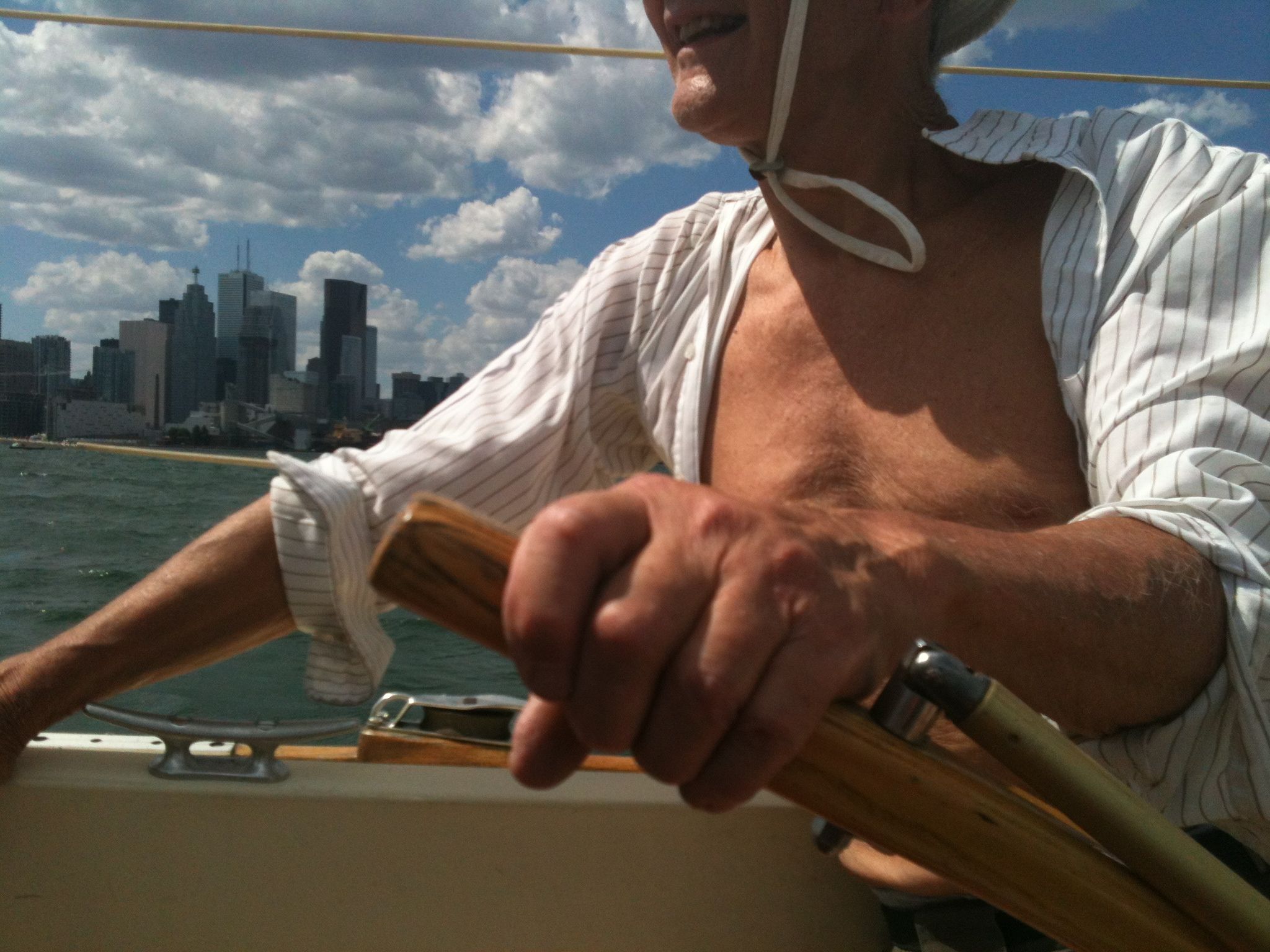
Yesterday I went sailing with M. and her friend A. It was another exciting outward-bound type adventure that seems to  be becoming a Durant norm, Remind me to put that phrase into the brochure… I slipped the mooring with the main sail up and was getting too close to the neighbouring boat. I went to the bow and successfully fended off without touching. Unfortunately, I lost my footing and found myself dangling from the pulpit. We were a boat moving in the basin with nobody in control.

M. had sailed a little and A. none. Legs dangling in the water, I quickly moved hand over hand  back to the cockpit where M. and A. were chatting away completely unaware I had gone overboard. When they got over their surprise and shock at hearing my voice from over the side of the boat, I proceeded to steer the boat by remote control through M., around the anchored boats  and turned us towards the gap to Lake Ontario. I had a bit of time before we reached the lake, so I decided to get back aboard.

Again by remote control, this time through A., we got the ladder out of the locker and installed. Easier to say than do. I clambered aboard, but was not finished. We were very close to the cement side of the gap and I had to fend off again. This time I was careful not to lose my footing. We then hoisted the jib and had a wonderful sail around the Toronto islands, heaving-to on the way to have lunch. Today I am having a rest.

Mortality and Christopher Hitchens

In his recently released book Mortality, Christopher Hitchens tells the story of how British journalist John Diamond chronicled his battle with cancer in a weekly column. Hitchens confesses like many other readers, he quietly urged him on from week to week. He says,

But after a year and more…well, a certain narrative expectation inevitably built up. Hey, 
miracle cure! Hey, I was just having you on! No neither of those would work as endings.
Diamond had to die; and he duly, correctly (in narrative terms) did. Though – how can I put this?- a stern literary critic might complain that his story lacked compactness toward the end.
Hitchens’ own story was more elegantly structured. He told it in 7 essays published in Vanity Fair and now collected posthumously in this small book.

Mortality describes his initial collapse in a New York City hotel room during a tour in support of his latest book, Hitch 22, in early June 2010, saying of the emergency responders:

I had time to wonder why they needed so many boots and helmets and so much backup equipment, but now I view the scene in retrospect I see it as a very gentle but firm deportation, taking me from the country of the well across the stark frontier that marks off the land of malady.

He dislikes the use of the metaphor of battle, fight or struggle to describe what ensued after he was diagnosed with metastatic oesophageal cancer. He says

Myself I love the imagery of struggle. I sometimes wish I were suffering in a good cause, or risking my life for the good of others, instead of being a gravely endangered patient.

But sitting “while a venom sack gradually empties itself into your system, the image of the ardent soldier or revolutionary is the very last one that will occur to you.” And yet his dispatches from the Land of Malady are full of his customary wit and irony. His wife, Carol Blue, reports in the book’s Afterward that he wrote the jottings now collected as chapter 8 in bursts of energy and enthusiasm, his computer perched on the food tray of his hospital bed. He continued to hold court whenever he was hospitalized, “making a point or hitting a punchline for his “guests”, whom he treated like “participants in his Socratic discourses”. He had always been a great raconteur, as well as a bon vivant. He had an encyclopedic knowledge and a rapier-like intelligence. And he could hold his liquor. After an 8 hour dinner, he would rise to toast the assembled motley crowd with “a stirring, spellbinding, hysterically funny twenty minutes of poetry, limerick reciting, a call to arms for a cause and jokes. ‘How good it is to be us’, he would say in his perfect voice.”

I started reading him in Vanity Fair, after many years of avoiding his work and like many others, I was immediately won over. I avoided him because he had betrayed me. For many years he had espoused causes dear to my heart, workers’ rights among them, what might be called leftwing views, but then after 9/11, he made a sharp turn right and supported the war in Iraq, believing the now disproved weapons-of-mass-destruction premise. Not to mention, he dissed Mother Teresa and rounded on Salman Rushdie, when Rushdie, under fatwa pressure, published “Why I have Embraced Islam”. I read the rebuttals that his friend Martin Amis wrote and imagined, in my innocence, that Amis was actually alienated from Hitchens. I was wrong. Amis remained his great friend, Rushdie was at Hitchens’ memorial and Mother Teresa – well that goes without saying.

Hitchens was a famous atheist, author of god is Not Great, and on his last Thanksgiving Day in November 2011, he was in my town, Toronto, debating his point of view with Tony Blair, the former British prime minister and recent convert to the Catholic Church. Hitchens arranged Thanksgiving dinner for his family and friends here and by all accounts carried the day in the debate.

His reaction to the Christopher Hitchens Day of prayer on September 20, 2011 involved wondering exactly what was being prayed for – his survival, his redemption? He examined the nature of prayer -the importuning of an omnipotent being to suspend His laws of nature for personal benefit- and found the practice specious. He noted that certain religious zealots had pronounced that his illness was God’s punishment and in short order analyzed the ill-logic and cruelty of that by citing blameless children suffering from cancer. He said there would be no deathbed conversion and told of Voltaire being badgered as he was dying to renounce the devil, whereupon the great thinker replied, “that this was no time to be making enemies”.

The best gift that Hitchens gave me, besides many good laughs, was the realization that I can listen to a point of view I don’t agree with, indeed that I might find contrary and wrongheaded although, of course, he said much that I found true.

He concluded an essay on The Great Gatsby by saying, “It remains ‘the great’ because it confronts the defeat of youth and beauty and idealism and finds the defeat unbearable and then turns to face the defeat unflinchingly”.  He died on December 15, 2011 at the age of 62. HIs unflinching voice goes on.