The Weight: Take a Load off Annie

http://www.youtube.com/watch?v=sjCw3-YTffo
T
he Weight by the Band from The Last Waltz
http://www.youtube.com/watch?v=HmRDM7GyJXE

I’ve just shed weight in preparation for winter. No not that kind. I would like to lose pounds of actual me, but it goes very slowly about 2 lbs a month if I don’t even look at sugar and wine. The weight I have lost has come out of closets and storage spaces.

This is what I have thrown out/left on the curb/shredded/taken to the thrift shop in the last week:

a full length mirror with gilt frame;

a favourite Indian rug too big for my room;
all floppy discs, a floppy disc reader, the ZIP drive and its discs;
4 years of tax returns,
12 steno pads detailing flight options,
packing lists and hand-drawn maps, dating back to ’97;
10 tiny notebooks with grocery and to do lists;
pay stubs dating back to ’80;
2 boxes of research for a book that has been finished for years;
a large collection of postcards bought while travelling;
a large, puffy, pink elephant with a top handle;
a red velour hat that looks as if it were lost by the Mad Hatter;
some very bad poetry (I kept the somewhat bad poetry);
the white suit my 4 year-old wore as ring bearer;
a vase made by one of my children at summer camp;
their first books with their childish signatures.

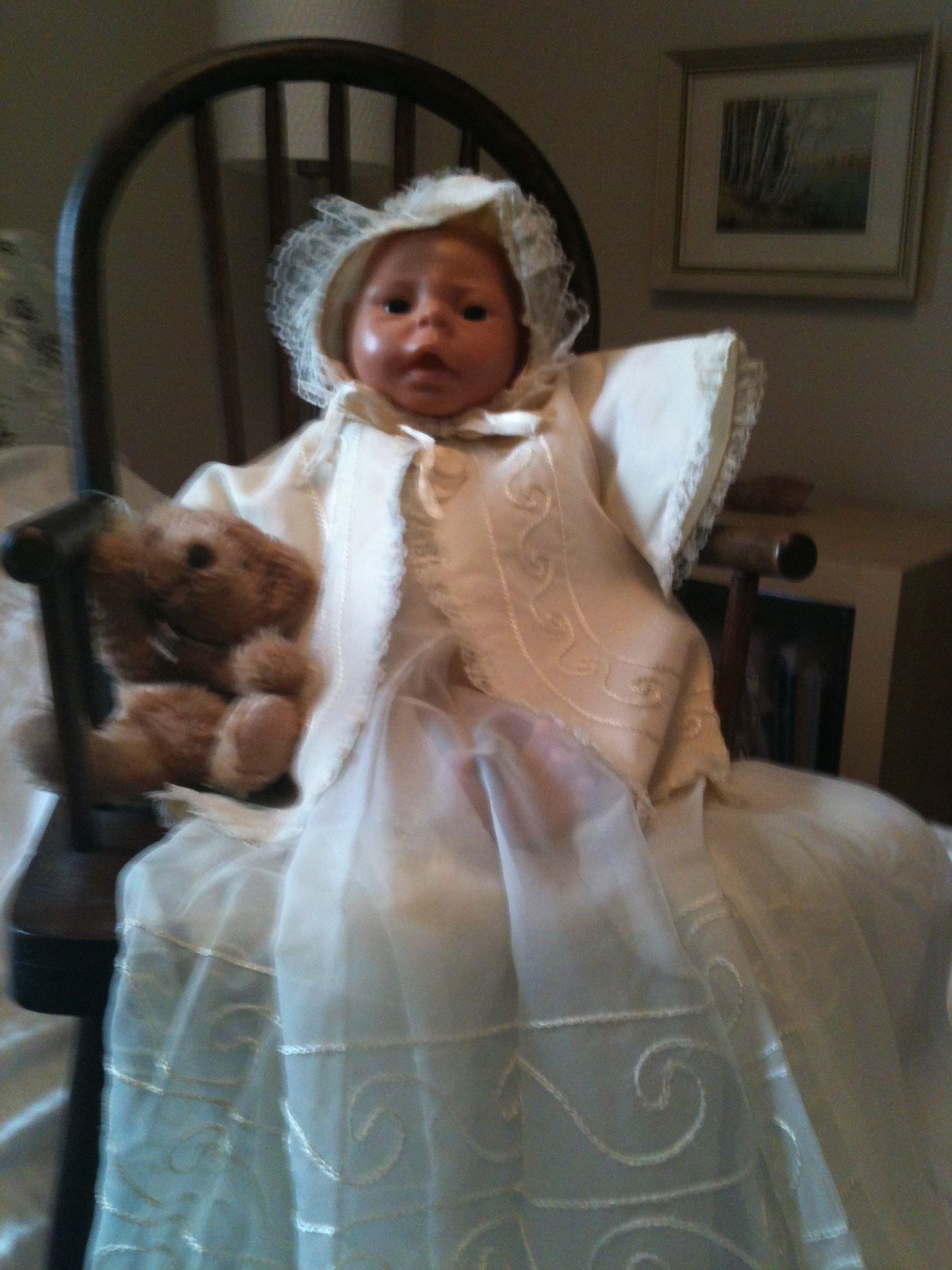
The christening dress is due to go, we all agree. Not only has church-going fallen off en famille, people persist in marrying Jews. Anyway, it isn’t silk. It isn’t hand embroidered and although it was as much beauty as we could afford back then, it has to be admitted, it is ugly. Clearly, my courage has faltered or it would not still be in the keepsake box.

Late Breaking News: it isn’t.
Here’s what I haven’t given up: the 100 year-old portraits of my grandparents -I bought them a plastic storage box; my first novel – I might be able to use some of that detail about Greece -I certainly couldn’t actually read it; the pictures minus the negatives (but they could do with weeding); the canner – whaaaat?; the roast pan and lid; the portable sewing machine.

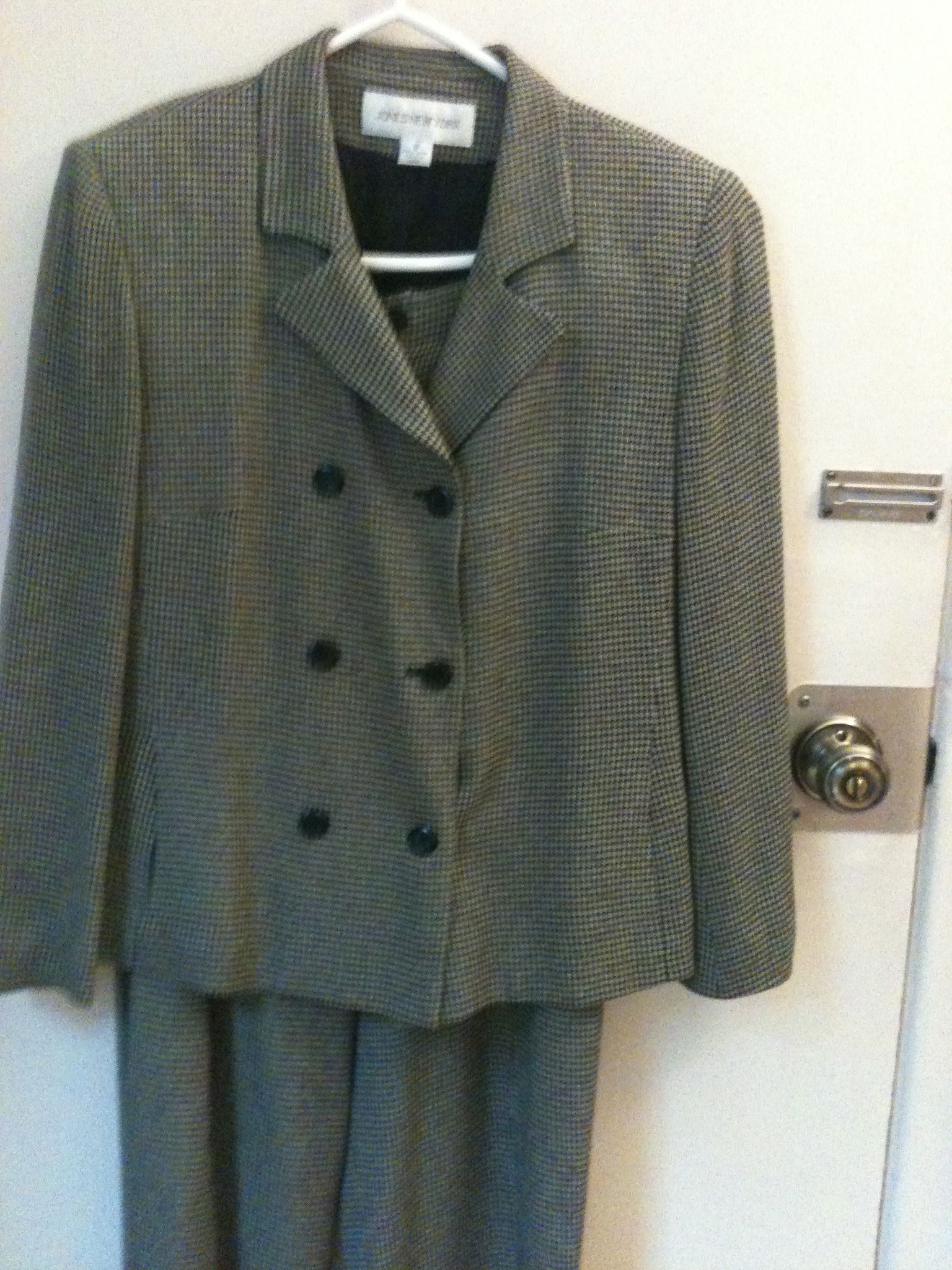
Here’s what I need to do: sort through the clothes hanging at the far end of my long, narrow closet – the houndstooth suit -what was I thinking?-, the gauzy red flowing  Indian thing, the jaloba from Morocco, not to mention the multiple  jeans in size 10 and the same number in size 12; my mother’s costume jewellery, and my mother-in-law’s and that third box that belonged to the stranger I used to be; my degree handwritten in Latin with a plaid ribbon! – these decisions require courage.
I feel much lighter in spite of what the scale reports. The air seems fresher. It is easier to breathe. All that past I was dragging behind felt like the slime of a dragon’s tail. Why did I think I needed it? I never looked at it. It seems to have functioned as insulation or protection, not effectively of course. Come to think of it, whenever I have been able to fit into those size 10 jeans, I have always felt on the verge of vanishing.

Is there a lesson here?

The Right Mistake

Thelonius Monk, the jazz pianist, had a “unique improvisational style” Wikapedia tells us. He once said, after what he thought was disappointing performance, that good jazz consisted of making the right mistakes.

Robbie Robertson (late of the Band) borrowed that idea for his song, “The Right Mistake”. http://www.youtube.com/watch?v=09KF2GX2qtM

We can call to mind scientific discoveries that resulted from mistakes or were at least accidental: small pox vaccine, penicillin, insulin, the Pap smear, as well as inventions including X-rays, the microwave oven and, apparently corn flakes. But, in addition to music and science, can making the right mistake be a good thing personally? Should we be trying, like Robbie Robertson, to make the right mistake?

Shakespeare’s King Lear did that. In his eighties, he decided to divide his kingdom, the ancient kingdom of Briton among his 3 daughters. Then he got annoyed at Cordelia, the only one who really loved him, and gave her share to the other two. They immediately set about curtailing his privileges.  He had a retinue of “an hundred” men that followed him as he sojourned first with one nasty daughter and then with the other. One of them ordered him, “a little to disquantity your train”. He bargained for 50, they cut him down to one and then to none. In despair and rage, he left the castle and went out onto the shelterless moor just as the storm of the century bore down upon it. By the time, he stumbled across supporters and rudimentary shelter, he was soaked to the skin and raving mad.

What he said made little sense, but already he had changed. He was no longer the autocratic egotist who demanded that his daughters compete in a contest to see who loved him best. He was humbled to such an extent that he sat at the feet of a homeless derelict, calling him a philosopher. By the time he was rescued by Cordelia, he was ready to live out his life in prison, if need be, so long as he is with her:

As if we were God’s spies. And we’ll wear out
In a walled prison, packs and sects of great ones
That ebb and flow by the moon.

His great mistake has allowed him to learn to be a loving human being. He does not get his wish to live such a life. He is one of Shakespeare’s great tragic heroes and he must pay a price. That is really irrelevant because he has accomplished a much greater goal by becoming more completely human.

We perfectionists can relax it seems, for even our most egregious mistakes can lead us where we need to go.

The First and Second Sleep

In Medieval literature, including Chaucer’s Canterbury Tales, there are references to the time between the first and second sleep, which was the ideal time for study, one book said. I vaguely remember knowing that already, possibly from a long ago summer course. I learned it anew from my morning paper, the National Post, which published excerpts of Dreamland: Adventures in the Strange Science of Sleep this week.

The book’s author David K. Randall recounts how a Virginia Tech history professor noted these references in his reading and how a Bethesda psychiatrist put the question of what this meant to the test. He deprived those in his study of artificial light. Initially, they took the opportunity to sleep deeper and longer than they had before, but eventually, they seemed to catch up on their sleep deficit and a new pattern emerged. They fell asleep shortly after sunset and woke up sometime after midnight, at which time they stayed awake for an hour or so and then fell back into a second sleep. Having escaped the tyranny of artificial light, they had apparently reverted to the medieval sleep pattern.

Okay, I know I’m old, but this is ridiculous. I remember my grandfather sitting up in the middle of the night in his wooden chair with the wide arms. I had been woken up by the smell of the herbal cigarette he was smoking to soothe his farmer’s lungs.

When I was born, we had no electricity in our rural community. In fact electricity did not come to those hills until well after World War II. It was not until then that the people there got out from under the Depression and were able to afford to pay for the lines from the road to their farmhouses. And while I lived in town from the time I was 5, I spent summers back there with my grandparents, so I do recall a way of life that was mostly devoid of artificial light.

I say “mostly” because toward the end of those years, my grandmother managed to buy an Alladin lamp. Not the kind that you rub for three wishes, but a tall kerosene lamp with  a brighter light, which may have had something to do with the mantle. This particular lamp could also be hung on a wall bracket where it gave us kids enough light to see our playing cards half way across the kitchen. My grandmother sat nearer it to sew or knit and my grandfather sat in his grandpa chair at the gloomier end of the kitchen. The old, little oil lamp was still carried upstairs when we children went up to bed but the puddle of light it shed went back downstairs with Nanny.

I remember sitting on the porch in the evening watching the light fade in the east, my young aunt and uncles climbing onto the porch swing beside their father. The sun was going down behind the house, sinking below steep Hereford Hill. As the sky faded into an improbable turquoise in front of us, a single silver star gradually appeared over the Mount Monadnock. My grandfather broke the silence that had fallen on us five children.

“That will be Venus,” he said.

The evening star! And we children whispered to ourselves, “Star light, star bright/ the first star I see tonight/ I wish I may I wish I might/ Have the wish I wish tonight.” And then we refused to tell our wish for fear it would not come true.

I don’t remember what I wished, but it may well have been just to go on living in such blissful peace.

As darkness fell, a soft cloud of light bloomed softly from the town across the border in Vermont where there was electricity. Then one by one, the other stars popped out until the dome above us was full of them. We stood on the gravel drive gazing up at them, turning with our arms out for balance and nearly falling over, until Nanny called us in.

Once in a while, we found it necessary to journey to the outhouse before bed, a journey which could be undertaken only in pairs. There were no flashlights. It wasn’t worth lighting a lantern. I remember stepping down off the flat stone that served as a porch step and turning into a darkness as thick as black velvet.

“Stand still for a minute,” Nanny called before she shut the door against the bugs. “You’ll get your eyes back.”

I would have been glad just to get my breath back. Our voices seemed suddenly small. The darkness immeasurably large and strangely silent.

Were there wolves?

I have experienced such darkness as an adult at Peppermint Creek camp grounds above the Kern River in the Sierras. We always avoided the “serviced” camping area, pitching our tents next to the creek itself. Under the huge trees, there was no light pollution. The stars were numberless. It was possible to believe as I have heard that there are as many stars in the sky as there are grains of sand on all the beaches on earth.

Talking about the medieval two sleeps, a number of us have decided that we can take a new attitude to the tendency of age to wake up in the middle of the night. We can do what they did in the Middle Ages and value it as time well found.

http://fullcomment.nationalpost.com/2012/09/17/book-excerpt-how-the-lightbulb-transformed-the-

http://fullcomment.nationalpost.com/2012/09/17/book-excerpt-how-litttle-we-know-about-sleep-is-sciences-dirty-little-secret/

Motherhood: savage longing

Robert Thurman, renowned Buddhist and scholar, and famous Uma’s father, writes in The Jewel Tree of Tibet about an unusual way to learn compassion. While you are sitting in a subway car or bus, look around and realize that everyone you see has, in the course of repeated lifetimes and in some form or other, been your mother.

But will we ever forgive each other?

Earlier this year, I bought Colm Toiben’s new book called New Ways to KIll Your Mother, a title that dismayed at least one mother I know.

Toiben is an Irish novelist and critic, who has written here a series of book reviews or essays in which he explores how we treat parents, particularly mothers, in our novels. He notes that 18th century novels rarely feature mothers. It is true that 10% of women died in childbirth then, but still, it seems unusual especially since motherhood was then beginning to be idealized. Yet “the novel is a form ripe for orphans”. He quotes Ruth Perry, a critic, who says that this “may derive from a new necessity in an age of intensifying individualism.”

(That darned individualism, so marked in 2 year-olds, and 14 year-olds, and … oh, never mind.)

Jane Austen’s last three novels have no mothers. Her great success Pride and Prejudice has Mrs Bennet, Elizabeth’s social climbing, hysterical, embarrassing mother, whose husband escapes into his study. (Wait, doesn’t that sound like someone I know?) Aunts were permitted in many motherless stories, including those of  Henry James. They might be kindly as Elizabeth’s or autocratic as Darcy’s, or manipulative, but they were surrogates, not the real mother McCoy.

The middle section of Toiben’s book concerns Irish writers, including the poet W.B. Yeats, whose essay is subtitled, “New Ways to KIll Your Father”. Yeat’s father, an successful artist sounds almost as annoying as Mrs Bennet. He confidently wrote from New York to explain a brilliant book he expected to write and publish to great acclaim. Yeats, who had put in a long and painful writing apprenticeship, refrained from dashing his father’s hopes -and thereby presumably killing him. Instead he waited a long while, during which time no such book materialized and then responded in a restrained manner.

J.M. Synge, Irish playwright (The Playboy of the Western World, Riders to the Sea) and co-founder of Irish theatre, had a formidable mother who preached damnation at all three daily meals and organized his short life when he wasn’t escaped to Paris. Much as he disdained her ‘rule’, he followed her every summer to the family’s summer place. And much as she, an Irish protestant, abhorred his atheism, she continued to give him house-room. Despite disdain, he kept on coming back.

“Samuel Beckett Meets His Afflicted Mother” tells us of the author of Waiting for Godot and his mother. Apparently, she tended to be depressed. (Imagine that -the Becketts were depressed!) Beckett eventually also fled to Paris and insisted on remaining during the Nazi occupation. He wrote the following in 1937 while his mother was away traveling: (She had of course left her cook in place and Samuel continued to enjoy life good food.) “I don’t wish her anything at all, neither good nor ill. I am what her savage longing has made me….. I simply don’t want to see her or write to her or hear from her…”

“Savage longing” indeed. Sound like a mother you know?

In the interests of full disclosure, I ought to admit that I am a mother. But, of course, you knew that.

A few weeks after I became one, I sneaked off to the doctor, leaving my newborn in the care of her father. There I sat and wept that she hated me already. Stupid man, he just laughed and assured me that soon we would be deeply attached. We were and we are – from time to time. Did I say that out loud? At present, we have entered a Pax Romana or a  long Victorian empire of peace. I have finally matured.

Her brother, on the other hand, is in a Beckett phase, although he is cordial enough at weddings and funerals. Funny how infrequent they are.

It is quite breathtaking when our beloved off-spring begin as they say to “individuate”. Humbling of course. After the momentary slights and cuts of childish insults, we endure a decade where we are ill-informed if not actually stupid, uncool, unfashionable and just generally out of date. We may or may not suddenly improve when the child is 21.

Apologies to Robert Thurman, but no wonder we have such a problem with each other! If we have all been each other’s mothers, we’ve got history.

On her death bed, my own mother had what looked like a large ruby on her upper lip. She was about to slip into a coma. She looked at me and moved her dry mouth silently. I wiped it with a wet cloth. Than she found her voice. “I need a present,” she said.

And my heart filled with compassion.