Life after the Reality Hotel (just when I thought it was over)

view from Kodiak #4One summer when Blake and I were still married, we visited my Nanny on her hilly farm in the Eastern Townships of Quebec. Hay season is late there and the fields get only one crop. Now it was ripe, but rain was forecast. My grandmother’s hay was already in a neighbour’s barn. She rented the land out now that my grandfather had passed -at the advanced age of 78. Would Blake, she asked, go up the hill and help her sister Eva with her crop. He set off immediately and didn’t return for many hours. When he did, he was very excited.

“You wouldn’t believe it,” he said. “There was an 88-year-old woman driving the stripped- down model T that served as a tractor. An 84-year-old woman was on the wagon packing down the hay and a 78-year-old man was pitching it up.”

We stared at him. He waited for our response. Well, yes, Blake. What else did you expect? That’s who lives there, Aunt Eva, Aunt Betsy and her younger husband, Ralph. They were no doubt happy to have help, but they would have managed on their own.

These were my people. My grandmother lived alone on the farm, out of sight of all her neighbours until she was 93, hauling in sticks of wood for the stove as necessary.

So I should not have been all that surprised when duty called just after my 78th birthday and given the stock I come from, I shouldn’t have doubted that I was up to the task.

I contemplated this as I flew home on the golf cart in the semi-dark, high desert cold, last night, barely able to see the other unlit golf carts who had also outstayed the light. I thought about it as I wrestled one plug out of the battery charger and forced the right one in. And I’m the old girl with such weak wrists that I have to waylay strange men in the street to open my wine bottle.

I also find myself driving mountain roads like a budding James Hunt. They call the part of the road just outside the village the S curves. This is misleading. The entire road is comprised of S curves, all the way down to the Mount Pinos turn. Until you get to know it, you don’t actually know whether the loop with go right or left. The road is narrow, but well marked and there are lots of turnouts, but after 3 months, I seldom need to let the cars behind me pass. Then the road opens out into a straight stretch down through Cuddy Valley. Do you remember the Waltons? This is where they lived, here in Kern County, California, not in the Carolina after all. Lately, my country driving skills have kicked in there and I have a problem sticking at 60 mph.

One quibble: should 78-year-olds sleep on the floor? Fine, I like a firm mattress, but getting up at 3 a.m.? First, you have to think about it. Turn on your knees. Plant the tops of your feet on the floor as you kneel on the mat. Push up with your hands and feet. Stand still until you get your balance. Find the flashlight. Follow its beam.

the podFor we have left the Reality Hotel, Clara and I. We have moved into her house. At last! The first 2 nights, we had a sofa, its matching chair and a mat on the floor. We borrowed sheets and blankets. Yesterday, 4 chairs fell out of the furniture pod when we unlocked it and behold there is a kind of  breakfast bar just like a table built into the kitchen island. Now I can stop eating breakfast while watching Clara sleep on the couch. If I am very lucky, or possibly, very good, I will find a bed in my room when I get back tonight. Various teenaged guys are willing to give up Saturday of Labour Day weekend to unload the pod, piano and all. Then perhaps on Monday or Tuesday, pans and dishes may materialize. At present, I make my porridge in the aforementioned hotpot https://115journals.com/2014/08/22/3024/and eat it from a styro-foam bowl with a plastic spoon.

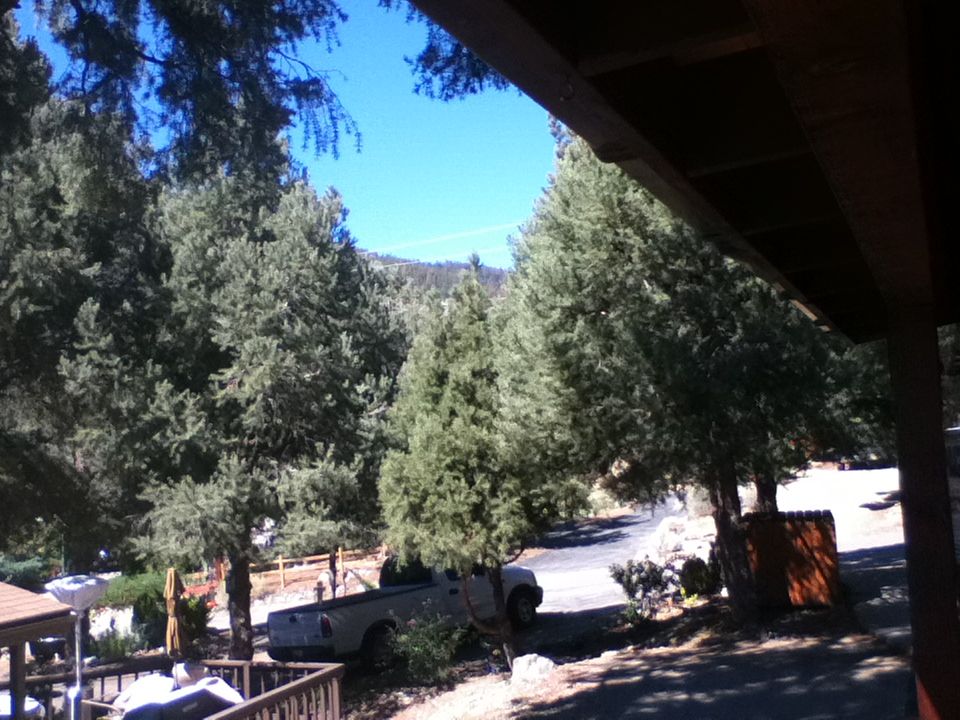
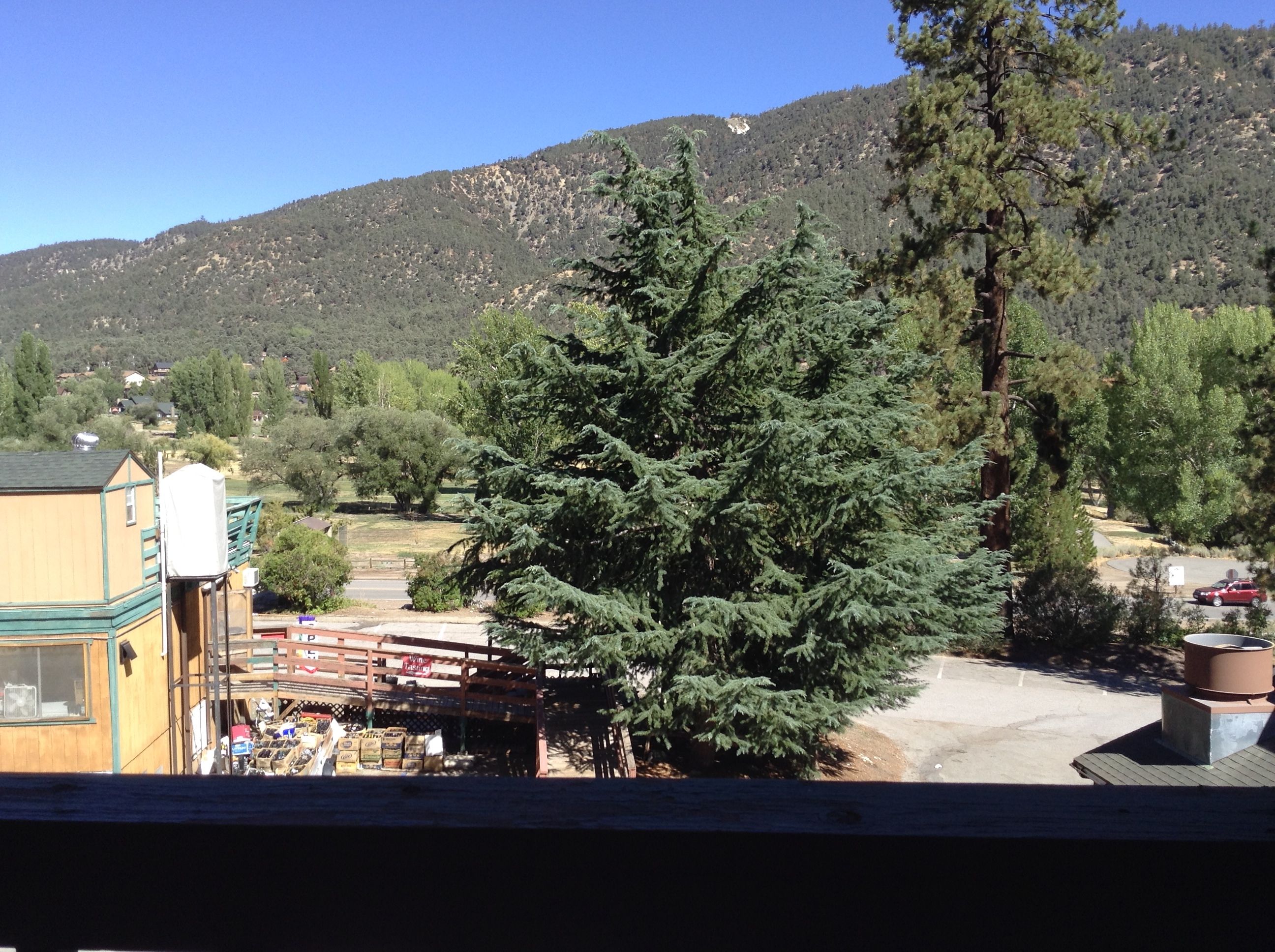
view #2 from Kodiak

The Reality Hotel: latter days

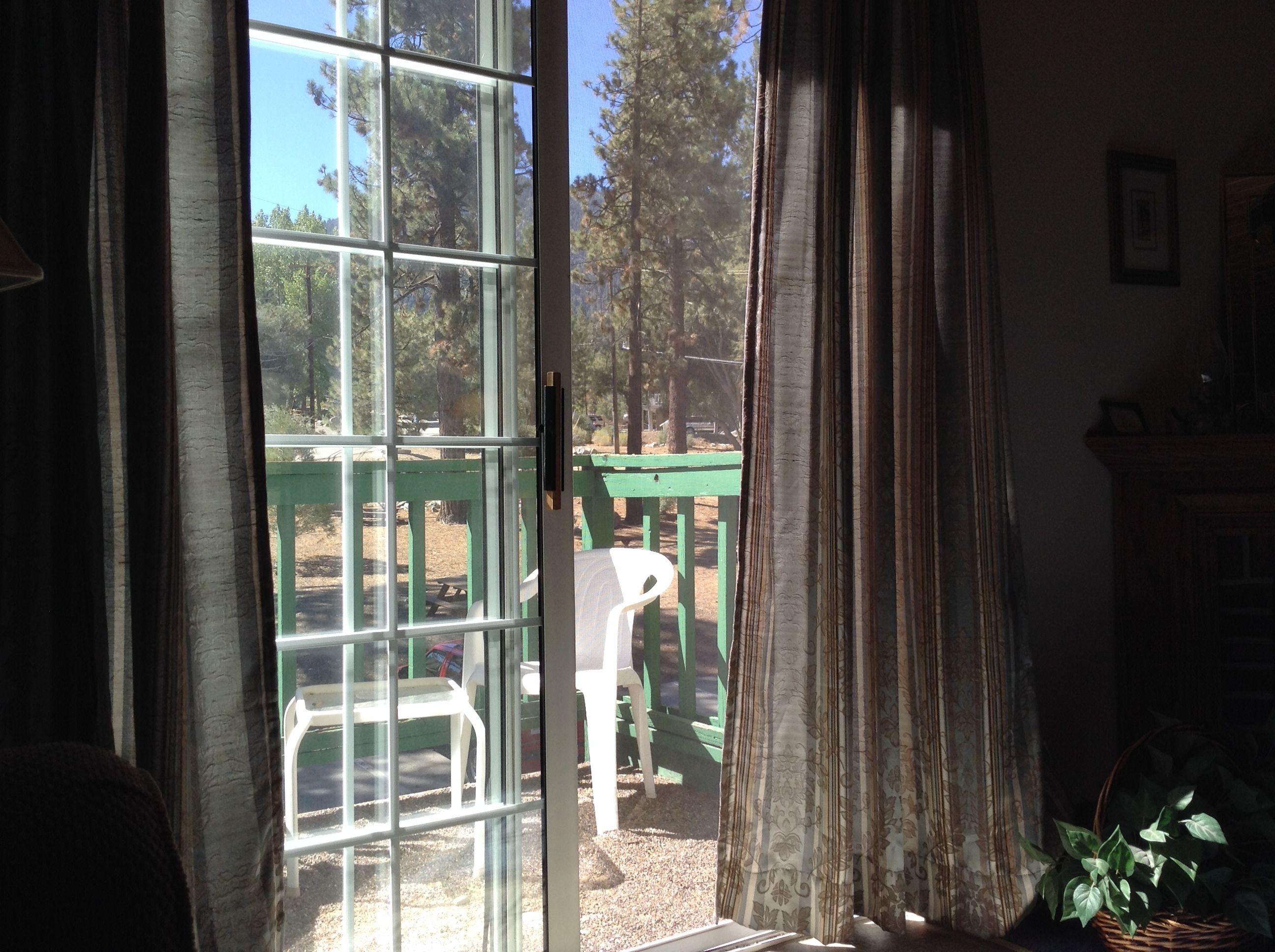
balcony hotelA snail climbed on the back of a turtle.
What did it say?
“Wheeeee!”

The house sale is moving at the same speed. When it finally closes, Clara and I can bust out of the Reality Hotel. Today it inches forward as the money from the sale of the Vegas house finally hits the bank account of the vendor of the house in Pine Mountain. Meanwhile Clara and I have been living in the second floor of this three roomed hotel since early July.

We have large airy rooms with excellent showers and a kitchenette in Clara’s room, but no phones or internet, no stove or hot plate, only a microwave and a toaster oven, in a town where restaurants keep mountain hours and Wednesdays they all close. Of course there is a general store next door where you can buy almost anything, including good French champagne, which I bought to celebrate getting the keys. Trouble was we trooped over to see the house that was almost Clara’s and the keys didn’t work. Turns out the key which over-rides the code was in the house and we didn’t have the code. We drank the champagne to make us feel better.

Now that little problem is solved. All we have to wait for is the house to be cleaned and the pod with the furniture to arrive from Las Vegas. Possibly not next week, say the pod people. Not to worry. There is a storage unit at the foot of the mountain with furniture in it, including the mats that Clara slept on in the last days in Vegas. I long to lie my ancient bones down on the floor. I dreamed last night that I was going from house to house looking for a bed to sleep on. I was still looking when I woke up.

But life here in the old Reality Hotel (Realty really, but it is all so surreal ) got better by the addition of two items.

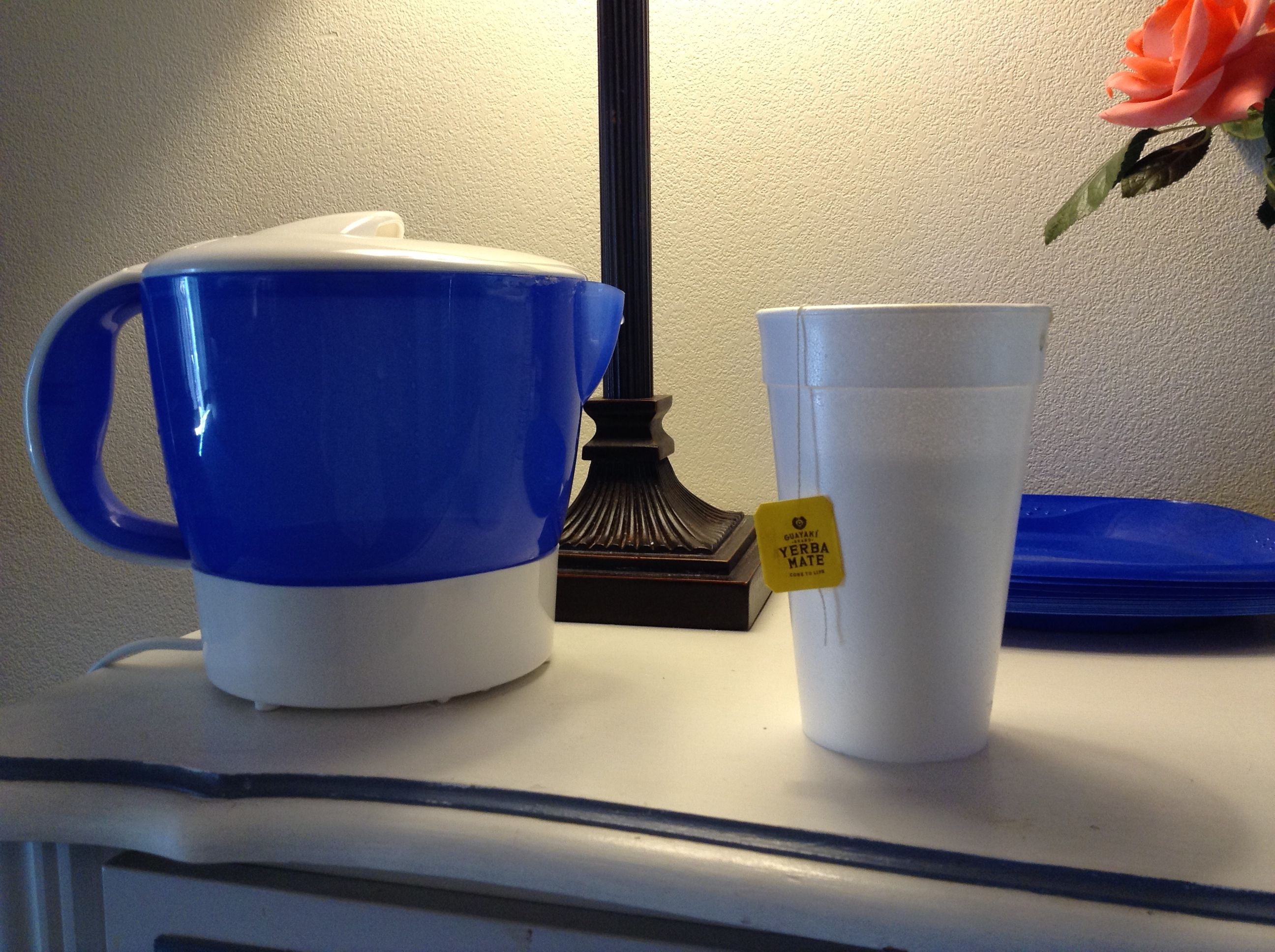
hot potA $13 Proctor Silas plastic hot pot, which boils water for tea and cooks porridge.

hot wireNo not the Mac Air book, the gizmo beside it, a hot wire that magically allows me to get the WiFi signal from the house in the pines. It had been lying in a drawer in that house, completely unrecognized for the miracle it is.

Now I can get on-line of course and that is good for a blogger, but the best thing, the very best thing, is that I can use Skype to make phone calls. Out-going at least. I haven’t convinced others to sign up for Skype so they can call me. Except my Brussels brother.

Previously I have had to rouse Clara and borrow her cell phone. (My phone is AT&T and gets no service at all on the mountain.) Because Clara’s hearing seems to be worse up here at altitude, getting her phone can be trying. Up to now, on occasion, I have just jumped on the golf cart and gone to knock on a door.

But here I am with a morning off so far as I know. The sun is shining in the balcony door. The breeze is swelling the curtain. The Stellars jays are calling. The ventilator over the store is humming away. No, no, Joyce, positive stuff. The mountains are embracing the village on every side. And the possibility of living in a home is inching ever closer.

“I will lift up mine eyes unto the hills/ from whence cometh my help”

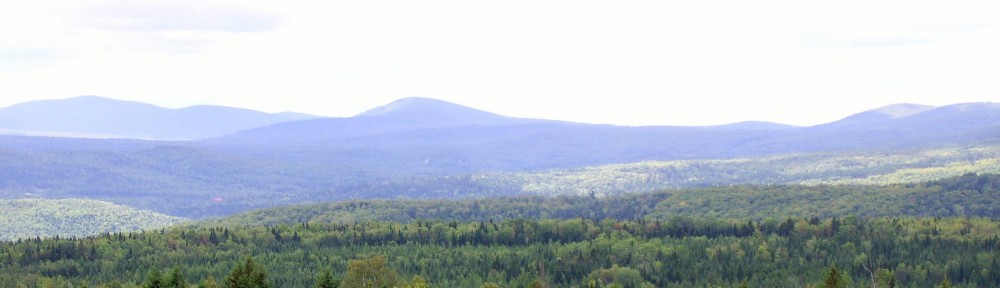
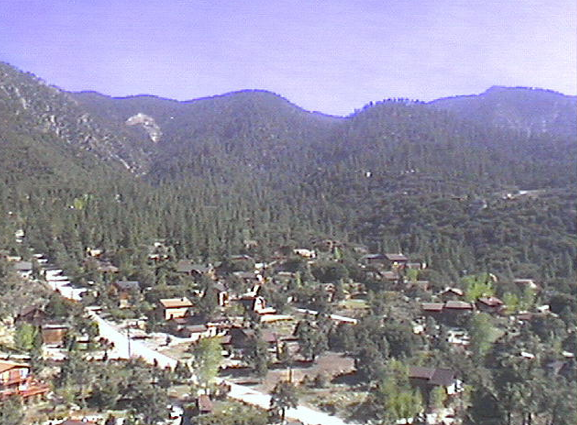
view from hotel

Return to the Reality Hotel

Village in Sierra MountainsWe had to vacate our rooms at the Reality Hotel. There was a big car show up here called “Run to the Pines” and our rooms had been reserved by car show enthusiasts weeks before we arrived. What to do?

“No problem,” said the manager of the three room Reality Hotel. “I’m going away, you can stay in my house.”

She was glowing with pride and generosity. It would be her pleasure to share her home with us. Moreover, we already knew her housekeeper and house-mate, the red-haired Jody, who cleaned our rooms. Now it is true that we are getting cut-rates for our beautiful rooms – mine is about $33 a night, which of course I can ill afford – but Jody is clearly part of the Gudenuff cleaning company. I don’t expect to get my bed changed any more often than I would change my own, but she has changed it three times since July 7th. The comforter, I avoid like the plague, although it’s pretty enough during the day.

So we moved.

Picture us: 163 years old (aggregated) with suitcases, at least 20 shopping bags, pillows, a box of food, a refrigerator bag, a walking stick, a litter box and a cat that has to be medicated to travel. Clara is between houses and much of her stuff is what remained in her ex-house after the movers left. As we carry stuff down the steep stairs from our second floor room, we joke that we will start a moving company called “Slowbutsure: the careful movers”.

At a certain point, Jody has to clean our not yet cleared rooms, so I start throwing money at her and she helps out. She probably would have anyway, but a bill or two makes her happier.

The house is beautiful as advertised, perched on a side hill with a fabulous view of mountains. And a steep set of stairs up to our rooms. Once again the friendly redhead helps out and we schlep our goods in.

However — there are either 3 or 4 additional cats. One is a recluse who lives in the en suite off Clara’s room. Two roam the house and I believe there is another that never leaves Jody’s room downstairs. The smell of cat pee welcomes us in. I can’t even find most of the litter boxes, but I clean the one I find. It is several days before I find the main one, which is clearly in Jody’s domain, but, being Canadian or just too darn cowardly, I do not clean it.

Clara’s girl cat lives in her bedroom, but the boy cats know that and begin spraying EVERYWHERE.

My room has an A.C. unit in the window. I can’t open the window and the A.C. works at gale force.

Clara asks me to open her bathroom window for the cat recluse next morning and I find myself in a cloud of dander and fine cat hair – cat down?. My skin begins to feel hot and prickly. My eyes burn. Tiny cat hairs constantly end up in my mouth. I shower often, only to discover that something -the softened water perhaps – gives me a red rash on my upper arms. In desperation, I ask Jody how to turn the shower head from stabbing to gentle. This she can do.

I was looking forward to watching television. The first time I try, I push what would be the up-channel button on my remote control and lose all reception. Jody doesn’t know how to fix it. Nor does she know the password for the internet, having forgotten it years ago.

No problem. Everyday we have to drive to Bakersfield. Down through the beautiful pine- covered mountains into the scrub-covered mountains, down through Tejon Pass to the desert mountains and then through the flat land of the Central Valley. Foodland. Finally we reach Bakersfield where 90 degrees is a cold snap. It takes an hour and more. As soon as I step into the Prius, my lower back cries, “Not again”, but you know what, out of the house, I no longer sneeze and clear my throat.

One night I stupidly leave my chicken salad on the counter and the long black cat with a white mustache eats it. Clara is having a shower and doesn’t hear the resulting furor, but she confides to a family member that Joyce doesn’t like the cats. That night, I find the same cat with his nose in my water glass. I keep my door shut, but he lurks around the corner and dashes in between my feet. I have to wave a sweat shirt under the bed to drive him back out.

Still he bears me no ill will, asks me to open the door, thanks me and comes when I call. I wouldn’t want the mountain lions to get him. Would I?

For the interim, however, I have a phone with a Canadian long distance plan and I do a mental health call when I wake up to brace myself for another day. It’s not just the cats, it’s living out of a suitcase. Drawers are great. You pull one open and there you see clearly visible clothes in neat piles. A suitcase you have place on a flat surface, a low one in my case since I can’t actually lift 23 kilos. Find the right zipper. Open it. Ah!!!! There they are -neatly rolled clothes in 6 layers. I was sure I put the underwear in this corner. It isn’t there. Carefully I begin removing each layer. Always I have two thirds of the clothes out by the time I find what I need.

“I’m sick of camping,” Clara confides.

On Sunday while I am deeply embroiled in family matters at the house in the pines, Clara arrives to announce that she has moved out of the house because our host returned unexpectedly. Host said she would sleep on the couch, but Clara can’t let her do that.

“Why not?” I think to myself.

So between 5 p.m. and dinner, I hie myself back in the Prius out past the s-curves, up the hill and on weary legs, up the outside stairs and pack. I notice that Clara has not packed our food. I pause, covered in sweat and consider crying. Then our host shows up and helps me carry six grocery bags, two suitcases, the food box, the refrigerator bag….. meanwhile talking gaily about her vacation. I can make no sense of anything she says I am so utterly bushed. I do manage to convince her that her house is lovely and that I am full of gratitude. She replies that we have left a wonderful feeling behind. Okay!

Dinner at the house in the pines somewhat restores me.

Afterwards a beloved family member carries everything in the Prius and in Clara’s car back up to the second floor of the Reality Hotel.

The cool evening air coming down from the mountains blows in one door and out the other, sweet and pure. I put my new tiny plastic hot pot ($13) on and a minute later, I have a cup of tea.

O Reality Hotel, why did I ever knock you?

Sailing in Shangri-la

bear claw bakeryRegular readers of this blog will know that circumstances have led me to spend my summer in a remote mountain village without media. Oh, media is here, via satellite dish but not that I can access easily. Deprived of my usual sources of information (except old National Geographics -1985!!), my conversation has fallen back on old timey tales. This morning four of sat outside the Bear Claw bakery toasting in the 8 a.m. sun, eating the best croissants outside France and telling such tales.

There had been a terrible lightning strike at Venice Beach the previous Sunday. One of us had been near the beach that day, but not actually at it and had witnessed the brief violent storm.

Julia piped up and said that when you are near ground zero, the flash is a sheet of light. She recounted being in the family room of our house under the hill in Scarborough when lightning hit the flag pole above.

I didn’t remember.

I have amnesia about lightning mostly. When I was a toddler and sleeping upstairs, a ball of lightning came in one window, streaked over my crib and out the other. I leaped out of my crib and hit the stairs running. Just as the horrible thunder crashed, I slipped in my pajama feet and soared into space. I fell –into the waiting arms of my Uncle John – infinitely slow John Cunnington who had heard me, sprung up from the table, flung open the stairway door and caught me.

That was it for me – memory wise. The file marked lightning was full.

But Julia had other memories from her sailing childhood.

When she was 14, her father, Blake and I bought a Northern 29, a sailboat designed to sail in the narrow North Sea, where the waves come close together. It has a lead keel, which renders it very stable, indeed capable of righting itself should it turn over. It was a good choice for Lake Ontario which is also narrow and prone to similar waves. It has a steel mast that is set in the lead keel. This means that lightening strikes should go down into the lead and disperse over the water. The fourth member of the crew was her 13 year-old brother, Daniel.

Julia thinks that it was Blake’s wartime experience that made him want to sail. He was evacuated with many other children on the ship, Antonia, to Canada. At least one such ship, The City of Benares had been torpedoed with the loss of 77 children.There were two other ships carrying children in Convoy Z in which Antonia sailed, a total of 1000 kids. There were 6 destroyers protecting the convoy and the Battle ship Revenge, which as it turns out was carrying Britain’s gold reserve £10 million  to safety in Canada. Blake was 5 at the time. He was 10 when he made the relatively safe return after V.E. Day.

For whatever the reason, we found ourselves press-ganged into the crew of the red sailboat, Sirocco.

Mostly we were self-taught sailors, although Blake took a night course to qualify as skipper, learning such things as right of way rules, how to understand lights and buoys and so on. He had also read avidly. But the first time we flew the spinnaker, none of this helped. The spinnaker is that balloon-like, colorful sail that flies out ahead of the boat when it is sailing downwind (the wind is behind). Ours was colored like a rainbow. It is attached the mast near the bottom and then pulled up by a pulley until it is secured at the top. Meanwhile, two lines (ropes) are threaded through winches so that the crew can trim it according to the wind. The object is to get it ballooning out in front. Blake had the sail up and Julia was on the foredeck holding one of the thick rope lines not yet secured through its winch. Suddenly the halyard at the top let go and the wind carried the huge sail straight out ahead of the boat. Julia hung onto the line as it ripped through her palms at high speed. She was screaming in pain but determined not to lose our most expensive sail.

“Let it! Let it go!” he father shouted.

She did. The sail puffed once and sank through the air into the water. I ran to Julia. Blake ran to the bow. Daniel grabbed the boat hook. Julia’s hands were raw and beginning to bleed. Daniel and Blake were leaning so far out that it looked as if they would join the sail in the water, but a minute later they were back up pulling in the bedraggled mass of the sail. Glorious in flight, sodden and unlovely as a swimmer.

Sirocco was about 2 years old when we bought her and the sails were still reliable, but by the second summer, the main sail was showing wear. There is a saying that owning a sailboat is like standing in a cold shower tearing up money, so we hadn’t got around to ordering a new main sail. Typically, we would study the weather report that summer and learn that here was a chance of an afternoon storm. Since the storm hadn’t materialized for at least a week, we went sailing. Sure enough, it arrived.

Blake had shortened sail by putting up the smaller jib instead of the bigger genoa. We sail trimmers were working attentively keeping just the right amount of air in it. From time to time, Blake leaned over from the tiller and adjusted the main on its track along the boom. The wind began to pummel us in great gusts. A huge boom like thunder right above us rent the air. We looked up to see the main sail loudly flapping. It had blown out into two pieces.

Just sailing wasn’t enough. We raced Sirocco. Not only did we race it around the yacht club bay, we raced it across Lake Ontario, sometimes in two day races. Thus we were treated to a close study of lightning.

One day during such a storm, three of us were in the cockpit steering and trimming the sails. Daniel was having a break down in the cabin, probably reading. He was sitting on the banquette beside the table. Our budgie’s cage was fastened with a bungie cord to the ceiling and the floor. They were both inches from that steel mast. As those of us up-top tried to keep the boat from swamping, water crashed over the gunwales. It is reported that I shouted, “I wish you’d tell that guy who’s throwing buckets of water in our faces to stop.” Suddenly, Daniel called up, “What does it mean when the mast glows blue?” “Don’t touch it!” three of us yelled in unison. Silence fell. He was alive. What about the bird? Then we heard a very clear chirp.

One day on the St. Lawrence River, Blake nonchalantly wondered why there was a large, orange bleach bottle floating in the water. A second later, with a crash like thunder, Sirocco hit a rock. Everything flew forward and bounced back, including hapless humans. “Is there a hole? Is there a hole?” we shouted. Daniel, who had once again been below, had to dig himself out of the cabin debris and crawl into the fore-cabin. “No hole,” he shouted back. Shaking so hard I could barely stand, I joined Julia and her father on the aft rail, about 4 inches wide and we began the time-honored rocking back and forth employed when you are hard aground. Daniel crawled out and joined us. The boat didn’t budge. But what is that crazy motor-boater doing. He is driving around us, faster and faster in tight circles, each circle building a higher wake. Finally, one big one lifted Sirocco and we floated clear. Our rescuer waved and raced away. I served juice. Eventually, we all stopped shaking.

Daniel was not always below. He was the one who leaped onto the dock as we came to tie Sirocco up. (Blake invariably sailed in rather than using the motor.) One night at Niagara-on-the-Lake, Daniel missed the dock and fell between it and the boat. There was a mad rush to fend off so that he wouldn’t be crushed between the ton and a half boat and the dockside.

The waters of the Niagara River come rushing down over Niagara Falls and down the rapids and roil out into Lake Ontario. On a stormy day, the waves of the lake collide with the rush of the river and create a sort of vortex of water. On one such day, I had my personal safety line hooked onto the boat’s safety lines. So did Daniel, but he got tangled up as we worked on the fore-deck trying to take in the jib. Impatiently, he unhooked it. He had both arms full, struggling to control the canvas. He stuffed it down the hatch and stood erect. A crosscut wave hit us. Daniel fell backwards as the boat leaned. His body was entirely over water. I grasped both his wrists, braced myself and hung on, staring into his face. Suddenly, the boat heeled again and he fell into my arms.

Clara, who was listening to these stories, said after each one, “And then you quit sailing.” Of course we didn’t. Were we addicted to the adrenal rush or the tranquility of a flat sea at evening? Blake sailed for the love of sailing. Perhaps we sailed for the love of Blake.
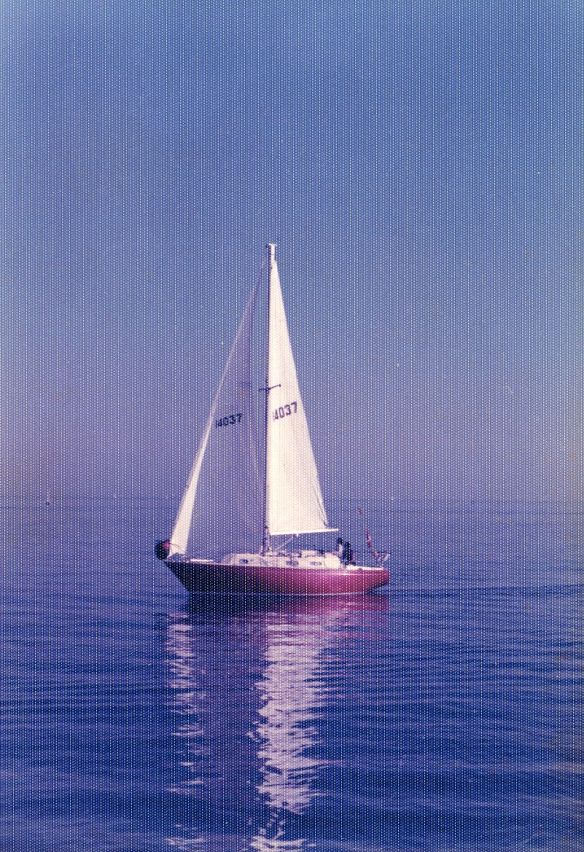
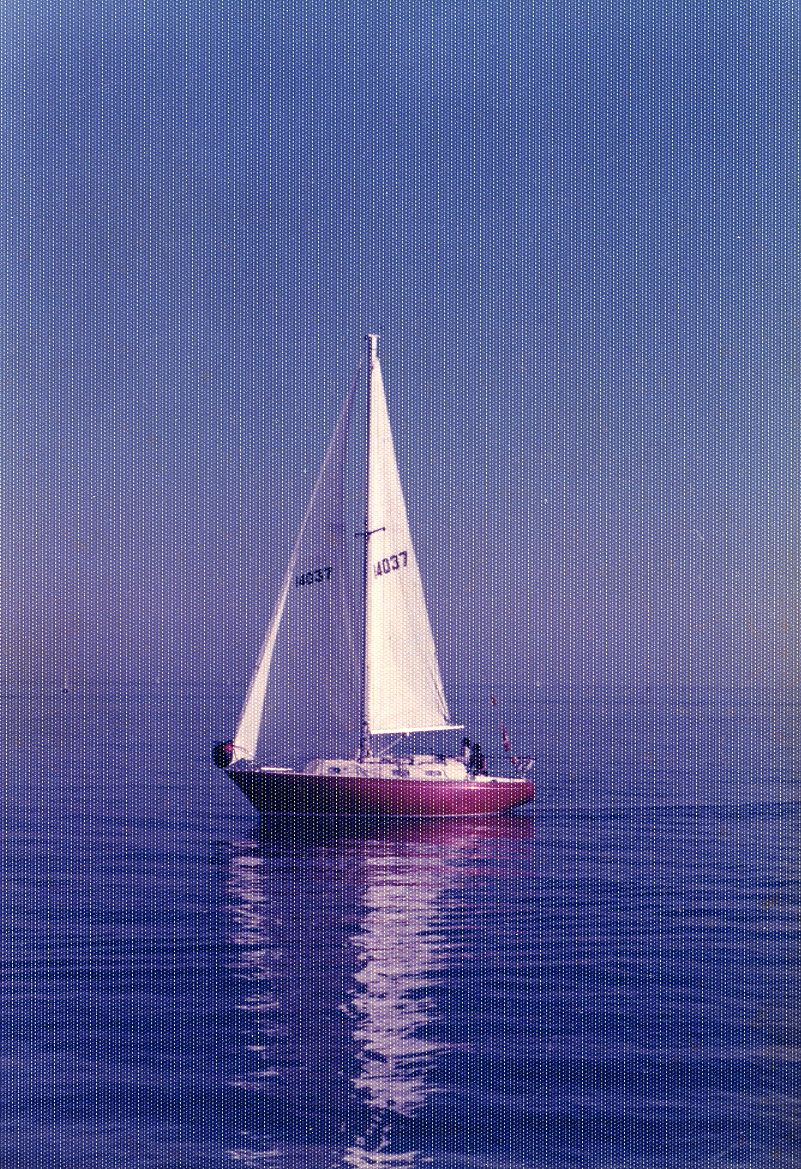
Sirroco, taken on a previous voyage

Sirocco, taken on a later voyage

Offa This Mountain: an anti-Shangri-la moment in

the bandWhen I get offa this mountain, you know where I’m wanna go
Straight down the Mississippi River to the Gulf of Mexico
To Lake Charles Louisiana Little Bessie girl I once knew
She told me just to come on by if there was anything she could do…

The prospect of an uninterrupted three weeks on this mountain, three weeks of sun, pure air and altitude is taking its toll. I’ve put in two already, but now I crave exhaust fumes, crowds, bookstores, freeways at a standstill, lunch at a noisy curbside.

I distract myself listening to the Band’s “Up on Cripple Creek” its raunchy message offsetting the unbearable niceness of life here at the village centre.

I distract myself by driving a golf cart. Turn the switch on. Press the pedal. Silently, it moves off, leaning over as it turns. Yes, it has an a go-pedal and a brake. No rear view mirrors. No directional signals. It has a governor. Which on down-hill runs kicks in later than I think it should. Once you put the brake on, it locks. The only way to unlock it s to press the accelerator. Stopping at stop signs is entirely absorbing. Turning on a hill causes a lean that is entirely exciting. Did I mention I’m a septuagenarian?

I feel like crying “Hi ho, Silver!” although it keeps turning into “Hi ho Silverwear. Don’t forget your underwear!”

Ah, little red Yaris, 2000 miles away in Toronto.

I come romping home to the small hotel in the dark, grab my Elizabeth George novel, take myself upstairs next door to Madd Bailey’s bar, order a Guinness and read. The bar is mine and mine alone.

I can travel – by golf cart or on foot – to an internet connection and a phone. There are of course no actual public phones still extant and no kindly charity has stepped forward to protect the species. I can, however, sit outside the internet cafe even when it’s closed and get online where the miracle of Skype lets me make phone calls all over the world. Try to have a private conversation, though.

The television set in my room seems to be the last analogue receiver in service. I can get a very, very grainy CNN and if I’ve already seen the show, I listen to the sound -The Sixties, Music e.g.; otherwise, forget it.

Yes, I am reading. And reading. And reading. A book every three days. Right now I’m embarked on another Lee Child, a Jack Reacher thriller, Running Blind. Without Fail is waiting at my bedside.

And listening to the Band on my iPod. “I’m a lonely boy/Ain’t got no home.”

Ostensibly, my mission when I’m not involved in the family healing project, is to plan a mystery novel. But I feel like one of the wasted detectives I read about -Vera Stanhope, Wallender, Rebus. In off hours, I just want to retreat to oblivion and music.

But hey, it was distracting to have my hair cut very short and get a bracing Christian message, all for $45 and a very small tip.

“Acadian driftwood, Gypsy tailwind,/They call my home the land of snow/Canadian cold front moving in/ What a way to ride, oh what a way to go.”

Such was my midnight moan, but sitting outside the Bear Claw Bakery having breakfast the next morning, my octogenarian friend warily asked if I would go shopping with her in Santa Clarita. “Just hand me your car keys,” I said as I sprang to my feet. An hour later, down many mountains, we found the mall. She completed her outfits for her grand-daughter’s wedding and I added to my collection of Apple gear – a small iPad

Pack in Haste: regret at leisure

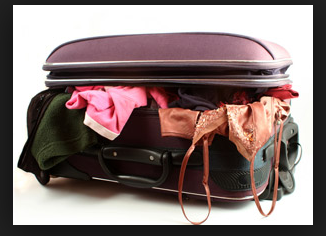
suitcase(howtodothings.com)

You’ve see those movies where the grifters have to leave town asap. They throw their clothes, hangers and all, into suitcases. Easy to do, because they had only one suitcase of clothes to begin with. Or the flee-ers scoop everything out of drawers into suitcases, which they slam shut. In comedies, some personal item trails out.

This time I had a 2 hour notice that I had to get from Toronto to Southern California. (Last time I got maybe 20 hrs.) It took me a half hour to figure out how to book  ticket while in a state of shock. (Definitely, on-line. Definitely don’t pay attention to prices.) Signed, sealed, delivered, checked in, bag paid for, boarding pass printed. Now what to pack?

I had made the same trip under more relaxed conditions, in early May, four weeks earlier. No problem, pack what I took then.

I dragged the purple suitcase out of the back of the long narrow cupboard. I set it on the blanket box at the foot of the bed, opened it and began flinging clothes at it. I had to be at the airport at 6 p.m. It was 5. Okay, this isn’t working.

I phoned Blake, my ex-husband. He knew he would have to drive me to the airport already. I said, “You have to come now,” I can’t think. He was with his young female friend. Let’s call her Noreen. “As soon as he could,” he said. They were caught in traffic. I kept flinging clothes. Breaking off now and then to empty the fridge, tie up the garbage, unplug the fountains. Forget the timer for the lights. I could cancel the papers once I got there. I was a whirling dervish.

5:20, they arrived.

“Joyce, this is Noreen” etc. I had heard a lot about Noreen. She seemed amiable enough.

“Can you two roll all this stuff up tightly and pack it.” The first time I’d met her and she was rolling my underwear.

I was stuffing toiletries into a plastic bag. When they finished, I put the dresses, etc. into the top compartment where they stood a small chance of not getting wrinkled.

They dropped me at Pearson International airport at 6:15. Noreen helped me put the bags on a cart and hugged me goodbye. Big surprise. No crowds. I self-served all the way through baggage check, customs, immigration, baggage loading – a nice Jamaician man lifted my bag onto the belt and sang me a song of his own devising- and finally, that metaphysical hurdle, security check, to arrive in good time at the gate for an 8:15 departure.

I forgot to mention the stop at the exchange counter. I have several hundred untouchable U.S. dollars in the bank, untouchable unless I present myself at the bank counter to claim them. I paid $138 Cdn for $100 US.

Fine.

At the first of June, on the mountain, north of Los Angeles, I survey my suitcase. What a difference a month makes! 24 times 31 little hours! It is hot, even at 5000 feet.

The grey wool suit, however light, is a non-starter. The tights will work on cold mornings or for midnight trysts. The desert cools down at night, especially at altitude. I have one t-shirt. No problem, here are 3 t-shirts from my male host. They should work. No shorts. Not even any capris or clam diggers. Well, here are 3 dresses and a wrap-around skirt that my size 2 hostess can give me. I am a size 14, but by some miracle, these are loose and flowing – on her. On me, not so much. I have brought the top of my bathing suit but not the bottom. (You should have some fun even in the middle of an emergency.) You know how they always say, “You can buy what you need when you get there.” They weren’t talking about the wilds of Kern County, but it is true in this one case. I find myself in Bakersfield and  buy a black bottom in Walmart. No sandals. No problem. I order some from Birkenstocks. I do not upgrade the shipping. Two weeks later I try to track the package. It has just been accepted by the mail service. In China. I pull out the silky tank top. It’s not the plain, soft one. It’s covered with glittery bits of plastic, like scales. I bought it for a costume.

Everyday, I discover new left-behinds: the list of my passwords for example. And no one will believe that I know my mother’s maiden name.

Bell has handed my cell coverage over to AT&T. The mountain is served only by Verizon. I send pleading texts from other people’s phones: please water the plant, did my parcel from Amazon come? Have they stopped paper delivery?

I can get most websites on my computer up here, but not my bank’s. I am reduced to telephone banking. How 90s!

They say that new experiences keep the aging brain young. I figure mine has dialed back to 17.


Bouts of Joy

Not us. Another group of haymow jumpers

Not us. Another group of haymow jumpers

Back in the Sierra Nevadas, having exhausted myself walking up the mountain at 7,000 ft., I came down to the village to walk beside the lake, really a pond that holds the water for the fire department. One side of the water is thick with cat tails and behind there is a slope covered with deciduous bushes of different hues, including a soft red. Suddenly, I had a flash of standing beside the Indian River with my grandmother, Gladys, when she was the age I am now and I was 42.

She and I had found ourselves single and living alone that summer. Her son had gone off to live with his best friend’s wife, best friend having passed to his reward. Gladys had left the farm and gone to live in a small house on the Quebec/U.S. border. Meanwhile, my husband, daughter and son had gone off in their own directions. Gladys and I were heart-broken and yet she still made me laugh.

She recalled a day in her first home, a farmhouse. It was spring cleaning time and she had hired a French Canadian girl whom I remember later as Aunt Kate. Kate was cleaning upstairs, when she suddenly came rushing down yelling, “Gladness, Gladness, the house is on fire.” It burned to the ground. All that was left was a stone-lined cellar hole. Gladys roared with laughter as she imitated Kate.

They didn’t lose everything. The “men” -two of them would have been about 12- must have smelled the smoke or heard the sound of pots smashed together that called them back. They rushed in and grabbed the first thing the saw, the big round oak table, which immediately got  jammed in the door. Gladys screamed and yelled. They pushed and shoved. Finally the door jam yielded and the table flew out, but precious time had been wasted. Other men began to arrive and grab what they could. Some things Gladys loved were lost and the family of 6 was homeless. But in the country, someone can always squeeze in a family of six.

Twenty seven years later, the family had changed shape. My mother, who was 13 when the house burned, was married as were her next three brothers. But there were still three children at home, more or less the same age I was and I was 19. This house, too, caught fire. Once again the men seized the oak table first. Once again it got stuck in the door and Gladys screamed, “Leave that damned thing to burn”. Gladys never damned anything. It was the worst word to her. They didn’t leave it. See above.

The third house was built by the community across the road from the second one. The porch was smaller but screened. There was a coal furnace in the cement cellar and no longer needed to be insulated on the outside with banks of sawdust. And there was an actual bathroom. Until 1955, the old out-house had stood at the back of the wagon shed and only little children could use the commode inside. Gladys was very happy there. Her kitchen stove had a wood side for heating and an electric side for cooking. She had hot and cold running water, which ran into a claw foot tub. Many a visit, we sat at the much despised round oak table and laughed.

We laughed about the time that four of us, aged 11 to 13 decided to jump in the hay. It wasn’t a dangerous sport once the new hay had been harvested, but it hadn’t. All there was in the mows was last years hay, so low in the mow that it could be pulled down through the lowest door. Moreover it had compacted and was hard.

I was 13, Evelyn and Ted, twin aunt and uncle, 11 and Percy, 10. The boys dared us to go out onto the side beam that led across the mow from the barn floor (ramp) and jump from there. Sure, we girls said we can do that. The boys went first, sliding on their bottoms far across so as to leave space for us. I went next, noting as I began that it was at least 20 down. I could barely move. Finally, Evelyn began the crossing. We were all scared but she was terrified. She didn’t want to lose face in front of her brothers and once, embarked, she couldn’t go back either.

My sisters, Georgia 7 and Anne 5 stood watching on the barn floor.

I was sweating and gripping the beam. First Ted and then Percy launched himself off into the air with a bloodcurdling whoop. They would crash together, I thought. Both disappeared. A few seconds later their heads appeared as they dug themselves out of the dusty hay.

I knew I couldn’t do it. “Go back, Evelyn,” I cried.

“I can’t move”, she said. Me neither, I thought.

I studied the mow. The boys were urgently calling us to jump. “It’s fun. It’s not so bad.” My stomach heaved. I had to go to the out-house. I jumped.

The worst part was drowning in hay dust and desperately scrambling out. But now we had another problem. Evelyn was deaf to our pleading. She was weeping in terror and hiding her face in her shoulder.

“Go get Ma,” Ted yelled to my sisters. They clomped off down the wooden ramp. Crying and yelling ensued while we waited. Then Gladys was there with her small grand daughters, wiping her hands on her apron, and clearly not happy.

“What in the name of heaven were you kids doing out on that beam?” We always jumped from the barn floor and never into low hard hay. “Get back here,” she screamed at her daughter.

“Can’t,” said Evelyn,” Can’t move.”

“Well, then jump!”

Evelyn protested she would die if she did.

“Well, you’ll die if you don’t, Evelyn Grace. I’ll come out there and give you such a clout…”

Evelyn threw herself headlong, screaming, and landed on her face. We pulled her out and I dusted her off, but she continued to scream that it was all our fault. The boys and I ran across the hay, through to the mow over the cowshed, down the trap door, out through the empty cow shed and up around the barn. There on the dirt ramp, stood Gladys, her face in her apron, laughing so hard her body shook. My little sisters, who were totally unused to laughter, clung to her skirts.


Bulletin from Shangri-la #5: village life

Village in Sierra MountainsMy mother was gravely ill for several years before she passed. She took comfort in the idea that God never closes a door without opening a window.

My own experience was summed up in a recent cartoon. Two women are lunching. One says to the other,” I find that when God closes a door and locks all the windows, I can still squeeze in through the dog door.”

But black humour aside, great misfortune often produces blessings.

One upside to the economic crash is that my family and I found ‘Shangri-la’, a mountain village in the Sierras. (Notice how canny I am about not naming it or providing its co-ordinates. Get your own great misfortune.)

For all I know people may live to be several hundred years old here as they did in James Hilton’s fictional paradise in Lost Horizon, high in the Himalayas. Certainly there are a lot of older people here, retired cowboys, architects, doctors, executives. Many working visual artists and an unusual number of professional musicians surviving the music industry’s transition. They can’t seem to get even free beer for plying their craft, but it doesn’t stop them from gathering and playing their hearts out.

After a previous -but lesser- misfortune, I moved to a country village in Ontario, Canada. For one thing it was cheaper there and things were on a human scale. You could park anywhere at no charge. I was right at the centre of town, a no-stop-light intersection, beside the church and the post office and across the road from the only store. I could walk out to the country in 4 directions in less than 15 minutes. One Christmas Day, I picked up a parcel from Belgium. My Newfie dog could wander in the field behind me at will. I went to buy a saw at the store one day. The Korean owner asked me what I needed to saw. I said ” A piece of wood this big.” I was mending a door frame. “Take it and bring it back when your done,” he said. The guy in the Mt. Albert hardware store always understood what thingamagig I needed and generously explained how to install it. I even had my own barn. Lots of storage there. And the tallest TV antenna tower for miles around. It soothed my soul. And set me up nicely for the real estate crash that coincided with the necessary selling of the house.

But it wasn’t Shangri-la. I was an in-comer for the entire seven years I lived there. The long term residents still mistrusted me, although they welcomed me at church. Like the other in-comers I commuted to work, although unlike them, I did not drive a big rig. Some of them thawed when one of my seven cats took to following me and the Newfie every time we went for a walk. “Oh, you’re the woman who walks her cat…”

In this Sierrra Shangri-la, everyone speaks to us. Getting croissants or the mail has to be leisurely. Dogs and people waylay us. It’s true that my son-in-law knows all the musicians and golfers, my daughter knows the musicians and everyone who goes to the daily tai chi and yoga classes, they both know all the artists, and the Vegas mother-in-law talks to everyone in the casinos, so of course she talks to everyone in the village. You simply do not pass anyone without speaking.

Worn out by the short walk “downtown” -it is high, remember- I collapse into the big chair, my feet up on the big hassock. The door is open to the breeze on this warm day. The pines are sighing, whispering, a song of deep contentment that I have brought with me from my childhood when we picnic-ed under them.

Life on a human scale! This is bliss.


Bulletin from Shangri-la # 4: spirits

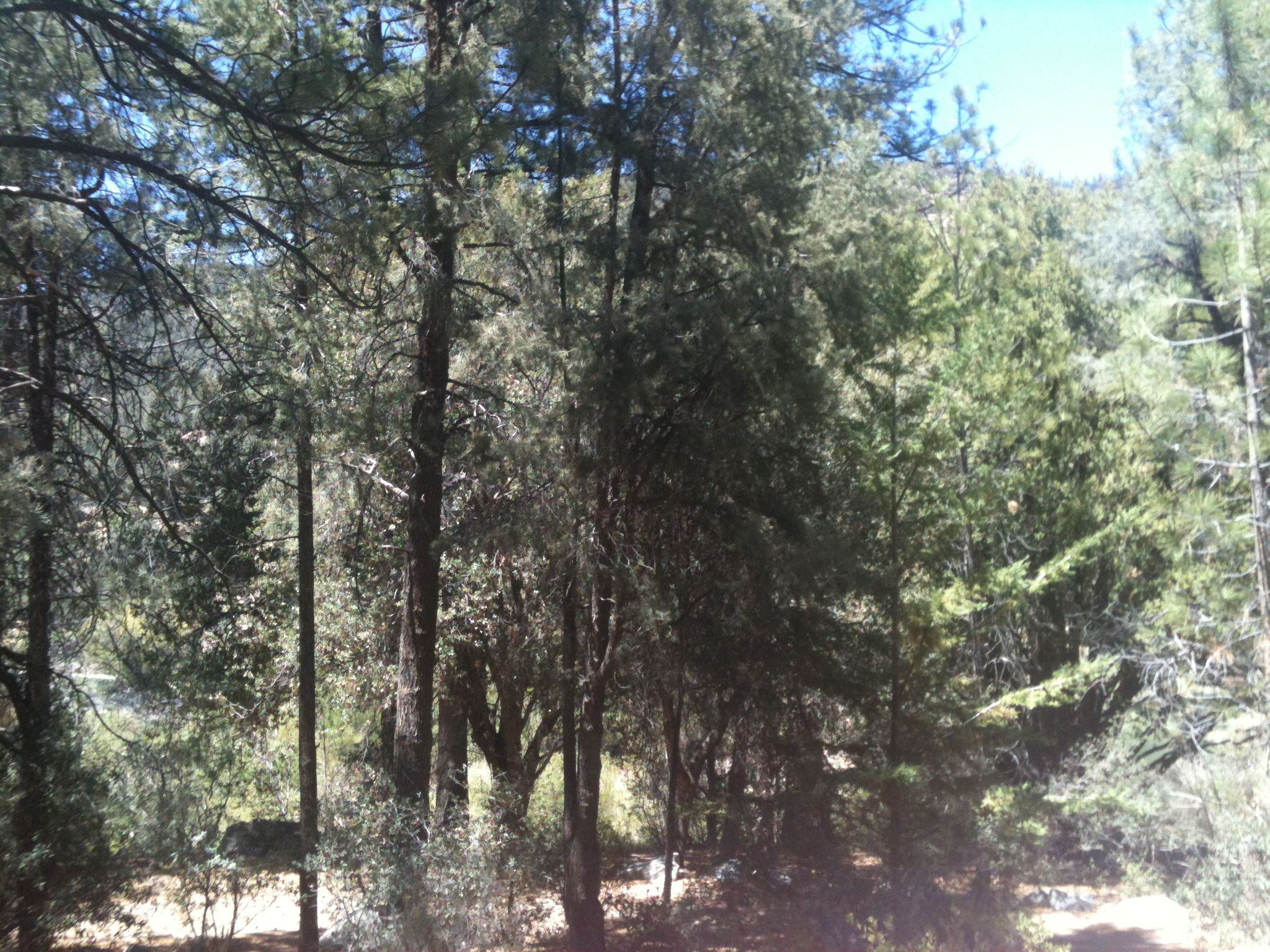
trees outside windowWhen I first walk into the house in the pines, I hear my mother say, “It’s beautiful!” My mother passed on in 1976, but this is the first I’ve heard from her. My grandparents, even my father-in-law and certainly my father when his time came, showed up in the days after they moved on. Not my mother. Absolute silence. So profound, that I had an existential breakdown. Now here she is- or seems to be- celebrating the tiny, jewel of house in Sierra mountains.

Of course she would be here, if anywhere, because the mountains and the pines are like her birthplace in Hereford, Quebec. And we are here, her daughter and her grand-daughter and full of joy to be together. It is the week of Mother’s Day and Julia’s mother-in-law is due to arrive as well.

We speculate that my mother has been lost in the timelessness of that other place, a purgatory of her own making, and only now has found a beacon to guide her out.

In the days that follow, her spirit seems to be doing loop-de-loops in the blue sky above the mountains. All the other mothers in our line, Janet and Jenny and Gladys, come into our thoughts as they often do, but only Lila is delirious.

She is not the only spirit there.

Besides being thin, the air is bone dry in this drought. Near the front door, a humidifier sends a jet of mist into the air. Out of the corner of my eye, I see it as a dancing water sprite.

The floors are local stone, patterned like rugs. Every step feels rooted in their strangely old, slumbering consciousness. There is a small cairn of rocks near the entry and California jade and other semi-precious stones on the desk and tables. The fireplace and massive hearth of red brick fills one whole wall. The cathedral ceiling is rafterred and wooden. A wall of sliding doors looks out on the woods. Below a lake peeks through the trees.

This is a Taoist household with altars to the ancestors and the family, but there is also a stone Buddha sitting below the bookcases. A path of beige floor stones leads up to him. One morning when I am making tea, I catch a glimpse of a figure standing in front of Buddha, the figure of a monk in a brownish robe. When I turn, he gives me what can only be called a stink eye. I hurry away. Julia tells me there is a Zen monastery nearby.

Enough proves to be enough one night as I get into bed, I have a picture of an army of brownies – no not that kind- tiny beings wearing red hats and overalls going about some work under the trees. I saw such creatures when I was a child when my father took me fishing in the trout stream that ran down through the woods. They scared me with their intensity. I always understood the Seven Dwarfs on a visceral level.

In the fields, as a child, I saw fairies – blue and pink and gold- or once in a while, a towering angel. I preferred them.

Happy ghosts, water sprites, meditating monks, nature spirits, but I don’t have to cry like Macbeth, “No more sights!” I move over to the boxcar house and don’t even see dead miners. https://115journals.com/2014/05/15/bulletin-from-shangri-la-the-boxcar-house/


Bulletin #3 from Shangri-la: bears and lilacs


wildanimalfightclub.com

wildanimalfightclub.com

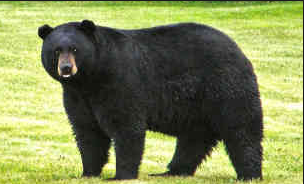
The bears and the lilacs come out together, they say. The Lilac Festival began last Saturday. On Friday around 7 p.m. a black bear ambled across the golf course. Diners rushed to the deck to watch it head off toward the wooded Sierra slope. There was no doubt who owned the place. The rest of us were merely guests who had to play by the rules.

Garbage goes in a bear-proof safe or directly to the transfer station. Recycling thoroughly washed can go in a locked shed. Grills have to cleaned immediately and well. Food or food wrappers must not be left in a car. (A friend of mine discovered this included corn-based kitty litter the hard way, but at least her bear tidily opened the door, whereas others destroy the car.) Sliding doors and low windows should be closed and locked at night. Always remember that a fed bear is a dead bear.

I come from bear country. I saw my first dead bear hanging from a makeshift tripod of logs when I was very small. My father thought that was just what any little girl needed apparently. Certainly he was very excited. My grandmother and I took pots with us when we went for a wilderness walk, banging them together now and then just in case.

There were lots of funny stories -funny in the retelling- about bears and pies, and bears and flour and molasses, bears and broken windows… Once my uncles and I, the same age,10 or 12, spotted a bear in the vegetable garden. The men were off haying or something. The boys had 22 rifles, as farm boys often do. Despite Nanny’s protests, they loaded the guns and set off to defend us females. We watched them dodge into the tall corn rows. They were crouching as they went and soon disappeared. The bear had also disappeared. Suddenly one of the boys stood up. One corn row away so did the bear. They were nose to nose. Instantly, both turned and ran, crashing in opposite directions. I was terrified. My grandmother was screaming. Then a minute later, she was holding her sides and laughing.

In this Sierra village, some benighted soul filled a tire swing with honey to attract a mother bear and cub. The bear broke into the house next door and vandalized it. The Rangers -the town is in Los Padres National Forest- trapped it in something that looked like a culvert. The bear was not relocated. See above.

The lilacs are not so demanding.

leslieland.com

leslieland.com