Bitter and Slow: part 2 -slow food

Having extolled the virtues of bitter greens, I am now moving on to the benefits of slow food.

LIke most people, I don’t look forward to hours at the kitchen counter after a busy day, so I don’t mean food that requires long and complicated preparation, but rather food that takes care of itself simmering away on a slow burner for hours, filling the place with mouth-watering fragrance. Specifically, I am talking about stock or broth and tomato sauce.

Two things have driven me to embrace slow food, diminishing financial resources and health concerns. The kind of restaurants I can afford, now, don’t serve the quality of food that I want to eat. Excellent organic fresh produce and meat prepared in an appetizing way comes with a high price sticker if I eat out,  but I got sick of the plain food I used to make before I took up slow-cooking stock. In addition, I have health challenges including a weak digestion and a tendency to osteoporosis.

Earlier, in “Helpless Human versus Pressure Cooker” posted on May 22, 2012, 115journals.com I alluded to the fact that I cook brown rice in an Ohsawa pot set into a pressure cooker. I soak the rice overnight and cook it for 50 minutes. Doing so, makes it easier for my system to digest it. I also soak the rice farina that I cook for breakfast and I have it on good authority that soaking steel-cut oats for 24 hours prior to cooking them for breakfast renders them as delicious as croissants. With or without butter and jam, I’m not sure. I have cooked my rice that way for years and I can make it more or less sticky by adjusting the amount of water, although I tend to use the usual twice as much water as rice, a stickier option.

It was only when I disagreed with my doctor about the significance of bone density scores that I turned to bone soup. (I have not broken a bone in 3/4 of a century and surely this says something about the strength of my bones; moreover, the medication would be entirely indigestible for my tum-tum.) Bone soup is an interesting name. I lived once in a sort of commune that served bone soup every Friday night, calling it a light supper. It was light all right. You could see through it. By the time, you had extracted the chicken bones, you were left with little more that broth with a few pieces of carrot and rice noodles. I soon learned to jump in the car and head out for the nearest burger joint that night.

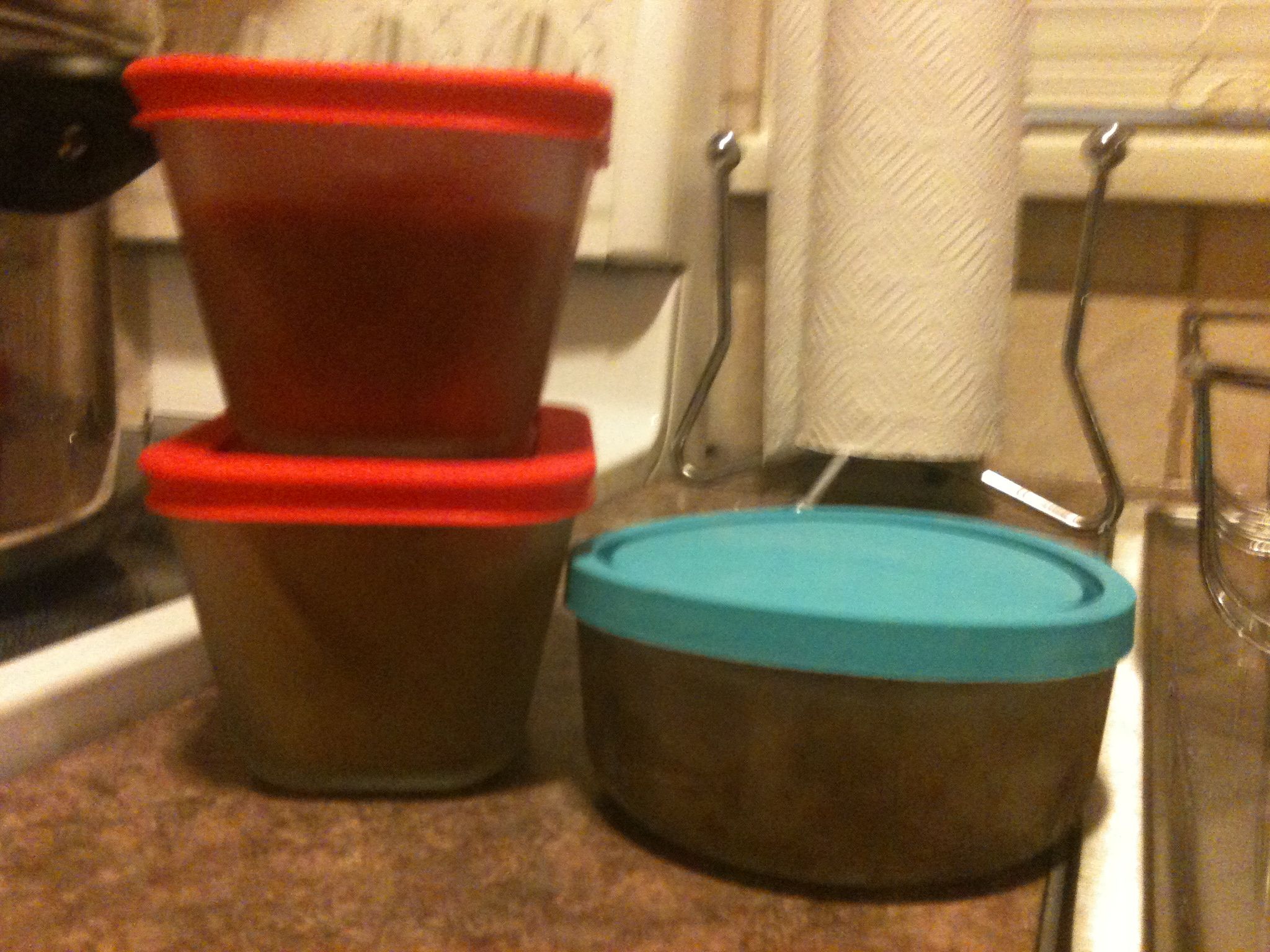
That’s not what I mean. I’m talking about beef or chicken stock made by roasting bones with as much marrow as possible and then stewing them gently with vegetables for at least 6 hours. It takes less than half an hour to prepare the ingredients, 40 minutes to roast them, a few minutes to transfer them to a stock pot. Once the burner under the stock pot is turned down to its lowest setting, it doesn’t have to be tended and the only other time needed is the washing up and transfer to containers for freezing. I use a pyrex type of small container and stack them in my small freezer. If I plan ahead, I take one out and thaw it in the refrigerator for 24 hours before I make stew or soup or gravy. If I forget, I put the frozen container in a pan of cold water so that I can pry it out in a hour or so and finish thawing in a pan on the stove. I can put together chicken soup from left-over chicken, thinly sliced carrots, green beans or chard and pre-cooked rice in about 15 minutes.
I found inspiration online and in The Joy of Cooking, but I adjusted the recipes I found to suit me. I don’t use onion, for example, just carrots and celery. I do use good quality bones – beef, marrow bones, for example, with ox tails sometimes and always some chicken bones even in the beef stock or chicken backs with a few thighs, perhaps for substance. I roast all the ingredients at 400 degrees F. I roast the vegetables for the last half hour. This gives my smoke alarm a workout unless I remember to relocate it temporarily. I use much longer cooking times – 6 hrs.- than The Joy of Cooking suggests.

I got hooked on the idea of roasting bones, years ago, when my first (although not then) son-in-law arrived from NYC and sought to woo me to his cause by roasting bones and making a reduction. He made a delicious meal and won me over. Thanks P.

I also make a vegetarian stock for when I cook for friends who don’t eat meat. Then I do use onion and a whole bulb of garlic. I found a recipe at allrecipes.com and have cooked it twice, both times enjoying how great it smelled and how great it tasted in a vegetarian Irish stew made of course with stout. (Sam Smith’s is vegetarian.) I found such a recipe by Melissa Breyer online www.care2.com. I t uses root vegetables including carrots, parsley, parsnips and turnips as well of course as potatoes and pearl barley, all in the previously slow-cooked vegetable stock. The stew itself takes only an hour or so, but be sure to get the barley well-cooked, not crunchy. Recently a huge pot of this stew went over very well at a potluck lunch. It was a stick-to-your-vegan-ribs sort of meal.

The other thing I love to slow cook is tomato sauce, not exactly a novel idea, I know. But I couldn’t eat tomatoes at all until I was told by that same good authority who soaks oats for a day that if I cooked them many hours I maybe could. I opted for 6, just for consistency. I simmer 4  or more cut up pounds that long until they are more or less paste and puree the result. Once again I freeze the paste and I can make a tomato sauce from it in a few minutes. I can’t use much and I still find it challenging to digest but it adds flavour and interest to my diet a few times a month.

So there you have my ideas for slow food, which miraculously turns into fast food, which tastes as good as gourmet restaurant food and which keeps me healthy.

Bitter and Slow: part 1 bitter greens

No not my personality!

Recently, my morning paper, read “Adult taste buds in a bitter retreat” subtitled “Sweet tooth overindulgence exacerbating picky palates”. (National Post, Sat. Oct. 13, 2012. Unfortunately this particular article is not available online.) In it Elizabeth Hames examines the apparent trend of adults reverting to  more childish tastes for sweets, as evidenced by the milky sweet concoctions available at Starbucks such as Frappuccino. Even beer is getting sweeter. And in Britain, it is now possible to buy Supersweet Broccoli, a Scottish- grown variant, touted by one chain store as benefitting pregnant women. The consumption of bitter leafy greens has declined there by 11%. In the U.S. grapefruit growers are going out of business.

Children, as you may remember from your own experience, have to develop a taste for bitter. It used to happen in the natural order of things that our tastes buds grew more refined, so that as adults we might have come to like the taste of olives, black coffee, hops in beer and martiniis as well as broccoli and its ilk. Apparently, this trend can be traced to the declining cost of sugar, due in part to the U.S. subsidies for corn growers and cheap availability of high fructose corn syrup.

“By abandoning refined tastes we eaters may actually be exacerbating the pickiness of our palates. Eating fewer flavourful foods, including certain types of produce, is believed to be creating a widespread deficiency in zinc, a flavour-enhancing mineral… That means it takes us longer to satisfy our flavour threshold which is when our brains determine we’ve had enough to eat.”

I was converted to bitter, leafy greens during a spell of bad health 25 years ago. One of the stories that convinced me was this one: newly trained doctors looking for a place to set up practice in Germany in the 19th century would go from town to town and they never chose to settle in a town where people were growing kale in their gardens. I believe that the health I enjoy today is in part of the result of eating kale and other bitter leafy greens almost every day since I heard that.

Not all bitter greens need to be cooked and even some that need to be cooked can be eaten in salads when young. Recipes from older cookbooks may advise long periods of boiling, I suppose, to make them more palatable to unrefined palates, but I just steam mine for a few minutes, more or less, more for more mature leaves, especially if I am also cooking the ribs. The longest I steam them would be 5 min., usually less. I serve them with a little olive oil and salt, or sometimes balsamic vinegar, oil and salt. Sauteeing in oil at the end or throughout also works. Some people roast kale to make chips.

Here is a partial list of bitter, leafy greens: argula, Belgian endive, beet greens, chard,chicory, cress, collard greens, endive, dandelion, kale, black kale, dinosaur kale, mustard greens, radicchio, rapini, spinach, watercress, rocket.

Of course, we are all already eating some of them and we know that oil and salt or salt substitute make them tasty and vinegar doesn’t hurt. In general, the hardier the leaf the more nutrients it provides. Many of us, who are  lactose intolerant, rely on them for calcium as do vegans. http://www.vrg.org/nutrition/calcium.htm

I add kale to stews for the last few minutes, adding new leaves when I heat up the leftovers, a particularly good way to eat it as the days grow colder. And of course I can add it or chard to my green soup. (See Green Soup posted July 28.)

Next I will consider the slow cooking I like to do especially at this time of the year. It fills the house with delicious smells that banish negativity and suit weak digestions.

Sage Baby: Bad Titles follow-up

A couple of posts ago, I ruminated about titles that get outdated by time, including George Orwell’s 1984 and my blog 115journals. I imagined that the three journals I have written since are seriously put out and I rashly promised journal 118 that I would mollify it by posting its highlights. Today I reached page 215, the last page. Journal 118 started on July 8th is now retired from active duty.

Let’s see what’s there.

Oh. My. Goodness. Anais Nin would have relegated its first part to her diary of pain. When she was mortally ill in Big Sur, as I remember, she divided her journal in two and kept the unpleasant stuff separate. I haste to add that my “pain” was more mundane and much alleviated by simple means such as a new regimen of supplements to replace the minerals I was short of.

Then I come to a dream I had in which I was a young doctor just beginning my residency when I learned that I was pregnant. The dream was suffused with love, warm, nourishing love for and from my husband, and a quickening sexual desire. I went out for a walk by myself on a rainy Sunday evening to relish this feeling. Oddly, I came upon my actual/ non-dream-life son in the course of this walk. He was working as a blacksmith -not of course in real life -outside his forge and raised his head only briefly to ask if I had written another book.

I seemed to be living an alternative past and seeing an alternative future.

When I looked at what the dream meant, I saw that I was dreaming of healing myself. The Sunday night walk could be seen as a sign I was now complete enough in myself to do so. Someone I told the dream to said I was dreaming about my “sage baby”, that gestation is a symbol of spiritual cultivation.

So I looked on the internet for “sage baby’ and found it was the name of a company that produces baby blankets, a name given to both boy and girl babies and the name of a musician. Not helpful. I imagined people sitting in a shamanic circle fashioning tiny doll babies out of sage leaves. Then I finally realized she meant “wise” baby.

Ah, a familiar idea. One of western civilizations most important festivals centres on the wise or sage baby, born in a manger. But it has seemed to me for some time that this is better understood as the birth of the Christ in the cave of the heart, in other words, our own soul discovering itself and knowing it is one with the divine creative spirit.

A book is another kind of sage baby and my real son was/is fashioning his own sage baby, in iron with fire.

So there you go, Journal 118. That is surely your highlight, an actual insight.

Isn’t it curious that in our dreams, we can be any age, possibly because we are not actually age-specific.

How’s your sage baby coming on?

Green Soup or Bieler’s Broth for prostate and bowel health

Enjoy!

kale, optional

See also: celiadermontblog.com/2014/04/20/spring-greens

For many of us, especially we oldsters, cancer has become a chronic disease, which can be managed. I’m all in favour of western meds as front line tools – don’t get me wrong, but the prostate clinic at our local cancer hospital got me thinking that I should re-post the green soup recipe. I believe eating it every morning for the past 11 years has kept my breast and bowel cancer at bay. Stands to reason that keeping the bowel “scrubbed” will also help its close neighbour the prostate.

I see lots of wives and other potential cooks with the men in the clinic, but having one is no reason to fob off the task, just as not having one is no reason to opt out.  It’s easy. Adapt the recipe below to 3 ingredients: zucchini, beans (green or yellow) and parsley to make it easier. (I don’t measure really. I just use a big bunch of parsley, a bag of beans and a big zucchini to balance. You’ll figure out what you like after a few test runs.) Make it once a week and freeze daily portions.

And of course, follow your bliss as Joseph Campbell said. Green soup will soon be part of it.

ORIGINAL POST

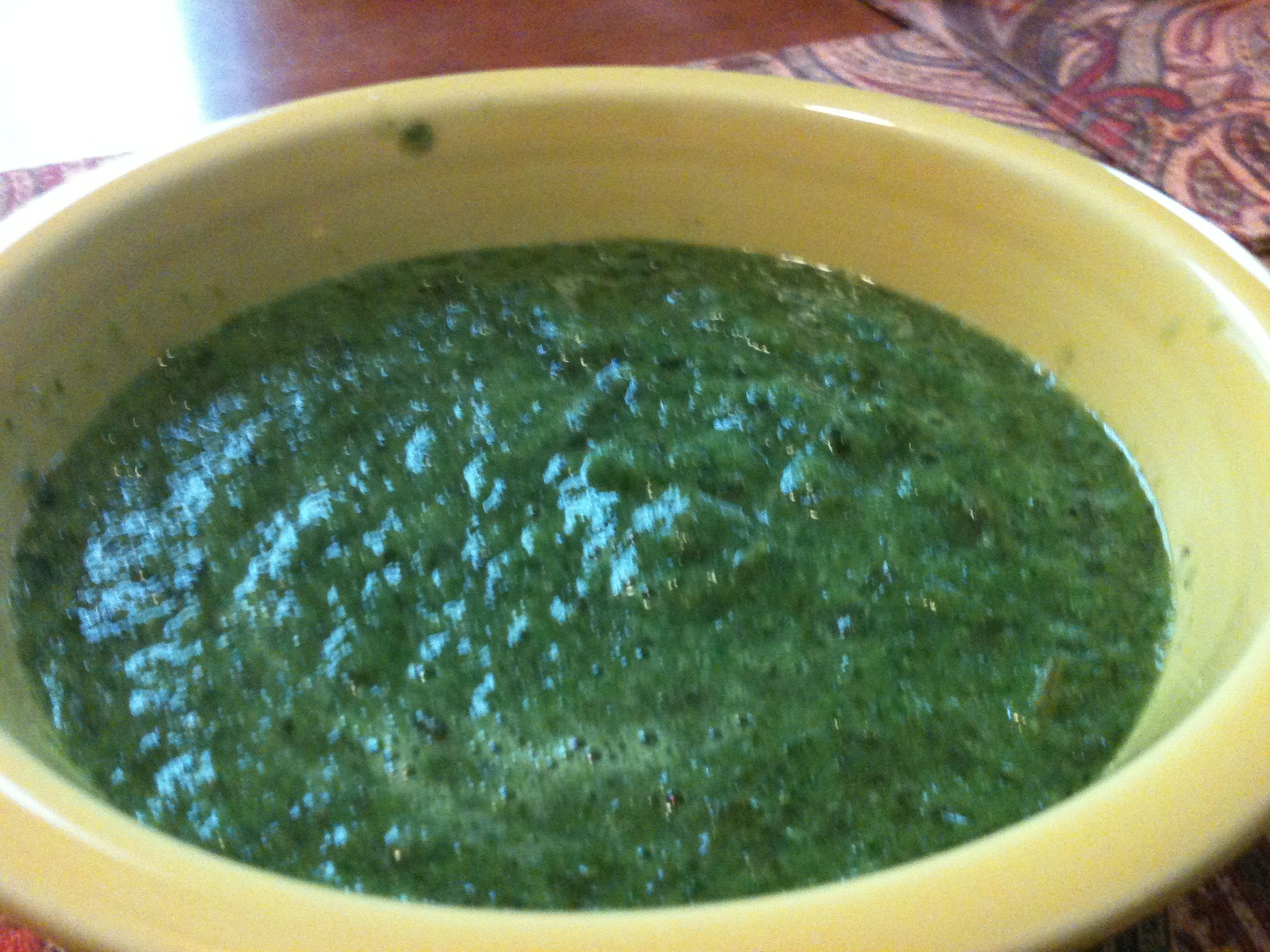
This is my variation of Henry Bieler’s broth recipe. His uses celery instead of seaweed or kale and chard as mine does. (You can find his recipe on Google) Green soup at breakfast is a great way to start the day. All those green pot-scrubbers (gut-scrubbers?) get to work for you right away.

chard

GREEN SOUP/Bieler’s broth

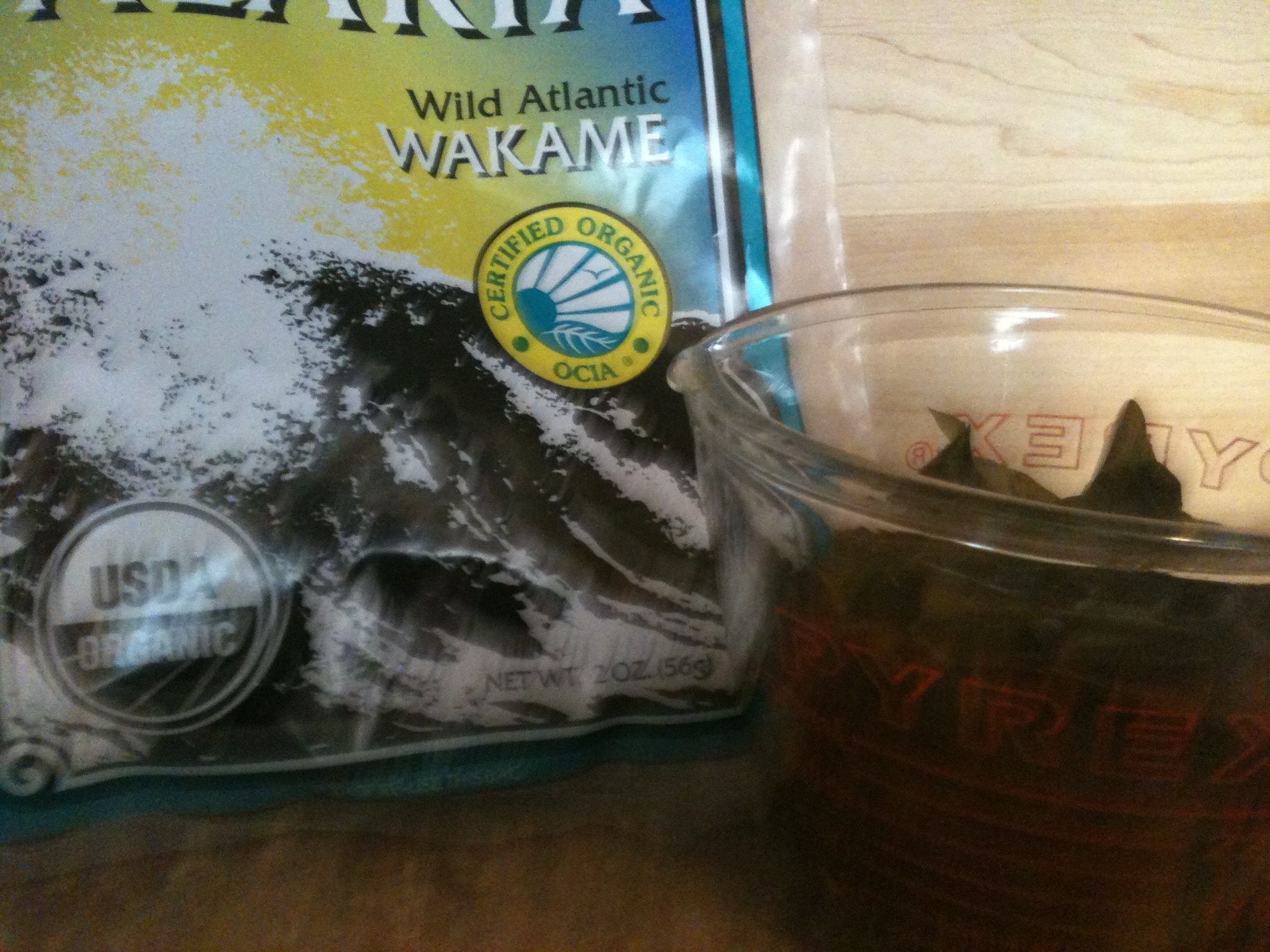
1 cup soaked seaweed (wakame or alaria) or kale or chard
1 medium zucchini, sliced
1 cup green or yellow beans, tips off
1 bunch of parsley, finely chopped by hand or processor
1 – 1 1/2 cups of water

Bring to boil, turn heat down, cook 8 -10 minutes. DO NOT OVERCOOK. Should still be very green and possibly still crunchy.( When using alaria, which is tougher than wakame, I precook it for 1/2 hr.)
Run through a food processor until as smooth as you like. Water down to suit when you reheat and eat. Freeze in suitable portions if necessary. I keep out 3 servings and freeze the 6 remaining in ziplock bags individually.

1 cup wakame/alaria, cut and soaked

1 medium zucchini, sliced

1 cup green beans, 1 bunch parsley

108 Moves in the Right Direction: tai chi or NOT

The Tao Te Ching begins by telling us that the Tao that can be named is not the true Tao. That is true of many things, your love for your spouse or children, for example. Try putting that into words. And it is certainly true of tai chi.

Anthony left a request on my book Never Tell‘s Facebook page asking me to write about tai chi. I replied I would think about it. I have done, for several weeks and I still don’t know where to begin. So I’ve stolen the motto of an international tai chi organization and I’ll see what I can do.

If you follow my blog, you know I am ancient of days. (not The Ancient of Days note. That’s another dude, who, presumably is a tai chi master Himself.) But, TA DA, drum roll please, I can stand on one leg and luffa the other foot, I can lie down on the floor and get back up with no help, (shut up chair), I can get out of the car without lifting the outside leg with my hands and so much more. I have survived 2 malignancies, one for 13 years and the other, completely different one, for 10. So much for the score sheet.

It is also true that I am one of those lucky people who are earning their wings through suffering. My body thinks it’s amusing to be in one kind of discomfort or the other all the time. It scrolls through a punishing list of pains and aches on a regular basis: bowel spasm, back spasm, leg spasm, indigestion, dizziness, feeling faint, feeling faint while sleeping (!), fatigue, exhaustion and, my personal favourite, diaphragm spasm and weakness.

Now Body’s objecting that much of this is caused by me or Mind that keeps shoving stuff down into flesh and muscle and organ and bone INSTEAD OF PROCESSING IT IN A MENTALLY HEALTHY WAY. OK, stop shouting. I hear you.

And so I do tai chi.

I started 20 years ago, but I began serious study only 15 years ago. As late as 10 years ago as I was recovering from major surgery in So Cal, I still couldn’t do the whole set up in Kenneth Hahn park without a plastic-covered cheat-sheet on the picnic table. When I was more or less better and back in TO, I started going to class more often and ended up instructing beginners for 8 years.

Listen, you don’t want to start tai chi. It’ll take over your life. You’ll get addicted to all those endorphins. You muscles will ache at first and you’ll have to consult your teacher about whether you need to correct something to stop it. You’ll be in trouble at home for being out so much. Just when you think you’ve got it, your teacher will let you know you haven’t. Then you’ll feel as if you can’t do it at all. There is absolutely no end to it. I’ve heard people say it will take several lifetimes just to get one move at the end, call it “Turn to Sweep Lotus” down pat. Face it -there is no “down pat”. There is no perfection. Never. You can go on learning forever.

OMG, you actually like that last idea!

Well, you wouldn’t like that feeling of calm that settles on you during the set, once you have  learned it enough to follow. You wouldn’t like the group energy that gets going when you follow each other well. You’re an individual aren’t you? You’re a North ‘Merican if not actually an ‘Merican. (No apology needed Ozzies as you know. You’re even more so. And that 1 German viewer same diff.) You don’t want some tai chi master correcting you. Good grief, all the instructors in my club are volunteers and we are supposed to maintain our own club building and run the damn place. “This is not an exercise club”, we are told. Charitable works, open hearts! Come on!

Of course, you may be able to find a tai chi club that espouses closed hearts, uncharitable works, etc. Good luck! Your club may just charge you a high fee and let you go your own way.

I have to confess that last Saturday, at the good old volunteer-based tai chi club, when 7 of us foregathered in a work party to lift and drill and clean and eat a delicious lunch that an  someone had brought unbidden, then I was carried back to my childhood and the church hall with the women setting out the chicken pie supper. I loved that group co-operation and getting things done.

Doing a tai chi set later, a group of 6 just like doing it in a group of 35 or on occasion in a group of 700, has that same feeling, many-fold.

I hesitate to recommend tai chi to you. It’s a serious decision. You’ll be frustrated at first. You don’t want that. You may hurt sometimes. You’ll never actually know whether it’s the tai chi that making you limber and strong and keeping you alive. And all that peace that comes of a moving meditation, how’s that going to jack you up?

Better not.

Home Spa: Castor Oil Pack for Tough Muscle Pain

There are 3 layers to a castor oil pack – a flannel or soft cloth soaked in castor oil, a piece of plastic and a heating pad, in that order.
They say a wool cloth is better but cotton seems to work fine. Castor oil, as I said in the Salt Scrub post, is nicknamed the hand of God because it seems to reach into the soft tissue. It is also a powerful laxative as you know, but not when applied to skin as far as I can see. There are various versions, including cold pressed, but any will do. Multiple applications my be necessary.
If there is no heating pad available, try heating the soaked cloth in a double boiler or microwave oven first.
Castor oil is heavy and hard to remove from fabric. I keep an old, oversize t-shirt to wear when I use the pack.

Home Spa: Salt Scrub for Muscle Pain

Mix castor oil with sea salt, and add a few drops of lavender oil. Mix so that it is not too oily nor too grainy. Rub on sore places, wet or dry, until skin reddens slightly. Shower off when done.
Castor oil, beloved of boxers, has been called the hand of God because it can reach into muscle knots.
I like a softer, unmilled sea salt but any will do.
Choose lavender for calming or eucalyptus for cold or invigoration. Pettigrain is nice. Experiment. Use vanilla in moderation if you don’t yet have essential oils.
It’s good for the skin too.
Watch for “Making A Castor OIl Pack” for sore muscles.