BLUE BOY

It was the fall of 2001 and the Los Angeles Times said that the Titan Arum (the Corpse Flower or Stinky Flower) would be blooming at the Huntington Gallery in San Marinoo only today. It was one of the largest flowers in the world and bloomed only every five years and only for three days. Twenty two years ago, there were many fewer of them in the world, but the Huntington had snaffled one. Yesterday, it had been at its best. Today would be the last chance to see it in flower. Tomorrow, the flower would wilt and die.
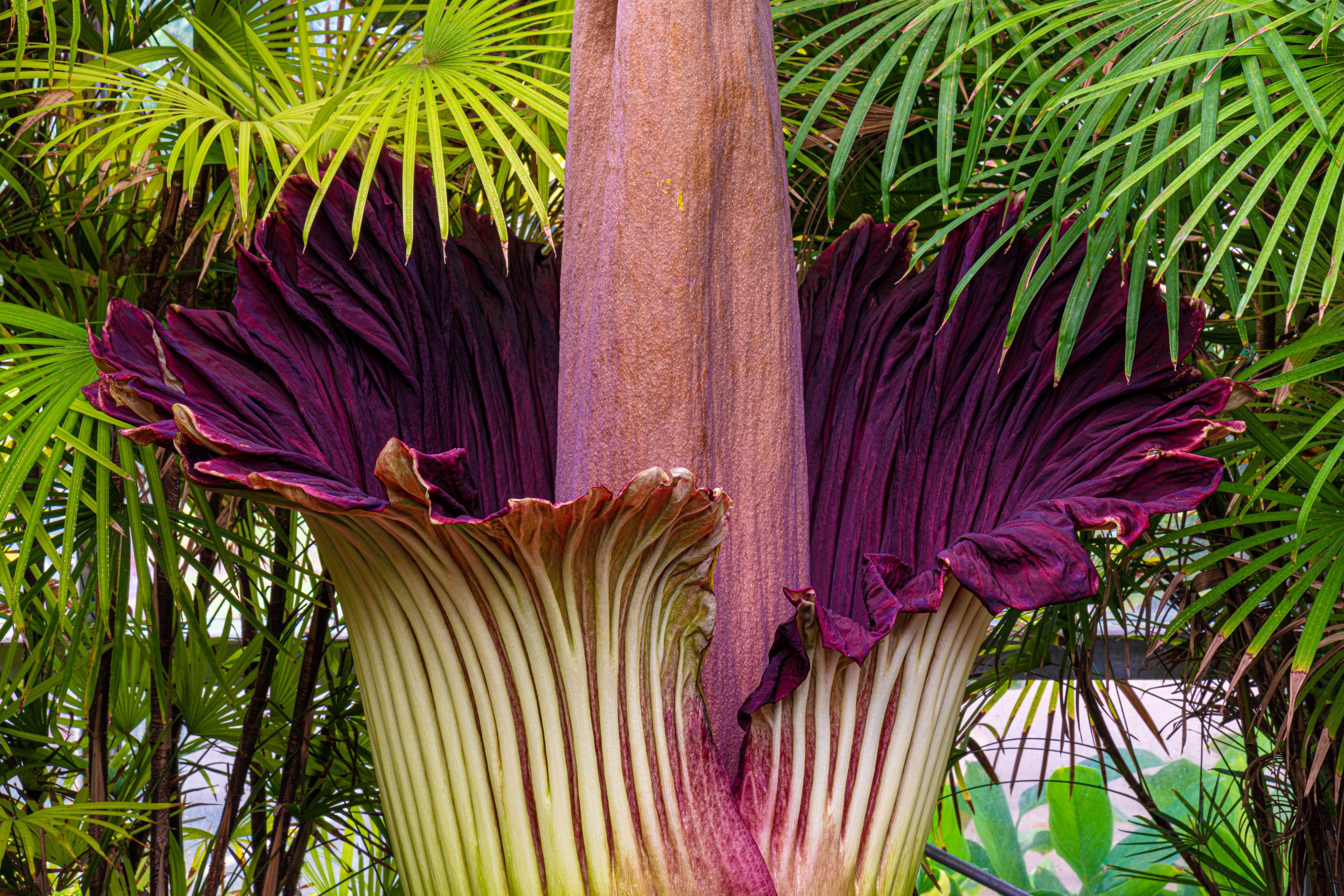
Corpse flower known as Amophophallus titanum blooming in Honolulu Hawaii and releasing an odor smelling like rotting flesh

I explained this to my grandson GS who was eating his breakfast at the other side of the tiny table. I did not call it a Corpse Flower. I called it a Stinky Flower. Six-year-old boys like gross, in moderation. Why did it smell bad? To attract flies to pollinate it. A few minutes of negotiation convinced his mother who was hurrying out to work that a school called Play Mountain Place would not disapprove of a day off to study a rare botanical specimen.

So we set off in my green Toyota Tercel from our barrio off Venice Blvd. I had just had major surgery and had come down from Canada to recover. The surgeon had recklessly removed my courage along with the part I had signed up for. I was no longer a road warrior on strange freeways. If I got confused, GS sitting behind me in his child seat, calmly pointed out where I should go.

The last thing my daughter said to me, “Oh, the Blue Boy is there. Be sure to see him.”

There was a very long line and it was hot in the sun, despite the free bottles of water. At certain points the smell of – let’s be frank – dead animal was overwhelming.

Then we went to lunch. Fortunately, a docent sitting at the next table was delighted to answer all the probing questions I couldn’t. Both of GS’s grandfathers were physicists and mathematicians. One of them had a double PhD. The other was my ex-husband.

After lunch, we looked at pictures. I was distracted by the blonde bombshell at my side. I had lost him in major airports, where I had to choose between catching him and losing our luggage. I still had him.

GS was close by my side when I walked into a room and there was the Blue Boy. I was so gobsmacked that I loosened my grip on my grandson’s hand. He slipped silently away. When I tore my eyes away from the full length portrait of the Boy in Blue, I saw a small being at the end of the room engrossed in the portrait there.

There was no one else there. Even the watcher had stood up from her chair and stepped around the corner. I wanted to stand there forever.

But I heard, “Can we go now? I’ve seen them all.”

It wasn’t enough. I had to go back the next day, without my mercurial companion.

As I passed the Titan Arum, I saw that it was a sad memory of its former glory.

I bought a small book about the Thomas Gainsborough’s Blue Boy (est. 1770) and and Sir Thomas Lawrence’s Pinkie (1793). The lithe girl hung opposite the Blue boy. Both people depicted are young, and Henry E. Huntington bought them both in the 1920s; otherwise, there is no connection between them.

Pinkie’s pink bonnet strings and her filmy white dress, with the wide pink sash are lifting in the breeze. Her pink lips are small, demure, kissable. A week before the portrait was to be exhibited at the royal Academy Exhibition, Pinkie died. She had had a cough, which may indicate she died of tuberculosis. The portrait vanished from view for many years, but it was known to be in the possession of Pinkie’s brother, the father of the poet, Elizabeth Barrett-Browning.

The little book The Blue Boy and Pinkie by Robert R. Wark, a ‘noted art historian’ was published by the Huntington Gallery in 1963. Wark gives the standard 1963 account of who modeled for the portrait. Indeed the print that I bought has the name in script at the bottom of the white window mat, Master Jonathan Buttall, the son of a wealthy ironmonger (hardware merchant). It is probable Gainsborough became a friend of the elder Buttall in Ipswich where they both lived before moving to London. Gainsborough was only 11-years-older than Master Buttall. We know they were friends because the artist left a short list of those he wanted at his funeral in 1788, including Jonathan.

Henry Huntington paid $728,000 for the Blue Boy in 1921. It is estimated to be worth over $9 billion today.

In the 1790s, Buttall’s business came upon hard times and his household effects were sold at auction, including the Blue Boy for 35 guineas. He died late in 1805 at the age of the age of 53, in which case, he would have been born in 1752. The portrait seems to have been exhibited in at the Royal Academy in 1770, which would have made Jonathan eighteen.

When I sat down to write this blog post, Google did not agree with Robert R Wark, noted art historian though he was. Today’s noted art historians suggest it was Gainsborough Dupont, Thomas’s nephew, or, just to be awkward, that there was no sitter.

We know that a Van Dyke Costume such as the Blue Boy is wearing was available for Gainsborough’s sitters. The Honourable Edward Bouverie chose to wear it for his portrait in 1773, same lace collar and cuffs. Another sitter Paul Cobb Methuen also wore it. It was the fashion in those days to dress in the costume of sitters for Sir Anthony Van Dyck. Women also chose to do this.

Whenever I see or remember the Blue Boy, I recall the smooth confidence of the young man, relaxed, calm, forthright, somewhat assertive, no doubt the product of wealth and class.

I spent 35-years, studying boys of this age as they entered my classroom for the first time, sussing out the troublemakers. Blue Boy would not be one, so long as he was treated with the respect he felt he deserved.

In my opinion, however, genius he was, no one, not even Gainsborough could paint that face and cavalier posture or the glint of light on the left sleeve without a model.

After I read Mr. Wark’s little book, believing it was a picture of Jonathan Buttall, I wondered how how he had changed by the time of his bankruptcy. Had his widow’s peak rendered him bald? Did he have a paunch from English beef, port and pudding? Had life battered that beauty and serenity out of him when he died at 53?

There is another story that Gainsborough painted the picture in answer to an essay by Sir Joshua Reynolds, head of the Royal Academy of Arts. Reynolds held that no great picture could be predominately blue. It must be made of warmer colors. Gainsborough took this as a challenge to be disproved.

When Huntington Museum xrayed the Blue Boy , it discovered that Gainsborough had reused an old canvas. The head of an older man was revealed above the Blue Boy’s. Surely, a painter would not reuse an old canvas in front of a wealthy sitter. Surely, Gainsborough fired up by the challenge had seized the first canvas that came to hand in his enthusiasm to disprove the older artist.

Blue Boy went back to London for a four month visit on the hundredth anniversary of its relocation to the United States of America, but it is home at the Huntington again now.

If I were Los Angeles, I would get GS to drive me down to San Marino to see the true colors of the Blue Boy. GS would keep track of the cane I’m always misplacing.

See joyce@joycehowe.com for latest book
I Trust You to Kill Me
Sign up your email address for a FREE cop of e-book,
Monthly draw.
BLUE BOY

It was the fall of 2001 and the Los Angeles Times said that the Titan Arum (the Corpse Flower or Stinky Flower) would be blooming at the Huntington Gallery in San Marinoo only today. It was one of the largest flowers in the world and bloomed only every five years and only for three days. Twenty two years ago, there were many fewer of them in the world, but the Huntington had snaffled one. Yesterday, it had been at its best. Today would be the last chance to see it in flower. Tomorrow, the flower would wilt and die.

Corpse flower known as Amophophallus titanum blooming in Honolulu Hawaii and releasing an odor smelling like rotting flesh

I explained this to my grandson GS who was eating his breakfast at the other side of the tiny table. I did not call it a Corpse Flower. I called it a Stinky Flower. Six-year-old boys like gross, in moderation. Why did it smell bad? To attract flies to pollinate it. A few minutes of negotiation convinced his mother who was hurrying out to work that a school called Play Mountain Place would not disapprove of a day off to study a rare botanical specimen.

So we set off in my green Toyota Tercel from our barrio off Venice Blvd. I had just had major surgery and had come down from Canada to recover. The surgeon had recklessly removed my courage along with the part I had signed up for. I was no longer a road warrior on strange freeways. If I got confused, GS sitting behind me in his child seat, calmly pointed out where I should go.

The last thing my daughter said to me, “Oh, the Blue Boy is there. Be sure to see him.”

There was a very long line and it was hot in the sun, despite the free bottles of water. At certain points the smell of – let’s be frank – dead animal was overwhelming.

Then we went to lunch. Fortunately, a docent sitting at the next table was delighted to answer all the probing questions I couldn’t. Both of GS’s grandfathers were physicists and mathematicians. One of them had a double PhD. The other was my ex-husband.

After lunch, we looked at pictures. I was distracted by the blonde bombshell at my side. I had lost him in major airports, where I had to choose between catching him and losing our luggage. I still had him.

GS was close by my side when I walked into a room and there was the Blue Boy. I was so gobsmacked that I loosened my grip on my grandson’s hand. He slipped silently away. When I tore my eyes away from the full length portrait of the Boy in Blue, I saw a small being at the end of the room engrossed in the portrait there.

There was no one else there. Even the watcher had stood up from her chair and stepped around the corner. I wanted to stand there forever.

But I heard, “Can we go now? I’ve seen them all.”

It wasn’t enough. I had to go back the next day, without my mercurial companion.

As I passed the Titan Arum, I saw that it was a sad memory of its former glory.

I bought a small book about the Thomas Gainsborough’s Blue Boy (est. 1770) and and Sir Thomas Lawrence’s Pinkie (1793). The lithe girl hung opposite the Blue boy. Both people depicted are young, and Henry E. Huntington bought them both in the 1920s; otherwise, there is no connection between them.

Pinkie’s pink bonnet strings and her filmy white dress, with the wide pink sash are lifting in the breeze. Her pink lips are small, demure, kissable. A week before the portrait was to be exhibited at the royal Academy Exhibition, Pinkie died. She had had a cough, which may indicate she died of tuberculosis. The portrait vanished from view for many years, but it was known to be in the possession of Pinkie’s brother, the father of the poet, Elizabeth Barrett-Browning.

The little book The Blue Boy and Pinkie by Robert R. Wark, a ‘noted art historian’ was published by the Huntington Gallery in 1963. Wark gives the standard 1963 account of who modeled for the portrait. Indeed the print that I bought has the name in script at the bottom of the white window mat, Master Jonathan Buttall, the son of a wealthy ironmonger (hardware merchant). It is probable Gainsborough became a friend of the elder Buttall in Ipswich where they both lived before moving to London. Gainsborough was only 11-years-older than Master Buttall. We know they were friends because the artist left a short list of those he wanted at his funeral in 1788, including Jonathan.

Henry Huntington paid $728,000 for the Blue Boy in 1921. It is estimated to be worth over $9 billion today.

In the 1790s, Buttall’s business came upon hard times and his household effects were sold at auction, including the Blue Boy for 35 guineas. He died late in 1805 at the age of the age of 53, in which case, he would have been born in 1752. The portrait seems to have been exhibited in at the Royal Academy in 1770, which would have made Jonathan eighteen

When I sat down to write this blog post, Google did not agree with Robert R Wark, noted art historian though he was. Today’s noted art historians suggest it was Gainsborough Dupont, Thomas’s nephew, or, just to be awkward, that there was no sitter.

We know that a Van Dyke Costume such as the Blue Boy is wearing was available for Gainsborough’s sitters. The Honourable Edward Bouverie chose to wear it for his portrait in 1773, same lace collar and cuffs. Another sitter Paul Cobb Methuen also wore it. It was the fashion in those days to dress in the costume of sitters for Sir Anthony Van Dyck. Women also chose to do this.

Whenever I see or remember the Blue Boy, I recall the smooth confidence of the young man, relaxed, calm, forthright, somewhat assertive, no doubt the product of wealth and class.

I spent 35-years, studying boys of this age as they entered my classroom for the first time, sussing out the troublemakers. Blue Boy would not be one, so long as he was treated with the respect he felt he deserved.

In my opinion, however, genius he was, no one, not even Gainsborough could paint that face and cavalier posture or the glint of light on the left sleeve without a model.

After I read Mr. Wark’s little book, believing it was a picture of Jonathan Buttall, I wondered how how he had changed by the time of his bankruptcy. Had his widow’s peak rendered him bald? Did he have a paunch from English beef, port and pudding? Had life battered that beauty and serenity out of him when he died at 53?

There is another story that Gainsborough painted the picture in answer to an essay by Sir Joshua Reynolds, head of the Royal Academy of Arts. Reynolds held that no great picture could be predominately blue. It must be made of warmer colors. Gainsborough took this as a challenge to be disproved.

When Huntington Museum xrayed the Blue Boy , it discovered that Gainsborough had reused an old canvas. The head of an older man was revealed above the Blue Boy’s. Surely, a painter would not reuse an old canvas in front of a wealthy sitter. Surely, Gainsborough fired up by the challenge had seized the first canvas that came to hand in his enthusiasm to disprove the older artist.

Blue Boy went back to London for a four month visit on the hundredth anniversary of its relocation to the United States of America, but it is home at the Huntington again now.

If I were Los Angeles, I would get GS to drive me down to San Marino to see the true colors of the Blue Boy. GS would keep track of the cane I’m always misplacing.

See joyce@joycehowe.com for latest book
I Trust You to Kill Me
Sign up your email address for a FREE cop of e-book,
Monthly draw.

BLUE BOY

Featured

It was the fall of 2001 and the Los Angeles Times said that the Titan Arum (the Corpse Flower or Stinky Flower) would be blooming at the Huntington Gallery in San Marinoo only today. It was one of the largest flowers in the world and bloomed only every five years and only for three days. Twenty two years ago, there were many fewer of them in the world, but the Huntington had snaffled one. Yesterday, it had been at its best. Today would be the last chance to see it in flower. Tomorrow, the flower would wilt and die

Corpse flower known as Amophophallus titanum blooming in Honolulu Hawaii and releasing an odor smelling like rotting flesh

I explained this to my grandson GS who was eating his breakfast at the other side of the tiny table. I did not call it a Corpse Flower. I called it a Stinky Flower. Six-year-old boys like gross, in moderation. Why did it smell bad? To attract flies to pollinate it. A few minutes of negotiation convinced his mother who was hurrying out to work that a school called Play Mountain Place would not disapprove of a day off to study a rare botanical specimen.

So we set off in my green Toyota Tercel from our barrio off Venice Blvd. I had just had major surgery and had come down from Canada to recover. The surgeon had recklessly removed my courage along with the part I had signed up for. I was no longer a road warrior on strange freeways. If I got confused, GS sitting behind me in his child seat, calmly pointed out where I should go.

The last thing my daughter said to me, “Oh, the Blue Boy is there. Be sure to see him.”

There was a very long line and it was hot in the sun, despite the free bottles of water. At certain points the smell of – let’s be frank – dead animal was overwhelming.

Then we went to lunch. Fortunately, a docent sitting at the next table was delighted to answer all the probing questions I couldn’t. Both of GS’s grandfathers were physicists and mathematicians. One of them had a double PhD. The other was my ex-husband.

After lunch, we looked at pictures. I was distracted by the blonde bombshell at my side. I had lost him in major airports, where I had to choose between catching him and losing our luggage. I still had him.

GS was close by my side when I walked into a room and there was the Blue Boy. I was so gobsmacked that I loosened my grip on my grandson’s hand. He slipped silently away. When I tore my eyes away from the full length portrait of the Boy in Blue, I saw a small being at the end of the room engrossed in the portrait there.

There was no one else there. Even the watcher had stood up from her chair and stepped around the corner. I wanted to stand there forever.

But I heard, “Can we go now? I’ve seen them all.”

It wasn’t enough. I had to go back the next day, without my mercurial companion.

As I passed the Titan Arum, I saw that it was a sad memory of its former glory.

I bought a small book about the Thomas Gainsborough’s Blue Boy (est. 1770) and and Sir Thomas Lawrence’s Pinkie (1793). The lithe girl hung opposite the Blue boy. Both people depicted are young, and Henry E. Huntington bought them both in the 1920s; otherwise, there is no connection between them.

Pinkie’s pink bonnet strings and her filmy white dress, with the wide pink sash are lifting in the breeze. Her pink lips are small, demure, kissable. A week before the portrait was to be exhibited at the royal Academy Exhibition, Pinkie died. She had had a cough, which may indicate she died of tuberculosis. The portrait vanished from view for many years, but it was known to be in the possession of Pinkie’s brother, the father of the poet, Elizabeth Barrett-Browning.

The little book The Blue Boy and Pinkie by Robert R. Wark, a ‘noted art historian’ was published by the Huntington Gallery in 1963. Wark gives the standard 1963 account of who modeled for the portrait. Indeed the print that I bought has the name in script at the bottom of the white window mat, Master Jonathan Buttall, the son of a wealthy ironmonger (hardware merchant). It is probable Gainsborough became a friend of the elder Buttall in Ipswich where they both lived before moving to London. Gainsborough was only 11-years-older than Master Buttall. We know they were friends because the artist left a short list of those he wanted at his funeral in 1788, including Jonathan.

Henry Huntington paid $728,000 for the Blue Boy in 1921. It is estimated to be worth over $9 billion today.

In the 1790s, Buttall’s business came upon hard times and his household effects were sold at auction, including the Blue Boy for 35 guineas. He died late in 1805 at the age of the age of 53, in which case, he would have been born in 1752. The portrait seems to have been exhibited in at the Royal Academy in 1770, which would have made Jonathan eighteen

When I sat down to write this blog post, Google did not agree with Robert R Wark, noted art historian though he was. Today’s noted art historians suggest it was Gainsborough Dupont, Thomas’s nephew, or, just to be awkward, that there was no sitter.

We know that a Van Dyke Costume such as the Blue Boy is wearing was available for Gainsborough’s sitters. The Honourable Edward Bouverie chose to wear it for his portrait in 1773, same lace collar and cuffs. Another sitter Paul Cobb Methuen also wore it. It was the fashion in those days to dress in the costume of sitters for Sir Anthony Van Dyck. Women also chose to do this.

Whenever I see or remember the Blue Boy, I recall the smooth confidence of the young man, relaxed, calm, forthright, somewhat assertive, no doubt the product of wealth and class.

I spent 35-years, studying boys of this age as they entered my classroom for the first time, sussing out the troublemakers. Blue Boy would not be one, so long as he was treated with the respect he felt he deserved.

In my opinion, however, genius he was, no one, not even Gainsborough could paint that face and cavalier posture or the glint of light on the left sleeve without a model.

After I read Mr. Wark’s little book, believing it was a picture of Jonathan Buttall, I wondered how how he had changed by the time of his bankruptcy. Had his widow’s peak rendered him bald? Did he have a paunch from English beef and pudding? Had life battered that beauty and serenity out of him when he died at 53?

When Huntington Museum xrayed the Blue Boy , it discovered that Gainsborough had reused an old canvas. The head of an older man was revealed above the Blue Boy’s. Surely, a painter would not reuse an old canvas in front of a wealthy sitter. Surely, Gainsborough fired up by the challenge had seized the first canvas that came to hand in his enthusiasm to disprove the older artist.

There is another story that Gainsborough painted the picture in answer to an essay by Sir Joshua Reynolds, head of the Royal Academy of Arts. Reynolds held that no great picture could be predominately blue. It must be made of warmer colors. Gainsborough took this as a challenge to be disproved.

Blue Boy went back to London for a four month visit on the hundredth anniversary of its relocation to the United States of America, but it is home at the Huntington again now.

If I were Los Angeles now, I would get GS to drive me down to San Marino to see the true colors of the Blue Boy. GS would keep track of the cane I’m always misplacing.

See joyce@joycehowe.com for latest book
I Trust You to Kill Me
Sign up your email address for a FREE cop of e-book,
Monthly draw.

Return to the Reality Hotel

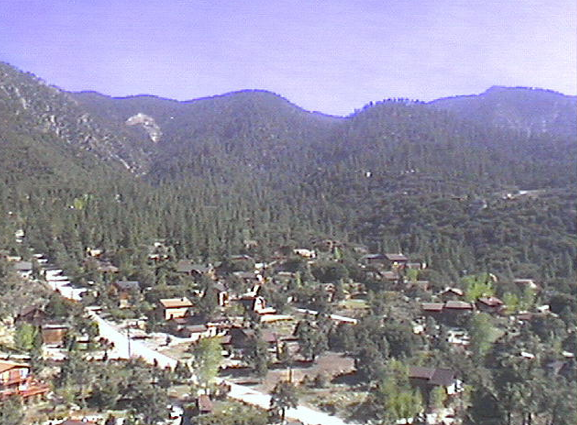
Village in Sierra MountainsWe had to vacate our rooms at the Reality Hotel. There was a big car show up here called “Run to the Pines” and our rooms had been reserved by car show enthusiasts weeks before we arrived. What to do?

“No problem,” said the manager of the three room Reality Hotel. “I’m going away, you can stay in my house.”

She was glowing with pride and generosity. It would be her pleasure to share her home with us. Moreover, we already knew her housekeeper and house-mate, the red-haired Jody, who cleaned our rooms. Now it is true that we are getting cut-rates for our beautiful rooms – mine is about $33 a night, which of course I can ill afford – but Jody is clearly part of the Gudenuff cleaning company. I don’t expect to get my bed changed any more often than I would change my own, but she has changed it three times since July 7th. The comforter, I avoid like the plague, although it’s pretty enough during the day.

So we moved.

Picture us: 163 years old (aggregated) with suitcases, at least 20 shopping bags, pillows, a box of food, a refrigerator bag, a walking stick, a litter box and a cat that has to be medicated to travel. Clara is between houses and much of her stuff is what remained in her ex-house after the movers left. As we carry stuff down the steep stairs from our second floor room, we joke that we will start a moving company called “Slowbutsure: the careful movers”.

At a certain point, Jody has to clean our not yet cleared rooms, so I start throwing money at her and she helps out. She probably would have anyway, but a bill or two makes her happier.

The house is beautiful as advertised, perched on a side hill with a fabulous view of mountains. And a steep set of stairs up to our rooms. Once again the friendly redhead helps out and we schlep our goods in.

However — there are either 3 or 4 additional cats. One is a recluse who lives in the en suite off Clara’s room. Two roam the house and I believe there is another that never leaves Jody’s room downstairs. The smell of cat pee welcomes us in. I can’t even find most of the litter boxes, but I clean the one I find. It is several days before I find the main one, which is clearly in Jody’s domain, but, being Canadian or just too darn cowardly, I do not clean it.

Clara’s girl cat lives in her bedroom, but the boy cats know that and begin spraying EVERYWHERE.

My room has an A.C. unit in the window. I can’t open the window and the A.C. works at gale force.

Clara asks me to open her bathroom window for the cat recluse next morning and I find myself in a cloud of dander and fine cat hair – cat down?. My skin begins to feel hot and prickly. My eyes burn. Tiny cat hairs constantly end up in my mouth. I shower often, only to discover that something -the softened water perhaps – gives me a red rash on my upper arms. In desperation, I ask Jody how to turn the shower head from stabbing to gentle. This she can do.

I was looking forward to watching television. The first time I try, I push what would be the up-channel button on my remote control and lose all reception. Jody doesn’t know how to fix it. Nor does she know the password for the internet, having forgotten it years ago.

No problem. Everyday we have to drive to Bakersfield. Down through the beautiful pine- covered mountains into the scrub-covered mountains, down through Tejon Pass to the desert mountains and then through the flat land of the Central Valley. Foodland. Finally we reach Bakersfield where 90 degrees is a cold snap. It takes an hour and more. As soon as I step into the Prius, my lower back cries, “Not again”, but you know what, out of the house, I no longer sneeze and clear my throat.

One night I stupidly leave my chicken salad on the counter and the long black cat with a white mustache eats it. Clara is having a shower and doesn’t hear the resulting furor, but she confides to a family member that Joyce doesn’t like the cats. That night, I find the same cat with his nose in my water glass. I keep my door shut, but he lurks around the corner and dashes in between my feet. I have to wave a sweat shirt under the bed to drive him back out.

Still he bears me no ill will, asks me to open the door, thanks me and comes when I call. I wouldn’t want the mountain lions to get him. Would I?

For the interim, however, I have a phone with a Canadian long distance plan and I do a mental health call when I wake up to brace myself for another day. It’s not just the cats, it’s living out of a suitcase. Drawers are great. You pull one open and there you see clearly visible clothes in neat piles. A suitcase you have place on a flat surface, a low one in my case since I can’t actually lift 23 kilos. Find the right zipper. Open it. Ah!!!! There they are -neatly rolled clothes in 6 layers. I was sure I put the underwear in this corner. It isn’t there. Carefully I begin removing each layer. Always I have two thirds of the clothes out by the time I find what I need.

“I’m sick of camping,” Clara confides.

On Sunday while I am deeply embroiled in family matters at the house in the pines, Clara arrives to announce that she has moved out of the house because our host returned unexpectedly. Host said she would sleep on the couch, but Clara can’t let her do that.

“Why not?” I think to myself.

So between 5 p.m. and dinner, I hie myself back in the Prius out past the s-curves, up the hill and on weary legs, up the outside stairs and pack. I notice that Clara has not packed our food. I pause, covered in sweat and consider crying. Then our host shows up and helps me carry six grocery bags, two suitcases, the food box, the refrigerator bag….. meanwhile talking gaily about her vacation. I can make no sense of anything she says I am so utterly bushed. I do manage to convince her that her house is lovely and that I am full of gratitude. She replies that we have left a wonderful feeling behind. Okay!

Dinner at the house in the pines somewhat restores me.

Afterwards a beloved family member carries everything in the Prius and in Clara’s car back up to the second floor of the Reality Hotel.

The cool evening air coming down from the mountains blows in one door and out the other, sweet and pure. I put my new tiny plastic hot pot ($13) on and a minute later, I have a cup of tea.

O Reality Hotel, why did I ever knock you?

Septuagenarians On the Road: part 1

We had been on the road together at least once, fifty years ago, lithe, limber and quick. That time we had a five month old baby in tow and we slept in a tent. Now here we were  my ex-husband, Blake, my sister, Georgia and me, septuagenarians on the road again – to the wedding of that baby’s son.

Georgia insists she is not a septuagenarian and will not be until September (at which time she will no doubt celebrate her achievement). Well,okay kid, two septuagenarians and a sexagenarian, does that sound better?

First off, let me say, that we are active old codgers. Every day, Georgia swims, Blake hikes with his dog and I practise tai chi. So physically, we felt we were up to it.

Whether it was wise for the three of us to share a room was another question, but there was little room at the inn, it being graduation day in Amherst, and prices had risen accordingly. Two hundred dollars a night seemed sufficient. Two rooms at that price, a bit steep. I reasoned there would be two queen sized beds and ordered a cot, but I confess when I talked about it to non-participants, I implied there just weren’t two rooms available.

Georgia and I had, fairly recently, driven from Toronto to the Quebec/Vermont border, where we were born and that had gone well. We took turns driving her Corolla. Mostly, I remembered the way although I experienced the usual confusion getting through Montreal.

Blake and I had made many trips when we were married, to the east coast in the summer, to Myrtle Beach on spring break, through the Rockies to Vancouver and for two summers through England, France, Italy and Greece. Blake had always been a fearless driver even on the right- that is to say the wrong- side of the road. Plus he had with an unerring sense of direction.

And I had driven myself from Toronto to Los Angeles, a drive that surely qualified me for this day trip.

We made good time Friday morning, arriving at the Fort Erie border by 11 a.m. and clearing it twenty minutes later. Now we needed to stop for several reasons, some of them typically septuagenarian. Fortunately, the New York State Thruway had a service centre a few miles farther on and we piled out to stretch. It was hard for some of us to stand up when we got out of the car, but we soon shook that off. There was an Arby’s restaurant, but it was still before noon, so why not wait until the next service centre. We were back in the car twenty minutes later, armed with caffeine and rarin’ to go.

The next service centre sported a Mcdonalds. Okay, some of us were food snobs, but also starving, so I gathered my courage and ordered a grilled chicken sandwich. Later when asked how it was, I replied that chicken had not led a happy life.

This pattern repeated itself. We passed centres with Starbucks, for example, but when we needed sustenance, the nearest centre was sure to have only Mcdonalds. What changed was that, at every stop, it took longer for some of us to straighten up when we got out of the car.  We spent the first few seconds more or less doubled over as if we were searching the tarmac for a lost treasure.

It was a beautiful drive, through wooded flat land beside the Erie Canal and then through low hills. Suddenly, two roads diverged. “Go right”, I said, consulting  Google’s convoluted directions. Blake went left. Either I had to be quicker or he did.

That he even consulted me as navigator surprised me. What had happened to Blake the intuitive navigator? That he didn’t react to instruction faster amazed me. What was this lag time about? It hadn’t been there 35 years ago.

The directions the toll guy gave us were more confusing than Google’s but after 15 minutes and Blake repeatedly assuring us that east is east and the I-90 goes east, he proved to be right. Never trust a computer program to know a continuous route if its name changes.

By the time we arrived at Ho Jo’s at 6 p.m., I had decided that I’d rather drive than navigate and if I never sat down again, it would be too soon.

And there in the parking lot was my son whom I hadn’t seen for six months, unloading his baggage. “Legs, don’t fail me now,” I whispered and launched my bent-over body out of the car.