Secrets of the Urban Woods

sunny gladeA few minutes into the woods, I come upon a sunny glade where one robin is singing from a hidden perch. I go down the sloping path to the little stream bed, almost dry now but still muddy from last Monday’s torrential downpour. I come out of the woods onto mown grass and stop, confounded. I should be able to cross this open area and begin the climb up the path to the ridge, but the opening is completely surrounded by impenetrable bushes. I go back. No, this is definitely the way. I stand and consider.

Gradually, it dawns on me that the storm has brought down a young oak and what looks like a bush is the tree’s crown. Looking closer, I see that there is a barely discernible path around it. I brush through the foliage and come out onto the trail again. A few feet farther on, another small tree’s top forces me on another bushy detour.

I come around its bend and find myself staring into the face of a young stag. He is standing in the middle of the grassy trail and gazing at me. His antlers are about 5 inches long, he is very lean and completely unafraid. He seems to be trying to figure out what kind of creature I am. We stand gazing at each other. I don’t move.

But of course, I can’t maintain that stillness. I reach into my pocket to take out my phone and as I look down to put it on camera, he moves soundlessly away and vanishes into the woods.

stag on ridge trailCan you see him? Click on the picture to expand.

Everything is changed. The rhubarb has bolted. The choke cherries have ripened.

ripe choke cherriesAnd a new species of flowering weed has attracted a host of tiny ants.

white flowerThe path along the wire fence above the settling ponds is so overgrown I can hardly find it and there are more fallen obstacles.

When I come down onto what should be the meadow, the plants are as high as my shoulder and I feel completely disoriented again.

milkweedNearer the river the milkweed flowers are about to open, to the delight, no doubt, of the monarch butterflies.

I can’t get to my usual river view because the willow is knee deep in water.willow kneee deepI can still make out the swan billing up reeds to mend her nest on the other side of the river, but only just. (Expand the picture and you will see her white dot below the apartment building.)

flooded riverAs I walk back up the paved path in the sunlight, a doe silently flies across in front of me and disappears into the copse on the other side.

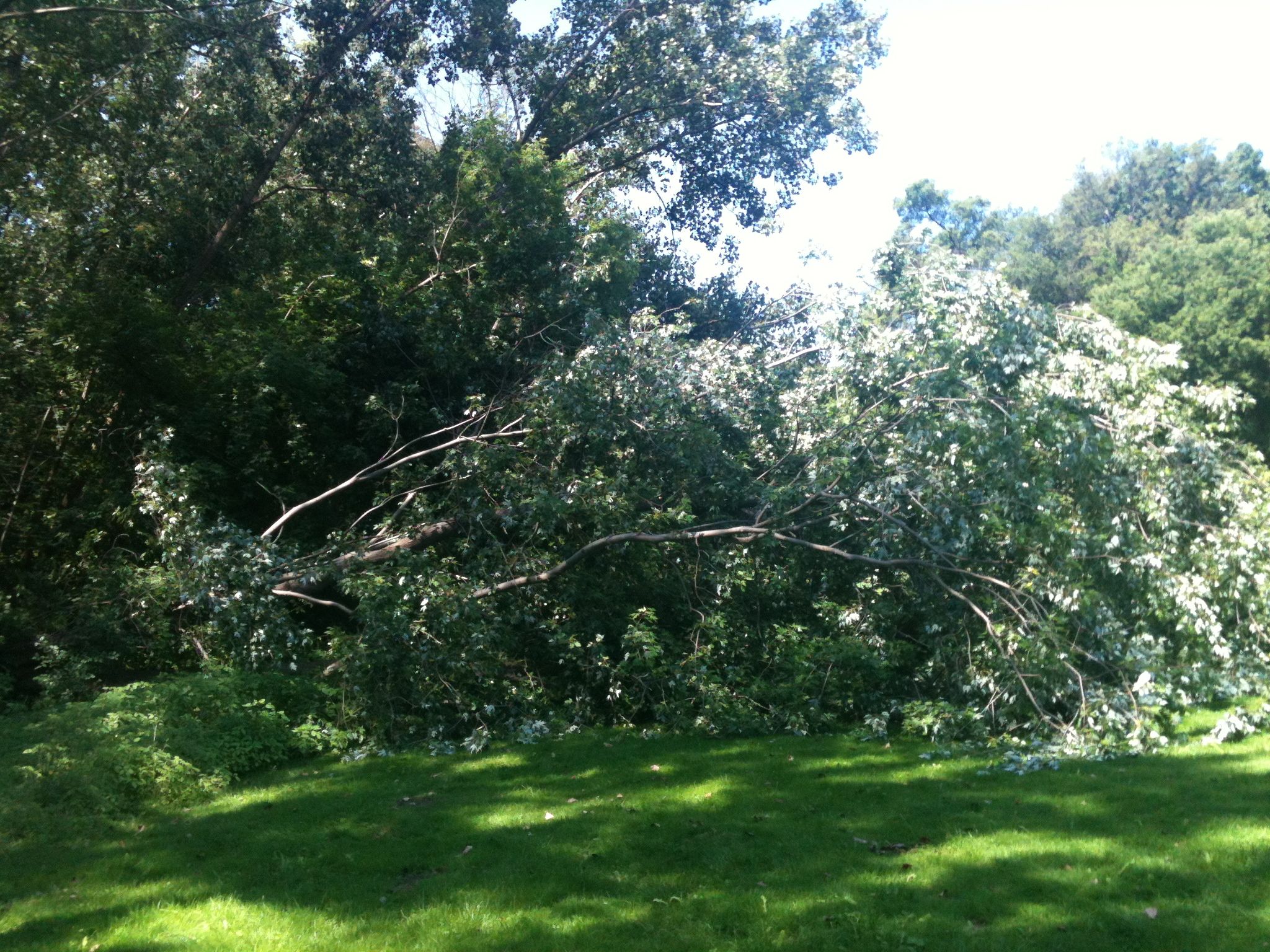
Around the bend, I come upon a fallen silver maple, 50 feet long.

FALLEN MAPLEWhy are the deer awake in mid-day? The answer shivers in the air. A few miles away, people are racing million dollar cars, very noisily around a closed circuit.

I don’t regret that anymore than I regret the fallen trees. The woods is an organism, a whole thing, that thrives and dies, decays and germinates. So is the city. The race fans and the deer and this Sunday walker, taking sylvan therapy, are all parts of that larger organism.

Starving in the Dark: septuagenarian faces flash flood

Last week, a Calgarian, worn out by the flooded Bow River perhaps, wrote a letter to the National Post in which he invited Torontonians to starve to death in the dark. Alberta has the oil after all. I thought “yeah, yeah” that’s an old one – 40 yrs at least.

On Monday, I am reading with my feet up, worn out by my negotiation with a Toyota salesman. It is all but pitch dark at 4:30 p.m. but I’m used to that. It has rained torrentially at that hour many times this year. It starts to pour. I keep reading – a fictional account of the London blitz as it happens.

On Sunday, I got caught in one of these downpours. I huddled in a doorway for 15 minutes, watching water 4 in. deep race down the street. The rain got steadily worse. I put up my umbrella and set out for my car, two short blocks away. I met a guy with a clinging wet t-shirt, who smiled ruefully. My pants were soaked up to the knee and by the time I got the umbrella down, so was my the car seat. I sat in the car reading, waiting until I could see out the windshield. When I could, I chose my route carefully, avoiding the deep dip in the road to the south of my place where it floods. I’ve learned at least that much this year.

As I read about the horrors of rescue in the London blitz, lightning flashes through the window. Okay, supper time. As I walk toward the kitchen, I observe that I cannot see out my windows.

Full disclosure – I still harbour a 2 year-old within, who found herself with an unconscious baby sitter in the middle of a hurricane. By that I do not mean ‘inattentive’. I mean-down-for- the-count and never-right-again unconscious. It was only one long hungry day before I was rescued, but of course it seemed like forever. I am actually reassuring this hysterical inner-child when the carbon monoxide alarms scream, various things beep and the lights go out.

No problem. Right? It’ll come right back on. GIve it a minute. Fortunately, I do not know that the underground transformer that feeds the west end is now 30 ft. deep in water.

So it begins.

I activate the CBC app on my phone and discover the subway is flooded and shut down. The streets are jammed with wet pedestrians. The traffic lights are out and rush hour is at a standstill.

Frank, my landlord, emerges from his own underground lair to watch the storm through the front storm door. (So that’s why it doesn’t have a screen.) An hour later, the upstairs tenant arrives reporting that she was the last person allowed south on the Don Valley Parkway. She drove through the river, which was already over the road. The cars behind her were turned back, driving the wrong way to exit in the middle of the city. Her trip took twice the usual time, she is all but out of gas and there are no working gas pumps.

I leave my apartment door open and consider food.

Besides the screaming inner-child, I have dietary limitations. The list of things I can’t eat is far longer than the list of those I can. I cannot, for example, eat bread. I can eat brown rice and there is some in the fridge and there is cold chicken and salad mix. No problem. The trick is not to tarry in front of an open fridge door.

I haul the lantern out of its closet and discover the D cell batteries still work. I light the available candles -beeswax of course. Regular candles make my eyes burn. I eat my cold dinner. How I long for tea -herbal- you guessed it. Sitting there, I decide that if civilization starts coming apart, with these ‘refined’ needs, I will be among the first to go. Well, there’s some good news.

The rain has more or less stopped. Using my CP24 app, I find that a train is sitting in the expanded Don River and 120 commuters are awaiting rescue by boat, tiny zodiacs as it turns out. They have had to scramble up to the upper deck and some of them will not get off until 12:30 a.m.

Meanwhile geysers of sewage have exploded out of utility holes. Cars have been abandoned, including one Ferrari. Fireman are rescuing people. Then my fading phone declares that it cannot access the internet. It’s only 9:30 but it’s time to go to bed.

I have a lovely dream. The carbon monoxide alarm has beeped and the room has been suffused with light. I wake up. Not.

In the morning, the second hand Twitter rumour is- power back by noon. This will change throughout the day and I will gradually lose my initial desire to join Twitter. Hope is not a winged thing that perches etc. Hope is a canard, a con. It misleads and keeps you from acceptance and necessary action. It takes me 24 hours to set up a rescue for my freezer goods, e.g., and in the meanwhile I lose over $50 worth of stuff.

How to live now?

Take inventory. There is still hot water. Most of the city has its power back. With all the blinds open, I can more or less see. No paper and the phone can no longer get a signal, too many others already on the system. I warm breakfast up in a pan of hot water, milk for cereal, green soup. I take a hot shower. I drive to the tai chi club where I can make tea, exercise and charge my phone. I even do 2 sets of tai chi. During tea break I go down to the basement restroom. What is this brown residue on the floor? I call for volunteer help and grab a mop. Patty joins me. The other, much younger class members, do not. In fact, one of them waxes outraged because she has to find another toilet. Meanwhile in a search for a pail and hot water, I have stumbled wetly into the downstairs practise hall. The carpet is soaked and a little pool sits in the middle. We give tours hoping to drum up help. Not so much. We phone a report in to an actual employee, wring out the mops and carry on with our lives.

I, for example, have to call on two cats whose mom is away. They are glad to see me and a note on the counter invites me to make tea. What a great idea! I plug the kettle in. I give one cat her medicine. I feed them. Hey, what happened to my tea? I know the power is on up here. But, the thing is, it isn’t. It’s what you call a rolling black-out. These black-outs roll with me as I roll westward. I see the traffic lights fire up behind me and go black in front.

By dinner time, I have been without hot food 30 hours and my weak digestion can’t take any more and besides, the food in the fridge is now inedible. I set out for a restaurant. First, I have to get to a place with power. This involves waiting 20 minutes at just one non-functioning light. Once there, I find the parking meters on the street don’t work and I know our parking officers will give tickets on Judgement Day, so I search out working meters. There are now only 22,000 householders without power and all of them have converged on Bloor West Village for food. Cash only. I found I had raided the hidden money envelope but still had $100 left, so that’s all right. I stand in line for 25 minutes. I can see empty tables. The maitre d’ can too, but he keeps handing out menus and bustling off, leaving us there. Very hungry.

Eventually, I am seated, single and wasteful though I am. I read to keep from raiding adjacent tables and when I finally get food, I nearly weep over the mashed potatoes.

In the evening, Blake, who has never lost power, shows up to take my freezer goods into custody. I serve him a warm beer while we sit in semi-darkness.

By next morning I discover that I get tea and ice at the super market south of me, which must have a generator. I am there by 7 a.m. and soon have an ice chest set up with lunch stuff. Should have done this yesterday. Why didn’t I? No idea. Hope precluded it? Or was it mental dysfunction? I note that we all seem to be suffering it.

At non-functioning traffic lights, you stop, look, take your turn. Do this 10 times and when you come to an actual red light, you start to do it again. The woman upstairs locks her keys in her apartment, fails to pick the lock and decides to kick it in. So much noise! And it doesn’t work. Our door locks have steel plates! I lose my glasses, find another pair and come back to discover the first pair right where I lost them.

We are all suddenly very neighbourly, except to the old guy who brags that he has power just 10 houses away. People share their barbecues, carrying pots across the street. We no longer share the estimated time of (power) arrival. We are cynics, one and all.

On Wednesday afternoon, I get gussied up- poppy red dress, leggings, good sandals and set off for a second round at Toyota. I am just pulling into the parking lot when Frank calls to tell me the power is back on. I can’t say I believe it will last, but I finish the car deal and go to the green grocers and the butcher shop, pretending I believe it.

It is indeed on. I have light and a kettle that comes to a boil. I do manage to set the fire alarm off, having apparently forgotten how to cook, but after two days, it is over.

Thursday morning, I assume it is life as normal. I get to the tai chi club late. I’m still so discombobulated it takes me ages just to do a simple task like get dressed. I go through the club’s back door and an odour like something burnt sends me reeling. I know that smell. Mould! It’s okay, I’m reassured, the water has been vacuumed up. It’s fine. Try the upstairs class.

Listen if you take a canary down a coal mine don’t try to argue with it. If it falls over, get outa there. In this case, it is the canary that escapes.

By now, my head is aching badly, very badly. I can’t go back there, I reason on my long drive home. Maybe never, at least not until cold weather.

At home, I decide to try one thing. I email the location leader, telling him that mould is a health hazard not just a bad smell. Then I call ma soeur, Georgia, who listens to me rail. When I get off the phone, I see the message light flashing. The location leader has called our contractor who said hell yes, the carpet has to come out and the floor has to be treated with fungicide. I call our leader back, full of gratitude. Now my exile is down to a week or so while the place gets cleaned.

Now if only this headache would quit….

House of Cards × 2: U.S. and U.K. (spoilers)

H of Cards title cardNow that you have spent 25 irretrievable hours of your life watching both the U.S. and the U.K. version of House of Cards let us consider who is more ruthless Francis Urquhart or Frank Underwood. Urquhart begins as Conservative Whip in the British House of Parliament and moves on to Prime Minister. Frank Underwood, Democratic Majority Whip in Congress, ends season 1 as potentially vice president of the United States.

What is not in doubt is that House of Cards has been a phenomenal streaming success. Netflix which produced the U.S. version of the political thriller, House of Cards, now has 29 million subscribers, 7 million of them international and has posted earnings of 1 billion dollars in the first quarter of 2013. Apparently the dire warnings of reviewers that releasing all 13 episodes at once was a reckless $100 million gamble were greatly exaggerated. Moreover, many viewers, like me, steamed through the U.S. series and immediately began watching the U.K. version.

If you look at reviews comparing the 2 productions, you will come across those that say, for example, that the U.K. version, although 20 years older, is “faster, leaner, tighter and a far more rewarding watching experience” (http://www.bleedingcool.com/2013/03/28/house-of-cards-the-us). Indeed I had read that opinion several times before I began watching either and mindlessly parroted it. But comparison is not that simple.

Francis Underwood had me at the get-go. It could have just been Kevin Spacey in high definition and close-up. He exuded vitality and sex appeal. He seemed like such a sincere fellow and the newly elected president, Garrett Walker, had done him wrong. Walker had promised Frank the position of Secretary of State, but once he no longer needed Frank’s support, he broke that promise. Underwood and his high profile wife, Claire settled in for long sleepless nights plotting their revenge. I was with them all the way in episode 1. Little did I know…

Thirteen episodes and 7 days later, I tuned in to the U.K. version with Ian Richardson as Francis Urquhart. Wait a minute!  This Francis is cold, bloodless and decidedly not hi-def. He speaks with a posh accent in an arch almost campy style. It took 2 or 3 episodes for me to get over that reaction, but the story itself and the assurance from others that Richardson was a great actor kept me at it. They cited Richardson’s charm. Although Spacey was called more menacing, his southern charm – Underwood is the representative from South Carolina – and old-fashioned courtesy was also noted.

Michael Dobbs, who wrote the books on which the British version is based, called the American version, written by Beau Willimon, “much darker”. He must be referring to the mood, for Urquhart has a higher body count.

The U.S. show has had one season of 13 episodes at this point, while the U.K. show had 3 seasons of 4 episodes each. A second season is planned for Spacey’s production, so conclusions now are only provisional.

Certain similarities are obvious. Both are stories of Machiavellian leaders intent on revenging a political slight and rising to the top. Both shows reference Shakespeare’s Macbeth, although Richardson’s more directly. He frequently quotes from that play, but he has none of Macbeth’s initial ambivalence. He jumps right into the bloody fray and says, “I am in blood stepped in so deep..” without apology or regret. Both have wives worthy of Lady Macbeth. Both break the fourth wall, peer into the camera and address the audience directly. We are never in doubt about their opinions and overall intention, although we may be misled about specifics.

Yet the stories are different. Well, they would have to be. The British show is about the parliamentary system, in which the prime minister is the leader of either the Conservative Party or Labour Party, chosen by party members before an election is called and elected by only one riding. The prime minister then chooses his cabinet, appointing a minister for each portfolio. The president of the United States,  having been chosen as leader of either the Republican Party or the Democratic Party, is of course elected to that position by voters nation-wide, . Once elected, he is secure in his position, but the British prime minister can lose the position in a non-confidence vote over a budget or other important bill. In that case, an election has to be called even though the term is not up, unless another leader is chosen who can rally the vote in the House. On the other hand, a president can continue in office in such a case although it is a tough slog as we have seen lately. Both, however, have the position of party whip, the House leader charged with ensuring that party members vote in support of party policy. Both Francises begin as majority whips, Urquhart for the Tory or Conservative Party and Underwood for the Democrats.

The U.K. series was first broadcast in 1990 and begins with Margaret Thatcher’s  fictional successor, Henry Collingridge winning an election and then betraying his chief whip by passing him over for Foreign Secretary.  Two days after the first episode aired, Thatcher resigned. John Major took over as party leader and prime minister. Campaigning for the now necessary election -in the middle of a recession – was suspended  (bleedingcool.com) in order to watch episode 2.

The U.K. series strikes me as extremely exciting because of its topicality. It did not, of course, cause the Iron Lady to resign after 4228 days in office. That was forced upon her by her own party, which was as fed up with her increasing despotism as the working class was with her crushing reforms. In the course of 3 seasons of 4 episodes each, the despair of the disenfranchised poor becomes one of the main themes. We see the bonfires of the homeless as they huddle for warmth. We also visit the palace and meet the new king, played by Michael Kitchen, who seems to share many of Prince Charles’s preoccupations. In this alternate future, Queen Elizabeth has passed on. But some things seem familiar. There is, for example, a beautiful blonde princess who has charge of the heir to the throne and a “fat princess”, a decidedly sportive red head. Viewers in 1993 (season 2) and 1995 (season 3) would have had no doubt who these characters were modeled on.

The U.S. production is not as specifically scandalous perhaps, but it does tackle current issues in government such as the influence of lobbyists for big business. Remy Danton, who lobbys for petrochemical interests, turns out to be an unlikely comrade-in-arms for Claire Underwood and her Clean Water Initiative.

It also updates media influence. In London, Mattie Stornin is a reporter for the right leaning tabloid, the Chronicle. She does have computer access, but certainly not to the wealth of information that Zoe Barnes, in Washington in 2012, has at her command. Nor does she have a mobile phone, although another character has a wired-in car phone. Mattie cannot easily switch gears and go to work for an internet news blog called Slugline as Zoe does. News happens in an instant in 2012. Reaction via Twitter, ditto.

Claire Underwood is the more prominent of the two wives as director of the not-for-profit Clean Water Initiative. Elizabeth Urquhart is less of a figure in her own right, but gains power as time moves on. Both readily approve of their husbands embarking on affairs in pursuit of their goals and expect the same in leniency in return. Frank and Claire frequently ask each other, “How can I help?” Initially at least, the Urquharts and the Underwoods are at one with their spouses.

Both stories have a Stamper, chief adviser, confidante and co-conspirator, ready to implement even the most devious of plans. Both have trusted security men to do their bidding although the British Corda plays a more important part, particularly in the final solution to Urquhart’s problems at the end of the series.

Both have a cocaine and alcohol addicted stooge -M.P. Roger O’Neill and Rep. Peter Russo- whose weakness is exploited, who do their master’s bidding and meet their deaths and not at arm’s length either. Both Francises are willing to be hands on.

The love affairs are different in that Urquhart tells us that he really did love Mattie even though he was using her newspaper pieces to further his plans. He is haunted by her. Frank Underwood does not seem capable of love but does show us he is capable of brutality in his treatment of Zoe. Zoe is not the soft, unworldly creature that Mattie is and she has the advantage of still being alive at the end of season 1. Creepily, Mattie calls Urquhart ‘daddy’. Indeed it is the very last thing she ever says.

One advantage of 1990 London is that the IRA is still blowing things up, so an extra car bomb here and there gets blamed on them. No one even suspects they are inside jobs, inside the P.M.’s office, that is.

Kevin Spacey’s House of Cards is incredibly rich. Even the titles, time-lapse photos of Washington throughout a day, are a pleasure to watch, all 13 times. There are grace notes like Freddy’s BBQ where Frank retreats to indulge his taste for ribs, Adam Galloway’s artist’s NYC loft where Claire takes refuge; the abandoned library at Frank’s old school, the Citadel; the S.C. town of Gaffney complete with peach- (or bum) shaped water tower. There is time for meandering through the woods, however irritably, or running through graveyards.

On Thatcher Day, the 4228th day Urquhart holds the office of prime minister, Elizabeth Urquhart assures her husband that Corda knows how to preserve his legacy in spite of recent disasters. Oh, good grief, Francis, parse that sentence before you agree. Or does he know somewhere in his benighted soul exactly what is about to happen?

So what will happen next season in the U.S. series? Will Frank’s body count match Francis Urquhart’s. Will Zoe, her Chronicle boyfriend, and her pal at Slugline uncover Frank’s machinations? They are well on their way. And surely Frank doesn’t really want to be V.P. The job bored even the boring Jim Matthews out of his mind. Isn’t it likely he has a “grassy knoll” plot waiting in the wings?

It looks as if judgement as to which Francis is more ruthless will have to be postponed.

Miracles in Early July

cherry tree #1Anna’s cherry tree from the roof of her kitchen.

butterflyWestern Tiger butterfly on screen door in Los Angeles.

river from east bankSix years later, I finally get a look at my river from the high cliff on the other side and find it has an eastern branch that I have not been able to see from the west bank. A long island of rushes blocks the view.

rush bankRush barrier seen from west bank.

Jackson Brodie

8557197Fictional detectives used to be unattached aristocrats or poets whose lives have been touched by tragedy -Rendell’s Adam Dalgleish, George’s Thomas Lynley- or no-nonsense suburban curmudgeons -Rendell’s Wexford. Nowadays they tend to be ex-army often special forces – Connelly’s Harry Bosch, Ian Rankin’s John Rebus, Lee Child’s Jack Reacher, Jo Nesbo’s Harry Hole  – and of humble origins – Peter Robinson’s DCI Banks, . They tend to be outsiders and pariahs in their police departments like Rebus in his last appearance, retired and a cold case investigator. Often they are semi-destroyed by what they have seen, struggling with addictions -smoking, booze, hard drugs – and clinically depressed or worse – Henning Mankell’s Kurt Wallender. Some of them are music lovers – Banks, Rebus – and have picturesque cottages as  they strive for peace -Banks, Wallender. Generally, they have failed marriages and single daughters who tend to follow their fathers into police work – Bosch, Wallender, Rebus – although Banks also has a musical son. Jack Reacher stands alone, never having married and pathologically unattached to home.

Then there is Kate Atkinson’s Jackson Brodie.

So far, Jackson Brodie has appeared in four of Atkinson’s novels: Case Studies; One Good Turn, A Jolly Murder Mystery; When Will There Be Good News? and Started Early, Took My Dog. He is typical of these latter day literary detectives in that he came from a mining family, quit school at 15 and joined the army. He is divorced, although his daughter is too young yet to join the police. Does he also have  a son? He takes solace in music of the female country hurtin’ kind. Initially he longs for a country place in France but lately he’d be happy to find one in Yorkshire. As his surname suggests, his family came from Scotland, and, in some ways, he is what the Scots call a hard man – Rebus, Harry Hole, Jack Reacher, Harry Bosch.  Note that I have called Jackson by his first name. Rebus is almost never called John; Reacher is never called Jack, although Harry Hole is often called Harry. Thank goodness. Otherwise, I would have had to keep reminding myself that in Norweigian, it is pronounced Whoolay. Jackson is quick to raise his fists, but he often gets the worst of the fight. One of Jackson’s appeals to this reader is his haplessness.

When it comes to detecting chops – he doesn’t have Wallender’s skill at group think and analysis, nor Rebus’s and Harry Hole’s instinct. He quit the police force before Case Studies begins, so, as a private eye, his inside information, is compromised. Fortunately, he has formed a sort of partnership with DSI Louise Munroe in Edinburgh and he has his own private sources. It has to be said that the best thing about Jackson is his commitment, especially to lost girls. There was such a girl in his youth and that has made him what he is, doggedly persistent in his effort to help others who have lost girls, but sometimes as in Started Early, he doesn’t even know what’s going on. When he meets with success, it seems almost accidental. His sudden acquisition of wealth, a case in point.

When I saw the first television series starring Jason Isaacs as Jackson, I didn’t get the humour. Somebody was trying to kill him in Case Studies, braining him from behind and moving on to arson and finally to vehicular homicide. As it turns out this maniac has a  ‘justifiable’ motive, but it is totally baffling to Jackson and me. It is random and absurd, and it was only when I read the books that I began to see that it was also darkly funny. He had just been punched in the face by two different people before he was mugged, for example. One Good Turn begins with a minor rear-end accident in a narrow street in Edinburgh during the Fringe Festival and quickly escalates to attempted murder by baseball bat. The hero of the day stops that with a lucky throw of his laptop, but finds himself inextricably bound to the questionable character he has saved. Passing by, Jackson casually offers the ‘hero’ his card. Both are now on the ‘murderer’s’ to-do list. Mistaken identity adds yet another person to the list.

Okay, I can see that you need to read the books to get the humour.

One of the peculiar things about these books is that in the beginning, Jackson isn’t even mentioned. Whole chapters are given over to narratives about people he has never met, but who will eventually bring their cases to him. Atkinson is very good at bringing characters alive in all their complexity. We get into the minds of Amelia and Julia who lost their little sister when she was 3, into Theo’s mind who lost his 16 year-old daughter on her first day of work at his law firm and into the mind of an obsessive new mother, whose husband meets a grisly end involving an axe. It took me a while to learn to enjoy this method and not rush over them to get to Jackson.

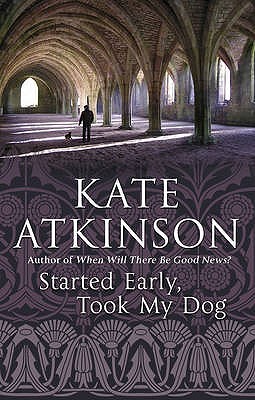
Jackson’s women are more than glad to tell him his faults and  to take advantage of him, sometimes with what seem like dire results. Dire to the reader. Not to him.  He has bad luck with women and trains. Accidentally, boarding the train bound for Scotland instead of the one for London turns out to be the least of his problems that day. At one time or another, he loses his wallet, his money, his car, but carries on with his original plans, although losing his actual identity does slow him down. Certainly he learns that old truth that no good deed goes unpunished. At least he ends up with a dog, which he takes to see the ruins of Fountains Abbey, as we can see on the cover of Started Early, Took My Dog.

Late Bloomers: tree blossoms in late June

Japanese Tree LilacThe riotous fuchsia and pink of early May have faded and gone as has the purple lilac. The white spirea and mock orange and apple blossoms ditto. This week I saw only the Japanese tree lilac, which I managed to get a picture of. I knew it was a lilac because of the shape of its leaf, but it was not in my Trees of North America, so I had to find it on-line.

The other blossoms I saw were on two tall trees, one on Annette and the other on Davenport. I thought I remembered that the leaf was that of a catalpa (Northern Catalpa). I had long ago learned that on a nature walk in Rondeau Park. I stopped twice on my drive home to have a closer look at the two trees I had noted, but traffic and rain have so far prevented a picture.

The flowers are like tiny orchids with four petals and red stamens that stain the petals yellow and draw the eye into their heart. The leaves are about 4 inches across and smooth edged, plain as the palm of a hand and pointed. The trees are over 60 ft. high, I think. There are many beautiful pictures on-line, but none that are shareable here.

Once again they are an introduced species that not everyone cares for. The Ontario government calls catalpa ‘invasive’ and recommends that you plant a native species instead. Too late, too late, O bureaucrat! Because of someone’s ill-advised decision 50 year ago, I can have an exquisite moment just outside a traffic lane.

Deadwood: a walk in the woods

I mean ‘deadwood’ in the nicest possible way.

oak crownMy local woods is part of an oak savannah that borders the river and once stood much closer to the shore of Lake Ontario. The trees are rooted in undulating sand hills, which are themselves the remnants of a prehistoric lake. Perhaps it is their loose footing that brings so many trees down. Once down, they lie where they fell. Even if they block a well-used path, the parks department let them be. Their decay is imperceptible but sure. The deadwood is host to insects and seedlings and whatever else thrives on it. Today is ideal decaying weather – very hot and humid. This is what I saw on my walk.

fallen tree #1fallen tree 2fallen tree 3 edtrickle treeThe tree above was undermined by a tiny trickle of a brook. The same trickle took down the next tree, a tall one. Its crown fell across the usual path and it took me several months to discover the detour around it.

fallen tree 5 edSomeone has ill-advisedly fashioned a rail of dead branches, certainly not a parks person.

railThere are, thank goodness, no “Use at Your Own Risk” signs nor should there be walking aids. Wood-walkers are made of hardier stuff.

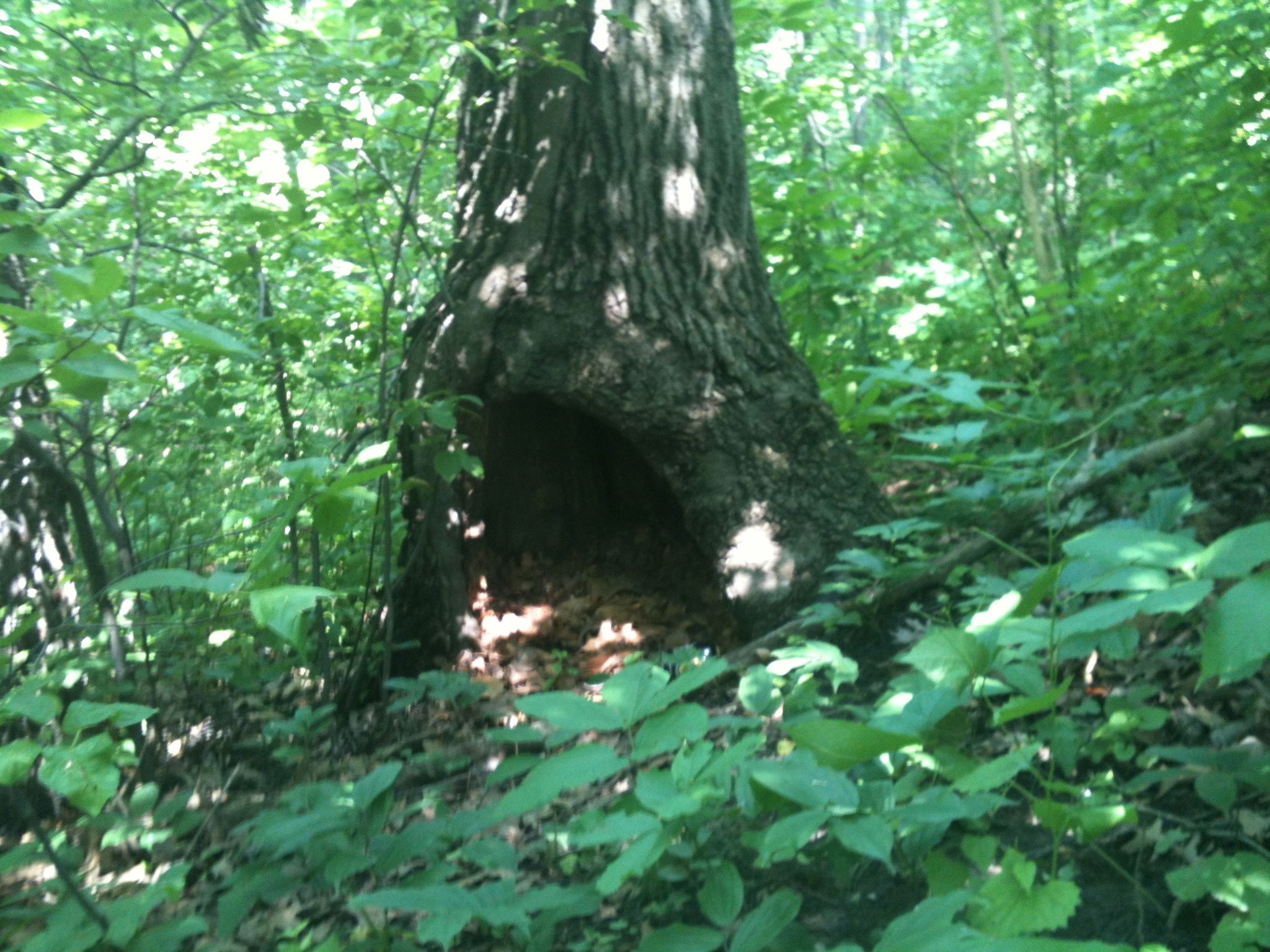
fallen tree 7 hollow tree edSome oaks hang on valiantly in spite of past trauma.

new tree edMeanwhile new trees just planted near the river are loving this extremely wet June.

Aruncus dioicus and A Midsummer Night’s Dream

This re-blog from My Botanical Garden gives the flavour of Midsummer Night’s Dream.

Tamara Jare's avatarMy Botanical Garden

Image

Image


Image

At the time of summer solstice goat’s beard was put on windows and doors in Slovenia, people believed the magic of the plant would protect them against evil. Who knows how it worked, but we shouldn’t stop believing in magic, anyway. So here is a piece of magic -A Midsummer Night’s Dream and some pictures of Aruncus diocus, having similar name as midsummer night in Slovene language, which I find magical…


View original post

Summer Solstice

Today, June 21, 2013 is the Summer Solstice. Summer officially began at 1:03 EDT. It is the longest day of the year, here in the Northern Hemisphere. It was light at 5 a.m. where I live and although the sun will set just after 9 p.m., there will be light well after that. In Sweden it will never really get dark and in Edinburgh barely.

I like to hike up Solstice Canyon to the little waterfall on this day.

Solstice Cyn pho #2 But this year I have had to send delegates instead. They assure me the falls is still there.

close up solstice fallsIt  is just above the ruins of the Roberts house that fell victim to wildfire years ago in spite of its deep, natural pool.

What a great place to perform Shakespeare’s Midsummer Night’s Dream: Titania, Oberon and the fairies in the rocky grotto, the workmen, Quince, Bottom, et al rehearsing their play on the colorful tiles that were the kitchen’s, the erstwhile lovers who have run away from Athens on the gravel path, Puck flitting between, bewitching the wrong people into love, Bottom saddled with an ass’s head proving irresistible to the exquisite Titania. But they have to be quick, so quick, because it is the shortest night and this is a fleeting dream.

Failing this, do something unexpected to celebrate the light.