The Fall: poem for Margaret


 Spring and Fall: to a young child

MÁRGARÉT, áre you gríeving
Over Goldengrove unleaving?
Leáves, líke the things of man, you
With your fresh thoughts care for, can you?
Áh! ás the heart grows older
It will come to such sights colder
By and by, nor spare a sigh
Though worlds of wanwood leafmeal lie;
And yet you wíll weep and know why.
Now no matter, child, the name:
Sórrow’s spríngs áre the same.
Nor mouth had, no nor mind, expressed
What heart heard of, ghost guessed:
It ís the blight man was born for,
It is Margaret you mourn for.

Gerard Manley Hopkins 1918

Early October: reflections from Journal 119

The first weekend in October has always been an important one for me. As a high school English teacher, I found that by that date I had finally forged a relationship with my classes. I knew their names and I was interested in them as individuals and they had, usually, stopped testing me, having presumably given me a passing grade. So by then the hard slog of the new school year was over.

And there was another reward – it was a long weekend, the first Monday in October being Thanksgiving Day here, where harvest time comes earlier than it does south of the border.

Some teachers in the States have a long weekend as well in honour of Columbus Day. Not all, as I found it one year when I took my 7 year-old grandson for a hike in Topanga Canyon that day. I discovered to my mortification (I was a teacher after all) that his school, a private school in Los Angeles, didn’t have that holiday. It was the sort of school that let its students plan the lessons, so, in fact, our day trip was not much out of line.

This year, that child is in his first year residency at a New England hospital. Just saying.

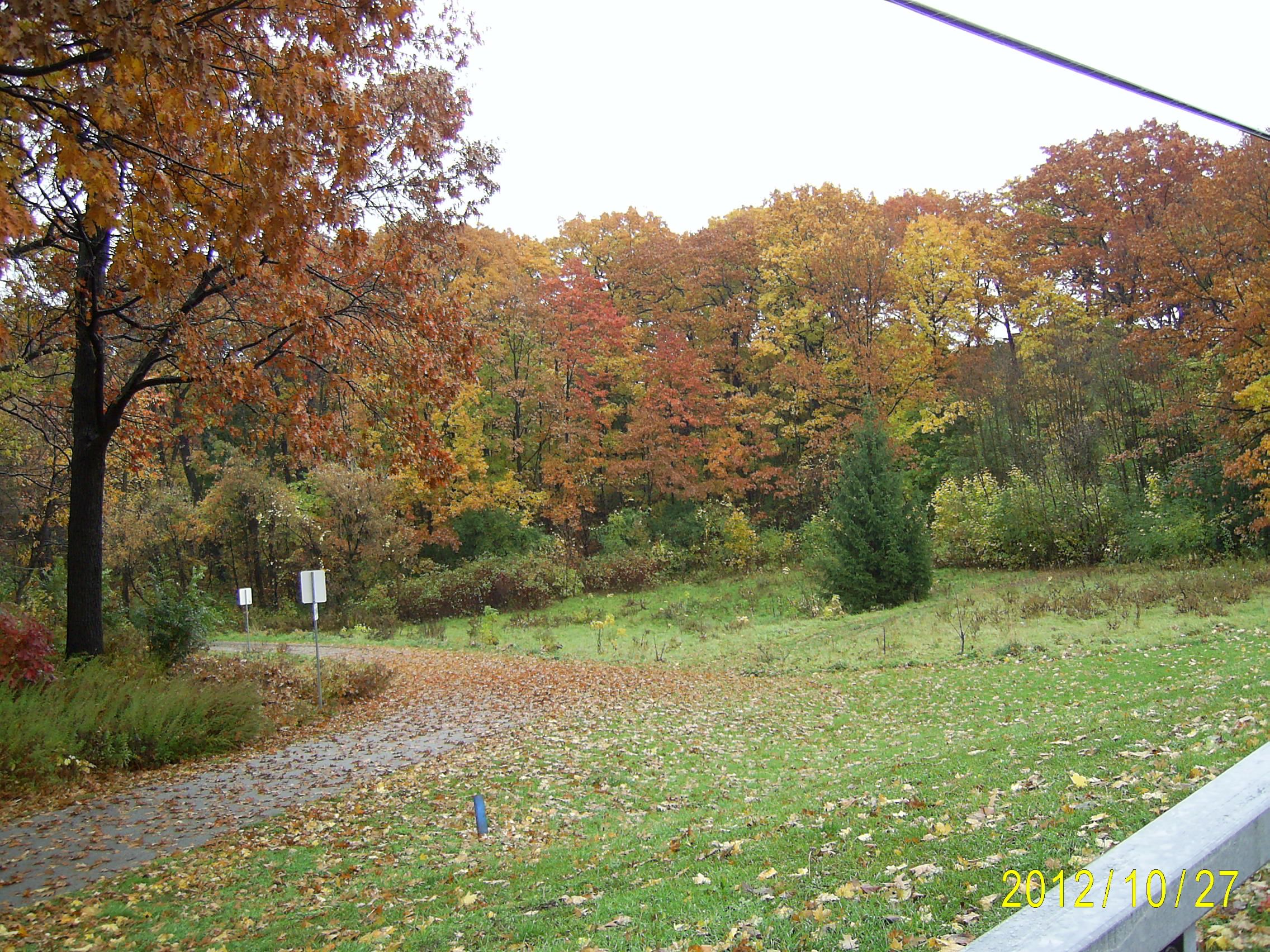
On Saturday I drove to Stratford to see a production of Shakespeare’s Much Ado About Nothing, a trip of about an hour and a half with a bonus that hadn’t occurred to me. The trees were aflame with colour. In the middle distance woodlots glowed with orange and red and golden phosphorescence. (We are lucky here to have so many hard maples that produce such bright colours. The photographer who originally posted “A Tribute to Autumn”, which I reblogged lives farther north and west, I think, because the trees there produce mostly yellows.) The corn nearer the highway still stood dusky gold, but as we drove farther northwest, the fields became brown and beige stubble.

Surprising how cold it was when we got out of the car to find lunch. I had worn a sheepskin-lined rain coat and a wool tam, scarf and gloves, but the cold wind went right through me as if I were wearing diaphanous cotton. No doubt about it, summer was long gone.

I note by the way that, although it is only 70 degrees F. in Los Angeles today, it will be back up to 92 next week.

The Festival Theatre in Stratford Ontario has a thrust stage, rather than a proscenium arch. I first saw it when I was a teenager in the second year of its operation, although at the time, it was housed in a huge circular tent. The permanent structure was designed to mimic the tent. By the time, we had hiked through the park from our car, we were chilled to the bone and it seemed as if a glass of pinot noir was in order to get the blood moving again.

Once seated, I realized that my friend who had made the reservation online had upgraded us, not to the very best seats, but almost, thinking I wouldn’t notice her largess. It is hard in such a theatre to get a bad seat, but the sections at the sides of the horseshoe-shaped auditorium are more challenging. And the row in front of us was entirely empty, sold no doubt to some sponsoring company but not distributed so no heads obscured our view. The set had a staircase that swept up around a palm tree!!!! This production had been relocated to Brazil in the early 1900s.

I had looked up a summary of the plot of Much Ado About Nothing, just to sort it out from Shakespeare’s other comedies, but I was not prepared for how familiar I found it. I knew the next line before the actor spoke it. It was unsettling! Apparently, in my 35 year career, I had taught it many times and forgotten I had done so. Considering that most years I taught 5 plays by Shakespeare, I had much opportunity.

Basically, the play is about the duelling couple who apparently scorn each other and are always putting each other down, but eventually ….. Shakespeare used the same sort of plot device in Taming of the Shrew. He liked to set a headstrong, witty woman, in this case Beatrice, against the equally willful, caustic man, Benedict. There’s plenty of scope for pratfalls as they eavesdrop on their friends who are setting them up to fall in love.

After the show, we stopped at Balzacs for coffee and sugar enough to get us home through a dark and rainy drive.

Monday, turkey day, was a roast beef day in my house, roast beef and Yorkshire pudding, which I came to love when I was married to a Yorkshire lad. Fortune had carried him back to my table after many years’ absence and he assured me that I had channelled his mother’s pudding. (See recipe below.) My mother-in-law used beef fat but beef doesn’t have much fat these days so I opt for butter. And it turned out well even though we never succeeded in raising large bubbles. Like my mother-in-law, I chose a loaf tin rather than the 9 by 6.You start the oven at 400 and turn it down to 350 after 20 minutes. If you are like me, you forget when you turned it down and have to wing it after that. Maybe that’s when I got help from beyond. Proof I had channelled her: it came out of the oven puffed high and lightly browned. You have to serve it asap, so the mashed root veg (See recipe below.) had to be ready, the beef sliced and the gravy made. (Why is there never enough gravy?) The roasted beet and argula salad had to wait its turn. The meal was so delicious that we four fell to expressions ofthankfulness spontaneously. And of course there was pumpkin pie.

There were absent friends, some more permanently absent than others. We were a family reconstituted with good fellowship and food.

Early October has a way of reconciling me to the inevitable, which comes earlier here than it does down there in my second home.

 Yorkshire Pudding according to The Joy of Cooking 75th anniversary ed.

Have all ingredients at room temperature, about 70 degrees F. Preheat oven to 400 F. Sift into a bowl:

3/4 cup all-purpose flour minus 2 tablespoons
1/2 tsp of salt
Make a well in the centre and pour in
1/2 cup milk
Stir in the milk. Beat in:
2 large eggs well beaten
Add:
1/2 cup water
Beat the batter until large bubbles rise to the surface. …Pour 1/4 in. beef drippings or melted butter into a 9 by 6 baking dish or 6 regular muffin cups. Heat pan or dish until hot. POur in batter and bake 20 min. Reduce heat to 350 and bake 10-15 min. longer until puffed and golden brown.

Mashed Root Vegetables a la Desmond, my hairdresser

Peel or scrub equal amounts of carrots, parsnips and turnip, dice, add water to cover, salt, bring to boil and reduce heat. Cook until fork tender, but not soft. Drain and mash. Add butter and pepper.
Desmond says, “Don’t even think of adding sugar. These vegetables are sweet enough.”

The First and Second Sleep

In Medieval literature, including Chaucer’s Canterbury Tales, there are references to the time between the first and second sleep, which was the ideal time for study, one book said. I vaguely remember knowing that already, possibly from a long ago summer course. I learned it anew from my morning paper, the National Post, which published excerpts of Dreamland: Adventures in the Strange Science of Sleep this week.

The book’s author David K. Randall recounts how a Virginia Tech history professor noted these references in his reading and how a Bethesda psychiatrist put the question of what this meant to the test. He deprived those in his study of artificial light. Initially, they took the opportunity to sleep deeper and longer than they had before, but eventually, they seemed to catch up on their sleep deficit and a new pattern emerged. They fell asleep shortly after sunset and woke up sometime after midnight, at which time they stayed awake for an hour or so and then fell back into a second sleep. Having escaped the tyranny of artificial light, they had apparently reverted to the medieval sleep pattern.

Okay, I know I’m old, but this is ridiculous. I remember my grandfather sitting up in the middle of the night in his wooden chair with the wide arms. I had been woken up by the smell of the herbal cigarette he was smoking to soothe his farmer’s lungs.

When I was born, we had no electricity in our rural community. In fact electricity did not come to those hills until well after World War II. It was not until then that the people there got out from under the Depression and were able to afford to pay for the lines from the road to their farmhouses. And while I lived in town from the time I was 5, I spent summers back there with my grandparents, so I do recall a way of life that was mostly devoid of artificial light.

I say “mostly” because toward the end of those years, my grandmother managed to buy an Alladin lamp. Not the kind that you rub for three wishes, but a tall kerosene lamp with  a brighter light, which may have had something to do with the mantle. This particular lamp could also be hung on a wall bracket where it gave us kids enough light to see our playing cards half way across the kitchen. My grandmother sat nearer it to sew or knit and my grandfather sat in his grandpa chair at the gloomier end of the kitchen. The old, little oil lamp was still carried upstairs when we children went up to bed but the puddle of light it shed went back downstairs with Nanny.

I remember sitting on the porch in the evening watching the light fade in the east, my young aunt and uncles climbing onto the porch swing beside their father. The sun was going down behind the house, sinking below steep Hereford Hill. As the sky faded into an improbable turquoise in front of us, a single silver star gradually appeared over the Mount Monadnock. My grandfather broke the silence that had fallen on us five children.

“That will be Venus,” he said.

The evening star! And we children whispered to ourselves, “Star light, star bright/ the first star I see tonight/ I wish I may I wish I might/ Have the wish I wish tonight.” And then we refused to tell our wish for fear it would not come true.

I don’t remember what I wished, but it may well have been just to go on living in such blissful peace.

As darkness fell, a soft cloud of light bloomed softly from the town across the border in Vermont where there was electricity. Then one by one, the other stars popped out until the dome above us was full of them. We stood on the gravel drive gazing up at them, turning with our arms out for balance and nearly falling over, until Nanny called us in.

Once in a while, we found it necessary to journey to the outhouse before bed, a journey which could be undertaken only in pairs. There were no flashlights. It wasn’t worth lighting a lantern. I remember stepping down off the flat stone that served as a porch step and turning into a darkness as thick as black velvet.

“Stand still for a minute,” Nanny called before she shut the door against the bugs. “You’ll get your eyes back.”

I would have been glad just to get my breath back. Our voices seemed suddenly small. The darkness immeasurably large and strangely silent.

Were there wolves?

I have experienced such darkness as an adult at Peppermint Creek camp grounds above the Kern River in the Sierras. We always avoided the “serviced” camping area, pitching our tents next to the creek itself. Under the huge trees, there was no light pollution. The stars were numberless. It was possible to believe as I have heard that there are as many stars in the sky as there are grains of sand on all the beaches on earth.

Talking about the medieval two sleeps, a number of us have decided that we can take a new attitude to the tendency of age to wake up in the middle of the night. We can do what they did in the Middle Ages and value it as time well found.

http://fullcomment.nationalpost.com/2012/09/17/book-excerpt-how-the-lightbulb-transformed-the-

http://fullcomment.nationalpost.com/2012/09/17/book-excerpt-how-litttle-we-know-about-sleep-is-sciences-dirty-little-secret/

The Secret Life of City Deer: a walk in the woods

Thanks to Hurricane Hazel in 1958, there are no longer houses in the valleys of the three rivers that flow southward to Lake Ontario through our city. The flood plains have become parkland. I live near the western-most river where farmland that had become a golf course when Hazel hit is now a woods crisscrossed by hidden paths.

On Sunday, a friend and I set out with his shiba inu for a walk there. The park entrance is more or less across the road from where I live and is a paved bicycle/pedestrian path. We left the path almost immediately and took a dirt path into the woods. The dog decided to explore an open glade where the trilliums bloomed last May while we searched for the over-grown path we had taken a month before. My friend called her to come and she came, walking along fallen tree trunks when possible. She is a city dog and doesn’t like to get her feet dirty.

Suddenly, I found our way blocked by a huge fallen tree, 35 ft. long with 3 trunks, uprooted from the opposite side of the marshy streambed we were following. The leaves were brown and dead, so it had probably fallen in August.

Let’s try up here,” my friend said, and I started up the steep slope through the bushes.

There they were standing under a big old apple tree, staring at me. I stopped and held up my hand to caution the others. The deer ambled off. We stood very still. We could just glimpse them as they  moved, not far, maybe 50 ft. Then they stopped. I could see one of them clearly, a young buck with horns about 7 inches long. The others were not a visible, but they were equally fearless. The buck stretched his head up and pulled down an apple.

The shiba inu sat beside us wondering what had got into us now.

The ground beneath the tree we were standing under had been worn down to earth as if the deer habitually lay there.

We left them there and quietly climbed up to the ridge trail we had been making for, before we stumbled on a miracle.

We knew the deer were there because we had seen a hind a few weeks ago, running down the hill toward the river, tail flying. This woods is no bigger than a large city block but it is very hilly and its paths are tricky leading you into unexpected places. The deer can easily stay hidden and it was only the fallen tree that led us to them.

Summer’s Almost Gone: Jim Morrison and I lament

Woke up this morning, not early, 7 o’clock. Whaaat? It’s still dark. Not a glimmer of dawn. But I happen to know the sun was supposed to rise here at 6:49. Simple solution – go back to sleep.

At 8:30, it is just very gloomy, rain is pelting down, trees are tossing their heads and the temperature is falling down past 15C/60F. At least the papers have arrived and their weather maps show rain from Iqaluit to Maimi. Even Houston and El Paso are getting wet.

Yesterday, Friday, it was hot and humid with sun burning down. But the traffic, which had been its usual summer-lite on Wednesday, was back to its non-summer impossible. I hit a detour 5 minutes from home that held me back 15 minutes and even my usual “deke-around” routes had huge trucks barrelling toward me on narrow residential streets.

I was late for my tai chi class. So were ten others. We sat on the benches changing our shoes.

“It’s over, isn’t it?” the woman across from me said. I only just kept myself from falling on her shoulder in a grieving embrace.

Then wouldn’t you know it, on the way home, Jim Morrison “Summer’s Almost Gone”, going on in atonal fashion about having been calmly unaware with gold burned into our hair, “Where will we be/when summer’s almost gone?”

Easy answer, Jim, sitting here, staring out at the rain and the maple leaves turning orange from the edges in before our very eyes.

We are moving on in our grief in my town at least. Mostly, we have stopped talking about it. Some of us have buried ourselves in a relentless round of movie-going or celebrity stalking attendant on our film festival. (That would be TIFF.) There are many more flyers in today’s papers and from the looks of them, others are going to hit the stores to buy crazily- patterned shoes and clothes. One caption cries, “Let loose the houndstooth”. Or look – what a nice dining room table and all the gewgaws to set it up for a harvest dinner party. I do have Perception and World Without End waiting on the TIVO.

Here in TO, we get to enjoy a lot of indoor time once summer ends, so why not get the rugs cleaned and set up the new filing system. That should be fun!

Jim, how can you people in California even pretend that you have winter?

Oh, come on now, buck up, Joyce! Temperatures of 27/80 are forecast for later next week. Didn’t I have to call you to task on this issue in Septuagenarians in the Wilderness part 3:
“Oh, give it up my friend. There will be warmer, dryer days. There will be other summers. There will be other burning chef’s hats. We’re a good way yet from closing time.”

Blue Moon

On Friday, there was a second full moon in August. It is rare to have 2 full moons in one month and we refer to the phenomenon as a blue moon, hence the expression, “Once in a blue moon”.

Of course the moon was actually its usual golden glow that I was able to glimpse through the maple trees that line my street. It hung there above the bay where the river empties into Lake Ontario. So beautiful, a mirror for our star, the Sun.

The Hungry Ghosts: Chinese All Souls Festival

As we approach the temple building in Chinatown, we can see smoke rising from the tiny courtyard, smell strong incense and feel a fine spray on our faces. Through the filagree of the metal fence we catch glimpses of red-robed figures and hear their chanting. My friend peels off at this point, allergic to such strong incense and smoke. Entering by a side gate, I come upon other chanters in light blue robes, coming down from the temple on the third floor.

Inside the tiny office area, I am pointed toward the English list. The Chinese list looks to be more sizeable. The man before me is busy adding a folded package containing a paper sports jacket, paper dress shoes and a paper cell phone to his bag of paper money. I know these customs having attended a Chinese funeral, although the deceased also received genuine Scotch whiskey to help her on her way. When it is my turn, I am greeted happily. “We didn’t know you would be here to burn your own!” But I eschew extras. I am sending only these ersatz silver and gold bars to my parents.

For weeks, we have been rolling this paper money at our tai chi club and sending it down here in huge green plastic bags. The money has been redistributed into the small parcels, such as the one I hold with my parents’ names and their memorial plaque number on the label.

“You know what to do?” asks the volunteer in charge of the English list and she proceeds to remind me, but I do know what to do. This is the sixth year that I have burned an offering.

“Why don’t you do it for Aunt Mae?” Georgia has asked me. Aunt Mae got us through our tough young lives.

“Aunt Mae doesn’t need any help,” I reply.

Perhaps our mother doesn’t either, for when she left, she never looked back. She went so completely and utterly that her leaving left me questioning my beliefs, questioning them all the way to a two-week hospital stay.

My father, on the other hand, hung around, offering, for example, financial advice: buy lottery tickets. Those who have read my memoir, Never Tell, will understand that he was the sort of parent, one is better off without.

I climb to the third floor, clutching my paper sack. Through the door to the temple I can see more blue-robed chanters moving about among what surely must be “graven images” of the Quan Yin and Confucius and other Buddist, Taoist and Confucian “saints” or holy beings. They are large and colourful and delight me, but today my business is in the anteroom where the memorial plaques are posted. Mine is #588 and easily found.

I stand gazing at this innocuous slip of yellow paper, bearing my parents’ names and the name of their native town -Hereford. How strange to see it here, amid these gaudy red and gold trappings, above this altar covered in dishes of food: fruit, pastries, rice, tea, pots with many sticks of incense, and beautiful flowers. Hereford of rolling green hills and low mountains, Hereford Hill that lies under slope-shouldered Hereford mountain and looks down over the Indian and Connecticut Rivers, a wooded place that is turning its back on cultivation now, turning back to dark and tangled forest.

I bow, the parcel tucked awkwardly under my arm. I choose a joss stick, light it on a candle, bow and stick it in the sand of an incense pot. I bow again. I don’t want to leave.

I am 76 years-old, but I am also 2 and 4 and 5. I am living through the Great New England hurricane and watching my parents build a load on the hay wagon and walking the dirt road with my mother and fishing the trout stream with my father.

If they were alive my mother would be 95. Her mother lived to that age. And my father, 98. But they have been gone for 44 and 24 years. Most of the family is profoundly grateful and it certainly has made life easier. No one else, Georgia or my visiting brother, wants to be here with me.

Downstairs, I am waved toward the back parking lot where a small iron burner stands ready. Two of my favourite instructors are there to feed the fire. They are my age, perhaps, although their wiry small bodies are in such good shape, it’s hard to tell and they are teaching another Chinese man how to do the tor yu as one of them pokes my bundle into flames.

I stand watching it burn, leaping up in bright gold and red flames, dying back to black ash and leaping into flame again. My eyes are watering. Must be the smokey wind.

I am feeding the hungry ghosts, my father who waited his whole life for a windfall, my mother who loved beautiful things -cranberry glass, cow pitchers (!), my father who sought some adrenaline high to fill the emptiness of his orphaned heart, my mother who sought solace, a gift to soothe her battered soul. And my own. My ghost is still more or less grounded here for the time being, but I know its tendency to wander, howling in the wilderness.

It’s all about me as usual.

Measured against the forests and the granite, the myriad lakes and waters, the un-reckonable ages, I am just a flame. These steadfastnesses support me, not I them. I can flicker and go out and reignite. I owe my life to Something greater.

When the fire has died down to black, I thank the men and walk through the back gate to my car, which still has a lot of time on the meter.

Septuagenarians in the Wilderness: part 3

Everything changes.

The cast of characters first. The young family exits. Errant parent is waiting in the parking lot of the hibachi restaurant to carry partner and children off. The next day, the twenty somethings rush back to their busy lives. On the holiday Monday, two more leave with the dog, so for one night, Georgia and I have the cottage to ourselves, while my niece retreats to the cabin. No dog, no kids! Not even any trains hooting at the crossing!

On Tuesday the cast begins to swell again as two of Georgia’s friends arrive. On Wednesday, I sit by the phone waiting for my brother to fly in from Europe. His first call on landing assures me he had lost his luggage. On the next call, he has found his bag, but his rental car has no GPS. On the third call, he is on the road, ignoring my route instructions and on a highway I don’t even know. Here is a man who can fill all dog/kid/train deficits. (See post I dream of Etherica.)

And the season changes.

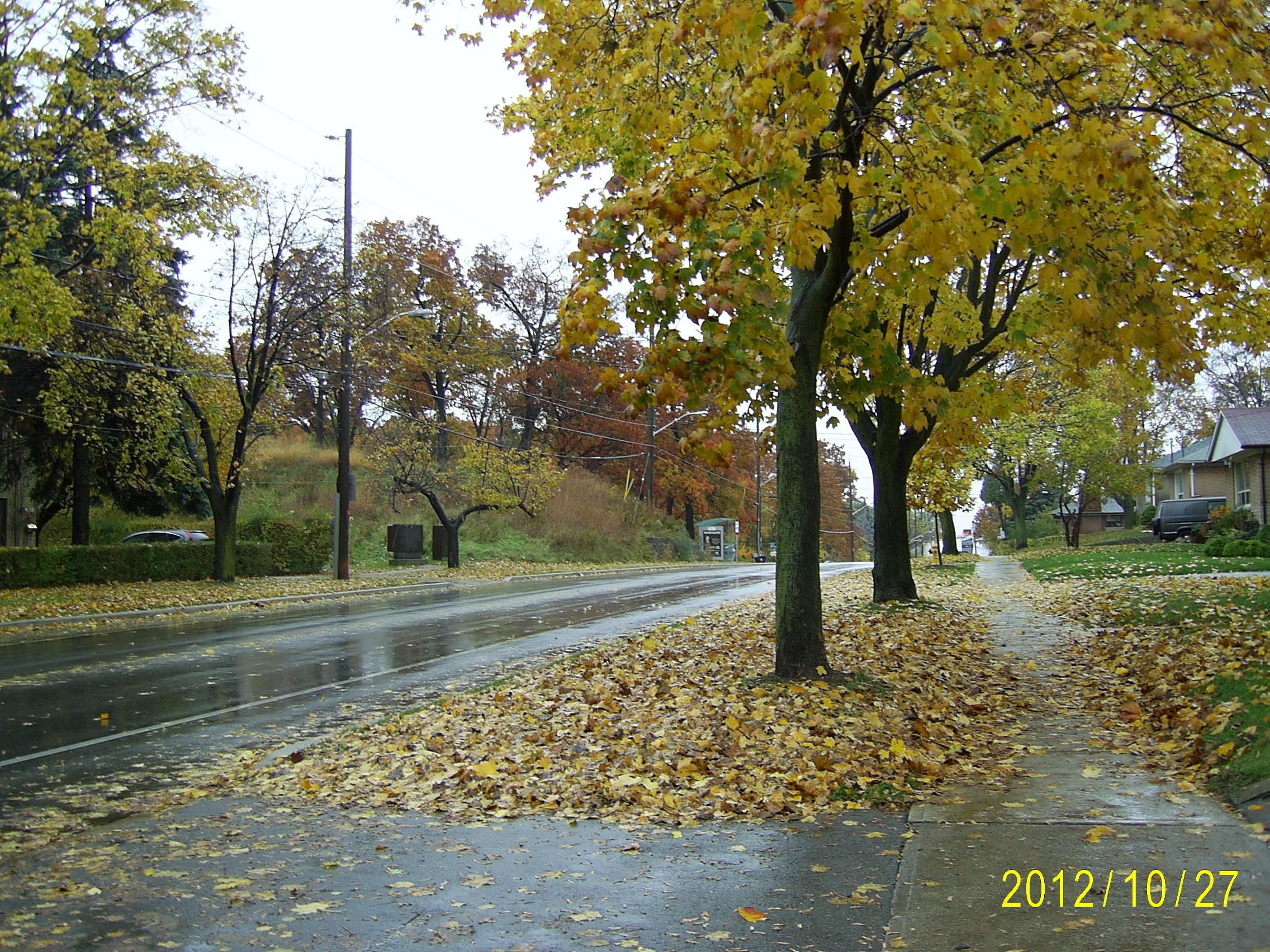
What had been high summer abruptly becomes early autumn. The temperature plummets overnight and it begins to rain. It hasn’t rained for nearly 3 months. It is so dry there is a fire ban and holiday fireworks are cancelled. It is so dry that some trees have already turned orange in early August. Now it rains steadily. One could say relentlessly.

This doesn’t stop the daily production of gourmet meals nor even shut down the barbecue on the deck. Rob grills teriyaki salmon while someone holds an umbrella over him. Nor does it stop great conversation. He hasn’t come home for 3 years, so we have a lot to catch up on. And it doesn’t stop reading. I finish an early Lynley mystery by Elizabeth George in record time. There is even some canoeing, which involves much tipping, drenching and subsequent recovery. But it puts an end to beach sitting. The canopy and umbrella -wearing an improvised neck brace- look sad and wet. No high flying sallies!

Even the birds seem too wet to fly. I come upon a covey of quail feeding on the edge of the woods, softly mewing to each other, utterly unafraid of me. It’s their woods.

Driving back from the village I drift to a stop: there is a deer standing in the middle of the narrow dirt road, calmly gazing at me. By the time I have found my iPhone, she has quietly vanished into the trees.

I stop before I go up the steps to the cottage and enjoy the trees, tall, slim, steadfast in spite of human intrusion, breathing peacefully, exhaling something healing.

Then it is Friday, time to go. Time to pack the cooler, the suitcase, the duffle bag and the dozen or so bags of groceries, pills, books. And that’s just my list. There are 4 cars to load. The fridge has to be sorted. My niece sits in front of the open door and Rob holds a garbage bag. If food is still edible, it goes back to whoever brought it. Some of it is unidentifiable and that goes into the big garbage bag. When they need someone to break a tie, they appeal to me.

When the fridge is empty, Rob and I suit up for a rainy run to the dump. When we arrive we study the sign detailing hours of operation. The landfill site is open 6 days a week. Can you guess which day it is closed? We decide not to tell Georgia. When I talk to Rob on the phone next day, and ask what he has done with the garbage, he replies he’s just going to leave it where it is and return it with the rental. As usual, I believe him for a split second.

Meanwhile Georgia and my niece have been cleaning the bamboo floors and making the beds with clean sheets. The beds are no problem, but carrying that mess of bags out to the cars involves a good deal of wiping up footprints. By now we don’t notice how wet we are, but an idea is blossoming in our minds: for the price Georgia paid, she shouldn’t have to play char as well.

We are ready to go, standing in the rain, realizing we don’t want to head off in three different directions yet. We decide to eat lunch together. We form a caravan, Rob in the middle, Georgia in the lead, to look for a restaurant up Parry Sound way. As soon as we hit the highway, Georgia jack-rabbits off so fast that Rob can barely keep up with her and he’s a European. I squint through the rain to keep them in view and we race up hill and down dale on rain-slick roads. So much for the stereotype  of doddery, slow old drivers! It goes on and on. I’m getting hungry. We pass a closed restaurant. We pass a boat dealership in the middle of nowhere. Suddenly, a sign tells us we have arrived at Highway 400. We pull onto the shoulder. Georgia and I get out and converge on Rob’s open window. We cancel lunch. Anything to stop the rain pouring down inside our collars.

One by one, we head south on the freeway. Slowly I am remembering that there are no exits with services for many miles and I am down to 2 bars on my gas gauge and starving. Half an hour later, I see an exit offering gas and food. It’s the exit to the railway town we left an hour ago. CANNOT go back there.

I assure myself that I still have a quarter of a tank and surely it can’t be that far to the next gas station. It is. I do see an exit to the Wahta Mohawk cranberry barn, a source of cranberry muffins perhaps but not gas. I sail past. It’s no use, music doesn’t distract me. Anxiety is creeping up on me in spite of self-talk. I can’t talk me down. Well, it’s 2 p.m., me answers back. You haven’t fed me. What do you expect?

Much later. Much much later, a gas sign and a fork and knife sign – the bed sign is irrelevant – and I swing off the highway into Port Severn. Which way to go now? Something tells me left. Yes, following a curving street, I come upon a marina advertising the Driftwood Cafe. Me first, car second.

The Driftwood Cafe has a screened porch for a diningroom. Very chilly. But look, I am being ushered onto a side porch with closed windows and heater. Oh, bliss! I am looking out on the marina basin where a fountain of water is rising in graceful curves and falling back to its source. A mist hangs over the boats. Here the Trent-Severn Waterway ends its 400 kilometre journey from Lake Ontario, in Georgian Bay across the highway.  I am in a watery world.

While I wait for my hot Tom turkey sandwich on ciabatta, I register my dismay at being on my own so suddenly.

When I was 2 years-old, I lived in an old farm house with 3 generations of my family, the only child. I liked it. When I fell head over heels downstairs, my great uncle caught me in midair. When my mother got sulky, my great grandmother helped me set my doll’s table. When we moved into our own house, I used to build domino towers with a level for each set of grandparents. My mother hated the idea.

Perhaps we have lost the knack if we ever actually had it. I noticed that someone turned the toilet paper roll the other way around every time I put it on. Correctly of course! Or was that just paranoia? I did catch someone rewashing the sink I had not only just washed but announced as well. How do the sister-wives manage?

So I await my lunch as the rain does its pathetic fallacy thing and mirrors my mood.

I will no doubt see Rob several times before he flies back. I will talk to Georgia several times a week as usual. I will go back to the tai chi club, which is family in its way. I will have Blake for dinner. I may even go sailing with him, but just for now, melancholy settles in.

In the kitchen 6 young people, the cook and wait staff, are drawing straws for some unpleasant job and shrieking with laughter. They’ve got plans for the late night hours after closing time.

Oh, give it up my friend. There will be warmer, dryer days. There will be other summers. There will be other burning chef’s hats. We’re a good way yet from closing time.

Septuagenarians in the Wilderness: part 2

There is, thank heavens, no 15 minute wait at the train crossing. The crews apparently take the opportunity to climb down from their freight trains in this little town. Unfortunately, this means that the train’s mile-long tail blocks the road to the cottage. Today I quickly turn onto the road that runs parallel to the tracks and it changes from pavement to black top to gravel, getting ever smaller. Signs warn me repeatedly that the tiny dirt road is now private so what am I doing there and, moreover, I am ordered to stop for snakes and turtles neither of which I see. Finally, after the usual panic that surely I have missed the hidden turn, I find it and bump over rock and hillocks into a clearing in the woods where the cottage sits basking in the sun.

Beach picture from previous year

I step out of the Yarris into 95 degree heat with my usual grace after long sitting and hobble around until I can get things stretched and operational. Then I carry my Tim’s tea around the cottage down to the beach where I can see the others. On either side of the clearing, a 50 or 60 year-old wood of birch and maple and beech stands, unmoved and calming.

There are 4 children playing in the water and 5 adults sheltering under a white canopy, one of whom is my sister, Georgia, the founder of the feast, for it is Georgia who has rented the cottage with her carefully saved substitute-teacher’s pay.

The cottage can sleep 12 in its 2 bedrooms and loft, but there is also a brand new cabin hidden in the woods where the children and their parents are staying. It, like the main building, is fully screened against insect predation. Both have screened porches and the larger one has a big deck looking out on the lake.

A group of 6 has been there already for a week. Georgia and my older niece arrived yesterday. My niece moves from the bedroom she has shared with Georgia and re-makes her bed in the loft, not an easy choice to make because the loft is open to the noise of the main room below. She is honouring her elder.

The Wilderness Effect

I have shared houses with my daughter’s family and never experienced the wilderness effect in them. They were in Los Vegas, however, the last place on earth for the wilderness effect. Even though there were just as many people and emotionally charged events – a memorial service for grandpa and a wedding, there were no meltdowns. Plumbing disasters, inconvenient babysitting expectations, varying standards of housekeeping, but no need for interventions or group therapy sessions.

On the other hand, not one of our camping trips in the High Sierras passed without it. Others at the same campsite above the Kern River dealt with the wilderness effect by drinking copious qualities of beer and howling like wolves to scare off bears. In our camp, usually on the 3rd or 4th day, we found ourselves sitting in a circle listening to an older child express his angst or holding a screaming younger child or shaking heads in disbelief when gran nearly perished from insomnia. (Something about the altitude and all those stars wheeling overhead.) It must be all that fresh air, all this patient trees, the safety net of the family that brings it on.

In this case, it starts with wind. Saturday morning, Georgia has just come up from sitting under her new orange umbrella, 4 others are sheltered in the shade of the canopy and the children are hunting mussels in the lake. I am in the cottage with a view out the glass front. Suddenly, the umbrella’s neck is twisted and broken and the children watch in disbelief as a great funnel of sand flies up. Those under the canopy shield their faces. The canopy, metal frame and white cover intact rises, hovers six feet over their heads, turns on its side and speeds thirty feet across the clearing to land 15 feet up in the trees.

True the cottage sits at the end of a long stretch of water, wooded on both sides, that forms a wind-alley but this is ridiculous.

Much of the rest of the morning is spent debriefing and fishing the canopy down with oars.

Dinner at a hibachi bar, in a town an hour away, is scheduled this evening, to celebrate Georgia’s approaching 70th birthday. We have reservations for 14. Three more, including Georgia’s other grandchildren are expected to arrive soon.

I am on the screened porch when I hear an uproar from the cabin.  One parent arrives, very het up, seeking intervention. A passionate difference of opinion has arisen over appropriate child discipline.  The most objective of our group is sent forth to reason. One half of the blended family, having secured the car keys, departs precipitously, leaving the other half without transportation. A less objective person, that is to say a mother, makes the trek to the cabin. The remaining children and parent are whisked away for lunch in the aforementioned town.

Those of us left behind contemplate the wilderness effect.

I make a quick trip down the private road and over the tracks, to buy Georgia a bunch of Gerber daisies and a bottle of Moet & Chandron. I stow them in the cabin to keep them out of sight. When I carry them to the main cottage later, I meet an exasperated 7 year-old.

“What are they for?” she asks.

“They’re for Grandma Georgia’s birthday,” I reply.

“I guess you didn’t know my birthday was on Wednesday,” she says.

“I didn’t,” I reply. “Sorry. What would you like for a late birthday present.”

“I’d like to find my pink dress,” she declares and stomps away.

Alas, it turns out that her pink dress had been carried off by the departing parent in hastily packed luggage.

As a fitting end to a perfect day, the hibachi chef sets his hat of fire.

More to come.


Jack Reacher -Wandering Taoist

In my last post “How I developed ‘Low Tastes’ in Reading, I mentioned that I was hooked on Lee Child’s Jack Reacher thrillers, to my dismay. Then, wouldn’t you know it, I found a justification: Jack Reacher is a wandering taoist.

It was reading # 156 in Deng Ming-Dao’s 365 Tao:Daily Meditations* the one for June 5th that clued me in to what I should have realized before.  (* Available at Amazon.com)

Inseparable: The trunk is hollow,/But the branches live./The void is fundamental,/But the ten thousand things are diverse./ Therefore wanderers free themselves of cares/And follow Tao in great delight.

In the ensuing explanation, Deng tells us that we can know all of Tao’s manifestation by travelling through the world. All experience is the experience of Tao. Those who follow it, divest themselves of ego and ambition and follow its flow throughout the land, moving from place to place as they sense the direction of its vital flow. “These wanderers have glimpsed the void that is in them and in all things. They delight in life but never see more than the void.”

As a volunteer, I once took a phone call from a very serious young man who wanted me to tell him what Taoism was. I replied civilly, I hope, that to answer would take longer than the average phone call and, besides, it was beyond me. Short answer -Tao is the stuff of life, the energy that animates it. Taoists believe in the supremacy of nature and the necessity of living by its laws, in particular the cycles of change. They understand that whatever is full and rich will decline in time and whatever is empty and poor will rise in turn. Taoists don’t talk about God in spite of reverence. Should they search for God, they would look, not in a book, but within.

I would say they are practical and work things out as they go along rather than adhering to doctrine. This story illustrates that: a Buddhist, a Confucian and A Taoist were meditating when mosquitoes began buzzing around their ears. The Buddhist let a mosquito bite him without protest. The Confucian slapped and killed his mosquito. The Taoist waved his mosquito away. When that didn’t work, he moved to another room. When the mosquito followed him there, he killed it. Taoists  prefer not to interfere unnecessarily but act instinctively when necessary.

It seems to me that many people are Taoists at heart, although they never identify as such. Joseph Campbell, for example, warned against being co-opted by the system. Systems prevent us from personal assessment and self-determination. They also enable us to succeed in our careers, attain wealth and social standing. Opting out has rather the reverse effect.

The fictional Jack Reacher attained the rank of major as U.S. military police officer. Then in 1997, he left that system over a moral disagreement, just short of being deployed to outer Thule or its equivalent. His pension is paid into a D.C. bank and accessed on the road. He doesn’t own a car, drives badly and flies only when he can’t take a bus or hitchhike, across the Atlantic, for example. He travels the United States according to whim, once deciding to follow a diagonal line from the north east to San Diego. He carries no baggage, except that folding toothbrush, I mentioned last time. When his clothes need washing, he buys new, cheap, sturdy shirts, pants etc. and throws the old ones away. he reckons that when you factor in the cost of a washing machine, dryer and the dwelling to contain them, not to mention the soap, he still comes out ahead. Nevertheless, he is a clean person, showering thoroughly in the cheap motels he chooses, although when he still wore his Class A’s complete with Purple Heart and Silver Star, he was not above cadging first class digs at the army’s expense.

Wherever he goes- Mississippi, Kansas, Colorado, he finds trouble or it finds him. Often all he does is step down from his ride, when the locals take agin him and try to run him out of town. Usually it is a very small town with its own ingrained and deeply corrupt system. But at 6’5″ and 250 lbs. and with some serious brawling smarts, the system’s minions don’t have much success throwing him out. Pretty soon, he has identified the nature of the corruption and its victims. He believes as he was taught that the best fight is no fight at all, but when a fight is necessary, he strikes first and dirty. In The Affair, he chides the rednecks who take him on for bringing only 6 men and takes them down readily. And they aren’t even the real enemy, just wrong-headed and misinformed.

I gave up watching boxing when I was 20 and now it just makes me think ‘concussion’, but Lee Child’s fight descriptions are choreography on paper. I would love to know how he knows all this stuff. Does he practise it the way I practise tai chi?

Jack Reacher can be counted on to right some wrongs before he blows out of town and to  leave behind more wisdom than he found there, that is for those who survive. The guiltiest may meet sudden ‘accidental’ ends, which cause Reacher neither remorse nor even a backward glance. He bids goodbye to his latest woman just as readily.

Now the purists among you may object that he also has sex on a regular basis. I counter, never indiscriminately and always on the basis of respect and affection as well as healthy desire. Besides Taoists are not purists. If they claim to be, that’s your first clue.

Jack Reacher looks into the void. The void looks back. That’s okay with him.