She’d Come Undone

IMG_0194

“She’s come undone,” the Guess Who sang. “She didn’t know what she was headed for… She’d come undone.”

http://www.youtube.com/watch?v=VLMF5GM0Kt8

Indeed she had. I found her on the top shelf of the closet I was cleaning, in a sturdy, brightly coloured box. When I opened it, I found she had fallen to pieces. She was dismembered. She had lost her head.

Still I recognized her of course. She had come into the house under the hill one Christmas time. She was by no means a new doll even then. She had been found by grandma at an antique sale. She was made of composition. She had blue eyes and red hair and she was dressed in a silky pink dress over petticoats. She was more my age than my daughter’s, although she had been so well cared for that she seemed like new, except she was missing one joint on her left pinkie. She had come originally from Eatons catalogue, my mother told my seven-year-old. Her name was Anne Shirley, of Green Gables fame.

I was deeply affected by her condition and I started calling doll shops. No, there were no more doll doctors, I was told by one and all. What, then, happens to sick dolls, I wondered. Listen, I thought, I’ve watched my own grandmother repair my dolls. All it takes is a button hook and new elastics. Just a minute. That sounds familiar. I had already tried to fix her years ago, but I couldn’t get the right tension: doll limbs suddenly became ballistic missiles.

This time, however, I didn’t give up. I searched the internet and began sending emails. Of course there were doll hospitals and medical personnel if I would pack her up and ship her miles away. I decided against cross-border medical care. I didn’t want some customs officer peering in at her. I wrapped that sturdy, bright box in plain brown paper and sent her off to Ottawa.

It was a long convalescence, without visiting hours, just emails of reassurance. Then I found myself in a people hospital far across the continent, sitting beside the doll’s mother, holding her hand, willing her back to us. She did come back and so did Anne.

Last Friday, a big box arrived. I cut the tape as excitedly as the 7 year-old had all those years ago. There she was, all her limbs in place and her head firmly attached to her shoulders. Her complexion sparkled, her blue eyes glowed. Weren’t her lips redder than before? Carefully I unwrapped her clothes. The silky, pink dress, the petticoat, the bonnet, the stockings, even the knickers had been cleaned and pressed. I couldn’t get her boots back on. Had her feet swollen in transit?

So she sits now in the child’s rocking chair that my great grandmother gave me when I was 2, the chair my wood-working son repaired for me.  She surveys the room serenely.

The Miracle of Return

Time to fly home. Twenty eight years of lifting off from LAX, 2 or 3 times each year, you would think it would be routine by now.

In one way, it has actually got better. Having printed my boarding pass at home, I find myself only third inline to check my bag – my one bag, which cost an extra $20 + tax. The pull handle on my suitcase has taken the opportunity to lock down, so that it has to be towed from a crouching posture, but I have help schlepping it, up and onto the scale and back to the X-ray machine.

“Next stop, there where the sun is shining on the green plants,” sings out the x-ray guy.

That, of course, is the farewell spot, a narrow gate, guarded by a familiar dragon who does the second of six boarding pass and ID checks. I make for the escalator with tears on my face. Once upon a time, my Children, farewellers could go with you through security and share a farewell coffee.

There is no line at security either and it is an exciting challenge to fill 3 plastic tubs, about the size of kitty litter pans while standing on one foot. I persist in wearing lace-up low boots. It seems like defiance: I will be darned if I’ll lower my fashion standard. As if. Finally, I have much of my clothing -the guard kindly lets me keep my cardigan on – and all my possessions, some of which, I value dearly, into the trays. The nice surprise is that I do not get “wanded”, patted down nor given a full-body scan. We must not be in an Orange alert. Or maybe my number didn’t come up. Septuagenarian women are, of course, notorious hotheads given to radicalism and acts of terror.

You get used to these absurd assumptions and things really aren’t worse than the good old days. In 1971, my 10 year-old daughter was “wanded” and patted down under the eagle eye of a soldier in camouflage holding a sub-machine gun at the ready. This was in peace-loving Switzerland.

And in those days, there always seemed to be a plane crash in the news. I used to invoke angels to get us off the ground and help us back down. Now I’m usually half asleep. Airlines seem to have learned how to build and fly planes that stay in the air until time and place dictate descent.

With notable exceptions!

It is true that I no longer have the luxury of complaining about the quality of my pre-ordered special meal. I can buy a reheated pepperoni pizza or a sub sandwich from the vending cart: credit cards only, please, but most of us buy our lunch and our water before we board the plane. Starbuck’s smoked turkey and cheddar on multigrain bread turns out to be edible, but not much more. I expected stuffing, cranberry jelly.

My individual entertainment screen is not working. My seat, I am told, should not have been sold. I can move into the middle seat instead. The window guy and I look at each other. We prefer to keep a civilized distance. I do tap its screen so that I can follow our journey on the map and see what towns we are passing over. The captain announces then that we are presently over the Grand Canyon.

And so, another return. There have been returns from weddings and divorces and new babies and new houses and plenty from just ordinary family life. This is a return from what I called in an earlier post a fortunate fall. (See 115journals.com), a return after great shock and fear and grief and then great joy and renewal of love. Rebirth. A chance to start again differently.

Yes, there are still miracles.


Dance Class and Tai Chi

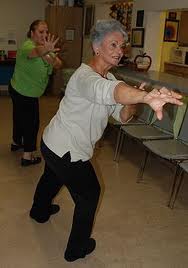
Tai chi-er

We are waiting for barbells. The resident teenager is reconciled to waiting. If the poor delivery guy/girl struggles through the gate with the 105 lb. package before Christmas so much the better, but meanwhile this health-nut proclaims there are many ways to exercise, a towel apparently comes in handy. I didn’t ask.

I packed fast for this trip. I brought only one pair of pjs. (Hello washing machine.) And I’m getting sick of these 2 outfits and the sweat pants. BUT, my exercise equipment did not get left behind. It is not heavy or forgettable. My tai chi is portable.

I ported it to a dance studio yesterday. Well, a masonic hall really, at least an ex-masonic hall, on Venice Blvd., where dance class is held. There is no instructor leading dancers through prescribed choreography, just a DJ with his computer hooked into what seem like the world’s most powerful speakers and a roomful of people moving however they please. Or lying on the floor as they please or lying in a pile on the floor as they please. So no one notices or cares about the mostly linear moves I’m making in the corner.

Loyal readers will say, “How Hollywood!” But no, I’m told that if I look it up on-line, I will find similar classes in my home town, Toronto. If your town is big enough, you might as well. And they will no doubt feature the same creatively dressed crowd -tights and tank- tops, sweats and baggy pants, floating silks of vivid colour, long skirts on guys and girls,- weaving out of their own imagination the beauty or anguish they feel.

They dance alone or with each other or in groups. One fellow danced with a bright red apple. A woman danced with a long white pillow with a heart embroidered on it. The sweatiest fellow in the room gave me a very looong, sweaty hug. It was déclassé  of me to notice any of this, although I carried away something of the sweaty guy’s essence.

My kind of tai chi -taoist.org – is never done to music. Master Moy, who brought the art of tai chi to the west in the early 70s, taught this silent technique so that we would learn to listen to our bodies. So it’s quite a shock to be practising, as I did yesterday, to tribal drums, as the “class” stomped through something like a solstice ritual.

Yet it is curiously liberating. I am so distracted by the whirling colour and the floor-shaking rhythm and even the occasional melody that I find my body moving unself-consciously. Suddenly I feel it accomplishing some refinement that I haven’t been able to get before. My  weight is well and truly in my feet. My belly soft, no longer trying to do the lifting. My hands, full of intention, but the push coming from the back foot. There is a real internal massage going on.

I had arrived here knotted up. Life will do that, as you know. I am away from my usual supports -osteopath, acupuncturist, massage therapist. Then I slipped on a rock, crossing a stream and added a spiral twist -and a good deal of temporary wetness- to the mix. (Incidentally, it was a beautiful fall, I’m told. I would expect no less after all that tai chi.) What to do? You guessed it. More tai chi. I tripled the number or jongs or standing exercises and came unwound. Now, of course, I have to keep that up for the interim or this 76 year-old body will revert or at least stiffen up.

There is usually someone in an electric wheelchair at dance class. One chap moves his chair in dancing circles with his chin. A woman dances with her upper body. Taoist Tai Chi has a sitting set as well as sitting jongs. I have done these while stricken with H1N1 flu when I would have otherwise just languished in bed for weeks.

So here’s the thing, “Dance, dance, wherever you may be.” (“I am the Lord of the dance, said he.) You don’t need any training for that. Or if you won’t dance, (Can’t make me!) take the training route so you never have to pack your exercise equipment. Learn tai chi. Look it up. Taoist Tai Chi is found in 25 countries. It could be in your town and if not, there is some other kind.

Or just get out your towel!

Merry Christmas!

Ruth Rendell’s The Saint Zita Society

Image

Ruth Rendell

Ruth Rendell, (aka Barbara Vine) the 82 year-old British novelist

Saint Zita, Ruth Rendell tells us, is the patron saint of servants. The Saint Zita Society is spearheaded by June, the 80 year-old companion to the Princess. June gets little or no respect and starts the society to improve working conditions on Hexam Place, an upscale London address. Attendance is never high, the chief draw being that meetings are held in the local pub, the Dugong. (You could look that word up in a myth dictionary.)

I would call it an ensemble novel because it has so many characters all more or less of equal importance. Only one of them, Rabia, the Muslim nursery maid to Thomas, a banker’s son, engages our sympathy. She has had a tragic history as mother and wife and she has attached herself to her charge with ferocity.

Two of the others fall into the doormat category: Thea, who rightly claims that she is not actually a servant, nonetheless, is admitted to the Society because she fulfills that role to her landlords, a gay couple planning a civil union ceremony and to the angry widow who lives in the first floor flat of the 3 flat house. She would qualify for sainthood herself if she wasn’t filled with furious resentment. The other pushover is Dr. Jefferson, Hexham’s resident paediatrician. The doctor does not, of course qualify as a member, nor do, the gay couple, the Princess or Lord and Lady Studley.

There are several drivers, Jimmy, Beacon and Henry, easily distinguishable by their differing morality and who they drive for – Dr. Jefferson, Mr Still and Lord Studly, respectively. They do not indulge in alcoholic beverages at the meetings, although some of them indulge in other vices on their own time.

Several people entertain the idea of marrying persons they do not love, but these plans don’t always pan out. In fact love gets a bad rap in this book, with the exception of Rabia’s love for baby Thomas.

There are those ready and willing to take advantage of the pliant nature of others, including the gay couple and the Still’s au pair, Montserrat, who lives in the Still’s house and collects a salary but apparently has no duties.

There are 2 nasty old girls, the afore-mentioned Mrs. Grieves and the Princess, although the Princess’s dog Gussie may have the inside edge on nastiness.

The novel is not a Whodunit nor even a Whydunit, nor even a Will-they catch-em. It’s inciting event is an accidental death, which gets mismanaged, so to say. There are, I hasten to add, additional, actual murders. A red-headed detective wanders ineffectually  into the drawing rooms and bedsits of Hexham Place. Nevertheless things get wrapped up nicely, including the St. Zita Society. No one is left out of this denouement. And there is a measure of what my history prof called natural justice in the end.

I read this book on my Kindle.

Skyfall: M and Ulysses

Of course I saw Skyfall, the latest James Bond movie, as soon as I could, just as I had the other 22. So far as you no doubt know, it has been a 50 year project. The one that stands out in my memory is Thunderball and that has more to do with the way I got there than the movie itself. We set out in our new racing green 1965 MGB with the top down on a pleasant evening. We were cruising along the freeway, happily anticipating the film. As we drove under an overpass, the driver of the semi next to us pulled on his air horn, elevating us out of our seats -no seat belts back then- and setting our hearts racing. I could see him laughing madly as he passed us. Thunderball could only be an anti-climax.

Skyfall I liked much better than Quantum of Solace although  I’ve never met a Bond movie that I didn’t like. As the usher assured me, Skyfall is old-fashioned Bond.

The movie begins with Bond’s death and when that proves, unsurprisingly, greatly exaggerated, we see a battered, unshaven Bond wearing jeans and drinking —- beer. Back in harness, he is expected to re-qualify as an agent and is assured by one and all that he is past it, that, in fact, the concept of agents going out into the field is itself passé. Computer nerds can do all that work now without getting out of their pyjamas.

M, Bond’s boss, played by Judy Dench, is of course, even older and appears to have lost control of MI 6. Eventually, she is called before a parliamentary committee to face the music. In answering the badgering chair of the committee, she quotes from Alfred Lord Tennyson’s poem “Ulysses”.

The poet imagines the great adventurer Ulysses, the ancient Greek commander who defeated Troy by using a wooden horse. In the poem, Ulysses old and bored with his home island of Ithaca, exhorts his men to join him on one last great adventure from which they will not return. The poem ends with the lines which M quotes:
We are not now that strength which in old days
Moved earth and heaven; that which we are, we are;
One equal temper of heroic hearts,
Made weak by time and fate, but strong in will
To strive, to seek, to find, and not to yield.

Hush-a-bye: rain on a window pane

In my childhood home, it paid to have excellent hearing, not that it would necessarily stop a blow, but it would at least lessen the shock. And so, I cultivated mine. Now I’m stuck with it.

Prospective tenants do not see the drawbacks of the duplex I live in now. They see, as I did, the light flooding in through the floor-to-ceiling windows. They see the large main bedroom. They cannot see how insubstantial the floors are. They don’t stick around long enough to learn that every footfall above registers like an earthquake below.

So here I am with my vigilant hearing learning much more than I want to know about other tenants’, shall we say, intimate lives.

The 3 year-old next door has bedtime issues, by which I mean he is punishing his mother for bringing home a baby sister, by screaming at an octave only dogs and I can hear, between 10 p.m. and 11. The fellow downstairs goes to work at 5 a.m., a few hours after the tenant upstairs comes home from a night shift.

I have tried floral remedies, urgent pleas in pjs, music called Delta Sleep, which promised to change my brainwaves, ear plugs, running the air filter non-stop and pharmaceuticals. To little avail. But, wouldn’t you know, there’s an app for that.

The app in question cost peanuts at iTunes and is called “White Noise”. (Not “White Noise Ambience”) It gives a choice of 52 different sounds including white, blue, red, pink, grey, and purple noise, as well some rather mundane sounds such as a shower, floor fan, vacuum cleaner, dryer, projector and restaurant. It has nature sounds like ocean waves, a stream, a sandstorm, a waterfall, and my favourite, heavy rain.

I downloaded the app onto my iPhone and I set it going on my bedside table when I’m ready to go to sleep. So far, “heavy rain” seems to send me off to sleep. Rain on the window pane has always been one of my favourite sounds. I find it very soothing, especially since the app doesn’t come with the threat of flooding.

See what I mean? Hyper-vigilant.

To e-Read or not to e-Read

This week, I read another pronouncement by a Book Lover that he, bibliophile that he is, would never consider reading an e-book, he being Joe Queenan, who has written a memoir One for the Books. Robert Fulford, critic for the National Post calls the memoir “a funny, fractious and ecstatic book about his (Queenan’s) life as an obsessive reader.”

Queenan spends 2 hours a day reading and claims to have read 6,000 books since he was 7 when he began reading to escape his violent, alcoholic father and emotionally distant, manic-depressive mother.

Well, good for you, Joe, and la-dee-da. Who hasn’t? Who didn’t? And I swear I have already given away that number of read books while still retaining a couple thousand more. You can see Joe has rubbed me the wrong way and I haven’t read his book yet, but I intend to enjoy it nevertheless.

In addition, Fulford reports that Queenan refuses to read any book in which the character attends private school, including Catcher in the Rye, self-actualization books, books described as “luminous” and he considers To Kill a Mockingbird a historically suspect novel about Just the Nicest White Man Ever. That is not the end of the list of what he will not read.

Queenan enjoys the sensual experience of the book as object, the feel of it in his hands, the visual impression of print on paper, the smell, the memories evoked of where and when he got it.

Fulford, himself, recounts the 3 life rules he taught his daughters: 1. never fold down a page, 2. never leave a book open face down, 3. never leave the house without a book.

Once we have enjoyed the irony of the fact these are supposed to primary life rules, we can evaluate them. Number 3 is – it goes without saying – undeniably a prime directive. You can endure the interminable waits that transit companies, airlines, hospitals, doctors, and city hall throw at you with your mind buried in a book. Today I watched a young woman walking up from the main bus route reading every step of the way. And I have a friend who got a ticket for reading in a traffic jam. Well, they weren’t going anywhere!

Personally, I do not regard books as sacred. They are too important.

I do not turn down corners except in dire emergencies. Having said that, dire emergencies do arise, times when the bookmark has vanished and there are no available sales slips, transit tokens and certainly no dollar bills, here in the Great White North, to make do as markers. Since many of the mysteries I read are 3rd or 4th hand or more, I spend time straightening other people’s dog-ears. I would never dog-ear a library book nor would I underline or write in one and more than once, I have wanted to hunt down someone who did. Their comments are without exception puerile. (Look that up, desecrator!)

My own books are a different question. I write on the back flyleaf reminding myself of ideas that struck me as interesting and noting the page number. I generally don’t underline but I might note a word at the top of the page to help me find the idea later. Of course, I read in the bathtub, although not in the shower. Of course, I read at my solitary table at home and in restaurants. Of course jam gets involved and grease, but never ketchup. I hate ketchup.

Once my young daughter came home indignant that her school librarian had told her that never, never, under any circumstances, should she read, even her own books, in the tub or at the table. Daughter and I just shook our heads in pity: librarian was not a true reader.

A true reader is omnivorous and will find books wherever possible -in discard bins, big box bookstores, second hand stores in mouldy basements and, of course, in e-readers. Even Robert Fulford, Queenan’s reviewer, confesses that he read One for the Books on his Kindle.

I have an old Kindle that my sister, Georgia, gave me. She has its twin. Mine is still in her name, so whatever book she buys also downloads to mine and vice versa. I bought Lee Child’s new book A Wanted Man and she also downloaded it. She did wait until I had finished; otherwise, we would have got confused. It would have automatically gone to the last page of whoever had used it last. Note to Lee Child: if I had bought the hardcover, I would have loaned it to her.

I love the Kindle for that reason and because I can hear about a book and have it in my hands in seconds. (Full disclosure: I have also published an e-book Never Tell: recovered memories of a daughter of the Knights Templar. See 115journals.com) So if I am snowed in or too sick to go out, if I can’t get to sleep, if I need to consult a book I don’t have, I can find it easily on Amazon and download it. It all goes on Georgia’s charge card!

Apparently, it is now possible to download e-books from our library, but I haven’t got there yet.

I can’t write notes on the back flyleaf of an e-book. I can’t even keep a record of page numbers -there are no page numbers, just % of book read – and ideas, but I am dealing with 5 year-old technology and I’m betting other tablet users can. It is annoying to go back and search for a reference as I had to do when writing the post “Jack Reacher: a long way from Virginia”. But it was not impossible and was no doubt instrumental in building me new neural pathways, so necessary in one of such advanced years.

Why I Will Never Sleep Again: reposted


I am re-posting this for Hallowe’en.

Connor was dead. I was the one who found his body. It was lodged at the bottom of a paper cup in what looked like latte foam. I knew he was dead when I poked him with a straw and he didn’t move.

Normally, Connor stood six feet tall, but lately he had been getting shorter. I was surprised a few days ago when I realized my eight year-old was looking down at him. Still discovering how tiny he had become was almost as bad as discovering he was dead. For a moment, I considered pretending that it was just an empty paper cup and tossing it in the garbage. But that wouldn’t be right.

The cup had been sitting beside his bed, his night-time drink, I supposed. How he had managed to fall into it, I could not imagine. Still I knew what I had to do: call the police for it was a sudden and unexplained death no matter how miniscule. I only hoped they would not think I had murdered him. After all I had poked his body with a straw and my finger prints were on it. I would just have to take my chances.

My call was transferred to female officer. I said someone had been found dead. I didn’t specify the size. She said she would be right over.

By now the household was stirring and I needed to inform the others. “Connor has died,” I said. Out of the corner of my eye I caught the horrified look on the face of my 8 year-old son. I turned my attention to him. It was some time later that I realized the officer was in the house talking to my daughter who had, apparently, provided her with coffee. I went to greet her, trepidation in my heart. How to explain?

“What lovely paintings you have,” she exclaimed and set about examining the artwork. “Did you paint these?” I could tell what she was doing, building background, which would be useful in case the death involved foul play.

“No,” I replied, indicating which of my family had painted each. “Well, I painted this one,” I admitted, “but I’m more of a writer.”

And then, as my creative writing students used to say where there should have been a climax, I woke up.

The Fall #2: journal 120

My upstairs neighbours made me a generous gift of time between “The First and Second Sleep” (http://115journals.com), 1:45-3:10, that would be in the A. and M. After an initial, “What the …..”, I settled down and pulled out journal 120.  I had the luxury of writing a really long entry.

When I went out this morning, in my wellies, to take pictures of the autumn leaves in the rain, one of them apologized. “Everyone has the right to live a life,” I heard myself say. It did sound as if there had been a special circumstance -very late arrival of a house guest- but not all of me agreed with what I said.

Among other journal observations, I had blogged about how our attitude to fall has been changing in the last few weeks, from melancholy at the way summer was threatening to fade away (Summer’s Almost Gone:Jim Morrison and I Lament) to putting a positive spin on the season in Early October  and a celebration of its colour A Tribute to Autumn, reblogged.

Today there is no possibility except acceptance. It’s over. We are bound toward the dark time. We aren’t going to be able to glue all those leaves back on the trees.

The Lady Vanishes: that was no lady, that was my M.D.

Initially Dr. Koldpac didn’t work for the Pearshaped Medical Group. (How can you tell I’ve changed the names to protect the guilty?) She was in private practice down near the lake, a hard to access place for me. I had to go west to get east, etc. I didn’t care. Finding her, someone who would actually take a new patient, meant that I could quit driving from my westend home to the far east suburb to which my previous doctor had moved. We’ll call him Dr. Vim.

Dr. Vim had a few drawbacks apart from the hour-long trip across the city. He had settled in a high density area to minister to the new immigrants there, intending to staff the office with a number of other physicians, but it hadn’t worked well. While there should have been 5 doctors, several of them were always away for one reason or another and he was sometimes left holding the fort against the onslaught of patients by himself. I always made an appointment and never waited less than 90 minutes, once a full 2 hours. Walk-ins were there for the interim- breaking down at the 4 hour mark, going out to buy sub sandwiches next door, crying into their cellphones. We amused ourselves watching the CP24 news channel with a split screen, on mute of course. We read the sign that told us that absolutely no narcotics would be prescribed on the first visit and that if we pushed around the reception counter the police would be called.

Still we were a docile lot and learned about each other’s culture. Women in full chador, only their eyes peeking through, with all their children -I hope it was all their children- in tow were of course shepherded by a man, sometimes clearly an elder son. Called by a female doctor, all of them would go into the examination room together. How easy pelvic exams must have been! I spent hours letting go of my judgement, but apparently, I have some way to go.

I had clung to Dr. Vim because initially I had gone to his walk-in clinic near my home to see about my eye which was totally bloodshot. Not a problem, he assured me, but had I considered a colonoscopy. Excuse me? Well,  my age you see and my digestive problems. He had wormed this out of me. Don’t you know he was right on! I underwent the procedure. I discovered I had an unwelcome visitor in the ascending bowel, round about the appendix. I had surgery, etc. I was so grateful I presented Dr. Vim with a Swiss Army knife and swore lasting fealty to him.

My loyalty was sorely tested after he moved across town, but I persevered. Now I don’t run snivelling to a doctor with the sniffles or stomach aches or muscle spasms. I was one of the first in my town to get H1N1 flu having picked it up in Vegas and I went to bed for the better part of 3 weeks and drank fluids. I was way too sick to drive across town and there was nothing Dr. Vim could do about it anyway. Ordinarily, I went for yearly checkups and in between to get the only prescription drug that I took. Hint: I always took one of those little pills before I went to Dr. Vim’s office.

Dr. Vim’s office also had every conceivable test available and he used these facilities liberally. I had, for example, bone scans done there and guess what? It was determined that I had osteoporosis. Having done some research, I realized that WHO (the World Health Organization) would not have classified my results that way. At most WHO would say that I had osteopenia. I have never, despite opportunity, broken a bone. Dr. Vim recommended medication. I said no thanks. I had read alarming stories that indicated taking it for many years actually weakened bones and produced spontaneous fractures of large bones, for example, when the subway train stopped too quickly. I do tai chi every day I told him. Not a weight bearing exercise, he countered. “That”, I replied, “is not the current thinking.” He should just try lifting my considerable weight off the floor in a one-legged kick. I began to question his expertise: he had trained in what we might call, an off-shore medical school.

So after much searching, I found Dr. Koldpak. She was a snappy dresser. Her style was European and her skirts were short. But she wasn’t happy. There was something about Dr. Zitt, whose office she shared, that she found insupportable. “I am going to leave,” she told me, sotto voce. “Get a copy of your file when you go out and give it to me. I’ll take you with me. You’re going to love where I’m going. Everything is electronic. You can make appointments online…” Thus I was introduced Pearshaped Medical Group.

At first it was fine. It was a little irritating not to be able to actually phone her office. All calls had to be made to a central number. And I found it hard to remember always to go online and check wait times, because even if I had an appointment, I had to wait for the walk-in before me to be seen. Once in a while when I myself walked in without going online, I would discover the office was closed. I would find myself standing and cursing at the locked metal gate. No vitamin B12 shot today!

But guess what? In between her visits to Paris et al, Dr. Koldpak hinted that she wasn’t really happy at Pearshaped. She had to see the walk-ins in the order they came in and that kept the appointments waiting and they, in turn, got angry. Still there were never more than 4 young mothers with kids waiting. It’s true than instead of CP24, we got to watch and listen to Pearshaped ads for hepatitis shots and pap smears. But I was sure, absolutely sure, that my doctor who had brought me with her from Dr. Zitt’s, would never abandon me.

Reader, she did.

I walked in to get my monthly shot and that old gate was locked right up. I turned to the pharmacist. “Gone,” he said. Gone where? Didn’t know. Gone forever? He shrugged his shoulders. A few weeks later even the sign was gone and the pharmacist, who must be seeing a downturn in business, gave me his card, told me to call. Maybe she would come back privately.

Usually doctors who abandon you have to give you other doctors’ names who can take you on, but in this case Pearshaped had me covered: there were other clinics, although getting to most of them involved crossing time zones, but there was one office farther west that wasn’t too far. I would try that. I just needed the damn shot after all.

Ah, here we are again. Another third world waiting room – a grandmother with a teenaged daughter who has the flu and another daughter who whales in with a toddler who may have a cough. They begin urgent negotiations to jump the queue. No seats left. Camp on the floor and wipe the child’s hands every two seconds because he has just touched said floor. Mother has to go buy a new package of wipes. In a loud general observation, grandma accuses us all of giving her”grandbaby” germs, although none of us is coughing or blowing or touching the floor. But miracle of miracles, I get Dr. Caragansus, who is beyond belief -well-informed and smart, explaining why, e.g., I personally, can’t take quinine to stop muscle spasms.

Oh please, be my doctor!

No such luck. Dr Caragansus is a sort of roving gunslinger. He doesn’t take patients. He just rides into town, sees walk-ins and moseys on back out again.

I decide to call Pearshaped to account. I email my complaint. In reply, I get Dr. Koldpak’s new number. For one whole night and part of a day, I feel buoyant, even happy, but I am due for a come-down.

I phone the office, full of naive hope. I ask for an appointment. “Are you a patient of Dr. Koldpak.” Certainly, just at her previous office. Can’t be done. The receptionist starts talking a mile a minute. She is hard to follow, accent-wise, but it seems to me, she is saying that I cannot qualify because I am a Pearshaped patient. !!!!! I ask her please to listen to me. I don’t want to be part of that organization anymore. I try to be clear and concise. I claim Dr. Koldpak as my physician. Now I listen very carefully. Where do I live? It turns out that I am way outside their catchment area. Catchment area? Never heard of such a thing. Been thus for 20 years. Where have you been? Well, clearly, out of the catchment.  I cannot trust myself to speak. Very softly, I press “end” and sit staring at the phone. As I sit there, it becomes clear that I wouldn’t take that faithless hussy back if she begged me.

Good news, my sister tells me later. A new doctor is taking patients up in the Junction. But he’s a man. Oh, that’s the least of my worries.