Mountain vista from Hereford Hill, Quebec: a photo essay

SAMSUNG DIGITAL CAMERA

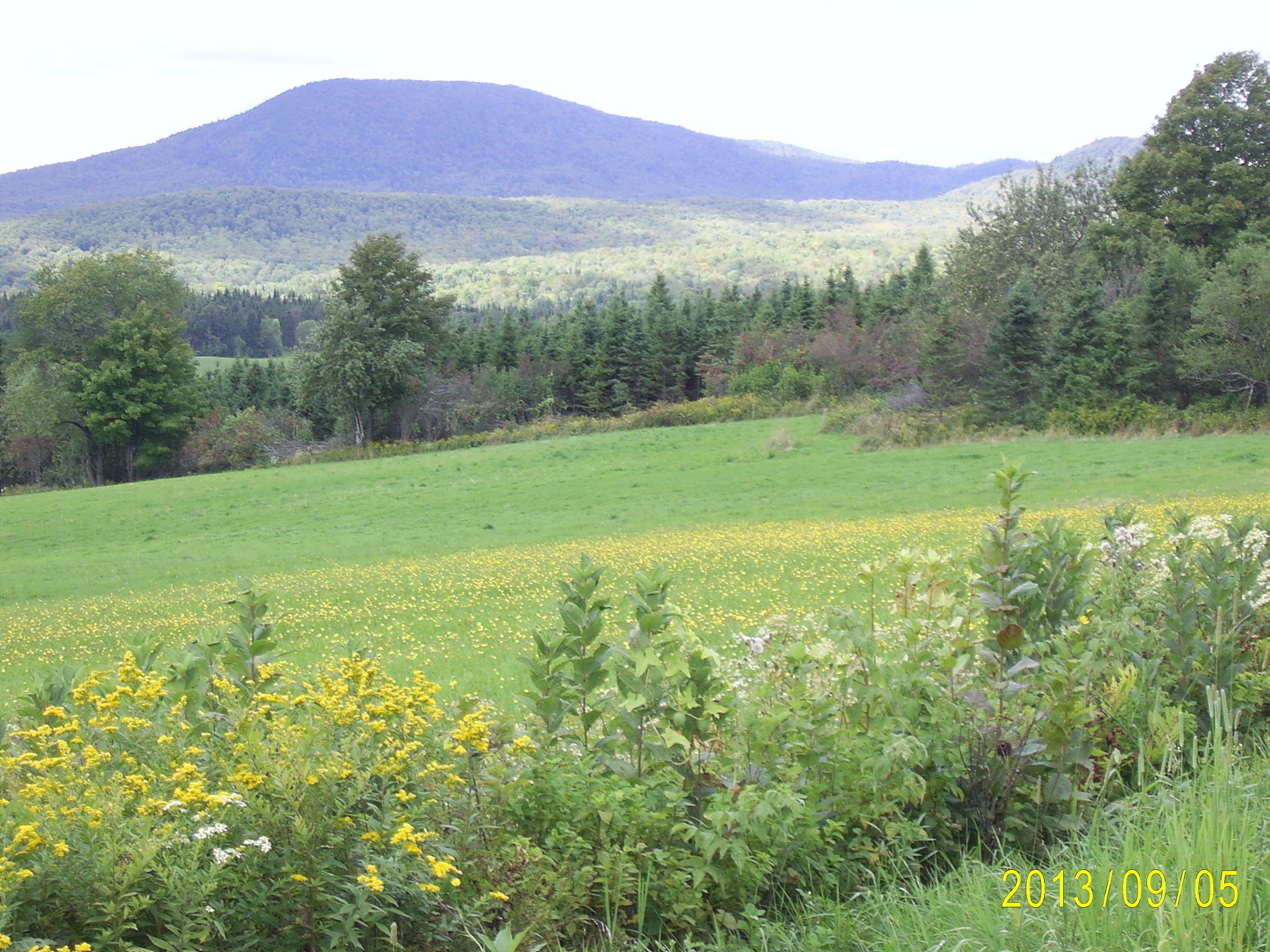
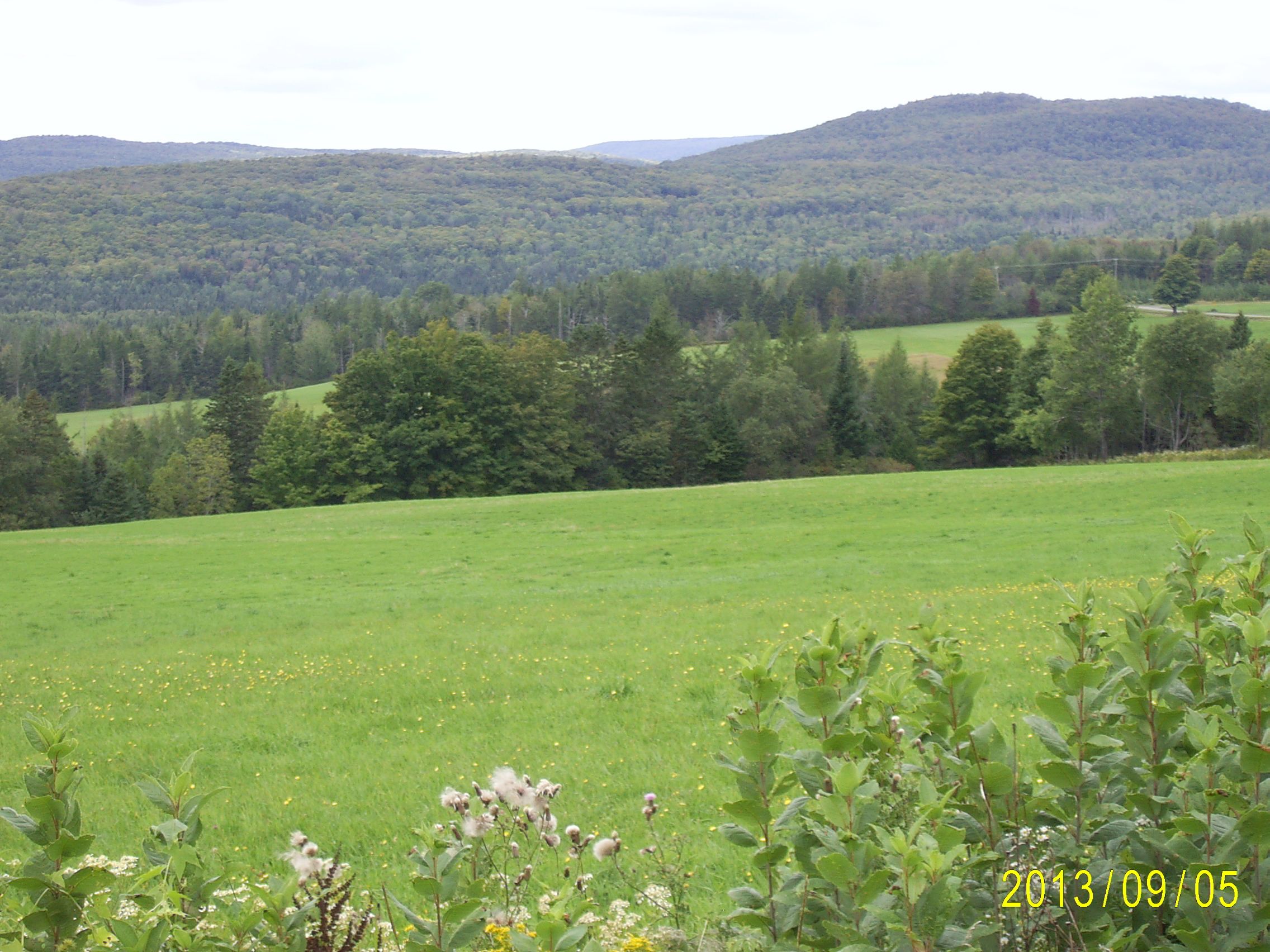
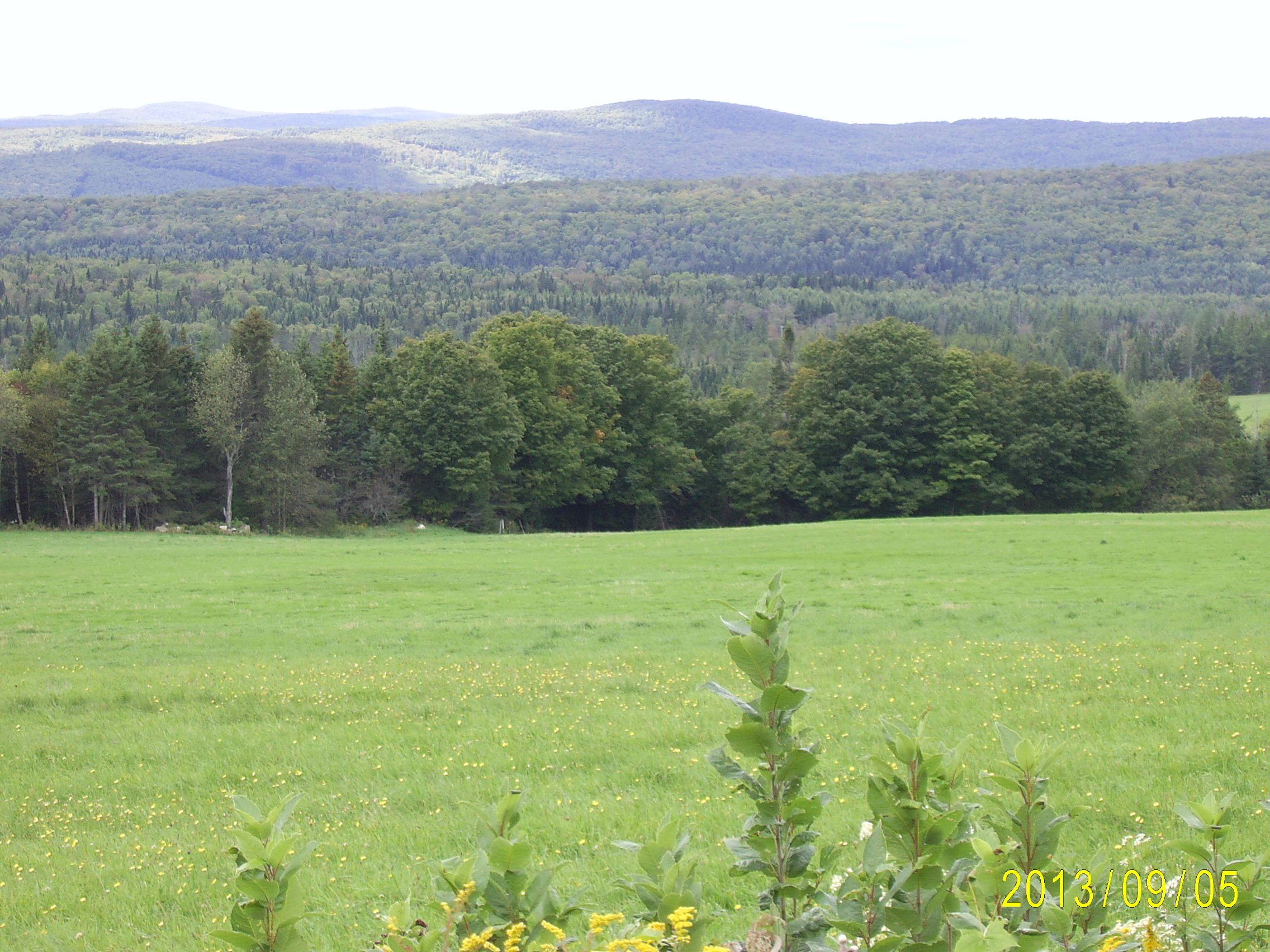
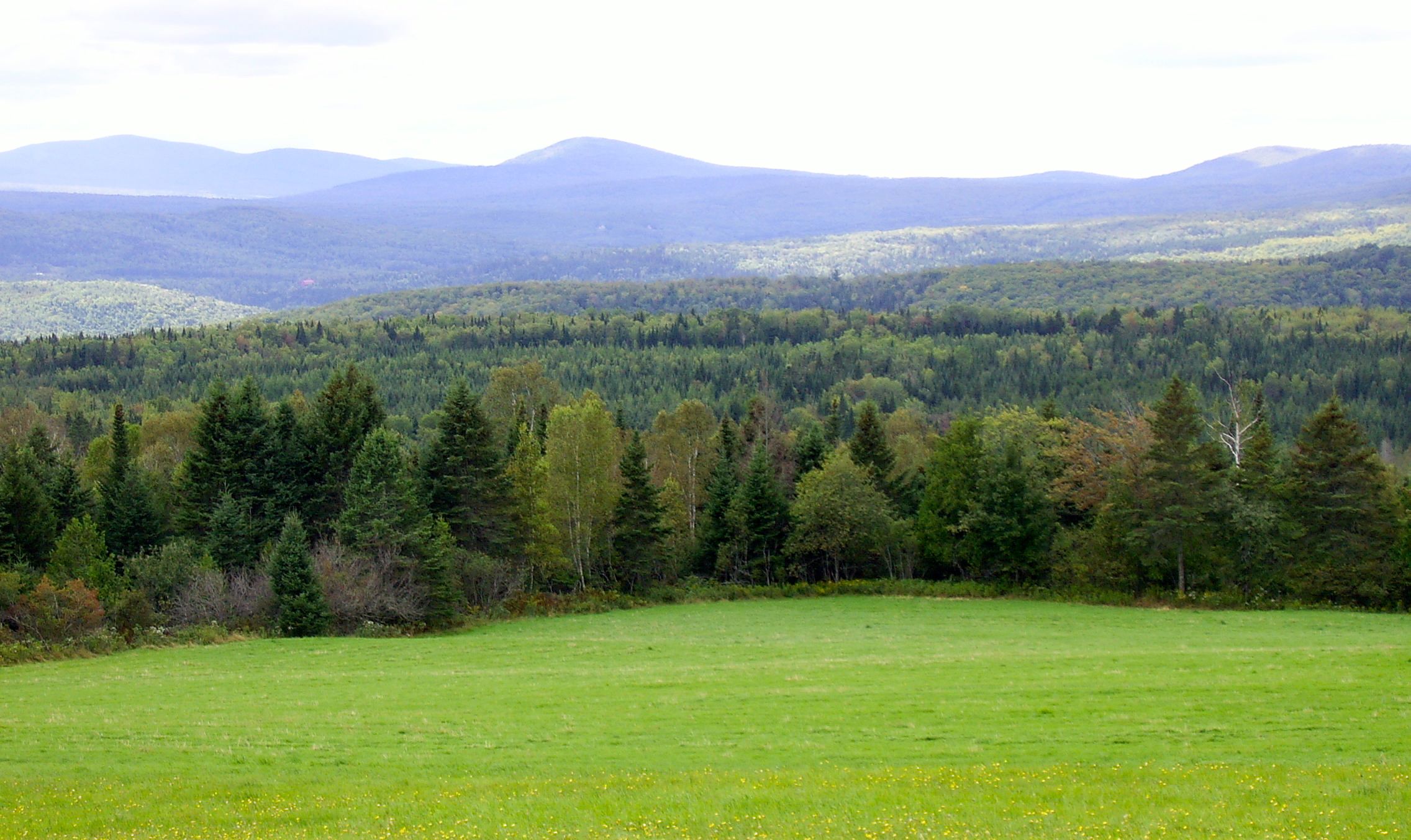
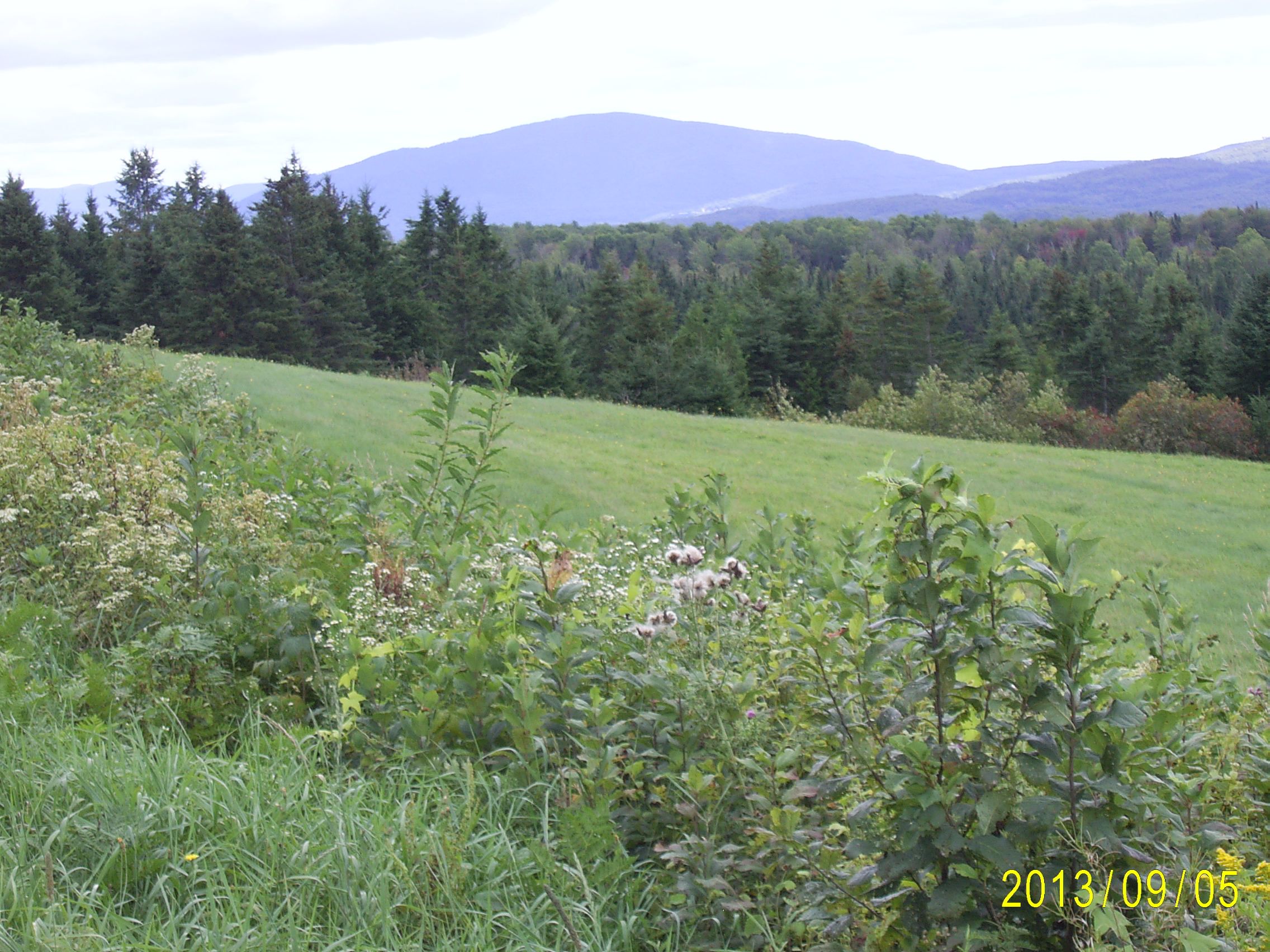
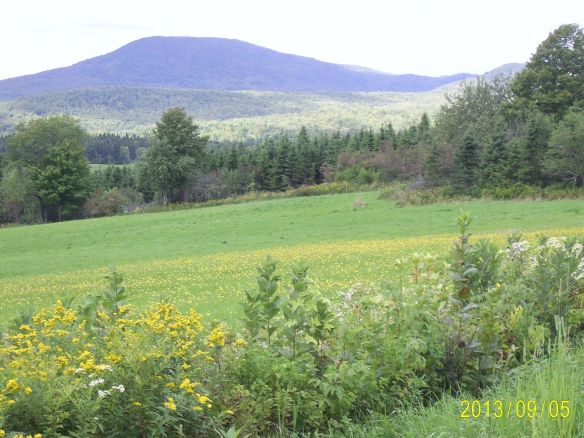
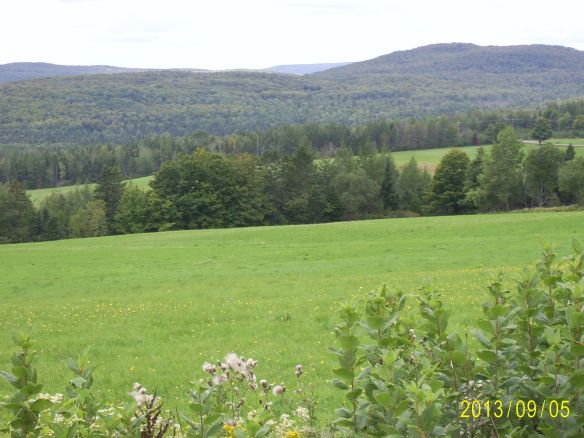
SAMSUNG DIGITAL CAMERASAMSUNG DIGITAL CAMERASAMSUNG DIGITAL CAMERASAMSUNG DIGITAL CAMERAHereford mountain is at the top to the right of the vista. The view then moves to the left with each subsequent picture, ending with Mount Monadnock in New Hampshire just above. The view is southerly.

You probably already know that if you click on a photo, it will expand to full screen.

Septuagenarians on the Road #4

SAMSUNG DIGITAL CAMERASee Septuagenarians on the Road #3 for the first part. (https://115journals.com/2013/09/11/septuagenarians-on-the-road-3/)

We wake up on the third floor of Auberge Ayres Cliff on the third day of our road trip. I go downstairs to see if the restaurant is open. It is not. Back up that wooden Everest!

Since we are booked into the Auberge Ripplecove, we have to pack up our things yet again, and Georgia has a plan for getting them downstairs.

We take turns using the shower and my cereal bowl. Georgia’s nosh is All Bran and mine is gluten-free granola. Our ice packs have melted and so has the ice and in keeping with its historic charm, the old auberge has neither ice machine, vending machine or coffee maker. No problem, we know a great little place to have breakfast in Coaticook.

I heard people working in the second floor office while I was reconnoitering, but saw no one. Georgia goes to top of the stairs and pushes her bag off the top step.  I hear it thump, thump, bump and crash. Silence. She heaves down the second one. It is not until I start to bump my wheeled suitcase down the top step, that a man shows up on the second floor and gallantly sweeps her bags up. Another sprints up the stairs to carry mine down. See, all we had to do was ask.

The guy carrying mine is likely the proprietor, whereas hers has been working outside on the deck. He speaks English well and by the time, I have carried down the remaining odds and sods, Georgia and he are deep in conversation about the town. Communication is proving to be a challenge, so this is welcome.

We debate about who will drive. As usual, Georgia wants to drive early when she is fresh.

“Which way do you intend to go,?” I ask. She points back the way we came.

“I’m driving,” I announce.

I pull a u-turn right there on Main St. and head around the corner on 141. I have these maps in my head or so I believe, and indeed, they fail me only once and then for only 6 miles. As we drive, I explain that basically there is a wide fertile valley where dairy farms flourish and on either side there is a two lane black top. When we were young our father took the left hand road to get to Sawyerville where we had moved in 1941, but the mail van took the right hand route. I travelled in the mail van with my mother that winter and noted the ‘exotically different towns’, St. Isadore, St. Malo, Paquetteville. We were on a mission to reveal to my Nanny that a baby was “expected”. My 5 year-old self made little sense of this, but I was very glad to go back to Hereford. I stubbornly refused to understand what was “expected” until that fateful first day of school when Georgia inconveniently arrived. (See https://115journals.com/2013/08/31/labour-day-weekend-reflections/)

In less than half an hour we are Coaticook. (This is an Abenaki word as is Massawippi, which means big, deep water.)

Coaticook is an agricultural town, the centre for production of milk products, especially butter, but it also boasts an industrial park largely devoted to farm and construction equipment. And it boasts a covered bridge as well as a round barn. It seems that every time we go there, a major road is under construction. This time it is Child St. In trying to park on the opposite side of the street I came in on, I get entangled in the detour, which kindly offers us a tour of parts of the town we have never seen before. Finally, we disembark at that parking spot we have been aiming for for 20 minutes, walk half a block and arrive at the Croissant Chaude.

I order my usual gluten/ milk/ bacon- free breakfast – ham and home fries, while Georgia enjoys a fresh-from-the-oven muffin with butter and jam. There is one French couple, clutching a map and looking for advice and two women speaking English, very loudly, with interesting personal detail. Then in comes a couple in their early 50s, speaking with an Australian accent. It is not long before Georgia has struck up a cross-the-room conversation and we have learned that they have ridden motor bikes from Las Vegas up through Colorado and on to Chicago. There they switched to a car and, like us, they are siblings. Georgia reminds them that the longest relationship most people have is with a sibling.

Hey, two conversations in one day!

After breakfast, we turn south on 147 and begin the final leg of our journey home. Since I am still driving, Georgia has the leisure to observe that the infrequent houses we are passing have the largest, greenest, weed-free lawns she has ever seen. Prosperity and ride-em lawnmowers, I suspect. Our grandfather’s dooryard stayed short and smelled of what I learned much later was camomile. Even later, I learned that camomile lawns were all the rage in Elizabethan England. As you walk over them, crushing the little yellow flower balls, the perfume rises. Surely my harried grandparents did not actually plant it.

We skirt what we called Wallace Pond with its cottages and youth camp, pass a haulage company bearing my last name, catch sight of the Line -the wide treeless cut up through the woods that marks the dividing line between Canada and the United States, round a corner and find ourselves in front of the church.
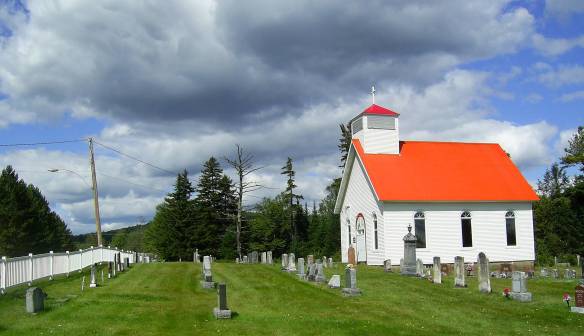
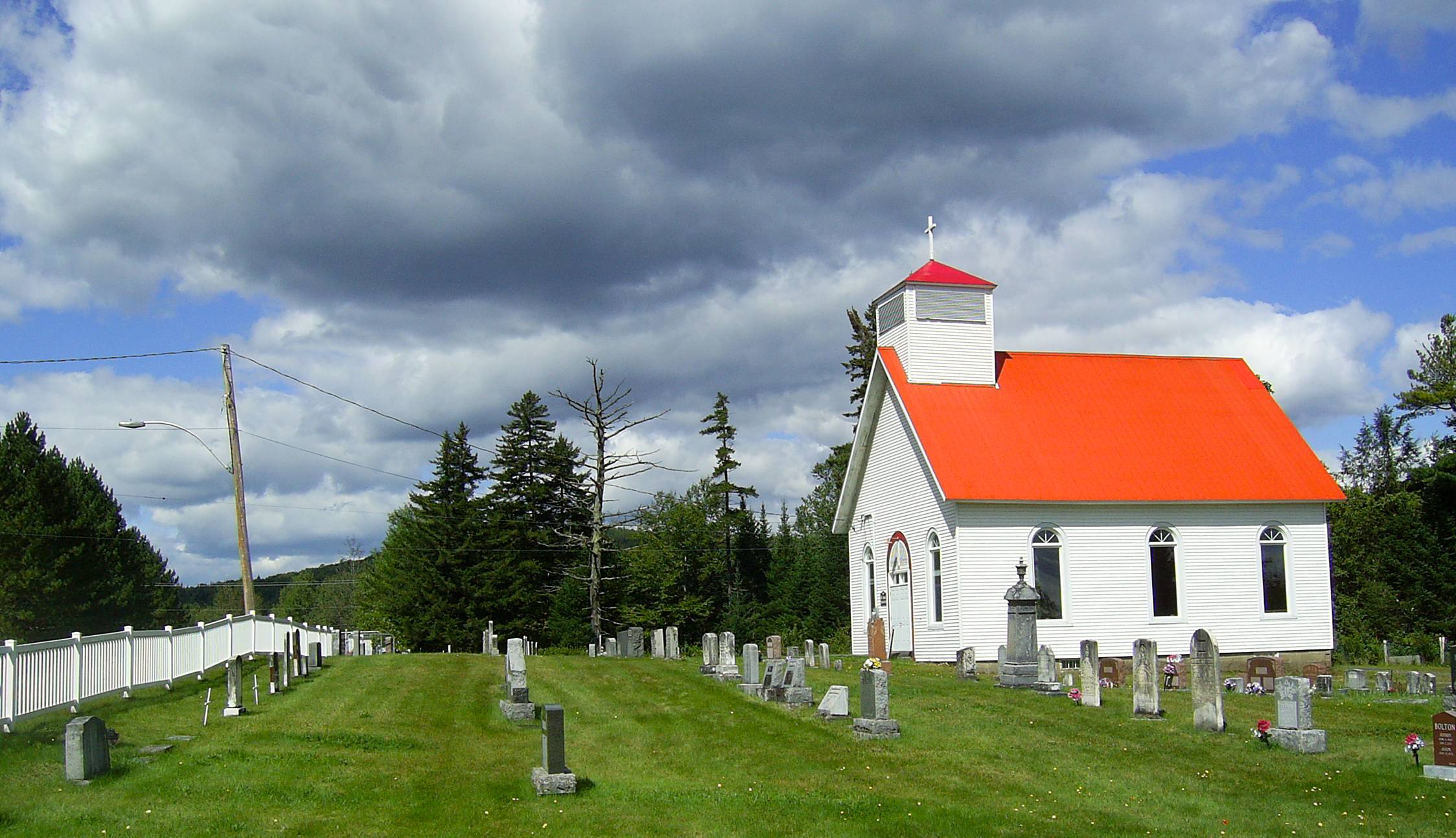
SAMSUNG DIGITAL CAMERAHere there will be silent conversations.

I park the car south of the church where the church hall used to be and the wagon sheds where the horses sheltered and munched from their bag of oats while we children skidded the wax onto the hardwood floor and the fiddles tuned up and the women hauled chicken pies out of the oven. I suppose this liveliness vanished long before the hall did. I was in it last in the mid 80s, having brought my father down from Ontario for his cousin’s fiftieth wedding anniversary. When it was pulled down, its lovely wood panelling sold for scrap, I do not know.

Georgia is the first to see that Uncle S. has died. His name joined his wife’s on the gravestone not long after we were here four years ago. Georgia is bitterly aggrieved that no one let us know. But, really, who is left that knows how to get in touch with us? Only our cousin R., 11 years older than me, but even he doesn’t answer my emails. Probably  an uncle and aunt my own age are still living in the States, but we don’t know each others’ addresses.

We visit each gravestone and leave flowers for our Nanny and our Aunt Mae. The wind purrs through the pines that stand at the edge of the church yard above Indian River. Nanny and I took off our shoes the last time I visited her -she was 87- and went wading in the cold mountain stream. And one of my best memories is of a church picnic a little farther up in a pine grove. After we had eaten, the women washed the dishes in the river. A well informed 4 year-old, I was aghast. “Don’t worry, Joy,” Maude sang out.” We’ll scald them off when we get home.”

We cross the bridge and point the car up the dirt road that leads to Cannon Hill. (Sometimes, we children called it McCannon.) It winds steeply up through the woods. I know that a good trout stream is dropping down through the trees beside us, for my father took me fishing there. I also know that wood spirits live there, brownies perhaps, rather malevolent little beings, quite unlike the fairies that lived in the corners of the hayfield and came in rainbow colours. Neither had the magnificence of the angels that I saw twice when I was little and once when I was 42. I don’t believe any of this really, but, on the other hand, I know it to be true.

Here on the right is the farm I remember living on, although both barn and house have long since been rebuilt. What used to be a hayfield is pasture now and there are cows there. Then we are back into woods. Soon we will come to the Swamp, the part we children didn’t care for. I want the road just to go on and on. I don’t want to sail out into open and see the house where Nanny lived alone until she was well over 90. There it is now, with a long well groomed side yard planted with small fruit trees. Much of the white siding is still missing as an insulating upgrade proceeds slowly. I prefer to remember the gleaming white siding and the neat, little screened porch. We turn right, pass in front of the house and continue on up into the wilderness that lies below the mountain. We are making a pilgrimage past Aunt Mae’s tiny house. The road is much better than it used to be because somebody with influence and money has built a house out back of beyond. A very nice house, quite a cut above Aunt Mae’s.

On the way out, we stop near where Nanny’s first house stood, the one that burned down- well, the second one burned down too actually. By ‘down’, I mean utterly, to the cellar hole. I want to walk but mine is apparently a minority opinion. We press on, waving at the men loading a pickup in Nanny’s yard. Yes, one is probably Aunt Mae’s grandson, but we don’t feel up to the explanations. Our cousin R. has just had his driveway paved. It is covered in fresh tar and roped off. No sign of his huge white SUV.. Now we are higher between open fields, past the new forest that covers our grandfather’s fields.

He  had a stone boat, a sledge into which he threw the heavy rocks he dug out of his fields. The horses would drag the contraption over to the stone pile around the big spruce tree or one of the other half dozen that he and his long dead predecessors had broken their backs building and he would heave them off. Sic transit and all that. A rich American bought the land and planted it in trees.

At the highest point, we stop to take pictures of the mountain vista.
SAMSUNG DIGITAL CAMERA

SAMSUNG DIGITAL CAMERASAMSUNG DIGITAL CAMERASAMSUNG DIGITAL CAMERAThen we drive down a truly scarey incline past our Uncle S’s house, one of those that make you think you vehicle will tip end over end, Then we are on the road that once changed places with the brook during a flood and we drove on the stream bed for weeks. (It was war time and we didn’t vote for the party in power,)

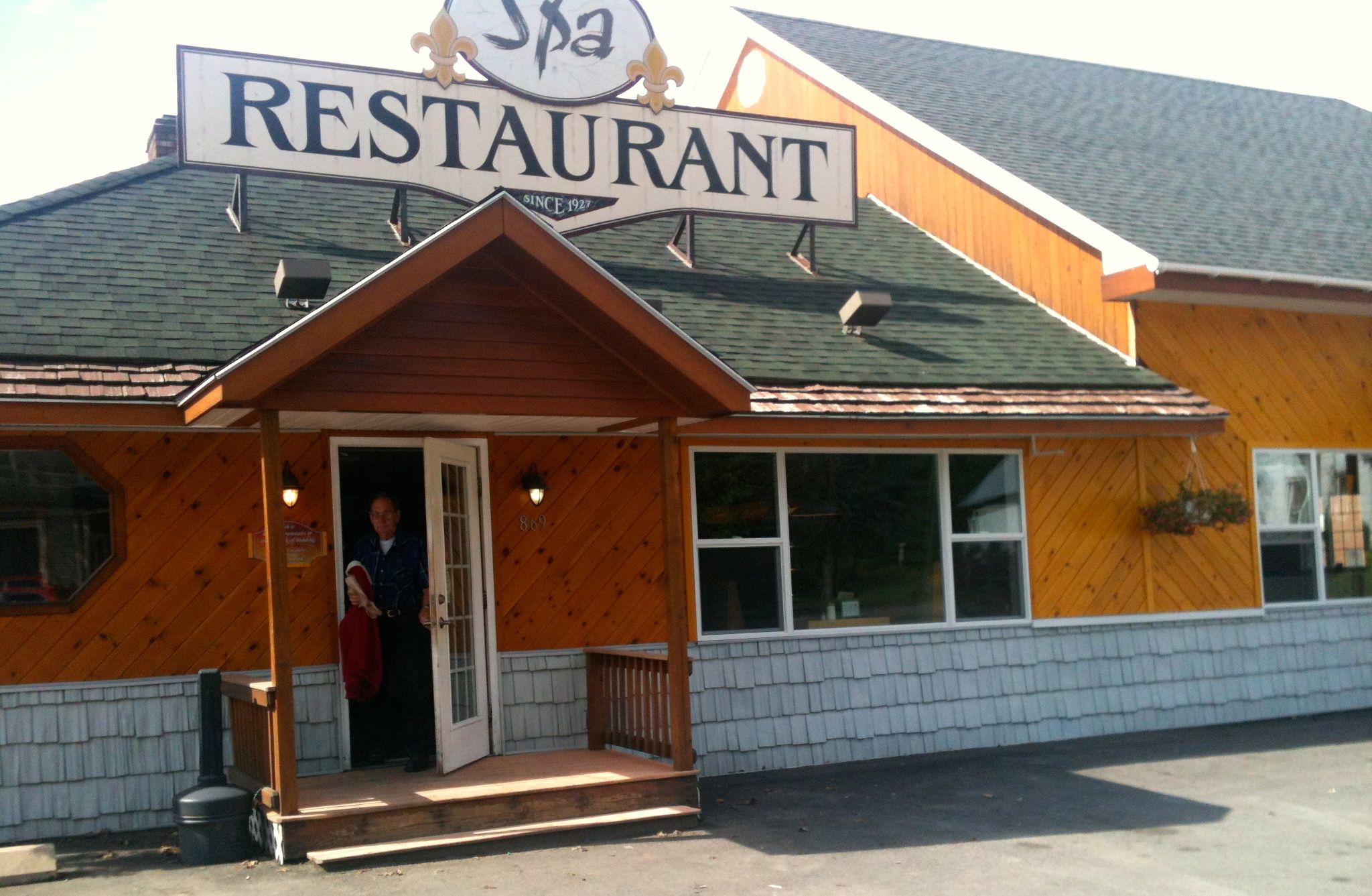
We cross the border at Beecher Falls, discovering that the agent on duty can fill us in about Cousin R. who seems to alive and kicking. We stop for lunch at Nanny’s favourite restaurant, the Spa in Canaan where I have fresh Maine lobster.

the SpaHereford was in Quebec and Canada, but we drew our identity from the States, from Vermont and New Hampshire and Maine, from New England. Every New Year’s Eve, we gathered in the hall for an oyster supper. We even spoke with New England accent. LIke most immigrants, I got rid of mine asap but when Nanny said “Spa”, I thought she meant “Spar”.

As we attempt to cross back into Canada at the Hereford crossing, the Canadian agent keeps questioning us closely. Georgia tells him we crossed at Beecher Falls an hour ago and ate lunch and that we are now returning to Ayres Cliff. I repeat the same story. He keeps glancing at the luggage filled hatchback. “So you are coming from New Brunswick?” he says. Well, no, we are coming from Ayres Cliff and going to Ayres Cliff. “Then why do you have your bags?” he asks in exasperation. Because we are changing hotels? I offer as if seeking his approval. “Ahhh” and he waves us through.

PLEASE CLICK ON PICTURES TO ENJOY FULL DETAIL.

to be continued -one more time

Septuagenarians on the Road: #3

SAMSUNG DIGITAL CAMERASo Georgia and I decided to take a sentimental journey, back to our roots. We started out on her birthday, the day after Labour Day (See https://115journals.com/2013/08/31/labour-day-weekend-reflections/)

We didn’t make the decision lightly. We divided hip stiffness into the mileage and arrived at a two day trip. We reserved a hotel room at the Waterfront Holiday Inn in Kingston Ontario, which we thought was half way from Toronto to Ayres Cliff, Quebec. We were wrong. It was more like a third of the way there, but when we got to KIngson, we realized that factoring in the fatigue of packing and hefting bags made it a good choice.

When asked if we need help with our bags, my macho sister says no. Being older, I know better. Imagine the most awkward grocery cart you have ever tried to steer, turn it into a luggage cart, top-heavy with a hanging bar, add a tiny elevator and thick pile on the hall carpet.

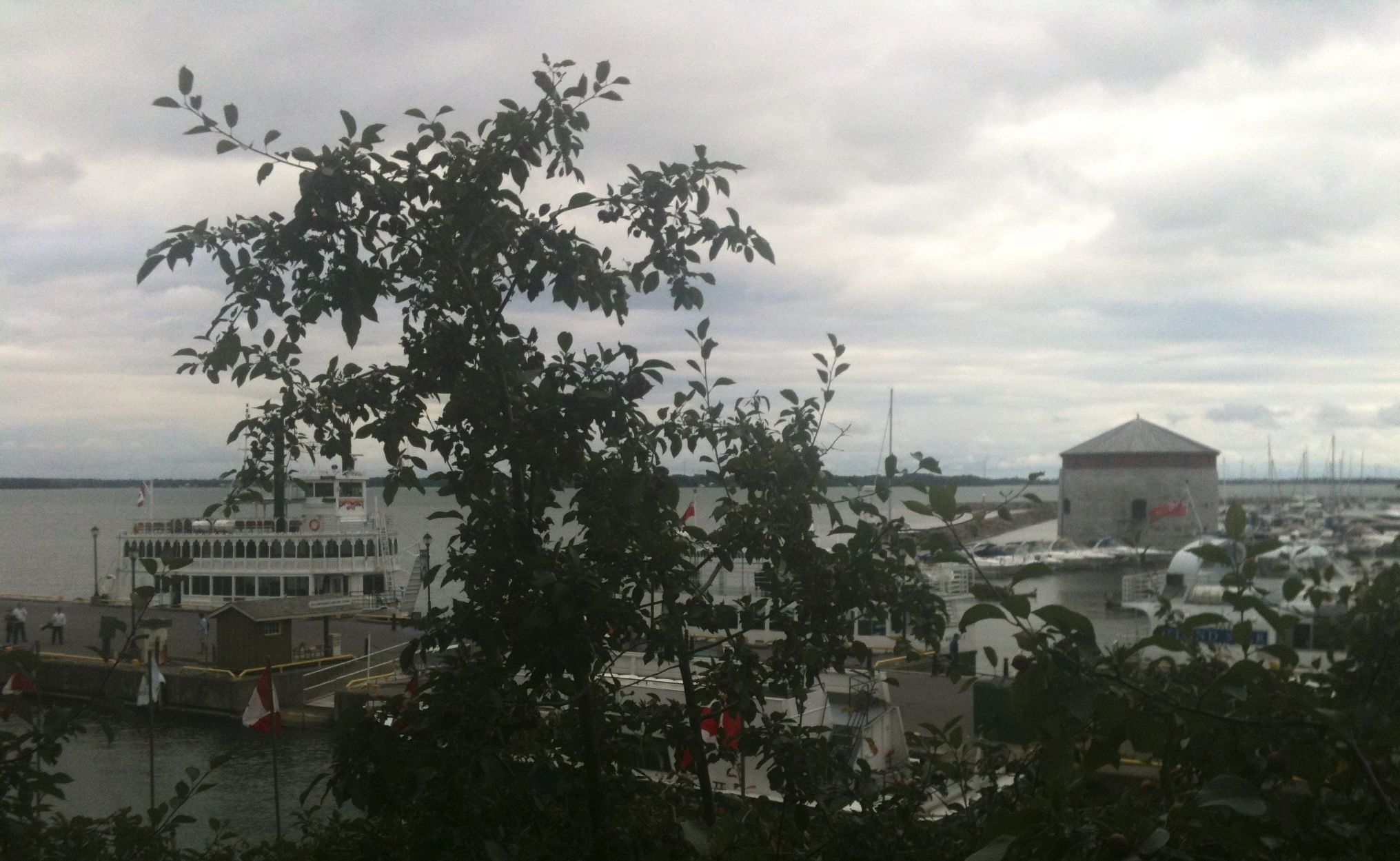
Still it is a beautiful room that looks out over the ferry docks and one of the six squat, round Martello towers that guarded Upper Canada from the American invaders.

Martello Tower, KingstonWe stayed in a similar room 4 years ago when we last made this trip. The place is not much changed. The question is are we?

We rest. Resting will be a recurring theme in this blog post as it is in our lives. I would say ‘in the lives of septuagenarians in general’, but Blake (see http://115journals.com/2012/05/26/septuagenarians-on-the-road-part-1/ and https://115journals.com/2012/05/27/septuagenarians-on-the-road-part-2/ ) doesn’t rest much. Resting like Archemedes’ lever makes all things possible.

Then it is time to pop the cork on the Veuve Cliquot. It is a birthday after all.

It seems wise to find a restaurant within walking distance, so we search through the available literature and come up with Olivia, an Italian restaurant two short blocks away. As it turns out there is live jazz from the Dave Barton trio with Amanda Balysy on vocals. Amanda has a retro look, blouse and skirt out of the 50s and songs to match. So the ambience is delightful. The day’s special of wild boar sausage seems too demanding for my digestion and I willfully ignore the black cod and order risotto. As soon as I lay eyes on it, I know I have been wrong. I’m used to risotto at Marcellos in Toronto where they don’t even add cheese. This dish is swimming in cheese and oil. But the optimism of the moment prevails and I take the risk.

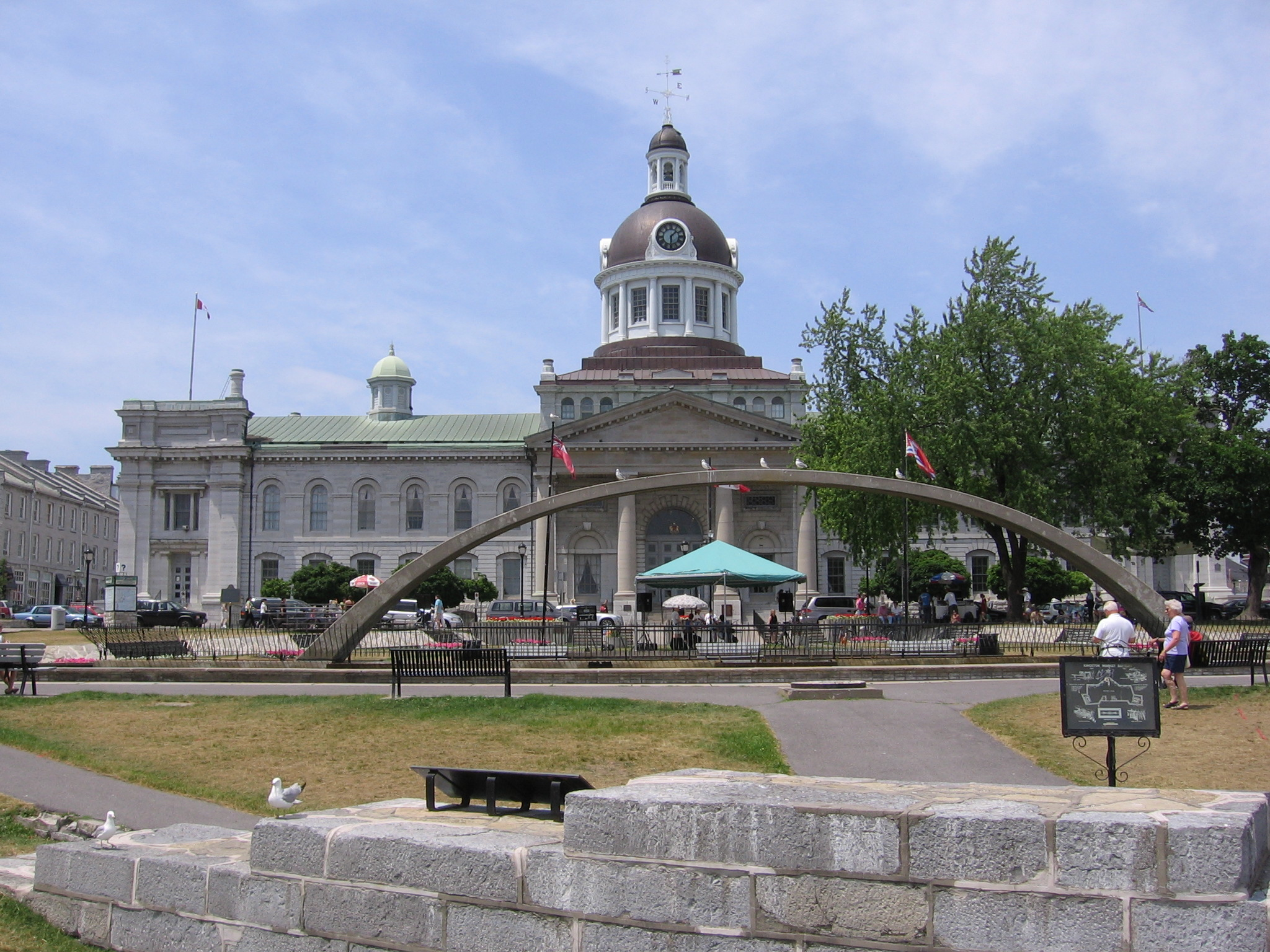
As evening falls, the Kingston City Hall across the square becomes ever more beautiful (http://en.wikipedia.org/wiki/File:Kingston_City_Hall_Andrew_pmk.JPG). Its limestone glows silver and its lovely dome stands etched against the sky. After dinner, we sit in the park at the water’s edge and enjoy its beauty.

Kingston_City_Hall__#3All in all, the day has gone well, we think. Georgia settles down to watch Netflix on my Mac Air Book and I lie down to sleep. To no avail. Yes, I am tired enough to sleep, but my body has other ideas. I am aching all over. The pillows labelled soft are so soft, I feel smothered. The ones labelled hard hurt my head but don’t support my neck. But most of all I blame the risotto. Years ago, in this same town, I spent the night sitting on the bathroom floor reading John Irving’s The World According to Garp.I might have been better to spend this night there as well.

I’ve had considerable experience with insomnia – who hasn’t at this age?- and developed strategies to deal with it. In between bathroom trips, I try them all. First, I roll up a bath towel and put it under my long neck, a softer version of the wooden Japanese head rest. I do my three part deep breathing exercise over and over. I take a sleep aid. I put in my ear buds and hit the white noise App on my iPhone. Even the continuous swish of heavy rain doesn’t send me off. By now, Georgia is soundly asleep, or so it seems for she is very softly snoring. At what seems like 2 a.m, but is actually much earlier, I get up to do tai chi exercises in the dark. That seems to calm my system down. Then just as I begin to slip into sleep, someone hammers on the door next to us and calls out in a aggrieved voice, “Come on Michael, I forgot my key.” Apparently that is just the ticket. I am gone. I don’t even wake up when Georgia spends an hour reading at 3 a.m. Of course, in the morning, she maintains not only that I had kept her awake, but also that I was groaning. Perhaps she is right.

So unrefreshed, we find our way to the complimentary breakfast with a view of the water. I am unenthusiastic about eating but I need to take on fuel. Fortunately, Georgia is able to enjoy the free meal, which we have earned by being members of the Canadian Automobile Association.

There is one more little hiccup. I neglected to bring down our parking stub. There is no attendant. Fortunately, someone from the bar across the street yells out instructions on what button to push to contact the office and my car is finally released. That is one drawback to this particular hotel. We call them parking Nazis.

So we set out on the second lap of our journey and a very long lap it turns out to be. It begins with a Google Map gaff -you have surely experienced at least one of those. Instructions are to head north on Princess St, which is, as luck would have it, one way, going south. We do what we can and find ourselves crossing bridges we’ve never seen before and confronting signs to west bound 401. We reason that east bound 401 has to be in approximately the same place, but the west bound signs proliferate and get larger. Just a little kick of adrenaline from the Ontario Ministry of Transportation. Once we have achieved the elusive east bound highway, we feel as if it can only get easier.

The newly renovated ONroute service centres are a plus, clean and up-to-date. You can take your own lunch in and eat it at the tables or make one up from Tim Hortons and Subway or Burger King. I carry in my rice crackers and home-made salad dressing, and manage to scrounge up salad and chicken to go with them. We take turns driving, trading off every hour or so. Some time after lunch, we cross the provincial border into Quebec. I recall that there used to be a lovely stone building in the old style, which served as an information centre. A few of those stones seemed to have been recycled into the service centre that has replaced it. I line up at the counter to ask the same question as everyone else. Google had told me to take exit 29 to new highway 30, but the maps show no bridge there. What gives? The bilingual receptionist has the interesting skill of being able to write on a map upside down and she assures me that there is now a bridge, which will cost me $1.50 to cross. If you have ever had to drive into the city Montreal to cross the St. Lawrence River on the Champlain Bridge, you may understand what a cause for rejoicing that is. As we discover the bridge is really two bridges, the first one low to the water and the second soaring up over the widest part of the river to let the ships pass up the St Lawrence Seaway.

So we skirt Montreal in that low level river land, which is fertile but also being eaten up by industry as time passes. Now all signs are exclusively in French. Sud and nord are simple enough and easy to figure out as south and north. Est and ouest are trickier. I keep reciting “est” as a clue to finding the right exit to #15, which will take us toward Sherbrooke. “Traveaux” is pretty clear, including as it does miles of orange cones and on occasion, actual workers and machines. The sign that orders us to respect the security zone or so it seems, puzzles me, until I realize that I am to pull out into the left lane when I see someone stopped on the shoulder. Then there is an urgent LED sign that absolutely eludes me. I can not catch even one word. We fly by oblivious.

Like all Canadian children, I have studied French, in my case until I was in grade 12. Moreover, I have a brother who lives in Belgium and speaks French most of the time. I have spent long holidays there and in France. I just finished watching Spiral on Netflix, a made-in-France police drama, with  sub-titles, it must be said. I’m more than willing to give it my all, but really! Nothing but French. The stop signs say “Arret”. Even in Europe, they say “Stop”. When I am flying along at 110 km, I could use a little help.

We can just glimpse Mount Royal over the river on the horizon. Then a solitary mountain rises from the plain, a volcanic cone. The country grows more rural. The road begins to rise and curve and finally, we begin to see the soul-soothing mountains of our childhood, the northern-most Appalachians.

By the time, we round the corner into Ayres Cliff, we have been on the road for six hours. I seem to think I know where the Auberge Ayres Cliff is and I am not wrong, although I hadn’t realized it was right in the middle of town, a quiet tourist town of one main street and side streets leading down to Lake Massawippi. I stayed somewhere near here 16 years ago, but it takes me a full 24 hours to realize it was the same place and when I do, I seriously wonder if senility has crept up on me. It is a hard place to forget. It is said to be 200 years old and while that may not be an exact number, it is certainly very old. (www.aubergeayrescliff)

It has a huge patio at the side, full of expensive wicker seating and those outdoor heaters and little canvas-covered nooks, all on wooden decking. It also has seating on the veranda. We check in at the bar where some of the locals are having lively conversations. I’d like to join them, but we have to go up to see our room. Up is the operative word. We are the only guests, but we have booked two adjoining rooms, which are on the third floor. The second flight of stairs is made up of a large number of steps -each one 14 inches high.

The rooms are furnished with a double bed each, with good mattresses and dressers in a VIctorian style. And a  fan. There are no chairs. There certainly is no television set. No mention is made of this but apparently we were warned on the website. I give Georgia the room that has a more or less level floor, it being her birthday, and allot myself the one that slopes so dramatically that it takes all my tai chi balance to walk across it.

And yes, we want to have our bags brought up, a task that falls to the slim bartender/receptionist/ farmer’s daughter and a guy who gets up from dinner with his family to help her.

It is clear that we would not have got much sleep if we had come a few days before, on Labour Day weekend, but summer is over, the temperature has fallen, the tourists have left.

True to their hype, they have an excellent Angus beef fillet mignon. After dinner and the long slog back up the stairs, I get Georgia set up on the internet to watch Netflix: she is well into season 5 of Weeds and well fed with simple food, I fall fast asleep in my Alice in Wonderland room.

to be continued

Labour Day Weekend: reflections

SAMSUNG DIGITAL CAMERA(And yes, I can spell. It’s just that I follow a different tradition. Stubbornly, it seems.)

The dreaded weekend has come. The end of summer. A cacophony (strictly speaking a ‘murder’) of crows announced it this morning.

Oh, sure, we can assure ourselves that September can be the best of summer still, but that’s bravado, positive thinking gone rogue. Realistically, we know the light is failing. Vegetable gardens started telling us that weeks ago. Here at least, at 43.7° N. where the squash and cucumber vines have died back and the tomatoes are refusing to ripen. I can no longer count on light at 6 a.m. and the evening moves faster into night.

There were more swallows than ever sweeping across the sky two evenings ago, as they fatten up to cross the big lake and leave these shores. This evening, they may be gone. And it doesn’t help that I know they will come back to Capistrano on March 19th next year. It’s at 33° N and the swallows take another 40 days to get here.

Autumnal, that’s the word. ‘An early autumn walks the land/ And chills the breeze/And touches with her hand/The summer trees….’ etc. ( Courtesy Johnny Mercer) I would say it is all the more affecting because I am in the autumn of my life, but that would be false. The autumn of my life, I glimpse only in the rear view mirror. While I sometimes question how many more springs there are left, I never ask how many falls.

This weekend, the skies above are rent by low flying fighter jets, as the annual air show gets underway. While there are those who love the thrill of a group of jets roaring just above rooftop, I am not one of them, although I admit there is no need for coffee and the pumping adrenaline more than offsets the weary wintery-ness of age.

In the spirit of the occasion, let us consider Labour Day weekends past. Here in at 43.7° N., school begins on the Tuesday after Labour Day now as it did over 70 years ago when I started. My mother and I had planned that I would wear my sailor dress, light blue with a navy blue sailor’s collar and a narrow red stripe, and she would walk with me, holding my hand and teach me how to cross the street in our little town. The best laid plans and all that. Turned out my mother was far away in a maternity ward of the hospital that morning when I woke up. I was outraged. How could she? I was fed breakfast by my cousin next door and towed unwillingly to school by the grade 3-er across the street. Very early indeed, in case her friends saw her with my lowly grade 1-self, sailor dress or not.

The upside of this was that every Labour Day thereafter I got to celebrate my sister’s birthday. In addition, my mother’s betrayal led me to bond with Miss Graham, my teacher, to such an extent that I continued returning to school for the next 50 years, as student and teacher.

The year that I gave that up going back to school the day after Labour Day was so traumatic that I could deal with it only by setting out to drive across the continent to Los Angeles. Crossing the border in my heavy laden Tercel I was knocked sideways by the American border guard. (Metaphorically that is.) He was worried about whether I had green apples and where my ex-husband was at the moment. No and don’t know. He successfully banished all first-day-of-school nostalgia quite out of my head.

Driving across the continent by yourself takes a while, the sun streaming in through the driver’s side window, day after day. Mind boggled by the wide rivers and the deep canyons and the endless oppressive desert. Terrified of falling asleep at the wheel, of taking a wrong turn on a freeway. My expensive car phone without service most of the time. Then just so tired, I had to hole up and sleep in a well air-conditioned ‘better’ motel where the furniture wasn’t bolted to the floor. When I finally emerged and drove down off the Santa Monica Freeway to glimpse the Pacific, I had left my school self behind. But what did I discover in my daughter’s house? No not green apples! My ex-husband!  Just what the border guard feared. A reconstitution  of a family separated for 15 years for the purpose of defrauding the U.S. government. Somehow.

This year, I have other plans. My sister and I are going to return to the mountains of Quebec’s Eastern Townships where we were born. Her birthday treat. Not that there is family there any more. Well, maybe one. Eighty eight he’d be, if still extant. And the old house we loved isn’t tidy and white any more. The barn is just a heap, a mound of earth where the ramp to the haymow was. My grandfather’s fields, cleared with such killing effort, have been put back to trees. Unbelievably, actually planted with trees! You can barely see our slope-shouldered mountain for the woods. Nevertheless, we will drive the gravel roads and breathe the spruce air and feel our native earth beneath our feet.

And these two one-upon-a-time teachers will take solace in an excellent hotel on Lake Massawippi where the furniture is definitely not bolted to the floor.

Las Vegas: a non gambler’s perspective

palms #2

I’m not a gambler. That’s because my father was. Even a little bit of his meagre income squandered on the ponies had a significant impact on that week’s meals and the one time he won more than a week’s wages did not make up for that.

I was once the owner of sailboat, which, they say is like standing in a cold shower tearing up hundred dollar bills. The difference between that and gambling, in my mind, is that with gambling, you skip the shower.

And yet I find myself in Las Vegas from time to time, staying in a hotel. On Christmas Eve it was the Palms. We had chosen the Palms because one of us had stayed there last Christmas and reported that with wood panelled rooms it had a warm vibe . Besides the rooms were going cheap. How surprised we were to find there had been a total renovation. Now the tigerlike eyes of a woman, framed by palm fronds gazed down over every bed. The bathtubs had been removed and replaced by showers big enough to accommodate a small crowd behind transparent plexiglass. The coffee makers had gone the way of the bathtubs. This meant that whenever I wanted tea, I had to travel down to the cafe to get hot water. On Christmas morning at 5 a.m., I made my way there to discover that the usually crowded casino had only three diehards, eyes glued to their slot machines.

For as you may know, the casino in any Las Vegas hotel is unavoidable. You enter through it. You cross it to get to the front desk. You recross it to get to the elevator and every time you want to buy a bottle of water or get a meal or go out to visit a relative. Initially, the noise drove me crazy, but I have found that it’s like traffic when you’re driving. Pay attention only to what’s relevant.

The Las Vegas that I know is not party central. It is a more suburban experience where neat Spanish-style bungalows line curving streets. Twice we have rented houses big enough to accommodate the extended family gathered from across the continent. The first one could have slept about 20, but it had a few disadvantages. One of the toilets roared when flushed and on the wedding day, the city turned off the water for non-payment. The other was smaller although it still had room for 10 and a pool where you could escape the summer heat. You could escape it in the house as well, but the air conditioning was so fierce that you risked frostbite. Some of us devised a strategy: we stayed inside until we got chilled, then we sat outside until we got fried even with pool breaks. The kids of course just stayed in the water until about 10 p.m. Party central, yes, but….

We did stay at the Monte Carlo on the strip one year and I was bowled over by the Babylonian opulence of it all. I sat waiting for kids to get off the rides in New York, New York. The fountains at the Bellagio alone were worth the trip, not to mention the buffet despite the line-up.

Ah, the buffet! Las Vegas has cheap buffets, breakfast, lunch and dinner. Like the reasonably priced drinks you can get at the casino bars, the food and even the room is just a ploy to keep the gambler feeding the machines money. Meanwhile feast your eyes on a glass pyramid, an Eiffel Tower and other bizarre edifices that delight a playful heart, never more than when the lights come on at night.

We go there for weddings and funerals and, sometimes, for Christmas. Thanks to the bold imagination of 2 family members who upped stakes and moved there in their retirement and who never played more than the nickle machines, Las Vegas has a homey feel.

The Miracle of Return

Time to fly home. Twenty eight years of lifting off from LAX, 2 or 3 times each year, you would think it would be routine by now.

In one way, it has actually got better. Having printed my boarding pass at home, I find myself only third inline to check my bag – my one bag, which cost an extra $20 + tax. The pull handle on my suitcase has taken the opportunity to lock down, so that it has to be towed from a crouching posture, but I have help schlepping it, up and onto the scale and back to the X-ray machine.

“Next stop, there where the sun is shining on the green plants,” sings out the x-ray guy.

That, of course, is the farewell spot, a narrow gate, guarded by a familiar dragon who does the second of six boarding pass and ID checks. I make for the escalator with tears on my face. Once upon a time, my Children, farewellers could go with you through security and share a farewell coffee.

There is no line at security either and it is an exciting challenge to fill 3 plastic tubs, about the size of kitty litter pans while standing on one foot. I persist in wearing lace-up low boots. It seems like defiance: I will be darned if I’ll lower my fashion standard. As if. Finally, I have much of my clothing -the guard kindly lets me keep my cardigan on – and all my possessions, some of which, I value dearly, into the trays. The nice surprise is that I do not get “wanded”, patted down nor given a full-body scan. We must not be in an Orange alert. Or maybe my number didn’t come up. Septuagenarian women are, of course, notorious hotheads given to radicalism and acts of terror.

You get used to these absurd assumptions and things really aren’t worse than the good old days. In 1971, my 10 year-old daughter was “wanded” and patted down under the eagle eye of a soldier in camouflage holding a sub-machine gun at the ready. This was in peace-loving Switzerland.

And in those days, there always seemed to be a plane crash in the news. I used to invoke angels to get us off the ground and help us back down. Now I’m usually half asleep. Airlines seem to have learned how to build and fly planes that stay in the air until time and place dictate descent.

With notable exceptions!

It is true that I no longer have the luxury of complaining about the quality of my pre-ordered special meal. I can buy a reheated pepperoni pizza or a sub sandwich from the vending cart: credit cards only, please, but most of us buy our lunch and our water before we board the plane. Starbuck’s smoked turkey and cheddar on multigrain bread turns out to be edible, but not much more. I expected stuffing, cranberry jelly.

My individual entertainment screen is not working. My seat, I am told, should not have been sold. I can move into the middle seat instead. The window guy and I look at each other. We prefer to keep a civilized distance. I do tap its screen so that I can follow our journey on the map and see what towns we are passing over. The captain announces then that we are presently over the Grand Canyon.

And so, another return. There have been returns from weddings and divorces and new babies and new houses and plenty from just ordinary family life. This is a return from what I called in an earlier post a fortunate fall. (See 115journals.com), a return after great shock and fear and grief and then great joy and renewal of love. Rebirth. A chance to start again differently.

Yes, there are still miracles.


Dance Class and Tai Chi

Tai chi-er

We are waiting for barbells. The resident teenager is reconciled to waiting. If the poor delivery guy/girl struggles through the gate with the 105 lb. package before Christmas so much the better, but meanwhile this health-nut proclaims there are many ways to exercise, a towel apparently comes in handy. I didn’t ask.

I packed fast for this trip. I brought only one pair of pjs. (Hello washing machine.) And I’m getting sick of these 2 outfits and the sweat pants. BUT, my exercise equipment did not get left behind. It is not heavy or forgettable. My tai chi is portable.

I ported it to a dance studio yesterday. Well, a masonic hall really, at least an ex-masonic hall, on Venice Blvd., where dance class is held. There is no instructor leading dancers through prescribed choreography, just a DJ with his computer hooked into what seem like the world’s most powerful speakers and a roomful of people moving however they please. Or lying on the floor as they please or lying in a pile on the floor as they please. So no one notices or cares about the mostly linear moves I’m making in the corner.

Loyal readers will say, “How Hollywood!” But no, I’m told that if I look it up on-line, I will find similar classes in my home town, Toronto. If your town is big enough, you might as well. And they will no doubt feature the same creatively dressed crowd -tights and tank- tops, sweats and baggy pants, floating silks of vivid colour, long skirts on guys and girls,- weaving out of their own imagination the beauty or anguish they feel.

They dance alone or with each other or in groups. One fellow danced with a bright red apple. A woman danced with a long white pillow with a heart embroidered on it. The sweatiest fellow in the room gave me a very looong, sweaty hug. It was déclassé  of me to notice any of this, although I carried away something of the sweaty guy’s essence.

My kind of tai chi -taoist.org – is never done to music. Master Moy, who brought the art of tai chi to the west in the early 70s, taught this silent technique so that we would learn to listen to our bodies. So it’s quite a shock to be practising, as I did yesterday, to tribal drums, as the “class” stomped through something like a solstice ritual.

Yet it is curiously liberating. I am so distracted by the whirling colour and the floor-shaking rhythm and even the occasional melody that I find my body moving unself-consciously. Suddenly I feel it accomplishing some refinement that I haven’t been able to get before. My  weight is well and truly in my feet. My belly soft, no longer trying to do the lifting. My hands, full of intention, but the push coming from the back foot. There is a real internal massage going on.

I had arrived here knotted up. Life will do that, as you know. I am away from my usual supports -osteopath, acupuncturist, massage therapist. Then I slipped on a rock, crossing a stream and added a spiral twist -and a good deal of temporary wetness- to the mix. (Incidentally, it was a beautiful fall, I’m told. I would expect no less after all that tai chi.) What to do? You guessed it. More tai chi. I tripled the number or jongs or standing exercises and came unwound. Now, of course, I have to keep that up for the interim or this 76 year-old body will revert or at least stiffen up.

There is usually someone in an electric wheelchair at dance class. One chap moves his chair in dancing circles with his chin. A woman dances with her upper body. Taoist Tai Chi has a sitting set as well as sitting jongs. I have done these while stricken with H1N1 flu when I would have otherwise just languished in bed for weeks.

So here’s the thing, “Dance, dance, wherever you may be.” (“I am the Lord of the dance, said he.) You don’t need any training for that. Or if you won’t dance, (Can’t make me!) take the training route so you never have to pack your exercise equipment. Learn tai chi. Look it up. Taoist Tai Chi is found in 25 countries. It could be in your town and if not, there is some other kind.

Or just get out your towel!

Merry Christmas!

Skyfall: M and Ulysses part 2

My post Skyfall: M and “Ulysses” got me thinking about what I know by heart. Long ago some English teacher or other required me to commit the whole of that long dramatic monologue, “Ulysses” by Alfred Lord Tennyson, the 19th century poet, to memory. It is 70 lines long and free verse and that much more difficult because there are no rhyming clues.

It begins “It little profits that an idle king/By this still hearth, among these barren crags/ Match’d with an aged wife/ Should mete and dole/ Unequal laws unto a savage race.” Ulysses is standing in the port of his island kingdom, Ithaca, beside his ship or even on its prow, and addressing his crew and his subjects. Presumably his “aged” wife is there, Penelope, who faithfully waited for him all those years while he was fighting in Troy and taking his own sweet time getting home. Thinking he had perished, suitors beset her in order to gain her kingdom. She devised a scheme to put them off, saying she would choose just as soon as she finished weaving her tapestry: every night, she tore out what she had woven that day. Now Ulysses regards her merely as an aged wife.

Presumably his son, Telemachus is also there. Ulysses says of him “most blameless is he”, suited to the task of mete-ing and dole-ing apparently and subduing the savage race “thro soft decrees”. Ulysses does concede that Telemachus is “well-loved of me”. Maybe, but not all that well respected. Still “He works his work, I mine.” but make no mistake, only one is glorious.

Mainly, however, Ulysses is talking to his mariners, those poor sods who are going to row him, assisted now and then, by fortunate winds and scant sails. “Push off, and sitting well in order smite/ The sounding furrows”, Ulysses cries. “For my purpose holds/ To sail beyond the sunset, and the baths/ Of all the western stars until I die.” “It may be that the gulfs will wash us down,” he suggests, for he is going to take them out past what we call Gibraltar into the Atlantic Ocean, terra incognita so far as the ancient Greeks were concerned. I am ill-equipped, probably, being an aged woman, to understand how his charisma made his men eager to follow him still.

Nevertheless, I can well understand the lines with which he closes. I took them to my heart as a teenager, but they are even more significant now that I can empathize with the ageing hero:
We are not now that strength which in old days
Moved earth and heaven; that which we are, we are
One equal temper of heroic hearts,
Made weak by time and fate, but strong in will
To strive, to seek, to find and not to yield.

Septuagenarians in the Wilderness: part 3

Everything changes.

The cast of characters first. The young family exits. Errant parent is waiting in the parking lot of the hibachi restaurant to carry partner and children off. The next day, the twenty somethings rush back to their busy lives. On the holiday Monday, two more leave with the dog, so for one night, Georgia and I have the cottage to ourselves, while my niece retreats to the cabin. No dog, no kids! Not even any trains hooting at the crossing!

On Tuesday the cast begins to swell again as two of Georgia’s friends arrive. On Wednesday, I sit by the phone waiting for my brother to fly in from Europe. His first call on landing assures me he had lost his luggage. On the next call, he has found his bag, but his rental car has no GPS. On the third call, he is on the road, ignoring my route instructions and on a highway I don’t even know. Here is a man who can fill all dog/kid/train deficits. (See post I dream of Etherica.)

And the season changes.

What had been high summer abruptly becomes early autumn. The temperature plummets overnight and it begins to rain. It hasn’t rained for nearly 3 months. It is so dry there is a fire ban and holiday fireworks are cancelled. It is so dry that some trees have already turned orange in early August. Now it rains steadily. One could say relentlessly.

This doesn’t stop the daily production of gourmet meals nor even shut down the barbecue on the deck. Rob grills teriyaki salmon while someone holds an umbrella over him. Nor does it stop great conversation. He hasn’t come home for 3 years, so we have a lot to catch up on. And it doesn’t stop reading. I finish an early Lynley mystery by Elizabeth George in record time. There is even some canoeing, which involves much tipping, drenching and subsequent recovery. But it puts an end to beach sitting. The canopy and umbrella -wearing an improvised neck brace- look sad and wet. No high flying sallies!

Even the birds seem too wet to fly. I come upon a covey of quail feeding on the edge of the woods, softly mewing to each other, utterly unafraid of me. It’s their woods.

Driving back from the village I drift to a stop: there is a deer standing in the middle of the narrow dirt road, calmly gazing at me. By the time I have found my iPhone, she has quietly vanished into the trees.

I stop before I go up the steps to the cottage and enjoy the trees, tall, slim, steadfast in spite of human intrusion, breathing peacefully, exhaling something healing.

Then it is Friday, time to go. Time to pack the cooler, the suitcase, the duffle bag and the dozen or so bags of groceries, pills, books. And that’s just my list. There are 4 cars to load. The fridge has to be sorted. My niece sits in front of the open door and Rob holds a garbage bag. If food is still edible, it goes back to whoever brought it. Some of it is unidentifiable and that goes into the big garbage bag. When they need someone to break a tie, they appeal to me.

When the fridge is empty, Rob and I suit up for a rainy run to the dump. When we arrive we study the sign detailing hours of operation. The landfill site is open 6 days a week. Can you guess which day it is closed? We decide not to tell Georgia. When I talk to Rob on the phone next day, and ask what he has done with the garbage, he replies he’s just going to leave it where it is and return it with the rental. As usual, I believe him for a split second.

Meanwhile Georgia and my niece have been cleaning the bamboo floors and making the beds with clean sheets. The beds are no problem, but carrying that mess of bags out to the cars involves a good deal of wiping up footprints. By now we don’t notice how wet we are, but an idea is blossoming in our minds: for the price Georgia paid, she shouldn’t have to play char as well.

We are ready to go, standing in the rain, realizing we don’t want to head off in three different directions yet. We decide to eat lunch together. We form a caravan, Rob in the middle, Georgia in the lead, to look for a restaurant up Parry Sound way. As soon as we hit the highway, Georgia jack-rabbits off so fast that Rob can barely keep up with her and he’s a European. I squint through the rain to keep them in view and we race up hill and down dale on rain-slick roads. So much for the stereotype  of doddery, slow old drivers! It goes on and on. I’m getting hungry. We pass a closed restaurant. We pass a boat dealership in the middle of nowhere. Suddenly, a sign tells us we have arrived at Highway 400. We pull onto the shoulder. Georgia and I get out and converge on Rob’s open window. We cancel lunch. Anything to stop the rain pouring down inside our collars.

One by one, we head south on the freeway. Slowly I am remembering that there are no exits with services for many miles and I am down to 2 bars on my gas gauge and starving. Half an hour later, I see an exit offering gas and food. It’s the exit to the railway town we left an hour ago. CANNOT go back there.

I assure myself that I still have a quarter of a tank and surely it can’t be that far to the next gas station. It is. I do see an exit to the Wahta Mohawk cranberry barn, a source of cranberry muffins perhaps but not gas. I sail past. It’s no use, music doesn’t distract me. Anxiety is creeping up on me in spite of self-talk. I can’t talk me down. Well, it’s 2 p.m., me answers back. You haven’t fed me. What do you expect?

Much later. Much much later, a gas sign and a fork and knife sign – the bed sign is irrelevant – and I swing off the highway into Port Severn. Which way to go now? Something tells me left. Yes, following a curving street, I come upon a marina advertising the Driftwood Cafe. Me first, car second.

The Driftwood Cafe has a screened porch for a diningroom. Very chilly. But look, I am being ushered onto a side porch with closed windows and heater. Oh, bliss! I am looking out on the marina basin where a fountain of water is rising in graceful curves and falling back to its source. A mist hangs over the boats. Here the Trent-Severn Waterway ends its 400 kilometre journey from Lake Ontario, in Georgian Bay across the highway.  I am in a watery world.

While I wait for my hot Tom turkey sandwich on ciabatta, I register my dismay at being on my own so suddenly.

When I was 2 years-old, I lived in an old farm house with 3 generations of my family, the only child. I liked it. When I fell head over heels downstairs, my great uncle caught me in midair. When my mother got sulky, my great grandmother helped me set my doll’s table. When we moved into our own house, I used to build domino towers with a level for each set of grandparents. My mother hated the idea.

Perhaps we have lost the knack if we ever actually had it. I noticed that someone turned the toilet paper roll the other way around every time I put it on. Correctly of course! Or was that just paranoia? I did catch someone rewashing the sink I had not only just washed but announced as well. How do the sister-wives manage?

So I await my lunch as the rain does its pathetic fallacy thing and mirrors my mood.

I will no doubt see Rob several times before he flies back. I will talk to Georgia several times a week as usual. I will go back to the tai chi club, which is family in its way. I will have Blake for dinner. I may even go sailing with him, but just for now, melancholy settles in.

In the kitchen 6 young people, the cook and wait staff, are drawing straws for some unpleasant job and shrieking with laughter. They’ve got plans for the late night hours after closing time.

Oh, give it up my friend. There will be warmer, dryer days. There will be other summers. There will be other burning chef’s hats. We’re a good way yet from closing time.

Septuagenarians in the Wilderness: part 2

There is, thank heavens, no 15 minute wait at the train crossing. The crews apparently take the opportunity to climb down from their freight trains in this little town. Unfortunately, this means that the train’s mile-long tail blocks the road to the cottage. Today I quickly turn onto the road that runs parallel to the tracks and it changes from pavement to black top to gravel, getting ever smaller. Signs warn me repeatedly that the tiny dirt road is now private so what am I doing there and, moreover, I am ordered to stop for snakes and turtles neither of which I see. Finally, after the usual panic that surely I have missed the hidden turn, I find it and bump over rock and hillocks into a clearing in the woods where the cottage sits basking in the sun.

Beach picture from previous year

I step out of the Yarris into 95 degree heat with my usual grace after long sitting and hobble around until I can get things stretched and operational. Then I carry my Tim’s tea around the cottage down to the beach where I can see the others. On either side of the clearing, a 50 or 60 year-old wood of birch and maple and beech stands, unmoved and calming.

There are 4 children playing in the water and 5 adults sheltering under a white canopy, one of whom is my sister, Georgia, the founder of the feast, for it is Georgia who has rented the cottage with her carefully saved substitute-teacher’s pay.

The cottage can sleep 12 in its 2 bedrooms and loft, but there is also a brand new cabin hidden in the woods where the children and their parents are staying. It, like the main building, is fully screened against insect predation. Both have screened porches and the larger one has a big deck looking out on the lake.

A group of 6 has been there already for a week. Georgia and my older niece arrived yesterday. My niece moves from the bedroom she has shared with Georgia and re-makes her bed in the loft, not an easy choice to make because the loft is open to the noise of the main room below. She is honouring her elder.

The Wilderness Effect

I have shared houses with my daughter’s family and never experienced the wilderness effect in them. They were in Los Vegas, however, the last place on earth for the wilderness effect. Even though there were just as many people and emotionally charged events – a memorial service for grandpa and a wedding, there were no meltdowns. Plumbing disasters, inconvenient babysitting expectations, varying standards of housekeeping, but no need for interventions or group therapy sessions.

On the other hand, not one of our camping trips in the High Sierras passed without it. Others at the same campsite above the Kern River dealt with the wilderness effect by drinking copious qualities of beer and howling like wolves to scare off bears. In our camp, usually on the 3rd or 4th day, we found ourselves sitting in a circle listening to an older child express his angst or holding a screaming younger child or shaking heads in disbelief when gran nearly perished from insomnia. (Something about the altitude and all those stars wheeling overhead.) It must be all that fresh air, all this patient trees, the safety net of the family that brings it on.

In this case, it starts with wind. Saturday morning, Georgia has just come up from sitting under her new orange umbrella, 4 others are sheltered in the shade of the canopy and the children are hunting mussels in the lake. I am in the cottage with a view out the glass front. Suddenly, the umbrella’s neck is twisted and broken and the children watch in disbelief as a great funnel of sand flies up. Those under the canopy shield their faces. The canopy, metal frame and white cover intact rises, hovers six feet over their heads, turns on its side and speeds thirty feet across the clearing to land 15 feet up in the trees.

True the cottage sits at the end of a long stretch of water, wooded on both sides, that forms a wind-alley but this is ridiculous.

Much of the rest of the morning is spent debriefing and fishing the canopy down with oars.

Dinner at a hibachi bar, in a town an hour away, is scheduled this evening, to celebrate Georgia’s approaching 70th birthday. We have reservations for 14. Three more, including Georgia’s other grandchildren are expected to arrive soon.

I am on the screened porch when I hear an uproar from the cabin.  One parent arrives, very het up, seeking intervention. A passionate difference of opinion has arisen over appropriate child discipline.  The most objective of our group is sent forth to reason. One half of the blended family, having secured the car keys, departs precipitously, leaving the other half without transportation. A less objective person, that is to say a mother, makes the trek to the cabin. The remaining children and parent are whisked away for lunch in the aforementioned town.

Those of us left behind contemplate the wilderness effect.

I make a quick trip down the private road and over the tracks, to buy Georgia a bunch of Gerber daisies and a bottle of Moet & Chandron. I stow them in the cabin to keep them out of sight. When I carry them to the main cottage later, I meet an exasperated 7 year-old.

“What are they for?” she asks.

“They’re for Grandma Georgia’s birthday,” I reply.

“I guess you didn’t know my birthday was on Wednesday,” she says.

“I didn’t,” I reply. “Sorry. What would you like for a late birthday present.”

“I’d like to find my pink dress,” she declares and stomps away.

Alas, it turns out that her pink dress had been carried off by the departing parent in hastily packed luggage.

As a fitting end to a perfect day, the hibachi chef sets his hat of fire.

More to come.